
Your Guide on How to Make a Coffee Frappe That’s Never Icy
To make a coffee frappe, blend chilled strong coffee, cold milk, liquid sweetener, and a generous amount of ice until smooth. The drink’s signature texture depends on the ice being crushed into a fine slush, not just chipped. Using hot coffee or adding ingredients in the wrong order creates a watery, chunky mess.
Most recipes get the ingredients right but miss the sequence. They tell you to dump everything in the blender at once. The ice sinks, the blades catch air, and you get a lumpy half-frozen slurry with pockets of undissolved sweetener at the bottom of the glass.
This guide covers the professional barista method adapted for a home blender. You’ll learn why ingredient temperature matters more than the brand of coffee, how to guarantee a smooth blend every time, and how to tweak the formula for dietary needs or stronger caffeine kicks.
Key Takeaways
- Use coffee that’s been chilled for at least two hours. Hot coffee melts the ice instantly, diluting the drink before it even blends.
- Blend the liquids and sweetener together first, before adding any ice. This ensures the syrup fully incorporates and won’t sink.
- A high-powered blender like a Ninja or KitchenAid is non-negotiable for breaking ice into a fine slush. Weak blenders leave chunks.
- For a thicker, creamier texture, swap regular milk for a barista-style almond milk or add a tablespoon of coconut oil coffee.
- Serve immediately. A frappe begins to separate and become watery within 10 minutes.
The Frappe Formula: Ingredients and Proportions
A frappe is a simple equation. Get the ratios wrong and you have iced coffee with ice chips. Get them right and you have a velvety, spoonable dessert drink.
The core formula is one part strong coffee, one-half part milk, and one-and-a-half parts ice, by volume. Sweetener is added to taste but must be in liquid form. Granulated sugar will not dissolve in the cold blend and will sandblast your teeth with a gritty finish.
Common mistake: Using room-temperature coffee and granulated sugar, the ice melts to water the moment blending starts, and the sugar remains granular at the bottom of the glass. The first sip is sickly sweet, the last sip is bitter and weak.
Here is the baseline spec for a single 16-ounce serving.
| Ingredient | Quantity | Critical Note |
|---|---|---|
| Strong Brewed Coffee | 1 cup (240ml) | Must be chilled. Use a blonde roast beans for a milder, smoother base that won’t overpower additives. |
| Milk or Cream | 1/2 cup (120ml) | Whole milk or cream for richness. For fewer milk calories, use almond or oat milk. |
| Liquid Sweetener | 1–2 tbsp | Simple syrup, brown sugar syrup, or flavored coffee syrup. |
| Ice Cubes | 1 1/2 cups (loosely packed) | Standard cubes from the freezer. Smaller “cubelet” ice works faster. |
| Optional Thickener | 1 tbsp | MCT oil, coconut oil, or a scoop of vanilla ice cream. |
The coffee must be strong because dilution is inevitable. If you normally use 2 tablespoons of grounds per 12 ounces of water for drip coffee, bump it to 3 tablespoons for a frappe base. Cold brew concentrate is ideal, as its low acidity and intense flavor hold up to the ice assault. The Wikipedia entry on frappé coffee notes the original Greek version used instant Nescafé for its potent, fast-dissolving qualities, a trick you can use if you’re in a pinch.
TL;DR: 1:0.5:1.5 coffee-to-milk-to-ice ratio, with all liquids chilled and sweetener dissolved before the ice goes in.
Why Your Blender Matters More Than Your Beans
You can use the most expensive single-origin beans and still make a bad frappe. The limiting factor is almost always the blender motor’s ability to pulverize ice.
Low-wattage personal blenders (those under 700 watts) struggle. They spin the ice around the pitcher, creating a vortex that leaves whole cubes untouched at the edges. You’ll hear the motor strain, smell the plastic heating up, and get a inconsistent slush. A high-powered Ninja blender or a KitchenAid Diamond blender, with wattage over 1000 and a blade design that pulls material downward, makes the difference between a chore and a five-second blend.
I burned out the motor on a cheap department-store blender trying to make frappes twice a week. The third batch ever produced smoke and a burning-plastic smell mid-blend. The replacement Ninja Professional has handled the same recipe every other day for two years without a hitch.
The blender’s tamper is your secret weapon. As you blend on high, use the tamper to push unmixed ice down into the vortex. This guarantees every cube meets the blades. No tamper? Stop the blender after 20 seconds, stir with a long spoon, and resume. That single interruption prevents a chunky outcome.
The 5-Step Blending Method That Never Fails
This sequence is what coffee shops use. It looks fussy but eliminates variables.
- Chill your coffee base. Brew it strong and let it cool in the refrigerator for at least two hours, or overnight. Speed-cool it by pouring hot coffee over a full glass of ice, then straining out the melted ice water. The base must be below 40°F (4°C).
- Combine liquids and sweetener in the blender. Add the cold coffee, cold milk, and liquid sweetener. If using a pinch of salt to balance bitterness, add it now.
- Blend the liquid base. Secure the lid and pulse for 10-15 seconds. This fully incorporates the syrup and creates a homogenous liquid. You should hear a smooth, low-pitched whirl.
- Add ice and final blend. With the blender off, add all the ice cubes. Start on low for 5 seconds to break the cubes, then immediately switch to high. Blend for 30-45 seconds, using the tamper. Listen for the sound to change from a crushing roar to a smoother, higher-pitched hum, that’s the signal the ice is fully crushed.
- Serve immediately. Pour into a tall glass. The frappe will be thick enough to support a straw. Top with whipped cream, a drizzle of chocolate syrup, or a sprinkle of cinnamon powder. Drink within 5 minutes for the ideal texture.
Skipping step 3 is the most common home error. Adding syrup directly with the ice means it sinks and coats the bottom of the pitcher, never fully dissolving. Your first sip will be cloying, and the last third of the drink will be bitter.
Customizing Your Coffee Frappe
The basic formula is a blank canvas. The variations hinge on your choice of coffee base, milk, sweetener, and additives.
Choosing Your Coffee Base
- Cold Brew Concentrate: The best option. Its smooth, low-acid profile and high caffeine content stand up to dilution. Use a 1:1 ratio of concentrate to water as your “coffee” in the formula.
- Strong Chilled Drip Coffee: Easy and accessible. Use 25-30% more coffee grounds than you normally would.
- Instant Espresso Powder: The professional cheat. Dissolve 2 teaspoons of powder in 1 cup of cold water. It mimics the original Greek method and delivers a potent, fast-punch flavor.
- Leftover Coffee: Only if it’s strong and unsweetened. Weak, old coffee makes a flat, sad frappe.
Dairy and Non-Dairy Swaps
The milk adds creaminess and body. Whole milk or half-and-half yields the classic, rich texture. For a lighter version, 2% milk works. Non-dairy milries bring their own quirks. Almond milk can make the frappe slightly thinner unless you use a barista blend designed for steaming. Oat milk adds a pleasant sweetness and thicker mouthfeel. Coconut milk (canned) will make it intensely rich and tropical, a half-cup is plenty.
Sweeteners and Flavor Twists
Liquid sweeteners are mandatory. Here’s how they compare:
| Sweetener Type | Best For | Ratio (per serving) | Mixing Note |
|---|---|---|---|
| Simple Syrup | Classic, clean sweetness | 1–2 tbsp | Dissolves instantly in cold liquid. Make it with brown sugar for caramel notes. |
| Flavored Coffee Syrup | Vanilla, caramel, hazelnut frappes | 1–2 tbsp | Adds both sweetness and flavor in one step. Torani or Monin brands are standard. |
| Maple Syrup | A rich, autumnal flavor | 1 tbsp | Use pure maple syrup. Its flavor is strong, so start with less. |
| Sweetened Condensed Milk | Ultra-creamy, Vietnamese-style | 2 tbsp | Reduces the needed milk by half. Makes an decadently thick dessert drink. |
For an extra flavor layer without sweetness, add a quarter teaspoon of pure extracts (vanilla, almond) or spices (cinnamon, nutmeg) to the liquid base before the first blend.
Troubleshooting a Failed Frappe
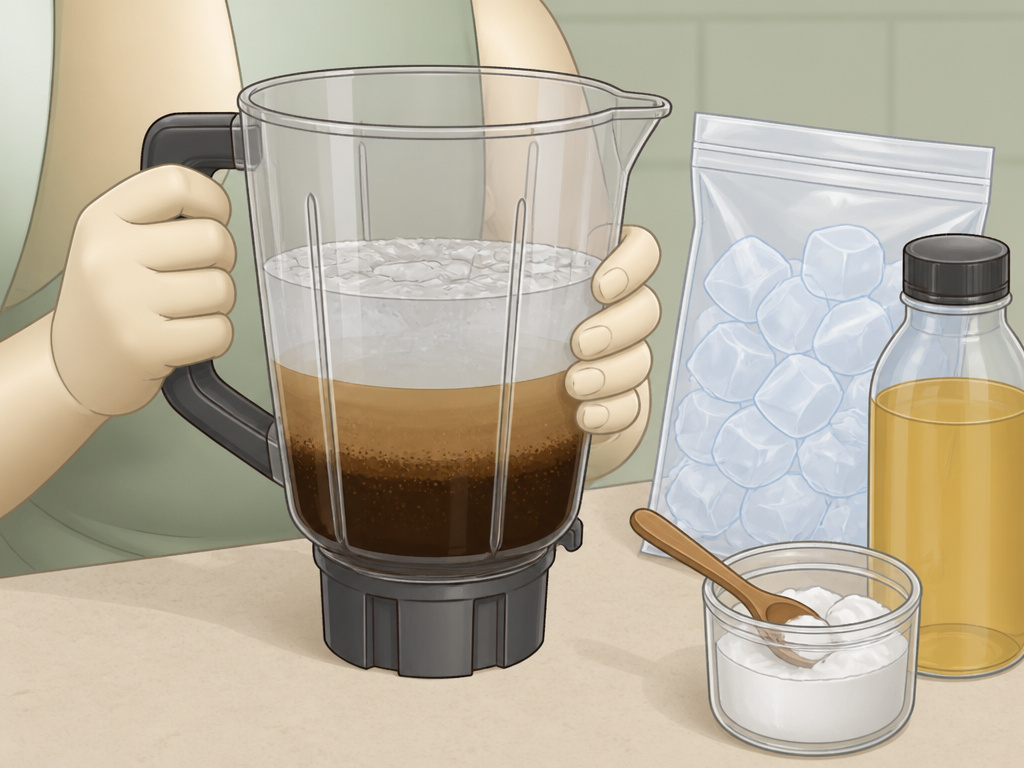
If your drink isn’t right, the fix is usually straightforward.
Problem: Watery and thin.
Cause: Coffee was not chilled enough, or the blend time was too long, melting the ice. Fix: Start with coffee that’s been in the fridge overnight. Blend only until smooth, not a second longer. Add an extra 1/4 cup of ice next time.
Problem: Icy chunks throughout.
Cause: Blender is underpowered or ice was added with the liquids from the start. Fix: Use the sequenced method above. If your blender is weak, crush the ice in a bag with a mallet before adding it, or use smaller “pebble” ice.
Problem: Gritty, undissolved sweetener at the bottom.
Cause: Used granulated sugar or added syrup after the ice. Fix: Only use liquid sweeteners, and always blend them with the coffee and milk first.
Problem: Frappe separates instantly.
Cause: Lack of emulsifier. This is common with very low-fat milks. Fix: Add a natural emulsifier like a tablespoon of coconut oil for creaminess or a teaspoon of xanthan gum to the liquid base before blending. It binds the liquids and ice.
Common mistake: Substituting hot freshly brewed coffee to save time, the thermal shock melts 60% of the ice volume in the first 10 seconds of blending. You’ll need to double the ice to compensate, which then overtaxes the blender motor. The result is either a weak, lukewarm drink or a burned-out appliance.
Frequently Asked Questions
Can I make a coffee frappe without a blender?
No. The essential texture of a frappe comes from the ice being crushed into a fine, homogeneous slush. A shaker bottle or stirring will only make iced coffee with ice chips. A blender for coffee drinks is the only tool for the job.
How can I make a decaf coffee frappe?
Use decaffeinated coffee beans or instant decaf espresso powder prepared the same way. All other steps are identical. The texture and experience are unchanged.
My frappe is too bitter. How do I fix it?
Bitterness usually means your coffee base is over-extracted or too darkly roasted. Next time, use a lighter roast or cold brew. For this batch, blend in an extra tablespoon of simple syrup or a pinch of salt to counteract the bitterness. Salt blocks bitter receptors on the tongue.
Can I prepare a coffee frappe base ahead of time?
Yes, but only the liquid portion. Mix the chilled coffee, milk, and liquid sweetener and keep it in a sealed container in the fridge for up to 2 days. When ready to serve, give the base a stir, pour it into the blender, add fresh ice, and blend. Do not blend the entire drink ahead of time, it will separate and become watery.
What’s the difference between a frappe and a frappuccino?
frappe is the generic term for a blended, iced coffee drink. A Frappuccino is a Starbucks trademark for their specific version, which often contains a proprietary base syrup that includes emulsifiers and stabilizers to guarantee consistency. Homemade frappes have a purer coffee flavor but may separate faster without those additives.
The Bottom Line
A perfect coffee frappe comes down to temperature, sequence, and power. Chill your coffee like you mean it. Blend your liquids and sweetener into a uniform base before the ice ever touches the pitcher. And use a blender that doesn’t balk at a cup and a half of frozen water.
The recipe is forgiving once you lock in that method. Swap the milk for a dairy-free alternative, use cold brew for a smoother kick, or add MCT oil benefits for sustained energy. The goal is a creamy, spoonable treat that doesn’t just taste like frozen coffee water. That first sip should be cold, sweet, and strong, with not a single ice chunk in sight.
