
Ghee Butter in Coffee | The One Thing That Makes It Work
To make ghee butter in coffee, you need three things: freshly brewed coffee, 1-2 tablespoons of grass-fed ghee, and a high-speed blender. The blender is non-negotiable for creating a stable emulsion that delivers creamy texture and modifies caffeine absorption, providing energy for 4-6 hours according to user reports. Simply stirring ghee into hot coffee results in separation and a greasy mouthfeel.
Most people get this wrong by skipping the blender. They drop a pat of butter into their mug, give it a stir, and end up with an oily film on top of a lukewarm drink. The texture is awful, and they miss the entire point.
This guide walks through the exact method, the science behind why it works, and the practical realities no trendy article mentions. We will cover the tools you actually need, how to adjust it for your diet, and when to avoid it altogether.
Key Takeaways
- A high-speed blender is mandatory. Stirring creates a broken, oily drink.
- Use grass-fed ghee or unsalted butter. The feed impacts the fat’s nutrient profile.
- The energy lift is real but time-limited. Expect 4-6 hours, not all day.
- This is a high-calorie addition. One tablespoon of ghee adds roughly 135 calories.
- It is not a magic detox. Benefits depend on your overall diet and health.
The Science Behind the Fat
Ghee is clarified butter, meaning the milk solids and water have been removed. What remains is nearly pure milkfat. According to the USDA FoodData Central entry for ghee (Food ID: 173432), it is 99.5% fat. Of that, about 62% is saturated fat, 29% is monounsaturated, and just 3.3% is polyunsaturated.
This composition matters for two reasons. First, the high concentration of medium-chain triglycerides (MCTs) and other saturated fats is what the body can metabolize quickly for energy. Second, removing the milk solids eliminates most of the lactose and casein. The USDA data shows 0 grams of sugar per 100g of ghee, which is why many with mild lactose intolerance can handle it. A PMC study on high-fat coffee investigated the metabolic effects of similar beverages, noting alterations in energy substrate use.
Ghee, per USDA standard reference, contains 843µg of Vitamin A (RAE) and 2.8mg of Vitamin E (alpha-tocopherol) per 100g. These fat-soluble vitamins are part of the nutritional argument, though you’d need to drink a lot of coffee to hit daily values.
The original “Bulletproof” recipe specifies grass-fed butter or ghee plus a separate MCT oil. The grass-fed part isn’t just marketing. Grass-fed dairy has a different fatty acid profile, with more conjugated linoleic acid (CLA) and omega-3s than grain-fed. If you’re doing this daily, the source matters.
TL;DR: Ghee is almost pure fat with a specific saturated fat profile that burns for energy. Grass-fed sources offer a slightly better nutrient mix.
Ghee vs. Butter vs. Other Coffee Fats
Not all fats behave the same in your cup. Your choice changes the flavor, texture, and how your stomach feels an hour later.
| Fat Source | Best For | The Catch |
|---|---|---|
| Grass-Fed Ghee | Daily use, lactose-sensitive folks | Higher cost. Can have a distinct, nutty flavor that alters coffee taste. |
| Grass-Fed Butter | Richer, creamier texture | Contains milk solids. May cause issues for those with casein sensitivity. |
| MCT Oil | Pure, fast-acting energy, no dairy | No flavor. High doses can cause immediate digestive distress. |
| Coconut Oil | Vegan option, mild flavor | Solid at room temp. Requires very hot coffee and vigorous blending to melt. |
Ghee wins for consistency and digestibility. Butter provides a fuller mouthfeel because of the residual milk solids, but those same solids can burn if your coffee is too hot or leave a filmy residue in your mug. Pure MCT oil, a common addition to MCT oil in coffee, is often combined with ghee for a synergistic effect.
Some people layer fats, adding a teaspoon of coconut oil in coffee alongside their ghee. I find that overkill. One primary fat source is enough. The goal is energy and focus, not consuming the most calories possible.
Common mistake: Using salted butter, the salt overpowers the coffee’s natural notes and can make the drink taste savory in a bad way. It also masks the subtle flavors of a good blend vs single origin bean.
If you’re managing calorie intake, compare this to your usual creamer. A tablespoon of ghee has about 135 calories. That’s more than most almond milk in coffee but similar to heavy cream. It’s a conscious addition, not a freebie.
The 7-Step Ghee Coffee Method (and the One Step Nobody Skips)
This isn’t a recipe you can eyeball. The proportions and technique dictate success or a greasy failure.
Step 1: Brew your coffee strong.
Use a method that yields a robust cup, like a French press or a strong Americano vs drip coffee ratio. Weak coffee will taste watery and thin once the fat is incorporated. The coffee needs to be piping hot, straight from the brewer.
Step 2: Measure the ghee.
Use a real tablespoon measure. Scoop 1 to 2 tablespoons of grass-fed ghee directly into your blender carafe. Starting with one tablespoon is wise. This is not the time for a heaping spoonful.
Step 3: Pour in the hot coffee.
Carefully pour 8 to 12 ounces of your freshly brewed coffee into the blender with the ghee.
Step 4: Secure the lid tightly.
This is critical. Place the lid on the blender and hold it down firmly with a folded kitchen towel. The hot liquid creates steam pressure. If the lid isn’t secure, you will have a scalding mess.
Step 5: Blend on high for 20-30 seconds.
Blend until the mixture is completely homogenous and has a creamy, light-brown microfoam on top. It should look like a well-frothed latte, not like coffee with bubbles on top. If you see any oil slick, blend longer.
Step 6: Pour and drink immediately.
Pour your ghee coffee into a pre-warmed mug and drink it right away. The emulsion is temporary. As it cools, the fat will start to separate. You have about 5-10 minutes before it becomes less pleasant.
Step 7: Clean the blender immediately.
Rinse the blender carafe and blade assembly with hot, soapy water immediately. Ghee solidifies as it cools. If you wait, you’ll be chiseling waxy fat off the plastic.
Skipping the blender is the failure point. A whisk, a frother, or vigorous stirring cannot create the mechanical shear needed to break the fat into tiny droplets suspended in the water-based coffee. You get a broken emulsion. The fat floats.
The first time I tried this, I used a milk frother. The result was a lukewarm, oily soup with bubbles on top. It was disgusting. I dumped it, cleaned the mug twice to get the grease off, and got out the blender. The difference was night and day, a creamy, integrated drink versus a science experiment gone wrong.
When Ghee Coffee Works (And When It Doesn’t)
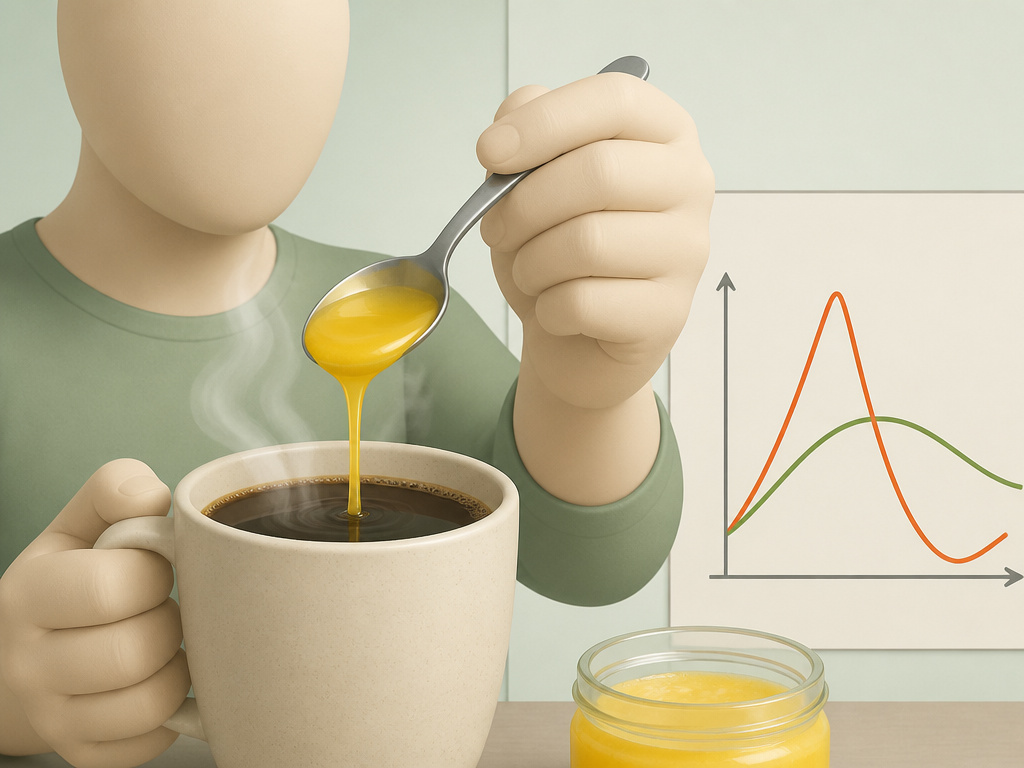 The claimed benefits are sustained energy, mental focus, and appetite suppression. In practice, these effects are highly individual and situational.
It works if you are following a ketogenic or very low-carb diet. Your body is already primed to use fat for fuel, so the MCTs in ghee provide a quick energy source without spiking insulin. The focus boost is real for many, likely due to the modified caffeine absorption. The fat slows the release of caffeine into your system, preventing the jittery spike and crash.
It also works as a meal replacement for a busy morning. At 135-270 calories per cup, it can stave off hunger for several hours. Compare that to a coffee with just a splash of milk for calories in milk.
I won’t recommend ghee coffee for someone trying to lose weight by simply adding it to their existing diet. Those are empty calories unless they displace a higher-carb breakfast. It’s a tool, not a magic potion.
It does not work if you have acid reflux or a sensitive stomach. The high fat content can relax the lower esophageal sphincter, triggering heartburn. The YouTube transcripts mention this directly, creators warn it can trigger acidity.
It is a bad choice right before intense exercise. Your body will prioritize digesting that fat over delivering oxygen to your muscles. You’ll feel sluggish.
Furthermore, the “mold-free” coffee claim pushed by some brands is overblown. A 2015 review in Food and Chemical Toxicology concluded that mycotoxins in commercial coffee are not a food safety concern for consumers. You don’t need a special, expensive “Bulletproof” brand bean. A fresh, high-quality bean from your local roaster is fine.
Tools of the Trade: What You Really Need
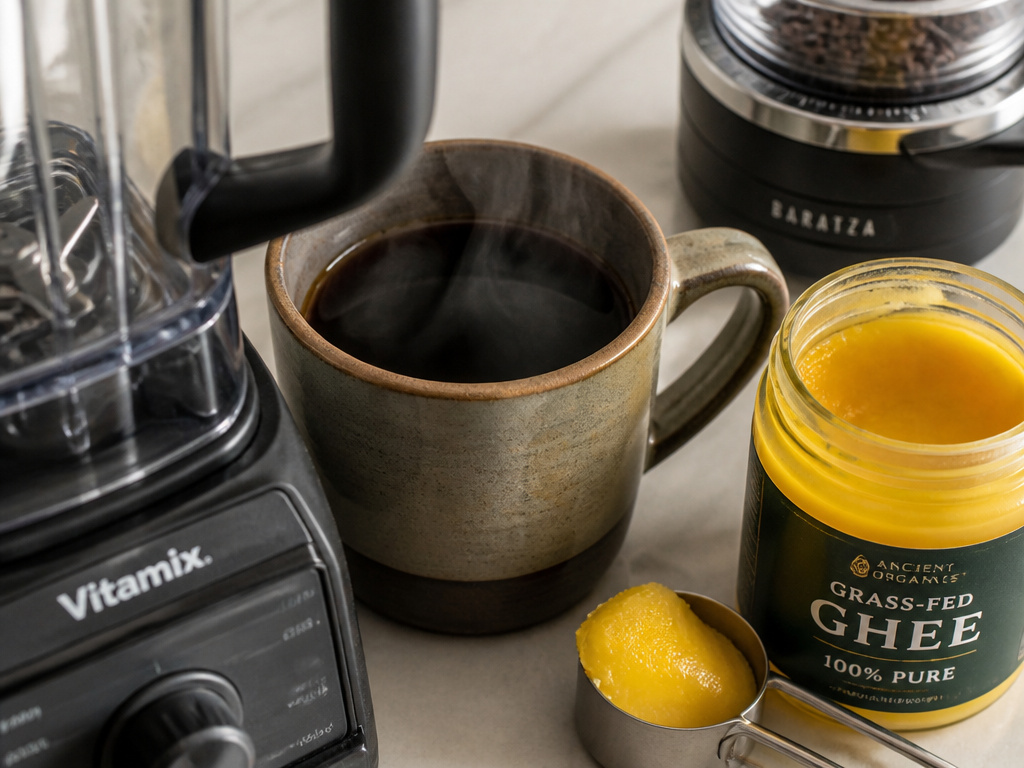 You can complicate this, but the essentials are short.
- A High-Speed Blender: A Vitamix, Blendtec, or Ninja is ideal. An immersion (stick) blender can work in a tall, narrow container, but it’s messier and less effective.
- A Good Coffee Grinder: Start with freshly ground beans for the best flavor. A consistent grind from a burr vs blade grinder makes a noticeable difference, even when adding fat.
- Grass-Fed Ghee: Look for brands like Pure Indian Foods, Fourth & Heart, or make your own. The color should be deep gold, not pale yellow.
- A Heavy Mug: A pre-warmed ceramic or stainless steel mug will keep your drink hotter longer, slowing the emulsion breakdown.
That’s it. Fancy kettles, special scales, and branded MCT oils are optional. The blender is the only non-negotiable hardware. Without it, you are just drinking oily coffee.
Customizing Your Cup
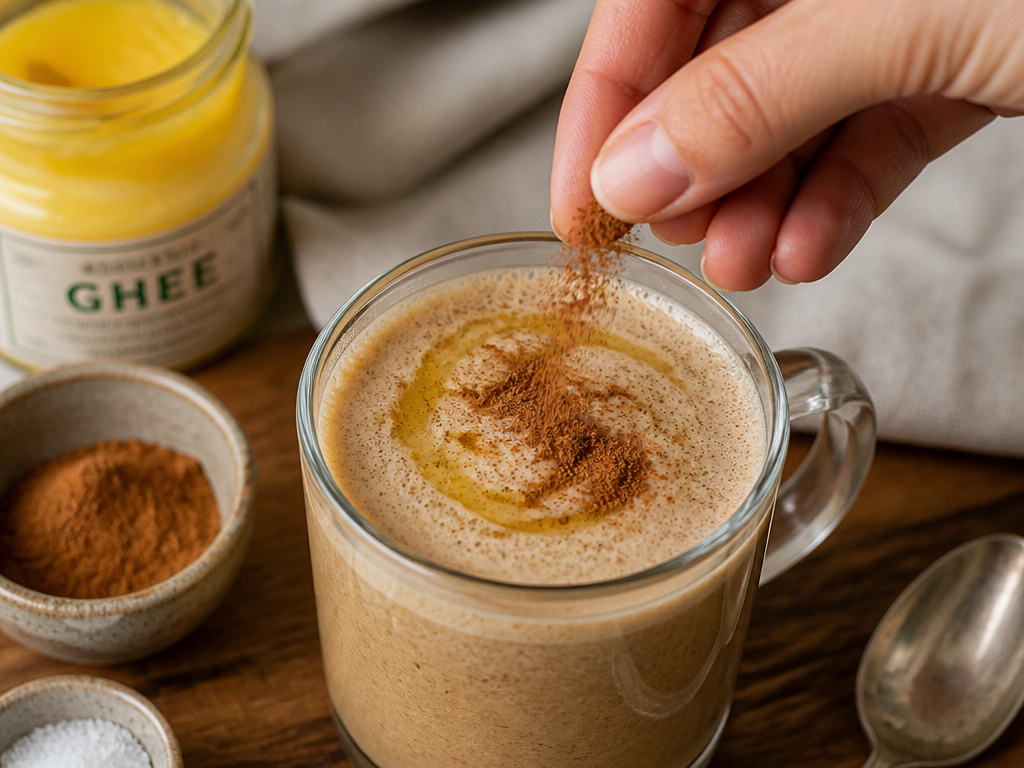 Once you master the basic emulsion, you can tweak it.
For sweetness without sugar, add a pinch of cinnamon in coffee. It complements the fat’s richness and can help with blood sugar stability. A dash of adding salt to coffee can also cut any residual bitterness, making the drink taste rounder and smoother.
If you miss sweetness, a small amount of brown sugar in coffee can work, but it defeats the low-carb purpose for many. Use sparingly.
For a different flavor profile, try adding a drop of pure vanilla extract or a sprinkle of cocoa powder before blending. These can mask the distinct ghee flavor if you’re not a fan.
The goal is to make it palatable and enjoyable for you. If you have to choke it down for the “benefits,” you won’t stick with it.
Frequently Asked Questions
Does ghee coffee break a fast?
Yes, absolutely. Consuming 135+ calories of pure fat breaks a physiological fast. If you are fasting for metabolic benefits like autophagy, this will interrupt it. If you’re just doing intermittent fasting for calorie control, it technically breaks the fast but may keep you in a fat-burning state.
Can I use regular butter instead of ghee?
You can, but ghee is better for most people. Regular butter contains water and milk solids (lactose, casein). The water can make the emulsion less stable, and the solids can cause digestive issues. If you use butter, make sure it’s unsalted and grass-fed.
Why does my ghee coffee still separate?
Your coffee wasn’t hot enough, you didn’t blend long enough, or your blender isn’t powerful enough. The emulsion requires heat and high shear force. Ensure everything is piping hot and blend for a full 30 seconds on the highest setting.
Is this just a fad?
The combination of fat and coffee has ancient roots, like Tibetan yak butter tea. The modern “Bulletproof” version popularized it. The fad aspect is the overhyped marketing around miracle benefits and proprietary products. The core concept of fat for sustained energy has legitimate, science-backed mechanics.
How does this affect cholesterol?
This is a YMYL (Your Money or Your Life) topic, and you should consult your doctor. Ghee is high in saturated fat, which can raise LDL (“bad”) cholesterol in some people. However, it may also raise HDL (“good”) cholesterol. The impact is highly individual, based on genetics and overall diet. Don’t take health advice from a coffee blog.
The Bottom Line
Ghee butter in coffee is a functional beverage, not a casual treat. It requires a specific tool, a blender, and a specific ingredient, quality ghee, to work correctly. When done right, it delivers a creamy, satisfying drink that can power you through a morning without hunger pangs or caffeine crashes.
Ignore the detox and miracle-cure claims. The international Codex Standard for Milkfat Products defines ghee’s composition, not its magical properties. Treat it as a high-calorie, high-fat addition that fits certain dietary patterns.
Try it for a week. Use the method exactly as written. If you feel better, more focused, and less hungry until lunch, you’ve found a useful tool. If it upsets your stomach or feels like a calorie burden, drop it. Your daily coffee ritual should work for you, not the other way around.
