
Does Tea Have Less Caffeine Than Coffee? The Brewing Truth
This post contains affiliate links. As an Amazon Associate, we earn from qualifying purchases.
A standard 8-ounce cup of brewed coffee typically contains 65–120 mg of caffeine. The same size cup of brewed tea usually ranges from 14–61 mg. So yes, tea generally has less caffeine than coffee, but the overlap in their ranges means a strong black tea can surpass a weak coffee.
Most comparisons get the basics right but miss the specifics that actually decide your buzz. They parrot the “tea has less” line without showing you the numbers that prove it, or explaining why your afternoon matcha sometimes wires you more than your morning coffee.
This guide breaks down the caffeine question with primary-source data, explains the critical brewing variables, and highlights the edge cases that flip the script.
Key Takeaways
- Brew time is a bigger caffeine lever than tea type. A 5-minute black tea steep can have double the caffeine of a 1-minute steep.
- The “tea leaf has more caffeine than a coffee bean” factoid is misleading. You consume an infusion, not the raw leaf, and coffee’s brewing method is brutally efficient at extraction.
- Matcha is the exception. Consuming the whole ground leaf delivers 30–70 mg of caffeine per half-teaspoon, rivaling a cup of coffee.
- Decaffeinated does not mean caffeine-free. Health Canada notes decaf coffee or tea still contains 2–5 mg per cup.
- The L-theanine in tea modulates caffeine’s effect, often creating a calmer, focused alertness compared to coffee’s sharper jolt.
The Simple, Measured Answer
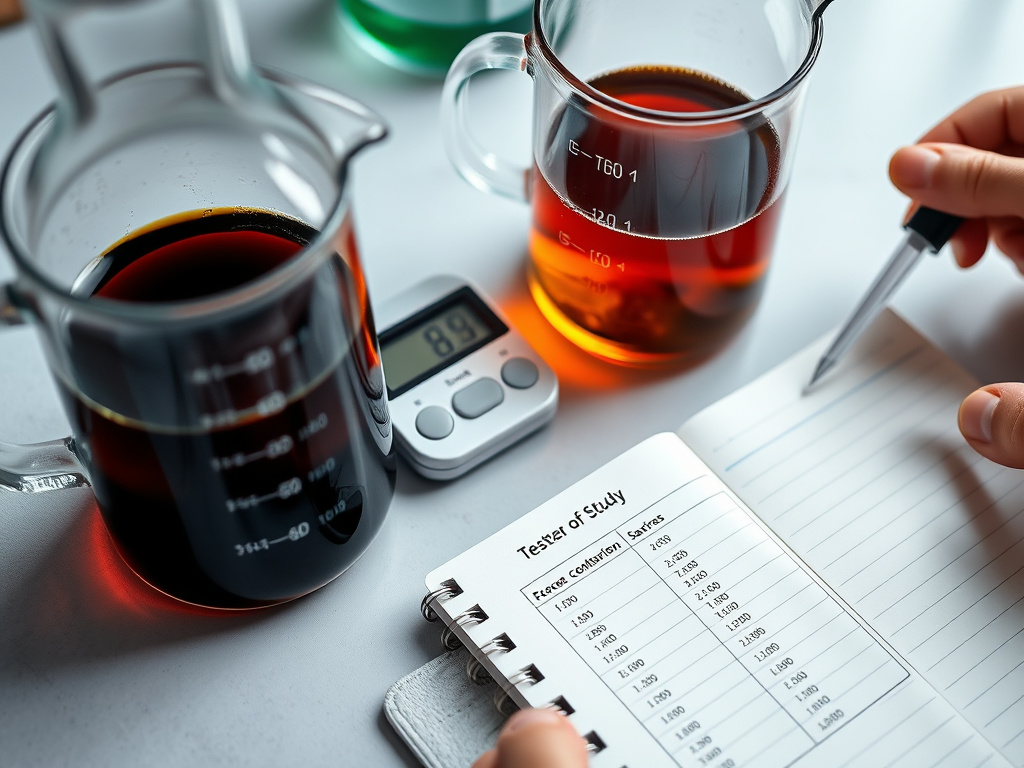
Forget vague ranges. A 2005 study in the Journal of Agricultural and Food Chemistry measured it under controlled conditions. Researchers brewed name-brand teas and coffee with the same water, for the same times, and measured the caffeine per 100 milliliters.
| Beverage (Brand) | 3-Minute Brew | 5-Minute Brew |
|---|---|---|
| Coffee (Maxwell House Regular Roast) | 50 mg / 100 mL | 60 mg / 100 mL |
| Black Tea (Lipton Yellow Label) | 35 mg / 100 mL | 40 mg / 100 mL |
| Oolong Tea (Celestial Seasonings) | 25 mg / 100 mL | 30 mg / 100 mL |
| Green Tea (Lipton Green Tea) | 16 mg / 100 mL | 20 mg / 100 mL |
| White Tea (Teavana Silver Needle) | 15 mg / 100 mL | 18 mg / 100 mL |
Scaling this to an 8-ounce (240 mL) cup, that Maxwell House coffee delivers about 120–144 mg. The Lipton black tea gives 84–96 mg. The gap is clear, but it narrows. This is your baseline.
A standardized laboratory comparison shows brewed coffee extracts 20–25 mg more caffeine per 100 mL than black tea under identical steeping conditions. This difference scales directly with cup size.
TL;DR: In a side-by-side test, coffee consistently yields more caffeine per ounce than tea, but extending steep time narrows the gap.
Why Your Grandma’s Rule About Tea Color Is Wrong
You’ve heard it: black tea is high caffeine, green is medium, white is low. It’s a decent shorthand, but it breaks often. The plant’s defense mechanism tells the real story.
Caffeine is a natural insecticide. The tea plant (Camellia sinensis) produces more of it in young, tender leaf buds and first leaves, the parts most vulnerable to bugs. As the leaf matures and toughens, caffeine production drops. Therefore, a tea made from young buds (like a Silver Needle white tea or a Darjeeling first flush) can have caffeine levels rivaling some black teas, which are often made from more mature leaves.
Processing method, whether the leaf is oxidized to become black tea or steamed to become green tea, has less impact on final caffeine content than the leaf’s starting point. This is why any simplistic caffeine in tea vs coffee rule based solely on color is flawed.
The Leaf vs. The Bean: A Misleading Stat
You might encounter a factoid that dry tea leaves contain 3.5% caffeine by weight, while coffee beans hold 1.1–2.2%. This is true. It’s also irrelevant.
We don’t eat dry leaves or beans. We brew them. Coffee’s grinding process and brewing method (hot water forced through a fine powder) is dramatically more efficient at extracting that caffeine than steeping whole tea leaves. The brewing process is the great equalizer, and coffee’s method wins the extraction race every time. This is a key detail often missing from a basic tea and coffee caffeine comparison.
The Four Factors That Actually Change Your Caffeine Dose
If you want to control your intake, watch these four levers. They matter more than choosing “tea” or “coffee.”
1. Brew Time (The Biggest Driver)
The ACS study data proves it: more time equals more caffeine. The increase from 3 to 5 minutes added 10–15 mg per 100 mL for coffee and 4–5 mg for the teas. For a full cup, that’s a 20-30 mg jump. A forgotten tea bag steeping for 10 minutes is a different beverage entirely.
Common mistake: Assuming a quick 1-minute green tea steep is “low caffeine”, underbrew it and you might get only 8-10 mg per cup, but overbrew it and you can easily double that.
2. Serving Size (The Volume Trick)
This is where comparisons fall apart. A 2-ounce espresso shot contains about 63 mg of caffeine. A 20-ounce venti black tea from a cafe, brewed strong, could contain 100 mg or more. Total volume matters. Always compare ounces to ounces, not cups to cups where “cup” is undefined.
3. Preparation Method (The Game Changers)
Standard hot brewing is just one method. Two others radically alter the equation: * Cold Brew: Steeping coffee or tea in cold water for 12-24 hours produces a concentrate. Because it’s often consumed without dilution, a serving of cold brew coffee can pack 200+ mg of caffeine. The principle applies to tea, making iced tea caffeine levels highly variable. * Matcha: This is the outlier. You whisk powdered whole green tea leaf into water and drink it all. You’re ingesting 100% of the leaf’s caffeine. A typical half-teaspoon serving of ceremonial matcha contains roughly 30–70 mg of caffeine, directly in the range of a cup of coffee. This is why the caffeine content in green tea discussion must separate matcha from brewed green tea.
4. The “Decaf” Illusion
If you’re sensitive to caffeine, note this. Health Canada explicitly states that decaffeinated coffee and tea are not caffeine-free. They retain 2–5 mg per cup. For someone with extreme sensitivity, even this trace amount can have an effect.
Coffee vs. Tea: The Body-Feel Isn’t Just About Mg
A milligram of caffeine from tea doesn’t feel the same as a milligram from coffee. The difference often comes down to one amino acid: L-theanine.
Tea leaves contain significant L-theanine, especially shade-grown varieties like gyokuro or matcha. This compound promotes alpha-wave activity in the brain, which is associated with relaxed focus. When combined with caffeine, as it naturally is in tea, the result is often described as a “calm alertness”, the jittery, anxious edge of a coffee buzz is softened.
Coffee contains virtually no L-theanine. Its caffeine hits your system fast and clean, which can be great for a sharp wake-up but harder on some people’s nerves. This synergistic effect is a core part of the health benefits comparison between the two beverages. It’s also why the overall effects comparison favors tea for sustained, jitter-free focus.
The L-Theanine Factor
Think of caffeine as the accelerator and L-theanine as the steering wheel and brakes. Together, they provide a smoother, more controlled ride. This is why a strong black tea might have a similar caffeine load to a weak coffee but leave you feeling steadier. It’s not just the amount of stimulant; it’s the supporting cast.
When Tea Can Have More Caffeine Than Coffee
Given all the variables, it’s easy to construct a scenario where tea wins the caffeine contest. 1. Matcha vs. Single Espresso: A robust serving of matcha (70 mg) versus a single ristretto espresso shot (45-55 mg). 2. Long-Steeped Strong Tea vs. Weak Coffee: A 16-ounce mug of black tea, steeped for 7 minutes, could hit 120 mg. A small 8-ounce cup of lightly brewed or decaf coffee might be under 80 mg. 3. Cold Brew Tea vs. Iced Coffee: A concentrated cold-brew tea, served undiluted, versus a diluted iced coffee with lots of milk.
The point isn’t that tea is usually stronger. It’s that the blanket statement “tea has less caffeine” is useless without context. Your brewing habits and serving size dictate the truth. This nuance is critical for an accurate stimulant levels in beverages analysis.
Frequently Asked Questions
Does black tea have more caffeine than coffee?
Almost never, per equal volume and brew time. In the ACS study, black tea maxed out at 40 mg/100mL, while coffee reached 60 mg/100mL. A strong black tea might surpass a very weak coffee, but in a standard preparation, coffee wins. The caffeine in black tea is substantial, but coffee’s extraction is more efficient.
Which has more caffeine, green tea or coffee?
Coffee, decisively. Brewed green tea ranges from 12–20 mg per 100mL in USDA data, while brewed coffee starts around 40 mg. The EGCG antioxidants in green tea are its superpower, not its caffeine content.
Is the caffeine in tea healthier?
“Healthier” is subjective. The presence of L-theanine and different antioxidants may make the effect of tea’s caffeine more manageable and potentially offer different health benefits of black tea and green tea. However, caffeine itself is the same molecule in both plants.
How does espresso compare to tea?
An espresso shot (1 oz) has about 63 mg of caffeine. That’s a high concentration per ounce, but low total volume. An 8-oz black tea could have 80-100 mg total. So while espresso caffeine content is more concentrated, a full cup of tea might deliver more total stimulant. It’s a volume game.
Does adding milk affect caffeine content?
No. Milk dilutes the drink and adds volume, but it doesn’t change the total milligrams of caffeine extracted during brewing. It just changes the concentration in your cup.
The Bottom Line
Yes, a typical cup of tea has less caffeine than a typical cup of coffee. The data from the USDA and peer-reviewed studies confirms it. But “typical” isn’t your cup. Your brew time, your leaf or bean quantity, and your serving size write the final recipe.
If you’re using caffeine as a functional tool, coffee is the more potent and consistent delivery system. If you’re seeking alertness without the edge, the L-theanine in tea provides a unique, smoother lift. And if you ever feel unexpectedly wired after a matcha, now you know why, you just drank the whole leaf.
Understand these variables, and you move past the oversimplified myth. You can then tailor your choice not just to flavor, but to the precise type of energy you need. That’s the real power behind knowing the numbers.
