
Does Mushroom Coffee Have Caffeine? The Real Numbers
Mushroom coffee contains caffeine, but typically 30–70 mg per 8-ounce serving, which is about half the caffeine of a standard cup of brewed coffee. The exact amount depends entirely on the brand and specific blend, with some products using decaffeinated coffee or no coffee at all.
Most people assume the “coffee” in the name means a full caffeine kick. They buy a bag, brew a cup expecting their usual morning jolt, and end up with a mild lift that fades by mid-morning. That mismatch leads to either overconsumption or disappointment.
This guide breaks down the caffeine numbers for leading brands, explains why the content varies so much, and shows you how to read a label to find your perfect match, whether you want a gentle boost or a complete caffeine break.
Key Takeaways
- Brand-specific caffeine content is non-negotiable. Four Sigmatic Think has 50 mg, Ryze Original has 48 mg, and MUD\WTR Rise has 35 mg from chai tea.
- “Mushroom coffee” is not always coffee. Products like MUD\WTR Rest Blend contain zero coffee and zero caffeine, using only adaptogenic mushrooms and spices.
- The caffeine reduction happens because the product is a blend, not a replacement. Up to half the scoop can be mushroom extract, diluting the coffee grounds.
- Always check the Supplement Facts panel, not just the marketing. This is where the milligrams per serving are legally required to be listed.
- For a true caffeine-free experience, you must select a blend explicitly labeled as such. “Low-caffeine” is not the same as “caffeine-free.”
How Much Caffeine Is in Mushroom Coffee?
You cannot guess. You have to look at the label of the specific product in your hand. The range is wide because the formulation is a recipe, not a single ingredient.
A standard 8-ounce cup of brewed coffee contains about 95 mg of caffeine, according to the USDA FoodData Central database. Mushroom coffee blends generally land between 30 and 70 mg for the same volume, placing them closer to a strong cup of black tea in stimulant effect.
Leading brands publish their numbers. Four Sigmatic states 50 mg of caffeine per serving for their Think Coffee blend. Ryze lists approximately 48 mg per serving for their Original Mushroom Coffee. These figures are not estimates; they are tested values on the product’s Supplement Facts panel. MUD\WTR takes a different path, their Rise Blend derives 35 mg of caffeine from chai tea, not coffee.
The mechanism is simple dilution. A serving of mushroom coffee might contain only 4-5 grams of actual coffee grounds, with the remaining 2-3 grams made up of lion’s mane or chaga extract powder. You are literally drinking less coffee per cup. This is the primary why-layer for the lower caffeine content.
TL;DR: Check the label. Expect 35-50 mg of caffeine per cup from major mushroom-coffee blends, about half a regular coffee’s punch.
The Brand-by-Brand Caffeine Breakdown
Generalizations are useless here. You need a comparison table to make an informed choice. This isn’t about which mushroom is best; it’s about how much of a wake-up call you want.
| Brand & Blend | Caffeine Source | Caffeine per Serving | Best For |
|---|---|---|---|
| Four Sigmatic Think | Coffee + Lion’s Mane | 50 mg | A familiar coffee ritual with a focused, jitter-free edge. |
| Ryze Mushroom Coffee (Original) | Coffee + Blend of 6 Mushrooms | ~48 mg | A balanced, slightly earthy cup with a consistent caffeine level. |
| MUD\WTR Rise | Chai Tea + Adaptogens | 35 mg | A gentle, spice-forward lift without coffee’s acidity. |
| MUD\WTR Rest | Cacao, Mushrooms, Spices (No Coffee/Tea) | 0 mg | An evening wind-down or a complete caffeine avoidance strategy. |
Notice the outlier. MUD\WTR Rest contains no coffee or tea. It’s a roasted herbal blend that borrows the “mushroom coffee” aesthetic but operates in a different category entirely. If you are sensitive to caffeine or drink it after 3 PM, this is the only safe bet among the popular options.
The 35 mg in MUD\WTR Rise comes from chai tea. Tea-sourced caffeine often releases more slowly than coffee-sourced caffeine due to the presence of L-theanine, which can smooth out the stimulant effect. This is a key distinction if you’re comparing it to a coffee-based mushroom blend.
Common mistake: Assuming all mushroom “coffees” use a coffee base, some use tea, and some use none at all. Buying a mushroom-coffee alternative for a caffeine kick and getting a caffeine-free cup wastes a morning and $30.
What Makes the Caffeine Content Vary?
Three factors dictate the final number in your mug: the base ingredient, the blend ratio, and the processing method. Most articles talk about the mushrooms; the caffeine story is in the coffee.
First, the base. Is it regular coffee, decaffeinated coffee, or tea? This is the single biggest determinant. A blend using Swiss Water Process decaf coffee will have about 2-5 mg of caffeine, a trace amount. A blend using black tea as a base, like some chai-inspired products, will start in the 40-50 mg range. A standard medium-roast coffee base is the variable.
Second, the ratio. A 70/30 coffee-to-mushroom powder mix will have significantly more caffeine than a 50/50 mix. Brands tweak this for flavor and functional balance, directly impacting the stimulant payload. They are selling you on the benefits of lion’s mane for focus, not a caffeine overdose.
Third, the processing. Instant mushroom coffee mixes might use a spray-dried coffee extract, which can have a standardized caffeine concentration. Whole-bean or ground blends mixed with mushroom powder rely on your brewing method to extract it, adding another layer of variability. A French press will pull more caffeine from the grounds than a quick pour-over.
If you’re trying to manage your intake, these variables make consistent dosing a challenge. That’s why the published serving-size number on your specific product is the only reliable guide.
Does Mushroom Coffee Have Less Caffeine Than Regular Coffee?
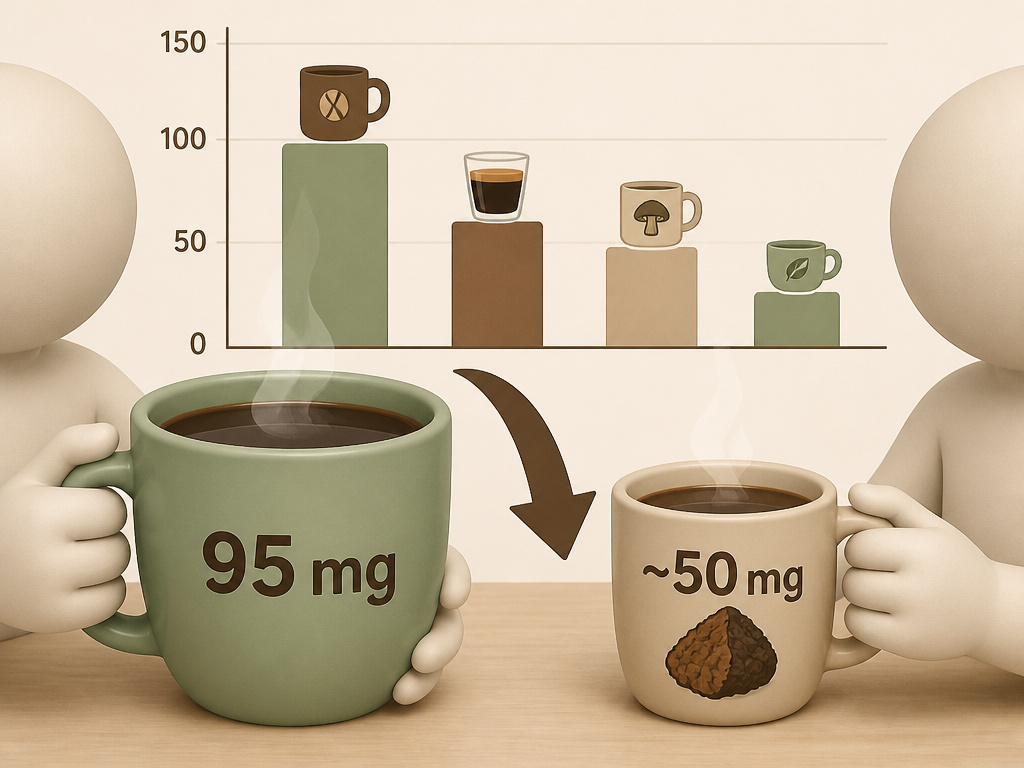
Almost always, yes. The math is straightforward. A standard 8-ounce cup of black coffee, like the caffeine content in a standard brewed coffee, hovers around 95 mg. A typical mushroom coffee serving cuts that by nearly half.
The difference is more dramatic when you compare it to espresso. A single 1-ounce shot of espresso has about 63 mg of caffeine. So, one shot has more caffeine than an entire 8-ounce cup of most mushroom coffees. This is crucial for people using mushroom coffee as an afternoon drink, it’s unlikely to disrupt sleep like a late-day regular coffee would.
How does it stack up against tea? A cup of black tea has about 47 mg of caffeine, putting it right in the sweet spot of brands like Ryze and Four Sigmatic. If you’re a tea drinker looking for a different flavor profile with similar functional benefits, the caffeine transition will feel seamless. For a deeper dive, our analysis of caffeine in black tea covers the nuances.
I switched to mushroom coffee for a month to manage afternoon anxiety. The first week, I drank two cups back-to-back, assuming the caffeine was minimal. I was wrong. The 100 mg total from two servings of Four Sigmatic left me just as jittery as a large regular coffee. Now I measure one precise scoop and stop there.
How to Find the Caffeine Content on Any Package
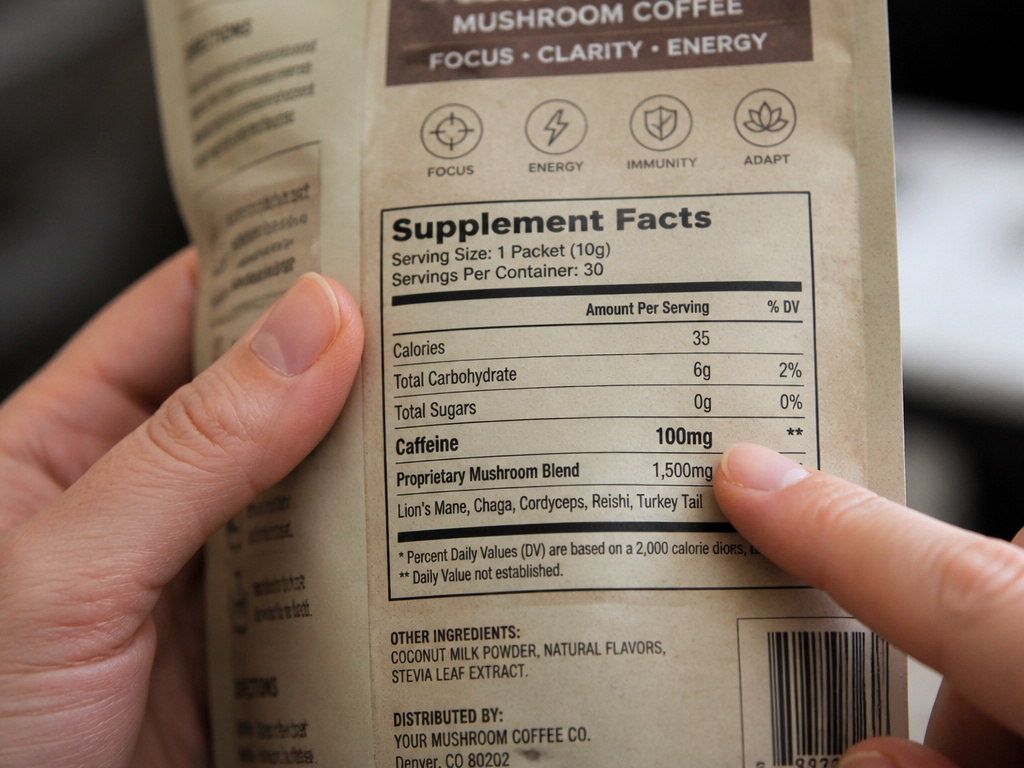
Don’t look at the front. The marketing copy will say “focus,” “calm energy,” or “adaptogenic.” The real data is on the back or side, in the standardized panel.
- Locate the “Supplement Facts” box. This is legally required for these products, as they are often sold as dietary supplements.
- Find the “Caffeine” line item. It will list the amount in milligrams (mg) directly next to it.
- Verify the “Serving Size.” This is usually “1 packet” or “1 scoop (approx. 7g).” The caffeine amount is for that serving only.
- Check the ingredients list. This confirms the base: “organic instant coffee,” “decaffeinated coffee,” “black tea,” or just a list of mushrooms and spices.
If the product doesn’t have a Supplement Facts panel or lists no caffeine, it’s a red flag. Either it’s a culinary product not making a functional claim, or it’s not transparent. Legitimate brands like the ones cited earlier are meticulous about this disclosure.
TL;DR: The “Supplement Facts” panel is law. The “Caffeine” line there is your only trustworthy number. Ignore the romantic descriptions on the front.
Who Should Try Mushroom Coffee (And Who Should Skip It)
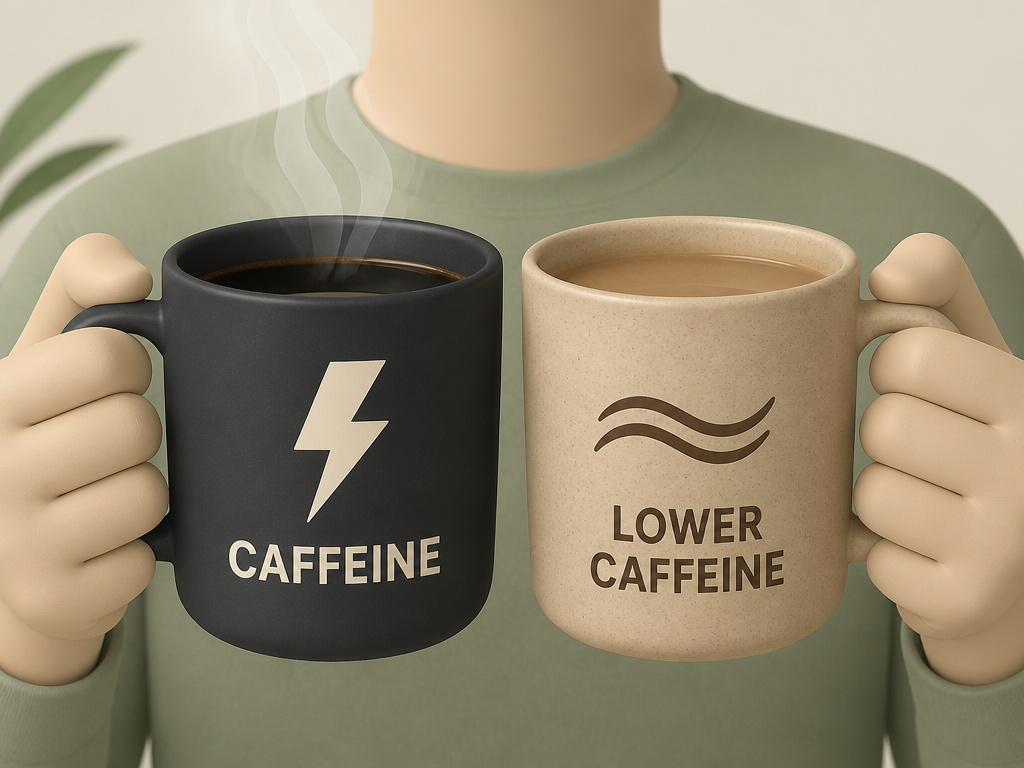
This isn’t for everyone. The value proposition is a modified caffeine experience paired with potential cognitive benefits, not a straight stimulant replacement.
Consider mushroom coffee if: * You love coffee’s ritual but dislike the jitters or crash. * You want to reduce your caffeine intake gradually without quitting cold turkey. * You’re interested in the purported focus benefits of lion’s mane or the immune support of chaga. * Your caffeine in tea routine feels too mild, but regular coffee is too strong.
Avoid mushroom coffee or choose a caffeine-free version if: * You need a consistent, high caffeine dose to power through morning tasks. Stick with your regular brew. * You are on medications that interact with adaptogens. An AARP mushroom coffee health analysis rightly advises consulting a doctor, as mushrooms can affect blood thinners and immunosuppressants. * You have a known allergy to mushrooms. * You dislike earthy, umami flavors. No amount of functional benefit is worth choking down a drink you hate.
For those comparing it to other functional beverages, understand that the caffeine in a Monster Energy caffeine drink is synthetic and delivered with a massive sugar hit. Mushroom coffee is the opposite, a natural, lower-dose, no-sugar option. The health impacts are not comparable.
Frequently Asked Questions
Is mushroom coffee caffeine-free?
No, not inherently. Most mushroom coffees contain caffeine from their coffee or tea base. However, specific products like MUD\WTR Rest Blend are explicitly formulated without caffeine. You must select a product labeled “caffeine-free” to guarantee it.
Can I drink mushroom coffee at night?
Only if you choose a verified caffeine-free blend. Even a low-caffeine option with 35-50 mg can disrupt sleep for caffeine-sensitive individuals. Treat a mushroom-coffee blend like you would a cup of black tea, avoid it within 6 hours of bedtime.
Does mushroom coffee taste like coffee?
It tastes like coffee that has been muted and given an earthy, sometimes slightly bitter, note. The mushroom extracts dilute the coffee flavor. If you enjoy the bright acidity of a light roast, you might find the flavor dull. It’s closer to a dark roast with a savory twist.
Is the caffeine in mushroom coffee healthier?
The caffeine molecule is the same whether it’s from coffee, tea, or a mushroom blend. The “healthier” claim comes from the lower total dose and the presence of adaptogens, which may modulate the body’s stress response to the stimulant. It’s a different experience, not a different chemical.
How does it compare to decaf coffee?
They are different solutions. Decaf coffee uses a process to remove most caffeine from coffee beans, leaving the flavor largely intact. Mushroom coffee blends regular caffeine-containing coffee with other ingredients to lower the dose per cup. For a true minimal-caffeine option, explore decaffeinated options across different beverage types.
The Bottom Line
Mushroom coffee has caffeine, but the dose is a design choice, not a given. Your morning cup could contain 50 mg, 35 mg, or zero. The only way to know is to ignore the marketing and read the Supplement Facts panel on your specific product.
This category works best for people who want to dial down their stimulant intake without abandoning the coffee ritual. It fails for anyone seeking a full-strength caffeine replacement. The numbers from Four Sigmatic, Ryze, and MUD\WTR don’t lie, they offer a middle ground between tea and coffee. Choose based on that number, not the mystique of the mushroom. Your energy levels will thank you by 10 AM.
