
The Truth: Does Coffee Lower Blood Pressure or Increase It?
This post contains affiliate links. As an Amazon Associate, we earn from qualifying purchases.
Coffee does not lower blood pressure. The direct, short-term effect of caffeine is a blood pressure increase, averaging a 4.90 mmHg spike in systolic pressure within an hour. For habitual drinkers, this acute effect diminishes with tolerance, and long-term epidemiological studies show no significant link between regular coffee consumption and the development of hypertension. The critical variables are your genetics, your current blood pressure status, and whether you drink coffee habitually.
Most articles get this wrong by conflating the immediate spike with long-term risk, or by giving vague advice that ignores a key genetic wildcard. They tell you coffee might raise your pressure a bit, but they don’t give you the number, the timeline, or the biological reason your friend feels nothing while you’re jittery for hours.
This guide breaks down the research you can actually use. We’ll cover the measurable acute effect, the long-term data on habitual drinking, the genetic factor that changes everything, and the one specific scenario where your daily cup becomes a genuine concern.
Key Takeaways
- The average acute blood pressure increase after coffee is 4.90 mmHg systolic and 2.70 mmHg diastolic, peaking within 60 minutes.
- Habitual coffee drinkers develop tolerance; long-term studies find no significant association between 3-5 daily cups and hypertension risk.
- Your CYP1A2 gene variant determines if you’re a fast or slow caffeine metabolizer, drastically changing the duration and intensity of the pressor effect.
- If you have severe, uncontrolled hypertension (≥160/100 mmHg), regular caffeinated coffee consumption is linked to a doubled risk of cardiovascular death.
- Decaffeinated coffee shows no significant effect on blood pressure, proving caffeine is the primary active agent.
The Acute vs. Habitual Effect
Headline studies often contradict each other because they measure different things. One looks at what happens in the hour after a cup. The other tracks thousands of people for a decade. Both are right, but for different timeframes.
A 2021 meta-analysis in Hypertension pooled data from 11 studies and 550 participants. It found that a single serving of coffee increased systolic blood pressure by 4.90 mmHg and diastolic by 2.70 mmHg within 60 minutes. The effect was strongest in people who didn’t drink coffee regularly.
That’s the acute picture. Your nervous system gets a jolt, blood vessels constrict slightly, and your pressure goes up. It’s a real, measurable physiological response.
The long-term story flips the script. Your body adapts. A separate 2020 meta-analysis of 17 prospective cohort studies, following over 400,000 people, concluded there was no significant association between habitual coffee drinking and the development of hypertension. Some data even hinted at a slight protective effect at moderate intake levels. This aligns with a 10-year blood pressure study that tracked coffee consumption against office and ambulatory readings, finding a neutral long-term relationship.
The mechanism is tolerance. Regular exposure to caffeine blunts the adrenergic response. The first-time drinker feels their heart pound. The veteran feels a gentle nudge toward alertness. The body’s systems adjust.
TL;DR: Coffee raises your blood pressure for about an hour after you drink it, especially if you’re not a regular drinker. If you drink it every day, your body gets used to it and the long-term risk of developing high blood pressure doesn’t increase.
Your Genes Are Holding the Coffee Filter
This is the part most general advice misses completely. Two people can drink the same Colombian roast and have radically different physical experiences. One feels focused for two hours. The other is wired, anxious, and checking their pulse for six. The difference often lives in your liver, in a gene called CYP1A2.
This gene codes for the primary enzyme that breaks down caffeine. Specific variants make you a “fast” or “slow” metabolizer.
– Fast Metabolizers: They clear caffeine quickly. The blood pressure spike is shorter and less intense. They’re the people who can have an espresso after dinner and sleep fine.
– Slow Metabolizers: They process caffeine sluggishly. It lingers in their system, amplifying and prolonging the stimulating effects, including the pressor response on blood vessels.
A review in Current Hypertension Reports underscores this, stating that slow metabolizers experience a “more pronounced and prolonged pressor effect.” This isn’t a minor footnote. It’s the reason blanket statements about coffee are useless.
You can’t change your genes, but you can observe their effects. If one cup has you buzzing all afternoon with a noticeable headache (a classic sign of constricted blood vessels), you’re likely on the slower end of the spectrum. Your personal coffee and cardiovascular risk calculus needs to account for that.
| Metabolizer Type | Caffeine Clearance | Typical Blood Pressure Response | Practical Implication |
|---|---|---|---|
| Fast (CYP1A2 *1A) | Rapid | Short, mild spike (≤2 hours) | Can likely tolerate multiple cups with minimal long-term impact. |
| Slow (CYP1A2 *1F) | Slow | Pronounced, prolonged spike (4+ hours) | Should limit intake, especially if hypertensive. Monitor individual response closely. |
When Coffee Poses a Real Risk
For the majority of people with normal or well-controlled blood pressure, the news is reassuring. For a specific subgroup, the data sends a clear warning.
Research presented in 2023, analyzing people with severe hypertension (defined as 160/100 mmHg or higher), found a stark correlation. Drinking two or more cups of coffee a day was associated with twice the risk of cardiovascular death compared to non-drinkers within that hypertensive group. The theory is that the acute pressure spike from caffeine places an excessive strain on an already critically stressed cardiovascular system.
This doesn’t apply to someone with borderline or mild hypertension managed by medication. The danger zone is severe, uncontrolled high blood pressure.
Common mistake: Assuming your medication fully negates coffee’s effect, the acute spike still happens on top of your medicated baseline. If your control is fragile, that spike matters.
If you fall into this category, the move isn’t necessarily to quit forever. The move is to switch to decaf. A 2021 meta-analysis of randomized trials confirmed that decaffeinated coffee has no significant effect on systolic or diastolic blood pressure. The polyphenols and antioxidants stay; the caffeine-driven pressure lift leaves.
TL;DR: If your blood pressure is severely high and uncontrolled, caffeinated coffee is a genuine risk factor. For everyone else, the acute spike is manageable and the long-term risk is neutral.
How to Actually Monitor Your Personal Response
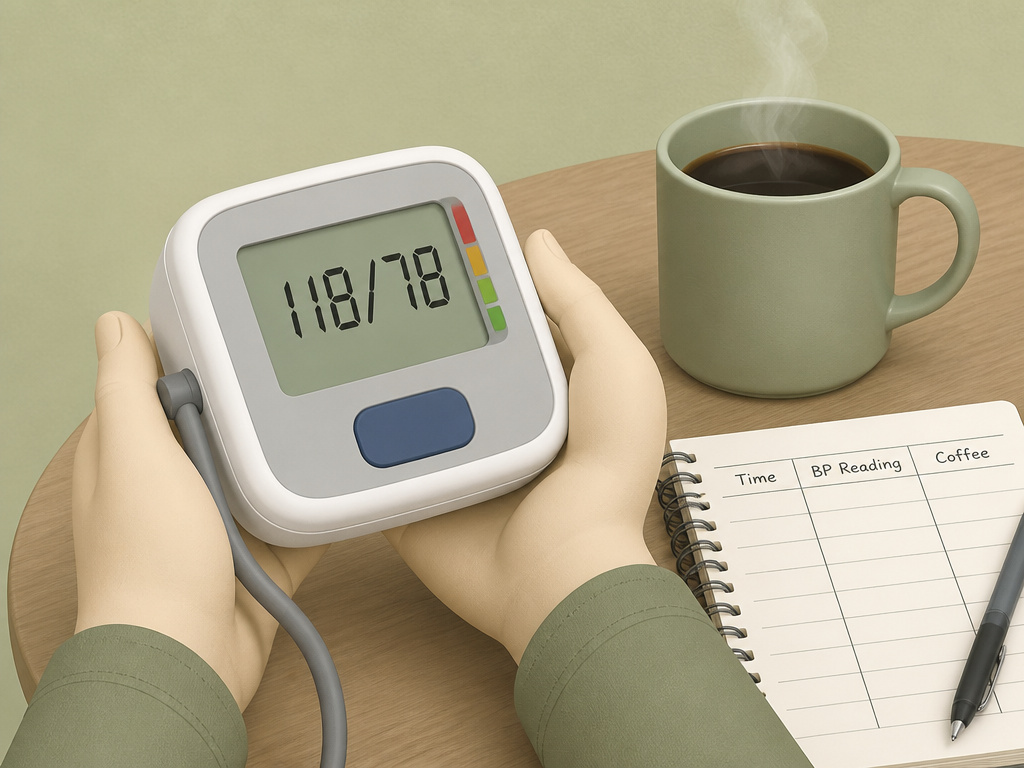
Guessing based on how you feel is unreliable. You need data. This simple, three-phase self-assessment cuts through the noise.
- Establish Your True Baseline. For three mornings, take your blood pressure before you consume anything, no coffee, no tea, no food. Use a validated monitor, sit quietly for five minutes first, and take two readings a minute apart. Average them. This is your real resting pressure, free of caffeine’s influence.
- Map the Acute Spike. On a morning when you have time, take your baseline reading. Drink your standard cup of coffee. Take your pressure again at 30 and 60 minutes post-consumption. Record the peak change. This shows you the size of your personal caffeine jolt.
- Track for Habitual Tolerance. Over the next two weeks of your normal coffee routine, take your pre-coffee morning reading every other day. Is it creeping up? Staying stable? This shows if habitual use is affecting your resting baseline.
This log turns abstract health advice into a personal report card. It’s the single best way to answer the question for your own body. It also provides concrete evidence to discuss with your doctor, moving the conversation from “coffee is probably fine” to “here’s exactly what it does to me.”
Navigating Alternatives and Comparisons
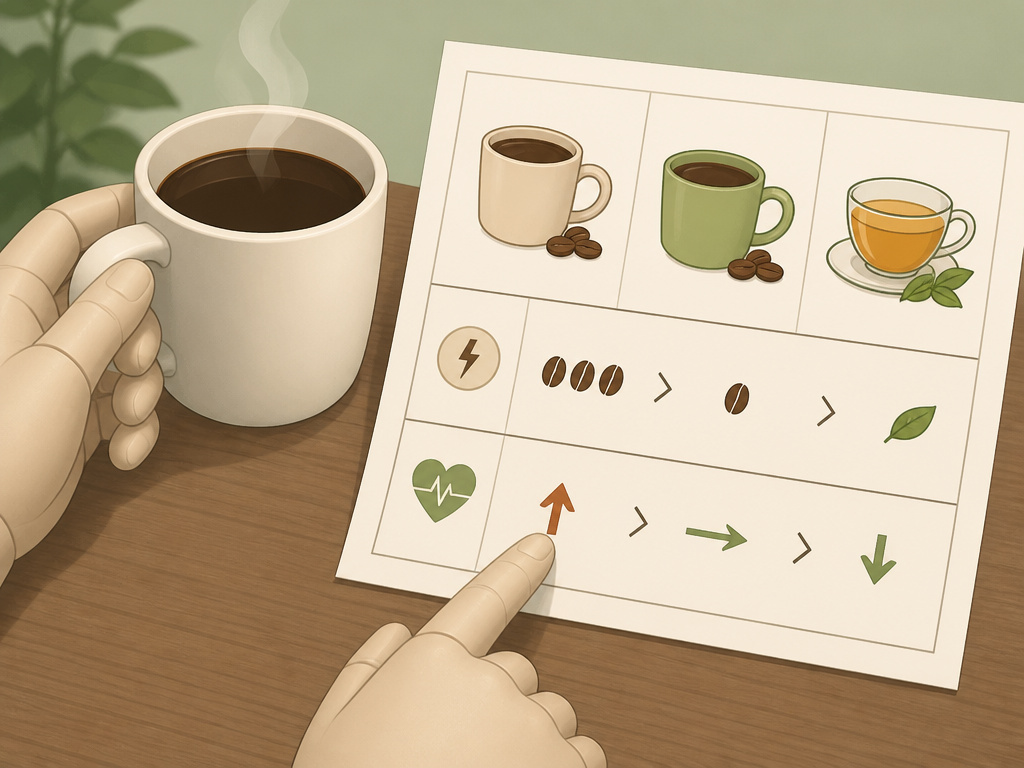
What if the data suggests you should cut back? You don’t have to abandon ritual or flavor. The world of brewed beverages is vast.
Decaffeinated coffee is the most straightforward swap. Modern Swiss Water Process decaf removes caffeine without harsh chemicals, preserving much of the original bean’s flavor profile. You keep the ritual and the antioxidants linked to other health benefits of coffee, but lose the pressor agent.
Tea presents another avenue. It contains caffeine, but generally less per cup, and its effects are modulated by L-theanine, an amino acid that promotes calm alertness. The caffeine release rates are slower due to tea’s other compounds, leading to a gentler, longer ramp-up without a sharp peak. For a detailed breakdown, our green tea vs coffee guide explores the antioxidant profiles, while the black tea and black coffee comparison looks at flavor and preparation.
Be wary of seemingly simple substitutes like energy drinks. While some are sugar-free energy drinks, they often pack a concentrated, rapid-hit of caffeine alongside other stimulants, which can be harsher on your system than a slowly sipped coffee. The caffeine per serving in a can can dwarf a standard cup.
| Beverage | Typical Caffeine | Key Blood Pressure Consideration | Best For |
|---|---|---|---|
| Brewed Coffee | 95 mg per 8 oz | Acute 4.90 mmHg SBP spike; tolerance develops. | Habitual drinkers with controlled BP. |
| Decaf Coffee | 2-5 mg per 8 oz | No significant pressor effect. | Those sensitive to caffeine or with severe hypertension. |
| Black Tea | 47 mg per 8 oz | Slower caffeine release; L-theanine modulation. | Seeking a gentler, sustained lift. |
| Green Tea | 28 mg per 8 oz | Very gentle lift; high in antioxidants like EGCG. | Minimal stimulation focus. |
| Energy Drink | 80-300 mg per can | Rapid, concentrated spike; added stimulants. | Not recommended for BP management. |
Frequently Asked Questions
Should I stop drinking coffee if I have high blood pressure?
Not necessarily, but you must manage it strategically. If your hypertension is well-controlled with medication, moderate coffee (1-2 cups) is likely fine for most. Monitor your response. If your hypertension is severe (≥160/100 mmHg), switch to decaf. Always discuss this with your doctor, using your personal monitoring data.
How long does coffee raise your blood pressure?
The peak increase occurs within 30 to 60 minutes after drinking. For fast metabolizers, levels often return to baseline within 2-3 hours. For slow metabolizers (CYP1A2 *1F variant), the elevated pressure can persist for 4-6 hours or more.
Is decaf coffee better for blood pressure?
Yes, from a pure blood pressure perspective. Research, including a 2021 meta-analysis in the Journal of Hypertension, confirms decaffeinated coffee has no significant effect on systolic or diastolic pressure. It removes the primary pressor agent (caffeine) while retaining beneficial antioxidants.
Can drinking coffee regularly prevent high blood pressure?
The research doesn’t show a preventive effect, but it does show a neutral one. Large-scale, long-term studies like the UCL systematic review PDF find no significant increase in hypertension risk from habitual consumption. It doesn’t lower your risk, but it doesn’t raise it either for most people.
What about other caffeinated drinks like soda or tea?
Tea’s lower caffeine content and the presence of L-theanine generally make it a gentler choice. The caffeine in black tea is about half that of coffee, with a slower release. Sugar-sweetened sodas are a poor choice due to the sugar content, which has its own negative health impacts of energy drinks and metabolic effects. Diet soda with caffeine will have a similar acute pressor effect as coffee.
The Bottom Line
Coffee is not a blood pressure medication. It’s a mild stimulant with a predictable acute effect, a 4.90 mmHg systolic spike that fades as tolerance builds. The long-term epidemiological data is clear: drinking 3-5 cups a day doesn’t cause hypertension in the general population.
Your personal equation has two non-negotiable variables. First, your CYP1A2 genetics dictate whether you’re a fast or slow metabolizer, which changes the intensity and duration of every cup. Second, your current blood pressure status is critical. If you’re in the severe, uncontrolled range, the evidence says to choose decaf.
Don’t guess. Use a monitor for a week. See the numbers for yourself. That personal dataset is more valuable than any generic article, including this one. It tells you exactly what your morning ritual is doing, so you can keep enjoying it, or adjust it, with your eyes wide open. For a trusted, patient-facing summary, the Harvard Health blood pressure guide is an excellent resource to share with your doctor.
