
Find Your Ideal Cold Brew Water to Coffee Ratio & Recipe
The cold brew water to coffee ratio is a weight-based measurement that determines your final brew’s strength, typically ranging from 1:4 for a strong concentrate to 1:12 for a ready-to-drink brew. A 1:5 ratio (one part coffee to five parts water) is the most reliable starting point for a versatile concentrate.
Most people get this wrong by using volume instead of weight or by blindly following a generic recipe without adjusting for their specific coffee. A tablespoon of dark roast weighs less than a tablespoon of light roast, and a fine grind extracts faster than a coarse one. Using the wrong metric throws the entire ratio off.
This guide breaks down the science behind the numbers, shows you the exact ratios recommended by major cold brew system manufacturers, and explains how to adjust for your beans and taste.
Key Takeaways
- Always measure your coffee and water by weight, not volume, for consistency. A kitchen scale is non-negotiable.
- The standard starting ratio for a versatile cold brew concentrate is 1:5 (coffee to water). Steep for 16 hours at room temperature.
- Your grind size directly changes the effective ratio. A finer grind at a 1:5 ratio will over-extract and taste bitter.
- Dark roasts often need more water (a higher ratio like 1:8) to avoid ashy, bitter notes, while light roasts can handle stronger ratios (1:4) to pull out nuanced flavors.
- Ready-to-drink cold brew is not a steep ratio; it’s a concentrate diluted after brewing. Aim for a final dilution between 1:1 and 1:2 (concentrate to water/milk).
The 1:5 Starting Ratio and Why It Works
A 1:5 coffee-to-water ratio by weight is the community and expert sweet spot for a reason. It produces a concentrate strong enough to hold its character when diluted, but not so intense that it tastes like coffee syrup. At this strength, a 2020 study in the journal Foods noted that higher coffee-to-water ratios like 1:5 yield higher total dissolved solids and caffeine content compared to milder ratios.
A 1:5 coffee-to-water ratio by weight, steeped for 16 hours with a coarse grind, produces a balanced cold brew concentrate with a total dissolved solids (TDS) percentage ideal for post-brew dilution. This ratio is the benchmark used in sensory analysis for its reliable extraction yield.
You need a scale. “One cup” of whole beans can vary by over 20 grams depending on the bean density and roast. That variance alone can turn your intended 1:5 ratio into a weak 1:7 or a sludge-like 1:3. Weigh 100 grams of coffee. Add 500 grams of cold, filtered water. That’s your foundation.
The 16-hour steep time is part of the equation. Shorter steeps at this ratio leave flavors under-extracted and sour. Longer steeps, especially with a fine grind, pull out bitter, woody compounds. Set a timer.
TL;DR: Start with 100g coffee to 500g water (1:5). Steep 16 hours. This makes a concentrate you can dilute later.
How Grind Size and Roast Level Change the Rules
The printed ratio on a box is a suggestion, not a law. Two variables force you to adjust: how fine you grind and how dark you roast.
If you grind finer than the recommended coarse texture, say, a medium grind for drip coffee, you dramatically increase the surface area of the coffee exposed to water. A PMC study on grinding and extraction confirms that finer grinds achieve higher extraction yields much faster. Using a 1:5 ratio with a medium grind will over-extract the coffee, making it harsh and bitter, often within 12 hours. The fix is to either grind coarser or use more water. For a medium grind, a 1:7 or 1:8 ratio often works better.
Roast level is the other lever. Dark roasts are more soluble. Their cell structures are fractured during longer roasting, so they release flavors, and bitterness, more easily. Pushing a dark roast with a 1:4 ratio frequently results in a cup that tastes ashy and burnt.
| Roast Level | Recommended Ratio Range | Why It Works |
|---|---|---|
| Light Roast | 1:4 to 1:5 | Needs a stronger ratio to fully extract complex, delicate fruity and floral notes. |
| Medium Roast | 1:5 to 1:6 | The sweet spot. Balanced solubility works with the standard 1:5 starting point. |
| Dark Roast | 1:7 to 1:8 | Higher solubility means it needs more water to avoid over-extracting bitter compounds. |
Common mistake: Using the same ratio for a dark French roast as for a light Ethiopian, the dark roast will taste charred and astringent, overpowering any potential sweetness.
Your first batch with a new bean is a test. Write down the ratio, grind, and time. The flavor tells you what to change next.
Concentrate vs. Ready-to-Drink: The Dilution Math
This is where confusion costs people money and flavor. “Ready-to-drink” cold brew is not a steep ratio; it’s a serving instruction.
When you see a bottle of cold brew at the store that’s ready to pour over ice, it was almost certainly brewed as a concentrate and then diluted with water before bottling. The Toddy Cold Brew System (Model T2N) official manual recommends a 1:4.67 ratio to make a concentrate. The OXO Brew Compact (Model 8710300) suggests a 1:3 ratio. These are not meant to be drunk straight.
| Brewing Goal | Steep Ratio (Coffee:Water) | Final Serving Preparation |
|---|---|---|
| Strong Concentrate | 1:3 to 1:5 | Dilute 1:1 or 1:2 with water or milk. |
| Ready-to-Drink | 1:12 to 1:16 | No dilution needed; brewed at drinking strength from the start. |
Brewing at a ready-to-drink ratio like 1:16 from the start uses less coffee, but it also produces a less stable, more delicate flavor that stales faster. Concentrate is efficient. You brew a potent, small volume that you dilute cup by cup, ensuring every serving is fresh. It also takes up less fridge space.
The math is simple. If you brew 500ml of liquid at a 1:5 ratio, you have a concentrate. To get a standard strength similar to drip coffee, you’d mix that concentrate with an equal amount of water. Your final yield is 1000ml of ready-to-drink cold brew from your original 500ml concentrate. This is why understanding caffeine concentration matters, your diluted cup will have a different stimulant profile than a straight concentrate.
Manufacturer Ratios and When to Ignore Them
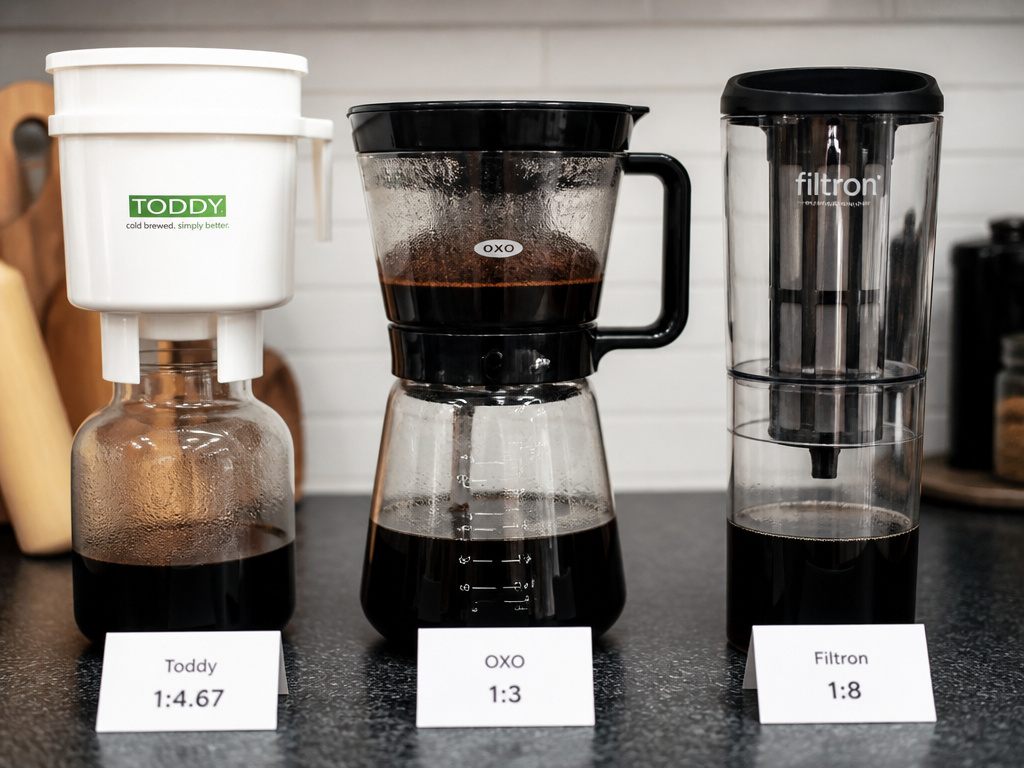
Your cold brew maker’s manual has a number. It’s a safe starting point for that specific device, but it’s not sacred. Here are the specs from three major brands, directly from their official guides.
- Toddy T2N: 12 oz coffee to 56 fl oz water (~1:4.67 by weight).
- OXO Brew Compact 8710300: 8 oz coffee to 24 fl oz water (1:3 by weight).
- Filtron 1000: 1 lb coffee to 1 gallon water (1:8 by weight).
Notice the wild variation? The OXO ratio makes a thick, syrupy concentrate. The Filtron ratio is much milder, closer to a ready-to-drink strength. The Toddy sits in the middle. This proves there’s no single “correct” ratio. Each manufacturer designs their filter and flow rate around a specific brew strength.
I used the OXO ratio for a month with a medium-dark roast. The resulting concentrate was so potent that diluting it 1:1 still tasted aggressively bitter. I had to dilute it 1:3 with water to make it palatable, which defeated the purpose of a concentrate. I switched to a 1:5 ratio in the same device, and the concentrate became versatile and balanced.
The manual gives you a baseline. Your taste buds and your specific coffee give you the final answer. This principle of adjusting manufacturer advice applies to many brewed coffee methods, where water temperature and contact time are also flexible variables.
Common Mistakes and Their Sour or Bitter Consequences
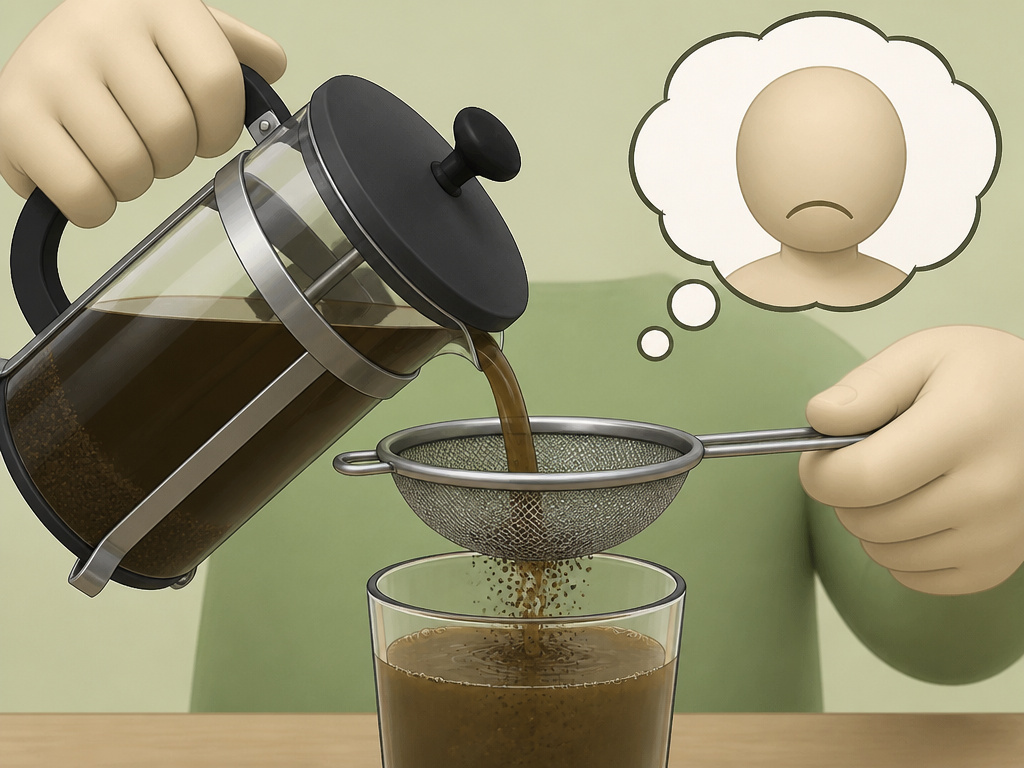
You can follow the 1:5 ratio perfectly and still ruin a batch. These are the execution errors that change the outcome.
- Using hot water to start the brew. Some guides suggest a “bloom” with hot water. This immediately begins extracting acids and oils that cold water wouldn’t touch, defeating the purpose of a smooth, low-acid cold brew. Your final cup will have a sharp, sour tang.
- Straining through a too-coarse filter. A metal mesh sieve lets fines through. Those suspended particles continue to extract in your fridge, turning your clear concentrate cloudy and bitter within two days. Use a paper filter or a super-fine mesh.
- Guessing the dilution. Pouring concentrate into a glass and topping it with milk “until it looks right” creates inconsistent strength day to day. Use a measuring spoon or small pitcher. A consistent 1:1 dilution means every cup tastes the same.
- Ignoring water quality. Tap water with chlorine or high mineral content will impart those flavors to your brew over the long steep. The PMC study on cold brew optimization uses controlled water for a reason. Filtered water is the cheapest ingredient that improves quality the most.
Common mistake: Storing the concentrate with the grounds still in it after the steep time is up, extraction continues, and after 24 hours total, even a coarse grind will start contributing bitter, woody notes that overwhelm the chocolate or nutty base flavors.
Each mistake has a taste signature. Sour means under-extraction or tainted water. Bitter means over-extraction or too fine a grind. Cloudy and harsh means poor filtration. Diagnose from there.
The Science of Extraction: Why Cold Brew Is Different
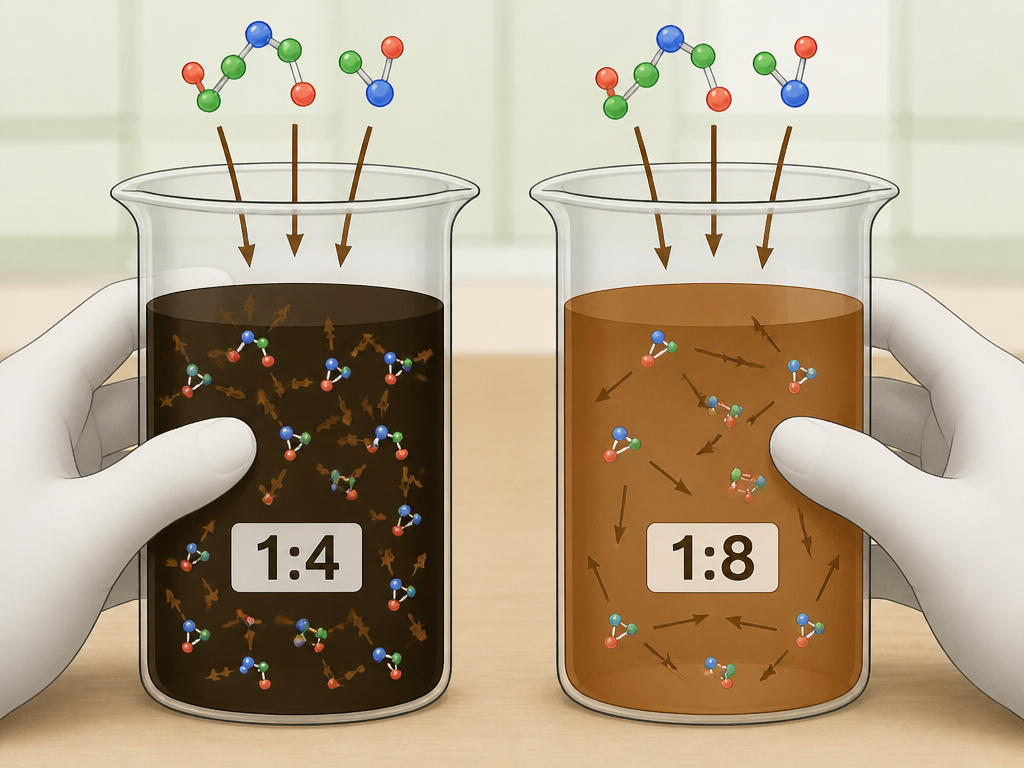
Cold water is lazy. It doesn’t have the thermal energy of hot water to aggressively pull compounds out of the coffee cell. This lethargy is cold brew’s superpower and its limitation.
According to the academic review “The Chemistry of Cold Brew Coffee” by Fuller (2018), cold water preferentially extracts certain soluble compounds while leaving others behind. It’s good at pulling out caffeine, sugars, and some acidic compounds, but it’s inefficient at extracting the oils and acidic compounds that create brightness and complexity. This is why cold brew is naturally sweeter, less acidic, and has a heavier body than its hot-brewed counterpart. It also explains why the caffeine release rates between different beverages vary so much.
The ratio acts as a concentration lever within this constrained extraction environment. A 1:4 ratio means there’s less water to hold the extracted compounds, so the solution saturates faster with the easiest-to-extract materials (sugars, caffeine). A 1:8 ratio gives the water more “room,” allowing it to continue pulling a wider array of compounds over the long steep, potentially leading to a more balanced but milder cup.
This scientific grounding helps you troubleshoot. If your cold brew tastes flat or hollow, it’s not extracting enough. Try a slightly finer grind or a longer steep before changing the ratio. If it’s bitter and harsh, it’s over-extracting. Try a coarser grind or a shorter steep. The ratio is the primary control, but grind size and time are the fine-tuning knobs. This interplay is a key brewing factor for caffeine and flavor in all steeping methods.
Frequently Asked Questions
Can I use pre-ground coffee for cold brew?
You can, but you must find coffee ground specifically for cold brew or French press, which is very coarse. Standard supermarket pre-ground coffee is ground for drip machines and is too fine. Using it will almost guarantee an over-extracted, bitter batch.
How long does cold brew concentrate last in the refrigerator?
Properly strained and stored in a sealed container, cold brew concentrate maintains good flavor for about 10-14 days. After that, it begins to oxidize and taste stale. Ready-to-drink diluted cold brew lasts only 3-5 days.
Does cold brew have more caffeine than hot coffee?
It can, but it’s a function of concentration, not the method itself. A 1:5 cold brew concentrate, when diluted 1:1, will have a similar caffeine per volume to a strong cup of hot coffee. If you drink the concentrate straight, the caffeine content will be significantly higher. For comparison, understand the caffeine content in iced tea is typically much lower.
What’s the best coffee bean for cold brew?
There is no single “best” bean. Dark roasts yield classic chocolate and nutty notes. Light roasts can produce surprising fruity and floral cold brews, though they are subtler. The best bean is a fresh, high-quality bean you enjoy as hot coffee, ground coarse.
Why is my cold brew cloudy?
Cloudiness is caused by fine coffee particles suspended in the liquid. You did not filter it finely enough. Strain it again through a paper coffee filter or a finer mesh. Cloudy cold brew will become bitter faster as those fines continue to dissolve.
The Bottom Line
Forget the range of 1:4 to 1:8. Start with a precise 1:5 coffee-to-water ratio by weight. Use a scale, grind coarse, and steep for 16 hours. That batch will be your control. Taste it diluted. If it’s too strong or bitter, adjust your grind coarser or move to a 1:6 ratio next time. If it’s weak or sour, check your grind size or try a 1:4 ratio.
The numbers from Toddy, OXO, and Filtron are guides for their hardware. Your taste is the final judge. Write down what you do each time. The perfect ratio is the one that makes you want to finish the entire pitcher before it has a chance to stale.
