
Coffee Mix with Tea: Hong Kong’s Yuenyeung Drink Recipe & Guide
To mix coffee with tea, you combine brewed black tea and black coffee, typically in a 7:3 ratio, sweetened with condensed or evaporated milk. This traditional Hong Kong drink, called Yuenyeung, delivers a combined caffeine dose of roughly 120-140 mg per 240 mL serving and a unique flavor profile that balances earthy coffee notes with malty, astringent tea.
Most people approach a coffee-tea mix as a novelty, throwing together leftover brews. They end up with a lukewarm, bitter cup that highlights the worst qualities of both. The real method is a deliberate, centuries-old practice with specific rules for strength, texture, and balance.
This guide walks through the traditional Yuenyeung recipe, explains the caffeine and health implications from published research, and shows you how to adapt the concept for your own kitchen without the common pitfalls.
Key Takeaways
- The authentic Yuenyeung mix uses a 7:3 ratio of strong Hong Kong-style milk tea to black coffee, creating a balanced, non-bitter drink.
- Combining the beverages roughly doubles the caffeine versus tea alone, with a typical 240 mL serving containing between 120-140 mg of caffeine.
- The traditional “pulling” technique, pouring tea between pitchers four times, aerates the brew and creates a smoother, silkier mouthfeel that stands up to the coffee.
- Sweetened condensed milk or evaporated milk is non-negotiable for authenticity; it counters the astringency and integrates the two flavors.
- Randomly mixing light tea with weak coffee produces a muddy, acidic drink. You must over-brew both components separately for the blend to work.
The Classic Hong Kong Yuenyeung Recipe
Forget improvisation. The Yuenyeung served in Hong Kong cha chaan tengs since the 1950s follows a strict formula. The goal is a harmonious, silky drink, not a caffeine shock.
You start with Hong Kong-style milk tea. This isn’t your average cup. It uses a robust black tea blend, often labeled “Salon tea” or “pantyhose tea” for the fine strainer used. You need double the usual leaf amount. Simmer the leaves in actively boiling water for two full minutes, then let them steep off the heat for another eight. The result is a punishingly strong, dark liquor.
Technical Snippet: Hong Kong-style milk tea is brewed with a high proportion of coarse-leaf black tea (often a Ceylon-based blend) at near-boiling temperature for an extended 8-10 minute steep. This extracts ample tannins and body, which is then mitigated by the “pulling” aeration process and the addition of evaporated or condensed milk.
The next step is what defines the texture. You strain the tea into one pitcher. Then you pour it back and forth into a second pitcher four times from a height of about a foot. This “pulling” cools the tea slightly, introduces tiny air bubbles, and oxidizes the tannins just enough to round off the sharpest edges. The tea becomes noticeably smoother and develops a slight creaminess even before milk is added.
Now you sweeten. Authentic Yuenyeung uses sweetened condensed milk, evaporated milk, or a combination. The condensed milk’s thick sweetness and cooked-milk flavor are integral. Stir until it’s fully dissolved into the pulled tea. This is your base.
Finally, you add the coffee. A strong black coffee works, but a single or double shot of espresso is better for intensity. The standard ratio is about 30% coffee to 70% of your prepared tea mixture. Pour the coffee gently over the back of a spoon into the cup to layer it, or stir it in thoroughly.
TL;DR: Brew extra-strong black tea, “pull” it four times between pitchers, sweeten with condensed milk, then combine with strong coffee in a 7:3 ratio.
Caffeine Math: What You’re Really Drinking
Combining two stimulant beverages isn’t trivial. You need to know the dose. A 2020 meta-analysis in the Journal of Food Science gives us hard numbers. The average 240 mL (8 oz) cup of brewed coffee contains about 95 mg of caffeine. The same volume of brewed black tea averages 47 mg.
| Beverage (240 mL / 8 oz) | Average Caffeine (mg) | Typical Range (mg) |
|---|---|---|
| Brewed Coffee | 95 | 60 – 180 |
| Brewed Black Tea | 47 | 20 – 90 |
| Yuenyeung Mix (70/30) | ~120 | 80 – 190 |
If you mix a 70% tea and 30% coffee Yuenyeung, you’re looking at a combined average of roughly 120 mg per cup. That’s stronger than a typical black tea but within the range of a single cup of coffee. The key variable is your brew strength. Using a double espresso shot (around 120-150 mg alone) in the mix can push the total near 190 mg.
This has practical consequences. If you’re sensitive to caffeine, a Yuenyeung is essentially a strong coffee. The timing of the caffeine release might feel different, however. Tea contains L-theanine, an amino acid that can promote a state of relaxed alertness. Some people report the “buzz” from a coffee-tea mix feels less jittery than from coffee alone, though the total stimulant load is significant.
Common mistake: Assuming a half-coffee, half-tea mix halves the caffeine, it actually creates a drink that’s 25% more stimulating than black tea and sits in the lower range of coffee strength. Don’t drink it in the afternoon if you’re caffeine-sensitive.
Why-Layer: The Science of the Mix
Why does this specific combination work when just dumping coffee into tea fails? The answer is in the chemistry and preparation.
The astringency in tea comes from tannins, which bind to proteins. The proteins and fats in evaporated or condensed milk bind to those tannins first, softening the tea’s bite and creating a rounder base. This pre-mitigated tea can then handle the introduction of coffee’s chlorogenic acids and bitterness without the flavors clashing into a muddy, sour mess. If you skip the dairy or use regular milk, the two astringent profiles compete and the cup turns harsh.
The “pulling” technique isn’t theater. Pouring the hot tea through the air increases surface area, accelerating evaporation of some volatile bitter compounds and allowing slight oxidation. This mimics the effect of “swirling” wine in a glass. It smooths the tea’s profile so it acts as a complementary backdrop, not a rival, to the coffee.
Your choice of coffee matters for mechanical reasons. A light roast, single-origin coffee often has brighter, fruity acids. These can clash violently with the malty, tannic tea. A medium to dark roast coffee with more bitter, roasty notes actually complements the tea better, the bitter compounds align rather than fight. This is why the traditional recipe uses a robust, simple black coffee.
TL;DR: Dairy proteins soften tea’s tannins, creating a stable base. The “pulling” aerates and smoothes the tea. A darker roast coffee aligns its bitterness with the tea’s profile for harmony.
Modern Variations and What to Avoid
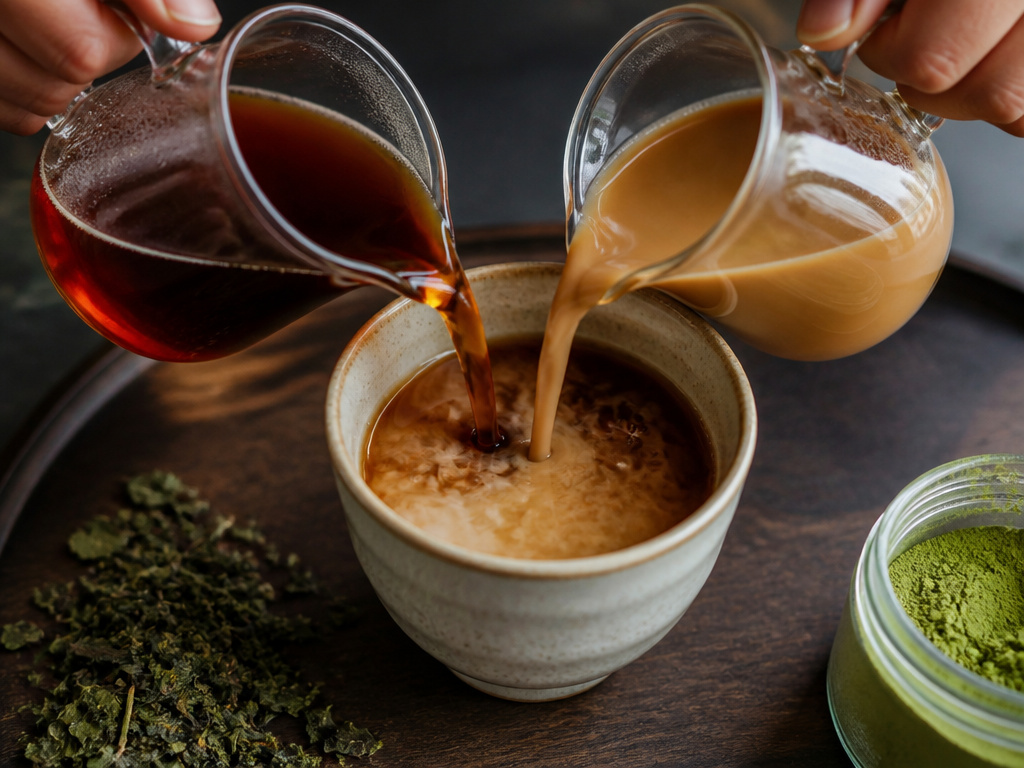
The Yuenyeung template is versatile, but certain swaps break the drink. Here’s what works and what guarantees a bad cup.
First, the tea. You can use Assam, Ceylon, or a strong English Breakfast blend. Do not use green tea, white tea, or herbal tea. Green tea’s delicate, vegetal notes are obliterated by coffee, and its lower tannin content means the milk won’t have enough to bind to, resulting in a thin, washed-out mix. The structure relies on a stout black tea.
For the coffee, freshly brewed strong filter coffee or moka pot coffee is fine. Espresso is ideal for its concentration. Instant coffee will work in a pinch but adds a distinct, often undesirable, processed flavor. Cold brew coffee can be used for an iced version, but note its lower acidity changes the balance, you may need slightly less sweetener.
The dairy is your main lever for customization. Full-fat evaporated milk gives a rich, clean dairy note. Sweetened condensed milk adds body and sweetness in one step. Using both is common. If you need a dairy-free version, opt for a creamy, neutral alternative like oat milk or soy milk. Avoid almond milk or coconut milk here, their distinct flavors add a third competing note that rarely works.
Common mistake: Substituting green tea for black tea to “make it healthier.” The result is a murky, grassy, and weak drink because the structural elements (tannins, body) are missing. The health benefits of green tea, like its EGCG antioxidants, are also easily overshadowed by the stronger flavors and chemistry of the mix.
The Green Tea Mistake
I tried a “healthier” version with matcha and cold brew. It was a total failure. The vibrant green matcha turned a swampy brown upon mixing, and its nuanced umami was completely buried by the coffee’s roast notes. The drink tasted like bitter, grainy water. It wasted good matcha.
Stick to the robust, malty foundation of black tea. It’s designed to hold its own.
Health Context: What the Research Says

Mixing coffee and tea combines the health profiles of both beverages. It’s not a magic elixir, but it consolidates benefits documented in large studies.
A 2021 meta-analysis in the European Journal of Preventive Cardiology analyzed 37 prospective cohort studies. It found that moderate consumption of 3-5 cups of coffee per day was linked to a 15% lower risk of cardiovascular disease compared to non-drinkers. For tea, drinking 3 or more cups per day was associated with a 21% lower risk. The study examined them separately, but consuming a mixed beverage would contribute to your total intake of both.
The mechanisms are different, which is potentially complementary. Coffee is rich in chlorogenic acids and other antioxidants. Tea provides catechins (like EGCG in green tea) and theanine. You’re getting a broader spectrum of bioactive compounds in one cup. However, the dairy and sugar in a traditional Yuenyeung add calories, fat, and sugar, which can offset some benefits if consumed in excess.
For a deeper look at the individual components, our article on the health benefits of tea and coffee breaks down the specific antioxidants and long-term study findings.
If acidity is a concern, note that the acidity of tea and coffee differs. Coffee is generally more acidic (lower pH), while black tea is milder. The mix will land somewhere in the middle, but the added dairy can help neutralize some of the acid.
TL;DR: A Yuenyeung contributes the combined polyphenol antioxidants from both coffee and tea, based on separate large studies. The added dairy and sugar are the main nutritional trade-offs.
Frequently Asked Questions
Does mixing coffee and tea cancel out caffeine?
No, the caffeine is additive. A typical Yuenyeung mix contains roughly 120 mg of caffeine per 240 mL cup, which is more than black tea alone and within the range of a standard coffee. For a detailed breakdown, see our guide to caffeine content in tea.
What’s the best tea to use for a coffee mix?
Use a strong, malty black tea. Ceylon, Assam, or a proprietary “Hong Kong-style” or “Salon” tea blend are ideal. Avoid green, white, or herbal teas. The robust profile of a good black tea vs black coffee is what makes the blend work.
Can I make a coffee and tea mix with green tea?
You can, but you shouldn’t. Green tea’s delicate flavors are overpowered by coffee, and its lower tannin content fails to provide the necessary body and structure. The drink often turns out murky and unbalanced. If you want green tea’s benefits, drink it separately.
Is Yuenyeung served hot or cold?
Traditionally, it’s served hot. However, a chilled version over ice is incredibly popular, especially in Southeast Asia. For an iced version, consider the different caffeine release rates when brewing the components cold.
What’s a good dairy alternative for Yuenyeung?
For a non-dairy version, opt for a creamy, neutral-tasting milk like oat milk or soy milk. These can mimic the body of evaporated milk. Avoid strongly flavored alternatives like almond or coconut milk. For more on this, read our tips for using almond milk in coffee.
How do I sweeten it without condensed milk?
If you avoid condensed milk, you can use evaporated milk with a separate sweetener. Brown sugar sweetener works well, as its molasses notes complement the roast flavors. Simple syrup is another option, but it lacks the cooked-milk flavor that defines the drink.
Before You Go
Mixing coffee with tea is a legitimate craft, not a gimmick. The Hong Kong Yuenyeung proves that with its strict ratios, specialized “pulling” technique, and specific dairy components. It delivers a unique, potent drink that’s more than the sum of its parts.
Remember the core formula: very strong black tea, pulled and sweetened with condensed milk, then combined with strong coffee in a 7:3 ratio. This balances flavors and caffeine. Deviate with caution, especially with tea selection and dairy choices.
Experiment with your coffee origin and roast level once you’ve mastered the base recipe. And be mindful of the total caffeine, especially if you’re using espresso. This is a drink designed for deliberate enjoyment, not absent-minded sipping.
