
Why Do People Add Butter to Coffee? Benefits & Recipe Tips
People put butter in their coffee to replace breakfast, sustain energy without a crash, and support a ketogenic fat-burning state. The standard recipe blends 8-12 ounces of black coffee with 1-2 tablespoons of unsalted grass-fed butter or ghee and 1-2 tablespoons of MCT oil, creating a 400-500 calorie drink that delays caffeine absorption and promotes ketone production.
Most people get it wrong by focusing on the butter. The butter is just a carrier. The real engine is the MCT oil, and its job is to make the caffeine hit last hours instead of minutes. Skipping the blending step leaves oily droplets that taste terrible and don’t emulsify into your system.
This guide walks through the science behind the fat oxidation spike, the exact recipe that works, and the specific health markers that tell you whether this drink is a safe addition to your morning or a risk you should skip.
Key Takeaways
- Butter coffee’s primary benefit is sustained energy from delayed caffeine absorption and increased fat oxidation, not mental clarity magic.
- The standard Bulletproof recipe delivers roughly 445-500 calories and 50 grams of fat per serving, it’s a meal replacement, not a supplement.
- Independent research shows butter raises atherogenic APO B particles more than cream due to the lost milk fat globule membrane.
- Starting with a full dose of MCT oil (15-20g) causes diarrhea or bloating within hours for most beginners; start with 1 teaspoon.
- If your fasting goal is autophagy or cellular repair, butter coffee’s calories break the fast and negate those benefits.
The Bulletproof Recipe (and Why It Works)
Head design changes the entire process. The butter isn’t the star.
Dave Asprey’s Bulletproof Coffee recipe calls for 1-2 tablespoons of unsalted grass-fed butter or ghee and 1-2 tablespoons of MCT oil or coconut oil blended into black coffee. That combination hits about 445-500 calories. It’s a meal.
The primary function of butter in Bulletproof Coffee is to make MCT oil digestible, as MCT oil alone can cause severe digestive distress.
The butter carries the MCT oil. MCT oil is a concentrated fat that converts directly into ketones in the liver, bypassing normal digestion. Without a buffer like butter, it hits your gut raw. People who jump straight to 20 grams of MCT oil report cramping and diarrhea within two hours. The butter slows that entry.
Blending is mandatory. A spoon stir will leave fat globules floating on top. Those globules taste greasy and won’t emulsify in your stomach. You need a blender or immersion blender running for 20-30 seconds to create a stable emulsion. The frothy texture isn’t just for looks, it signals the fats are dispersed enough to absorb evenly.
TL;DR: Blend 1-2 tbsp grass-fed butter and 1-2 tbsp MCT oil into hot coffee. The butter buffers the MCT oil, and blending creates the emulsion needed for steady absorption.
The Energy Mechanism: Caffeine + Fat
Butter coffee doesn’t just “make you alert.” It changes how caffeine is absorbed.
Fat slows everything down. When you ingest caffeine with a high-fat emulsion, the caffeine molecules bind to the fat droplets. Your digestive system has to break that emulsion down before the caffeine is released. That process stretches the caffeine release over 3-4 hours instead of the usual 45-minute spike.
A 2024 randomized controlled trial noted butter coffee “may be safe” based on 12-week data, but flagged the need for longer studies. The short-term energy boost is measurable. The long-term lipid impact is the unanswered question.
One study found Bulletproof coffee increases fat oxidation by 41% during fasted states.
That 41% fat oxidation increase is the real hook for keto dieters. Your body switches from burning glucose to burning the fat you just drank. It’s a forced metabolic shift. If you’re already in ketosis, it amplifies it. If you’re not, it nudges you toward it.
The mental clarity people report is mostly the absence of a crash. You get a steady drip of caffeine instead of a jolt and a slump. It’s a different pharmacokinetic profile, not a new cognitive drug.
Who Should Skip Butter Coffee
This drink has specific contraindications. Ignoring them turns a trendy breakfast into a health problem.
The Cleveland Clinic explicitly states they wouldn’t recommend drinking it every day for people with gastrointestinal problems, diabetes, or a heart condition. That’s not a vague warning, it’s a direct list.
| Condition | Risk with Butter Coffee | Timeline / Effect |
|---|---|---|
| High cholesterol / heart condition | Raises APO B atherogenic particles | Lipid panels show change within 4-6 weeks |
| Diabetes | Adds 400+ calories with zero fiber/protein; disrupts glucose management | Immediate calorie load, potential insulin spike |
| GI sensitivity (IBS, Crohn’s) | MCT oil causes diarrhea; butter can trigger inflammation | Symptoms within 1-2 hours of first dose |
| Intermittent fasting for autophagy | Calories break the fasted state; cellular repair processes halt | Autophagy stops as soon as calories are detected |
Common mistake: Adding any type of sugar to butter coffee, the sugar prompts an insulin response that shuts down ketone production, turning the drink into a high-calorie dessert that negates the fat-burning effect.
If your fasting goal is cellular repair or metabolic rest, butter coffee’s calories break the fast. Autophagy requires a true fasted state. Drinking 500 calories of fat ends that state immediately, regardless of the lack of carbs.
For individuals considered “hyper-responders” to dietary cholesterol, butter coffee may not be advisable. These people see dramatic LDL and APO B rises from saturated fat intake. A lipid test after 4 weeks of daily butter coffee would show the movement.
TL;DR: Skip butter coffee if you have high cholesterol, diabetes, GI issues, or if you’re fasting for autophagy. The calories and fat profile actively work against those conditions.
The Marketing Claims vs. The Research
Dave Asprey’s original pitch included a mycotoxin scare. He claimed regular coffee was laden with mold toxins and his “Bulletproof” beans were tested and clean.
Independent researchers, including Dr. Mark Chern, call that “pure fear-mongering designed to sell branded coffee at premium prices.” Studies have found little evidence that mycotoxins in coffee pose meaningful health risks or that Bulletproof beans are significantly different from quality beans from other sources.
The butter itself has a structural problem compared to cream. Cream retains the milk fat globule membrane, a natural coating that modulates how fat is absorbed. Butter loses that membrane during churning.
Research comparing the effects of cream versus butter on blood lipids found cream had a neutral effect. Butter raised the ratio of APO B to APO A. APO B is the atherogenic particle linked to plaque formation. That’s why some critics say if you want the fat without the lipid risk, use heavy cream instead of butter.
The University of Washington research Asprey funded looked at water structure, not health outcomes. The claim that butter droplets change water structure to match cellular water is a physicochemical observation. It hasn’t been linked to a clinical health benefit in published trials.
The takeaway here is simple. The sustained energy effect is real. The fat oxidation boost is real. The “mold-free” and “brain octane” claims are marketing. Your choice of beans matters for flavor, not for mycotoxin safety.
How to Start (Without Digestive Disaster)
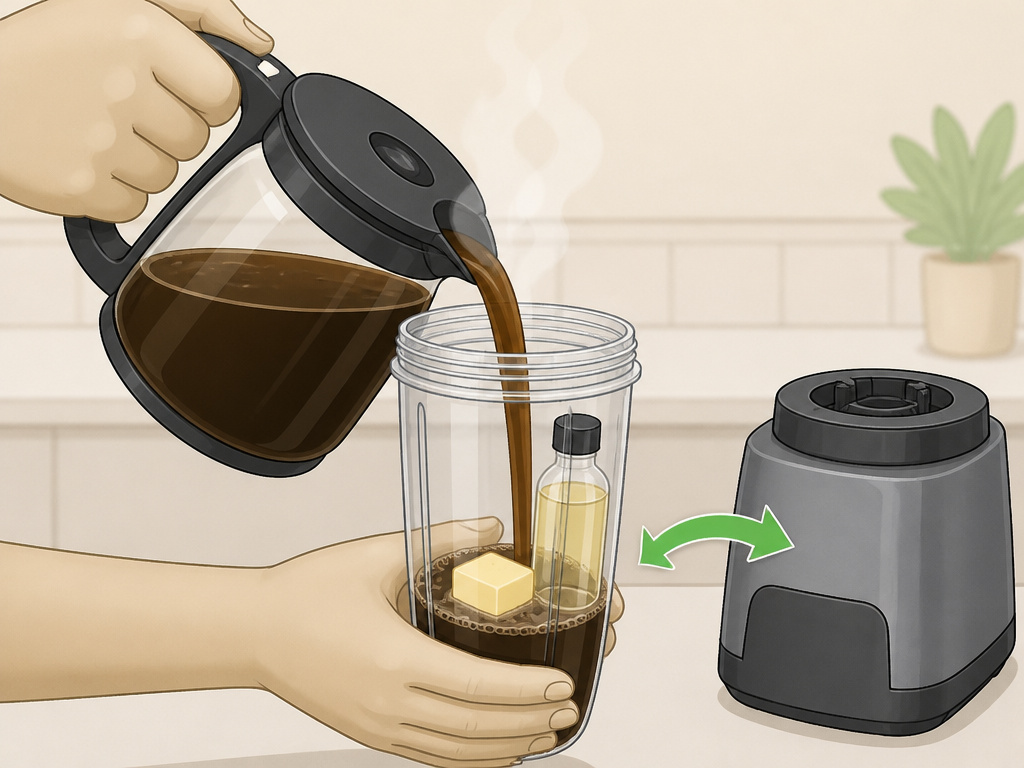
Beginner mistakes here have immediate consequences.
Most guides recommend the full 2-tablespoon dose of MCT oil. That’s about 30 grams. For someone new to MCTs, that dose commonly causes gastrointestinal side effects, bloating, cramping, diarrhea. The timeline is fast. You’ll feel it within two hours.
Start with one teaspoon of MCT oil and one tablespoon of butter. Use that for three days. If your gut feels normal, move to two teaspoons of MCT oil. Build up over two weeks until you reach the full tablespoon dose. This staggered approach avoids the shock that triggers coffee and digestion issues.
Use unsalted butter. Salted butter introduces sodium that can affect hydration and taste. Grass-fed butter is preferred because it has a higher concentration of omega-3s and vitamin K2, but the primary reason is flavor. Grass-fed butter tastes cleaner. Conventional butter can leave a greasy, plastic aftertaste in the blend.
Ghee is a solid option for people with dairy sensitivities. Ghee is clarified butter, meaning the milk solids and water are removed. It’s pure butterfat. It blends just like butter but lacks the lactose and casein that trigger reactions.
Your coffee needs to be hot. Emulsification requires heat. If you use lukewarm or cold coffee, the fats won’t blend properly. You’ll get a layer of oil on top and a weak emulsion that separates in your stomach. Brew your coffee as you normally would, then add the fats immediately.
- Brew 8-12 oz of black coffee.
- Add 1 tbsp unsalted grass-fed butter or ghee.
- Add 1 tsp MCT oil or coconut oil.
- Blend for 20-30 seconds until frothy.
- Drink immediately.
Skip the blending step, and the drink fails. The fats separate, the caffeine release is uneven, and you might as well just eat a spoon of butter.
Butter Coffee vs. Other High-Fat Additives

Not all fats in coffee behave the same.
Heavy cream is the immediate alternative. It contains the milk fat globule membrane, which modulates absorption and appears to have a neutral effect on blood lipids. Cream also adds a touch of protein and lactose, which slightly changes the metabolic response. It won’t promote ketosis as aggressively as pure MCT oil, but it’s safer for lipid profiles.
Coconut oil is often used as a cheaper substitute for MCT oil. Coconut oil contains about 60% MCTs, so it delivers a similar ketogenic boost but less potently. It also brings a distinct coconut flavor that some people dislike in their coffee.
MCT oil is the most potent ketone precursor. It’s derived from coconut or palm oil and refined to concentrate the medium-chain triglycerides. It has no flavor, which makes it versatile, but it’s also the most likely to cause digestive distress if taken too quickly.
The choice depends on your goal. For maximum ketosis, use MCT oil. For general sustained energy without keto, heavy cream works. For a budget option with a flavor twist, use coconut oil. Butter sits in the middle, it’s a carrier for MCT oil, not the primary fat source.
The Calorie Trade-Off and Fasting Conflict
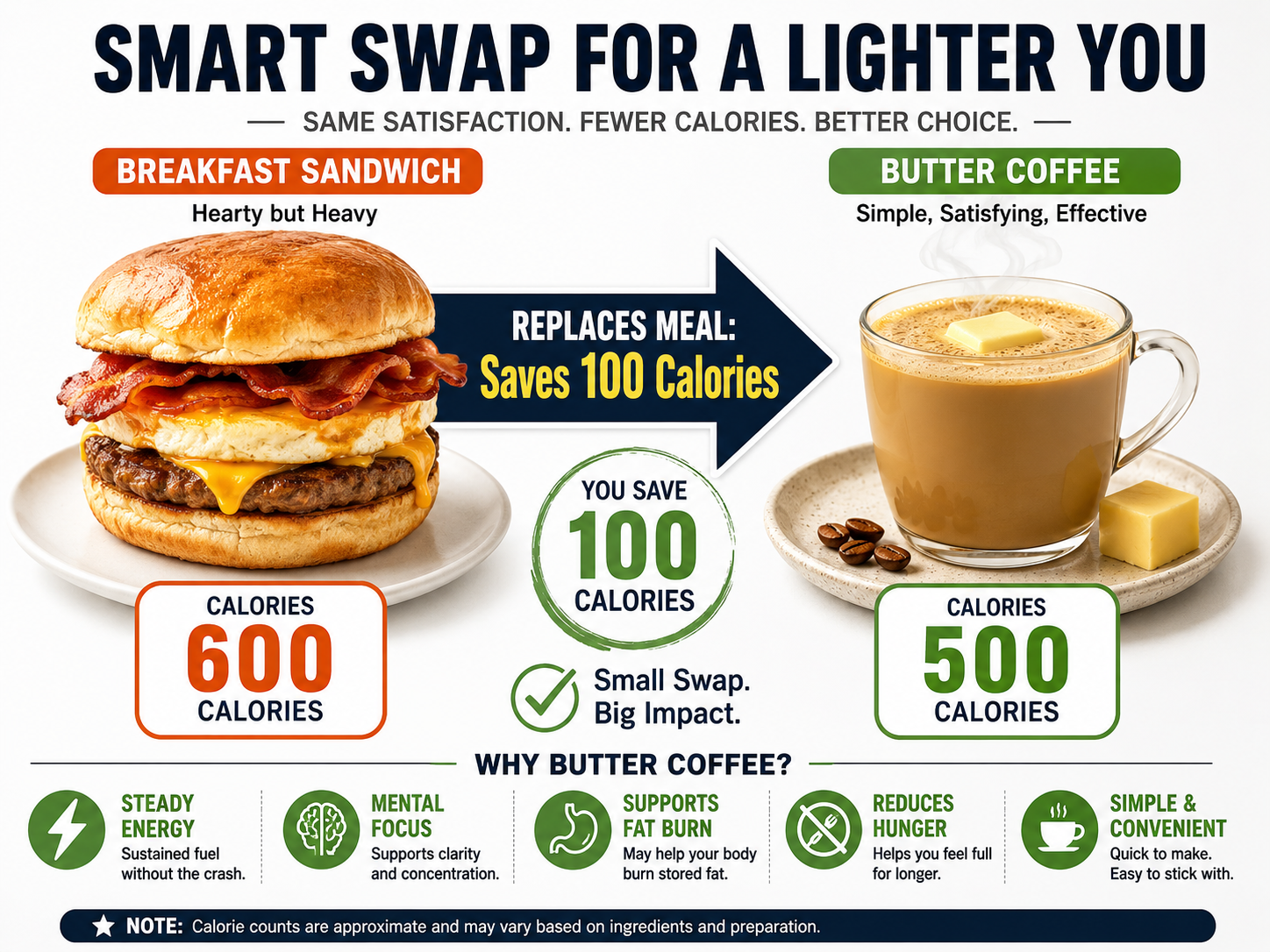
Butter coffee is a meal. It’s not a snack.
The standard recipe delivers roughly 445-500 calories and 50 grams of fat. That’s the energy equivalent of a large breakfast sandwich. If you drink it and then eat a normal breakfast, you’re stacking calories. Most people use it as a breakfast replacement, which is the intended design.
Common mistake: Using butter coffee as a supplement alongside a full breakfast, the calorie overload can lead to weight gain even if you’re in ketosis, because total energy intake still matters.
If you’re practicing intermittent fasting, butter coffee breaks the fast. True fasting means zero calories for a set period. The 500 calories in butter coffee end the fasted state. Your body shifts from fasting metabolism to fed metabolism immediately.
The benefit some fasters claim is “fat fasting”, consuming only fat to stay in ketosis while avoiding carbs. That works for ketosis, but it fails for autophagy. Autophagy, the cellular cleanup process, requires a true fasted state with no caloric intake. Drinking butter coffee stops autophagy.
So the trade-off is clear. If you want ketosis and sustained energy, butter coffee fits. If you want autophagy and cellular repair, it doesn’t. You can’t have both.
For weight loss, the math is simple. Butter coffee replaces a meal. If your normal breakfast is 600 calories, swapping to a 500-calorie butter coffee saves 100 calories. If your normal breakfast is 300 calories, swapping to butter coffee adds 200 calories. You have to count it.
Frequently Asked Questions
Does butter coffee actually help with weight loss?
It can, but only as a meal replacement within a controlled diet. The drink itself doesn’t magically burn fat. The 41% increase in fat oxidation means your body burns the fat in the drink more efficiently, but if you consume excess calories overall, you’ll still gain weight. It’s a tool for keto dieters, not a standalone solution.
Can I use regular butter instead of grass-fed?
You can, but the flavor and nutrient profile change. Grass-fed butter has a higher concentration of omega-3 fatty acids and vitamin K2, and it tastes cleaner. Conventional butter can leave a greasy, processed aftertaste. The functional effect, carrying MCT oil, works with any butter, but the experience is better with grass-fed.
What if I don’t have a blender?
You need some form of vigorous mixing. An immersion blender is the best alternative. A handheld milk frother might work if you mix for a full minute. A spoon stir will not create an emulsion. The fats will float on top, taste oily, and absorb unevenly, which can cause digestive upset.
How does butter coffee affect cholesterol?
Research shows butter raises atherogenic APO B particles more than cream. If you have existing high cholesterol or are a hyper-responder to saturated fat, daily butter coffee could worsen your lipid panel. If your cholesterol is normal and you’re on a keto diet, the effect might be neutral, but you should check your lipids after 4-6 weeks of daily use.
Can I add sweetener to butter coffee?
No. Adding sugar or any carbohydrate triggers an insulin response that shuts down ketone production. It turns the drink into a high-fat, high-sugar beverage that negates the ketogenic benefit. If you need sweetness, consider a tiny pinch of salt to enhance flavor without carbs, or explore non-caloric sweeteners that don’t spike insulin.
Before You Go
Butter in coffee is a functional recipe, not a magic potion. It works by delaying caffeine absorption and forcing fat oxidation. The standard Bulletproof blend delivers 400-500 calories, so treat it as a meal replacement, not a supplement.
Start with a teaspoon of MCT oil to avoid digestive disaster. Use grass-fed butter for a cleaner taste. Blend vigorously, emulsification is the key to absorption and palatability.
Skip this drink if you have high cholesterol, diabetes, or GI issues. Skip it if your fasting goal is autophagy. For keto dieters seeking sustained energy without a crash, it’s a proven tool. For everyone else, it’s an experiment with real metabolic stakes.
Your morning ritual is your own. Make it work for your body, not against it.
{
“@context”: “https://schema.org”,
“@type”: “HowTo”,
“name”: “How to Make Bulletproof Coffee”,
“totalTime”: “PT5M”,
“tool”: [
{
“@type”: “HowToTool”,
“name”: “Blender or immersion blender”
},
{
“@type”: “HowToTool”,
“name”: “Coffee mug”
},
{
“@type”: “HowToTool”,
“name”: “Measuring spoon”
}
],
“step”: [
{
“@type”: “HowToStep”,
“name”: “Brew your coffee”,
“text”: “Make 8 to 12 ounces of strong black coffee using your preferred method. The heat is essential for emulsification.”
},
{
“@type”: “HowToStep”,
“name”: “Add fats”,
“text”: “Add 1 to 2 tablespoons (14-28g) of unsalted grass-fed butter or ghee and 1 to 2 tablespoons (15-30ml) of MCT oil or coconut oil directly to the hot coffee.”
},
{
“@type”: “HowToStep”,
“name”: “Blend vigorously”,
“text”: “Use a blender or immersion blender for 20-30 seconds until the mixture is frothy and uniform, with no oil droplets floating on top.”
},
{
“@type”: “HowToStep”,
“name”: “Drink immediately”,
“text”: “Consume the drink hot. Leaving it to cool can cause the fats to separate and create an oily layer.”
}
]
}
{
“@context”: “https://schema.org”,
“@type”: “FAQPage”,
“mainEntity”: [
{
“@type”: “Question”,
“name”: “Does butter coffee actually help with weight loss?”,
“acceptedAnswer”: {
“@type”: “Answer”,
“text”: “It can, but only as a meal replacement within a controlled diet. The drink itself doesn’t magically burn fat. The 41% increase in fat oxidation means your body burns the fat in the drink more efficiently, but if you consume excess calories overall, you’ll still gain weight. It’s a tool for keto dieters, not a standalone solution.”
}
},
{
“@type”: “Question”,
“name”: “Can I use regular butter instead of grass-fed?”,
“acceptedAnswer”: {
“@type”: “Answer”,
“text”: “You can, but the flavor and nutrient profile change. Grass-fed butter has a higher concentration of omega-3 fatty acids and vitamin K2, and it tastes cleaner. Conventional butter can leave a greasy, processed aftertaste. The functional effect, carrying MCT oil, works with any butter, but the experience is better with grass-fed.”
}
},
{
“@type”: “Question”,
“name”: “What if I don’t have a blender?”,
“acceptedAnswer”: {
“@type”: “Answer”,
“text”: “You need some form of vigorous mixing. An immersion blender is the best alternative. A handheld milk frother might work if you mix for a full minute. A spoon stir will not create an emulsion. The fats will float on top, taste oily, and absorb unevenly, which can cause digestive upset.”
}
},
{
“@type”: “Question”,
“name”: “How does butter coffee affect cholesterol?”,
“acceptedAnswer”: {
“@type”: “Answer”,
“text”: “Research shows butter raises atherogenic APO B particles more than cream. If you have existing high cholesterol or are a hyper-responder to saturated fat, daily butter coffee could worsen your lipid panel. If your cholesterol is normal and you’re on a keto diet, the effect might be neutral, but you should check your lipids after 4-6 weeks of daily use.”
}
},
{
“@type”: “Question”,
“name”: “Can I add sweetener to butter coffee?”,
“acceptedAnswer”: {
“@type”: “Answer”,
“text”: “No. Adding sugar or any carbohydrate triggers an insulin response that shuts down ketone production. It turns the drink into a high-fat, high-sugar beverage that negates the ketogenic benefit. If you need sweetness, consider a tiny pinch of salt to enhance flavor without carbs, or explore non-caloric sweeteners that don’t spike insulin.”
}
}
]
}
