
Double Espresso Coffee Explained: The Modern Brewing Guide
A double espresso is a shot made with a double dose of coffee grounds, typically 16 to 20 grams, yielding 32 to 40 grams of liquid espresso in 25 to 30 seconds. It is defined by dose and yield ratio, not a fixed volume, and is the standard serving in modern specialty coffee.
The confusion starts the moment you walk into a cafe. One shop calls its 16g shot a double. The next calls its 20g shot a double. Neither matches the textbook 14g definition. That mismatch isn’t a mistake. It’s the result of thirty years of equipment evolution and a shift in how we measure coffee.
This guide cuts through the noise. We will cover the historical 14g standard, the modern 16-20g reality, and the exact steps to pull a balanced double shot at home. You will learn why the term “double” is now more useful as a concept than a recipe.
Key Takeaways
- The traditional “double” used 14g of coffee for 60ml of output, a standard born from lever espresso machines.
- Modern specialty coffee defines a double by dose and ratio, not volume, with 16-20g in and a 1:2 brew ratio (e.g., 18g in, 36g out) in 25-30 seconds.
- Using a 14g dose in a basket designed for 18g creates a gap above the puck, causing the water to channel and the shot to run fast and sour.
- For milk drinks, use a tighter ratio like 1:1.5 (ristretto) so the espresso flavor cuts through the milk.
- Always dose by weight, not volume, and stop the shot by weight for consistent results.
The Traditional Double Shot: A 14g Artifact
Lever machines created the single espresso. A barista’s arm could only reasonably pull about 7 grams of coffee through a small basket. The double, or doppio, logically used twice that: 14 grams. The Synesso S-Series technical manual still lists these specs, a 7g single basket and a 14g double basket. The output was about 60 milliliters, or two fluid ounces.
This 14g-in, 60ml-out definition is clean. It is also mostly historical.
A traditional double espresso (doppio) uses 14 grams of coffee ground to a fine espresso consistency, yielding approximately 60 milliliters (2 fluid ounces) of liquid espresso. This standard originates from lever-operated espresso machines, where the single shot (7g) was the maximum practical dose.
The lever machine’s limitation locked in the dose. When pump machines arrived, they could handle more coffee in a bigger basket. The industry kept the “double” label but gradually increased the coffee underneath it. The shift wasn’t about flavor at first. It was about workflow. Pulling one 18g shot for a drink is faster than pulling two separate 9g shots.
TL;DR: The 14g double is a relic of lever machines. Modern pump machines and baskets allow for larger, more efficient doses that still carry the “double” name.
The Modern Double Espresso Dose
Walk into a specialty cafe today and order a double espresso. The barista will most likely grind between 16 and 20 grams of coffee into a portafilter. They will aim for a yield that is roughly double that weight in liquid, a 1:2 brew ratio, in about 25 to 30 seconds. The volume in the cup is irrelevant. The weight is everything.
This is the core disconnect. As retailers like Clive Coffee point out, the terms “single,” “double,” and “triple” are not regulated. They do not mean anything universal anymore. A “triple” could be three separate singles, a dose of 20-22g, or a shot and a half. The only reliable way to know what you’re getting is to ask for the dose in grams.
| Era / Standard | Dose (Coffee In) | Target Yield (Liquid Out) | Primary Goal |
|---|---|---|---|
| Traditional (Lever) | 14g | ~60ml (volume) | Standardized output |
| Modern Specialty | 16-20g | 32-40g (weight, 1:2 ratio) | Flavor optimization |
| Ristretto (Modern) | 18g | 18-27g (1:1 to 1:1.5 ratio) | Higher concentration |
| Lungo (Modern) | 18g | 54-72g (1:3 to 1:4 ratio) | Larger, milder drink |
The move to weight-based brewing changed the game. A scale under the cup removes the guesswork from volume, which is affected by crema. This precision allows cafes to dial in a specific espresso blend for a predictable flavor profile every time.
Common mistake: Assuming a “double” means 60ml of liquid, using volume alone leads to over-extraction if your dose is 18g, because you’ll push out 70+ grams of water to hit that volume mark, turning your shot into a bitter lungo.
Why did doses increase? Pump machines provide consistent pressure, and larger baskets allow for a more even extraction bed. More coffee also means a richer, more complex shot that stands up better in milk. The evolution of the espresso grind consistency from burr grinders was the final piece, providing the uniform particles needed to extract 18g evenly.
TL;DR: A modern double is defined by a 16-20g dose and a yield ratio (like 1:2), not a fixed volume. Always ask for the dose in grams.
Single vs. Double: More Than Just Size
Is a double just two singles in one cup? Not quite. Brewing one 18g dose is different from brewing two separate 9g doses. The larger puck in a double basket offers more resistance, which changes the extraction dynamics. The water takes a more uniform path through a thicker coffee bed, which can yield a more balanced and integrated flavor than two singles combined.
The practical difference is more obvious. A single shot uses a smaller basket, often with a 7-9g capacity. Trying to put 18g into that basket is impossible. Conversely, putting a traditional 14g dose into a modern 18g basket creates a problem.
There will be a gap between the top of the coffee puck and the shower screen. When the pump engages, the water hits the puck, finds that empty space, and blasts a channel through the coffee grounds. The shot runs pale and sour in 15 seconds. This is why matching your dose to your basket size is non-negotiable. Check your basket’s ridge or consult the manual. A Synesso portafilter basket designed for 14g will have a smaller internal volume than one designed for 18g.
I used a 14g dose in an 18g VST precision basket for a month before I realized why my shots were so inconsistent. The first half of the pull looked great, then it would suddenly gush blonde. Lifting the shower screen after the shot showed a crater eroded in the center of the puck. The gap was the cause.
TL;DR: A double extracts differently than two singles. Always match your coffee dose to the intended capacity of your portafilter basket to avoid channeling.
Brewing Your Own Double Shot
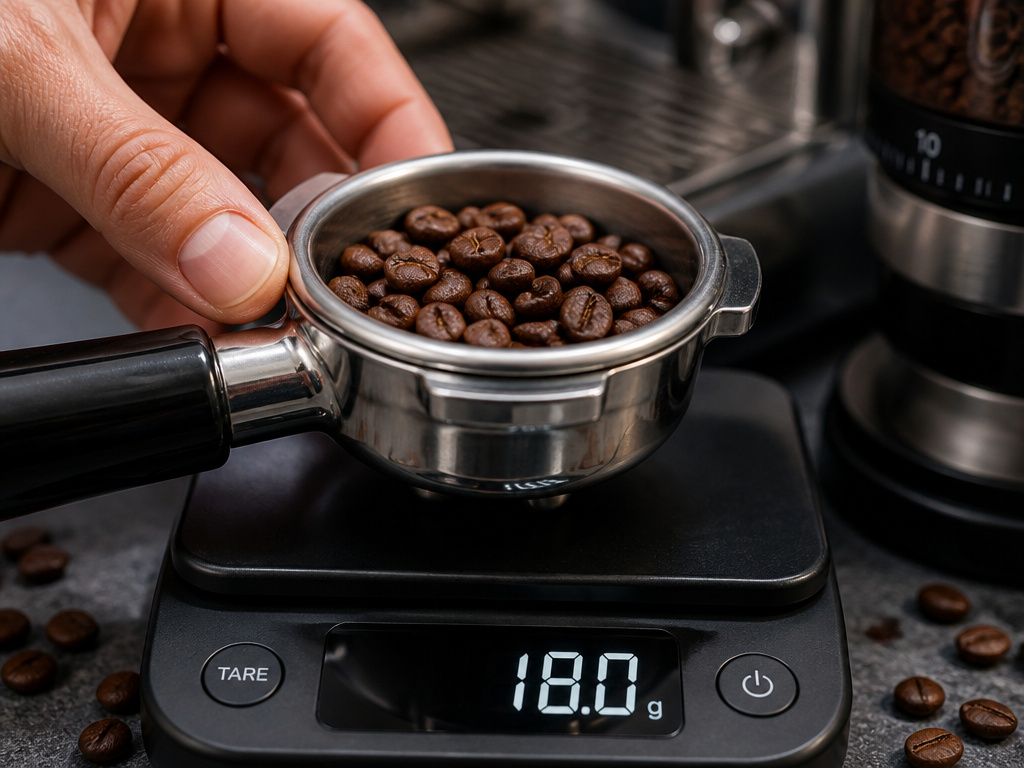
Forget volume. Your tools are a scale, a grinder, and a timer. The goal is to pick a dose, pick a yield ratio, and hit a time window.
- Choose and weigh your dose. Start with 18 grams. This is a safe middle ground for most modern double baskets. Use fresh, high-quality beans, a well-developed espresso blend is forgiving for learning.
- Grind, distribute, and tamp. Grind the beans directly into your portafilter. Level the grounds with a gentle shake or a distribution tool. Tamp with firm, even pressure, enough to compact the grounds into a solid puck. The grind size is your main variable for controlling time.
- Brew to weight, not time. Place a scale with a small cup under the portafilter. Start the pump. Your target yield is double your dose: 36 grams out for an 18g dose. The ideal time for this to happen is 25 to 30 seconds. If it runs too fast (<25s), grind finer. If it runs too slow (>35s), grind coarser.
- Taste and adjust. The shot should taste balanced, not sour (under-extracted), not bitter (over-extracted). If it’s sour, grind finer or increase the yield slightly. If it’s bitter, grind coarser or decrease the yield.
The timing is a diagnostic tool, not the goal. A shot that hits 36g in 28 seconds but tastes bitter might need a coarser grind, which will make it run faster. You then compensate by reducing the yield to 34g to prevent over-extraction. This is dialing in.
TL;DR: Dose 18g, target a 36g yield, and adjust your grind size until that happens in 25-30 seconds. Taste is the final judge.
Double Espresso Variations: Ristretto, Lungo, and Crema
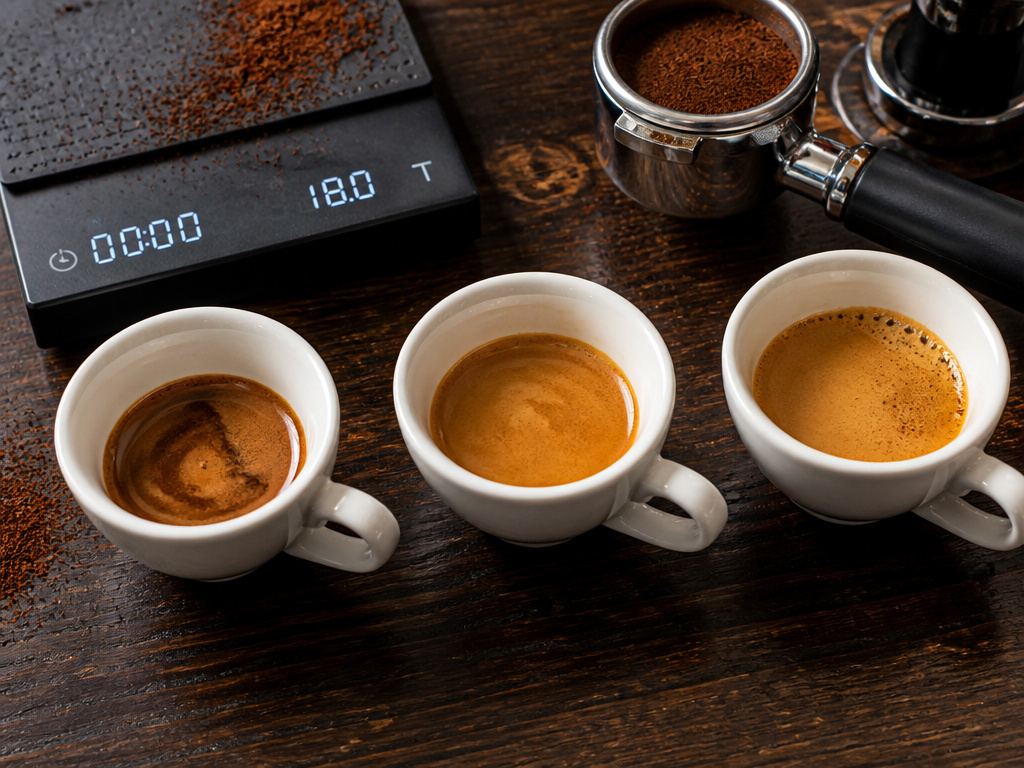
The double espresso is the baseline. By changing the brew ratio, you create different drinks with distinct characters. This is where understanding the espresso brewing method guide pays off.
- Ristretto (“Restricted”): A shorter, more concentrated shot. Use a 1:1 to 1:1.5 ratio (18g in, 18-27g out). It requires a slightly finer grind to increase resistance and limit the flow. The result is sweeter, thicker, and more intense. It’s the best choice for milk-based espresso drinks like lattes because the concentrated flavor cuts through.
- Lungo (“Long”): A longer, more diluted shot. Use a 1:3 to 1:4 ratio (18g in, 54-72g out). It often requires a slightly coarser grind so the water doesn’t over-extract the puck. The result is a larger, milder coffee, closer to an americano preparation but brewed in one pass.
- Caffè Crema: This is an even longer drink, 120-240ml, brewed with a significantly coarser grind. It’s a historical style more common in certain European regions, not a standard modern variation.
Common mistake: Making a lungo by just letting a standard shot run longer, this over-extracts the puck, making it bitter. You must coarsen the grind to accommodate the greater water volume.
Choosing a variation is about purpose. Need intensity for milk? Go ristretto. Want a larger black coffee? Go lungo. Understanding these ratios gives you control over the final cup’s body and flavor, much like choosing between a drip coffee method and a pour-over.
TL;DR: Ristretto (1:1.5) is concentrated and sweet for milk drinks. Lungo (1:3) is larger and milder. Adjust your grind size for each; don’t just change the stop time.
Caffeine and Serving Tips
How much caffeine is in a double? It depends entirely on the dose and the beans. A rough guide is 30-50mg of caffeine per fluid ounce of espresso. A traditional 2-ounce (60ml) double would have 60-100mg. However, a modern 18g dose yielding 36g of liquid might have a similar or slightly higher caffeine content, as you’re extracting more from more coffee.
The caffeine content of espresso is often overstated. A double espresso typically has less caffeine than a standard 12-ounce drip coffee. The intensity is in the flavor concentration, not the stimulant.
To serve it properly:
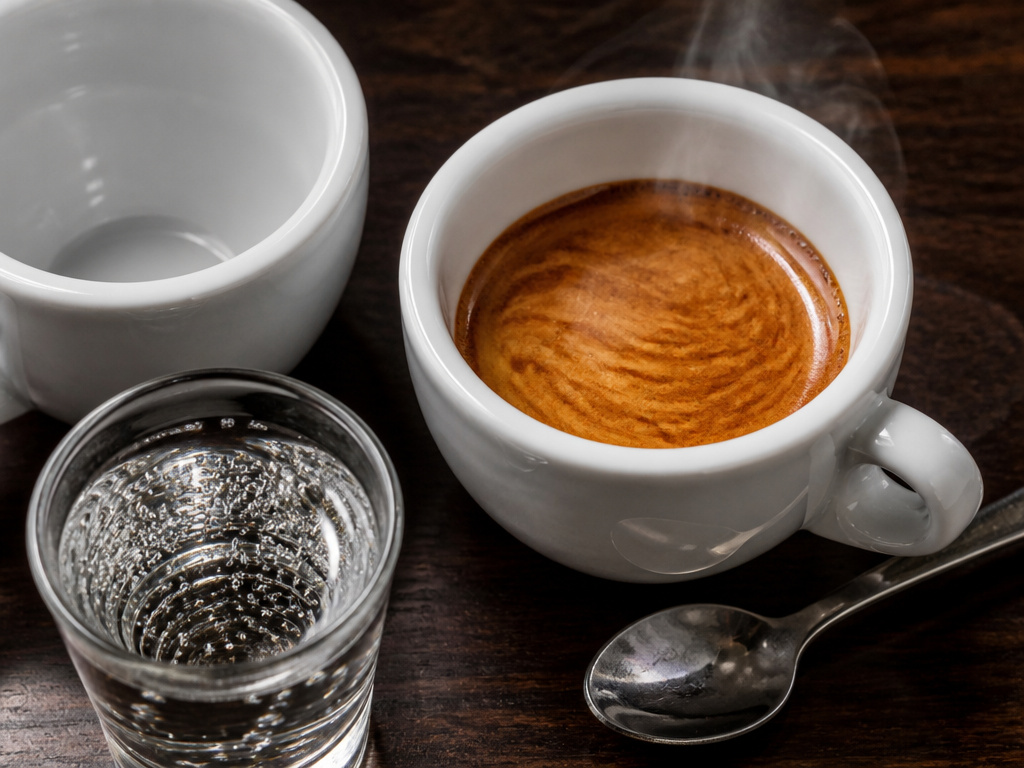
* Use a pre-warmed demitasse. A cold cup saps heat from the espresso immediately.
* Stir it. The layers, thick crema on top, heavier body below, have different flavors and textures. One quick stir integrates them into a uniform sip.
* Drink it quickly. Espresso’s volatile aromatics and texture degrade within a minute. It’s not a drink to savor over ten minutes.
* Pair it with water. A small glass of sparkling or still water cleanses the palate.
For a flavor twist, consider a grain of salt for bitterness reduction or a teaspoon of brown sugar for a caramelized sweetness that complements darker roasts.
Frequently Asked Questions
Is a double espresso the same as two shots?
In a modern cafe, usually yes. “Two shots” typically means a double dose pulled as one shot in a double basket. Two separately pulled single shots are less common due to time and consistency.
How many ounces is a double espresso?
traditional double is 2 fluid ounces (60ml). A modern double, measured by weight (e.g., 36g), will be slightly less in volume, closer to 1.5 fluid ounces, because crema takes up space but weighs very little.
Is a doppio a double?
Yes. “Doppio” is Italian for “double.” It is synonymous with a double espresso.
Can I make a double espresso with a single-serve pod machine?
No. These machines are designed for a single small dose (5-7g) and pressure profile. You cannot double the dose or properly extract a larger amount. For a stronger drink, use a bold pod or add a second shot from a second pod.
What’s the best coffee bean for a double espresso?
Start with a medium to dark roast espresso blend for consistency and balanced flavor. As you get comfortable, experiment with single-origin espresso beans, like a Colombian coffee, to highlight specific origin characteristics.
The Bottom Line
A double espresso is no longer a fixed recipe. It is a framework. The core idea is a doubled dose of coffee extracted to a target yield ratio. The 14g standard is a footnote from the lever-machine era. Today, 18g in, 36g out in 28 seconds is the new normal.
Embrace the scale. Let go of volume. Your reward is a shot you can actually dial in, one where you control the strength, the sweetness, and the balance. Whether you pull it as a dense ristretto for a latte or a longer lungo for sipping, that control starts with understanding what “double” really means now.
{
“@context”: “https://schema.org”,
“@type”: “HowTo”,
“name”: “How to Brew a Double Espresso”,
“totalTime”: “PT5M”,
“tool”: [
{
“@type”: “HowToTool”,
“name”: “Espresso machine with pump”
},
{
“@type”: “HowToTool”,
“name”: “Burr grinder”
},
{
“@type”: “HowToTool”,
“name”: “Scale accurate to 0.1g”
},
{
“@type”: “HowToTool”,
“name”: “58mm portafilter with double basket”
}
],
“step”: [
{
“@type”: “HowToStep”,
“name”: “Dose the coffee”,
“text”: “Grind 16-18g of fresh espresso-roast coffee directly into your portafilter’s double basket.”
},
{
“@type”: “HowToStep”,
“name”: “Distribute and tamp”,
“text”: “Level the grounds with a finger or tool, then tamp evenly with 20-30 lbs of pressure to create a flat, compact puck.”
},
{
“@type”: “HowToStep”,
“name”: “Brew to weight”,
“text”: “Lock the portafilter into the machine and start the shot. Stop the pump when the scale reads 32-36g of liquid espresso, which should take 25-30 seconds.”
},
{
“@type”: “HowToStep”,
“name”: “Serve immediately”,
“text”: “Pour the espresso into a pre-warmed demitasse, stir once to integrate the layers, and drink within a minute.”
}
]
}
{
“@context”: “https://schema.org”,
“@type”: “FAQPage”,
“mainEntity”: [
{
“@type”: “Question”,
“name”: “Is a double espresso the same as two shots?”,
“acceptedAnswer”: {
“@type”: “Answer”,
“text”: “In a modern cafe, usually yes. \”Two shots\” typically means a double dose pulled as one shot in a double basket. Two separately pulled single shots are less common due to time and consistency.”
}
},
{
“@type”: “Question”,
“name”: “How many ounces is a double espresso?”,
“acceptedAnswer”: {
“@type”: “Answer”,
“text”: “traditional double is 2 fluid ounces (60ml). A modern double, measured by weight (e.g., 36g), will be slightly less in volume, closer to 1.5 fluid ounces, because crema takes up space but weighs very little.”
}
},
{
“@type”: “Question”,
“name”: “Is a doppio a double?”,
“acceptedAnswer”: {
“@type”: “Answer”,
“text”: “Yes. \”Doppio\” is Italian for \”double.\” It is synonymous with a double espresso.”
}
},
{
“@type”: “Question”,
“name”: “Can I make a double espresso with a single-serve pod machine?”,
“acceptedAnswer”: {
“@type”: “Answer”,
“text”: “No. These machines are designed for a single small dose (5-7g) and pressure profile. You cannot double the dose or properly extract a larger amount. For a stronger drink, use a bold pod or add a second shot from a second pod.”
}
},
{
“@type”: “Question”,
“name”: “What’s the best coffee bean for a double espresso?”,
“acceptedAnswer”: {
“@type”: “Answer”,
“text”: “Start with a medium to dark roast espresso blend for consistency and balanced flavor. As you get comfortable, experiment with single-origin espresso beans, like a Colombian coffee, to highlight specific origin characteristics.”
}
}
]
}
