
What Is Doppio Coffee? The Double Espresso Explained
A doppio is a double shot of espresso, made with a double dose of ground coffee (typically 18–21 grams) extracted with hot water at 9 bars of pressure to yield 36–42 grams of liquid in 20–30 seconds. It is not a different drink, just the standard Italian term for ordering two shots in one cup.
The confusion starts because many cafes list “espresso” as a single shot and “doppio” as a separate, stronger menu item. This makes people think a doppio is a distinct, more concentrated style. It isn’t. It’s a quantity.
This guide breaks down the exact definition, the equipment and technique needed to make one correctly, and how it fits into the wider world of espresso-based drinks. You’ll learn why a doppio made with light roast needs a different temperature than one made with dark roast, and why it’s the cheapest, most honest drink you can order at a good cafe.
Key Takeaways
- A doppio is strictly a quantity: two shots of espresso served in one cup, requiring a double basket and a dose of 18–21g of coffee.
- The standard extraction parameters are a 1:2 coffee-to-water ratio, 9 bars of pressure, 90–96°C water, and a 20–30 second pull time.
- Roast level dictates temperature: use 94–96°C for light roasts to extract delicate aromatics, and 88–91°C for dark roasts to avoid ashy bitterness.
- In a cafe, a doppio is often the most affordable drink because it contains no milk, syrup, or extra labor.
- Distinguish it from a double espresso ordered as two separate singles; a doppio is pulled as one continuous double shot into one vessel, which can affect crema and body.
What Is a Doppio? (The Simple Definition)
A doppio is the Italian word for “double.” In coffee, it means a double shot of espresso. This is not a different brewing method or a stronger concentration. It is simply twice the amount of a single shot, extracted into one cup. The confusion is understandable. When you see two separate items on a menu, espresso and doppio, it implies a difference in kind, not just volume.
The definition is anchored in technical specs. According to primary machine manuals from manufacturers like Rocket Espresso, a standard single espresso uses 7–9 grams of coffee. A double, therefore, uses 14–18 grams. Modern specialty coffee has settled on a slightly higher range, with most standard double baskets holding 18 to 21 grams comfortably.
A doppio espresso is a beverage of 50–60ml (1.7–2 oz) prepared from 14–18 grams of ground coffee, extracted with water at 90.5–96.1°C and 9–10 atmospheres of pressure over 20–30 seconds.
This technical snippet is what every machine manual assumes. The dose, yield, and time are the three variables you control. The pressure and temperature are machine settings. Getting a true doppio means hitting all these marks, not just putting more water through a single dose.
TL;DR: A doppio is two shots of espresso served as one drink, defined by a 18–21g dose and a 36–42g yield pulled in 20–30 seconds.
Doppio vs. Other Espresso Drinks
It’s easy to mix up terms, especially when cafes use them loosely. A doppio is not just any double coffee. Here’s how it stands apart.
A doppio is a double shot of pure espresso. A cafe americano starts with a doppio (or a single) and adds hot water, changing the texture and strength entirely. An americano has a lighter body, more similar to drip coffee. A cappuccino or latte also starts with a single or double shot, but the addition of steamed milk creates a completely different drink category focused on milk texture and sweetness.
The more subtle distinction is between a doppio and ordering “two espressos.” If you order two espressos, a barista will often pull two separate single shots into two separate cups. Each shot will have its own crema and extraction profile. A doppio is one continuous extraction into one cup. The flow rate through one larger puck can produce a slightly different crema structure and mouthfeel, sometimes thicker, sometimes more unified. It’s a minor point, but it matters to purists.
| Drink | Base | Added Element | Key Difference |
|---|---|---|---|
| Doppio | Double espresso | Nothing | The benchmark; pure, concentrated coffee. |
| Americano | Single or double espresso | Hot water | Diluted, larger volume, lighter body. |
| Cappuccino | Single espresso | Steamed & frothed milk | Milk-forward, sweet, textured. |
| Lungo | Single espresso dose | More water (longer extraction) | Over-extracted, often bitter, not a double. |
What about a ristretto? A ristretto is a “restricted” shot, using the same dose as a single or double but less water, resulting in a sweeter, more concentrated syrup. A doppio ristretto would be a double dose extracted to a yield of less than 1:1.5 ratio. It’s a variation on a doppio, not a different drink.
TL;DR: A doppio is the base building block for milk drinks and americanos, but it is defined by being served alone. It is not a lungo, which is a single shot over-extracted with more water.
How to Make a Doppio at Home (Step-by-Step)
You need an espresso machine that can generate real pressure. A steam-toy machine or a moka pot won’t cut it. You also need a burr grinder. Blade grinders create inconsistent particles that will channel and produce a sour, weak mess. The burr grinders create the uniform fines necessary for even extraction at high pressure.
Here is the step-by-step process, with the consequences of skipping each step.
- Weigh your dose. Use a scale. Place your portafilter on it, tare to zero, and grind 18 grams of coffee directly into it. Going by volume is a guess. Beans have different densities. The consequence of guessing is a shot that runs too fast (if under-dosed) or chokes the machine (if over-dosed), wasting coffee and time.
- Grind fine enough for espresso. The grounds should feel like table salt with some flour-like powder. If you pinch it, it should clump slightly then fall apart. Too coarse and the water blasts through in 15 seconds, yielding a sour, under-extracted doppio. Too fine and nothing comes out for 45 seconds, then a dark, bitter sludge drips out.
- Distribute and tamp evenly. Use your finger or a distribution tool to level the mound in the basket. Then tamp with firm, even pressure. The goal is a flat, level puck. An uneven tamp creates paths of least resistance. Water follows those paths, leading to channeling. You’ll see spurts from the basket and the shot will taste simultaneously sour and bitter.
- Pull the shot immediately. Lock the portafilter in and start the pump. Pre-infusion is beneficial if your machine has it, but not required. Letting the loaded portafilter sit heats the basket and starts degrading the grounds. Start within 30 seconds of tamping.
- Time and weigh the output. Your target is 36 grams of liquid espresso from your 18 grams of coffee, hitting that 1:2 ratio, in about 25 seconds. Use a scale like the Timemore Black Mirror Nano under your cup. Stop the pump when you hit the weight. Relying on time or volume marks on the cup is inaccurate.
- Taste and adjust. The first shot is diagnostic. Sour and fast? Grind finer. Bitter and slow? Grind coarser. Only change one variable at a time, and grind size is the first one you should touch.
Common mistake: Changing the dose to fix extraction problems. If your shot runs fast, grinding finer slows the water flow through the same coffee mass. Increasing the dose to slow the shot just makes a stronger, still-under-extracted mess. Adjust grind first, every time.
The machine matters, but technique matters more. A Sage Barista Express Impress can make a great doppio. A $4,000 commercial machine in untrained hands will make a terrible one. The steps are the constraint.
TL;DR: Weigh 18g, grind fine, tamp level, pull for ~25 seconds to a 36g yield. Adjust only the grind size to fix sour or bitter flavors.
The Technical Specs: Dose, Ratio, Time, and Temperature
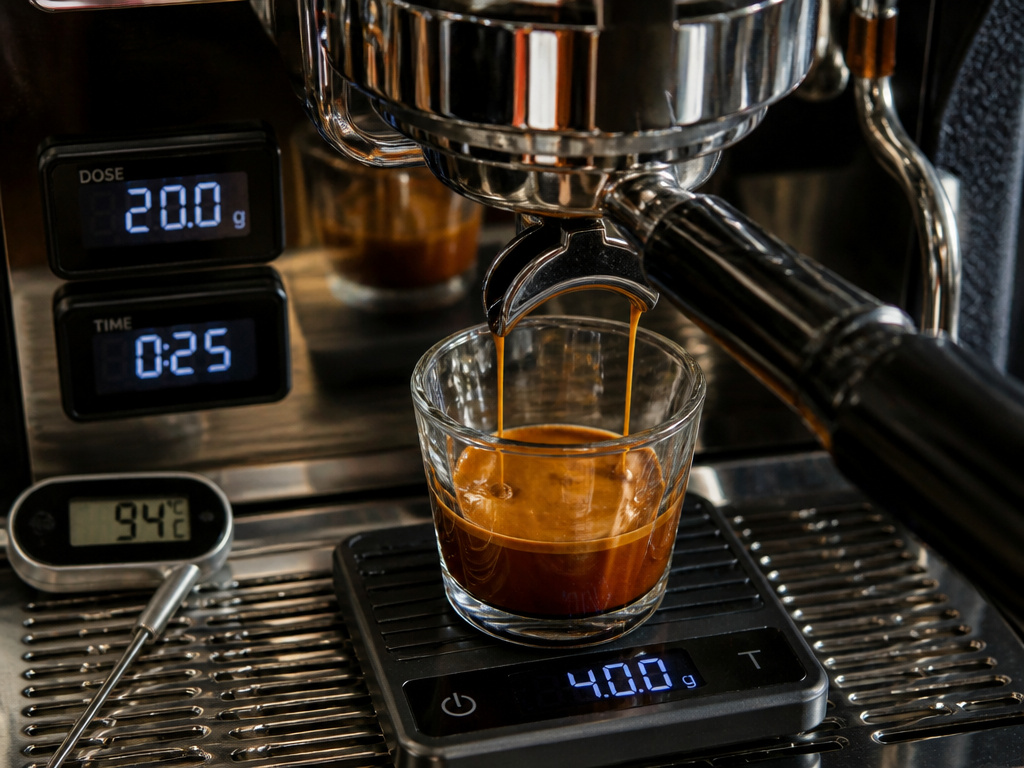
This is where commodity advice stops and real execution begins. The numbers are not suggestions. They are physical requirements for the chemical extraction we call espresso.
Dose: 18–21 grams for a standard double basket. This is the mass of dry coffee. The basket size dictates the maximum. Overfilling prevents the shower screen from seating, imprinting the screen on the wet puck and causing uneven extraction. Underfilling leaves a gap that leads to puck collapse and spraying.
Yield: 36–42 grams of liquid espresso. This is your beverage weight. The 1:2 ratio (coffee in to liquid out) is the classic starting point. A ristretto is a 1:1 to 1:1.5 ratio. A lungo is 1:3 or higher. The doppio is the 1:2 center.
Time: 20–30 seconds from pump start to pump stop. This includes any pre-infusion time. Time is a diagnostic output, not an input you directly set. It tells you if your grind size is correct for your dose and machine pressure.
Temperature: 90–96°C (194–205°F) at the group head. This is the single most overlooked variable for home baristas. The Specialty Coffee Association recommends this range, but the exact setting depends on your beans.
- Light Roasts (like many blonde roast beans): Use 94–96°C. The complex sugars and acids in lightly roasted single-origin coffees need higher thermal energy to dissolve. Lower temperatures leave the shot tasting sour and grassy.
- Dark Roasts: Use 88–91°C. Dark beans are more soluble and have more bitter, carbonized compounds. Higher temperatures extract those harsh notes aggressively. Cooler water tames the bitterness and lets chocolate and nutty flavors come forward.
Pressure: Nine bars. This is the espresso standard. Many home machines advertise “15 bars of pressure.” That’s the pump’s maximum pressure, not what hits the puck. The coffee puck itself creates resistance, and the machine’s over-pressure valve should regulate flow to achieve about 9 effective bars of pressure during the extraction. You can’t set this; you buy a machine that does it correctly.
I spent two months chasing sour shots with a new Ethiopian light roast. I adjusted grind, dose, distribution, everything but the temperature. My machine was set to 92°C, the middle of the “recommended” range. Bumping it to 95°C fixed it in one shot. The manual had the answer, buried on page 14.
These specs are a system. Change one, and you must often adjust another. The espresso caffeine content of your doppio is largely locked in by the dose (18g of coffee has a fairly set caffeine amount), but the flavor is entirely in your control through these variables.
Why Order a Doppio at a Cafe?
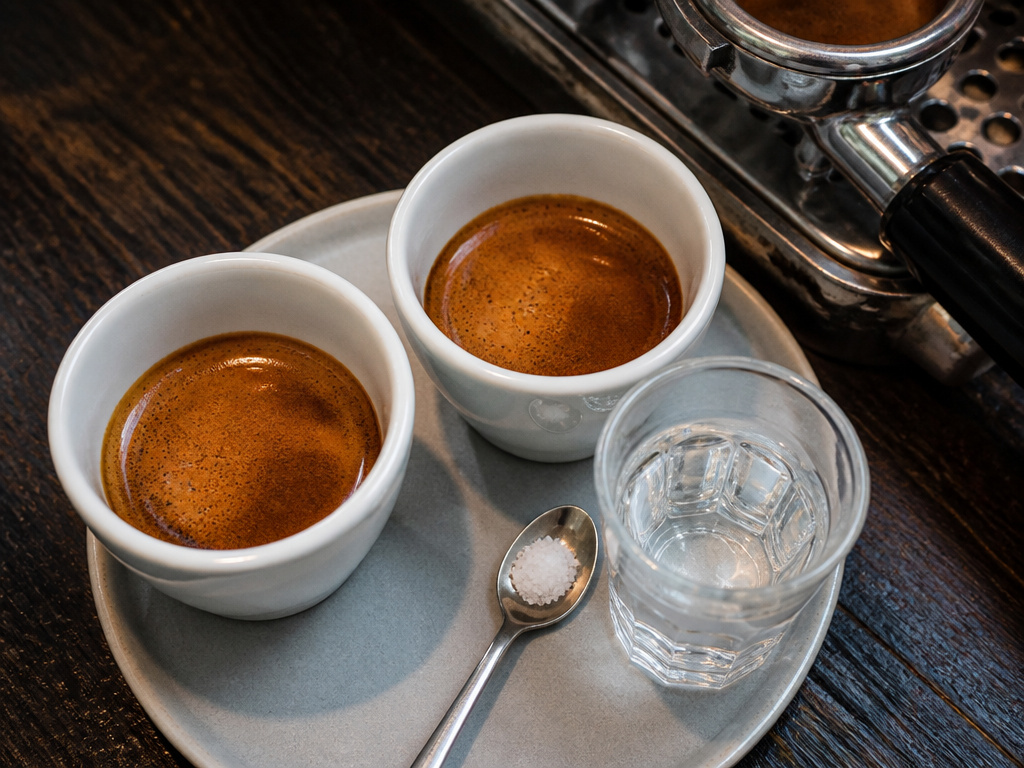
It’s the most affordable drink on the menu. A doppio is just coffee and water. No milk steaming, no syrup pumping, no blending. At a specialty shop, it’s often only a dollar or two more than a single espresso. For the budget-conscious coffee lover, it’s the best value.
It’s also the truest test of a cafe’s skill and bean quality. With no milk or sugar to hide behind, every flaw is exposed. A bitter, burned, or sour doppio tells you the barista isn’t dialed in or the beans are stale. A balanced, sweet, complex doppio is a sign of a serious operation. It’s how you evaluate a new shop.
Finally, it’s a quick, potent caffeine hit. The espresso shot strength of a doppio delivers a focused boost without the volume of a large drip coffee. You get the alertness without the sloshing.
Some find the pure taste too intense. That’s fair. If it’s too bitter for you, don’t assume all espresso is bad. Ask the barista if they have a lighter roast, or try a tiny pinch of salt on your tongue before sipping, a known trick for reducing bitterness. Sweetening with a bit of brown sugar can also mellow the edges while letting the coffee flavor through.
Choosing the Right Coffee for Your Doppio
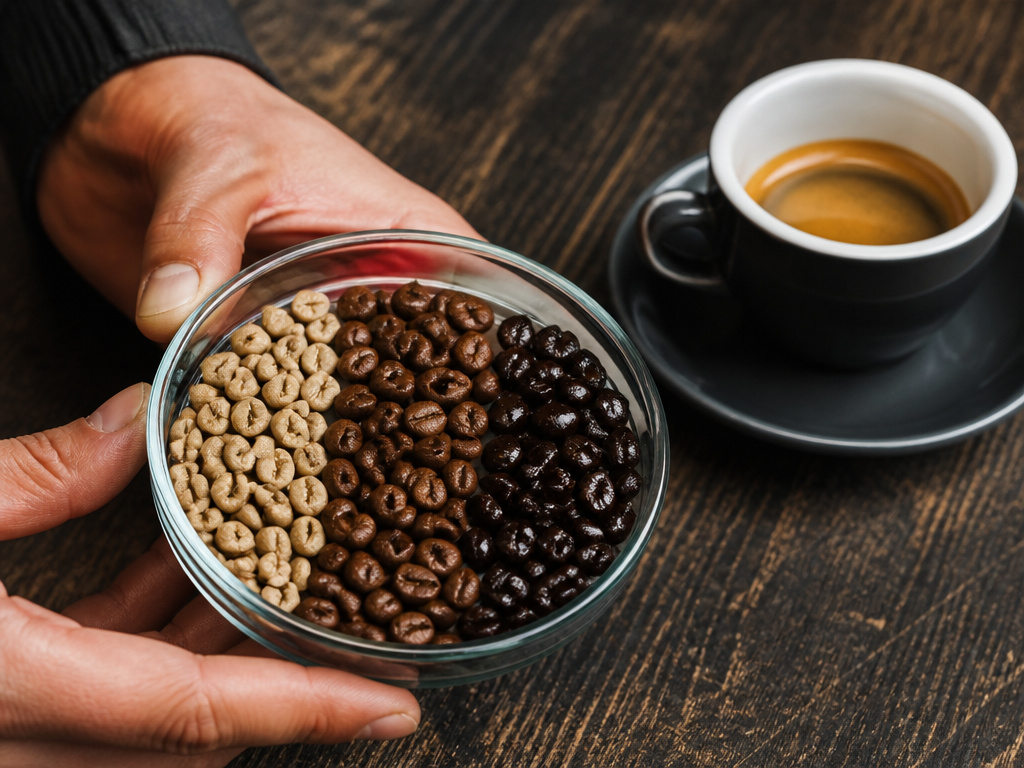
The bean decides everything. You can execute a perfect technique on stale or poorly roasted beans and get a mediocre cup.
For a classic, balanced doppio, start with a medium-roast blend. Blends are crafted for consistency and often contain beans that provide sweetness, body, and acidity in harmony. They’re forgiving and designed for espresso.
For a more adventurous, terroir-driven experience, try a single-origin espresso. A washed Colombian coffee might give you notes of caramel and nuts. A natural-processed Ethiopian might burst with blueberry and jasmine. These Arabica beans from specific farms require more precise grinding and temperature, but the reward is a unique snapshot of a place.
Avoid very dark, oily roasts for your first attempts. They are easier to extract but often taste ashy and flat, masking the skill of your technique. Very light blonde roast beans are the opposite, challenging to extract without sourness, but spectacular when you get it right.
| Roast Level | Best For | Temperature Guide | Flavor Profile |
|---|---|---|---|
| Light / Blonde | Experienced home baristas | 94–96°C | Bright, acidic, floral, fruity. |
| Medium | Everyone; the safe starting point | 91–93°C | Balanced, sweet, with chocolate & nut notes. |
| Medium-Dark | Those who prefer traditional “espresso” taste | 89–91°C | Richer, heavier body, bittersweet chocolate. |
| Dark | Milk drinks, or if you like bold, smoky flavors | 88–90°C | Smoky, woody, low acidity, can be bitter. |
Freshness is non-negotiable. Use beans roasted within the last 2–4 weeks. After a month, the volatile aromatics that create flavor have largely dissipated. No technique can resurrect dead coffee.
Frequently Asked Questions
Is a doppio stronger than a regular espresso?
Yes, but only in total caffeine content and volume because it uses twice the coffee. The concentration, the strength per milliliter, is identical to a well-made single shot. A doppio is not a hyper-concentrated extraction; it’s just more of the same thing.
How much caffeine is in a doppio?
doppio made with 18 grams of coffee contains roughly 126 milligrams of caffeine, assuming standard Arabica beans. This is about double a single shot, but still less than a typical 12-ounce brewed coffee. Caffeine content depends more on the coffee mass and variety than the brew method.
Can I make a doppio without an espresso machine?
No. The definition of espresso, and therefore a doppio, requires high pressure (9 bars) to create the emulsified oils and crema that define the drink. A moka pot makes strong coffee at about 1.5 bars. An AeroPress can make concentrated coffee. Both can be delicious, but they are not espresso and cannot produce a true doppio.
What’s the difference between a doppio and a double shot?
In practice, nothing. “Doppio” is the Italian term, “double shot” is the English term. Some purists argue a doppio must be pulled as one continuous double extraction, while “two espressos” could be two separate single shots served together. Most cafes treat them as synonyms.
Should I drink a doppio straight or add water?
Drink it straight to experience the full, intended flavor and texture. If you find it too intense, you are essentially making a small cafe americano by adding water. There’s no wrong way, but trying it straight first lets you judge the coffee on its own terms.
Before You Go
A doppio is the purest form of espresso appreciation. It’s two shots in one cup, defined by a 18-gram dose, a 1:2 extraction ratio, and about 25 seconds of your time. Remember that roast level dictates your machine’s temperature setting, hotter for light roasts, cooler for dark. At a cafe, it’s your most affordable and honest option, laying bare the quality of the beans and the barista’s skill.
Start with a reliable medium-roast blend and a 1:2 ratio. Weigh everything. Adjust only your grind size to hit the 25-second window. When you get that balanced, sweet shot, you’ve mastered the doppio. Then you can explore how a single-origin changes the game, or how it serves as the foundation for every espresso-based drink on the menu. It’s not just a drink. It’s the baseline.
{
“@context”: “https://schema.org”,
“@type”: “HowTo”,
“name”: “How to Make a Perfect Doppio Espresso at Home”,
“totalTime”: “PT5M”,
“tool”: [
{
“@type”: “HowToTool”,
“name”: “Espresso machine capable of 9 bars of pressure”
},
{
“@type”: “HowToTool”,
“name”: “Burr grinder”
},
{
“@type”: “HowToTool”,
“name”: “Digital scale accurate to 0.1g (like a Timemore Black Mirror Nano)”
},
{
“@type”: “HowToTool”,
“name”: “Standard double basket portafilter”
},
{
“@type”: “HowToTool”,
“name”: “Tamper”
}
],
“step”: [
{
“@type”: “HowToStep”,
“name”: “Dose the coffee”,
“text”: “Weigh 18 to 21 grams of coffee beans, then grind them finely for espresso.”
},
{
“@type”: “HowToStep”,
“name”: “Distribute and tamp”,
“text”: “Transfer the grounds to your portafilter, level them, then tamp with firm, even pressure to create a flat, compact puck.”
},
{
“@type”: “HowToStep”,
“name”: “Pull the shot”,
“text”: “Lock the portafilter into the machine and start the extraction immediately. Aim for a total output of 36 to 42 grams of liquid espresso.”
},
{
“@type”: “HowToStep”,
“name”: “Time and stop”,
“text”: “The shot should finish pulling within 20 to 30 seconds. Stop the machine when you reach your target yield.”
}
]
}
{
“@context”: “https://schema.org”,
“@type”: “FAQPage”,
“mainEntity”: [
{
“@type”: “Question”,
“name”: “Is a doppio stronger than a regular espresso?”,
“acceptedAnswer”: {
“@type”: “Answer”,
“text”: “Yes, but only in total caffeine content and volume because it uses twice the coffee. The concentration, the strength per milliliter, is identical to a well-made single shot. A doppio is not a hyper-concentrated extraction; it’s just more of the same thing.”
}
},
{
“@type”: “Question”,
“name”: “How much caffeine is in a doppio?”,
“acceptedAnswer”: {
“@type”: “Answer”,
“text”: “doppio made with 18 grams of coffee contains roughly 126 milligrams of caffeine, assuming standard Arabica beans. This is about double a single shot, but still less than a typical 12-ounce brewed coffee. Caffeine content depends more on the coffee mass and variety than the brew method.”
}
},
{
“@type”: “Question”,
“name”: “Can I make a doppio without an espresso machine?”,
“acceptedAnswer”: {
“@type”: “Answer”,
“text”: “No. The definition of espresso, and therefore a doppio, requires high pressure (9 bars) to create the emulsified oils and crema that define the drink. A moka pot makes strong coffee at about 1.5 bars. An AeroPress can make concentrated coffee. Both can be delicious, but they are not espresso and cannot produce a true doppio.”
}
},
{
“@type”: “Question”,
“name”: “What’s the difference between a doppio and a double shot?”,
“acceptedAnswer”: {
“@type”: “Answer”,
“text”: “In practice, nothing. \”Doppio\” is the Italian term, \”double shot\” is the English term. Some purists argue a doppio must be pulled as one continuous double extraction, while \”two espressos\” could be two separate single shots served together. Most cafes treat them as synonyms.”
}
},
{
“@type”: “Question”,
“name”: “Should I drink a doppio straight or add water?”,
“acceptedAnswer”: {
“@type”: “Answer”,
“text”: “Drink it straight to experience the full, intended flavor and texture. If you find it too intense, you are essentially making a small cafe americano by adding water. There’s no wrong way, but trying it straight first lets you judge the coffee on its own terms.”
}
}
]
}
