
What Is a Misto Coffee? Definition & Easy Homemade Recipe
A Misto coffee is a drink made with equal parts brewed coffee and steamed milk, creating a balanced cup. It’s the American version of a French Café au Lait. Unlike a latte, which uses espresso and more milk, a Misto highlights the coffee’s flavor with a lighter, smoother profile.
A Misto coffee, specifically the Starbucks Caffè Misto, is a drink made with equal parts freshly brewed coffee and steamed milk. It is the Americanized counterpart to the French Café au Lait. The result is a balanced, smooth cup that highlights the coffee’s flavor without the milk dominance of a latte or the intensity of a straight espresso.
Most people confuse it with a latte because both have coffee and steamed milk. The difference is foundational. A latte is espresso-based with much more milk and a distinct foam layer. A Misto uses brewed coffee, creating a completely different flavor profile and strength. It’s the drink you order when you want coffee, not a milk beverage with coffee flavor.
This guide breaks down the exact recipe, the equipment that matters, and the common mistakes that turn a smooth Misto into a weak, scorched imitation.
Key Takeaways
- A true Misto uses a 1:1 ratio of brewed coffee to steamed milk. Altering this changes the drink’s identity.
- Brew temperature is critical. The Specialty Coffee Association standard of 200°F (93°C) is backed by the ECBC approval held by makers like Technivorm Moccamaster.
- Steam milk to 150–155°F (65–68°C). Going over 160°F scalds the milk, imparting a burnt, sulfurous taste that ruins the coffee.
- The Misto is distinct from an Americano Misto, which substitutes brewed coffee with espresso and hot water.
- Your choice of coffee blends or single-origin coffee dramatically alters the Misto’s character. A blonde roast will yield a much brighter cup than a dark blend.
The Core Misto Recipe: Brewed Coffee + Steamed Milk
The formula is simple. The execution separates a good cup from a great one. You need four ounces of strong, freshly brewed coffee and four ounces of properly steamed milk.
The Technivorm Moccamaster coffeemaker manual cites a brewing temperature of 200°F and a saturation time of 4 to 6 minutes as key factors for certification by the European Coffee Brewing Center. This is the standard your home brewer should meet.
Your coffee base matters more here than in a milk-heavy latte. A Misto has nowhere to hide. Use a medium to dark roast for classic Starbucks flavor, or experiment with a light roast coffee for higher acidity. Grind fresh beans with a burr grinder for consistent extraction. A blade grinder creates uneven particles that lead to a muddy, over-extracted taste.
TL;DR: Equal parts coffee and milk. Brew hot (200°F), steam gently (155°F max), and combine immediately.
Misto vs. Latte vs. Americano: A Clear Breakdown
The coffee shop menu is a minefield of similar names. Knowing the construction of each drink is the only way to navigate it.
| Drink | Coffee Base | Milk | Key Characteristic | Common Mistake |
|---|---|---|---|---|
| Caffè Misto | Brewed Drip Coffee | Steamed, light foam | Balanced, coffee-forward flavor. | Using espresso, creating a latte. |
| Latte | Espresso (1-2 shots) | Steamed, ½” foam layer | Milk-forward, silky texture. | Using brewed coffee, creating a Misto. |
| Americano | Espresso + Hot Water | None (usually) | Diluted espresso strength. | Adding milk, making an Americano Misto. |
| Café au Lait | Strong Brewed Coffee (often French Press) | Steamed Milk | French precursor to the Misto. | Using weak coffee. |
A latte’s identity is built on espresso. The espresso shot provides a concentrated punch that stands up to 8-10 ounces of milk. A Misto uses brewed coffee, which is inherently less concentrated. Swapping the bases creates a different drink entirely.
The Americano Misto is a legitimate variant, but it’s not the standard Caffè Misto. It starts with an Americano, espresso and hot water, then adds steamed milk. It’s closer to a cafe Americano with a creamy texture. If you want the true Starbucks version, stick to brewed coffee.
TL;DR: Misto = brewed coffee + milk. Latte = espresso + more milk. Americano Misto = espresso + water + milk. The base ingredient dictates everything.
How to Make a Misto Coffee at Home: The Step-by-Step
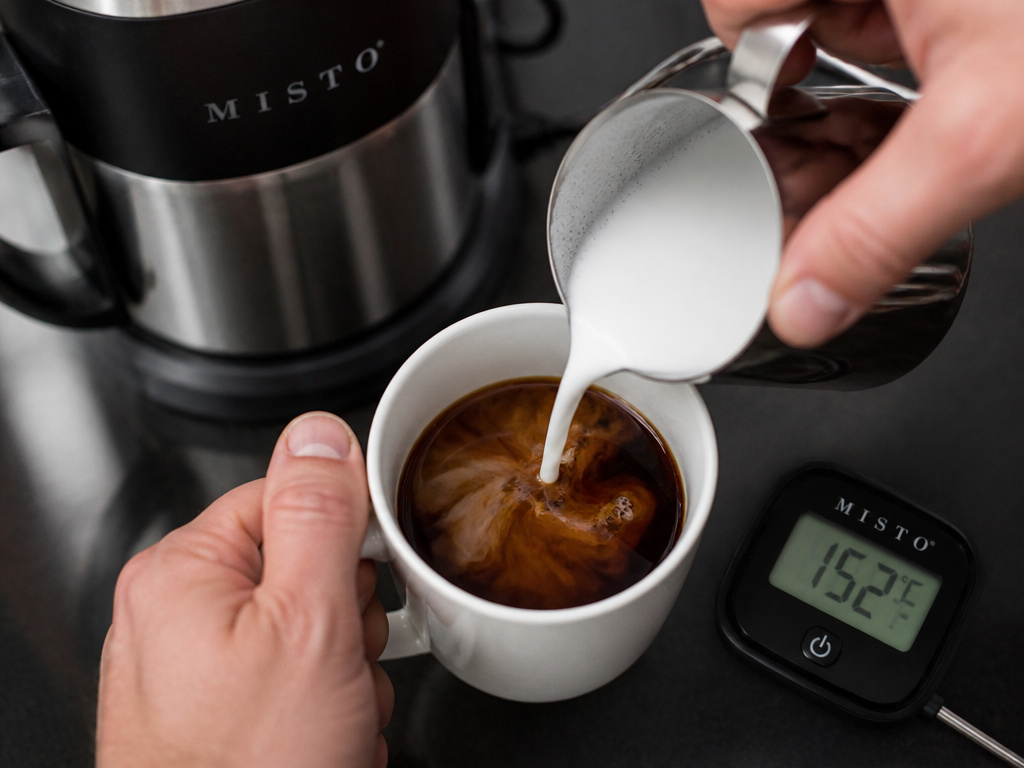
You don’t need a commercial machine. You need control over two variables: brew temperature and milk temperature.
What You’ll Need
- A drip coffee maker, French press, or pour-over setup. A machine that can hit 200°F is ideal.
- Whole milk. It steams to a richer, sweeter microfoam than skim.
- A steaming wand, automatic milk frother, or a small saucepan and a whisk.
- A kitchen thermometer. Guessing the milk temperature fails every time.
The Process
- Brew four ounces of strong coffee. Use a slightly finer grind or a higher coffee-to-water ratio than your usual cup. The milk will dilute it.
- Steam four ounces of milk. Target 150–155°F (65–68°C). The milk should be hot to the touch but not scalding. You want tiny, velvety bubbles (microfoam), not the stiff foam of a cappuccino.
- Combine immediately. Pour the coffee into a pre-warmed mug. Gently pour the steamed milk over it. The goal is a harmonious blend.
Common mistake: Steaming milk above 160°F, the proteins denature and release sulfur compounds. Your Misto will taste like burnt eggs, and no amount of brown sugar will save it.
Why the temperature fuss? Coffee extracts properly within a specific thermal range. The SCA’s 200°F standard isn’t arbitrary. Below 195°F, you under-extract, leaving acidic, sour notes. The milk’s fat and sugar can’t balance that. A proper brewed coffee base is non-negotiable.
The “Why” Behind the Method: Science in Your Mug
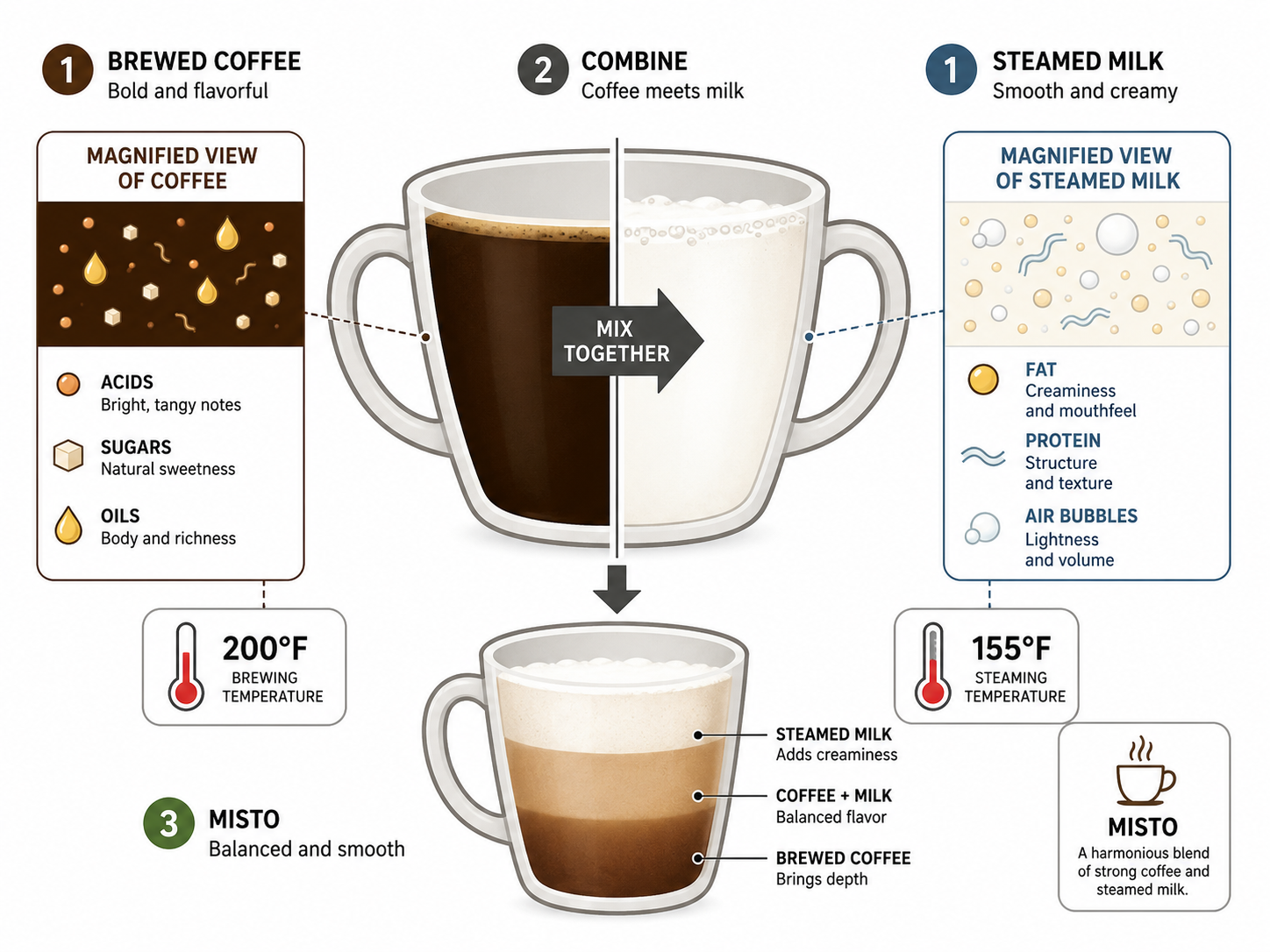
This isn’t just mixing two liquids. It’s a controlled combination where chemistry dictates flavor.
Brewed coffee contains hundreds of soluble compounds. Hot water pulls acids, sugars, and oils from the grounds at different rates. A temperature of 200°F optimizes this extraction, yielding a balanced cup. Using a paper coffee filter versus a metal mesh also changes the body by trapping oils.
Milk is an emulsion of fat, protein, and sugar. Steaming incorporates air, creating foam. The heat unfolds (denatures) milk proteins, allowing them to trap air bubbles. At 150–155°F, this happens perfectly, sweetening the milk via lactose caramelization. Go hotter, and the proteins break down completely, the fat separates, and the sugar burns. The result is a harsh, bitter addition that clashes with your coffee.
The equal parts ratio is the equilibrium point. It reduces the coffee’s bitterness and acidity through milk’s fat and sugar, while the coffee’s strength prevents the milk from making the drink taste thin or watery. It’s the midpoint between a stark Americano coffee and a creamy latte.
Choosing Your Coffee: Blends, Origins, and Roasts
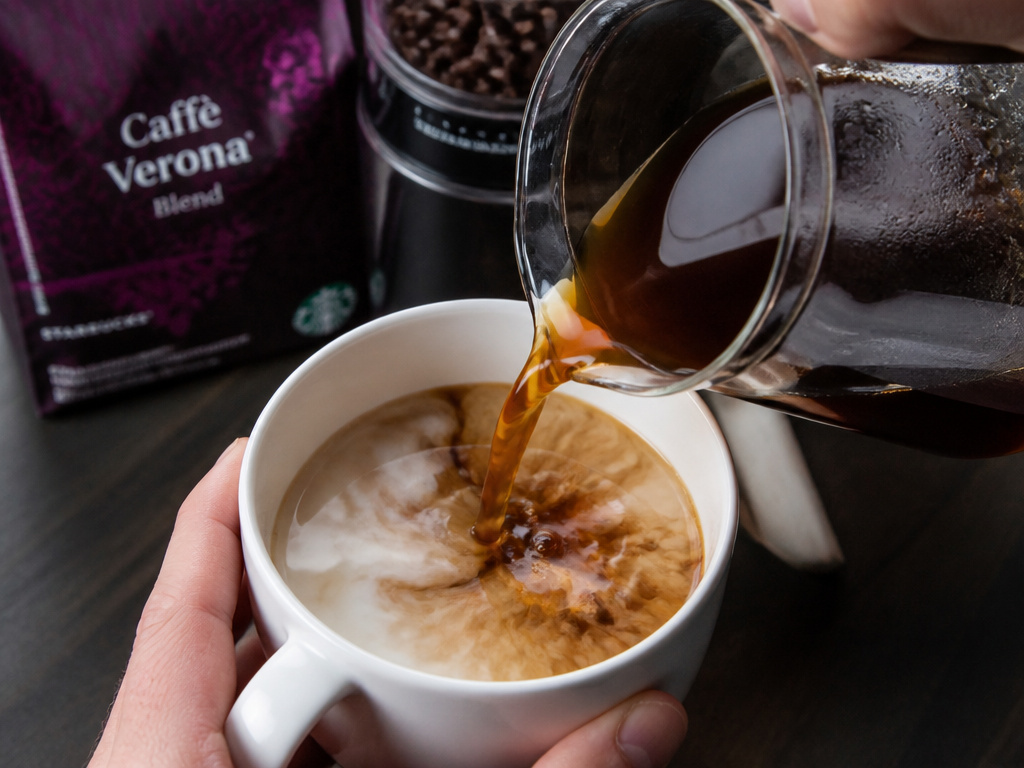
The coffee you choose is the lead actor. The milk is the supporting cast.
- Starbucks-Style (Classic Misto): Use a medium-dark roast blend. Starbucks’ own Caffè Verona is a popular choice, designed to brew a full 16 ounces for a large mug. Blends offer consistency and balanced coffee flavors.
- For a Brighter Cup: Try a single-origin coffee from Ethiopia or Kenya. These Arabica beans have fruity, floral notes that the milk will mellow but not erase.
- For a Smoother, Nutty Cup: A medium roast from Brazil or Colombia works well. Colombian coffee often has chocolate and nut notes that pair seamlessly with steamed milk.
Your grind must match your brewer. A fine grind for drip can over-extract and turn bitter. A coarse grind for pour-over can under-extract and taste sour. This is where a quality grinder pays off.
Equipment Spotlight: What Actually Matters
You can spend $50 or $500. These are the specs that affect your Misto, not the brand name.
| Equipment | Ideal Spec / Feature | Impact on Your Misto |
|---|---|---|
| Coffee Brewer | Heats water to 200°F (93°C) minimum. | Ensures proper extraction. Weak, lukewarm coffee makes a weak Misto. |
| Milk Frother | Temperature control up to 160°F. Steaming wand preferred. | Prevents scalding. Automatic frothers often overheat. |
| Coffee Grinder | Burr grinder (conical or flat). | Creates uniform grounds for even flavor. Blade grinders create dust and boulders. |
| Thermometer | Instant-read, range 100–200°F. | Takes the guesswork out of milk steaming. Essential for consistency. |
An espresso machine is overkill unless you’re making an Americano Misto. A simple drip machine with a hot plate won’t cut it either, it keeps coffee hot by cooking it, which destroys flavor. Look for a thermal carafe model or a single-serve brewer that heats water on demand.
For milk, a standalone electric frother with a cold-setting is a great budget option. Heat the milk separately to 155°F, then froth. It adds one step but guarantees you won’t scorch it.
Frequently Asked Questions
Is a Misto coffee strong?
It’s as strong as the coffee you brew. Since it’s a 1:1 dilution with milk, it’s milder than a straight black coffee but stronger than a latte in terms of coffee flavor concentration. The caffeine content depends entirely on your brew strength.
Can I make an Iced Misto?
Absolutely. Brew strong coffee and chill it. Use cold milk, you can froth it cold with a handheld frother for texture. Pour over ice. The dilution from the ice means you should brew your coffee even stronger to compensate.
What’s the difference between a Misto and a Flat White?
Flat White is an espresso-based drink with a very thin layer of microfoam. It’s all about the espresso and textured milk. A Misto is about brewed coffee and steamed milk. Different base, different result.
Can I use non-dairy milk?
Yes, but choose carefully. Oat and soy milk steam and froth well. Almond milk can separate when heated. Always use the “barista” editions, which contain stabilizers for better steaming performance.
Why does my homemade Misto taste weak?
Two likely causes. First, your base coffee isn’t strong enough. Use more grounds or a finer grind. Second, your milk is too hot and has scalded, adding a flat, bitter taste that masks the coffee. Check your temperatures.
The Bottom Line
A Misto coffee is the ultimate bridge drink. It’s for the person who finds black coffee too sharp and a latte too milky. The magic is in the equal partnership between a properly brewed cup and carefully steamed milk.
Skip the guesswork. Heat your water to 200°F, stop your milk at 155°F, and stick to the one-to-one ratio. Your choice of bean, whether a dependable coffee blend or a nuanced single-origin, will shine through. It’s a simple formula that rewards attention to detail. Your morning routine just got an upgrade.
{
“@context”: “https://schema.org”,
“@type”: “Recipe”,
“name”: “Starbucks-Style Caffè Misto”,
“recipeIngredient”: [
“4 ounces (120ml) freshly brewed coffee”,
“4 ounces (120ml) whole milk”
],
“recipeInstructions”: [
{
“@type”: “HowToStep”,
“name”: “Brew the coffee”,
“text”: “Brew 4 ounces of coffee using your preferred method. For optimal flavor, ensure the brewing water reaches 200°F (93°C) as per specialty coffee standards.”
},
{
“@type”: “HowToStep”,
“name”: “Steam the milk”,
“text”: “Steam 4 ounces of milk to between 150-155°F (65-68°C). Aim for a light, velvety microfoam, not the thick foam used for a cappuccino.”
},
{
“@type”: “HowToStep”,
“name”: “Combine”,
“text”: “Pour the freshly brewed coffee into a pre-warmed mug. Gently pour the steamed milk over the coffee. The goal is a homogenous blend, not a layered drink.”
}
]
}
{
“@context”: “https://schema.org”,
“@type”: “FAQPage”,
“mainEntity”: [
{
“@type”: “Question”,
“name”: “Is a Misto coffee strong?”,
“acceptedAnswer”: {
“@type”: “Answer”,
“text”: “It’s as strong as the coffee you brew. Since it’s a 1:1 dilution with milk, it’s milder than a straight black coffee but stronger than a latte in terms of coffee flavor concentration. The caffeine content depends entirely on your brew strength.”
}
},
{
“@type”: “Question”,
“name”: “Can I make an Iced Misto?”,
“acceptedAnswer”: {
“@type”: “Answer”,
“text”: “Absolutely. Brew strong coffee and chill it. Use cold milk, you can froth it cold with a handheld frother for texture. Pour over ice. The dilution from the ice means you should brew your coffee even stronger to compensate.”
}
},
{
“@type”: “Question”,
“name”: “What’s the difference between a Misto and a Flat White?”,
“acceptedAnswer”: {
“@type”: “Answer”,
“text”: “Flat White is an espresso-based drink with a very thin layer of microfoam. It’s all about the espresso and textured milk. A Misto is about brewed coffee and steamed milk. Different base, different result.”
}
},
{
“@type”: “Question”,
“name”: “Can I use non-dairy milk?”,
“acceptedAnswer”: {
“@type”: “Answer”,
“text”: “Yes, but choose carefully. Oat and soy milk steam and froth well. Almond milk can separate when heated. Always use the \”barista\” editions, which contain stabilizers for better steaming performance.”
}
},
{
“@type”: “Question”,
“name”: “Why does my homemade Misto taste weak?”,
“acceptedAnswer”: {
“@type”: “Answer”,
“text”: “Two likely causes. First, your base coffee isn’t strong enough. Use more grounds or a finer grind. Second, your milk is too hot and has scalded, adding a flat, bitter taste that masks the coffee. Check your temperatures.”
}
}
]
}
