
What is a Good Substitute for Coffee? Best Drinks Analyzed
A good substitute for coffee provides a similar ritual, warmth, and flavor profile without the negative side effects you’re avoiding. The best direct taste replacement is roasted chicory root, which brews a dark, slightly woody cup that accepts milk and sweetener like coffee. For a gentler caffeine lift, black tea or matcha green tea offer structured energy with less acidity and jitteriness.
Most people reach for a substitute because coffee’s acidity hurts their stomach, the caffeine disrupts their sleep, or they simply want to reduce their dependency. They try the first alternative they find, brew it wrong, and decide all coffee substitutes taste like bitter dirt water.
This guide breaks down seven proven alternatives. We’ll match each one to a specific goal, whether that’s mimicking coffee’s taste, finding a cleaner energy source, or addressing health concerns like acid reflux. You’ll get brewing specs, taste comparisons on a 1-to-10 scale, and the one additive that makes or breaks each cup.
Key Takeaways
- Chicory root is the closest flavor match to coffee (a 9/10 for similarity) when brewed strong and taken with milk. Avoid blends with maltodextrin.
- For a caffeine alternative without jitters, choose matcha green tea or yerba mate. Their L-theanine content creates a focused, calm alertness.
- Black tea is the most accessible and flexible substitute, with a familiar ritual and about half the caffeine of coffee. Its flavor improves dramatically with a proper 3-4 minute steep.
- Dandelion root and roasted barley tea (Mugicha) are completely caffeine-free and offer digestive benefits, but their flavor is more earthy and less coffee-like.
- Always check the ingredient label on commercial coffee substitute blends. Many contain maltodextrin, artificial caramel flavor, or instant coffee, which defeat the purpose.
Chicory Root: The Classic Coffee Mimic
Chicory root has been blended with coffee for centuries, notably in New Orleans-style coffee and South Indian filter coffee. When roasted and ground, it brews into a dark, inky liquid that looks like espresso. The flavor is woody, slightly sweet, and has a bitter backbone that reads as “roasty” rather than “sour.”
Roasted chicory root contains inulin, a prebiotic fiber that supports gut health. It has zero caffeine and its deep, granular brew accepts milk and sweetener almost identically to coffee, which is why it scores a 9/10 on the coffee-similarity scale in blind tastings.
You must brew it aggressively. Use two heaping teaspoons per cup of just-boiled water and let it steep for 5-7 minutes. A French press works perfectly. The result under-extracts into a weak, vaguely sweet tea. Over-extraction isn’t really a concern, the bitterness plateaus.
TL;DR: For a coffee-like cup, use two teaspoons of pure roasted chicory root, steep for 7 minutes, and add milk. It’s the closest you’ll get.
The Label Trap: Why “Chicory Coffee” Often Fails
The biggest mistake is buying the wrong product. Many commercial “chicory coffee” blends are cut with fillers.
Common mistake: Buying a chicory blend containing maltodextrin or artificial flavors, these additives create a thin, sweet, and artificially smoky cup that doesn’t mimic coffee’s body. You’ll dislike it within two sips.
Look for a bag that says “100% roasted chicory root.” Popular health-food brands sometimes add maltodextrin as an anti-caking agent, which dissolves into a slick, sweet note that ruins the mouthfeel. A pure product is just ground root. It should smell like a dark, sweet woodshop, not like caramel candy.
| Blend Ingredient | Effect on Flavor | How to Identify |
|---|---|---|
| Maltodextrin | Adds slick sweetness, reduces body | Ingredient list, often after chicory |
| Artificial Caramel Flavor | Imparts fake, smoky note | “Natural flavors” or “caramel flavor” on label |
| Instant Coffee | Defeats purpose of caffeine-free substitute | “Coffee extract” or “caffeine” on label |
| Roasted Barley | Adds grainy, beer-like note | Label will list multiple grains/roots |
I used a popular “chicory coffee” blend for a week before checking the label. The cup was always thin and oddly sweet, no matter how much I used. Switching to a pure, coarse-ground chicory root from a tea supplier changed the game, the brew had viscosity and a honest bitterness that stood up to a splash of cream.
Black Tea: The Reliable Stand-In
If your coffee habit is more about the ritual of a hot, stimulating morning cup than the exact flavor, black tea is your most straightforward substitute. It’s ubiquitous, easy to brew, and offers a structured caffeine experience. A standard 8-ounce cup of black tea contains 40-70 mg of caffeine, roughly half that of a similar cup of coffee.
The flavor profile is different, malty, tannic, sometimes floral or fruity depending on the origin (Assam vs. Darjeeling). But it provides a robust, aromatic experience that can satisfy the “need a hot drink” urge. The caffeine release rates in tea are generally slower than coffee due to tannins, leading to a more gradual energy lift.
Before you start: Water temperature matters. Pouring boiling water (100°C) onto black tea leaves scalds them, releasing excessive bitterness and astringency that overwhelms the flavor. Aim for 90-95°C (just off the boil) for a balanced cup.
Brewing method is non-negotiable. Use one teaspoon of loose-leaf tea or one bag per cup. Steep for 3-4 minutes. Shorter steeps taste weak and watery; longer steeps turn unpleasantly bitter. Adding a splash of milk and a little sweetener after brewing bridges the gap to a coffee-like creaminess, especially with a strong Assam or Ceylon tea.
TL;DR: Brew black tea at 90-95°C for 4 minutes max. Add milk to approximate the creamy texture of coffee.
Matcha Green Tea: The Focused Energy Alternative
Matcha isn’t a coffee mimic, it’s a superior replacement for the functional aspect of coffee: clean, sustained energy without the crash or jitters. You consume the whole stone-ground tea leaf, suspended in water. This delivers caffeine (about 70 mg per serving) along with a high concentration of L-theanine, an amino acid that promotes calm alertness.
The sensation is distinct. Coffee caffeine often feels like a buzzy, scattered urgency. Matcha’s combination generates a focused, steady concentration. The flavor is vegetal, umami-rich, and slightly sweet, an acquired taste for some, but one that grows on you.
| Aspect | Coffee | Matcha |
|---|---|---|
| Caffeine Feel | Fast, sharp peak, potential crash | Gradual, sustained, focused |
| Key Compound | Caffeine | Caffeine + L-theanine |
| Preparation | Brew, discard grounds | Whisk powder into liquid, consume entirely |
| Acidity | High (can upset stomach) | Very Low |
| Flavor Profile | Roasty, bitter, acidic | Grassy, umami, slightly sweet |
You need the right tools: a bamboo whisk (chasen) and a fine sifter. Sift 1-2 grams of ceremonial-grade matcha into a bowl to avoid clumps. Add about 70ml of hot water (80°C, not boiling), and whisk vigorously in a “W” motion until frothy. Drinking it straight is the way. Adding milk or sweetener makes a latte, which is delicious but obscures the pure flavor and some of the green tea benefits.
The first time I tried matcha as a coffee replacement, I used boiling water and a fork to mix it. The result was a bitter, clumpy slurry that put me off for months. The 80°C water and proper whisking unlock a smooth, almost creamy texture and a complex flavor that completely replaces the need for coffee’s roast notes.
Yerba Mate and Guayusa: The South American Stimulants
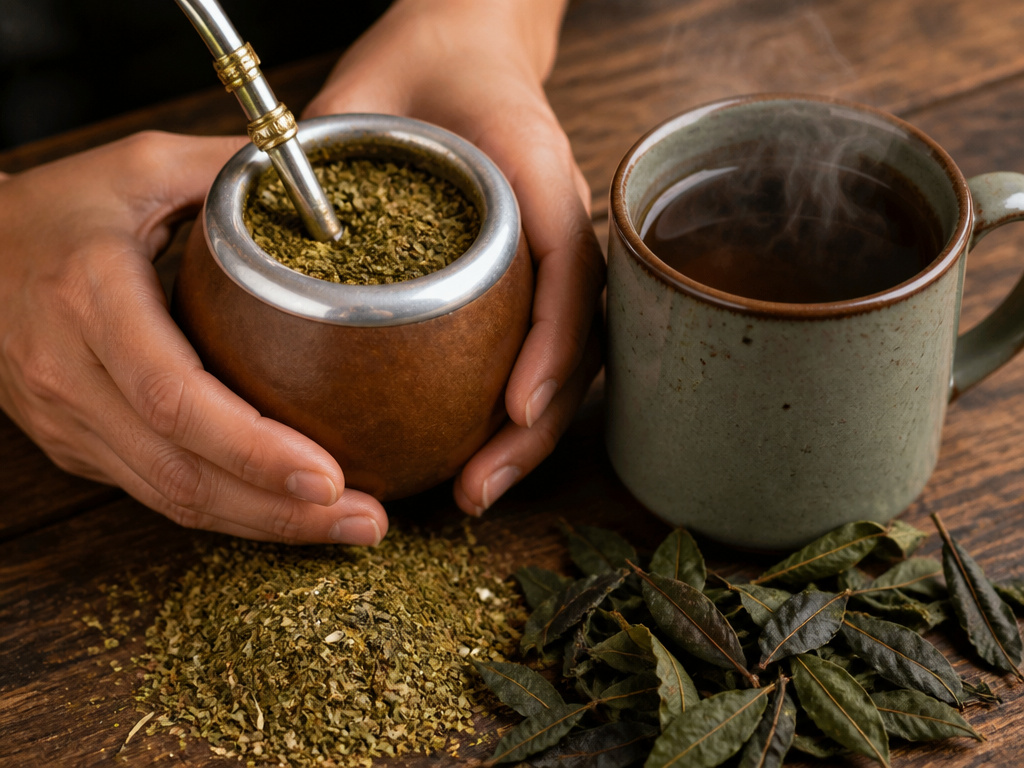
These two holly plants (Ilex paraguariensis and Ilex guayusa) are traditional South American brews. They offer a coffee-like caffeine kick (yerba mate: 85 mg/cup; guayusa: slightly less) but with a different chemical profile that includes theobromine (found in chocolate) and often L-theanine in guayusa. The effect is alert yet calm, with less reported anxiety.
Yerba mate has a bold, smoky, vegetal taste, imagine green tea that spent time by a campfire. It’s traditionally drunk from a gourd (mate) with a metal straw (bombilla), which filters the leaves. Guayusa is smoother, more subtly sweet and earthy, with less bitterness.
I prefer guayusa over yerba mate for afternoon sessions. The caffeine is just as present, but the lack of astringency means I can drink it plain and it doesn’t interfere with my sleep if I have a cup after 3 PM. Yerba mate’s stronger tannins sometimes leave a dry mouthfeel that begs for a sweetener.
Brew them like loose-leaf tea. Use 1-2 tablespoons per cup, water just off the boil (90-95°C), and steep for 3-5 minutes. You can re-steep the leaves multiple times. Avoid buying pre-ground, dust-like yerba mate in tea bags if you can; the loose-leaf experience is fuller and less bitter. These are not coffee flavor substitutes. They are ritualistic, social beverages that provide a robust caffeine experience with a unique taste you learn to crave.
Dandelion Root and Roasted Barley: The Caffeine-Free Comfort Drinks

When you need to remove caffeine entirely from the equation, these two roots and grains step in. They won’t give you energy, but they provide a warm, comforting, and often health-positive drinking experience.
Dandelion Root: Roasted dandelion root brew is dark and earthy, with a bitter note that’s more reminiscent of burnt grain than coffee bean. It’s famously used as a liver-supportive tonic. The flavor is an acquired taste, stronger and more singular than chicory. Brew it like chicory: a long 7-10 minute steep with just-boiled water. It tastes best with a touch of honey and milk to soften its edges.
Roasted Barley Tea (Mugicha): A staple in Korea and Japan, this is made from roasted barley kernels. The taste is nutty, toasty, and clean, like the flavor of a brown bread crust infused in water. It’s incredibly refreshing served iced in summer, but also pleasant hot. It has no bitterness and no caffeine, making it a perfect after-dinner or all-day drink. Simply simmer a handful of roasted barley in water for 5-10 minutes, or steep a tea bag in hot water.
Dandelion root and barley tea are diuretics. If you’re drinking them to replace a high-volume coffee habit, start with one cup a day and monitor your hydration. Switching from four coffees to four dandelion root teas on day one can leave you feeling dehydrated by afternoon.
Their role is hydration and ritual, not stimulation. Don’t expect a flavor replica of coffee. Expect a pleasant, grain-based hot drink that satisfies the hand-to-mouth habit without chemicals.
How to Choose Your Substitute: A Decision Matrix
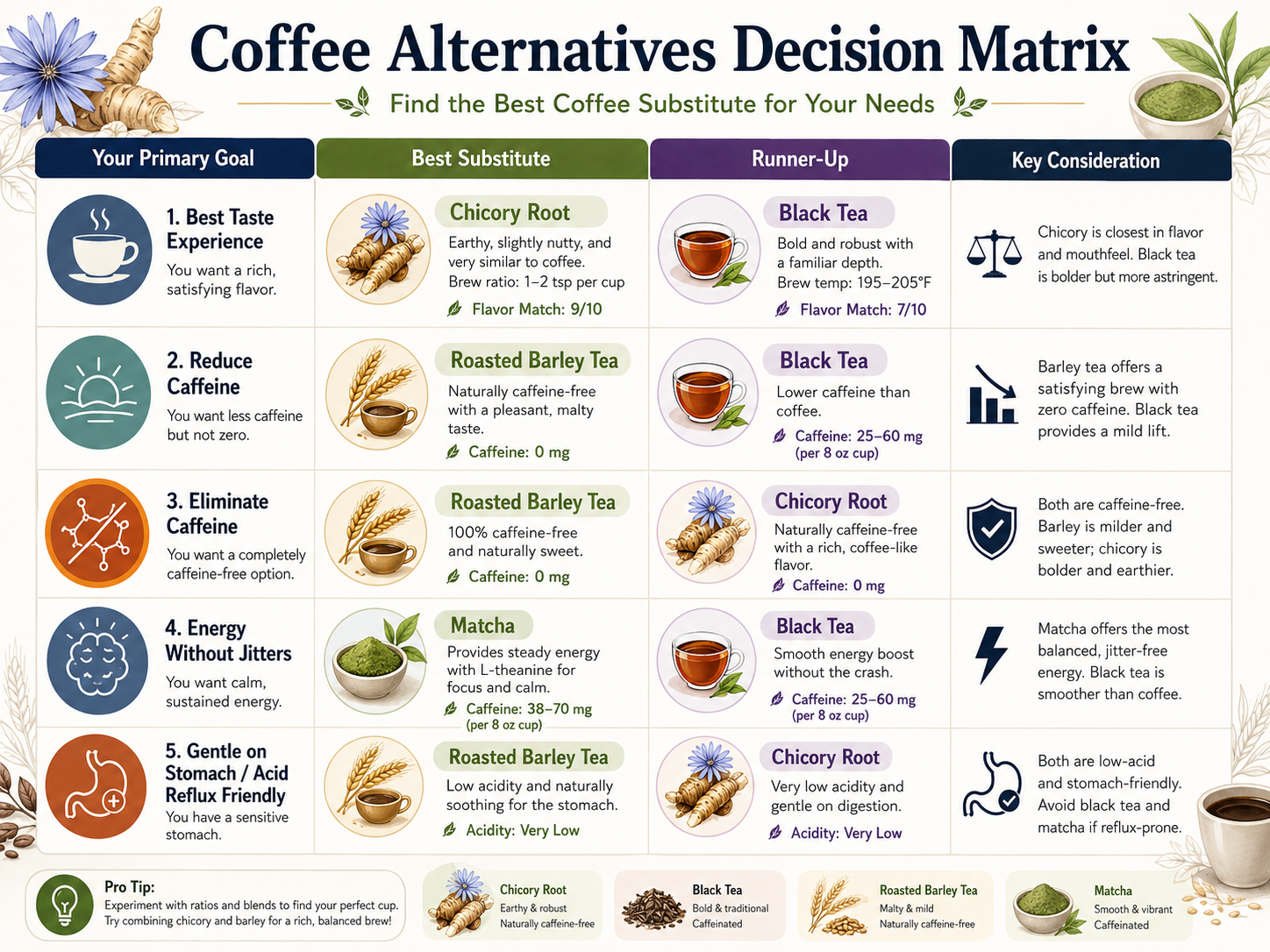
Your goal dictates the best option. Use this table to match your primary reason for quitting coffee with the two strongest candidate substitutes.
| Your Primary Goal | Best Substitute | Runner-Up | Key Consideration |
|---|---|---|---|
| Matching coffee’s taste & look | Chicory Root | Dandelion Root | Must add milk; buy 100% pure product |
| Reducing caffeine but keeping ritual | Black Tea | Yerba Mate | Control brew temperature (90-95°C) |
| Eliminating caffeine entirely | Roasted Barley Tea | Chicory Root | Accept a grain-forward flavor profile |
| Needing energy without jitters/anxiety | Matcha | Guayusa | Investment in proper tools (whisk, sifter) |
| Addressing acid reflux or stomach upset | Matcha or Black Tea | Roasted Barley Tea | Both are far less acidic than coffee |
For a stepwise transition, the method from Stephen Cherniske’s Caffeine Blues is effective. Mix half your regular coffee with half a coffee substitute like chicory or a grain-based blend. Over a week, gradually increase the substitute ratio. Your taste buds and your body’s caffeine receptors adjust without triggering withdrawal headaches. This is far more sustainable than going cold turkey.
Frequently Asked Questions
Can any substitute truly taste exactly like coffee?
No. The complex flavor of coffee, created by roasting hundreds of compounds, is unique. The closest is chicory root, which mimics the dark color, bitterness, and ability to pair with milk. Think of it as a convincing cover song, not the original recording.
What is the best substitute for coffee that still has caffeine?
For a balanced caffeine experience, matcha is superior due to its L-theanine content. For a simple, accessible swap, a strong cup of black tea is your best bet. Its caffeine content is substantial but less likely to cause the sharp spike and crash of coffee.
I miss the creaminess of coffee. Which alternative works best with milk?
Chicory root and black tea are the top contenders. Chicory develops a creamy texture when brewed strong. Black tea, especially robust varieties like Assam, becomes smooth and coffee-like with a splash of milk. Avoid adding milk to green teas like matcha if you’re trying to taste the pure flavor.
Are coffee substitutes good for your stomach?
Generally, yes. Most are far less acidic than coffee. Chicory and dandelion root contain prebiotic fibers that can support gut health. However, some people find yerba mate’s tannins slightly astringent. If your goal is reducing acidity, roasted barley tea or matcha are exceptionally gentle.
What should I avoid when buying a coffee substitute?
Avoid products with long ingredient lists. Steer clear of blends containing maltodextrin (a sweet filler), artificial flavors (like “caramel”), or added instant coffee. These additives create an inferior, often sickly-sweet brew and can undermine a caffeine-free goal. Always opt for single-ingredient products like “100% roasted chicory root.”
The Bottom Line
Finding a good coffee substitute isn’t about discovering an identical flavor. It’s about matching the need, whether for ritual, warmth, energy, or digestive relief, with a beverage that fulfills it better than coffee currently does. Chicory root wins on taste mimicry, especially with milk. Matcha provides a cleaner, more focused energy lift. Black tea is the effortless, reliable switch.
Start with one. Source a pure, high-quality version of that substitute. Brew it with the specific parameters it needs, water temperature and steep time are not suggestions. Your first cup might not win you over. The third one often does. The goal is to find a new habit that you genuinely enjoy, not just to endure a punishment for quitting coffee.
{
“@context”: “https://schema.org”,
“@type”: “HowTo”,
“name”: “How to Find and Brew a Good Coffee Substitute”,
“totalTime”: “PT15M”,
“tool”: [
{
“@type”: “HowToTool”,
“name”: “Kettle or saucepan”
},
{
“@type”: “HowToTool”,
“name”: “French press, tea infuser, or fine mesh strainer”
},
{
“@type”: “HowToTool”,
“name”: “Measuring spoons”
}
],
“step”: [
{
“@type”: “HowToStep”,
“name”: “Identify your goal”,
“text”: “Decide if you need a caffeine-free mimic, a gentler caffeine source, or a specific health benefit. This narrows the list from seven options to two or three.”
},
{
“@type”: “HowToStep”,
“name”: “Source a pure product”,
“text”: “Buy chicory, dandelion, or barley labeled 100% roasted root/grain. Avoid blends with maltodextrin, artificial flavors, or instant coffee added.”
},
{
“@type”: “HowToStep”,
“name”: “Brew with intention”,
“text”: “Steep chicory and dandelion root for 5-7 minutes in just-boiled water. Brew black tea or yerba mate with slightly cooler water (90-95°C) for 3-4 minutes to control bitterness.”
},
{
“@type”: “HowToStep”,
“name”: “Adjust with traditional additives”,
“text”: “Add a splash of milk or a natural sweetener to chicory, dandelion, or black tea. These additives bridge the flavor gap to coffee more effectively than drinking them plain.”
}
]
}
{
“@context”: “https://schema.org”,
“@type”: “FAQPage”,
“mainEntity”: [
{
“@type”: “Question”,
“name”: “Can any substitute truly taste exactly like coffee?”,
“acceptedAnswer”: {
“@type”: “Answer”,
“text”: “No. The complex flavor of coffee, created by roasting hundreds of compounds, is unique. The closest is chicory root, which mimics the dark color, bitterness, and ability to pair with milk. Think of it as a convincing cover song, not the original recording.”
}
},
{
“@type”: “Question”,
“name”: “What is the best substitute for coffee that still has caffeine?”,
“acceptedAnswer”: {
“@type”: “Answer”,
“text”: “For a balanced caffeine experience, matcha is superior due to its L-theanine content. For a simple, accessible swap, a strong cup of black tea is your best bet. Its caffeine content is substantial but less likely to cause the sharp spike and crash of coffee.”
}
},
{
“@type”: “Question”,
“name”: “I miss the creaminess of coffee. Which alternative works best with milk?”,
“acceptedAnswer”: {
“@type”: “Answer”,
“text”: “Chicory root and black tea are the top contenders. Chicory develops a creamy texture when brewed strong. Black tea, especially robust varieties like Assam, becomes smooth and coffee-like with a splash of milk. Avoid adding milk to green teas like matcha if you’re trying to taste the pure flavor.”
}
},
{
“@type”: “Question”,
“name”: “Are coffee substitutes good for your stomach?”,
“acceptedAnswer”: {
“@type”: “Answer”,
“text”: “Generally, yes. Most are far less acidic than coffee. Chicory and dandelion root contain prebiotic fibers that can support gut health. However, some people find yerba mate’s tannins slightly astringent. If your goal is reducing acidity, roasted barley tea or matcha are exceptionally gentle.”
}
},
{
“@type”: “Question”,
“name”: “What should I avoid when buying a coffee substitute?”,
“acceptedAnswer”: {
“@type”: “Answer”,
“text”: “Avoid products with long ingredient lists. Steer clear of blends containing maltodextrin (a sweet filler), artificial flavors (like \”caramel\”), or added instant coffee. These additives create an inferior, often sickly-sweet brew and can undermine a caffeine-free goal. Always opt for single-ingredient products like \”100% roasted chicory root.\””
}
}
]
}
