
Coffee While Breastfeeding: Safety, Limits, and Expert Advice
You can drink coffee while breastfeeding, but you must track your total daily caffeine intake against a firm limit, 200 mg per day according to European and UK health authorities, or up to 300 mg per day per U.S. guidelines. This equals about one to two standard 8-ounce cups of brewed coffee. The caffeine passes into your milk, peaks 1-2 hours after you drink it, and can affect some infants, especially newborns or preemies.
Most breastfeeding guides stop at the 200 mg number. They miss the part where you hit that limit with a single large latte and a square of dark chocolate before noon. They also skip what happens when your six-week-old gets the jitters because you didn’t know their liver can’t process it yet.
This guide breaks down the official limits, explains where they come from, and gives you a real plan for timing your intake. You’ll get a clear list of caffeine amounts in everyday items, learn the specific signs of infant sensitivity, and understand how to adjust as your baby grows.
Key Takeaways
- Stick to a 200 mg daily caffeine limit (EFSA/NHS) for the most conservative safety margin, which is roughly two small cups of coffee.
- Time your coffee right after nursing; caffeine concentration in milk peaks 1-2 hours later, creating the longest buffer before the next feed.
- Chocolate counts heavily due to theobromine, a primary caffeine metabolite that made up 56–88% of total metabolites in one study of nursing mothers.
- Preterm and newborn infants metabolize caffeine extremely slowly; even moderate intake can lead to accumulation and symptoms like jitteriness and poor sleep.
- Watch for specific sensitivity signs: unusual alertness, fussiness that starts 1-2 hours post-feed, clenched fists, and difficulty settling for sleep.
How Much Caffeine Is Safe While Breastfeeding?
Official health bodies agree you need a limit, but they disagree on the number. The European Food Safety Authority (EFSA) and the UK’s National Health Service (NHS) set the bar at 200 mg per day. The U.S. Centers for Disease Control and Prevention (CDC) and the World Health Organization (WHO) say up to 300 mg daily is acceptable.
A 2022 Polish study found that while 65% of breastfeeding women knew coffee was allowed, only 35% were aware of the 1-2 cup daily limit, highlighting a major information gap many new mothers face.
Why the discrepancy? The 200 mg guideline from the EFSA and NHS builds in a larger safety margin, especially for younger infants. The 300 mg figure from the CDC and WHO is based on older data suggesting moderate intake has no measurable impact. The lower number is the prudent choice, particularly in the first three months.
TL;DR: For maximum safety, follow the 200 mg daily limit. It’s the most conservative guideline and accounts for slow metabolism in young infants.
What Does 200 mg of Caffeine Actually Look Like?
A “cup of coffee” is meaningless. A standard 8-ounce mug of home-brewed coffee contains about 95 mg. A 16-ounce grande brewed coffee from a chain cafe can deliver over 300 mg alone, blowing your entire daily budget in one drink.
You must account for all sources. Tea, soda, energy drinks, and chocolate all contribute. Dark chocolate is a significant one, as it contains theobromine. A study published in Nutrients found theobromine represented 56% to 88% of all caffeine metabolites in the breast milk of participants, largely traced back to their chocolate consumption.
| Drink/Food | Typical Serving | Approximate Caffeine |
|---|---|---|
| Brewed Coffee (home) | 8 oz (240 ml) | 95 mg |
| Brewed Coffee (chain, grande) | 16 oz (475 ml) | 310 mg |
| Espresso | 1 shot (1 oz) | 64 mg |
| Black Tea | 8 oz (240 ml) | 47 mg |
| Green Tea | 8 oz (240 ml) | 28 mg |
| Cola | 12 oz (355 ml) | 34 mg |
| Diet Cola | 12 oz (355 ml) | 46 mg |
| Energy Drink (e.g., Red Bull) | 8.4 oz (250 ml) | 80 mg |
| Dark Chocolate (70-85%) | 1 oz (28 g) | 23 mg |
This table is your cheat sheet. Notice how a single large coffee and an energy drink put you over the 300 mg mark. Two cups of home-brewed coffee and a few squares of dark chocolate will nudge you past 200 mg. For a deeper look at how different beverages stack up, our guide on caffeine content in tea vs coffee breaks down the numbers by brew method and steeping time.
What Are the Signs Your Baby Is Sensitive?
Not all babies react. Many show no signs at all. For those who are sensitive, the symptoms are specific, timed, and observable. The primary issue is that infants, especially newborns and preterms, metabolize caffeine at a fraction of an adult’s rate. The LactMed drug safety database notes this slow metabolism means caffeine can accumulate in their system over days.
The classic signs are hyper-alertness and fussiness that appear 1 to 2 hours after you’ve consumed caffeine and peak when the caffeine concentration in your milk is highest. Look for a baby who is wide-eyed but unhappy, difficult to soothe, and clenching their fists. Sleep disruption is a major red flag, short, fitful naps or fighting bedtime when they were previously a good sleeper.
Common mistake: Assuming “a little coffee” won’t affect a newborn, caffeine clearance in a preterm infant can be 10 times slower than in a 6-month-old. What’s a mild stimulant for you is a long-lasting drug for them.
Documented case reports in medical literature paint a clear picture. One involved a 6-week-old who was jittery and had increased muscle tone; the symptoms faded only after the mother, who was drinking 4-5 cups of coffee plus cola daily, stopped all caffeine. Another report described a 5-month-old with restlessness whose mother was drinking 20 cups of coffee a day. In a third case, an infant of a physician who drank at least 5 mugs of coffee daily slept only briefly, woke easily, and was “fretful and jumpy” until the mother eliminated caffeine.
If you see these signs, the test is simple: cut out all caffeine for 5-7 days. If the fussiness and sleep issues improve, you have your answer. You can then try reintroducing a very small amount (like half a cup) and see if the symptoms return. This direct feedback loop is more reliable than any generalized guideline.
How Does Caffeine Get Into Breast Milk?
The transfer is passive and efficient. When you drink a cup of coffee, caffeine enters your bloodstream. It then passes freely into your breast milk via the same mechanisms that allow nutrients to cross. The concentration in your milk mirrors the concentration in your blood.
Research shows caffeine levels in breast milk usually peak 1 to 2 hours after you ingest it. After that peak, the levels decline as your body metabolizes the compound. For a standard 150 mg dose (about a cup and a half of coffee), studies indicate measurable levels remain for several hours. This is why timing your intake right after a feeding is the most effective strategy, it maximizes the clearance time before your baby’s next meal.
The amount that transfers is small, typically 0.06% to 1.5% of the maternal dose. But that small percentage can be meaningful for a tiny infant with an immature liver. A double dose (300 mg) causes a roughly two-fold increase in caffeine levels in both blood serum and breast milk. Infants ultimately consume about 1.3 to 3.1 mg of caffeine from breast milk when their mothers consume between 35 and 336 mg.
When Should You Be Extra Cautious?
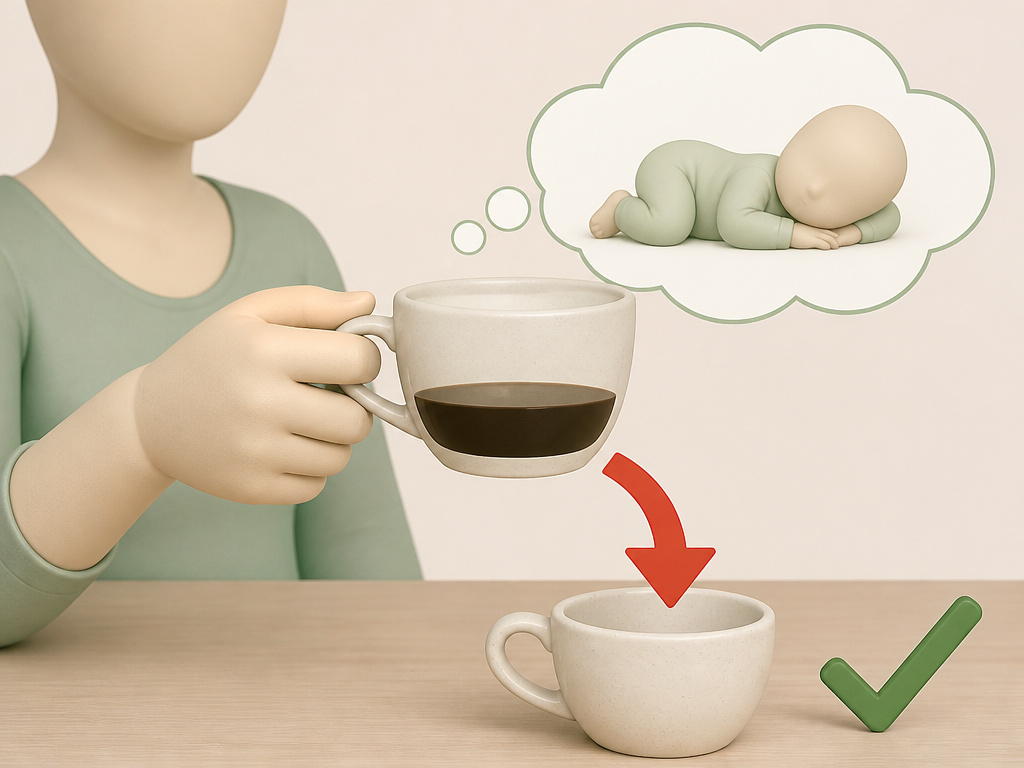
Some situations demand you dial back even further from the general guidelines. The CDC maternal diet guidelines stress that maternal nutrition directly impacts infant health, and caffeine is a part of that equation.
- Your baby is a newborn (under 3 months) or was born preterm. Their liver enzyme systems are simply not developed enough to process caffeine efficiently. It can build up in their system over consecutive days, leading to escalating irritability.
- Your baby has any liver or metabolic issues. If there’s a known medical condition affecting metabolism, caffeine clearance will be even slower. Consult your pediatrician.
- You are a “slow metabolizer.” Genetics affect how quickly you break down caffeine. If you feel jittery for hours after one cup, you likely metabolize it slowly, and so will your baby.
- You are consuming other stimulants. Certain medications, decongestants, or even some herbal supplements can amplify caffeine’s effects on both you and your baby.
In these cases, a limit of 100 mg or less per day, essentially one small cup of coffee, is a wiser approach. Better yet, consider switching to a half-caff blend or exploring the health benefits of tea and coffee to see if a lower-caffeine alternative like green tea, with its L-theanine content, provides a smoother energy lift without the risk.
A Practical Plan for Timing and Tracking
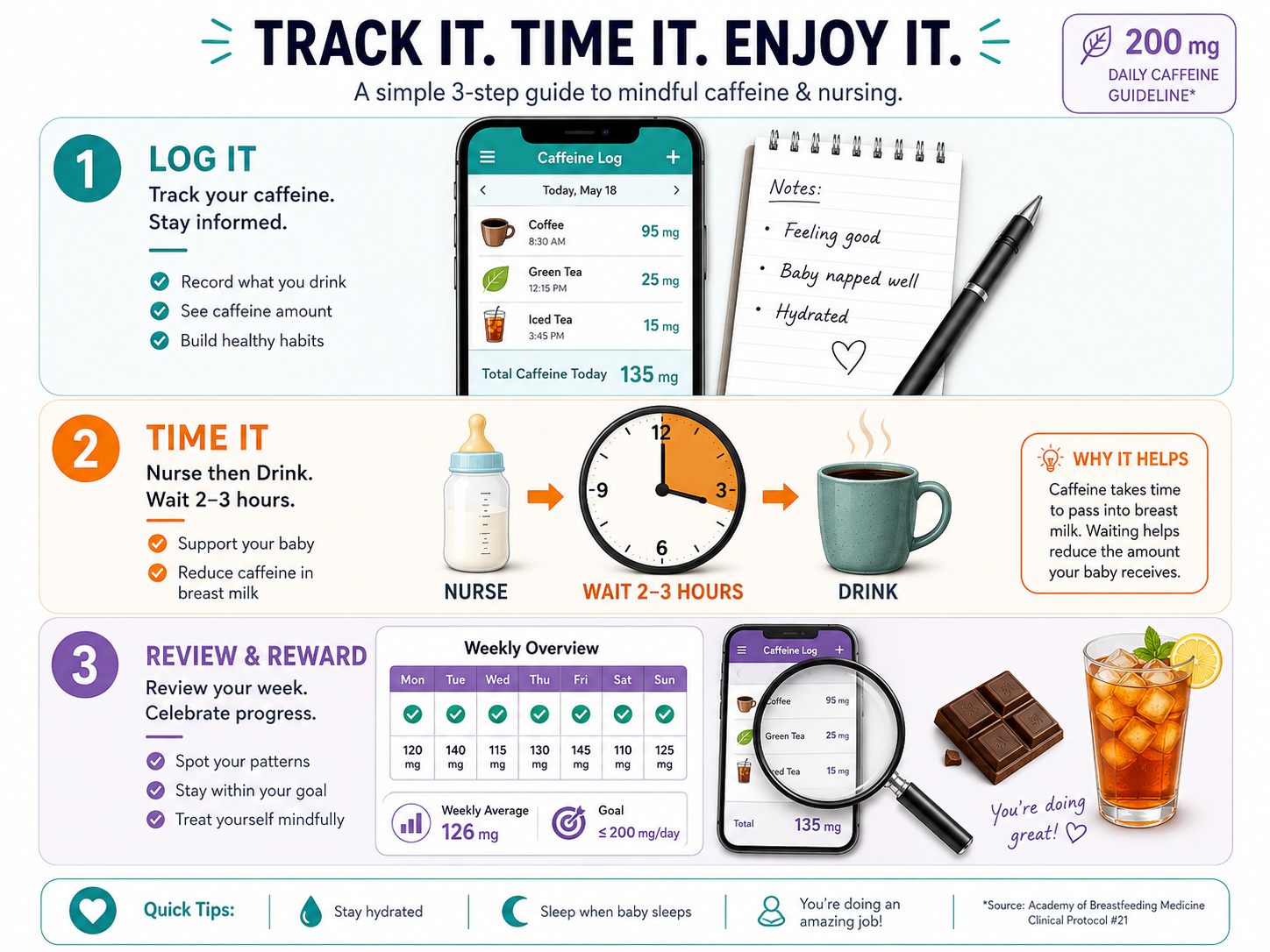
Knowing the limit is one thing. Living within it is another. This three-part system turns the guideline into a habit.
First, pick your tracking method. Use a notes app on your phone or a simple pen-and-paper log. The goal is awareness, not perfection. Every morning, start your log at zero.
Second, implement the “nurse then drink” rule. Feed your baby, then immediately make your coffee. This starts the 1-2 hour peak concentration clock at a point when your baby’s stomach is full and they are least likely to feed again soon. It’s the single most effective timing tactic.
Third, do a weekly audit. At the end of each week, glance at your log. Are you consistently near 200 mg? Are there surprise sources, like that afternoon chocolate bar or the iced tea you forgot about? Adjust for the next week. If you find yourself constantly craving more, our comparison of green tea vs coffee benefits might offer a satisfying, lower-caffeine alternative.
I switched to half-caff beans for my morning pour-over when my second child was a newborn. The ritual stayed the same, the warm mug, the smell, but the caffeine load halved. He slept in longer stretches almost immediately. It wasn’t magic, just math.
What About Decaf, Tea, and Other Drinks?
Decaffeinated coffee is a great option, but know that “decaf” is not caffeine-free. A typical 8-ounce cup of decaf still contains 2-5 mg of caffeine. It’s negligible for most, but if you’re drinking multiple cups a day or have a highly sensitive infant, those milligrams add up.
Tea is a complex substitute. Black tea has about half the caffeine of coffee, while green tea has less. However, tea contains L-theanine, an amino acid that can modulate caffeine’s effects, potentially leading to a calmer alertness. For a detailed breakdown, see our analysis of black tea and black coffee. The big trap is “herbal” tea. While many are caffeine-free, some, like yerba mate or guarana-based blends, are potent stimulants. Always check the label.
Energy drinks are a different category entirely. A single 8.4-ounce Red Bull has about 80 mg of caffeine, but it’s also packed with sugar, B vitamins, and other stimulants like taurine. The combined effect on a nursing infant is unknown and not recommended. The health impacts of caffeine sources like energy drinks versus coffee are significantly different, with the former carrying additional risks.
Chocolate is the stealth source. As noted earlier, the theobromine in chocolate is a major contributor to the caffeine metabolite load in breast milk. A few ounces of dark chocolate can easily add 50-100 mg of theobromine to your daily tally. Count it.
Frequently Asked Questions
Does caffeine decrease milk supply?
No, and it might do the opposite. While some cultural beliefs warn against coffee for supply, a review in the LactMed database notes there is no scientific evidence caffeine reduces milk production. One study even suggested it could slightly stimulate production.
How long should I wait to breastfeed after drinking coffee?
The optimal strategy is to drink your coffee immediately after a nursing session. Since caffeine peaks in your milk 1-2 hours later, this creates the longest possible window for it to clear before the next feed. There’s no need to “pump and dump” unless you’ve consumed an extremely high amount.
My baby is fussy. Is it the caffeine?
It could be. The test is an elimination trial: cut out all caffeine (coffee, tea, soda, chocolate) for 5-7 days. If the fussiness improves, reintroduce a small amount and see if it returns. Other common culprits include dairy or gas, but caffeine is a straightforward variable to test. For more on infant sensitivities, the MotherToBaby caffeine fact sheet is a trusted resource.
Are some types of coffee lower in caffeine?
Yes. A shot of espresso has less total caffeine (about 64 mg) than a full cup of drip coffee (95 mg), but it’s more concentrated. Light roast coffee actually has slightly more caffeine by volume than dark roast. Your best bet for control is knowing your brew method and sticking to a standard mug size.
Can I drink coffee while pregnant and breastfeeding?
Recommendations differ by stage. During pregnancy, organizations like Motherisk recommend a stricter limit of 150 mg per day due to caffeine’s ability to cross the placenta. Once breastfeeding begins, the limits relax slightly to the 200-300 mg range discussed here, as the infant receives a much smaller, filtered dose.
The Bottom Line
You don’t have to give up coffee. You do have to become a strategist about it. The 200 mg daily limit from the EFSA and NHS is your safest target, equating to roughly two small home-brewed cups. Time your intake right after a feed to maximize the clearance period. Most importantly, watch your baby, not just the clock. If you see signs of sensitivity, jitteriness, clenched fists, sleep disruption, cut back immediately. Your morning ritual can stay intact, it just needs a dose of mindfulness.
{
“@context”: “https://schema.org”,
“@type”: “HowTo”,
“name”: “How to Safely Manage Caffeine Intake While Breastfeeding”,
“totalTime”: “PT5M”,
“tool”: [
{
“@type”: “HowToTool”,
“name”: “Caffeine calculator or tracking app”
},
{
“@type”: “HowToTool”,
“name”: “Standard coffee mug (8 oz)”
},
{
“@type”: “HowToTool”,
“name”: “Kitchen timer or phone alarm”
}
],
“step”: [
{
“@type”: “HowToStep”,
“name”: “Know your daily limit”,
“text”: “Set a hard daily caffeine limit of 200 mg if following EFSA/NHS guidelines, or 300 mg if following CDC/WHO advice. This is roughly 1-2 standard cups of brewed coffee.”
},
{
“@type”: “HowToStep”,
“name”: “Time your intake strategically”,
“text”: “Drink your coffee immediately after a nursing session. Caffeine levels in breast milk peak 1-2 hours later, so this creates the longest possible gap before the next feed.”
},
{
“@type”: “HowToStep”,
“name”: “Monitor your infant for signs”,
“text”: “Watch for unusual fussiness, jitteriness, or difficulty sleeping in the hours after you’ve consumed caffeine. These can be signs your baby is sensitive.”
},
{
“@type”: “HowToStep”,
“name”: “Account for all sources”,
“text”: “Remember to count caffeine from tea, soda, energy drinks, and chocolate. Dark chocolate is a significant source of theobromine, a caffeine metabolite.”
},
{
“@type”: “HowToStep”,
“name”: “Adjust for infant age and health”,
“text”: “Be extra conservative if your baby is preterm, newborn (under 3 months), or has medical issues. Their livers metabolize caffeine much more slowly.”
}
]
}
{
“@context”: “https://schema.org”,
“@type”: “FAQPage”,
“mainEntity”: [
{
“@type”: “Question”,
“name”: “Does caffeine decrease milk supply?”,
“acceptedAnswer”: {
“@type”: “Answer”,
“text”: “No, and it might do the opposite. While some cultural beliefs warn against coffee for supply, a review in the LactMed database notes there is no scientific evidence caffeine reduces milk production. One study even suggested it could slightly stimulate production.”
}
},
{
“@type”: “Question”,
“name”: “How long should I wait to breastfeed after drinking coffee?”,
“acceptedAnswer”: {
“@type”: “Answer”,
“text”: “The optimal strategy is to drink your coffee immediately after a nursing session. Since caffeine peaks in your milk 1-2 hours later, this creates the longest possible window for it to clear before the next feed. There’s no need to \”pump and dump\” unless you’ve consumed an extremely high amount.”
}
},
{
“@type”: “Question”,
“name”: “My baby is fussy. Is it the caffeine?”,
“acceptedAnswer”: {
“@type”: “Answer”,
“text”: “It could be. The test is an elimination trial: cut out all caffeine (coffee, tea, soda, chocolate) for 5-7 days. If the fussiness improves, reintroduce a small amount and see if it returns. Other common culprits include dairy or gas, but caffeine is a straightforward variable to test. For more on infant sensitivities, the MotherToBaby caffeine fact sheet is a trusted resource.”
}
},
{
“@type”: “Question”,
“name”: “Are some types of coffee lower in caffeine?”,
“acceptedAnswer”: {
“@type”: “Answer”,
“text”: “Yes. A shot of espresso has less total caffeine (about 64 mg) than a full cup of drip coffee (95 mg), but it’s more concentrated. Light roast coffee actually has slightly more caffeine by volume than dark roast. Your best bet for control is knowing your brew method and sticking to a standard mug size.”
}
},
{
“@type”: “Question”,
“name”: “Can I drink coffee while pregnant and breastfeeding?”,
“acceptedAnswer”: {
“@type”: “Answer”,
“text”: “Recommendations differ by stage. During pregnancy, organizations like Motherisk recommend a stricter limit of 150 mg per day due to caffeine’s ability to cross the placenta. Once breastfeeding begins, the limits relax slightly to the 200-300 mg range discussed here, as the infant receives a much smaller, filtered dose.”
}
}
]
}
