
Choosing Your Roast: Medium vs Dark Roast Coffee Compared
Choosing between medium and dark roast coffee comes down to three concrete factors: your brewing method, your preferred flavor balance, and how you measure your dose. Medium roast highlights a coffee’s origin with balanced sweetness and acidity, ideal for pour-over and drip. Dark roast delivers bold, smoky intensity with lower acidity, built for espresso and milk drinks. The biggest myth, that dark roast has more caffeine, is backwards when you measure by volume.
Most people pick a roast based on the name alone. “Dark” sounds stronger, so it must pack more punch. That assumption leads directly to weak, underwhelming cups and confusion about why that “strong” coffee doesn’t taste right in your Chemex.
This guide breaks down the roast spectrum not by marketing, but by chemistry, flavor mechanics, and real-world brewing outcomes. You’ll learn why a medium roast might be the stronger choice, which chemical changes make dark roast easier on your stomach, and exactly which roast wins for your go-to brewer.
Key Takeaways
- Caffeine is higher by weight in medium roast, but lower by volume in dark roast. A tablespoon of dark roast contains fewer, lighter beans than a tablespoon of medium roast, leading to less caffeine per scoop if you don’t use a scale.
- Dark roast has up to 83% less chlorogenic acid (CGA) than green coffee. This reduction in acids is why dark roast is often gentler on sensitive stomachs, but it also removes many of the bright, fruity origin notes.
- Medium roast is the versatile all-rounder. Its balanced profile works well in most brewing methods, from pour-over to Aeropress, preserving a mix of origin character and roast-developed sweetness.
- Dark roast dominates milk-based drinks and immersion brewers. Its bold, smoky flavors stand up to milk and cream, and its full body shines in a French press or espresso shot.
- Your grinder matters more with dark roast. Inconsistent grinding can turn a dark roast’s boldness into overwhelming bitterness; a quality burr grinder benefits extraction uniformity.
The Roast Spectrum: More Than Just Color
Roasting is the application of controlled heat to transform green coffee beans. The duration and temperature determine everything from flavor to bean structure. Medium roast typically stops after the first crack, before the second crack begins. Dark roast pushes well into or past the second crack.
Common mistake: Judging roast by bean color alone, a shiny, oily surface signals a dark roast, but some medium roasts can appear dark if the bean origin has a high sugar content. Check the roaster’s description, not just the sheen.
The physical changes are dramatic. Beans lose moisture and expand. A dark roast bean can be up to 100% larger in volume and 15% lighter in weight than its green state. This puffiness is the root of the caffeine measurement confusion. It also creates a more brittle bean that produces more fines during grinding, which can clog paper coffee filters in pour-overs.
TL;DR: Roast level is a timeline of heat application, not just a color. Dark roast beans are physically larger, lighter, and more brittle than medium roast beans.
The Caffeine Myth: Weight vs. Volume
This is the most persistent error in coffee. The intense flavor of dark roast feels “stronger,” so people assume it has more caffeine. The opposite is often true in your daily brew.
Here’s the mechanics. Caffeine is remarkably stable under heat. Studies show its concentration by weight changes only slightly during roasting. One HPLC analysis found medium roast had the highest caffeine content by weight at 203.63 mg/L, with dark roast at 189.85 mg/L. The difference is minor.
The real issue is density. As beans roast longer, they lose water and puff up. A dark roast bean is a larger, lighter foam compared to a dense, compact medium roast bean.
| Measurement Method | Medium Roast | Dark Roast | Consequence |
|---|---|---|---|
| By Weight (e.g., 20g) | ~65 beans | ~75 beans | Nearly equal caffeine. |
| By Volume (e.g., 1 scoop) | Dense, many beans | Light, fewer beans | The scoop of dark roast has less caffeine. |
If you scoop your coffee, you’re loading less actual coffee mass, and thus less caffeine, with a dark roast. That’s why your dark roast pot can taste smoky but feel weak. The fix is non-negotiable: use a scale. A grinder impact on flavor is huge, but dose accuracy is foundational.
The YouTube clip nailed it: “if you measure equal volumes the light coffee beans will have more caffeine.” This applies to medium versus dark as well. That bold flavor is masking a potentially lighter caffeine load.
TL;DR: Always dose by weight. A scoop of dark roast contains fewer beans and less caffeine than a scoop of medium roast. For consistent strength, a scale beats a scoop every time.
Flavor Chemistry: What Happens in the Roaster
The flavor difference between medium and dark roast isn’t just about “more roast taste.” It’s a wholesale chemical transformation. Two compounds tell the story: Chlorogenic Acid (CGA) and N-Methylpyridinium (NMP).
Chlorogenic acids are the source of bright, fruity, and acidic notes in coffee. They break down rapidly under heat. Research cited by Ember Coffee Co. shows dark roast loses about 83% of its original CGA, compared to a 65% loss in medium roast. That’s why dark roast has low acidity and why those vibrant blueberry or citrus notes of a light Ethiopian vanish. You trade origin complexity for roast-driven body.
The chemical shift from acidity to bitterness is quantifiable. Dark roast contains about 87 mg/L of N-Methylpyridinium (NMP), a compound formed during roasting that contributes to bitter, roasted flavors. Medium roast has only about 29 mg/L.
NMP is not all bad. It’s part of the “roasty” flavor many love, and some studies suggest it may have gastrointestinal benefits. This ties directly to the anecdotal evidence that dark roast is “easier on the stomach.” The high NMP and low CGA profile is less stimulating to gastric acid secretion.
If you love the nuanced flavors of single-origin coffees, a medium roast preserves more of that geographic signature. A dark roast will stamp over it with its own chemical signature, which is why robust coffee blends often use a dark profile for consistency.
TL;DR: Medium roast keeps more origin-revealing acids (CGA). Dark roast develops more roast-driven, bitter compounds (NMP) and is often lower in acidity, which can be better for sensitive stomachs.
Medium vs Dark Roast: The Head-to-Head
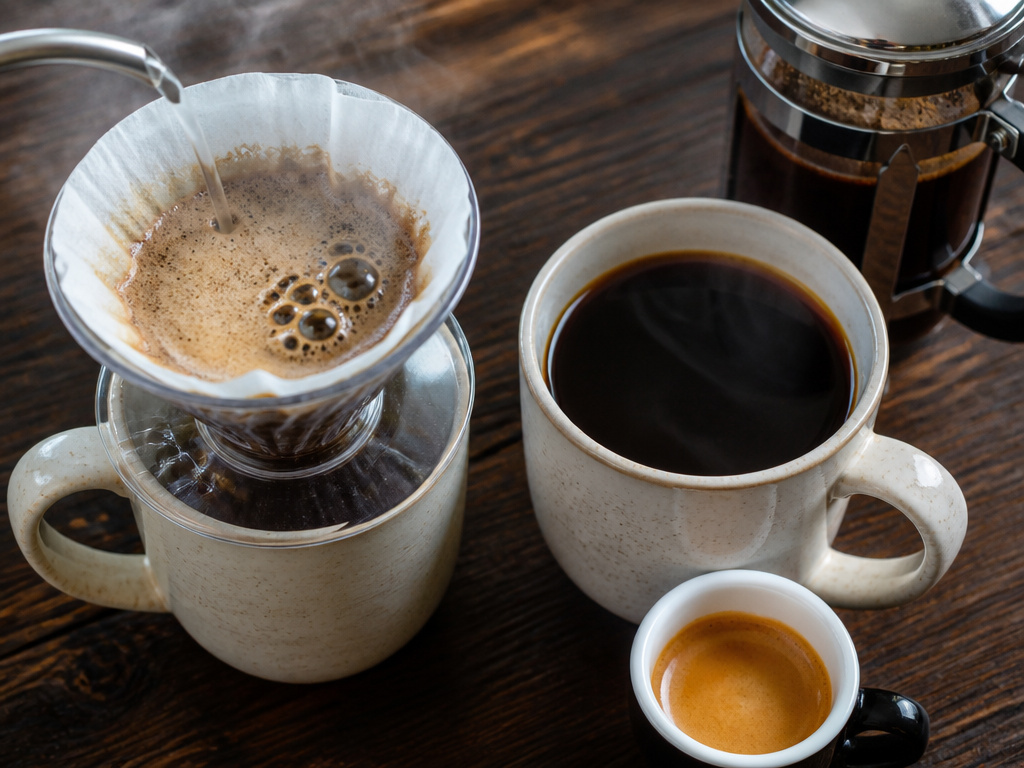
This isn’t about which is objectively better. It’s about which wins for your specific use case. The table below commits.
| Aspect | Medium Roast Winner | Dark Roast Winner | Why It Matters |
|---|---|---|---|
| Acidity & Brightness | ✓ Higher, brighter | Lower, muted | Choose medium for clarity and fruit notes in brewed coffee methods like pour-over. |
| Body & Mouthfeel | Medium, smooth | ✓ Full, heavy, syrupy | Dark roast’s weight stands up to milk and cream, dominating lattes. |
| Flavor Notes | Balanced, caramel, nut, chocolate | ✓ Bold, smoky, char, bittersweet | Dark roast flavors cut through sugar and milk; medium offers more complexity. |
| Best Brew Method | Pour-over, Drip, Aeropress | ✓ Espresso, French Press, Moka Pot | Dark roast’s oils and body excel under pressure and immersion. |
| Stomach Sensitivity | Can be sharper | ✓ Often gentler | The low-acid, high-NMP profile of dark roast is a common choice for reflux. |
When to Choose Medium Roast
Pick a medium roast when your goal is to taste the coffee, not the roast. It’s the ideal candidate for any method where water passes through grounds relatively quickly, like a V60 or standard drip coffee machine. The preserved acidity and complexity will shine. It’s also the safer choice if you’re exploring new Arabica beans and want to understand their character.
A medium roast forgives more. If your grind is a bit off or your water temperature fluctuates, the balanced profile won’t collapse into sheer bitterness the way a dark roast can. This makes it more forgiving for manual brewing beginners.
When to Choose Dark Roast
Commit to a dark roast when you need a flavor that can fight through other ingredients. It is the undisputed champion for:
- Espresso: The intense, syrupy body creates a stable shot that forms the backbone of milk drinks.
- French Press: The full immersion and metal filter let the oils and heavy body through, creating a rich, satisfying cup.
- Any drink with milk or sugar: The smoky, bitter notes provide a counterpoint that doesn’t get washed out.
Consider a dark roast like Peet’s Major Dickason’s or Mothership Coffee Roasters’ Dark Galaxy if your palate prefers a definitive, roasty punch. Be aware that roast-level perception varies. One Mothership customer called the Dark Galaxy “at best, a medium roast,” highlighting that one roaster’s “dark” can be another’s medium. Always read the flavor notes, not just the label.
TL;DR: Medium for tasting origin via pour-over. Dark for bold espresso, French press, and milk drinks. The brewing method chooses the roast.
Grinding and Brewing: The Final Adjustments
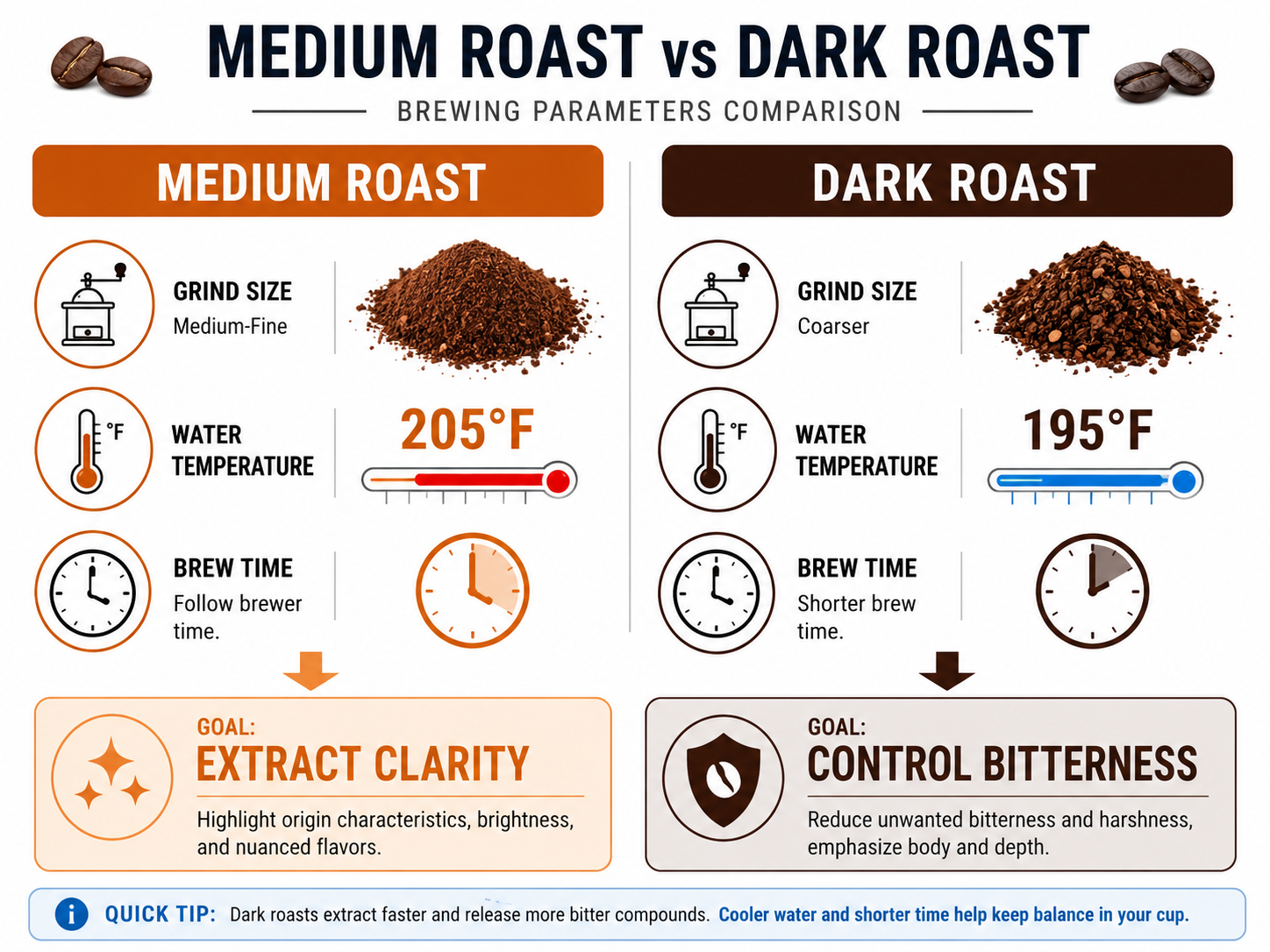
Your equipment demands different things from each roast. Getting this wrong turns a great bean into a mediocre cup.
For medium roast, your target is extraction clarity. You want to dissolve those sugars and acids evenly.
* Grind: Aim for a consistent medium-fine to medium grind. Too fine, and you’ll over-extract bitterness; too coarse, and the cup will taste sour and weak.
* Water Temperature: 200–205°F (93–96°C). This hot water is necessary to properly extract the more complex sugars and acids.
* Brew Time: Follow your brewer’s guidelines. Under-extracting a medium roast leaves its best qualities in the grounds.
For dark roast, your goal is to control bitterness. The compounds that create bitter notes extract very easily.
* Grind: Go slightly coarser than you would for a medium roast. This reduces the surface area and slows the extraction of bitter compounds. A quality burr grinder is critical here to avoid fine particles that over-extract instantly.
* Water Temperature: Drop it to 195–200°F (90–93°C). Cooler water is less aggressive at extracting the bitter elements that are already at the surface.
* Brew Time: Shorter is often better. For a French press, try 3:30 minutes instead of 4. For pour-over, aim for a faster draw-down.
Common mistake: Using scalding hot water on a dark roast, it unleashes a torrent of bitter, ashy flavors that overwhelm any sweetness. Let your kettle sit for 30 seconds off the boil.
If you find your dark roast is still too bitter after adjusting grind and temperature, a tiny pinch of salt in coffee can neutralize the perception of bitterness without adding saltiness. It’s a better fix than loading in brown sugar flavor to mask it.
TL;DR: Brew medium roast hot and fine to highlight complexity. Brew dark roast cooler and coarser to restrain bitterness. Your technique should adapt to the roast.
Frequently Asked Questions
Does dark roast coffee have more caffeine?
No. By weight, caffeine content is very similar, with some studies showing medium roast slightly higher. By volume, using a scoop, dark roast has less caffeine because the beans are larger and lighter. You get fewer beans per scoop.
Which roast is less acidic?
Dark roast is significantly less acidic. The roasting process breaks down chlorogenic acids (CGAs), which are the primary source of acidic flavors. Dark roast can have over 80% less CGA than green coffee, making it a common choice for people with acid reflux or sensitive stomachs.
Is medium roast stronger than dark roast?
“Strong” is ambiguous. If you mean more intense, smoky, bitter flavor, then dark roast is stronger. If you mean more caffeine per measured scoop, then medium roast is stronger. If you mean more pronounced origin character and acidity, medium roast is stronger. Define your metric.
Can I use dark roast for drip coffee?
You can, but it’s not ideal. The longer contact time with hot water in a drip machine can over-extract bitter compounds from a dark roast, leading to a harsh, ashy cup. If you must, use a slightly coarser grind and ensure your machine isn’t running too hot. A medium roast is generally better suited for standard coffee drinks from an auto-drip.
Why does my dark roast taste bitter?
Three likely reasons: your grind is too fine, your water is too hot, or your brew time is too long. Dark roast beans are more soluble and release bitter compounds quickly. Try grinding coarser, lowering your water temperature to just below boiling, and shortening your contact time. Also, check your espresso caffeine content expectations, espresso from dark roast is inherently more concentrated and bitter.
What’s the best roast for cold brew?
Dark roast is the popular choice for cold brew. The cold, slow extraction minimizes bitterness while pulling out the chocolatey, smooth, and low-acid notes. The result is a naturally sweet, heavy-bodied concentrate. A medium roast can make a brighter, more tea-like cold brew, but the classic, smooth profile comes from dark beans.
Before You Go
Stop choosing your roast based on a guess about strength. Match the bean to the brewer. Grab a medium roast for your morning pour-over to taste the work of the farmer. Reserve a dark roast for weekend espresso shots or a sturdy French press.
Remember the scoop myth. That tablespoon of dark beans is mostly air. For consistent results across any roast, a $20 kitchen scale is the most important tool on your counter. It demystifies the caffeine per volume puzzle instantly.
Finally, trust your palate over the label. One roaster’s “dark” might be another’s medium. If you crave the smoky hit of a traditional dark roast but find a bag labeled “dark” too mild, seek out roasters who explicitly mention “French roast,” “Italian roast,” or “espresso roast.” They’re speaking your language.
{
“@context”: “https://schema.org”,
“@type”: “HowTo”,
“name”: “How to Choose Between Medium and Dark Roast Coffee”,
“totalTime”: “PT5M”,
“step”: [
{
“@type”: “HowToStep”,
“name”: “Identify your brewing method”,
“text”: “Match your primary brewing method to the roast. Choose medium roast for pour-over, drip, or Aeropress to highlight origin notes. Choose dark roast for espresso, French press, or milk-based drinks where boldness cuts through.”
},
{
“@type”: “HowToStep”,
“name”: “Consider your flavor priorities”,
“text”: “Decide if you want balanced sweetness and acidity (medium) or bold, smoky, low-acid intensity (dark). If you have a sensitive stomach, the lower acidity of dark roast may be preferable.”
},
{
“@type”: “HowToStep”,
“name”: “Understand the caffeine reality”,
“text”: “Measure your coffee by weight, not volume. A scoop of light, fluffy dark roast beans contains fewer beans and thus less caffeine than a scoop of dense medium roast beans. For consistent caffeine, always use a scale.”
},
{
“@type”: “HowToStep”,
“name”: “Test with a specific coffee”,
“text”: “Buy a small bag of a reputable medium roast (like a single-origin Colombian) and a dark roast (like Peet’s Major Dickason’s) and brew them side-by-side with your usual method. Taste the difference in body, acidity, and finish.”
}
]
}
{
“@context”: “https://schema.org”,
“@type”: “FAQPage”,
“mainEntity”: [
{
“@type”: “Question”,
“name”: “Does dark roast coffee have more caffeine?”,
“acceptedAnswer”: {
“@type”: “Answer”,
“text”: “No. By weight, caffeine content is very similar, with some studies showing medium roast slightly higher. By volume, using a scoop, dark roast has less caffeine because the beans are larger and lighter. You get fewer beans per scoop.”
}
},
{
“@type”: “Question”,
“name”: “Which roast is less acidic?”,
“acceptedAnswer”: {
“@type”: “Answer”,
“text”: “Dark roast is significantly less acidic. The roasting process breaks down chlorogenic acids (CGAs), which are the primary source of acidic flavors. Dark roast can have over 80% less CGA than green coffee, making it a common choice for people with acid reflux or sensitive stomachs.”
}
},
{
“@type”: “Question”,
“name”: “Is medium roast stronger than dark roast?”,
“acceptedAnswer”: {
“@type”: “Answer”,
“text”: “\”Strong\” is ambiguous. If you mean more intense, smoky, bitter flavor, then dark roast is stronger. If you mean more caffeine per measured scoop, then medium roast is stronger. If you mean more pronounced origin character and acidity, medium roast is stronger. Define your metric.”
}
},
{
“@type”: “Question”,
“name”: “Can I use dark roast for drip coffee?”,
“acceptedAnswer”: {
“@type”: “Answer”,
“text”: “You can, but it’s not ideal. The longer contact time with hot water in a drip machine can over-extract bitter compounds from a dark roast, leading to a harsh, ashy cup. If you must, use a slightly coarser grind and ensure your machine isn’t running too hot. A medium roast is generally better suited for standard coffee drinks from an auto-drip.”
}
},
{
“@type”: “Question”,
“name”: “Why does my dark roast taste bitter?”,
“acceptedAnswer”: {
“@type”: “Answer”,
“text”: “Three likely reasons: your grind is too fine, your water is too hot, or your brew time is too long. Dark roast beans are more soluble and release bitter compounds quickly. Try grinding coarser, lowering your water temperature to just below boiling, and shortening your contact time. Also, check your espresso caffeine content expectations, espresso from dark roast is inherently more concentrated and bitter.”
}
},
{
“@type”: “Question”,
“name”: “What’s the best roast for cold brew?”,
“acceptedAnswer”: {
“@type”: “Answer”,
“text”: “Dark roast is the popular choice for cold brew. The cold, slow extraction minimizes bitterness while pulling out the chocolatey, smooth, and low-acid notes. The result is a naturally sweet, heavy-bodied concentrate. A medium roast can make a brighter, more tea-like cold brew, but the classic, smooth profile comes from dark beans.”
}
}
]
}
