
Is Tea Less Acidic Than Coffee? The Brewing Truth Behind pH
Yes, tea is generally less acidic than coffee on the pH scale. Black tea averages pH 6.37, while coffee is around pH 5.35. However, the specific type, your brewing water’s hardness, and compounds like tannins are more critical for digestion than the pH number alone.
Tea is generally less acidic than coffee on a pure pH scale, but the real answer depends entirely on three things: the specific type of tea or coffee, your brewing water, and your personal sensitivity to compounds beyond pH like tannins and caffeine. Black tea brewed with soft water averages a pH of 6.37, while a standard cup of coffee sits around pH 5.35. Green tea can reach a near-neutral pH of 7.0. However, adding lemon or using hard water flips the script, and perceived astringency often matters more than the number on a meter.
Most people get this wrong because they focus only on the headline pH number. They switch from coffee to tea expecting relief from heartburn, only to find a strong black tea or a mint herbal blend triggers the same GERD symptoms. The pH is part of the story, but it’s not the main character. Your brewing method, your water, and the other molecules in your cup dictate whether you’ll feel a burn.
This guide breaks down the measurable acidity, the surprising factors that change it, and what that means for your stomach and your taste buds. We’ll look at the science, the common mistakes, and how to choose your next cup intelligently.
Key Takeaways
- pH is variable: Black tea (pH ~6.37) is less acidic than coffee (pH ~5.35), but green tea (pH up to 7.5) and white tea are even milder. Lemon tea is more acidic than coffee.
- Water changes everything: Hard, alkaline water raises the pH of brewed tea, dulling flavor but reducing perceived sharpness. Your tap water’s mineral content is a major hidden variable.
- Roast level beats bean origin: For lower coffee acidity, choose a dark roast over a light roast. The longer roasting process breaks down more acidic compounds.
- Brewing method is a dial: Cold brew coffee can be 60% less acidic than hot brew. Over-steeping tea extracts more tannins, increasing astringency regardless of pH.
- GERD triggers are compound-specific: Caffeine and certain herbs like peppermint can relax the esophageal sphincter, triggering reflux independently of a drink’s acidity.
The Core pH Numbers You Can Measure
Forget averages and generalizations. You need specific, measurable pH values to make a real comparison. The numbers from lab tests tell a clear, if nuanced, story.
Black tea, when brewed with standard soft water, registers an average pH of 6.37. A typical cup of brewed coffee measures around pH 5.35. Green tea, under the same conditions, can reach a near-neutral pH between 7.0 and 7.5.
That puts green tea in a different category entirely. White tea follows a similar neutral path. The gap between coffee and black tea is about one full pH point, which translates to coffee being roughly ten times more acidic in terms of hydrogen ion concentration. But these are snapshot numbers from controlled brews. Your kitchen isn’t a lab.
TL;DR: On paper, green and white teas are the least acidic (pH ~7), followed by black tea (~6.37), with coffee being the most acidic (~5.35). Your water and technique will shift these numbers.
How Water Hardness Twists the Results
Your water is not neutral. If you have hard water with high bicarbonate alkalinity, think 150–400 mg/L of HCO₃⁻, you are adding a chemical buffer to your brew. This buffer raises the pH.
Hard water makes black tea taste dull and flat because it suppresses the bright orange-red color of theaflavins. It also raises the final pH of the cup, making it technically less acidic. The trade-off is a muddier flavor that many tea enthusiasts work hard to avoid with filtration. For the acidity of tea vs coffee, water quality is the wild card that most online comparisons ignore.
| Beverage & Condition | Typical pH Range | Key Influencing Factor |
|---|---|---|
| Green Tea (soft water) | 7.0 – 7.5 | Low tannin extraction, high theanine |
| Black Tea (soft water) | 4.9 – 5.5 | Oxidation level, steep time |
| Black Tea (hard water) | 6.0 – 6.5+ | High bicarbonate alkalinity |
| Coffee (light roast) | 4.85 – 5.10 | High chlorogenic acid content |
| Coffee (dark roast) | 5.20 – 5.50 | Breakdown of acids during roasting |
| Cold Brew Coffee | 5.50 – 6.00+ | Low-temperature extraction |
Common mistake: Assuming your tap water is neutral, it dramatically alters final acidity. Using hard water to brew black tea can increase its pH by over a full point, making it less acidic than a light roast coffee brewed with soft water.
Why Acidity Isn’t the Whole Story
A pH meter measures hydrogen ion concentration. Your mouth and stomach perceive astringency, bitterness, and chemical triggers like caffeine. These are different phenomena.
The NIH study on tea and coffee acidity involving over 1,800 participants found no consistent link between drinking coffee or tea and the development of erosive esophagitis. This suggests that for many people, factors beyond pure acidity, like individual physiology and the other compounds in these drinks, are the real drivers of discomfort. Your experience may vary wildly from the lab’s pH reading.
The Astringency vs. Acidity Confusion
Astringency is that dry, puckering feeling in your mouth. It’s caused by tannins binding to proteins in your saliva. Tea, especially black tea, can be highly astringent while having a moderate pH. Coffee’s sour bite is often a combination of acidity and bitterness from roasted compounds.
Experienced tea drinkers actually perceive heavily astringent teas as pleasant. Their salivary glands adapt, producing more proteins. A novice will find the same tea unbearably harsh. This perceptual recalibration means your personal history with these drinks changes the game. When comparing the flavor profiles of black tea and coffee, astringency is the hidden variable that pH strips can’t detect.
The GERD and Heartburn Factor
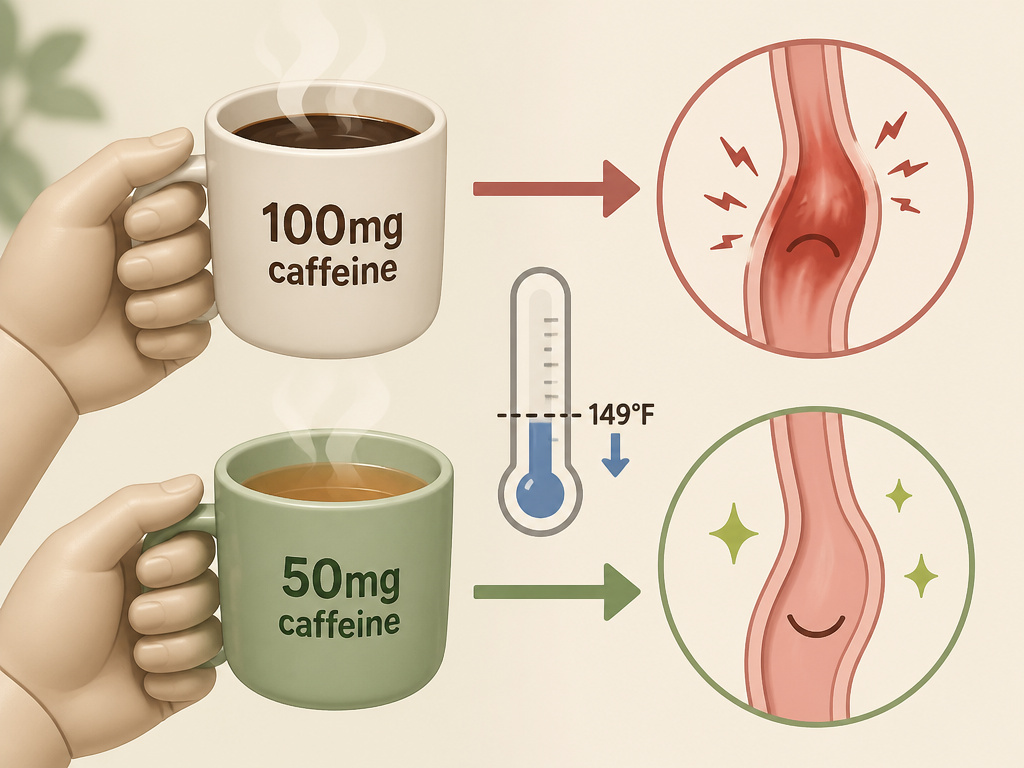
If you’re comparing tea and coffee for digestive comfort, pH is a secondary concern. The primary triggers are often pharmacological.
- Caffeine: This molecule stimulates gastric acid production and can relax the lower esophageal sphincter (LES), allowing stomach acid to splash up. The caffeine content in tea vs coffee is critical here. An 8-ounce cup of black tea has about 50 mg of caffeine. The same cup of brewed coffee has about 100 mg. That’s double the potential trigger dose.
- Herbal Intruders: Many herbal “teas” meant to soothe digestion, like those with peppermint or spearmint, are classic LES relaxants. They can trigger heartburn directly, regardless of pH.
- Temperature: Any drink consumed above 65°C (149°F) significantly increases the risk of esophageal damage. Let your cup cool regardless of what’s in it.
TL;DR: For GERD management, caffeine content and temperature matter more than pH. Decaffeinated options or low-caffeine teas like green tea (~28 mg/cup) may be better bets than switching from coffee to a high-caffeine black tea.
Your Practical Action Plan for a Gentler Cup
You want a satisfying drink without the burn. The path depends on whether you’re team coffee or team tea.
For coffee lovers:
* Go dark. Choose a dark roast. The extended roasting time breaks down chlorogenic acids, the main source of coffee’s sharp acidity.
* Embrace the cold. Cold brew coffee, steeped for 12-24 hours in cold water, extracts fewer acidic compounds. Its pH can be 60% higher (less acidic) than hot brew.
* Try decaf. Decaffeinated coffee averages only 2.4 mg of caffeine per cup, removing the primary pharmacological trigger.
For tea drinkers:
* Pick white or green. Their higher pH and lower tannin content make them inherently gentler.
* Avoid over-steeping. Steep black tea for 3-5 minutes, not 10. Longer steeping pulls more tannins, increasing astringency.
* Skip the mint. If you have reflux, avoid herbal blends featuring peppermint or spearmint.
* Filter your water. Using soft, slightly acidic water (pH 5.5-7.0) optimizes flavor and minimizes metallic, harsh notes from hard water.
I switched to dark roast cold brew during a bad reflux period. The difference wasn’t subtle. The hot, light-roast pour-over I loved was a guaranteed ticket to discomfort 30 minutes later. The cold brew gave me the coffee fix with zero esophageal protest. It tasted different, chocolatey and smooth, not bright and fruity, but my stomach voted yes.
The Health Lens Beyond Acidity
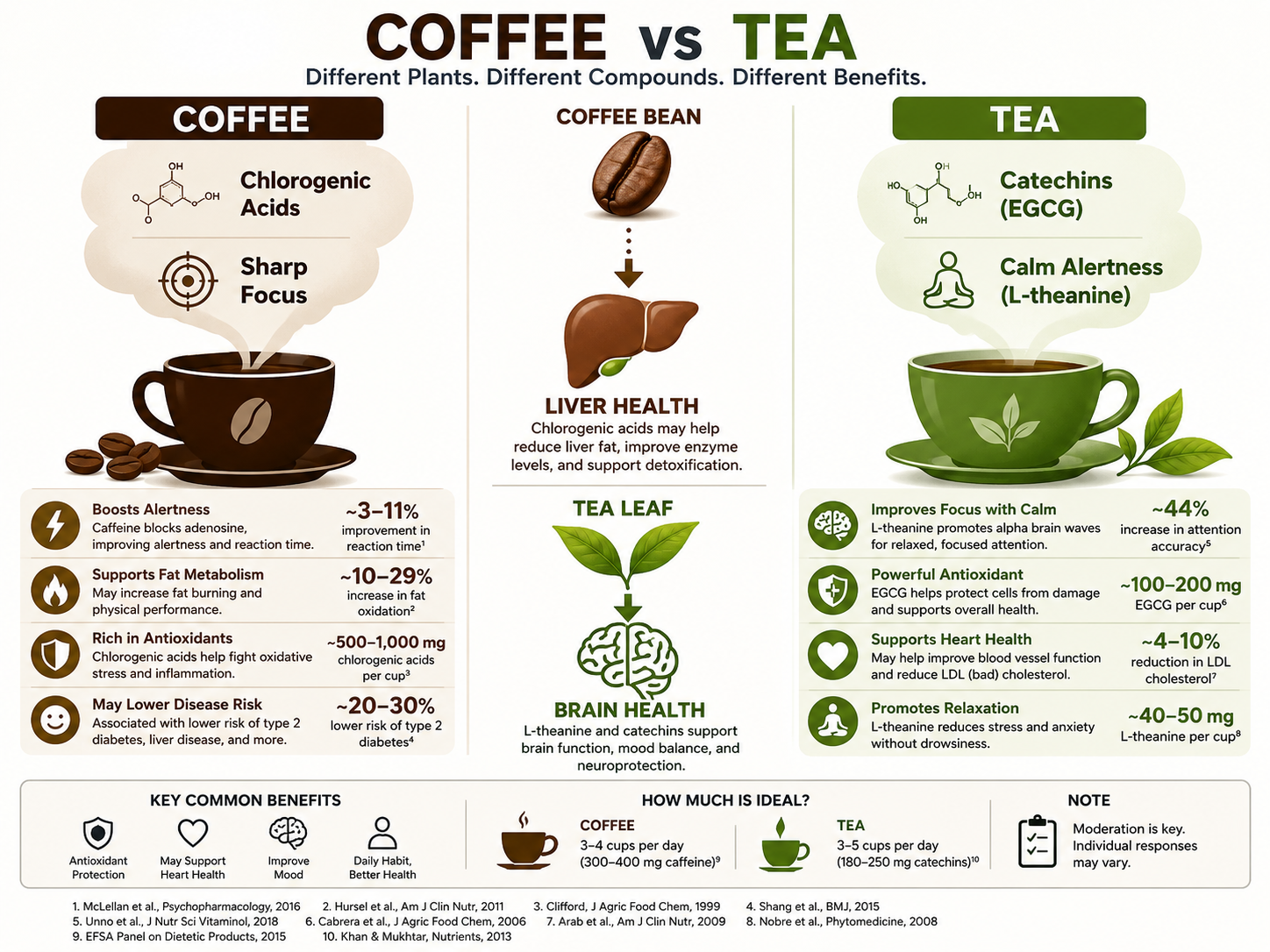
When we pit tea against coffee, we’re often asking which is “better” for us. The answer is fascinating because both are powerhouses of beneficial compounds, just different ones.
Coffee is rich in chlorogenic acids, potent antioxidants linked to reduced inflammation and improved metabolic health. Tea, particularly green tea, is loaded with catechins like EGCG, which have strong anti-inflammatory and neuroprotective properties. Green tea also contains L-theanine, an amino acid that promotes calm, focused alertness without the jitters often associated with coffee’s caffeine hit. This is a key differentiator when considering the overall effects of green tea.
The health benefits comparison shows a split decision. Coffee has stronger evidence for protecting against certain cancers, notably liver cancer. Both drinks show benefits for heart health and cognitive function when consumed in moderation (2-5 cups daily). The additives are often the problem: the sugar, cream, and syrups we add can negate any beverage’s inherent benefits.
| Health Consideration | Coffee’s Edge | Tea’s Edge |
|---|---|---|
| Primary Antioxidants | Chlorogenic acids | Catechins (EGCG) |
| Mental Alertness | Sharp, adrenaline-driven focus | Calm, focused alertness (L-theanine + caffeine) |
| Cancer Prevention | Stronger link to reduced liver & endometrial cancer | Possible link to reduced oral cancer |
| Cholesterol | Unfiltered coffee can raise LDL (due to diterpenes) | No negative effect |
| Iron Absorption | Inhibits non-heme iron absorption | Stronger inhibition of non-heme iron absorption |
Frequently Asked Questions
Is green tea acidic?
No, green tea is generally not acidic. When brewed with soft water, it often has a neutral or slightly alkaline pH, ranging from 7.0 to 7.5. It’s one of the least acidic common beverages.
What tea is least acidic?
White tea and green tea are the least acidic types of true tea (from the Camellia sinensis plant). Herbal teas like chamomile or rooibos are also very low in acidity, but watch out for mint-based blends if you have GERD.
Is decaf coffee less acidic?
Decaffeination itself doesn’t significantly change the pH of coffee. A decaf coffee will have a similar acidity level to its caffeinated counterpart. However, by removing most of the caffeine (down to ~2.4 mg/cup), it eliminates a major trigger for gastric acid production and LES relaxation, which is why it often feels gentler.
Does adding milk reduce acidity?
Milk can slightly buffer acidity, raising the pH of your coffee or tea a small amount. More importantly, the fat and protein in milk can coat the stomach lining, providing subjective relief for some people. It doesn’t change the fundamental acidic nature of the drink.
How does caffeine in espresso compare?
While espresso is concentrated, a standard 1-ounce shot contains about 63 mg of caffeine. A typical 8-ounce cup of drip coffee has about 100 mg. So, per ounce, espresso has more caffeine, but the total dose in a single shot is less than a full cup of coffee. This matters for the caffeine per volume calculation when managing intake.
The Bottom Line
Measuring pH tells you tea is usually less acidic than coffee, with green and white teas being the mildest. But your body doesn’t read pH strips. It reacts to caffeine, tannins, temperature, and your unique biology.
If heartburn is your concern, focus first on reducing caffeine and avoiding trigger herbs like mint. Try dark roast coffee or cold brew, or switch to white tea. If you’re chasing health benefits, both coffee and tea are excellent choices, just skip the sugar.
Your perfect cup is out there. It might be a smooth dark roast cold brew or a subtly sweet white tea. Experiment with the variables: water, roast, steep time, temperature. Let your taste buds and your stomach cast the deciding vote.
{
“@context”: “https://schema.org”,
“@type”: “HowTo”,
“name”: “How to Choose Between Tea and Coffee Based on Acidity”,
“totalTime”: “PT5M”,
“tool”: [
{
“@type”: “HowToTool”,
“name”: “pH test strips or meter”
},
{
“@type”: “HowToTool”,
“name”: “Digital kitchen scale”
},
{
“@type”: “HowToTool”,
“name”: “Gooseneck kettle with temperature control”
}
],
“step”: [
{
“@type”: “HowToStep”,
“name”: “Test your water’s pH”,
“text”: “Measure the pH of your brewing water. Hard, alkaline water (pH above 7.5) will raise the final acidity of black tea, while soft, slightly acidic water (pH 5.5-7.0) produces a brighter, less harsh cup.”
},
{
“@type”: “HowToStep”,
“name”: “Select your bean roast or tea type”,
“text”: “For lower coffee acidity, choose a dark roast. For lower tea acidity with more caffeine, select a white tea over a green tea.”
},
{
“@type”: “HowToStep”,
“name”: “Brew with method in mind”,
“text”: “Use cold brewing for coffee to reduce acidity by up to 60%. For tea, avoid over-steeping black varieties beyond 5 minutes to limit tannin extraction.”
},
{
“@type”: “HowToStep”,
“name”: “Let it cool before sipping”,
“text”: “Allow your drink to cool below 65°C (149°F). Consuming any beverage hotter than this increases the risk of esophageal damage regardless of its pH level.”
}
]
}
{
“@context”: “https://schema.org”,
“@type”: “FAQPage”,
“mainEntity”: [
{
“@type”: “Question”,
“name”: “Is green tea acidic?”,
“acceptedAnswer”: {
“@type”: “Answer”,
“text”: “No, green tea is generally not acidic. When brewed with soft water, it often has a neutral or slightly alkaline pH, ranging from 7.0 to 7.5. It’s one of the least acidic common beverages.”
}
},
{
“@type”: “Question”,
“name”: “What tea is least acidic?”,
“acceptedAnswer”: {
“@type”: “Answer”,
“text”: “White tea and green tea are the least acidic types of true tea (from the Camellia sinensis plant). Herbal teas like chamomile or rooibos are also very low in acidity, but watch out for mint-based blends if you have GERD.”
}
},
{
“@type”: “Question”,
“name”: “Is decaf coffee less acidic?”,
“acceptedAnswer”: {
“@type”: “Answer”,
“text”: “Decaffeination itself doesn’t significantly change the pH of coffee. A decaf coffee will have a similar acidity level to its caffeinated counterpart. However, by removing most of the caffeine (down to ~2.4 mg/cup), it eliminates a major trigger for gastric acid production and LES relaxation, which is why it often feels gentler.”
}
},
{
“@type”: “Question”,
“name”: “Does adding milk reduce acidity?”,
“acceptedAnswer”: {
“@type”: “Answer”,
“text”: “Milk can slightly buffer acidity, raising the pH of your coffee or tea a small amount. More importantly, the fat and protein in milk can coat the stomach lining, providing subjective relief for some people. It doesn’t change the fundamental acidic nature of the drink.”
}
},
{
“@type”: “Question”,
“name”: “How does caffeine in espresso compare?”,
“acceptedAnswer”: {
“@type”: “Answer”,
“text”: “While espresso is concentrated, a standard 1-ounce shot contains about 63 mg of caffeine. A typical 8-ounce cup of drip coffee has about 100 mg. So, per ounce, espresso has more caffeine, but the total dose in a single shot is less than a full cup of coffee. This matters for the caffeine per volume calculation when managing intake.”
}
}
]
}
