Liver Health: Is Mushroom Coffee Good or Bad for Your Liver?
Mushroom coffee may offer liver support, but the evidence is dose-dependent and indirect. The coffee itself is proven to benefit the liver, while the added mushroom extracts, like Chaga and Reishi, show promise in cell and animal studies at much higher doses than a typical cup provides. For most people, it’s likely safe and could be a gentler alternative to regular coffee, but those with liver disease, kidney issues, or on certain medications should avoid it.
The big mistake is assuming the bag of mushroom blend in your pantry delivers the same therapeutic punch as the extracts cited in glowing health articles. It doesn’t. The studies that get people excited use concentrated doses you’d never get from a morning brew.
Let’s cut through the marketing and look at the actual research on mushrooms and liver cells, the proven benefits of coffee itself, and the very real reasons some people should steer clear of this trendy beverage.
Key Takeaways
- Mushroom coffee contains 40-80 mg of caffeine, about half of regular coffee, which alone may benefit liver health.
- Key mushroom extracts like Chaga and Reishi show anti-inflammatory and cell-protective effects in lab studies, but at daily doses (750-3000 mg) far exceeding a cup of mushroom coffee (100-250 mg blend).
- Individuals with liver disease, kidney issues, or those on blood thinners, diabetes medications, or immunosuppressants should consult a doctor before trying mushroom coffee.
- The polysaccharides (beta-glucans) and triterpenes in mushrooms are the compounds studied for immune modulation and liver protection.
- Isolated extract research doesn’t directly translate to the blended, low-dose product in your cup.
How Mushroom Compounds Might Protect the Liver
The proposed liver benefits hinge on specific compounds within medicinal mushrooms, primarily polysaccharides like beta-glucans and triterpenes. These aren’t just random healthy ingredients. They have defined mechanisms studied in labs.
Beta-glucans, found in Turkey Tail and Reishi, are complex sugars that modulate the immune system. They don’t directly attack pathogens. Instead, they train immune cells to respond more efficiently, which can reduce chronic, low-grade inflammation. Since inflammation is a key driver of liver stress and fibrosis, calming it down is a net positive for the organ.
Triterpenes, abundant in Reishi and Chaga, are a different class. They are bitter-tasting compounds with direct anti-inflammatory and antioxidant activity. Think of them as cellular bodyguards. They can help neutralize free radicals that damage liver cells and interfere with inflammatory pathways at a molecular level.
Beta-glucans from mushrooms like Reishi and Turkey Tail act as immunomodulators, potentially reducing the chronic inflammation that stresses the liver. Triterpenes, particularly from Reishi and Chaga, provide direct antioxidant and anti-inflammatory activity at the cellular level.
The most cited evidence comes from petri dishes and mice. A 2015 study in the World Journal of Gastroenterology found Chaga extract suppressed the growth of human liver cancer cells in culture and slowed tumors in mice. It’s compelling, foundational science. It is also not a human clinical trial drinking mushroom coffee.
TL;DR: The beta-glucans and triterpenes in mushrooms have plausible, science-backed pathways to support liver health by reducing inflammation and oxidative stress, but human data is lacking.
The Critical Gap: Your Coffee Dose vs. The Study Dose
This is where the conversation falls apart. You read about a amazing study and picture sipping your way to those results. The numbers tell a different story.
A typical cup of mushroom coffee delivers between 100 and 250 milligrams of a multi-mushroom extract blend. The lion’s share of that weight is often filler like ryegrass or chicory. The actual extract content per mushroom is a fraction of the total.
Now, look at the doses used in the positive human studies that get referenced. Research on Reishi for quality of life in cancer patients used 1,500 to 3,000 milligrams per day of a standardized extract. Studies on Lion’s Mane for cognitive support used 750 to 1,000 milligrams daily. We’re talking about pure, single-mushroom extracts in capsule form.
| Factor | Typical Mushroom Coffee | Clinical Study Doses |
|---|---|---|
| Format | Blend with coffee + multiple mushroom extracts | Purified, single-mushroom extract (capsule/powder) |
| Daily Dose (per mushroom) | ~25-75 mg (estimated from blend) | 750 – 3,000 mg |
| Primary Evidence | Anecdotal reports, mechanistic plausibility | Human clinical trials, cell/animal studies |
| Consumer Expectation | “I’m getting the studied benefits.” | “This is a therapeutic intervention.” |
Your morning mug is simply not in the same league. It’s like comparing the vitamin C in a glass of orange juice to the dose used in an intravenous medical treatment. Both have vitamin C, but the purpose, potency, and outcome are worlds apart.
This dose disparity is the single most important fact to understand. It means any potential liver benefit from the mushrooms in your coffee is likely to be subtle, if perceptible at all. The Harvard Health mushroom coffee overview correctly frames this, noting that benefits are extrapolated and evidence is limited for the beverage itself.
Common mistake: Assuming the mushroom dose in your coffee matches the therapeutic doses in clinical studies, it’s off by a factor of 10 to 40. You’re getting a supportive hint, not a clinical treatment.
The Caffeine Advantage: Coffee’s Proven Liver Benefits
Here’s the ironic twist. While we’re scrutinizing the mushroom part, the coffee component of your mushroom coffee has a stronger, more direct resume for liver health. This is the non-commodity insight most articles bury.
Regular, moderate coffee consumption is one of the most well-established dietary factors associated with a healthier liver. A massive body of evidence, including over 1,000 studies reviewed by the World Health Organization, links coffee drinking to a reduced risk of liver conditions. This includes liver cancer, fibrosis, and cirrhosis.
The mechanism isn’t fully mapped, but it’s believed coffee’s hundreds of bioactive compounds, including antioxidants like chlorogenic acid, help reduce inflammation and slow the progression of scar tissue in the liver. It’s a robust, population-level finding.
Mushroom coffee enters this picture with a potential edge: lower caffeine. A serving typically has 40 to 80 milligrams of caffeine. Regular coffee sits between 80 and 120 milligrams. For individuals who are caffeine-sensitive or who experience jitters, anxiety, or sleep disruption from full-strength coffee, mushroom coffee offers a way to tap into coffee’s liver benefits without the high-caffeine side effects. It’s a gentler delivery vehicle for a proven beneficial substance.
This creates a sensible hierarchy of benefit. The coffee base provides a well-documented liver-protective effect. The mushroom extracts add a layer of potential support through different mechanisms, albeit at a much lower dose than studied. If you’re exploring other functional additions to your routine, understanding the caffeine content comparison between beverages is a useful next step.
Who Should Absolutely Avoid Mushroom Coffee?
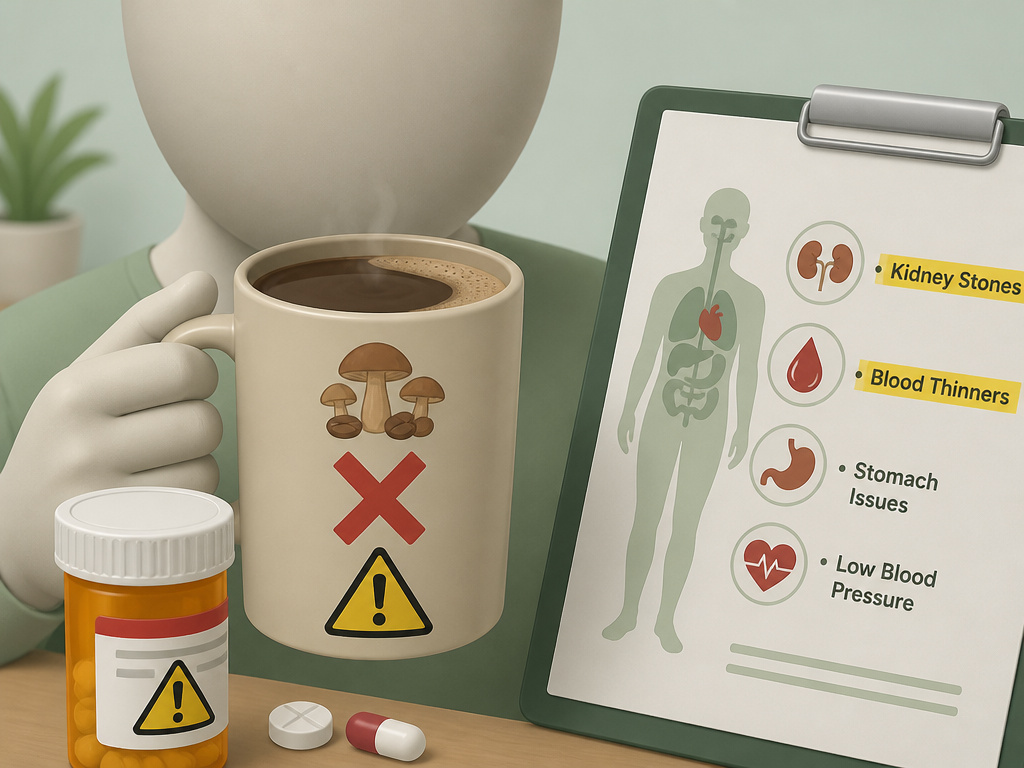
The functional mushroom market leans hard into the “natural = safe” narrative. It’s not that simple. These are biologically active compounds, and they interact with human physiology. For some groups, the risks clearly outweigh any hypothetical benefits.
The contraindications are specific and backed by clinical reasoning. If you fall into one of these categories, the answer to “Is mushroom coffee good for your liver?” is a firm “No,” or at least “Not without a doctor’s explicit okay.”
- Liver Disease or Elevated Liver Enzymes: This is the most critical warning. If your liver is already compromised, introducing any supplement or novel compound is a risk. The liver processes everything; you don’t want to challenge it further. Avoid.
- Kidney Disease or Kidney Stone Risk (especially with Chaga): Chaga mushroom is notably high in oxalates, which can contribute to kidney stone formation. If you have a history of stones or reduced kidney function, Chaga-containing products are a bad idea.
- Blood Thinners (e.g., Warfarin): Some mushrooms, like Reishi, may have anticoagulant or antiplatelet effects. Mixing them with blood-thinning medication could increase your risk of bleeding.
- Diabetes Medications: Mushrooms like Reishi may lower blood sugar. Combined with diabetes drugs, this could lead to dangerously low blood sugar (hypoglycemia).
- Autoimmune Conditions & Immunosuppressants: Since beta-glucans modulate the immune system, they could theoretically stimulate an overactive immune response in conditions like rheumatoid arthritis or lupus. They might also interfere with immunosuppressant drugs taken after organ transplants.
- Pregnancy and Breastfeeding: Simply put, there aren’t enough safety studies. The standard advice is to avoid. If you’re a nursing mother curious about caffeine limits in general, our guide on caffeine while breastfeeding covers the conventional coffee guidelines.
The Cleveland Clinic mushroom coffee guide emphasizes these interaction points, reinforcing that a conversation with your clinician is non-negotiable for these groups. It’s not about fear-mongering. It’s about recognizing that “functional” foods have functions, and sometimes those functions clash with your body’s current state.
Making an Informed Choice: What to Look For
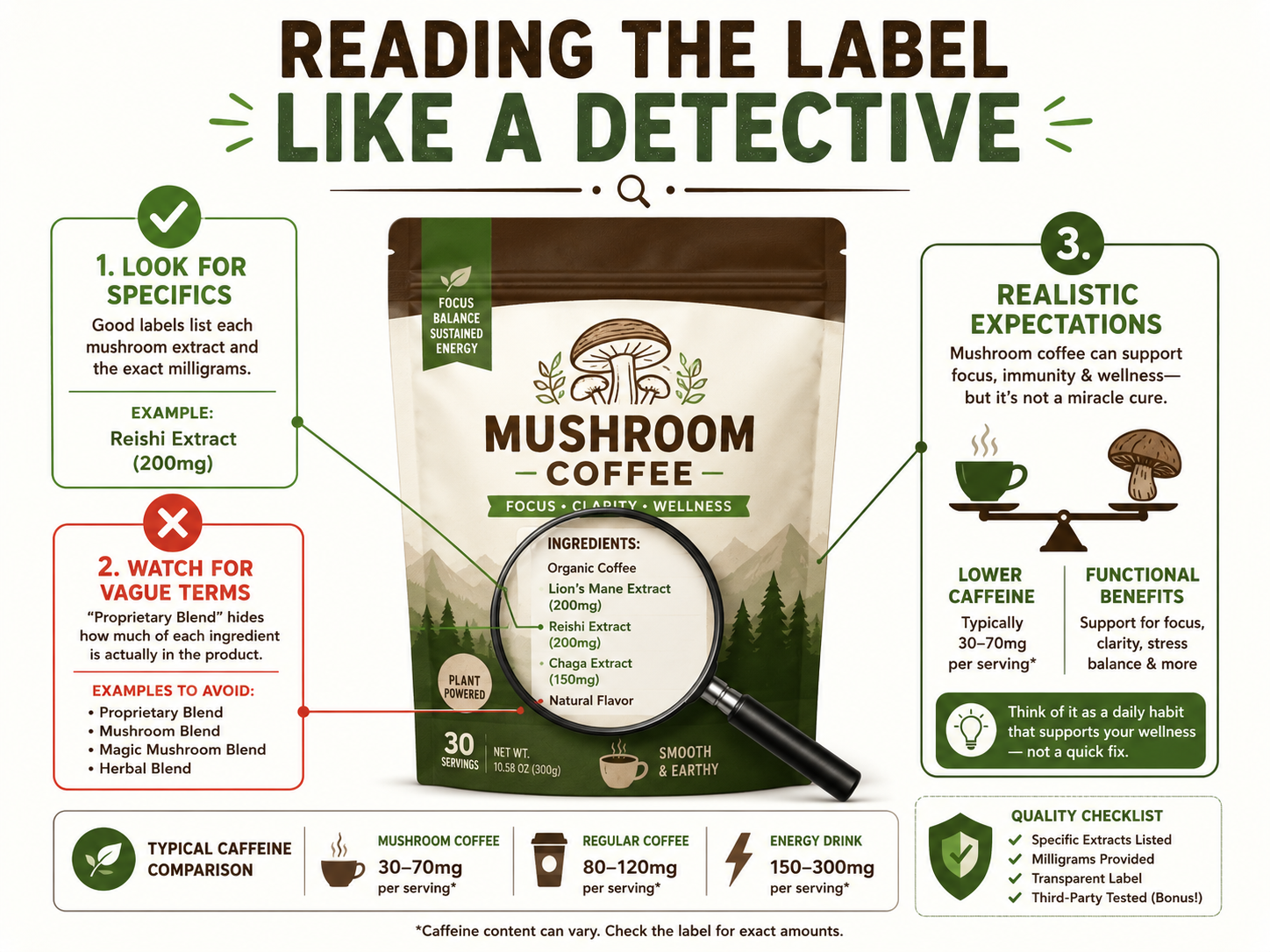
If you’ve cleared the contraindications and still want to try mushroom coffee, you can be a smarter shopper. Don’t just grab the prettiest bag. Your goal is to find a transparent product that aligns with realistic expectations.
First, read the label like a detective. A reputable brand will state exactly how many milligrams of extract from each mushroom are in a serving. Vague terms like “proprietary blend” or listing only the total blend weight are red flags. You want to see “200mg Reishi extract (Ganoderma lucidum), 150mg Lion’s Mane extract (Hericium erinaceus),” and so on.
Second, manage your expectations. Buy it for what it is: a lower-caffeine coffee alternative that might offer a mild sense of focus or calm (thanks to adaptogens like Reishi) and a theoretical sprinkle of liver-supporting compounds. Don’t buy it as a cure-all. The tangible benefits you’re most likely to notice are reduced coffee jitters and possibly less acid reflux, as the lower coffee content and soothing mushroom polysaccharides can be gentler on the stomach for some people.
Finally, consider your “why.” If you’re primarily after liver health, know that regular, moderate coffee consumption is a more evidence-based choice. If you’re curious about functional mushrooms, a dedicated, high-quality single-extract supplement will get you closer to the studied doses. Mushroom coffee sits in the middle, a pleasant hybrid. For other ways to enhance your brew, some explore MCT oil benefits for sustained energy or cinnamon coffee benefits for blood sugar balance.
Frequently Asked Questions
Does mushroom coffee cleanse your liver?
No. The concept of a “liver cleanse” is largely a marketing myth. Your liver is a sophisticated organ that detoxifies itself continuously. Mushroom coffee may support overall liver health through anti-inflammatory and antioxidant mechanisms, but it does not perform a special cleanse.
Is Chaga the best mushroom for liver health?
Chaga has the most direct research in cell and animal studies showing activity against liver cancer cells. However, Reishi’s broader anti-inflammatory and immunomodulatory profile via triterpenes and beta-glucans also provides strong theoretical support for liver protection. There is no declared “best” for human consumption yet.
Can mushroom coffee replace my medication for liver disease?
Absolutely not. If you have a diagnosed liver condition, your treatment plan should be managed solely by your healthcare provider. Do not use mushroom coffee or any supplement as a replacement for prescribed medication. It could interfere with your treatment or worsen your condition.
How long does it take to see benefits from mushroom coffee?
This is highly individual and depends on your definition of “benefits.” If you’re sensitive to caffeine, you might notice calmer energy immediately due to the lower caffeine content. Any potential systemic benefits related to inflammation or immunity would, if they occur, be subtle and likely take weeks or months of consistent use to become noticeable, if at all.
Is mushroom coffee safer for your stomach than regular coffee?
Many users report yes. The lower acidity from having less coffee grounds per serving, combined with the potentially soothing polysaccharides in mushrooms like Reishi, can make it easier on the digestive system. If regular coffee causes you acid reflux or stomach upset, mushroom coffee is worth a try. For more on coffee’s digestive effects, see our article on coffee and digestion.
The Bottom Line
Mushroom coffee sits at a curious intersection of proven science and plausible speculation. The coffee itself is good for your liver. The mushroom extracts contain compounds with legitimate, studied pathways to support liver health. The catch is the massive gap between the dose in your cup and the dose used in the lab.
For the average, healthy person, drinking mushroom coffee is likely safe and may offer a smoother, lower-caffeine experience with a side of potential wellness benefits. It is not a medical treatment. For anyone with existing liver conditions, kidney issues, or who takes certain medications, the risks are concrete and warrant avoidance unless a doctor says otherwise.
Your takeaway should be one of measured optimism. Enjoy mushroom coffee for what it is, a potentially gentler, functionally enhanced cup of coffee. Don’t expect it to perform pharmaceutical miracles. And always, always read the label and know your own body’s limits.
{
“@context”: “https://schema.org”,
“@type”: “HowTo”,
“name”: “How to Evaluate Mushroom Coffee for Liver Health”,
“totalTime”: “PT10M”,
“tool”: [
{
“@type”: “HowToTool”,
“name”: “Mushroom coffee product label”
},
{
“@type”: “HowToTool”,
“name”: “Scientific research review (optional)”
},
{
“@type”: “HowToTool”,
“name”: “Consultation with a healthcare provider”
}
],
“step”: [
{
“@type”: “HowToStep”,
“name”: “Check the extract dose”,
“text”: “Compare the milligrams of mushroom extract per serving listed on your product to the 750-3000 mg daily doses used in clinical studies.”
},
{
“@type”: “HowToStep”,
“name”: “Identify your personal risk factors”,
“text”: “Review the list of contraindications, including liver disease, kidney stones, blood thinners, and autoimmune conditions, to see if you should avoid mushroom coffee.”
},
{
“@type”: “HowToStep”,
“name”: “Understand the caffeine difference”,
“text”: “Recognize that mushroom coffee’s lower caffeine content (40-80 mg) may be gentler on your system than regular coffee (80-120 mg), which is itself proven to benefit the liver.”
},
{
“@type”: “HowToStep”,
“name”: “Separate blend benefits from individual extract research”,
“text”: “Acknowledge that most positive liver studies focus on high-dose, single-mushroom extracts, not the blended, lower-dose product in your cup.”
},
{
“@type”: “HowToStep”,
“name”: “Consult a professional if uncertain”,
“text”: “Speak with a doctor or dietitian, especially if you have a pre-existing health condition or take medication, before making mushroom coffee a daily habit.”
}
]
}
{
“@context”: “https://schema.org”,
“@type”: “FAQPage”,
“mainEntity”: [
{
“@type”: “Question”,
“name”: “Does mushroom coffee cleanse your liver?”,
“acceptedAnswer”: {
“@type”: “Answer”,
“text”: “No. The concept of a \”liver cleanse\” is largely a marketing myth. Your liver is a sophisticated organ that detoxifies itself continuously. Mushroom coffee may support overall liver health through anti-inflammatory and antioxidant mechanisms, but it does not perform a special cleanse.”
}
},
{
“@type”: “Question”,
“name”: “Is Chaga the best mushroom for liver health?”,
“acceptedAnswer”: {
“@type”: “Answer”,
“text”: “Chaga has the most direct research in cell and animal studies showing activity against liver cancer cells. However, Reishi’s broader anti-inflammatory and immunomodulatory profile via triterpenes and beta-glucans also provides strong theoretical support for liver protection. There is no declared \”best\” for human consumption yet.”
}
},
{
“@type”: “Question”,
“name”: “Can mushroom coffee replace my medication for liver disease?”,
“acceptedAnswer”: {
“@type”: “Answer”,
“text”: “Absolutely not. If you have a diagnosed liver condition, your treatment plan should be managed solely by your healthcare provider. Do not use mushroom coffee or any supplement as a replacement for prescribed medication. It could interfere with your treatment or worsen your condition.”
}
},
{
“@type”: “Question”,
“name”: “How long does it take to see benefits from mushroom coffee?”,
“acceptedAnswer”: {
“@type”: “Answer”,
“text”: “This is highly individual and depends on your definition of \”benefits.\” If you’re sensitive to caffeine, you might notice calmer energy immediately due to the lower caffeine content. Any potential systemic benefits related to inflammation or immunity would, if they occur, be subtle and likely take weeks or months of consistent use to become noticeable, if at all.”
}
},
{
“@type”: “Question”,
“name”: “Is mushroom coffee safer for your stomach than regular coffee?”,
“acceptedAnswer”: {
“@type”: “Answer”,
“text”: “Many users report yes. The lower acidity from having less coffee grounds per serving, combined with the potentially soothing polysaccharides in mushrooms like Reishi, can make it easier on the digestive system. If regular coffee causes you acid reflux or stomach upset, mushroom coffee is worth a try. For more on coffee’s digestive effects, see our article on coffee and digestion.”
}
}
]
}
