
The Truth About Drinking Coffee While You Are Breastfeeding
The truth about drinking coffee while breastfeeding is that a safe limit is 200 mg of caffeine daily. However, a key study found infant weight gain slowed when maternal intake exceeded 130 mg daily. Time your coffee right after a feed, as caffeine’s half-life in a newborn is over 97 hours.
Yes, it is generally safe to drink coffee while breastfeeding if you limit your total daily caffeine intake to about 200 milligrams. That’s roughly two small cups of home-brewed coffee. The caffeine passes into your milk, but only about 1.5% of the dose you consume reaches your baby. The real limit isn’t just about fussiness, it’s a specific 130 milligram threshold tied to infant weight gain.
Most advice stops at the 200 mg guideline. They miss the study that found infants of mothers consuming over 130 mg of caffeine daily started showing a decrease in weight percentile. They also skip the iron story: drinking more than 450 mL of coffee a day can lower the iron content in your milk. This isn’t about giving up coffee. It’s about drinking it smarter, knowing the half-life in a newborn is 97.5 hours, timing your cup right after a feed, and watching for the subtle signs that mean you need to cut back.
Key Takeaways
- The 130 mg daily caffeine mark is a pivot point. One survey linked intake above this level to a decreasing infant weight percentile.
- Peak caffeine concentration in breast milk hits 60 to 120 minutes after you drink. Nursing right before your coffee creates the longest clearance window.
- A newborn’s liver is immature. The half-life of caffeine is 97.5 hours in a newborn, compared to 4.9 hours in an adult. This means it builds up if you drink daily.
- Watch for iron levels. A study of mothers drinking over 450 mL of coffee daily found lower iron concentrations in their breast milk and lower infant hemoglobin at one month.
- Chocolate and soda count. Theobromine, a caffeine metabolite from chocolate, made up 56% to 88% of total stimulants found in one breast milk analysis.
How Much Caffeine Passes Into Breast Milk?
The transfer rate is low, but not zero. Research consistently shows that an infant receives about 1.5% of the maternal caffeine dose through breast milk. If you drink a standard 8-ounce cup of coffee with roughly 95 mg of caffeine, your baby gets the equivalent of about 1.4 mg.
Caffeine appears in breastmilk rapidly after maternal ingestion. Peak levels are found 60-120 minutes after intake, with an infant receiving approximately 1.5% of the maternal dose.
That small amount seems insignificant until you factor in accumulation. Caffeine’s half-life, the time it takes for the body to eliminate half of it, is dramatically different between you and your baby. In an adult, it’s about 4.9 hours. In a 3-5 month old, it’s 14 hours. In a newborn, it’s 97.5 hours. That’s over four days.
If you have a daily coffee habit, that 1.4 mg from today’s cup is still in your newborn’s system when you add another 1.4 mg tomorrow, and another the day after. The level can creep up. This is why preterm infants and those under three months are the most sensitive group. Their livers simply can’t clear the stimulant.
TL;DR: Your baby gets about 1.5% of your caffeine dose. Because a newborn clears it 20 times slower than you do, daily consumption leads to buildup, not a single exposure.
The 130 Milligram Threshold
The common 200-300 mg safety limit is a broad guideline. Dig into the data, and a more precise number emerges. A survey of 56 exclusively breastfeeding mothers found something telling. Caffeine consumption of up to 130 mg daily was related to increasing weight percentile in their infants. Consumption of more than 130 mg daily was related to a decreasing weight percentile.
| Daily Maternal Caffeine Intake | Observed Infant Trend |
|---|---|
| Up to 130 mg | Increasing weight percentile |
| More than 130 mg | Decreasing weight percentile |
This doesn’t prove causation, but it’s a strong correlation that most general advice glosses over. One hundred thirty milligrams is roughly one strong 10-ounce cup of coffee or two small 6-ounce cups. It’s a concrete line in the sand that’s easier to track than a vague “moderate” amount.
Common mistake: Assuming “a cup or two” is fine without measuring, a large travel mug or a venti brew can easily contain 300+ mg, pushing you past the 130 mg threshold and into the range linked with slower infant weight gain.
The mechanism isn’t fully understood, but caffeine is a known appetite suppressant and diuretic. It may subtly affect feeding patterns or infant metabolism. The takeaway isn’t panic. It’s precision. Knowing this threshold helps you make an informed choice rather than guessing.
What Are the Real Risks to Your Baby?
The risks aren’t about permanent harm from occasional coffee. They’re about cumulative exposure affecting sleep, temperament, and nutrition.
Immediate Sensitivity Signs
Some babies are more reactive, especially if you avoided caffeine completely during pregnancy. Watch for these signs within a few hours of your feeding:
– Jitteriness or tremors
– Increased muscle tone (they feel tense)
– Fussiness that’s hard to soothe
– Unusual wakefulness or difficulty settling for sleep
– A brief, sharp cry
A documented case from the NIH caffeine safety review involved a 6-week-old with jitteriness and trembling. The mother was drinking 4-5 cups of coffee plus 2-3 large colas daily. The infant’s symptoms decreased markedly two weeks after she stopped all caffeine. Another case noted restlessness in an infant whose mother drank 20 cups of coffee a day.
The Iron Deficiency Risk
This is the less-discussed, longer-term concern. A study of nursing mothers in Costa Rica found that infants of mothers who drank more than 450 mL of coffee daily (about two large mugs) had lower birth weights. More critically, they had lower concentrations of maternal and infant hemoglobin and hematocrit at birth. The iron levels in the breast milk were also lower, and infant hemoglobin values were lower at one month postpartum.
Coffee contains polyphenols that can inhibit iron absorption. When you’re breastfeeding, your iron stores are already taxed. High coffee intake can compound this, potentially affecting your baby’s iron status. It’s a good reason to space your coffee away from iron-rich meals or prenatal vitamins.
How to Time Your Coffee Intake

Timing is your most powerful tool for minimizing your baby’s exposure. The goal is to drink when the caffeine concentration in your bloodstream, and therefore your milk, is lowest.
The Feed-Before-You-Drink Rule
The simplest method is to nurse or pump, then immediately have your coffee. Since peak levels in milk occur 60-120 minutes later, this puts the longest possible gap between the caffeine peak and the next feeding. If your baby feeds every 3 hours, you’ve just created a 2-3 hour clearance window.
The Paraxanthine Curve
Caffeine breaks down into other active compounds, like paraxanthine. Research notes that the highest levels of paraxanthine in human milk appear 5–10 hours after consumption. This means the stimulant effect in your milk is biphasic, an initial caffeine peak, then a later metabolite peak. If your baby is sensitive, an afternoon coffee might affect a late-night feeding more than the next one.
Tracking All Your Caffeine Sources
Coffee is the big one, but it’s not the only source. Your total daily intake is what matters. Chocolate, tea, soda, energy drinks, and even some medications and headache pills contain caffeine.
| Beverage/Food | Approximate Caffeine | Notes |
|---|---|---|
| Brewed Coffee (8 oz) | 95 mg | A “grande” (16 oz) can have 300+ mg. |
| Espresso (1 shot) | 64 mg | A doppio is 128 mg. |
| Black Tea (8 oz) | 47 mg | Steeping time changes this; see our caffeine content comparison. |
| Green Tea (8 oz) | 28 mg | Contains L-theanine, which moderates the caffeine effect. |
| Cola (12 oz) | 34 mg | Diet versions often have more. |
| Dark Chocolate (1 oz) | 24 mg | Milk chocolate has less; cocoa is a source of theobromine. |
| Energy Drink (8 oz) | 80 mg | Check labels; some are far higher. |
A double shot latte, a can of soda, and a piece of dark chocolate can quietly push you past the 130 mg or even 200 mg mark without a second cup of coffee. Start a log for a few days. Write down every source. The total often surprises people.
I tracked mine for a week and found my morning pour-over and an afternoon black tea caffeine levels were putting me at nearly 250 mg. Switching the tea to a low-acid beverage option like herbal mint cut 50 mg without a fight.
What If Your Baby Seems Sensitive?
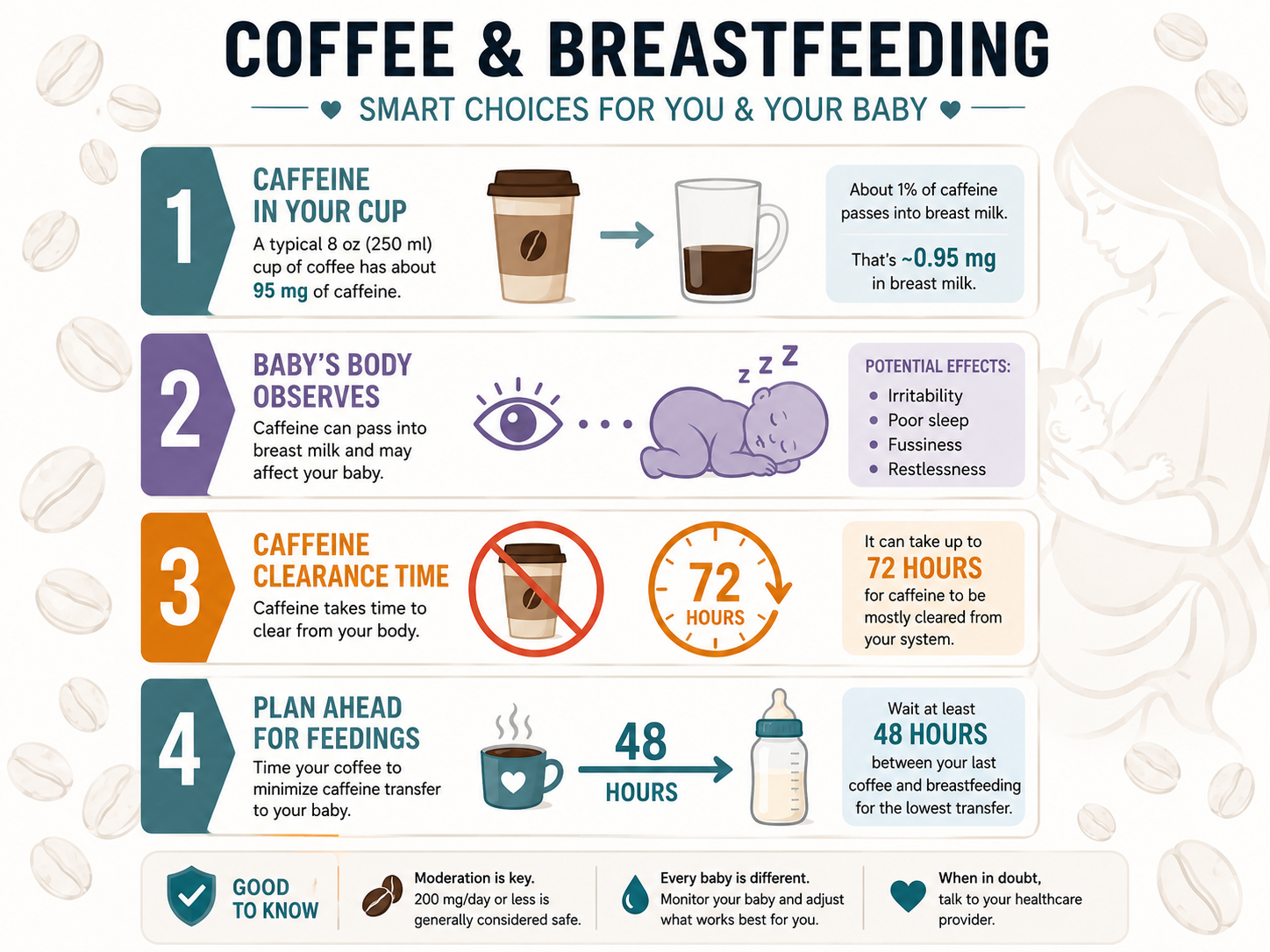
Some babies react more than others. If you notice fussiness, jitteriness, or sleep disturbances, don’t just stop caffeine cold turkey, that can cause headaches for you and won’t instantly fix the issue for your baby.
- Cut your intake in half for three days. This gives the accumulated caffeine in your baby’s system time to clear.
- Observe for changes. Does the fussiness ease? Does sleep improve?
- If symptoms persist, consider a full 72-hour caffeine break to see if it’s the culprit. Remember, chocolate and tea count.
- Reintroduce slowly. After the break, add back one small cup of coffee a day, timed after a feeding. Wait 48 hours to see if symptoms return.
This method isolates the variable. It’s more useful than guessing. The MotherToBaby caffeine fact sheet is a great resource to share with your pediatrician if you have concerns.
When to Be Extra Cautious
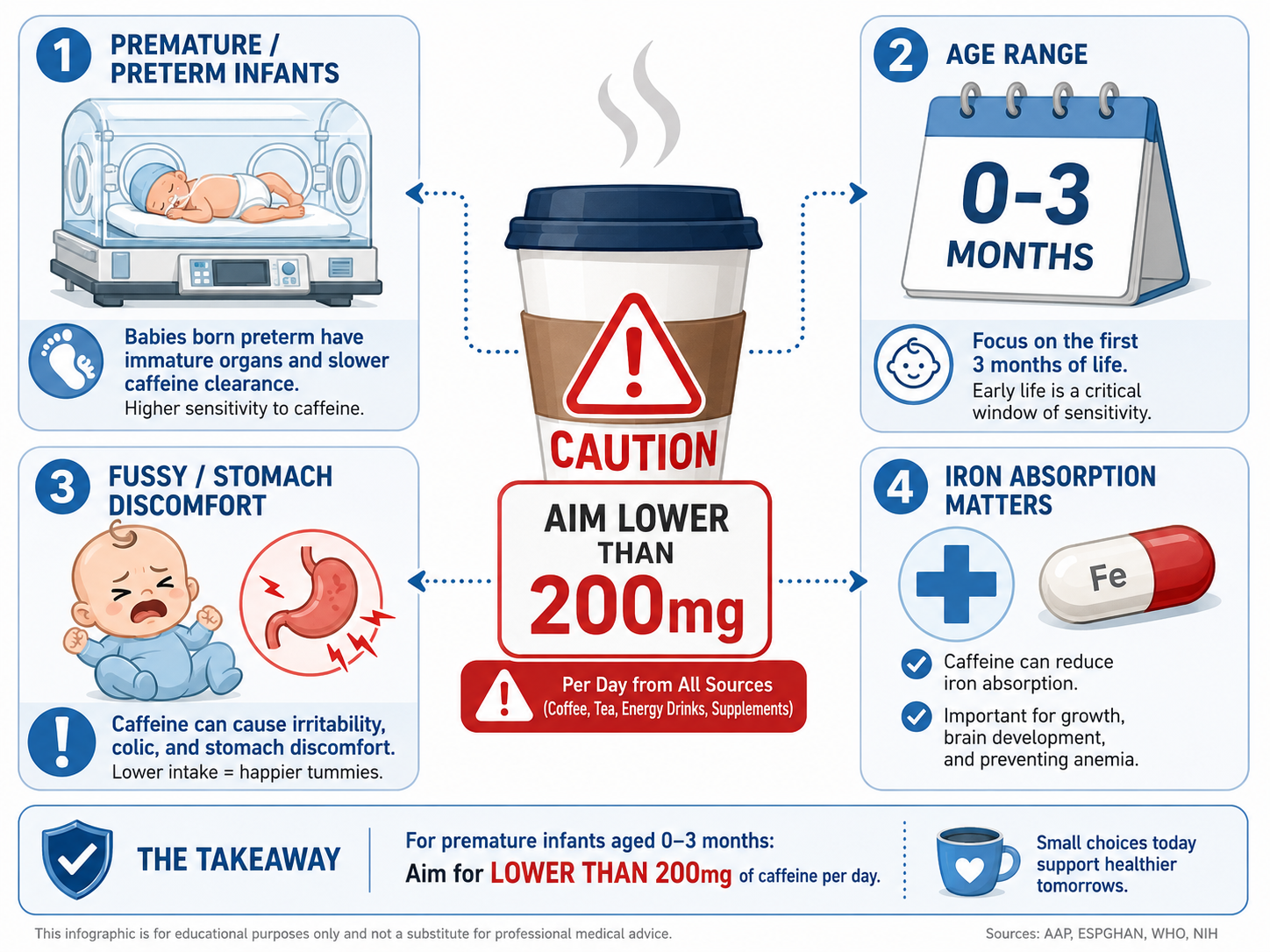
The standard guidelines assume a healthy, full-term infant. Several conditions warrant a more conservative approach.
- Premature Infants: Their livers are even less developed. The clearance rate is a crawl. Many neonatal intensive care units (NICUs) advise mothers to avoid caffeine entirely while their baby is in the unit.
- Infants Under 3 Months: This is the period of the 97.5-hour half-life. Err on the side of less.
- Infants with GERD, Colic, or Neurological Issues: These babies are often more irritable and harder to soothe. Caffeine can be an additional aggravating factor that makes it difficult to identify the primary issue.
- Mothers with Low Iron Stores: If you’re anemic or have low ferritin, the iron-inhibiting effect of coffee polyphenols is more significant. Space your coffee at least an hour away from iron-rich meals or supplements.
In these cases, treating the 200 mg limit as a maximum ceiling is unwise. Aim lower. Use the NCBI LactMed resource as a benchmark for medical-grade information when discussing with your doctor.
Frequently Asked Questions
Can I drink decaf coffee while breastfeeding?
Yes, absolutely. Decaffeinated coffee contains only trace amounts of caffeine (usually 2-5 mg per cup). It’s a excellent way to enjoy the ritual and flavor without the stimulant. Just be mindful of what you add to it, sugary syrups and whipped cream add calories without nutritional benefit for you.
Does pumping and dumping help remove caffeine from breast milk?
No. Pumping and dumping does not speed up the removal of caffeine from your milk. Caffeine concentration in your milk is a function of its concentration in your bloodstream. As your metabolism clears it from your blood, it clears from your milk. Pumping doesn’t change that rate. The only reason to pump is to maintain your supply if you’re skipping a feeding for timing purposes.
How does caffeine in coffee compare to caffeine in tea?
It’s not just about total milligrams. The caffeine in common beverages varies, but tea also contains L-theanine, an amino acid that promotes calm alertness and can moderate the jittery effects of caffeine. The stimulating effects of caffeine from tea often feel smoother than the sharp spike from coffee.
What about other sources of caffeine like chocolate?
They matter. Chocolate contains theobromine, a caffeine metabolite. One human milk caffeine study found theobromine made up 56% to 88% of all caffeine metabolites in breast milk. A daily habit of chocolate or cocoa can contribute significantly to your baby’s total stimulant load. A case report noted irritability in an infant whose mother ate 250g of chocolate daily; symptoms decreased when she stopped.
Are some babies more sensitive to caffeine than others?
Yes. Genetics, the mother’s diet during pregnancy, and the infant’s own metabolism play roles. Babies whose mothers avoided caffeine completely during pregnancy may react more noticeably when it’s introduced via breast milk. It’s always about observing your individual child.
The Bottom Line
You don’t have to choose between breastfeeding and coffee. The key is informed, measured consumption. Stick to the 130-200 mg daily range as a firm ceiling, not a target. Time your cup for right after a feeding to maximize the clearance window. Count all your sources, that afternoon tea and square of dark chocolate add up.
Watch your baby, not just the clock. If you see signs of jitteriness or sleep disruption, step back for a few days. Remember the iron connection if you’re a heavy drinker. This isn’t about fear. It’s about using the data, the half-lives, the thresholds, the metabolite peaks, to enjoy your ritual without second-guessing every sip. Keep your mug. Just know what’s in it.
{
“@context”: “https://schema.org”,
“@type”: “HowTo”,
“name”: “How to Safely Drink Coffee While Breastfeeding”,
“totalTime”: “PT2M”,
“step”: [
{
“@type”: “HowToStep”,
“name”: “Calculate your daily caffeine intake”,
“text”: “Track all sources: coffee, tea, soda, chocolate, and medications. Aim to stay under 200 mg total, but note the 130 mg threshold linked to infant weight changes.”
},
{
“@type”: “HowToStep”,
“name”: “Time your coffee after a feeding”,
“text”: “Drink your coffee immediately after nursing or pumping. Caffeine peaks in breast milk 60-120 minutes later, so this maximizes the clearance window before the next feed.”
},
{
“@type”: “HowToStep”,
“name”: “Observe your infant for 48 hours”,
“text”: “Watch for signs of sensitivity: fussiness, jitteriness, or unusual wakefulness. If symptoms appear, cut back your intake by half and reassess.”
},
{
“@type”: “HowToStep”,
“name”: “Adjust for infant age and health”,
“text”: “If your baby is under 3 months, premature, or has health issues, reduce your intake further. Their immature liver metabolizes caffeine far slower.”
}
]
}
{
“@context”: “https://schema.org”,
“@type”: “FAQPage”,
“mainEntity”: [
{
“@type”: “Question”,
“name”: “Can I drink decaf coffee while breastfeeding?”,
“acceptedAnswer”: {
“@type”: “Answer”,
“text”: “Yes, absolutely. Decaffeinated coffee contains only trace amounts of caffeine (usually 2-5 mg per cup). It’s a excellent way to enjoy the ritual and flavor without the stimulant. Just be mindful of what you add to it, sugary syrups and whipped cream add calories without nutritional benefit for you.”
}
},
{
“@type”: “Question”,
“name”: “Does pumping and dumping help remove caffeine from breast milk?”,
“acceptedAnswer”: {
“@type”: “Answer”,
“text”: “No. Pumping and dumping does not speed up the removal of caffeine from your milk. Caffeine concentration in your milk is a function of its concentration in your bloodstream. As your metabolism clears it from your blood, it clears from your milk. Pumping doesn’t change that rate. The only reason to pump is to maintain your supply if you’re skipping a feeding for timing purposes.”
}
},
{
“@type”: “Question”,
“name”: “How does caffeine in coffee compare to caffeine in tea?”,
“acceptedAnswer”: {
“@type”: “Answer”,
“text”: “It’s not just about total milligrams. The caffeine in common beverages varies, but tea also contains L-theanine, an amino acid that promotes calm alertness and can moderate the jittery effects of caffeine. The stimulating effects of caffeine from tea often feel smoother than the sharp spike from coffee.”
}
},
{
“@type”: “Question”,
“name”: “What about other sources of caffeine like chocolate?”,
“acceptedAnswer”: {
“@type”: “Answer”,
“text”: “They matter. Chocolate contains theobromine, a caffeine metabolite. One human milk caffeine study found theobromine made up 56% to 88% of all caffeine metabolites in breast milk. A daily habit of chocolate or cocoa can contribute significantly to your baby’s total stimulant load. A case report noted irritability in an infant whose mother ate 250g of chocolate daily; symptoms decreased when she stopped.”
}
},
{
“@type”: “Question”,
“name”: “Are some babies more sensitive to caffeine than others?”,
“acceptedAnswer”: {
“@type”: “Answer”,
“text”: “Yes. Genetics, the mother’s diet during pregnancy, and the infant’s own metabolism play roles. Babies whose mothers avoided caffeine completely during pregnancy may react more noticeably when it’s introduced via breast milk. It’s always about observing your individual child.”
}
}
]
}
