
Is Green Tea Better Than Coffee? The Data-Driven Verdict
Is green tea better than coffee? Neither is universally superior; the best choice depends on your biochemistry and goals. Coffee provides a stronger, faster energy spike (95mg caffeine/cup). Green tea offers a gentler, focused lift via L-theanine and lower caffeine (29mg), plus a higher concentration of specific antioxidants like EGCG.
Green tea is not universally “better” than coffee. The answer depends on your specific health goals, caffeine sensitivity, and desired type of energy. Coffee delivers a stronger, faster stimulant effect via higher caffeine (about 95mg per 8oz cup) and contains its own beneficial compounds like chlorogenic acids. Green tea provides a more balanced, focused energy through the unique combination of a lower caffeine dose (about 29mg) and the amino acid L-theanine, alongside a significantly higher concentration of specific antioxidants like EGCG catechins.
Most comparisons stop at “green tea has antioxidants, coffee has caffeine.” They miss the specific chemical thresholds, the impact of processing methods that can halve caffeine content, and the storage science that determines whether you actually get those benefits from your cupboard. The real question isn’t which drink is objectively superior, but which biochemical profile aligns with your body and your day.
This guide breaks down the ISO-standard chemical specs, the peer-reviewed storage data, and the mechanics behind the “calm alertness” green tea is famous for. You’ll see exactly where each drink excels and where it falls short.
Key Takeaways
- Green tea’s EGCG catechins must meet a 7% minimum mass fraction as per ISO 11287:2011, a concrete antioxidant benchmark coffee doesn’t have.
- The L-theanine in green tea stimulates alpha brain waves associated with meditation, buffering caffeine’s jittery effects to create a focused, crash-resistant energy.
- Blanching (B-2) during green tea processing reduces caffeine by 47-52% without harming antioxidants, a built-in decaf option most drinkers don’t know exists.
- Storing green tea at -20°C preserves 12% more polyphenols over 12 months compared to room temperature, per a 2023 study, your cupboard is degrading your tea right now.
- Coffee’s higher acidity and caffeine load make it a stronger stimulant and a common gut irritant, but its chlorogenic acids offer distinct metabolic benefits green tea doesn’t match.
The Antioxidant Showdown: EGCG vs. Coffee’s Compounds
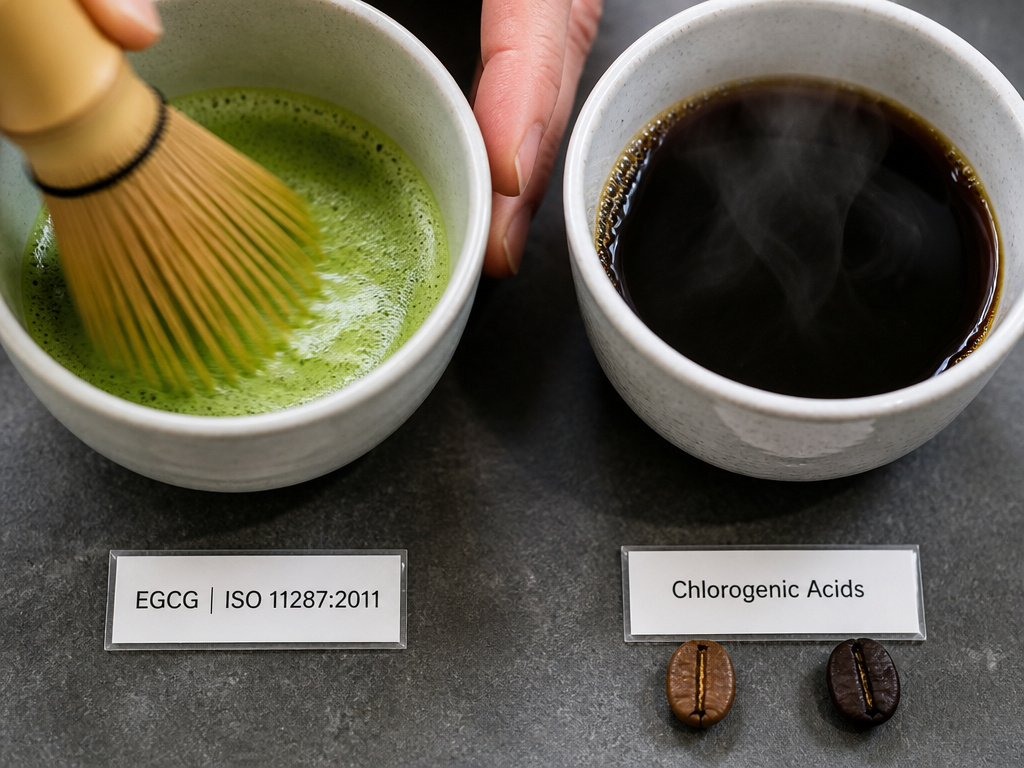
The health halo around green tea is built on one specific class of molecules: catechins. The most studied is epigallocatechin gallate, or EGCG. The international standard for green tea, ISO 11287:2011, sets a minimum mass fraction of 7% for total catechins and 11% for total polyphenols. That’s a regulatory guarantee of potency you won’t find on a bag of coffee beans.
Coffee fights back with chlorogenic acids. These are potent antioxidants linked to improved blood sugar metabolism and reduced inflammation. But the concentration and mechanism differ. Chlorogenic acids are plentiful in the raw bean but break down significantly during roasting, the darker the roast, the less you get. A light roast coffee might be a closer antioxidant competitor, but it’s still not playing the same game.
Green tea, as defined by ISO 11287:2011, must contain a minimum of 7% total catechins and 11% total polyphenols by mass. For specialized teas like Gyokuro and Matcha, cultivated for smoother flavor, the minimums are lower: 5% catechins and 8% polyphenols. This standardization provides a verifiable baseline for antioxidant content that varies only with processing and storage, not plant type.
The body uses these compounds differently. EGCG is researched for its potential in cellular health and metabolic support. Chlorogenic acids in coffee are strongly tied to liver health and glucose processing. Claiming one is “better” is like arguing whether a wrench is better than a screwdriver. Your goal picks the tool.
TL;DR: Green tea wins on standardized, high-concentration catechins like EGCG; coffee offers chlorogenic acids that support different metabolic pathways. The best choice depends on which antioxidant profile matches your health focus.
Caffeine & The Calm-Alert Paradox
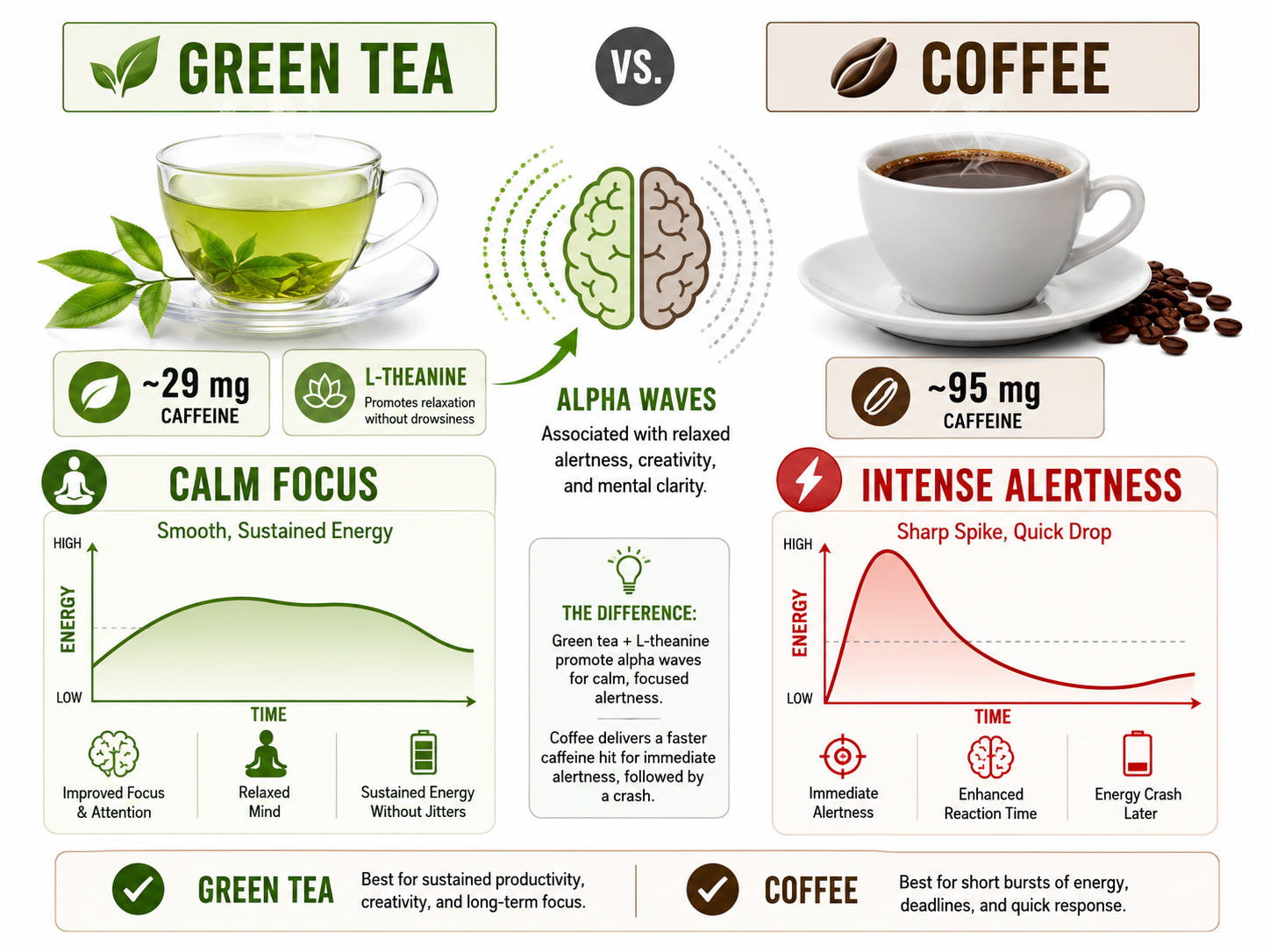
An 8-ounce cup of brewed coffee packs about 95 milligrams of caffeine. The same amount of green tea contains roughly 29 milligrams. This difference alone dictates the experience: coffee is a sprint, green tea is a paced run.
The real magic of green tea isn’t the lower caffeine, but what comes with it: L-theanine. This amino acid, virtually absent in coffee, crosses the blood-brain barrier and promotes the production of alpha brain waves. These are the waves associated with a state of relaxed alertness, think of the focused calm during meditation or flow states. L-theanine also modulates caffeine’s effects, smoothing the sharp spike and crash into a sustained plateau.
I used to crash hard around 3 PM after two morning coffees. Switching one of those cups to a high-theanine Gyokuro green tea cut the afternoon slump within two days. The focus lasted longer, without the edgy feeling. It wasn’t less energy, it was better-managed energy.
Coffee’s high-octane approach has its place. For immediate, high-intensity alertness, pulling an all-nighter, a pre-workout boost, nothing beats it. But that power comes with trade-offs: jitters, anxiety in sensitive individuals, a sharper crash, and a higher likelihood of disrupting sleep if consumed late in the day. The caffeine in espresso vs coffee further complicates the picture, as concentration per ounce changes the impact.
Common mistake: Assuming all caffeine is equal, the presence of L-theanine in green tea fundamentally changes the neurological response, turning stimulation into sustained focus without the crash.
| Aspect | Green Tea | Coffee |
|---|---|---|
| Caffeine (per 8oz) | ~29 mg | ~95 mg |
| Key Synergist | L-theanine (promotes alpha waves) | None |
| Energy Profile | Sustained, calm focus | Sharp, intense alertness |
| Crash Potential | Low | Moderate to High |
| Best For | Extended focus, anxiety-prone users | Immediate task activation, high-intensity needs |
For a detailed look at how brewing alters these numbers, our guide on caffeine in tea and coffee breaks it down further.
Processing & Storage: The Hidden Variables
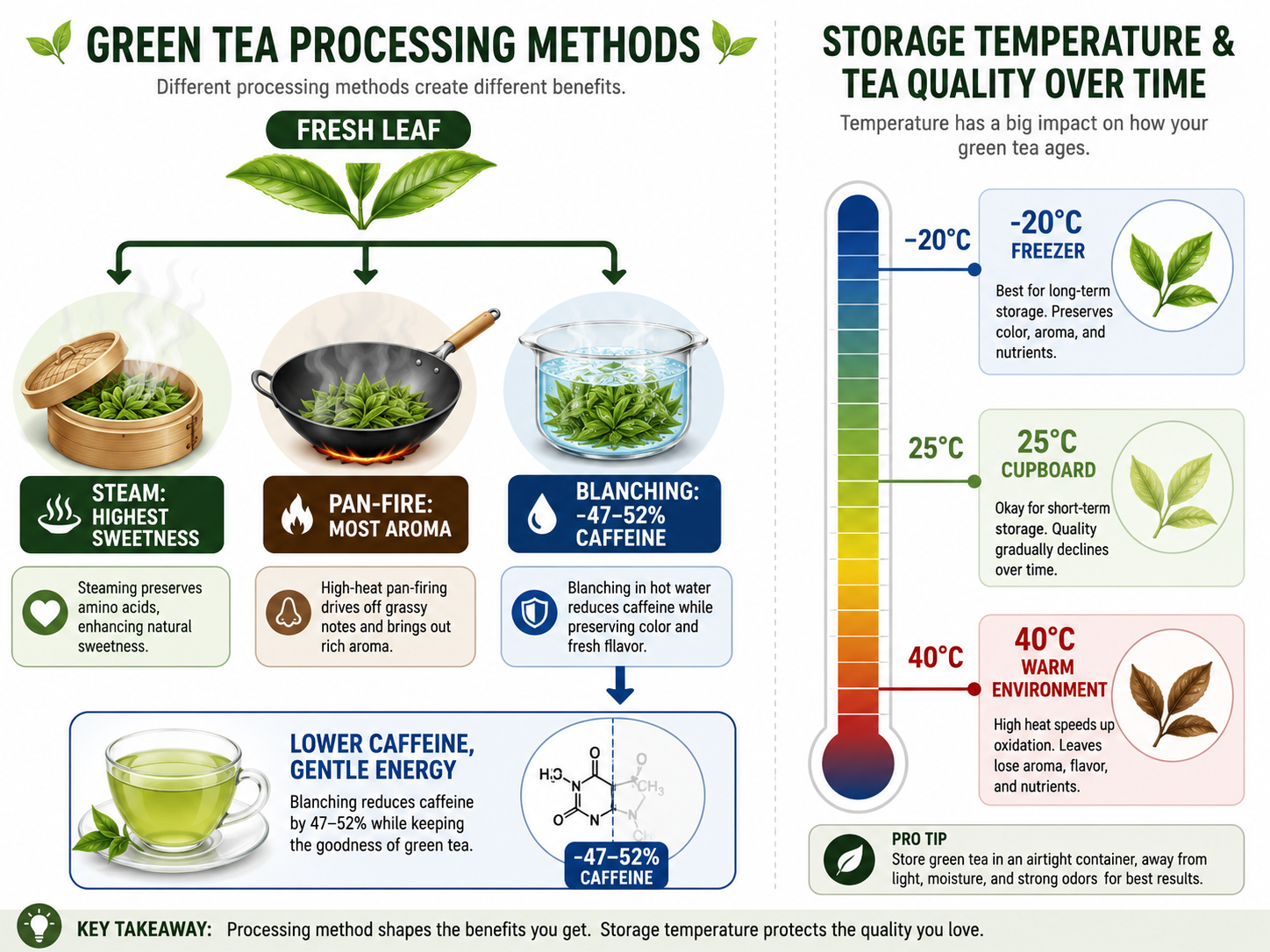
What’s in your cup depends heavily on what happened to the leaves before they reached you. Green tea processing, specifically the “fixation” step that halts oxidation, dramatically alters its chemistry. A 2024 study pinpointed three methods:
- Steam fixation (ZQ): Yields the brightest green color and highest sweetness.
- Mixed fixation (HC): Retains the most aroma compounds (like 1.42 mg/kg of linalool) and free amino acids.
- Blanching (B-2): This is the critical one. Blanching reduces caffeine content by 47-52% compared to steaming or pan-firing, without significantly diminishing catechin levels or antioxidant capacity.
This means a blanched green tea can offer nearly half the caffeine of a steamed one, while keeping its antioxidant punch, a perfect option for the caffeine-sensitive. Most drinkers buy based on region or name, never knowing the processing method is the primary dictator of caffeine content.
Storage is the other silent killer of quality. A 2023 study on green tea storage found that after 12 months, tea kept at -20°C retained superior color, aroma, and chemical composition compared to samples at room temperature (~25°C) or 40°C. Polyphenol and catechin levels dropped significantly at higher temperatures.
Common mistake: Storing green tea in a clear container on the counter, heat and light degrade catechins and amino acids within months, turning a premium tea into a bland, low-potency shadow of itself.
Your kitchen cupboard is likely around 25°C. That study suggests you’re losing a measurable percentage of the benefits you paid for every single day. The fix is simple: buy smaller quantities more frequently, and store what you have in an airtight container in the freezer.
TL;DR: Blanched green tea has half the caffeine of other types, and storing all green tea in the freezer preserves its health compounds. Your buying and storage habits matter as much as your choice between tea and coffee.
Health Impacts: Stomach, Teeth, and Long-Term Goals
Beyond energy and antioxidants, the day-to-day physical experience of drinking these beverages differs greatly. This is where individual physiology decides the winner.
Acidity and Digestion
Coffee is significantly more acidic than green tea. This can cause heartburn, acid reflux, or general stomach discomfort for many people. The lower pH is a primary reason coffee is a common gut irritant. Green tea, being less acidic, is generally gentler on the digestive system. For a deeper dive, our analysis of the acidity in tea vs coffee explains the pH science.
Oral Health
Coffee is notorious for staining teeth. Its tannins bind to enamel. Green tea also contains tannins, but its polyphenols may have an antibacterial effect in the mouth, potentially inhibiting the growth of cavity-causing bacteria. It’s not a dental miracle, but it’s a less damaging choice for your smile.
Weight Management and Metabolism
Both drinks play a role. The catechins and caffeine in green tea have a mild thermogenic effect, potentially increasing calorie and fat oxidation. Coffee’s chlorogenic acids may help modulate blood sugar and reduce fat absorption. The green tea vs coffee benefits for weight management are nuanced, but green tea often gets the edge in research due to the EGCG and caffeine synergy.
Cardiovascular and Cognitive Support
Long-term, both have potential. Green tea consumption is linked to improved cholesterol profiles and arterial function. Coffee is associated with a reduced risk of certain neurological conditions. It’s a tie that leans on your personal health history.
| Health Consideration | Green Tea’s Edge | Coffee’s Edge |
|---|---|---|
| Stomach Friendliness | Lower acidity, less likely to cause reflux. | – |
| Dental Impact | May reduce oral bacteria; still stains. | High staining potential. |
| Metabolic Support | EGCG + caffeine synergy for fat oxidation. | Chlorogenic acids for glucose metabolism. |
| Cardiovascular | Linked to better cholesterol & blood flow. | Linked to reduced stroke risk. |
| Caffeine Addiction | Lower dose = easier to manage withdrawal. | Higher dose = more pronounced dependence. |
For a broader view, the health benefits of tea vs coffee extend to black and herbal varieties as well.
Making the Switch (Or Finding Balance)
You don’t have to choose sides for life. The most practical approach is to match the drink to the need.
When to Choose Green Tea:
- You need sustained focus for a long work session or study period.
- Coffee makes you jittery, anxious, or disrupts your sleep.
- You have a sensitive stomach or acid reflux.
- Your primary health goal is upping your antioxidant intake for general wellness.
- You’re trying to reduce, but not eliminate, your caffeine intake.
When to Choose Coffee:
- You need an immediate, powerful wake-up effect.
- You’re engaging in high-intensity physical or mental activity for a short period.
- You enjoy the ritual and flavor profile of coffee (this matters!).
- You’re focusing on metabolic or liver health benefits tied to chlorogenic acids.
Try a Hybrid Approach:
- Coffee in the morning, green tea in the afternoon. This gives you the initial kick but avoids a late-day caffeine bomb that ruins sleep.
- Explore high-caffeine green teas. Gyokuro and Matcha can contain 70-140mg of caffeine per serving, similar to coffee, but delivered with L-theanine for a smoother ride.
- Listen to your body. Track how you feel for a week with each. Energy, mood, digestion, and sleep quality are your best metrics.
The debate isn’t about crowning a global champion. It’s about understanding the specific, measurable tools each beverage gives you. Green tea offers a calibrated, focused boost with a guaranteed dose of antioxidants. Coffee delivers raw stimulating power with its own unique health perks. Your ideal day might include both.
Frequently Asked Questions
Does green tea have more antioxidants than coffee?
Yes, by a significant and standardized margin. The ISO 11287:2011 standard mandates green tea contain a minimum of 11% total polyphenols and 7% total catechins by mass. Coffee contains antioxidants like chlorogenic acids, but the concentration and structural class are different, and they degrade with roasting. For a focused antioxidant boost, green tea is the more reliable source.
Can green tea give you the same energy as coffee?
Not the same type, and that’s the point. Green tea provides a “calm alertness” from the synergy of lower caffeine (~29mg/cup) and L-theanine, which promotes alpha brain waves. Coffee provides a more intense, jolt-like energy from higher caffeine (~95mg/cup). If you need immediate, high-intensity stimulation, coffee wins. For sustained, crash-resistant focus, green tea is superior.
Is green tea easier on your stomach than coffee?
Almost always. Coffee is significantly more acidic, which is a primary trigger for heartburn, acid reflux, and general gastric discomfort. Green tea has a higher pH (less acidic) and is generally better tolerated by people with sensitive stomachs. The acidity comparison between the two is stark.
Which is better for weight loss, green tea or coffee?
Research gives a slight edge to green tea. The combination of EGCG catechins and caffeine has a mild thermogenic effect, increasing calorie and fat oxidation. Coffee’s chlorogenic acids may support metabolism and blood sugar control, but the evidence for direct fat-burning is stronger for green tea’s specific compounds. Neither is a magic bullet, but green tea is the more studied tool for weight management support.
If I’m addicted to coffee, is switching to green tea hard?
It can be challenging due to caffeine withdrawal, but green tea can ease the transition. Its lower caffeine content helps taper your intake, reducing headaches and fatigue. The L-theanine can also alleviate the anxiety that sometimes accompanies caffeine withdrawal. Start by replacing your afternoon coffee with green tea, then gradually swap earlier cups.
The Bottom Line
Forget the search for a single “better” drink. The science shows two distinct tools. Green tea is your precision instrument: L-theanine for focused calm, EGCG catechins meeting ISO 11287 minimums, and processing methods that can halve its caffeine. Coffee is your power tool: high-dose caffeine for immediate torque, chlorogenic acids for metabolic support, and a flavor depth that defines rituals.
The 2023 storage study reveals a final, crucial point: quality is perishable. That bag of green tea in your warm cupboard is losing its beneficial polyphenols right now. The best drink is the one whose specific chemical profile, preserved properly, aligns with your body’s needs today. Sometimes that’s the sharp clarity of coffee. Often, it’s the sustained, calm focus of a properly stored green tea. Your ideal cup isn’t decided by a headline, but by the chemistry that matches your moment.
{
“@context”: “https://schema.org”,
“@type”: “HowTo”,
“name”: “How to Choose Between Green Tea and Coffee Based on Your Health Goals”,
“totalTime”: “PT5M”,
“step”: [
{
“@type”: “HowToStep”,
“name”: “Define Your Primary Goal”,
“text”: “Identify whether you need high-intensity alertness, sustained focus, antioxidant support, stomach-friendly acidity, or help managing caffeine intake.”
},
{
“@type”: “HowToStep”,
“name”: “Compare Key Chemical Profiles”,
“text”: “Match coffee’s higher caffeine (95mg per 8oz) and chlorogenic acids against green tea’s L-theanine, EGCG catechins (minimum 7% by ISO 11287), and lower acidity.”
},
{
“@type”: “HowToStep”,
“name”: “Consider Processing and Storage”,
“text”: “Note that blanched green tea cuts caffeine by 47-52%, and storing green tea at -20°C preserves 12% more polyphenols than room temperature after a year.”
},
{
“@type”: “HowToStep”,
“name”: “Test Your Personal Response”,
“text”: “Try substituting one drink for the other for three days, tracking energy, focus, stomach comfort, and any afternoon crashes to gauge your body’s preference.”
}
]
}
{
“@context”: “https://schema.org”,
“@type”: “FAQPage”,
“mainEntity”: [
{
“@type”: “Question”,
“name”: “Does green tea have more antioxidants than coffee?”,
“acceptedAnswer”: {
“@type”: “Answer”,
“text”: “Yes, by a significant and standardized margin. The ISO 11287:2011 standard mandates green tea contain a minimum of 11% total polyphenols and 7% total catechins by mass. Coffee contains antioxidants like chlorogenic acids, but the concentration and structural class are different, and they degrade with roasting. For a focused antioxidant boost, green tea is the more reliable source.”
}
},
{
“@type”: “Question”,
“name”: “Can green tea give you the same energy as coffee?”,
“acceptedAnswer”: {
“@type”: “Answer”,
“text”: “Not the same type, and that’s the point. Green tea provides a \”calm alertness\” from the synergy of lower caffeine (~29mg/cup) and L-theanine, which promotes alpha brain waves. Coffee provides a more intense, jolt-like energy from higher caffeine (~95mg/cup). If you need immediate, high-intensity stimulation, coffee wins. For sustained, crash-resistant focus, green tea is superior.”
}
},
{
“@type”: “Question”,
“name”: “Is green tea easier on your stomach than coffee?”,
“acceptedAnswer”: {
“@type”: “Answer”,
“text”: “Almost always. Coffee is significantly more acidic, which is a primary trigger for heartburn, acid reflux, and general gastric discomfort. Green tea has a higher pH (less acidic) and is generally better tolerated by people with sensitive stomachs. The acidity comparison between the two is stark.”
}
},
{
“@type”: “Question”,
“name”: “Which is better for weight loss, green tea or coffee?”,
“acceptedAnswer”: {
“@type”: “Answer”,
“text”: “Research gives a slight edge to green tea. The combination of EGCG catechins and caffeine has a mild thermogenic effect, increasing calorie and fat oxidation. Coffee’s chlorogenic acids may support metabolism and blood sugar control, but the evidence for direct fat-burning is stronger for green tea’s specific compounds. Neither is a magic bullet, but green tea is the more studied tool for weight management support.”
}
},
{
“@type”: “Question”,
“name”: “If I’m addicted to coffee, is switching to green tea hard?”,
“acceptedAnswer”: {
“@type”: “Answer”,
“text”: “It can be challenging due to caffeine withdrawal, but green tea can ease the transition. Its lower caffeine content helps taper your intake, reducing headaches and fatigue. The L-theanine can also alleviate the anxiety that sometimes accompanies caffeine withdrawal. Start by replacing your afternoon coffee with green tea, then gradually swap earlier cups.”
}
}
]
}
