
Is Espresso the Same as Coffee? Key Differences Explained
Espresso is a brewing method, not a different type of coffee bean. It is coffee made by forcing hot water under high pressure through finely-ground beans, creating a concentrated shot with crema. The key difference from regular coffee is entirely in the preparation technique, not the ingredient.
Espresso is a method of brewing coffee, not a different type of bean or plant. It is a concentrated coffee beverage produced by forcing hot water under high pressure (around 9 bar) through finely-ground coffee. The core difference lies entirely in the brewing technique, which creates espresso’s signature body, crema, and intensity compared to other coffee preparations.
People get this wrong because they mistake the result for the ingredient. They taste the potent, syrupy shot and assume it must come from a special “espresso bean”. That assumption leads to buying the wrong beans for their machine or misunderstanding why their home shots taste thin.
This guide breaks down the question using the Italian Espresso National Institute’s official 1999 certification, the physics of high-pressure extraction, and the practical differences you taste in the cup.
Key Takeaways
- Espresso is defined by a brewing process, not a bean variety. Any coffee bean can be used, but roast level and grind must suit the method.
- The Italian Espresso National Institute certified exact parameters in 1999: 7±0.5g dose, 90±2°C water, 9±1 bar pressure, 25±2.5 second extraction for a 25±2.5mL beverage.
- Modern specialty cafes often use 15-22g doses, diverging from the historical certification but still following the high-pressure principle.
- Channeling, where water finds a single path through the puck, is the primary failure mode in espresso, causing simultaneous sour and bitter flavors.
- Per ounce, espresso has more caffeine, but a standard mug of drip coffee typically delivers more total caffeine.
The Italian Institute’s Certified Answer (1999)
The most authoritative answer comes from a Third-Party Body in Italy. The Italian Espresso National Institute (INEI) obtained a product certification on September 24, 1999, defining “Espresso Italiano”. This isn’t a suggestion. It’s a measurable standard.
To be certified, the beverage must hit these exact specs:
* Dose: 7 ± 0.5 grams of roasted and ground coffee.
* Water Pressure: 9 ± 1 bar at the group head.
* Water Temperature: 90 ± 2 °C exiting the unit.
* Extraction Time: 25 ± 2.5 seconds.
* Volume in Cup: 25 ± 2.5 milliliters (including crema).
The certification also mandates a viscosity above 1.5 mPa and a total fat content above 2 mg/mL. Those numbers create the mouthfeel. Miss them, and it’s not a Certified Italian Espresso.
TL;DR: Since 1999, “Espresso Italiano” has been legally defined by a strict set of physical parameters centered on 9-bar pressure extraction, not bean type.
The certification for Espresso Italiano (Csqa n. 214, DTP 008 Ed.1) specifies 7±0.5 g of coffee, water at 90±2°C, 9±1 bar pressure, and a 25±2.5 second extraction to produce a 25±2.5 mL beverage with defined viscosity and fat content.
How Modern Cafes Broke the Official Mold
The historical Specialty Coffee Association (SCA) definition aligned closely with the Italian standard: 7-9g of coffee yielding 25-35mL in 20-30 seconds. Walk into a third-wave shop today, and you’ll see a different reality. Baristas routinely use 15-22 gram doses to produce 30-60 gram beverages.
This isn’t wrong. It’s evolution. The core principle, high-pressure extraction of finely ground coffee, remains intact. The variables of dose and yield have expanded, partly driven by a better understanding of coffee flavor profiles and larger drink sizes. The 1999 certification still stands as the baseline, the original recipe from which modern practice has branched.
Espresso vs. Coffee: The Mechanical Breakdown
The difference isn’t philosophical. It’s mechanical. You can feel it in the machine’s resistance and see it in the cup’s structure.
| Variable | Espresso | Drip / Pour-Over Coffee |
|---|---|---|
| Brewing Force | High pressure (~9 bar) | Gravity (1 bar atmospheric pressure) |
| Grind Size | Very fine (like table salt) | Medium to coarse (like sand to coarse sea salt) |
| Contact Time | Short (25-30 seconds) | Long (3-5 minutes) |
| Coffee-to-Water Ratio | High (e.g., 1:2) | Lower (e.g., 1:16) |
| Resulting Texture | Syrupy, with persistent crema | Light-bodied, clear |
Pressure is the non-negotiable element. An espresso machine’s pump creates resistance against the finely packed coffee grounds. This forces water through microscopic pathways, emulsifying oils and suspending fine solids that become the crema. A brewed coffee method relies on gravity. Water simply percolates through looser grounds, extracting differently.
That physical process explains why you can’t make true espresso without the right tool. A Moka pot produces a strong, concentrated coffee, but at about 1.5 bars of pressure, it doesn’t emulsify the oils the same way. The crema is thin and fleeting. The body is lighter.
The Caffeine Confusion Cleared Up
This is the most persistent myth. Yes, espresso has more caffeine per fluid ounce. A typical shot contains about 64 milligrams of caffeine in one ounce. A typical mug of drip coffee has about 95 milligrams, but in eight ounces.
You consume the mug over minutes. You down the shot in a gulp. The concentration is higher, but the total serving delivers less. For a detailed breakdown, our guide on espresso caffeine content covers the math. Comparing it to other sources, like the caffeine in black tea, shows how brewing method dictates stimulation.
Can You Use Any Coffee Bean for Espresso?
Technically, yes. Practically, no. The bean must withstand the process. A dense, lightly roasted Arabica bean ground for espresso can cause constant channeling. The water bypasses the puck, yielding a sour, weak shot. Roasters develop “espresso roast” profiles to increase bean porosity, ensuring even extraction under pressure.
Common mistake: Using a light roast filter coffee at an espresso grind, the shot channels immediately, tasting simultaneously sour (from under-extracted channels) and bitter (from over-extracted grounds) in the same cup.
Some modern “omni-roasts” are designed to work across methods. A 2023 study in the PMC journal found omni-roasting, a light method, suitable for both espresso and filter. This is the exception, not the rule. For reliability, choose a bean roasted with espresso in mind, or a versatile blonde roast from a skilled roaster.
Your grinder matters more than your beans. A inconsistent blade grinder creates a mix of dust and boulders. Under pressure, water rockets through the dust, ignoring the boulders. You get channeling. Every time. A quality burr grinder producing uniform particles is the single best investment for espresso at home.
The Science of High-Pressure Failure
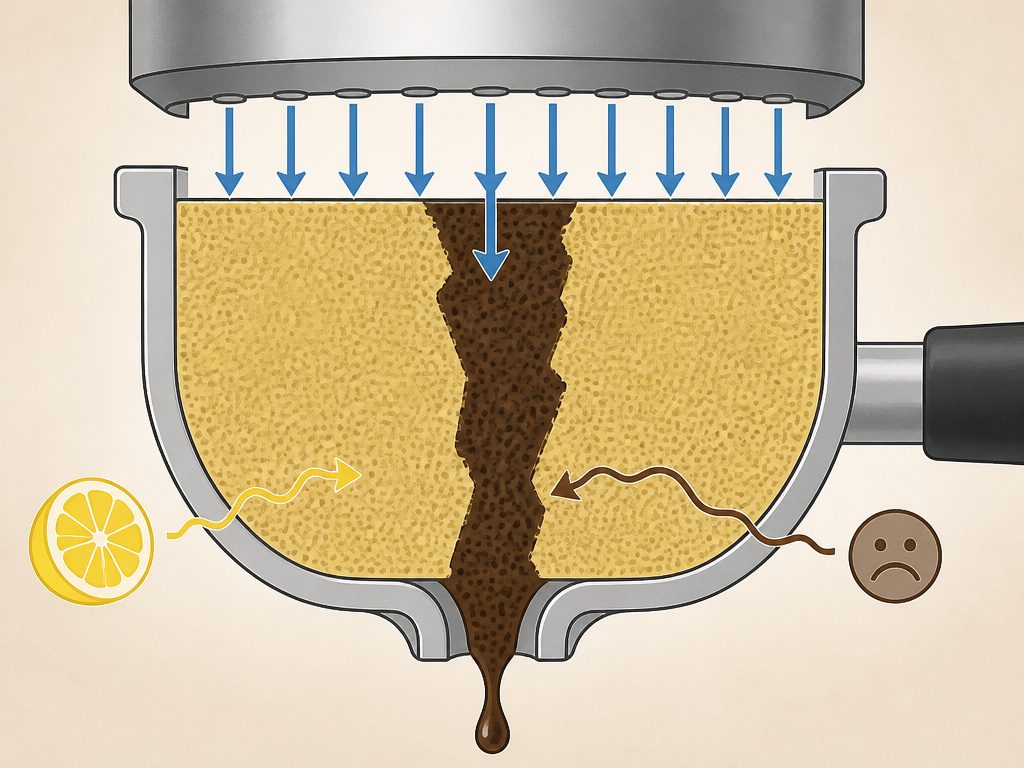
Espresso’s greatest enemy is invisible until you taste it. Researchers at the University of Oregon modeled it in a 2020 Matter journal study. They identified “inhomogeneous flow” as the reason shots fail at very fine grind settings.
Here’s what happens. You grind too fine to slow a fast shot. The water, seeking the path of least resistance, finds one tiny channel through the puck. It over-extracts that narrow path, pulling harsh bitterness. The rest of the coffee bed remains under-extracted, yielding sourness. The UOregon espresso extraction model shows this leads to poor reproducibility and wasted coffee.
The fix is counterintuitive. If your shot is sour and fast, going finer often makes it worse. You need to improve distribution first, shake the grounds in the portafilter to break clumps, then adjust the grind. The goal is even resistance across the entire puck, so water saturates all grounds equally. This scientific failure mode is unique to pressurized brewing. You don’t get channeling in a French press.
Why Espresso Tastes and Smells Different
The high-pressure process doesn’t just extract more; it extracts differently. A 2021 PMC aroma profile study characterized the key odorants in espresso. The process is particularly efficient at pulling volatile aromatic compounds like aldehydes (fruity), furanones (caramel), and pyrazines (nutty, earthy) into the cup.
This creates a more concentrated and complex aroma profile instantly. The crema itself acts as a lid, trapping these volatiles until you break it with a spoon. In a mug of drip coffee, those delicate aromatics evaporate during the longer brewing and sitting time. The experience is more muted. This is why the first sniff of a freshly pulled shot is so distinct from the scent of a cafe americano, which is just espresso diluted with water.
Espresso as a Building Block
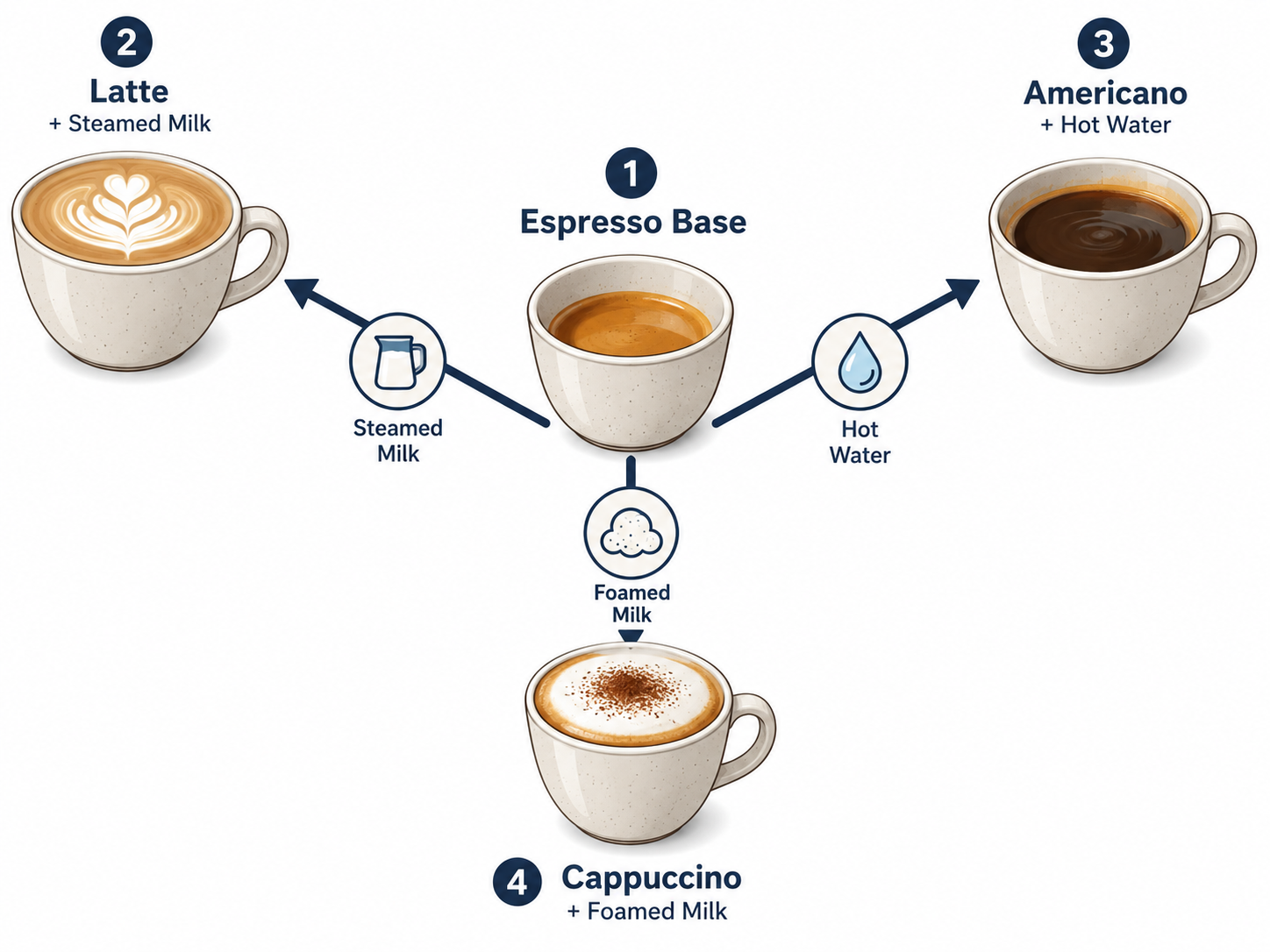
Understanding espresso as a method unlocks the world of coffee menus. It is the foundation. Add steamed milk in specific ratios and you get a latte or a cappuccino. Add hot water, and you get an Americano. The character of the base shot, its sweetness, acidity, and body, shines through or balances with the additions.
This versatility cements its role. It’s not “stronger coffee.” It’s a distinct culinary ingredient produced by a specific machine. A coffee blend designed for espresso often prioritizes chocolatey, low-acid notes that stand up to milk. A single-origin used for filter might highlight floral notes that get lost in a latte.
Frequently Asked Questions
Does espresso have more caffeine than coffee?
Per ounce, yes. Per serving, typically no. A 1-ounce espresso shot has roughly 64 mg of caffeine. An 8-ounce cup of drip coffee has about 95 mg. You get a more concentrated caffeine hit from espresso, but a larger total dose from a full cup of coffee.
Can I make espresso without an espresso machine?
You cannot make true, 9-bar pressure espresso. Devices like AeroPress or Moka pot make strong, concentrated coffee that resembles espresso in strength, but they lack the pressure to create the signature body, emulsified oils, and stable crema. The taste and texture are different.
Are espresso beans different from regular coffee beans?
No. “Espresso beans” are simply coffee beans roasted to a profile that performs well under high-pressure extraction, often darker to increase porosity and develop bittersweet notes that balance milk. Any coffee bean can be used, but the roast and grind must be appropriate for the machine.
Why does espresso have crema and coffee doesn’t?
Crema is an emulsion of coffee oils, gases, and water created by the high-pressure extraction process. The pressure forces oils into suspension and traps carbon dioxide from the roast, forming the stable, reddish-brown foam. Gravity-based brewing methods cannot create this emulsion.
Is espresso less acidic than coffee?
Often, yes. The darker roasts commonly used for espresso reduce acidity, and the very short brew time limits the extraction of certain acidic compounds. However, a light-roast espresso can still be quite bright. The perception of acidity is also balanced by espresso’s heavier body and bitterness.
Before You Go
Espresso is coffee, put through a specific, intense physical transformation. The Italian Espresso National Institute defined that transformation with numbers in 1999. Your home machine, or the one at your local shop, is aiming for those parameters, dose, pressure, time, temperature, to produce a beverage with a specific viscosity, aroma, and crema.
Chasing that standard explains why espresso requires a dedicated machine and a quality burr grinder. It explains why channeling ruins a shot. It explains why the caffeine math works as it does. The next time you order, you’re not just choosing a stronger drink. You’re choosing an entire engineering and chemical process, captured in a tiny cup.
{
“@context”: “https://schema.org”,
“@type”: “HowTo”,
“name”: “How to Understand the Difference Between Espresso and Coffee”,
“totalTime”: “PT10M”,
“tool”: [
{
“@type”: “HowToTool”,
“name”: “Espresso machine capable of 9 bar pressure”
},
{
“@type”: “HowToTool”,
“name”: “Coffee grinder with fine grind setting”
},
{
“@type”: “HowToTool”,
“name”: “Digital scale accurate to 0.1 grams”
}
],
“step”: [
{
“@type”: “HowToStep”,
“name”: “Define the terms”,
“text”: “Recognize ‘coffee’ as the broad category of beverages made from roasted coffee beans, and ‘espresso’ as a specific preparation method within that category using high pressure.”
},
{
“@type”: “HowToStep”,
“name”: “Check the certification”,
“text”: “Refer to the Italian Espresso National Institute’s 1999 certification for the exact technical parameters defining a Certified Italian Espresso, including dose, temperature, pressure, and volume.”
},
{
“@type”: “HowToStep”,
“name”: “Compare brewing mechanics”,
“text”: “Contrast the 9-bar pressurized extraction of espresso over 25-30 seconds with the gravity-driven, longer percolation of methods like pour-over or drip coffee.”
},
{
“@type”: “HowToStep”,
“name”: “Evaluate the sensory result”,
“text”: “Taste for the concentrated body, viscous texture, and persistent crema that define espresso, which are direct physical results of the high-pressure brewing process.”
}
]
}
{
“@context”: “https://schema.org”,
“@type”: “FAQPage”,
“mainEntity”: [
{
“@type”: “Question”,
“name”: “Does espresso have more caffeine than coffee?”,
“acceptedAnswer”: {
“@type”: “Answer”,
“text”: “Per ounce, yes. Per serving, typically no. A 1-ounce espresso shot has roughly 64 mg of caffeine. An 8-ounce cup of drip coffee has about 95 mg. You get a more concentrated caffeine hit from espresso, but a larger total dose from a full cup of coffee.”
}
},
{
“@type”: “Question”,
“name”: “Can I make espresso without an espresso machine?”,
“acceptedAnswer”: {
“@type”: “Answer”,
“text”: “You cannot make true, 9-bar pressure espresso. Devices like AeroPress or Moka pot make strong, concentrated coffee that resembles espresso in strength, but they lack the pressure to create the signature body, emulsified oils, and stable crema. The taste and texture are different.”
}
},
{
“@type”: “Question”,
“name”: “Are espresso beans different from regular coffee beans?”,
“acceptedAnswer”: {
“@type”: “Answer”,
“text”: “No. \”Espresso beans\” are simply coffee beans roasted to a profile that performs well under high-pressure extraction, often darker to increase porosity and develop bittersweet notes that balance milk. Any coffee bean can be used, but the roast and grind must be appropriate for the machine.”
}
},
{
“@type”: “Question”,
“name”: “Why does espresso have crema and coffee doesn’t?”,
“acceptedAnswer”: {
“@type”: “Answer”,
“text”: “Crema is an emulsion of coffee oils, gases, and water created by the high-pressure extraction process. The pressure forces oils into suspension and traps carbon dioxide from the roast, forming the stable, reddish-brown foam. Gravity-based brewing methods cannot create this emulsion.”
}
},
{
“@type”: “Question”,
“name”: “Is espresso less acidic than coffee?”,
“acceptedAnswer”: {
“@type”: “Answer”,
“text”: “Often, yes. The darker roasts commonly used for espresso reduce acidity, and the very short brew time limits the extraction of certain acidic compounds. However, a light-roast espresso can still be quite bright. The perception of acidity is also balanced by espresso’s heavier body and bitterness.”
}
}
]
}
