
Is Coffee Acidic or Basic? Uncovering the pH Truth for Your Gut
This post contains affiliate links. As an Amazon Associate, we earn from qualifying purchases.
Coffee is chemically acidic, with a brewed pH typically between 4.85 and 5.13, but its effect inside your body, whether it acts as an acid-forming or alkalizing agent, depends entirely on your individual metabolism. The sour taste you perceive is a complex mix of at least nine organic acids, led by chlorogenic and citric acid, whose concentrations shift with roast level and origin.
Most people taste that bright, tangy note and assume their stomach is getting a bath of pure acid. The truth is messier. Your brewing water’s mineral content changes the acid extraction. Your bean’s origin might not match its reputation. And two people can drink the same cup with completely different digestive outcomes.
This guide cuts through the noise. We’ll look at the hard chemistry, the surprising role of water, the peer-reviewed data that debunks common myths, and the practical steps to enjoy your coffee if acidity gives you trouble.
Key Takeaways
- Brewed coffee’s pH sits around 5, making it less acidic than orange juice but more acidic than milk. The main acids are chlorogenic, citric, and quinic acid.
- Your tap water is a secret ingredient. High bicarbonate alkalinity (above 70 ppm) flattens acidity and dulls flavor, while distilled water makes coffee taste harshly sour.
- Darker roasts are chemically less acidic because heat breaks down chlorogenic acid. However, they contain more quinic acid, which contributes to bitter notes.
- Your body may process coffee’s acids as neutral or even alkalizing, depending on your metabolism. Drinking it on an empty stomach is the real trigger for most people’s reflux.
- To reduce perceived acidity and stomach upset, choose a dark roast, use a cold brew method, and always have food first.
So, Is Coffee Acidic or Alkaline? (The Chemical Answer)
Chemically, brewed coffee is undeniably acidic. The Specialty Coffee Association defines acidity in its tasting protocol as a positive attribute, a “perception of sour taste.” On the pH scale, which runs from 0 (very acidic) to 14 (very alkaline), most studies place brewed coffee between 4.85 and 5.13.
That puts it closer to neutral (pH 7) than many think. Banana sits around 4.7. Tomato juice is about 4.3. Orange juice dips to 3.5.
The pH of coffee bean extract is not a straight line from light to dark roast. One study found pH decreased up to a medium roast, then increased with further darkening, tied to the decomposition of chlorogenic acid into other compounds.
The sour taste comes from a cocktail of organic acids. A 2023 peer-reviewed study in the PMC journal measured them. In light roasts, chlorogenic acid is the star, it makes up 6–10% of a green bean’s weight. Citric acid brings a lemon-like zing, measured between 0.23 and 0.60 grams per liter. As you roast darker, chlorogenic and citric acids break down. But quinic, acetic, and phosphoric acids increase.
TL;DR: Yes, coffee is chemically acidic (pH ~5), but its acidity is a complex, shifting mix of at least nine different organic acids that change with the roast.
The Acids in Your Cup (And What They Actually Do)
Naming the acids isn’t just chemistry trivia. Each one impacts flavor, mouthfeel, and how your body reacts. You can’t manage what you don’t measure.
The main players are chlorogenic, citric, and quinic acid. Chlorogenic acid is abundant in green beans and gives unroasted coffee its astringent, grassy taste. Roasting breaks it down. By the time you drink a light roast, it’s still a major contributor to perceived “brightness.” Citric acid adds a clean, fruity sharpness, think Kenyan coffee.
Then there’s quinic acid. It’s a breakdown product of chlorogenic acid. Its concentration increases with roast level. Quinic acid is bitter. It’s also a primary component in the stale, sour taste of coffee left on a hot plate for hours.
The PMC study on coffee acid composition included a crucial finding about sensory thresholds. The detection threshold for phosphoric acid sits just below its typical concentration in coffee. That means you almost always taste its sharp, clean acid note. The threshold for citric acid is also low. But for malic, acetic, and lactic acids, the thresholds are above their normal concentrations. You might not taste them directly, but they influence the overall blend.
| Acid | Contribution to Flavor | Change with Darker Roast |
|---|---|---|
| Chlorogenic | Astringency, brightness | Decreases significantly |
| Citric | Lemon-like, fruity sharpness | Decreases |
| Quinic | Bitter, stale aftertaste | Increases |
| Phosphoric | Clean, sharp acidity | Increases |
| Acetic | Vinegar-like tang (if over-threshold) | Increases |
Why does this matter? If you’re chasing a “low acid” coffee for your stomach, a dark roast has less chlorogenic and citric acid. But it has more quinic acid. Your stomach might feel better, but the cup might taste more bitter. It’s a trade-off, not a free pass.
The Silent Killer of Specialty Coffee (It’s Your Water)
You can buy the best, most expensive light-roast beans in the world and ruin them in seconds. The culprit is your water. Most coffee advice talks about the beans and the machine. The water is an afterthought. That’s a mistake.
Water isn’t just a solvent. It’s a reactive ingredient. Its mineral content, specifically its alkalinity, determines how acids present in the cup.
Common mistake: Using distilled or reverse-osmosis water for brewing, the near-zero alkalinity offers no buffer, so every extracted acid hits your palate with full force, resulting in a sharp, sour, and empty-tasting cup.
Alkalinity, usually from bicarbonate, acts as a buffer. It neutralizes acids. The SCA recommends water alkalinity between 40 and 70 parts per million (as calcium carbonate). Each 100 ppm of alkalinity can raise your coffee’s pH by about 0.22 units.
Go too low (like with distilled water), and the coffee tastes aggressively sour. Go too high, and you hit the “silent killer” Dr. Christopher Hendon describes. Bicarbonate above 70 ppm flattens the vibrant acidity of a light roast. It tastes dull, chalky, and earthy. The exciting fruity notes vanish.
Total hardness matters too. This is the calcium and magnesium content. The SCA range is 50-175 ppm. A ScienceDirect article on organic acids found that dissolved magnesium and calcium ions directly affect the extraction of quinic, lactic, malic, and citric acid. Very soft water below 40 ppm often leads to tasters reporting “underextracted” flavors, even with perfect grind and time.
TL;DR: Your water’s bicarbonate level is the invisible dial for acidity. Aim for 40-70 ppm. Too low tastes sour, too high tastes flat.
Kenyan vs. Brazilian: The Acidity Myth Your Barista Believes
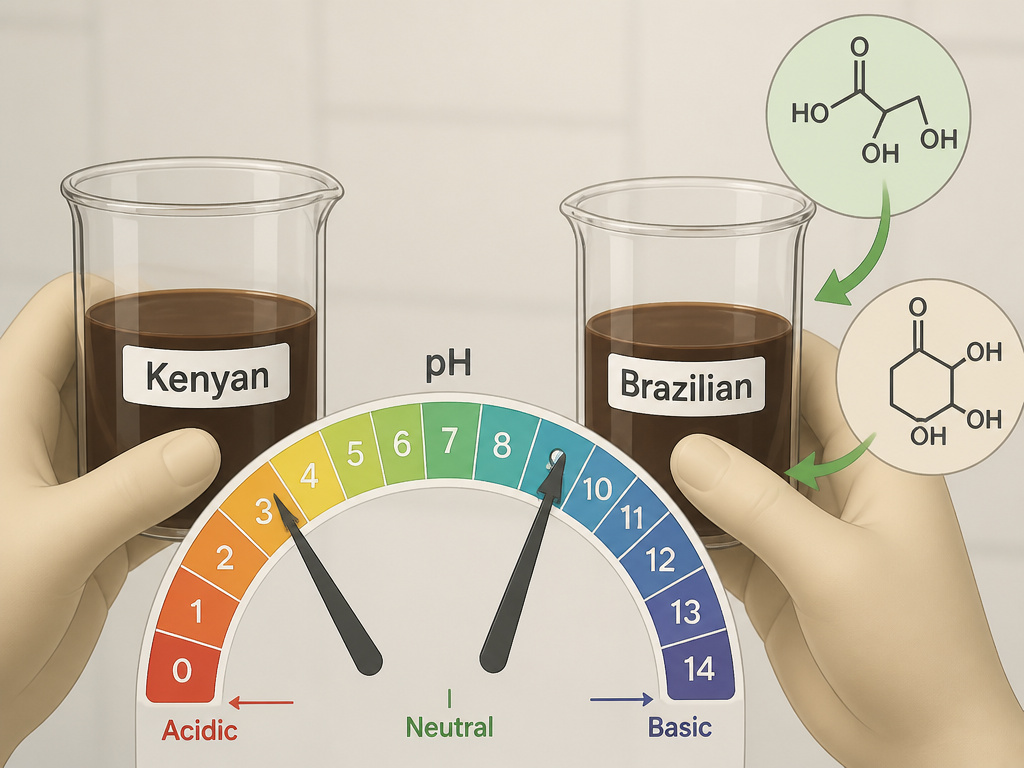
Walk into any specialty cafe. Ask for a high-acidity coffee. They’ll likely point you to a Kenyan. The common wisdom is that Kenyan beans, with their winey, tart profile, are the pinnacle of acidity. Chemical analysis says otherwise.
The same PMC study that mapped acid thresholds also measured specific origins. They found Brazilian and Bolivian coffees had higher concentrations of citric and quinic acid, and a lower pH, than the Kenyan samples. The Kenyan coffees averaged 0.30 g/L of citric acid. The Brazilian samples averaged 0.49 g/L.
So why does Kenyan coffee taste more acidic? The researchers suggest it’s about balance and mouthfeel. Kenyan coffees might have a brighter sensory profile because they have a more favorable ratio of acids to sugars, or less of the bitter quinic acid that can mask pure sourness. Brazilian coffees, while chemically more acidic, might present with more body and bitterness, shifting the perception.
This is a classic case of chemical reality versus sensory perception. It also means choosing a “low acid” coffee based on origin is unreliable. A Brazilian natural-process bean could be more chemically acidic than a washed Kenyan. Your best bet for lowering acid is to focus on roast and brew method, not the country on the bag.
This complexity extends to how you prepare your cup. The choice of adding salt to coffee is an old trick that doesn’t change pH but can curb perceived bitterness, making the acidic notes seem more balanced.
Is Coffee Acid-Forming in Your Body?
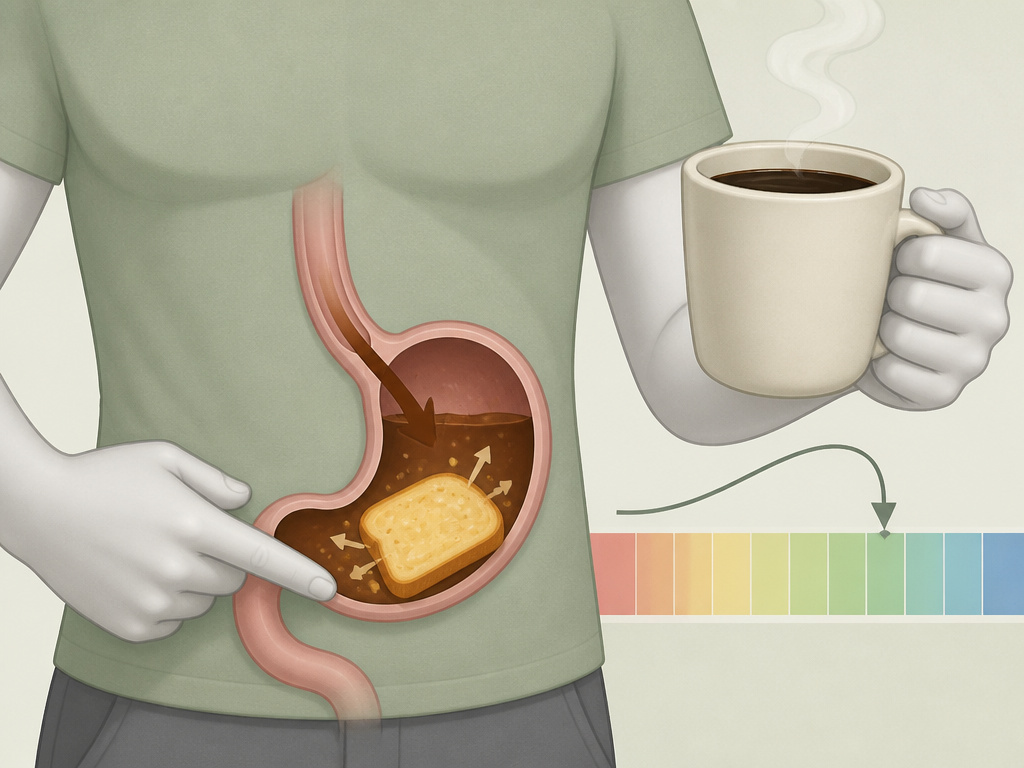
This is where “acidic” gets confusing. A food can be chemically acidic (low pH) but produce an alkaline or neutral effect once metabolized. Lemon juice is the classic example. Coffee is the debate.
Some metabolic systems label coffee as acid-forming. Yet, prominent researcher Dr. Linda Fretto has described lab experiments where a large coffee load did not acidify the body. The jury is out because individuals metabolize acids differently.
Your body processes some acids and excretes others unchanged. If you love coffee but worry about its systemic effect, the practical answer is to listen to your body. Have a cup or two and see. For most people, the primary issue isn’t metabolic acidosis, it’s local stomach irritation or reflux.
The real trigger is often drinking it black on an empty stomach. The acid hits an empty gastric lining, which can stimulate excess stomach acid production. Having a small piece of toast or a banana first provides a physical buffer. This simple step solves more problems than switching to expensive “stomach-friendly” blends.
If you experience digestive distress, it’s worth exploring the link between coffee and digestion more broadly, as acidity is just one factor.
How to Make Your Coffee Less Acidic (4 Proven Methods)
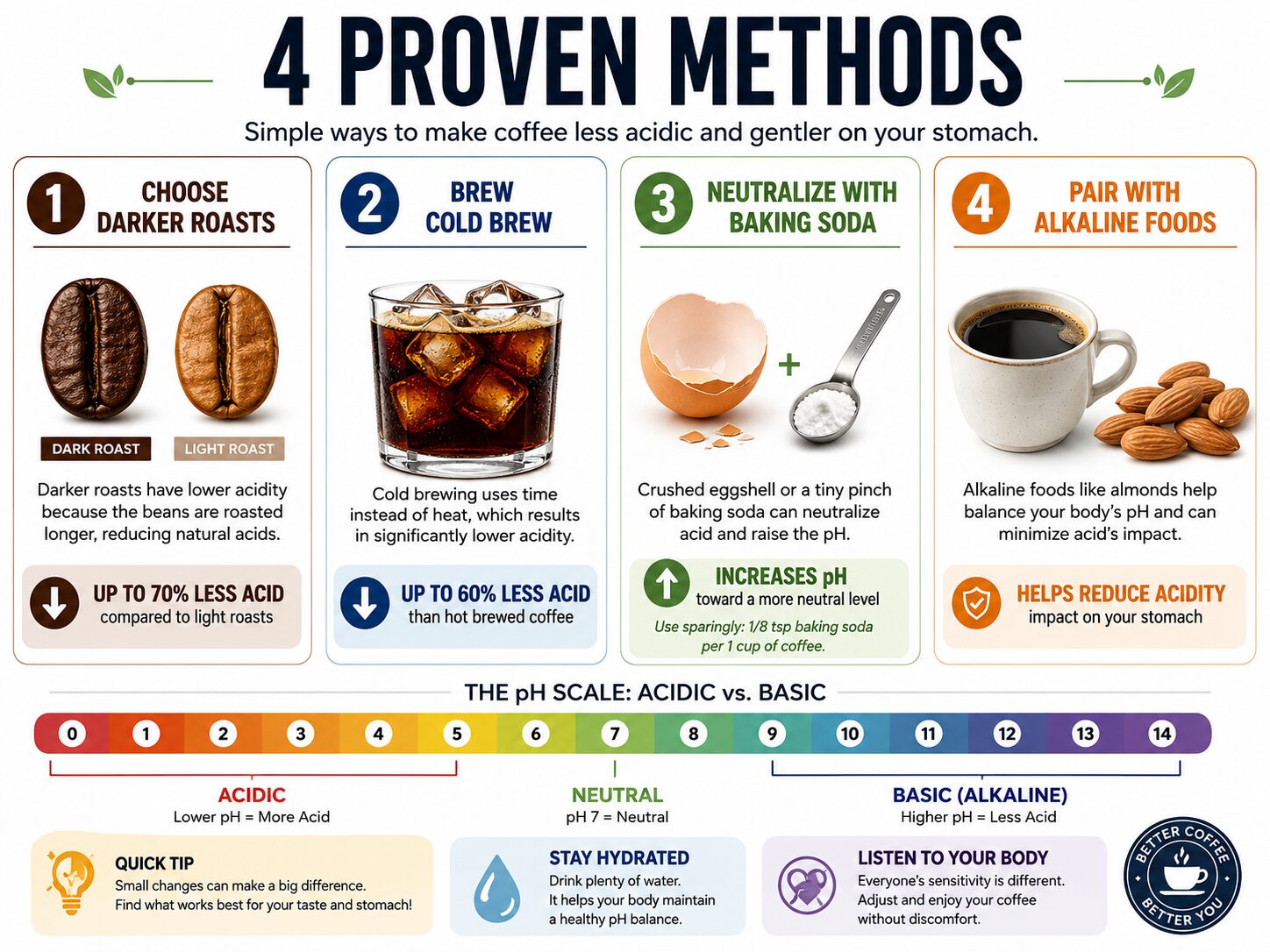
You don’t need to give up coffee. A few targeted changes can significantly lower both the chemical acidity and the harsh perception that bothers your stomach or palate.
- Choose a Darker Roast. This is the most direct method. The longer roasting time breaks down chlorogenic acid. Remember the trade-off: more quinic acid means more potential bitterness. Don’t go to charcoal levels; a solid medium-dark is often the sweet spot.
- Cold Brew It. This isn’t just a trend. Steeping grounds in cold water for 12-24 hours extracts fewer acidic compounds and less caffeine. The result is a smooth, low-acid concentrate. Dilute it with water or milk. It’s the single most effective method for sensitive stomachs.
- Use Eggshells or a Pinch of Baking Soda. This is the old-school hack. Clean a few eggshells, crush them, and add them to your grounds before brewing. The calcium carbonate neutralizes acid. A tiny pinch of baking soda in your brewed cup does the same. Go easy, too much and you’ll taste soap.
- Always Eat First. Never drink coffee on an empty stomach. Full stop. Even a handful of almonds or a piece of fruit provides a buffer. This alone can eliminate morning reflux for many people.
Your choice of additives can also soften the experience. Using almond milk in coffee instead of dairy can be easier on some stomachs, and a dash of cinnamon in coffee can add sweetness without sugar, masking sharp notes.
Frequently Asked Questions
Does adding milk make coffee less acidic?
Milk is slightly alkaline, so it can neutralize a tiny amount of acid. The main effect is dilution and coating. The fats and proteins coat your stomach lining and tongue, buffering the acid sensation. It doesn’t change the coffee’s fundamental pH much, but it can make it feel smoother.
Is cold brew really less acidic?
Yes, and measurably so. The cold water extraction pulls out fewer of the acidic compounds like chlorogenic and citric acid. Studies show cold brew can have a pH 0.10-0.30 higher than hot brew from the same beans. It also has about 30% less caffeine, another irritant for some.
What about decaf? Is it lower in acid?
The decaffeination process itself can remove some compounds, but it doesn’t target acids specifically. A decaf bean of the same roast will have a very similar acid profile to its caffeinated version. Any stomach benefit usually comes from removing caffeine’s stimulant effect on gastric acid production.
Can coffee damage your teeth?
The acidity can contribute to enamel erosion over time, especially if you sip slowly for hours. The tannins also cause staining. Don’t brush your teeth immediately after drinking, as the enamel is temporarily softened. Rinse with water instead. For more on this balance, see our guide on brushing teeth after coffee.
Are “low acid” coffee brands worth it?
They often use beans steamed before roasting or specific dark roast profiles to reduce chlorogenic acid. They work for some. But you can achieve similar results for less money by simply buying a high-quality dark roast and using a cold brew method. Try the cheaper fixes first.
How does coffee compare to other drinks?
When comparing acidity in tea vs coffee, black tea generally has a higher pH (less acidic), often around 5.5-6.0. Herbal teas can be near neutral. Coffee’s acidity is more pronounced and complex.
Before You Go
Coffee is acidic. Its pH sits around 5, fueled by a changing cast of organic acids from chlorogenic to quinic. But that number is just the start.
Your water’s hidden bicarbonate level can flatten that acidity or let it scream. The origin on the bag might lie about its chemical reality. And inside your body, the story changes again, it might not be the systemic acid villain you fear.
If acidity causes you grief, you have levers to pull. Darker roasts, cold brewing, and never drinking on an empty stomach are your best tools. You can even tweak your cup with additives like coconut oil in coffee for fat-based smoothing or brown sugar in coffee for caramelized sweetness that balances tartness.
The goal isn’t to eliminate acidity. It’s a vital part of coffee’s flavor. The goal is to understand it, so you can bend it to your taste and your stomach’s comfort.
{
“@context”: “https://schema.org”,
“@type”: “HowTo”,
“name”: “How to Reduce Coffee Acidity for Your Stomach”,
“totalTime”: “PT5M”,
“tool”: [
{
“@type”: “HowToTool”,
“name”: “Dark roast coffee beans”
},
{
“@type”: “HowToTool”,
“name”: “Cold brew coffee maker or French press”
},
{
“@type”: “HowToTool”,
“name”: “Low-mineral bottled water or water filter”
},
{
“@type”: “HowToTool”,
“name”: “Food-grade eggshells or a pinch of baking soda”
}
],
“step”: [
{
“@type”: “HowToStep”,
“name”: “Choose a darker roast”,
“text”: “Pick a medium-dark to dark roast bean. The longer roasting time breaks down more chlorogenic acid, which reduces both chemical acidity and perceived sharpness.”
},
{
“@type”: “HowToStep”,
“name”: “Brew with cold water”,
“text”: “Use a cold brew method. Steeping grounds in cold water for 12-24 hours extracts fewer acidic compounds, resulting in a smoother, less acidic concentrate.”
},
{
“@type”: “HowToStep”,
“name”: “Adjust your water”,
“text”: “Brew with water that has moderate hardness (50-175 ppm) but low alkalinity (under 70 ppm). High bicarbonate water flattens flavor; distilled water makes coffee taste sour.”
},
{
“@type”: “HowToStep”,
“name”: “Add a natural buffer”,
“text”: “Add a pinch of baking soda to your brewed cup or steep cleaned, crushed eggshells with your grounds. Both neutralize excess acid without major flavor loss.”
},
{
“@type”: “HowToStep”,
“name”: “Never drink it black on an empty stomach”,
“text”: “Have a small snack like toast or a banana before your first cup. Food in your stomach provides a buffer against acid irritation.”
}
]
}
{
“@context”: “https://schema.org”,
“@type”: “FAQPage”,
“mainEntity”: [
{
“@type”: “Question”,
“name”: “Does adding milk make coffee less acidic?”,
“acceptedAnswer”: {
“@type”: “Answer”,
“text”: “Milk is slightly alkaline, so it can neutralize a tiny amount of acid. The main effect is dilution and coating. The fats and proteins coat your stomach lining and tongue, buffering the acid sensation. It doesn’t change the coffee’s fundamental pH much, but it can make it feel smoother.”
}
},
{
“@type”: “Question”,
“name”: “Is cold brew really less acidic?”,
“acceptedAnswer”: {
“@type”: “Answer”,
“text”: “Yes, and measurably so. The cold water extraction pulls out fewer of the acidic compounds like chlorogenic and citric acid. Studies show cold brew can have a pH 0.10-0.30 higher than hot brew from the same beans. It also has about 30% less caffeine, another irritant for some.”
}
},
{
“@type”: “Question”,
“name”: “What about decaf? Is it lower in acid?”,
“acceptedAnswer”: {
“@type”: “Answer”,
“text”: “The decaffeination process itself can remove some compounds, but it doesn’t target acids specifically. A decaf bean of the same roast will have a very similar acid profile to its caffeinated version. Any stomach benefit usually comes from removing caffeine’s stimulant effect on gastric acid production.”
}
},
{
“@type”: “Question”,
“name”: “Can coffee damage your teeth?”,
“acceptedAnswer”: {
“@type”: “Answer”,
“text”: “The acidity can contribute to enamel erosion over time, especially if you sip slowly for hours. The tannins also cause staining. Don’t brush your teeth immediately after drinking, as the enamel is temporarily softened. Rinse with water instead. For more on this balance, see our guide on brushing teeth after coffee.”
}
},
{
“@type”: “Question”,
“name”: “Are \”low acid\” coffee brands worth it?”,
“acceptedAnswer”: {
“@type”: “Answer”,
“text”: “They often use beans steamed before roasting or specific dark roast profiles to reduce chlorogenic acid. They work for some. But you can achieve similar results for less money by simply buying a high-quality dark roast and using a cold brew method. Try the cheaper fixes first.”
}
},
{
“@type”: “Question”,
“name”: “How does coffee compare to other drinks?”,
“acceptedAnswer”: {
“@type”: “Answer”,
“text”: “When comparing acidity in tea vs coffee, black tea generally has a higher pH (less acidic), often around 5.5-6.0. Herbal teas can be near neutral. Coffee’s acidity is more pronounced and complex.”
}
}
]
}
