
How Many Calories Are in Iced Vietnamese Coffee Per Tablespoon?
Iced Vietnamese coffee calories come almost entirely from sweetened condensed milk. A standard drink made with two tablespoons of condensed milk contains about 130 calories, plus 2-5 calories from the coffee itself. The exact number depends entirely on how much milk you use.
Most guides tell you the range is 125-240 calories. They stop there. The part they skip is why a weak brew makes those calories taste cloying instead of balanced, and how the traditional 1:6 coffee-to-water ratio in a phin brewer exists for a reason. You can cut the milk in half and still get a great drink if you get the coffee strength right first.
This is not about finding the lowest-calorie version. It’s about understanding where every calorie comes from, how to measure it, and how to adjust the recipe without losing the soul of cà phê sữa đá.
Key Takeaways
- Each tablespoon (about 20g) of sweetened condensed milk adds roughly 65 calories to your drink. Two tablespoons is the traditional starting point.
- The coffee itself contributes almost no calories, about 2-5 for a phin-brewed concentrate. The real variable is the milk.
- Brew strength is non-negotiable. Using regular-strength drip coffee over ice creates a diluted, watery drink that needs more condensed milk to taste right, paradoxically increasing calories.
- For a lower-calorie version, reduce the condensed milk to one tablespoon and consider a brown sugar syrup or a splash of almond milk to supplement sweetness and body.
- Pre-mixed instant versions like Vietnam Instant Iced Milk Coffee can vary; one sachet contains 65 calories, similar to a single tablespoon of condensed milk.
How Many Calories Are in Iced Vietnamese Coffee?
The short answer is between 65 and 260 calories. The long answer requires a tablespoon and a scale.
A classic cà phê sữa đá is built on two ingredients: a fiercely strong, dark-roast coffee concentrate and sweetened condensed milk. The coffee contributes a negligible amount, maybe 2 to 5 calories. Every other calorie comes from the thick, sugary milk. One tablespoon of sweetened condensed milk, which weighs about 20 grams, packs approximately 65 calories. The math from there is straightforward.
One tablespoon (15ml) of sweetened condensed milk delivers about 65 calories, 11g of sugar, and 2g of protein. This is based on the nutrition data for branded products like Nguyen Coffee Supply’s canned version.
If your recipe calls for two tablespoons, you’re at 130 calories from the milk. Add the coffee, and you land at the standard 135-calorie figure. Use a heavy hand with three tablespoons, and you cross 200 calories. This is why the quoted range online is so wide, it’s a direct reflection of personal preference.
The real trap isn’t the milk itself. It’s using a coffee that isn’t strong enough.
Common mistake: Brewing with a standard drip coffee maker instead of a phin, the resulting drink is weak and watery, so you add extra condensed milk to compensate. You end up with a 200-calorie drink that still tastes unbalanced.
The traditional phin brewer exists for this reason. It makes a concentrate. That intense, almost syrupy coffee can stand up to the sweetness and richness of the milk. When you start with that foundation, you can actually use less condensed milk and still get a fantastic drink. One tablespoon over ice with a proper concentrate beats two tablespoons with weak coffee every time.
TL;DR: Count your tablespoons of condensed milk. Each one is about 65 calories. The coffee adds barely any.
The Calorie Math: From Phin to Glass
You can eyeball a tablespoon. For precise tracking, you need weight. Sweetened condensed milk is dense. A 14-ounce can holds about 396 grams. That entire can contains roughly 1,300 calories.
Most of us aren’t drinking a can in one go. But seeing the total helps you understand the ingredient’s potency. For a single serving, here’s how the numbers break down.
| Component | Typical Amount | Calories | Primary Source |
|---|---|---|---|
| Sweetened Condensed Milk | 2 tbsp (40g) | ~130 | Fat, Sugar |
| Coffee Concentrate | 1 phin brew (120ml) | ~5 | Negligible |
| Total (Traditional) | 1 glass | ~135 |
The coffee’s calorie contribution is so small it’s often rounded down to zero. The brew is just water passing through ground beans, extracting oils and caffeine, not significant macronutrients. Where you might see a slight bump is if you use a pre-ground blend that includes chicory, which adds a trace amount of carbohydrates.
The branded, ready-to-drink versions confirm this math. A single serving of Nguyen Coffee Supply Vietnamese Coffee, Condensed Milk clocks in at 100 calories for the whole can. A Vietnam Instant Iced Milk Coffee sachet from The Original Vietnamese line contains 65 calories, identical to a single tablespoon of the standalone milk product.
This consistency tells you everything. The calorie load is in the dairy and sugar. Alter that, and you alter the count dramatically.
What’s in Sweetened Condensed Milk?
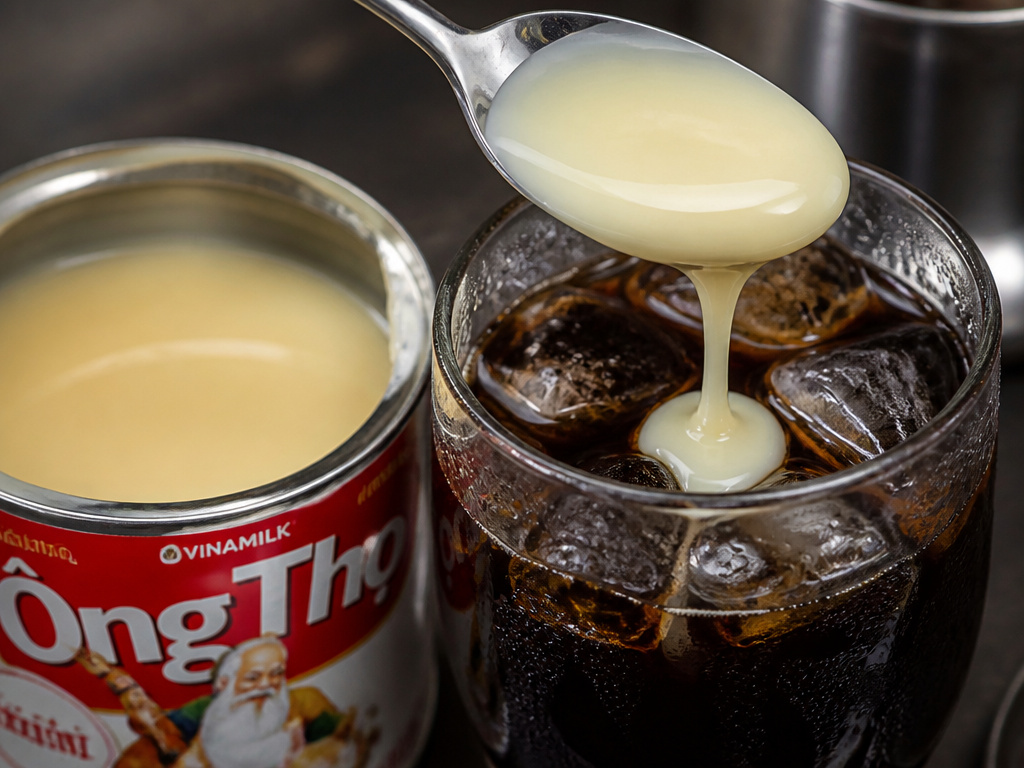
It’s not just sugary cream. The manufacturing process is what creates its unique role in this drink.
Sweetened condensed milk is whole milk that has had about 60% of its water removed. Sugar is then added, a lot of it, typically around 45% by weight. The result is a thick, shelf-stable product that is about 40% sugar. This sugar isn’t just for sweetness; it’s a preservative and a textural agent. When hot coffee hits it, the sugar dissolves seamlessly, and the reduced water content means it doesn’t dilute the coffee the way fresh milk or cream would.
The nutritional profile per tablespoon is heavy on carbohydrates. That 65 calories breaks down into roughly 11 grams of sugar, 2 grams of fat, and 2 grams of protein. It also delivers a notable amount of calcium, about 8% of your daily value per tablespoon.
For a lower-calorie milk option, you have to change the ingredient entirely. Swapping in a low-fat or skim condensed milk is not a direct substitute; the sugar content and texture are different. This is why most lower-calorie approaches use a different sweetener altogether, like a brown sugar syrup, and a separate splash of regular milk or a plant-based creamer like almond milk for body.
Can You Make a Lower-Calorie Version?
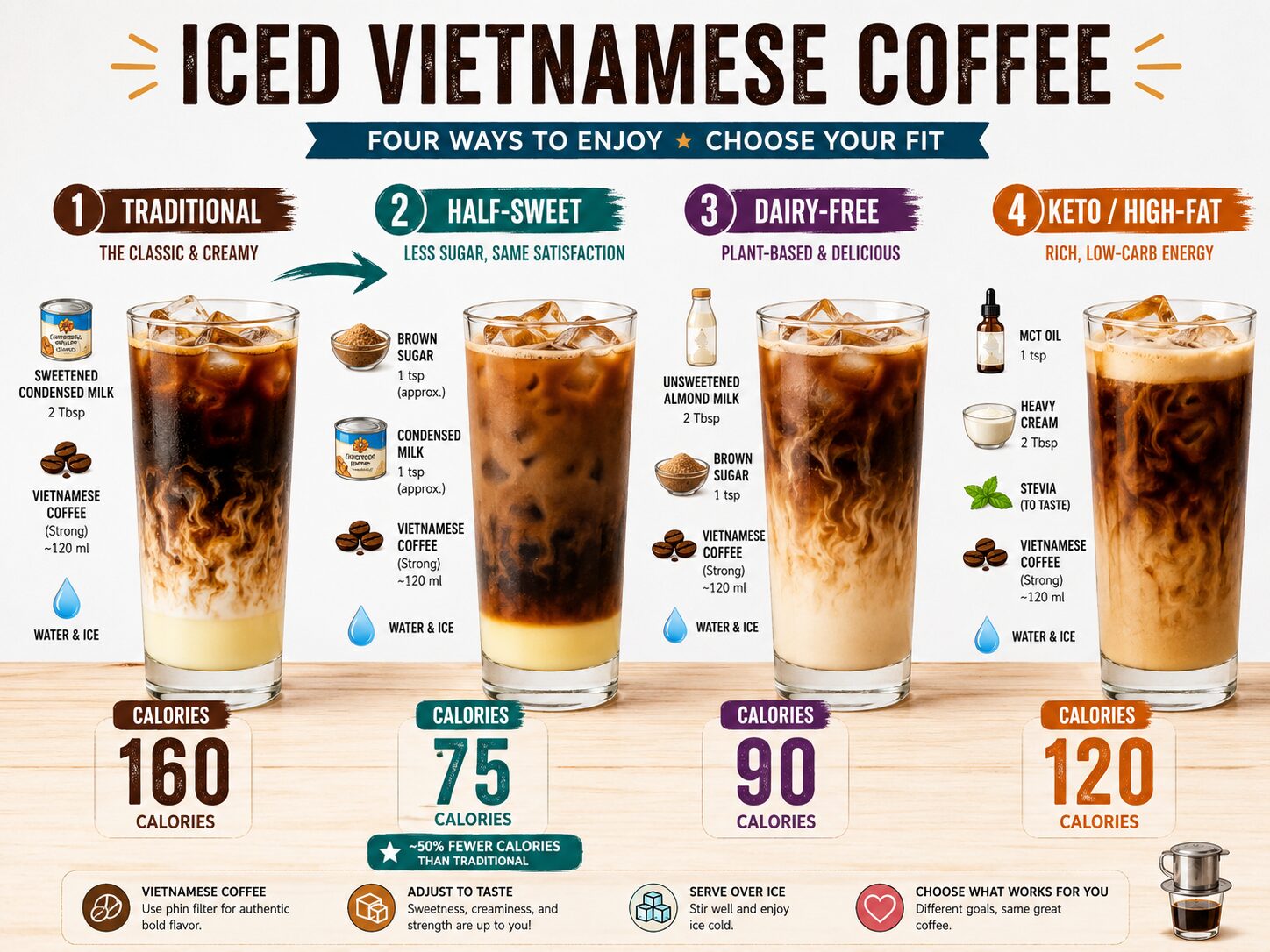
Yes, but you must compensate in two other areas: sweetness and mouthfeel. Simply cutting the condensed milk in half leaves a drink that tastes thin and sharp.
The most effective method is to build a substitute system. Start with a single tablespoon of condensed milk instead of two. That immediately saves 65 calories. Then, add a teaspoon of a brown sugar as a sweetener dissolved in a splash of hot water to make a simple syrup. This adds back some sweetness without the dairy fat. Finally, top up with a ounce of unsweetened almond milk in coffee. The almond milk adds a nutty creaminess and body that the syrup lacks, for only about 7 extra calories.
| Approach | Condensed Milk | Additional Elements | Estimated Calories | Best For |
|---|---|---|---|---|
| Traditional | 2 tbsp | None | ~135 | Purists, first-timers |
| Half-Sweet | 1 tbsp | 1 tsp brown sugar syrup | ~85 | Calorie-counters who still want richness |
| Dairy-Free | 0 tbsp | 2 tsp brown sugar syrup + 2 oz almond milk | ~50 | Vegan or lactose-intolerant drinkers |
| Keto/High-Fat | 1 tbsp | 1 tsp MCT oil in coffee | ~155 | Those following high-fat diets |
The half-sweet approach is my daily driver. It works because the coffee is still the star. You get the caramelized, cooked-milk flavor from the single tablespoon of condensed milk, and the sugar syrup bridges the gap. You don’t miss the second tablespoon at all.
Avoid the “skinny” pre-made condensed milk products. They often replace sugar with artificial sweeteners that leave a metallic aftertaste, which clashes violently with the dark, bitter notes of a robusta brew.
Why Brew Strength Matters More Than You Think
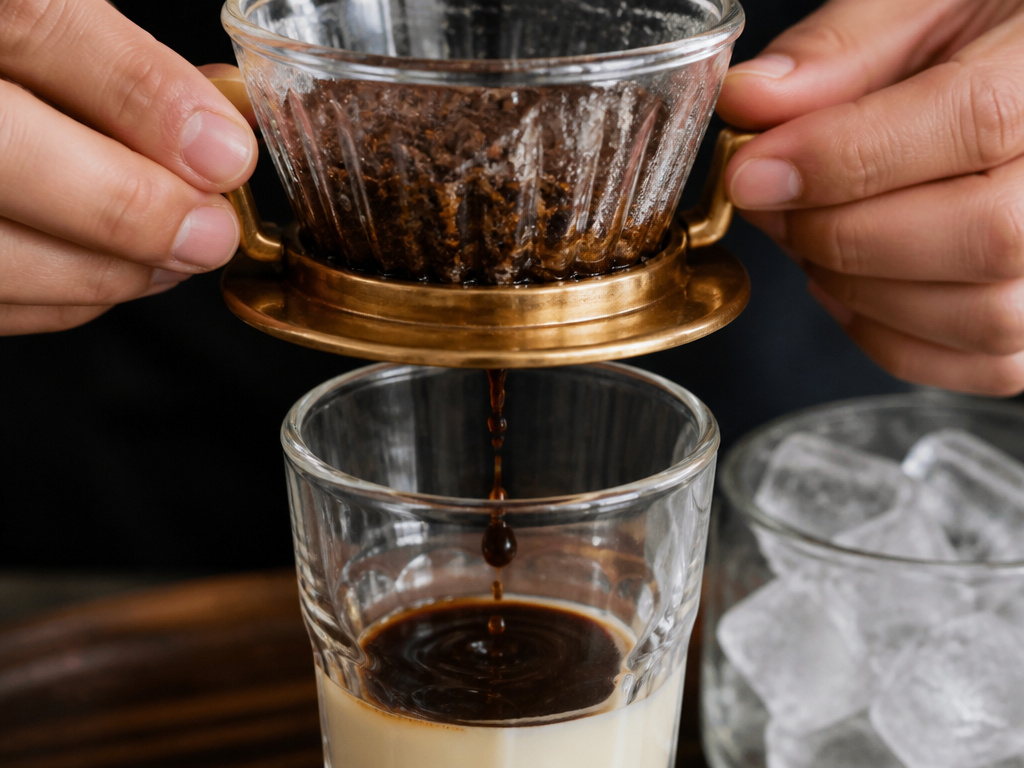
This is the mechanical reason most homemade attempts fail. Vietnamese coffee is not strong coffee poured over ice. It’s coffee concentrate poured over ice.
The standard ratio for a phin is 18 to 20 grams of coffee to 120 milliliters of water. That’s a 1:6 ratio. For context, a typical drip coffee ratio is 1:16. The phin brew is nearly three times more concentrated. This intensity is necessary because the ice will melt and dilute the drink as you sip it. If you start with a brewed coffee strength, you end up with flavored ice water by the bottom of the glass.
The YouTube tutorial that popularized the “better” version using whole milk and salt missed this point entirely. The creator used a phin correctly but then diluted the concentrate with milk, which is a different drink altogether. The authentic method relies on the thick, sweet milk to temper the intense coffee, not to dilute it.
When the coffee is weak, you need more condensed milk to achieve any sense of balance. This is how a drink can quickly balloon to 200+ calories without satisfying the core craving. The fix is always to strengthen the coffee base first.
Common mistake: Using pre-ground coffee meant for drip machines in a phin. The grind is too coarse, water passes through too fast, and you get a weak, under-extracted brew that demands extra condensed milk to be palatable.
Invest in a dedicated can of Longevity Brand or Cafe Du Monde Coffee with Chicory and a inexpensive brass phin. The grind is perfect for the device, and the chicory adds a woody, complex bitterness that stands up to the milk. Your calorie count will stay where you want it because the coffee can carry the weight.
Iced Vietnamese Coffee vs. Other Coffee Drinks
It sits in its own category. Let’s compare.
A standard 16-ounce cappuccino calorie count comes mostly from the whole milk foam, landing around 120 calories. It’s a different texture entirely, airy and warm. A 12-ounce espresso caffeine shot has virtually no calories, but it’s also not a sweet, dessert-like experience. The caffeine in iced drinks like cold brew or iced Americano is similar to Vietnamese coffee, but without the milk and sugar, they’re essentially calorie-free.
Vietnamese iced coffee is closer in spirit to a dessert. A small, 8-ounce serving can have the same calorie load as a large latte because of the condensed milk’s sugar density. This isn’t a bad thing, it’s a choice. Understanding the comparing coffee drink calories helps you slot it into your day. It’s not a morning eye-opener; it’s an afternoon treat.
If you’re looking for a low-calorie black coffee option, stick with an Americano vs drip coffee or plain cold brew. The moment you introduce sweetened condensed milk, you’re in a different realm.
Frequently Asked Questions
Does Vietnamese coffee have more calories than regular coffee?
Yes, significantly. A black brewed coffee has about 5 calories. A standard Vietnamese iced coffee with two tablespoons of condensed milk has about 135 calories. The difference is entirely due to the sweetened condensed milk.
Can I use sugar-free condensed milk?
You can, but the result is often disappointing. Sugar-free versions use artificial sweeteners like sucralose, which can leave a bitter, chemical aftertaste that amplifies the natural bitterness of the dark roast coffee instead of balancing it.
How many calories are in black Vietnamese iced coffee (cà phê đen đá)?
Very few, about 5 to 10 calories for the coffee itself. Without the condensed milk, it’s essentially a strong, iced black coffee. The calorie count is negligible.
Does the type of coffee bean change the calories?
No. Whether you use robusta, arabica, or a blend with chicory, the calorie contribution from the coffee grounds themselves is effectively zero. The calorie story is 100% about the condensed milk and any other additives.
Is the caffeine content high?
Yes, typically higher than a standard cup of coffee. Traditional Vietnamese coffee uses robusta beans, which have almost twice the caffeine of arabica beans. A single phin brew can contain between 100-150mg of caffeine, similar to a strong caffeine in espresso shot.
Before You Go
Track your tablespoons. The single biggest lever you control with iced Vietnamese coffee calories is the amount of sweetened condensed milk in the glass. Start with two, see how it tastes, and try cutting back to one and a half, then one.
The second lever is your coffee. If it doesn’t taste strong and almost syrupy before it hits the milk, it’s not strong enough. A weak base needs more milk to balance it, which defeats the purpose of cutting calories. Get the coffee right first, a proper phin brew or a very strong cold brew concentrate. Then adjust the milk.
You can enjoy the ritual and the flavor without the full sugar load. A single tablespoon of condensed milk over a powerful coffee concentrate, stirred until it’s a deep caramel color before you add the ice, is a completely legitimate and delicious version. It’s about 70 calories. That’s a compromise worth making.
