
The Real Difference Between an Iced Latte and Iced Coffee
The real difference between an iced latte and iced coffee is their base ingredient: espresso versus brewed coffee. An iced latte combines espresso with a large volume of milk over ice. Iced coffee is chilled, often double-strength, brewed coffee served over ice, typically with little or no milk added.
An iced latte is espresso shaken or poured over ice and diluted with a larger volume of milk. Iced coffee is brewed coffee, often double-strength, served chilled over ice, typically with little or no milk. The base ingredient, espresso versus brewed coffee, changes everything: the caffeine punch, the required milk ratio, the texture, and how the drink evolves as the ice melts.
Most people pick based on habit or a vague sense of “creaminess.” They miss the mechanical reality that espresso and brewed coffee are two entirely different extraction processes. That difference dictates which drink will taste watery in ten minutes, which one packs a hidden caffeine wallop, and which one actually costs less to make at home.
This guide breaks down the specs, the science behind the taste, and the real-world trade-offs so you can order, or make, the right one.
Key Takeaways
- Espresso versus brewed coffee is the only difference that matters. Everything else, caffeine, milk ratio, texture, follows from that.
- Iced coffee almost always has more caffeine per serving. A 12oz iced coffee can deliver over 200mg, while a 12oz iced latte from Starbucks has 75mg.
- Iced lattes taste less sweet than hot lattes. It’s not your imagination; the TRPM5 protein channel in your taste buds detects sweetness best at moderate warmth, not near freezing.
- Iced coffee dilutes faster. Brewed coffee is less concentrated than espresso, so melting ice waters it down more noticeably.
- Your home equipment decides your drink. A true iced latte needs an espresso machine. Iced coffee needs a coffee maker, a Keurig K-Iced, or a cold brew setup.
What Is an Iced Latte?
An iced latte is milk and espresso over ice. The standard build is one or two shots of espresso, poured or shaken over ice, then topped with cold milk. The high concentration of the espresso means it needs that large volume of milk to balance it into a drinkable, smooth beverage.
Starbucks lists their Tall (12oz) Iced Latte at 130 calories, with 75mg of caffeine. The Grande (16oz) jumps to 150mg of caffeine. Those numbers come from the espresso shots, the milk adds calories from natural sugars (lactose) but almost no caffeine.
Pulling a proper shot for an iced latte requires adjusting your grind. The colder temperature mutes flavor perception, so you often need a slightly finer grind and a slightly longer extraction to get the same intensity you’d taste in a hot drink. Miss that adjustment, and your homemade iced latte will taste weak and sour.
The texture is the real tell. A well-made iced latte has a silky, integrated mouthfeel from the combination of espresso crema and milk fat. It’s fundamentally a milk-based drink that happens to contain coffee. Skip the steaming wand, and you lose that integration. The milk just sits on top of the espresso in a cold, separate layer.
TL;DR: An iced latte is espresso diluted with a lot of cold milk over ice. Its character is defined by the espresso’s intensity and the milk’s creamy texture.
What Is Iced Coffee?
Iced coffee is brewed coffee served cold. The most common method is the “Japanese” or “flash-chill” method: brewing hot coffee at double strength directly over a full cup of ice. The ice instantly chills and dilutes the coffee to a normal drinking strength.
This method preserves more of the coffee’s bright, acidic notes compared to cold brew. It’s those notes that make a classic iced coffee taste refreshing and clean. Because brewed coffee is less concentrated than espresso, you don’t need much milk, a splash is enough. A black iced coffee has near-zero calories.
Common mistake: Using regular-strength brewed coffee over ice. The melting ice dilutes it into a sad, watery brew within minutes. You must start with a concentrated coffee, roughly twice your normal coffee-to-water ratio.
The caffeine content here is typically higher. While a Tall Starbucks Iced Latte has 75mg, a standard 12oz iced coffee from a specialty shop can easily contain over 200mg of caffeine, depending on the beans and brew ratio. It’s a more efficient caffeine delivery system.
TL;DR: Iced coffee is strong, hot-brewed coffee flash-chilled over ice. It’s higher in caffeine and acidity than an iced latte, and it needs far less milk.
The Caffeine and Calorie Showdown
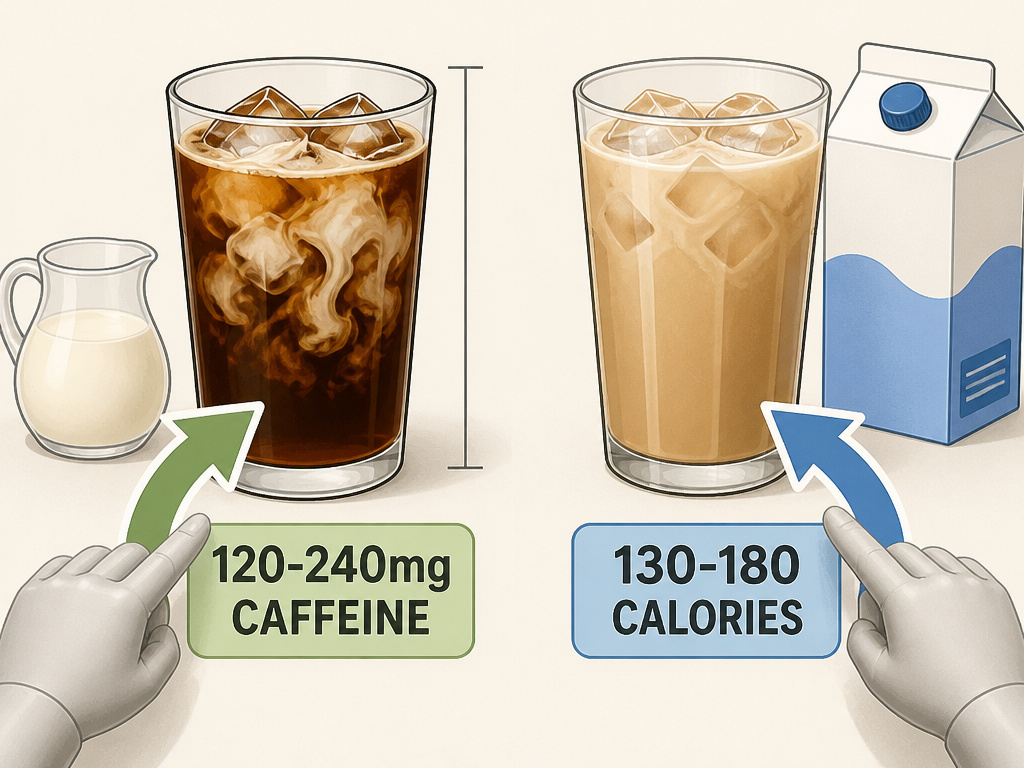
The base ingredient dictates the nutritional profile. Espresso is concentrated coffee volume, but brewed coffee delivers more caffeine per serving.
| Drink (12oz / Tall Size) | Base | Caffeine (approx.) | Calories (approx.) | Primary Source of Calories |
|---|---|---|---|---|
| Iced Latte | Espresso | 75–150 mg | 130–180 | Milk (lactose sugar) |
| Iced Coffee | Brewed Coffee | 120–240 mg | 5–50 | Added sugar or cream |
The numbers don’t lie. A McCafé Iced Latte (Small) contains 71mg of caffeine and 80 calories, with 0g of added sugar, the calories come solely from the milk’s natural lactose. An equivalent iced coffee from the same place, if you add just a splash of cream, could be under 20 calories but still pack over 150mg of caffeine.
This is why understanding espresso caffeine content matters. A single shot of espresso (about 1 oz) contains 63-75mg of caffeine. A 12oz iced latte uses one shot. A 12oz iced coffee uses 12oz of brewed coffee, which can extract far more caffeine from the same mass of grounds.
If you’re watching calories, an iced coffee with a low-calorie coffee addition like a dash of almond milk is the clear winner. If you want the creamy experience without the sugar spike, the iced latte with its natural milk sugars is your pick.
Why Iced Lattes Taste Less Sweet (It’s Science)
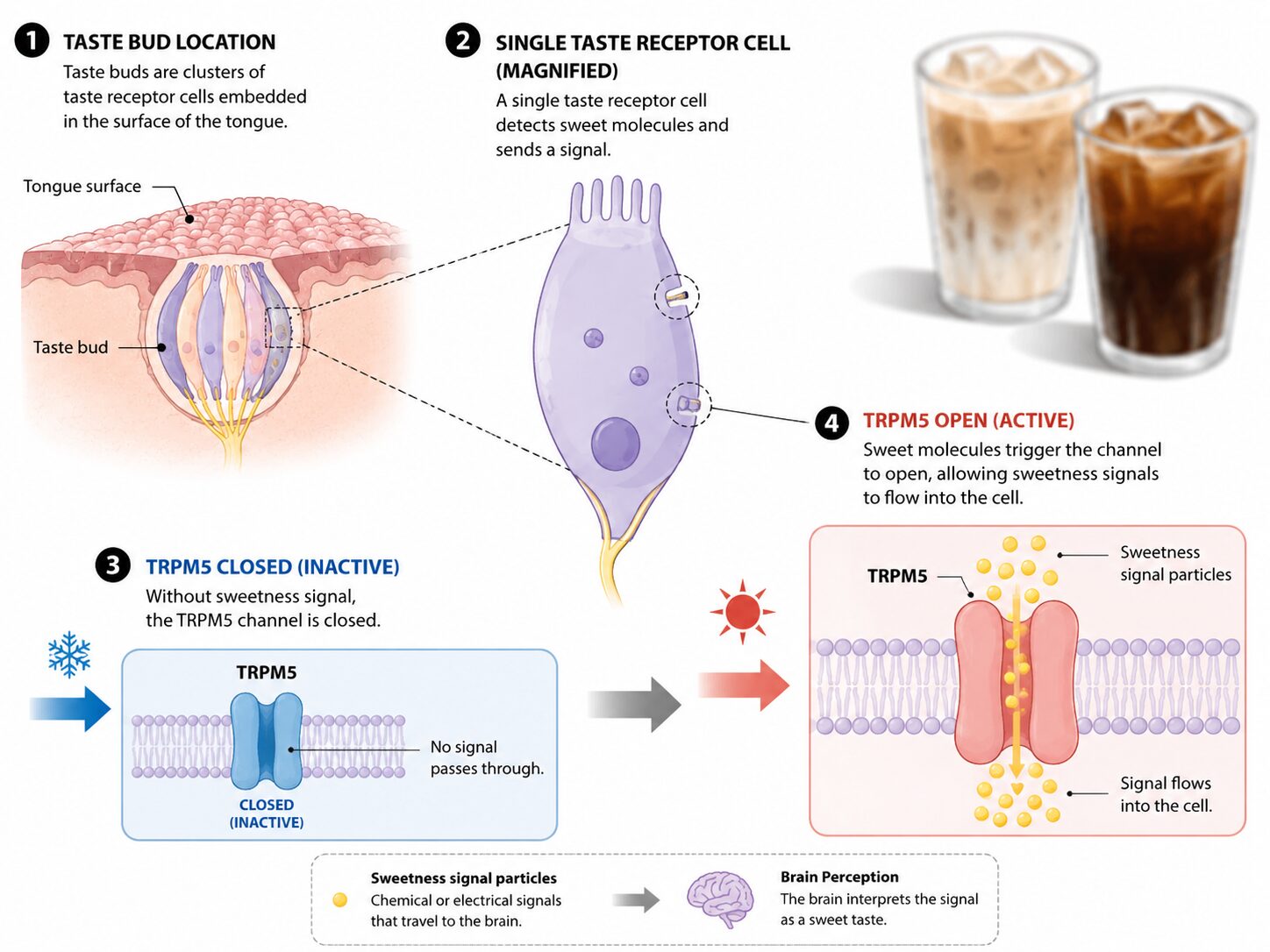
Order an iced latte and a hot latte with the same syrup. The iced one will taste noticeably less sweet. This isn’t a barista error. It’s biology.
The TRPM5 protein channel in your taste buds, responsible for detecting sweet flavors, is highly temperature sensitive. Its signal peaks around 25–35°C (77–95°F) and falls off sharply as temperature drops. At near-freezing temperatures, your ability to perceive sweetness is significantly dulled.
The milk in a latte contains lactose, a natural sugar. In a hot latte, the warmth amplifies that sweetness. In an iced latte, the cold suppresses it. Your brain expects the same sweetness level based on the recipe, but your taste buds report less. This is why baristas often add an extra half-pump of syrup to iced versions, they’re compensating for your biology.
This also affects other sweetening cold drinks. Sugar syrups dissolve better than granulated sugar in cold liquids, but the perceived sweetness is still lower. Some cafes use a pinch of salt in their iced drink recipes to enhance perceived sweetness and counteract bitterness, a trick that works because salt also activates TRPM5.
The Dilution Problem Nobody Mentions
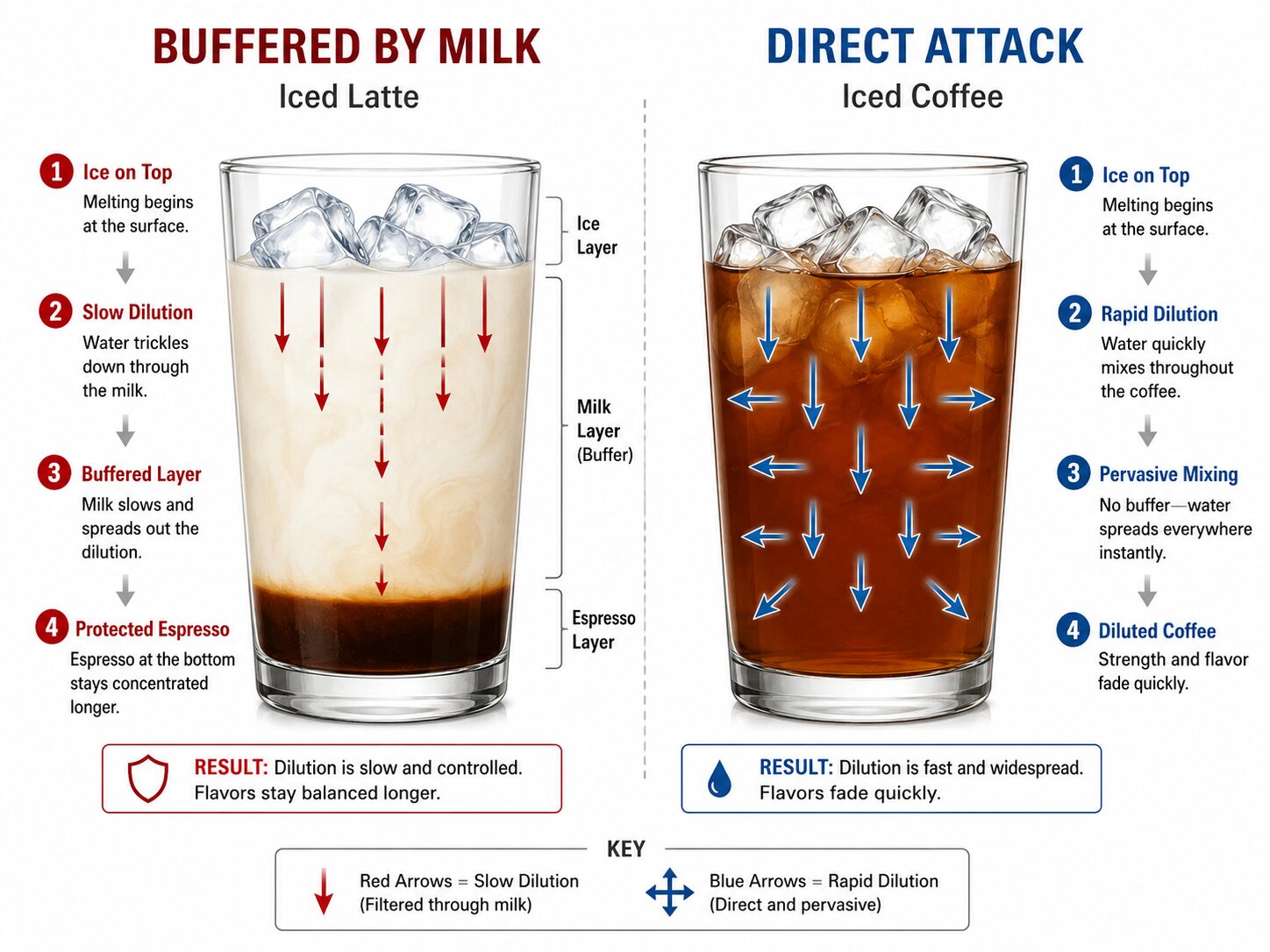
Ice melts. Both drinks suffer, but not equally.
Espresso is incredibly concentrated. When the ice melts in an iced latte, it’s diluting a small, powerful shot that’s already been tempered by a large volume of milk. The change is gradual, and the milk buffers the flavor for a while. The drink goes from “rich and creamy” to “mild and creamy.”
Brewed coffee for iced coffee is strong, but not that strong. Melting ice attacks a much larger volume of already-diluted coffee. The result is a faster, more noticeable slide from “bright and refreshing” to “weak and watery.” This is the single biggest complaint from iced coffee drinkers, the last third of the drink is a punishment.
The fix is in the brew. For iced coffee, you need that double-strength base. For an iced latte, some bartender-style places shake the espresso and milk with a few ice cubes first, then strain it over fresh ice. That pre-chills and pre-dilutes the mix slightly, so the serving ice melts slower. It’s a small step that adds five minutes to your routine and saves the last five sips.
Texture and Mouthfeel: Creamy vs. Clean
Shake an iced latte. You’ll see a fine, tan foam settle on top, the remnants of espresso crema mixing with agitated milk fat. That foam is the signature of a properly integrated iced latte. It feels silky and rich on the tongue.
Pour iced coffee over ice. It’s dark, clear, and looks like iced tea. Add a splash of milk, and it clouds up, but it never develops that cohesive, creamy body. The mouthfeel is clean, crisp, and quenching.
This texture difference influences your dairy-free milk options. Oat milk froths and integrates with espresso beautifully, making it a top choice for iced lattes. Almond milk tends to separate and can taste thin in an iced latte, but its clean flavor can work well in iced coffee. For iced coffee, almost any milk or creamer works because you’re not relying on it for structure.
How to Make Each Drink at Home
Your kitchen equipment makes the choice for you.
For a True Iced Latte:
You need an espresso machine, a capsule machine with an espresso setting (like some Nespresso models), or a Moka pot as a last-resort substitute. The process is simple but technique-sensitive.
1. Pull a double shot of espresso directly into a cup with 1-2 oz of simple syrup (if using).
2. Give the espresso a quick stir to dissolve the syrup.
3. Fill a tall glass to the brim with ice.
4. Pour the espresso over the ice.
5. Top with 6-8 oz of cold milk or your preferred plant-based milk.
6. Stir gently to combine.
The shot must be hot and fresh. Pulling it over the ice without the syrup step can shock the coffee and make it taste bitter.
For Reliable Iced Coffee:
You have more options, from dedicated machines to simple pour-overs.
* The Dedicated Route: A machine like the Keurig K-Iced has a “Brew Over Ice” setting that adjusts the brewing temperature to reduce ice melt by nearly 30%. It’s consistent and foolproof. The Mr. Coffee Iced Coffee Maker uses a simple measuring system for brewing a hot concentrate directly over ice in its included tumbler.
* The Manual Route: Brew a full pot of coffee at double strength (use 2x the coffee grounds). Immediately pour it over a full pitcher of ice. Stir until chilled.
I used a Mr. Coffee Iced maker for a summer. The included tumbler is convenient, but the nylon filter lets too many fine grounds through if you grind your own beans. Switch to a paper filter inside the reusable basket, and the sludge problem disappears.
The choice here is between convenience and control. The Keurig is faster and cleaner. The manual method is cheaper and lets you use any brewed coffee methods you like, from French press to pour-over.
Which Should You Order? A Decision Matrix
Stop guessing. Use this.
| You Want… | Order This | Why It Wins |
|---|---|---|
| A bigger caffeine hit | Iced Coffee | More brewed coffee volume equals more extracted caffeine. |
| A creamy, silky texture | Iced Latte | Espresso crema and milk fat integrate for a richer mouthfeel. |
| Lowest possible calorie count | Iced Coffee (black) | Zero calories from the coffee, add only what you want. |
| A drink that stays consistent as ice melts | Iced Latte | The high milk ratio buffers against dilution better. |
| To use up your light roast beans | Iced Coffee | Bright, acidic light roast characteristics shine when chilled. |
| A dessert-like, customizable experience | Iced Latte | More milk means flavors and syrups blend smoothly; the base is designed for add-ins. |
| Something quick with a home drip machine | Iced Coffee | No espresso machine needed. Brew double-strength, pour over ice. |
If you’re at a cafe and hate bitterness, the iced latte is the safer bet. The milk rounds off any harsh edges in the espresso. If you find most coffee too milky or sweet, the iced coffee is your move. Start black, add a splash, and you control the final product.
Frequently Asked Questions
Which has more caffeine, iced coffee or iced latte?
Iced coffee almost always has more caffeine. A standard 12oz iced coffee can contain 200mg or more. A 12oz iced latte typically has 75-150mg, depending on how many espresso shots are used.
Why does my iced latte from a cafe taste less sweet than the hot version?
It’s not your imagination. The TRPM5 protein channels in your taste buds that detect sweetness are far less sensitive at cold temperatures. The same amount of syrup or milk sugar will taste noticeably weaker in a cold drink. Cafes often add extra syrup to compensate.
Can I make an iced latte without an espresso machine?
You can approximate one with a Moka pot or a concentrated AeroPress brew, but the texture and crema won’t be the same. For a true iced latte with the signature silky foam, you need the high pressure of an espresso machine to create the crema that blends with the milk.
Is iced coffee just hot coffee poured over ice?
Not if you want it to be good. Pouring regular-strength hot coffee over ice waters it down instantly. Proper iced coffee is brewed at double strength (using twice the coffee grounds) so that when it melts the ice, it reaches a normal drinking strength.
Which is better for weight loss, iced coffee or iced latte?
Iced coffee is significantly lower in calories. A black iced coffee has almost zero calories. An iced latte’s calories come from milk, a 12oz one has at least 130 calories from milk sugars alone. For weight loss, iced coffee with a splash of milk is the clear choice.
The Bottom Line
The iced latte versus iced coffee debate isn’t about which is objectively better. It’s about which tool solves your specific problem. Need a potent, clean caffeine lift that won’t fill you up? The iced coffee is your workhorse. Want a creamy, dessert-like treat that feels substantial and smooth? The iced latte delivers.
The mistake is treating them as interchangeable. They come from different branches of the coffee tree. One is a brewed coffee method, the other is an espresso-based drink. Your preference for one over the other will steer your home equipment purchases, your cafe orders, and your entire approach to cold caffeine.
Pick your base first. Everything else is just ice.
{
“@context”: “https://schema.org”,
“@type”: “HowTo”,
“name”: “How to Choose Between an Iced Latte and Iced Coffee”,
“step”: [
{
“@type”: “HowToStep”,
“name”: “Identify your base ingredient”,
“text”: “An iced latte uses espresso as its base, while iced coffee uses brewed coffee. This fundamental difference dictates the drink’s strength, texture, and required milk ratio.”
},
{
“@type”: “HowToStep”,
“name”: “Consider your caffeine preference”,
“text”: “A standard iced coffee typically contains more caffeine per ounce than an iced latte. A 12oz iced coffee can have over 200mg of caffeine, while a Tall (12oz) Starbucks Iced Latte has 75mg.”
},
{
“@type”: “HowToStep”,
“name”: “Evaluate your sweetness and texture preference”,
“text”: “Iced lattes offer a creamy, silky mouthfeel from the steamed milk and espresso crema but taste less sweet cold due to science. Iced coffee has a brighter, more acidic flavor that stands up to ice melt.”
},
{
“@type”: “HowToStep”,
“name”: “Check the calorie and sugar content”,
“text”: “An iced latte’s calories come primarily from milk. A Tall Starbucks Iced Latte has 130 calories, mostly from milk sugars. An iced coffee with a splash of milk can be under 20 calories.”
},
{
“@type”: “HowToStep”,
“name”: “Decide based on your equipment”,
“text”: “Making a true iced latte requires an espresso machine or a pod brewer with an espresso setting. Iced coffee can be made with a standard coffee maker, a Keurig K-Iced, or even cold brew concentrate.”
}
]
}
{
“@context”: “https://schema.org”,
“@type”: “FAQPage”,
“mainEntity”: [
{
“@type”: “Question”,
“name”: “Which has more caffeine, iced coffee or iced latte?”,
“acceptedAnswer”: {
“@type”: “Answer”,
“text”: “Iced coffee almost always has more caffeine. A standard 12oz iced coffee can contain 200mg or more. A 12oz iced latte typically has 75-150mg, depending on how many espresso shots are used.”
}
},
{
“@type”: “Question”,
“name”: “Why does my iced latte from a cafe taste less sweet than the hot version?”,
“acceptedAnswer”: {
“@type”: “Answer”,
“text”: “It’s not your imagination. The TRPM5 protein channels in your taste buds that detect sweetness are far less sensitive at cold temperatures. The same amount of syrup or milk sugar will taste noticeably weaker in a cold drink. Cafes often add extra syrup to compensate.”
}
},
{
“@type”: “Question”,
“name”: “Can I make an iced latte without an espresso machine?”,
“acceptedAnswer”: {
“@type”: “Answer”,
“text”: “You can approximate one with a Moka pot or a concentrated AeroPress brew, but the texture and crema won’t be the same. For a true iced latte with the signature silky foam, you need the high pressure of an espresso machine to create the crema that blends with the milk.”
}
},
{
“@type”: “Question”,
“name”: “Is iced coffee just hot coffee poured over ice?”,
“acceptedAnswer”: {
“@type”: “Answer”,
“text”: “Not if you want it to be good. Pouring regular-strength hot coffee over ice waters it down instantly. Proper iced coffee is brewed at double strength (using twice the coffee grounds) so that when it melts the ice, it reaches a normal drinking strength.”
}
},
{
“@type”: “Question”,
“name”: “Which is better for weight loss, iced coffee or iced latte?”,
“acceptedAnswer”: {
“@type”: “Answer”,
“text”: “Iced coffee is significantly lower in calories. A black iced coffee has almost zero calories. An iced latte’s calories come from milk, a 12oz one has at least 130 calories from milk sugars alone. For weight loss, iced coffee with a splash of milk is the clear choice.”
}
}
]
}
