
How to Use a Hamilton Beach Coffee Maker Correctly | Tips
To use a Hamilton Beach coffee maker, fill the reservoir with cold water, add ground coffee to the filter basket (one scoop per cup), place the carafe, and press ‘Brew.’ For single-serve FlexBrew models, use a K-Cup pod or the provided scoop filter, select your side, and brew directly into a mug. The 2-hour automatic shutoff engages after brewing stops, not when you last poured.
Most people treat the brew basket like a trash chute. They dump in yesterday’s stale grounds, overfill it, and wonder why the coffee tastes bitter or the machine starts leaking from the seam under the filter door. That seam is not designed to hold back a sludge of over-extracted mud.
This guide walks through the specifics the manual assumes you’ll guess. We’ll cover the two main Hamilton Beach types, the standard programmable carafe maker and the dual-sided FlexBrew, and the maintenance steps that actually prevent the common failures.
Key Takeaways
- The 2-hour auto shutoff timer starts when brewing finishes, not from your last interaction. If the coffee tastes burnt after sitting, the plate stayed on for the full two hours.
- FlexBrew models have two independent water systems. You must select ‘Carafe’ or ‘Single-Serve’ before brewing; pouring water in the wrong reservoir does nothing.
- Descaling every 30 days is the manufacturer’s baseline. In hard water areas, scale clogs the internal tube in three weeks, causing weak, slow brews.
- Non-Keurig pods in a FlexBrew often jam the piercing needle. The plastic rim is slightly thicker, and the needle bends on the third or fourth use.
- The Pause & Serve feature on carafe models lets you snag a cup mid-brew, but releasing the carafe for more than 30 seconds can trip the thermal sensor and stop the cycle.
The Hamilton Beach FlexBrew Trio (Model 49976) operates two separate brewing systems: a single-serve side that accepts K-Cup pods or ground coffee up to 10 ounces, and a carafe side with a 12-cup capacity and a ‘Hotter Coffee’ setting. Both sides share a control panel but have independent water reservoirs and heating elements.
Your Hamilton Beach’s Two Main Personalities
Hamilton Beach makes dozens of models, but they cluster into two families. The classic programmable drip machine with a glass carafe is one. The FlexBrew series, which stacks a single-serve brewer beside a full carafe system, is the other. Your first step is identifying which you own.
The programmable model, like the 46310, has one lid on top for the filter basket and one lid in back for the water reservoir. The FlexBrew Trio has two distinct sections. On the left, you’ll see a pod holder or a scoop filter slot. On the right, a traditional swing-open basket for a carafe filter. It also has two separate water fill areas.
Using the wrong water reservoir is the most common first-hour mistake. The carafe side reservoir is usually larger and marked with cup lines. The single-serve side might be a smaller, unmarked opening behind the pod holder. If you fill the single-serve side but have the carafe basket loaded, you’ll get a blinking light and no coffee.
TL;DR: Identify your machine: one lid means one system; two distinct brewing areas mean you must choose your side before adding water.
The Universal Setup: Water, Coffee, Carafe
Every model starts with the same three physical actions. Get these wrong and nothing else works.
First, water. Always use cold, fresh tap or filtered water. Hot water from the tap can carry sediment from your water heater, and it’s already oxygen-depleted. That makes flat-tasting coffee. Fill to your desired cup line on the reservoir. The cup lines are 5-ounce cups, not your 12-ounce mug. For four mugs, fill to the 8-cup line.
Second, the coffee. Use the scoop that came with the machine. If you lost it, a standard tablespoon is close. The rule is one level scoop per 5-ounce cup of water. For a full 12-cup carafe, that’s 12 scoops. Grind size matters. Use a medium grind, like coarse sand.
Common mistake: Using a blade-ground powder in a drip basket, the fine particles slip past the filter paper, settle in the bottom of the carafe, and your last cup is all sludge. A consistent grind from a burr vs blade grinders prevents this.
Third, the carafe. Make sure it’s fully seated on the warming plate. The handle should click against the stop. If it’s off-center, the drip tray won’t align and hot coffee will miss the opening and spill onto the plate. That burnt sugar smell that won’t scrub off comes from baked-on coffee overflow.
The FlexBrew Trio: Single-Serve and Carafe Side-by-Side
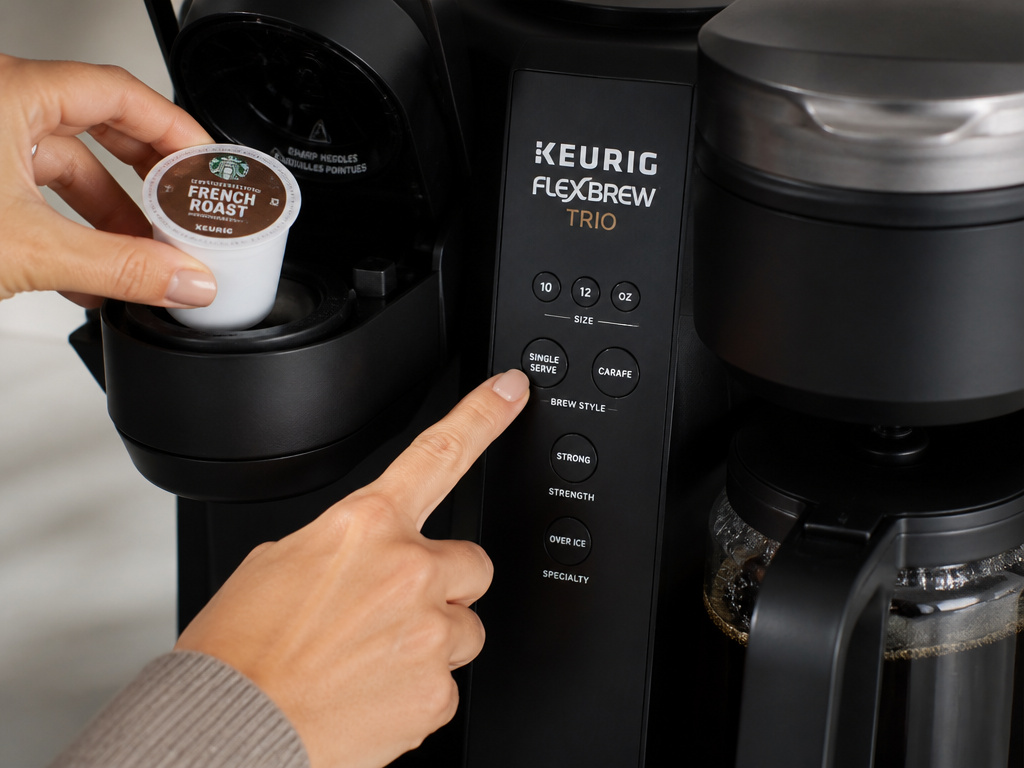
This is where most new owners get tangled. The FlexBrew Trio (Model 49976) isn’t one machine doing two things. It’s two machines in one housing. Each side has its own water tank, its own heating element, and its own brew path.
For the carafe side:
- Swing open the right-side basket.
- Insert a paper filter or the included permanent mesh filter.
- Add your ground coffee.
- Fill the right-side reservoir with water.
- Place the carafe on the right-side warming plate.
- Press the ‘Carafe’ button, then ‘Brew’.
For the single-serve side:
- Lift the left-side lid.
- Place a K-Cup pod in the holder, or fill the reusable scoop filter with grounds.
- Close the lid firmly until it clicks.
- Fill the left-side reservoir with water (max 10 oz).
- Place your mug on the built-in stand.
- Press the ‘Single-Serve’ button, then ‘Brew’.
The machine will not brew if you’ve placed water in the single-serve tank but have the carafe button selected. The control light will just blink. You must match the side you prepared.
| Brewing Side | Max Capacity | Filter Type | Key Limitation |
|---|---|---|---|
| Carafe | 12 cups (60 oz) | Paper or permanent | Requires full carafe on plate to start |
| Single-Serve | 10 oz | K-Cup pod or scoop filter | Off-brand pods risk needle jam |
Why the pod warning matters. The needle that pierces the K-Cup is precisely sized for Keurig’s spec. Generic pods often use a slightly thicker plastic rim. The needle meets resistance, can bend, and on the next genuine Keurig pod, it fails to pierce cleanly. You get a weak, under-extracted brew because water can’t flow in properly. It’s a $40 service call for a $0.50 part.
Programming and the ‘Hotter Coffee’ Option
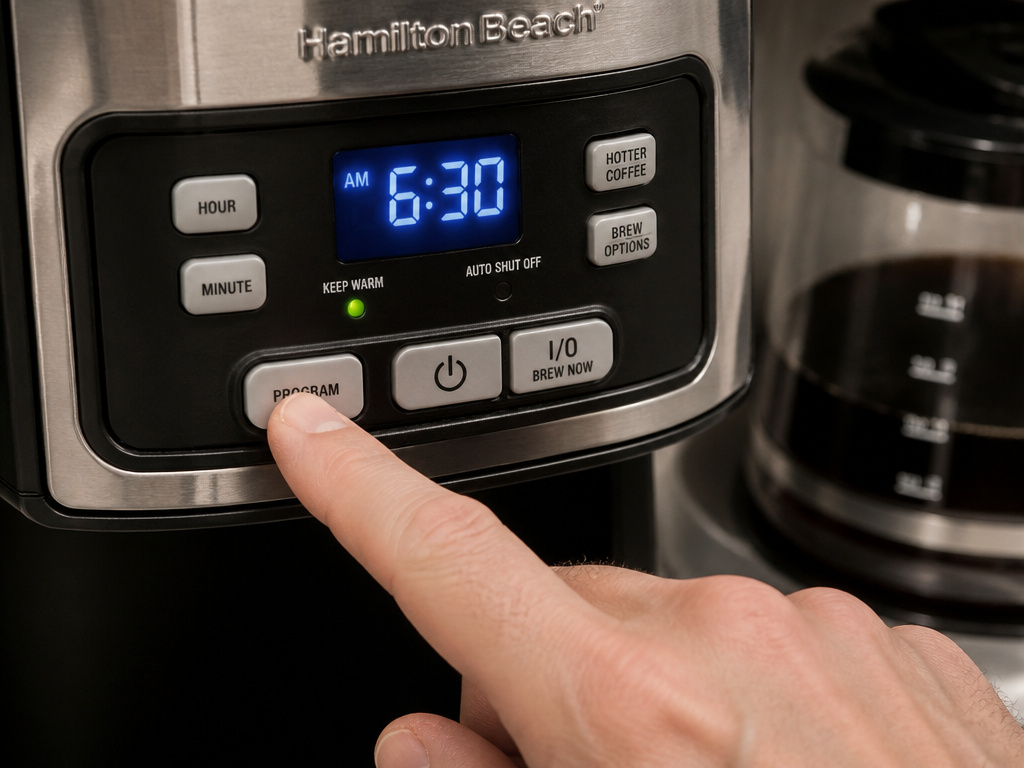
The programmable models let you set a brew time for the morning. The process is straightforward: press ‘Program’, use the hour/minute buttons to set the time you want the coffee ready, then press ‘Program’ again to lock it in. Now add your water and coffee the night before. The machine will start heating at the appointed time.
The ‘Hotter Coffee’ setting on some carafes, like the FlexBrew Trio’s carafe side, is a button you press after selecting ‘Carafe’. It increases the brew temperature slightly. Use this for darker roasts or if you find your coffee cools too quickly in the cup. Don’t use it for light roasts, it can push delicate flavors into bitterness.
The ‘Bold’ button, available on many models, works by slowing the flow of water over the grounds. It increases contact time for a stronger extraction. It’s not just more coffee; it’s a different brew method. Try it with a medium-dark roast.
I prefer the ‘Bold’ setting for my morning blend, but not because it’s stronger. The slower soak minimizes channeling in the basket, so the extraction is more even. The cup has fewer sour high notes and more of the chocolate base note.
The 2-Hour Auto Shutoff: What It Does and What It Doesn’t
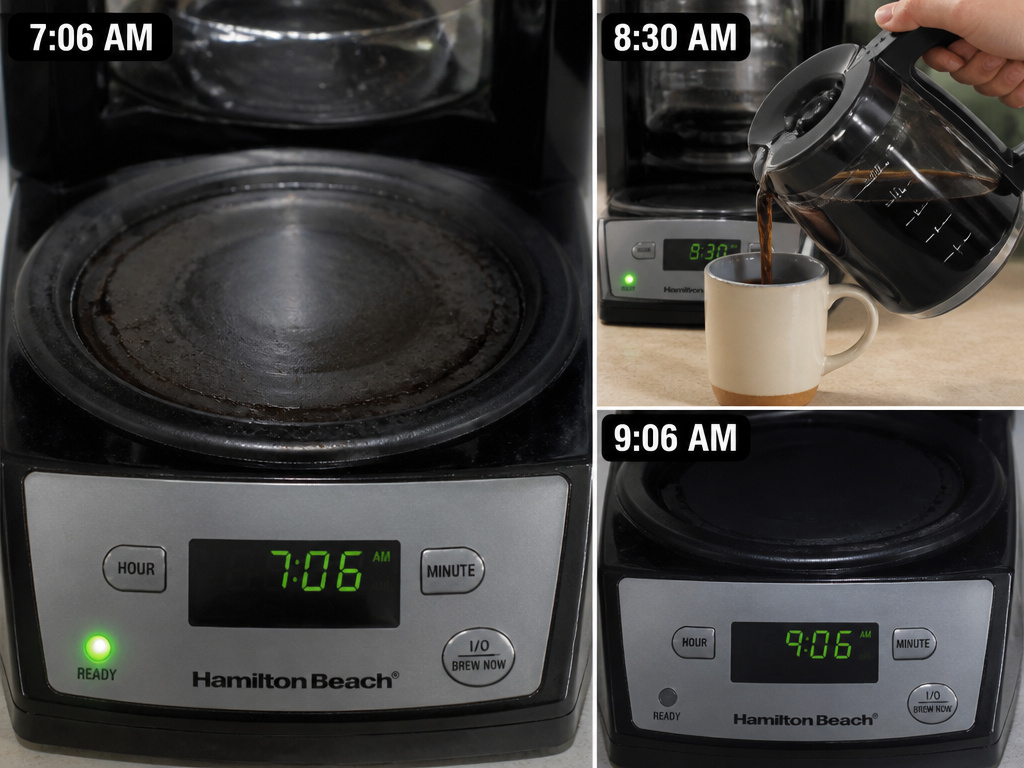
This feature is widely misunderstood. The automatic shutoff does not turn the machine off two hours after you press ‘Brew’. It turns off the warming plate two hours after the brewing cycle finishes.
Here is the sequence:
1. You press ‘Brew’ at 7:00 AM. Brewing takes 6 minutes.
2. The coffee is ready at 7:06 AM. The ‘Ready’ light comes on.
3. The 2-hour safety timer starts at 7:06 AM.
4. The warming plate will shut off automatically at 9:06 AM.
If you pour a cup at 8:30 AM, the plate is still on. If you come back at 9:30 AM, the plate is off and the coffee is cold. The machine itself remains in a low-power ‘idle’ state. This is not a malfunction.
The problem arises when the thermal sensor gets coated in baked-on coffee residue from overflows. The sensor thinks the plate is still dangerously hot and can prevent the shutoff from engaging. The plate stays on indefinitely, cooking the remaining coffee into a tar-like substance. You’ll smell it before you see it, a sharp, acrid odor from the warming plate area.
To reset the system and ensure the shutoff works:
- Unplug the machine for at least 60 seconds.
- Clean the warming plate and the area around it with a damp vinegar cloth.
- Plug it back in and run a water-only brew cycle (no coffee) to clear any internal flags.
Cleaning and Descaling: The Non-Negotiable Routine
Daily cleaning means rinsing the carafe, basket, and permanent filter (if you use one). Let them air dry. Weekly, wipe down the warming plate and exterior with a damp cloth. Never immerse the main unit in water.
Descaling is the critical maintenance. Calcium and mineral scale from your water build up inside the narrow tubes and heating element. Hamilton Beach recommends descaling every 30 days. In practice, that’s a soft-water schedule.
| Water Hardness | Visible Sign | Recommended Descaling | Consequence of Delay |
|---|---|---|---|
| Soft | No kettle scale | Every 60–90 days | Slow brew after 4 months |
| Moderate | Light kettle film | Every 30 days (manual) | Weak coffee in 3 weeks |
| Hard | White deposits | Every 14–21 days | Clogged tube; machine stops mid-brew |
The official descaling steps:
1. Fill the reservoir with a 50/50 mix of white vinegar and cold water.
2. Place an empty carafe on the plate.
3. Start a brew cycle, letting half the solution run through.
4. Pause the cycle and let the solution sit in the system for 30 minutes.
5. Resume the cycle to discard the vinegar solution.
6. Run two full reservoirs of clean water through to rinse.
Common mistake: Using lemon juice instead of vinegar, the citric acid is less effective on magnesium scale, and the sugar in the juice can caramelize on the heating element, leaving a sticky residue that attracts more scale.
After descaling, your first pot might taste slightly off. That’s normal. Run a third water-only brew if you’re sensitive to it. For a deeper clean on the internal water path, consider the role of a dedicated coffee maker water filters system to reduce scale from the source.
Troubleshooting the Usual Suspects
Coffee is weak or cold.
Check the water reservoir lid is sealed. An unsealed lid lets steam escape, reducing pressure and temperature. Also, confirm you’re using the correct paper coffee filters for your basket size; a folded filter can block water flow.
Machine won’t start or lights blink.
Verify the carafe is correctly positioned. The machine has a safety switch that won’t engage if the carafe is missing or misaligned. Also, check that you’ve selected the correct brew side on a FlexBrew model.
Coffee overflows from the basket.
You are using too fine a grind or too much coffee. Reduce the coffee by one scoop or use a coarser grind. Ensure your paper filter material differences aren’t causing a seal, some thicker filters don’t allow water to pass through quickly enough.
Taste is bitter or burnt.
Clean the carafe and basket thoroughly. Oils from old coffee go rancid. Then, try adding salt to coffee, a single grain on your tongue before sipping can neutralize the perception of bitterness, confirming it’s the brew, not your palate. For a sweeter cup without bitterness, try using brown sugar in coffee for its molasses notes.
Frequently Asked Questions
Can I use ground coffee in the single-serve side of my FlexBrew?
Yes. Most FlexBrew models include a reusable plastic scoop filter for ground coffee. Fill it with one scoop of medium-ground coffee, place it in the pod holder, and close the lid. Do not overfill, as it will compact and restrict water flow.
Why does my ‘Pause & Serve’ feature make the machine stop brewing?
If you remove the carafe for more than about 30 seconds during the pause, the thermal sensor in the drip area cools down. The machine interprets this as the carafe being permanently removed for safety and halts the brew cycle. Replace the carafe quickly.
Is the permanent filter better than paper filters?
The permanent mesh filter allows more oils and fine sediment into your carafe, resulting in a fuller-bodied, but sometimes grittier, cup. Paper filters, especially biodegradable coffee filters, produce a cleaner, brighter cup by trapping oils and fines. Your choice depends on your preferred mouthfeel.
Can I make hot water for tea or oatmeal with this machine?
Yes. Run a brew cycle with only water in the reservoir and no coffee in the basket. The water will be heated to brewing temperature, which is suitable for tea or instant foods. Do not do this if you have not recently cleaned the machine, as old coffee oils will flavor the water.
My machine is leaking from the bottom. What should I do?
First, unplug it immediately. The leak is likely from an internal hose or the water reservoir seam. This is not a user-serviceable issue. Per the Hamilton Beach manual, you should “Return appliance to the nearest authorized service center for examination, repair, or electrical or mechanical adjustment.” Do not attempt to open the housing.
What’s the best non-dairy milk to use with coffee from this machine?
For a creamy texture, almond milk in coffee works well, though it can separate if the coffee is very hot. Pour the coffee into the mug first, then slowly add the cold almond milk to temper it and prevent curdling.
The Bottom Line
Using a Hamilton Beach coffee maker correctly comes down to matching your actions to your model. Know if you have one system or two. Respect the 2-hour shutoff timer by understanding its start point. Commit to a descaling schedule based on your water, not the generic manual advice.
The machine is simple. The details are not. Get the water path right, keep the scale out, and it will brew reliably for years. Ignore the specifics, like the single-serve needle or the thermal sensor, and you’ll be searching for a replacement before the warranty expires. Your morning cup depends on the night before. Clean it, set it, forget it.
{
“@context”: “https://schema.org”,
“@type”: “HowTo”,
“name”: “How to Use a Hamilton Beach Coffee Maker”,
“totalTime”: “PT10M”,
“tool”: [
{
“@type”: “HowToTool”,
“name”: “Hamilton Beach coffee maker”
},
{
“@type”: “HowToTool”,
“name”: “Fresh coffee grounds or K-Cup pod”
},
{
“@type”: “HowToTool”,
“name”: “Clean, cold water”
},
{
“@type”: “HowToTool”,
“name”: “Carafe or travel mug”
}
],
“step”: [
{
“@type”: “HowToStep”,
“name”: “Prepare the water reservoir”,
“text”: “Lift the lid at the back of the machine and fill the reservoir with cold water to your desired cup line. Do not overfill.”
},
{
“@type”: “HowToStep”,
“name”: “Add coffee to the filter”,
“text”: “For carafe brewing, place a paper or permanent filter in the basket, add one scoop of grounds per cup, and close the lid. For single-serve, insert a K-Cup pod or add grounds to the scoop filter.”
},
{
“@type”: “HowToStep”,
“name”: “Place your cup or carafe”,
“text”: “Set a clean carafe on the warming plate or position your travel mug on the mug stand. Ensure it’s centered under the drip outlet.”
},
{
“@type”: “HowToStep”,
“name”: “Select your brew settings”,
“text”: “Press the ‘Brew’ button. On programmable or FlexBrew models, select ‘Regular’ or ‘Bold’ strength and choose carafe or single-serve side if applicable.”
},
{
“@type”: “HowToStep”,
“name”: “Initiate brewing and wait”,
“text”: “The machine will begin heating and brewing. Do not open the lid mid-cycle. The ‘Ready’ light will illuminate when brewing is complete.”
}
]
}
{
“@context”: “https://schema.org”,
“@type”: “FAQPage”,
“mainEntity”: [
{
“@type”: “Question”,
“name”: “Can I use ground coffee in the single-serve side of my FlexBrew?”,
“acceptedAnswer”: {
“@type”: “Answer”,
“text”: “Yes. Most FlexBrew models include a reusable plastic scoop filter for ground coffee. Fill it with one scoop of medium-ground coffee, place it in the pod holder, and close the lid. Do not overfill, as it will compact and restrict water flow.”
}
},
{
“@type”: “Question”,
“name”: “Why does my ‘Pause & Serve’ feature make the machine stop brewing?”,
“acceptedAnswer”: {
“@type”: “Answer”,
“text”: “If you remove the carafe for more than about 30 seconds during the pause, the thermal sensor in the drip area cools down. The machine interprets this as the carafe being permanently removed for safety and halts the brew cycle. Replace the carafe quickly.”
}
},
{
“@type”: “Question”,
“name”: “Is the permanent filter better than paper filters?”,
“acceptedAnswer”: {
“@type”: “Answer”,
“text”: “The permanent mesh filter allows more oils and fine sediment into your carafe, resulting in a fuller-bodied, but sometimes grittier, cup. Paper filters, especially biodegradable coffee filters, produce a cleaner, brighter cup by trapping oils and fines. Your choice depends on your preferred mouthfeel.”
}
},
{
“@type”: “Question”,
“name”: “Can I make hot water for tea or oatmeal with this machine?”,
“acceptedAnswer”: {
“@type”: “Answer”,
“text”: “Yes. Run a brew cycle with only water in the reservoir and no coffee in the basket. The water will be heated to brewing temperature, which is suitable for tea or instant foods. Do not do this if you have not recently cleaned the machine, as old coffee oils will flavor the water.”
}
},
{
“@type”: “Question”,
“name”: “My machine is leaking from the bottom. What should I do?”,
“acceptedAnswer”: {
“@type”: “Answer”,
“text”: “First, unplug it immediately. The leak is likely from an internal hose or the water reservoir seam. This is not a user-serviceable issue. Per the Hamilton Beach manual, you should \”Return appliance to the nearest authorized service center for examination, repair, or electrical or mechanical adjustment.\” Do not attempt to open the housing.”
}
},
{
“@type”: “Question”,
“name”: “What’s the best non-dairy milk to use with coffee from this machine?”,
“acceptedAnswer”: {
“@type”: “Answer”,
“text”: “For a creamy texture, almond milk in coffee works well, though it can separate if the coffee is very hot. Pour the coffee into the mug first, then slowly add the cold almond milk to temper it and prevent curdling.”
}
}
]
}
