
How to Stop Diarrhea Caused by Coffee: Key Tips and Fixes
To stop diarrhea from coffee, you need to adjust three specific things: the chemical irritants in the brew (acids and caffeine), the physical trigger of drinking it on an empty stomach, and any digestive irritants you add to the cup, like dairy or artificial sweeteners. A 1998 study in European Journal of Gastroenterology & Hepatology found both caffeinated and decaf coffee stimulate colon contractions within four minutes.
Most people blame the caffeine and switch to decaf, only to find the problem persists. That’s because caffeine is only one part of coffee’s complex chemical profile. The real issue is a one-two punch of specific acids and a hardwired nervous system reflex that coffee uniquely activates.
This guide walks through the mechanical why, then gives you a sequenced action plan. You’ll learn which variable to change first, what to expect, and how to isolate the culprit without giving up your ritual.
Key Takeaways
- Coffee triggers a gastrocolic reflex, an involuntary colon contraction, via acids like chlorogenic acid raising gastrin hormone levels. Caffeine amplifies this.
- Decaffeinated coffee still causes diarrhea for many people. The 1998 Rao et al. study confirmed decaf stimulates the colon, just about 30% less powerfully than caffeinated.
- Drinking coffee on an empty stomach guarantees the strongest laxative effect. Food in the stomach acts as a physical buffer.
- Low-acid coffee beans (often dark roasts from Brazil or Sumatra) and cold brew methods can reduce the primary chemical irritants.
- Your creamer or sweetener might be the culprit. Lactose intolerance and sugar alcohols (sorbitol, mannitol) in “sugar-free” syrups are common osmotic laxatives.
Why Coffee Triggers a Rush (It’s Not Just Caffeine)
The process starts before the coffee even reaches your colon. Coffee contains chlorogenic acid. This compound boosts the level of the hormone gastrin in your system.
Gastrin stimulates involuntary muscle contractions in your stomach and colon. It’s the primary chemical signal that kicks off the gastrocolic reflex—the chain reaction that moves contents through your digestive tract.
This is the core mechanism. When you drink coffee, especially on an empty stomach, the chlorogenic acid triggers a gastrin spike. Your stomach awakens and starts to contract. That contraction continues down into your small intestine and finally your colon, creating the urgent need to go.
Caffeine supercharges this existing process. It further stimulates colonic motility and can increase gastric acid secretion. But removing caffeine doesn’t stop the initial trigger. That’s why switching to decaf alone often fails.
TL;DR: Chlorogenic acid in coffee raises gastrin, which triggers colon contractions. Caffeine makes it worse, but isn’t the root cause.
The 5-Step Action Plan for Coffee Drinkers
Tackle these steps in order. Changing everything at once won’t tell you what the real problem was.
Before you start: If your symptoms include severe dehydration, blood in stool, or last more than 2-3 days, stop and consult a doctor. This advice is for routine coffee-induced urgency, not underlying common causes of chronic diarrhea like IBS or IBD.
1. Always Eat First (The 10-Minute Buffer)
This is the single most effective change. The gastrocolic reflex is strongest when your stomach is empty. Food acts as a physical buffer and slows the absorption of irritants.
Eat a small, solid meal 10 to 15 minutes before your coffee. A piece of toast, a banana, or a handful of nuts is enough. The difference is tangible. The urgency shifts from “immediate” to “maybe in an hour.” Skip this step and you’re fighting chemistry with willpower.
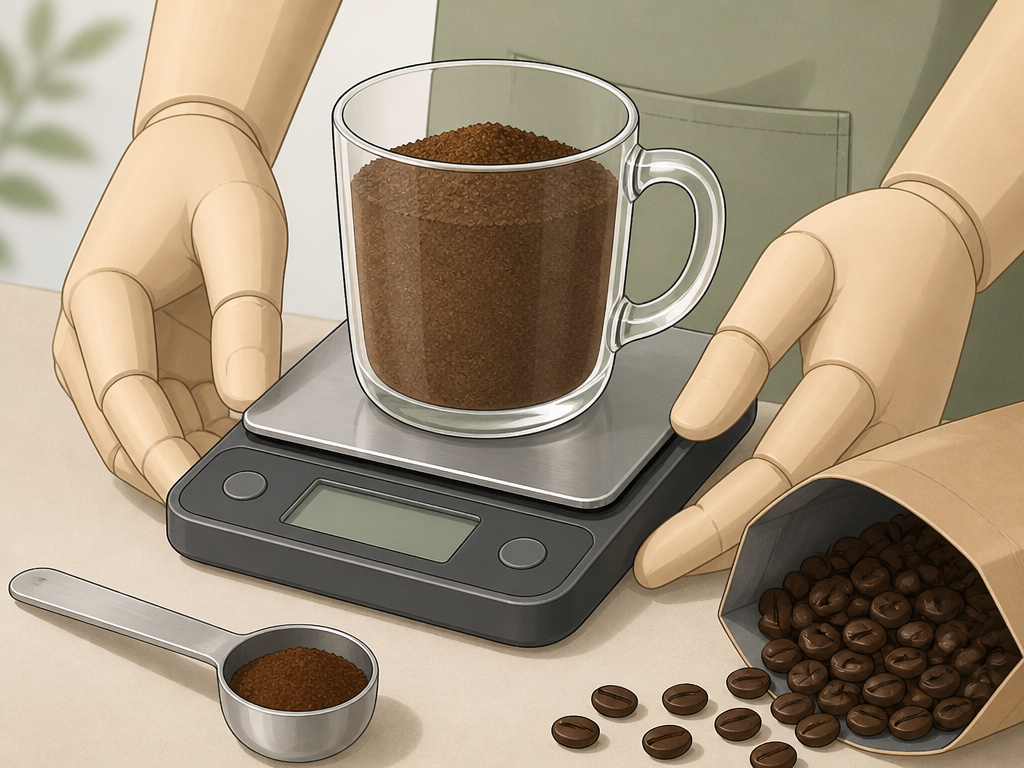
2. Measure Your Coffee Dose
A heaping, unmeasured scoop can easily double your typical dose. More grounds mean more chlorogenic acid and more caffeine hitting your system at once.
Use a kitchen scale and aim for 15-18 grams of coffee per 8-ounce cup. If you don’t have a scale, use a proper tablespoon measure—one level tablespoon is roughly 5 grams of ground coffee. This simple act of measuring alone has calmed more digestive systems than any exotic bean swap in my experience.
3. Change Your Bean or Your Brew Method
If eating first helps but doesn’t solve it, target the acids.
| Option | How It Helps | Best For |
|---|---|---|
| Dark Roast Beans | Longer roasting breaks down more chlorogenic acid. Brazilian or Sumatran beans are naturally lower in acid. | Those who love hot coffee and don’t want a specialty product. |
| Labeled Low-Acid Coffee | Brands like Simpatico or Lifeboost use specific processing to reduce acid content. | People with known acid reflux or very sensitive stomachs. |
| Cold Brew | The cold, slow extraction pulls out far fewer acidic compounds than hot brewing. | Anyone willing to plan ahead; it cuts acidity by about 70%. |
Switching to a low-acid coffee option was the fix for a friend who could never finish a cup without a sprint to the bathroom. The darker, smoother profile of a Sumatran dark roast gave her the ritual without the consequence.
4. Audit Your Additives
Your coffee itself might be innocent. The culprits are often in the cup.
- Dairy Creamer: Lactose intolerance is incredibly common and worsens with age. Try a week with a dairy-free coffee addition like almond or oat milk.
- Artificial Sweeteners: Sucralose (Splenda), aspartame, and especially sugar alcohols (sorbitol, mannitol, xylitol) are osmotic laxatives. They draw water into your colon. If you use flavored syrups or “sugar-free” packets, switch to a small amount of plain sugar or honey.
- Sugar Overload: A huge dump of sugar can also speed gastric emptying. Consider a digestive-friendly sweetener in moderation.
Common mistake: Blaming the coffee while using three pumps of sugar-free vanilla syrup — the syrup’s sorbitol will cause diarrhea on its own within 30 minutes, regardless of the brew.
4. Reduce Caffeine Strategically
If steps 1-4 haven’t worked, caffeine is your likely amplifier. You don’t have to quit.
- Mix Your Beans: Create a 50/50 blend of regular and decaf beans in your grinder. This cuts the caffeine load in half while preserving flavor.
- Switch to a gentler caffeine source for your second cup. Green tea, with its L-theanine, provides a calmer stimulation.
- Shorten the Brew Time: If you use a French press, cut the steep time from 4 minutes to 3. Less time means less caffeine extraction.
A PubMed review of coffee’s GI effects confirms caffeine’s role in stimulating gut motility. Reducing your total milligrams is a direct lever to pull.
Caffeinated vs. Decaf: What the Research Actually Says
Many people are surprised when decaf coffee still causes issues. The science explains why.
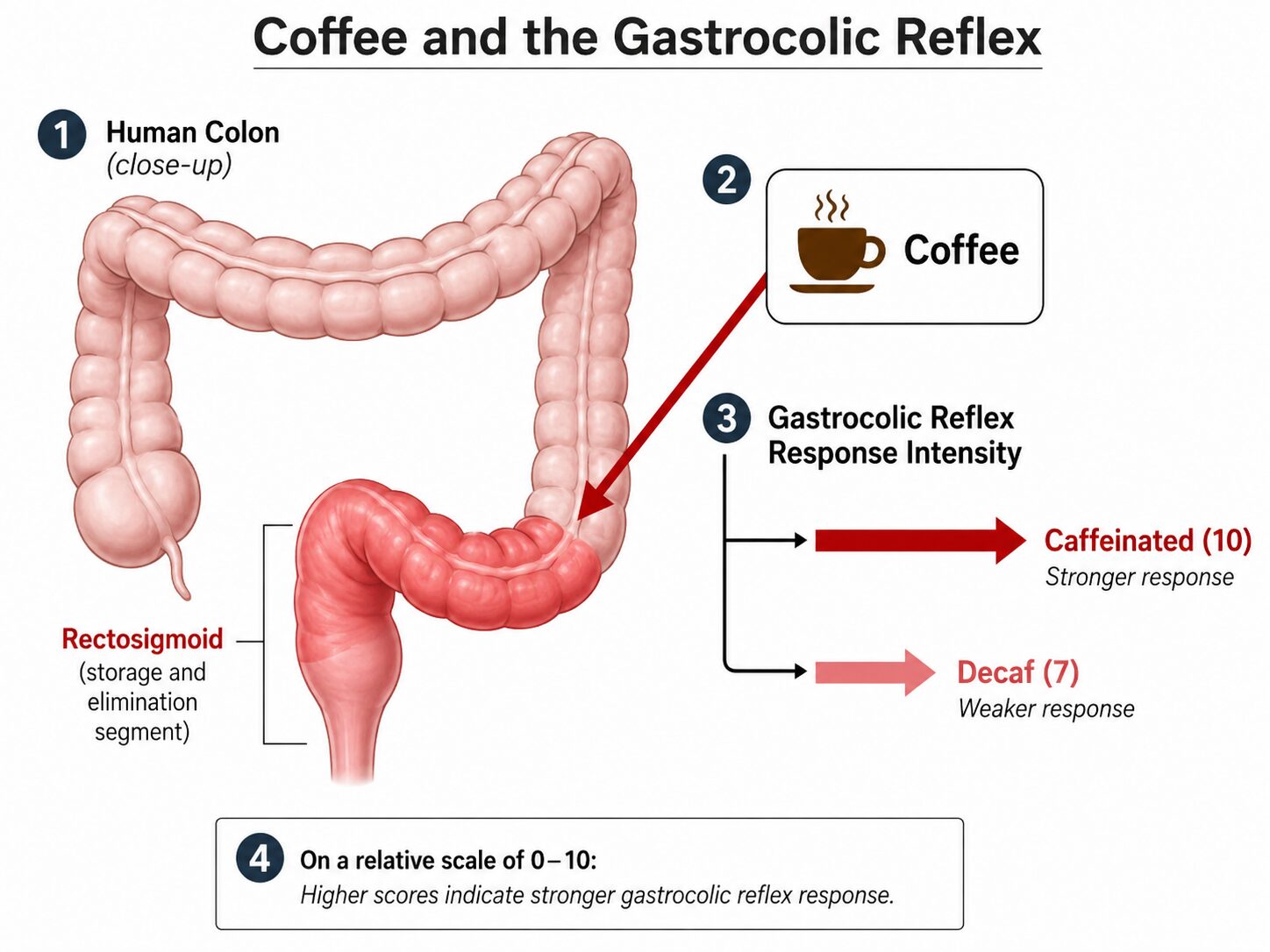
That 1998 study by Rao et al. is key. It measured colonic motor activity after subjects drank caffeinated coffee, decaffeinated coffee, water, or a meal. Both types of coffee significantly increased activity in the rectosigmoid colon (the last part before the rectum) within four minutes. Caffeinated coffee had a stronger effect, but decaf still provoked a clear response.
This happens because the decaffeination process removes caffeine but leaves most of the chlorogenic and other acids intact. These acids are still capable of raising gastrin and triggering the gastrocolic reflex. Think of decaf as turning the volume from a 10 down to a 7, not to zero.
If you are extremely sensitive, even decaf might be too much. Your next step is exploring lower-caffeine alternatives like black or green tea, which have different chemical profiles.
When to See a Doctor and What to Do Now
Coffee might be exposing a underlying sensitivity, not causing a new one.
If you’ve followed the action plan for two weeks with no improvement, consider these possibilities:
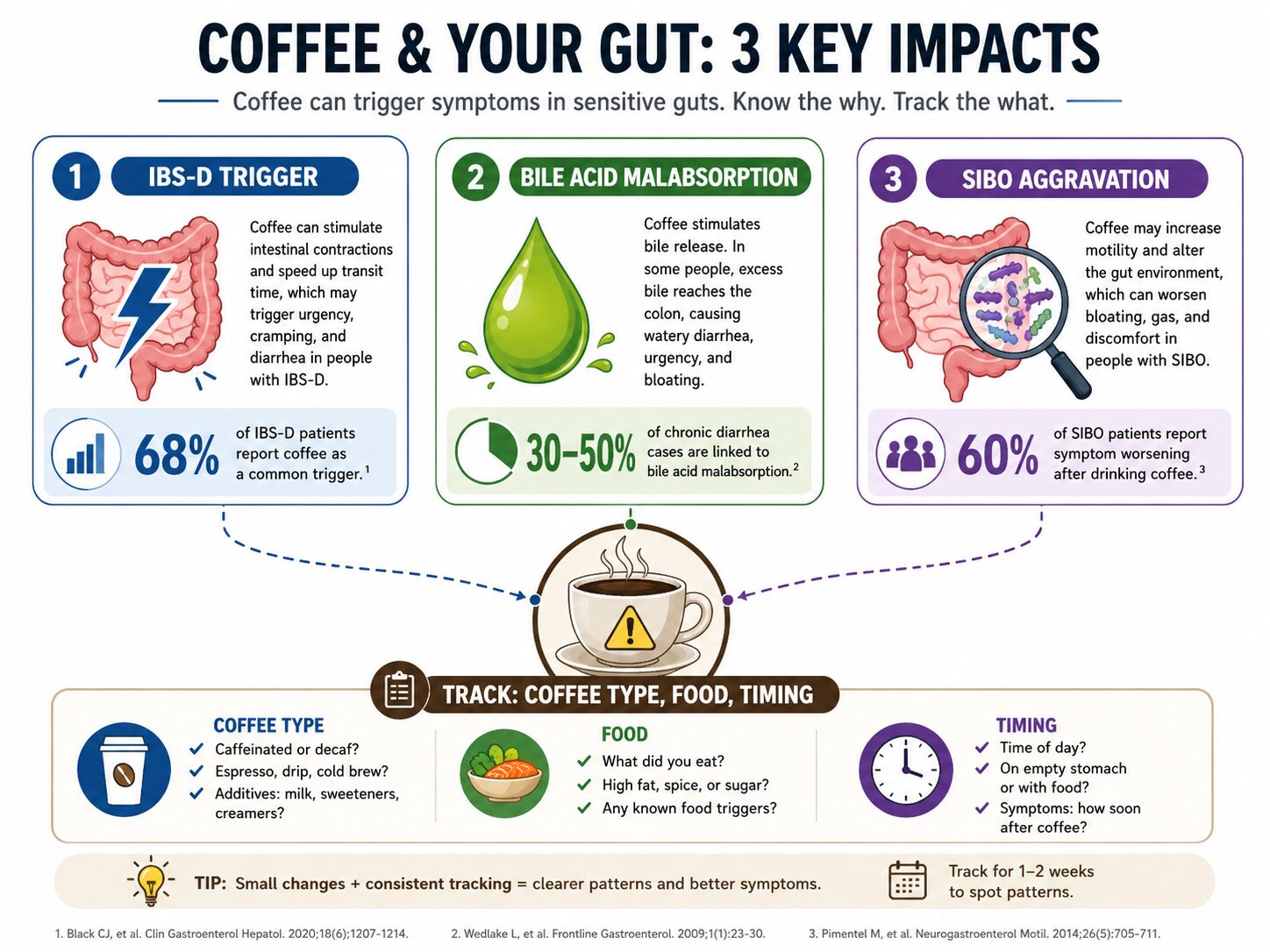
– Irritable Bowel Syndrome (IBS): Coffee is a classic trigger for IBS-D (diarrhea-predominant). The stimulant effect on an already-sensitive colon is profound.
– Bile Acid Malabsorption: This causes chronic diarrhea after eating. Coffee stimulates bile release, which could worsen symptoms.
– Small Intestinal Bacterial Overgrowth (SIBO): The rapid motility from coffee can aggravate an overgrowth of bacteria.
Track your symptoms. Note what you ate, what coffee you drank, and the timing of any urgency. This data is gold for a gastroenterologist.
In the short term, if you’re in distress, follow the BRAT diet (Bananas, Rice, Applesauce, Toast) and hydrate with electrolytes. A probiotic supplement can help restore balance after a flare-up, though it’s a slower fix, not a preventative one.
Frequently Asked Questions
Does drinking coffee on an empty stomach cause diarrhea?
Yes, almost guaranteed. An empty stomach allows chlorogenic acid to trigger the gastrocolic reflex unimpeded. Food buffers this effect. Always eat something solid before your first sip.
Can you build a tolerance to coffee-induced diarrhea?
To some degree, yes. Regular consumption can slightly dampen the gastrin response over time. But if you have an underlying condition like IBS, you likely won’t build a full tolerance. The better path is to manage the triggers using the action plan above.
Is cold brew better for diarrhea?
Cold brew is significantly better for many people. The cold-water extraction over 12-24 hours pulls out far fewer acidic compounds and less caffeine than hot brewing. It can reduce the total irritant load by 60-70%, often eliminating the problem entirely.
What is the fastest way to stop diarrhea after drinking coffee?
Stop consuming coffee immediately. Drink water with an oral rehydration solution to replace electrolytes. Eat bland, binding foods like white rice or a banana. For immediate relief, an over-the-counter anti-diarrheal like loperamide (Imodium) can help, but it’s a one-time fix, not a solution.
Can milk in coffee cause diarrhea?
Absolutely. If you are lactose intolerant, the lactose in milk or cream is a direct cause of diarrhea, gas, and bloating. This is separate from coffee’s laxative effect. Switch to lactose-free milk or a non-dairy alternative like almond, oat, or coconut milk for a week to test.
The Bottom Line
Stopping diarrhea from coffee isn’t about finding a magic bean or quitting cold turkey. It’s a systematic troubleshooting process. Start by always eating first. Then measure your dose. Swap to a low-acid bean or cold brew. Scrutinize your creamer and sweetener. Finally, and only if needed, cut the caffeine.
The goal is a peaceful, predictable relationship with your cup. That ritual is worth preserving. With these adjustments, you can keep the joy and lose the rush.
{
“@context”: “https://schema.org”,
“@type”: “HowTo”,
“name”: “How to Stop Diarrhea from Coffee”,
“totalTime”: “PT10M”,
“tool”: [
{
“@type”: “HowToTool”,
“name”: “Low-acid or dark roast coffee beans”
},
{
“@type”: “HowToTool”,
“name”: “Food scale or measuring spoon”
},
{
“@type”: “HowToTool”,
“name”: “Non-dairy creamer like almond milk”
},
{
“@type”: “HowToTool”,
“name”: “Water filter or bottled water”
}
],
“step”: [
{
“@type”: “HowToStep”,
“name”: “Measure your coffee dose”,
“text”: “Use a scale to limit your grounds to 15-18 grams per cup. A heaping scoop often doubles the irritants hitting your gut.”
},
{
“@type”: “HowToStep”,
“name”: “Swap to a low-acid or dark roast”,
“text”: “Choose a Brazilian or Sumatran dark roast, or a brand labeled ‘low-acid’. The longer roast time breaks down more chlorogenic acid.”
},
{
“@type”: “HowToStep”,
“name”: “Always pair coffee with solid food”,
“text”: “Eat a small meal like toast or a banana 10-15 minutes before your first sip. Food in the stomach buffers the acid and slows the gastrocolic reflex.”
},
{
“@type”: “HowToStep”,
“name”: “Switch your additives”,
“text”: “Replace dairy cream with almond or oat milk to rule out lactose. Avoid artificial sweeteners like sucralose or sugar alcohols, which are osmotic laxatives.”
},
{
“@type”: “HowToStep”,
“name”: “Try a decaf or half-caf blend”,
“text”: “Brew with a 50/50 mix of regular and decaf beans, or switch entirely for a week. Decaf still stimulates motility, but about 30% less than caffeinated.”
}
]
}
{
“@context”: “https://schema.org”,
“@type”: “FAQPage”,
“mainEntity”: [
{
“@type”: “Question”,
“name”: “Does drinking coffee on an empty stomach cause diarrhea?”,
“acceptedAnswer”: {
“@type”: “Answer”,
“text”: “Yes, almost guaranteed. An empty stomach allows chlorogenic acid to trigger the gastrocolic reflex unimpeded. Food buffers this effect. Always eat something solid before your first sip.”
}
},
{
“@type”: “Question”,
“name”: “Can you build a tolerance to coffee-induced diarrhea?”,
“acceptedAnswer”: {
“@type”: “Answer”,
“text”: “To some degree, yes. Regular consumption can slightly dampen the gastrin response over time. But if you have an underlying condition like IBS, you likely won’t build a full tolerance. The better path is to manage the triggers using the action plan above.”
}
},
{
“@type”: “Question”,
“name”: “Is cold brew better for diarrhea?”,
“acceptedAnswer”: {
“@type”: “Answer”,
“text”: “Cold brew is significantly better for many people. The cold-water extraction over 12-24 hours pulls out far fewer acidic compounds and less caffeine than hot brewing. It can reduce the total irritant load by 60-70%, often eliminating the problem entirely.”
}
},
{
“@type”: “Question”,
“name”: “What is the fastest way to stop diarrhea after drinking coffee?”,
“acceptedAnswer”: {
“@type”: “Answer”,
“text”: “Stop consuming coffee immediately. Drink water with an oral rehydration solution to replace electrolytes. Eat bland, binding foods like white rice or a banana. For immediate relief, an over-the-counter anti-diarrheal like loperamide (Imodium) can help, but it’s a one-time fix, not a solution.”
}
},
{
“@type”: “Question”,
“name”: “Can milk in coffee cause diarrhea?”,
“acceptedAnswer”: {
“@type”: “Answer”,
“text”: “Absolutely. If you are lactose intolerant, the lactose in milk or cream is a direct cause of diarrhea, gas, and bloating. This is separate from coffee’s laxative effect. Switch to lactose-free milk or a non-dairy alternative like almond, oat, or coconut milk for a week to test.”
}
}
]
}
