
Learn How to Make Irish Coffee with the Correct Layering
This post contains affiliate links. As an Amazon Associate, we earn from qualifying purchases.
To make Irish coffee, combine 1.5 ounces of Irish whiskey and sugar in a preheated 6-ounce glass, fill with hot strong coffee to within an inch of the top, and top with a layer of lightly whipped heavy cream poured over the back of a spoon. The cream must be cold, shaken to a pourable thickness, and the coffee must be hot but not boiling to achieve the signature float.
Most people get the cream consistency wrong. They use whipped cream from a can, or worse, pour liquid cream straight from the carton. The first sinks and mixes; the second sits like a greasy island. The Buena Vista Cafe in San Francisco went through the same failure in 1952. Their cream kept sinking until a local dairy farmer showed them the exact shake.
Here is how to build the drink correctly, why each step matters, and how to avoid the three mistakes that ruin the layers.
Key Takeaways
- Use heavy whipping cream with at least 30% fat. Lower-fat cream won’t hold and sinks within a minute.
- Shake the cold cream in a sealed container for 15–20 seconds. This incorporates just enough air to thicken it for floating without turning it into butter.
- The coffee must be hot, aim for just below boiling, around 200°F (93°C). Too cool and the cream sinks; too hot and it curdles.
- Always preheat your glass. A cold glass steals heat from the coffee, dropping the temperature and causing the cream layer to fail.
- Irish whiskey is non-negotiable. Its specific grain profile and smoothness cut through the richness where bourbon or Scotch would clash.
Why the Buena Vista Method Still Works
The Buena Vista Cafe in San Francisco didn’t invent Irish coffee. They perfected the serve. After travel writer Stanton Delaplane brought the recipe from Ireland in 1952, owner Jack Koeppler struggled for weeks. The cream kept plunging to the bottom of the glass. They finally consulted a San Francisco dairy farmer, who diagnosed the problem: cream temperature and texture.
The original Buena Vista recipe specifies a 6-ounce stemmed glass, two sugar cubes, 1.5 ounces of Irish whiskey, and coffee filled to within an inch of the top, topped with lightly whipped cream. The coffee should be “hot, strong, and black.”
That “lightly whipped” instruction is the entire trick. It’s not a vague suggestion. It’s the solution to a physical problem, density mismatch. The farmer taught them to hand-whip the cream to a specific consistency. We use a shaker now because it’s repeatable.
TL;DR: The Buena Vista method works because it solves the cream-sinking problem with a specific, repeatable technique for aerating the cream.
The Tools That Actually Matter
You don’t need a full bar setup. You need four things that handle the physics of the drink.
First, the glass. A 6- to 8-ounce stemmed glass is classic. The stem keeps your hand from warming the drink too quickly. An Irish coffee mug works if that’s what you have. The material matters less than the preheat. Fill it with boiling water while you prepare everything else. Dump the water right before you build the drink. A cold glass is the most common reason for a lukewarm, layered Irish coffee.
Second, a measuring tool. Eyeballing whiskey leads to a drink that’s either too weak or harsh. Use a jigger or a kitchen scale. A standard shot is 1.5 ounces (45ml).
Third, a shaking vessel. A Boston shaker, a Cobbler shaker, or a simple mason jar with a tight lid. You’re not making a cocktail; you’re aerating cream. The jar method is fine.
Fourth, a spoon. A regular teaspoon works, but a bar spoon is longer and makes the cream-pouring step easier.
The 4-Step Buena Vista Method (and Why It Works)
Follow this sequence. Swapping steps changes the outcome.
Step 1: Preheat and Sweeten
Empty the hot water from your preheated glass. Add your sweetener immediately. Two sugar cubes are traditional. If you use simple syrup, start with two teaspoons. The hot glass helps dissolve the sugar.
Skip this, and the sugar granules sit at the bottom. Your first sips are harsh whiskey, the middle is balanced, and the last gulp is pure syrup. The drink never integrates.
Step 2: Add Whiskey and Coffee
Pour 1.5 ounces of Irish whiskey over the sugar. Then add your hot coffee, leaving about an inch of space at the top. Stir vigorously with a spoon for 10 seconds.
The coffee must be strong, hot brewed coffee. This is critical.
Common mistake: Using espresso for Irish coffee, the concentrated oils and solids make the base too dense, and the cream either sinks immediately or sits on top like a separated cap. A standard drip coffee method or pour-over works best.
The ideal temperature is just off the boil, around 200°F (93°C). The U.S. FDA Food Code mandates hot holding at 135°F (57°C) or above for safety. While you’re not holding it for service, that number gives you a floor: anything below 135°F won’t have the thermal energy to keep the cream floating for more than a sip or two.
Step 3: Shake the Cream
Pour about 1 ounce of cold heavy whipping cream into your shaker or jar. Seal it. Shake it hard for 15 to 20 seconds, no more. You should hear the cream sloshing, then the sound will change to a softer whump as it thickens.
Open it and strain the cream into a small pitcher or back into its container. This catches any large bubbles. The cream should be the consistency of thick paint. It should pour slowly but steadily.
Over-shake, and you make butter. The cream will come out in chunks and won’t pour. If this happens, you can salvage it by gently folding in a teaspoon of fresh liquid cream.
Step 4: The Float
Hold a spoon upside down, just touching the surface of the coffee. Slowly pour your thickened cream over the back of the spoon, letting it run gently onto the coffee. The cream should spread evenly across the surface, forming a distinct layer.
Do not stir. The experience is sipping hot, sweetened coffee and whiskey through a cool, rich cream blanket.
| Ingredient | Spec | Why It Matters |
|---|---|---|
| Coffee | 130–150ml, hot (200°F/93°C), strong brew | Provides the hot, less-dense base layer for the cream to float on. Weak or cool coffee lacks thermal lift. |
| Whiskey | 1.5 oz (45ml), Irish | Irish whiskey is triple-distilled for smoothness. Bourbon is too sweet; Scotch is too smoky. |
| Cream | 1 oz, heavy whipping cream (≥30% fat), cold, shaken | Fat content provides structure. Cold temperature and aeration create the perfect density to float. |
| Sweetener | 2 sugar cubes or 2 tsp simple syrup | Balances the whiskey’s heat and coffee’s bitterness. Dissolves instantly in the hot liquid. |
Choosing Your Irish Whiskey
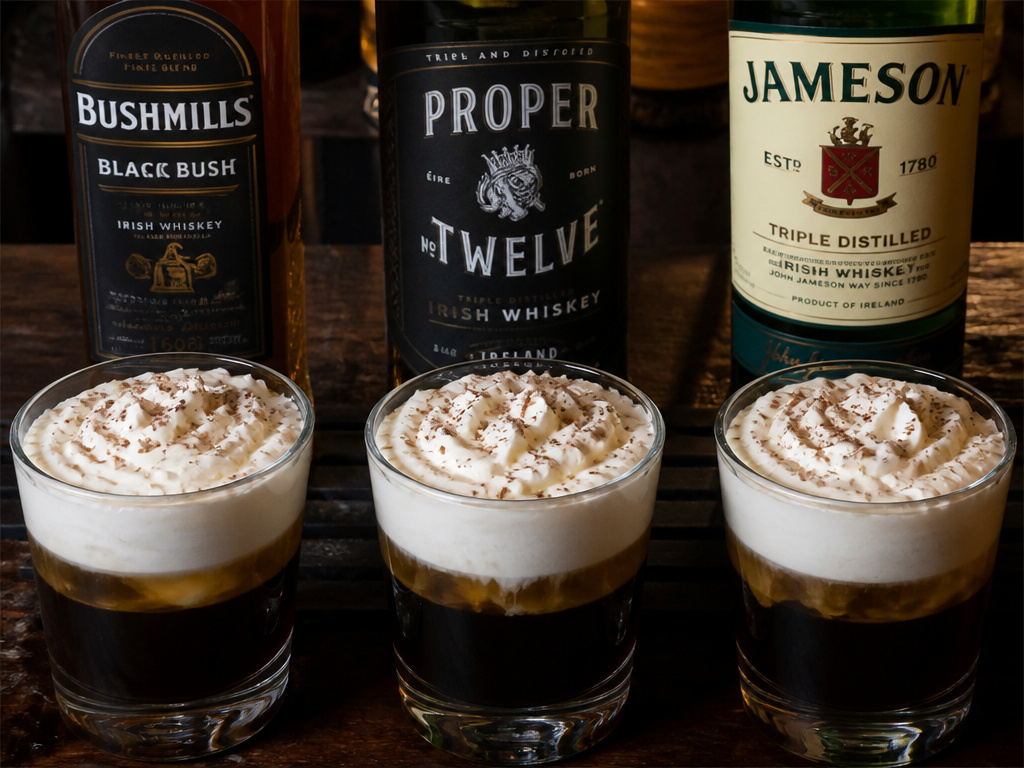
All Irish whiskey is smooth, but they bring different notes. The choice changes the drink’s character.
- For a classic, balanced profile: Bushmills Black Bush. It’s a blended whiskey with a high malt content, aged in sherry casks. It gives dried fruit and honey notes that complement the coffee’s roastiness without fighting it.
- For a modern, approachable sip: Proper No. Twelve. Founded by Conor McGregor, it’s known for being exceptionally smooth with hints of vanilla, honey, and green apple. It’s a crowd-pleaser that won’t intimidate anyone.
- For the true traditionalist: Jameson. It’s the world’s best-selling Irish whiskey for a reason. Its light, floral character is what Joe Sheridan likely used in Foynes. It’s the benchmark.
Using a blended Irish whiskey is the standard. Single pot still whiskeys like Redbreast are fantastic but expensive; their complex spice can get lost behind the cream and coffee. Save them for sipping neat.
A strong espresso has its place, but its intensity can overpower a delicate single malt. In an Irish coffee, the whiskey is a supporting player, not the star.
The Cream Consistency Edge Case
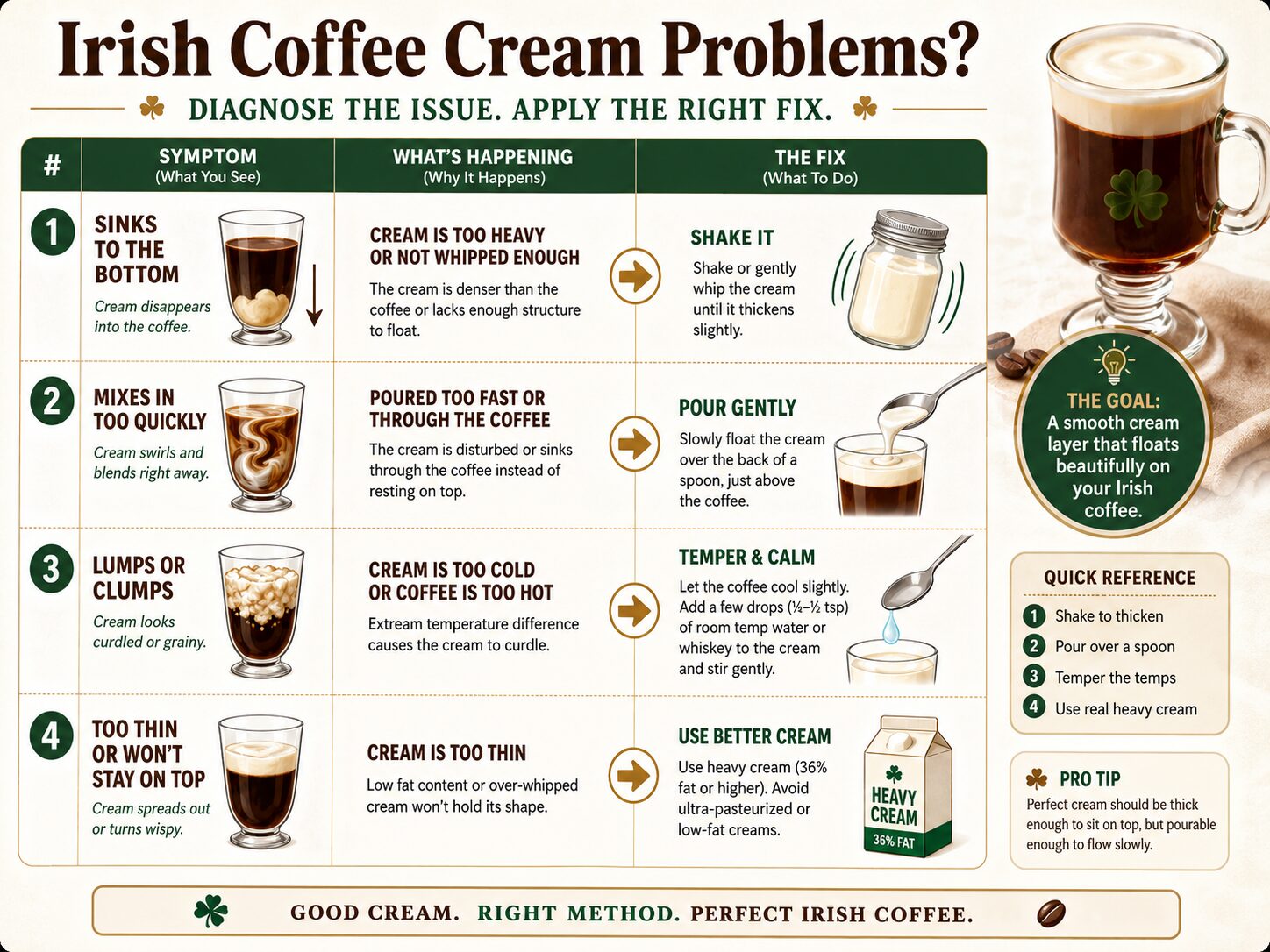
The “lightly whipped” directive is where everything fails. It’s not whipped cream. It’s not liquid cream. It’s the middle state that most people never need to create for any other purpose.
Here’s the diagnostic table for when your cream goes wrong.
| Symptom | Likely Cause | Fix |
|---|---|---|
| Cream sinks immediately | Cream is too thin (under-whipped) or coffee is too cool. | Shake cream 5–10 seconds longer. Ensure coffee is above 185°F (85°C). |
| Cream mixes into coffee | Cream was poured too fast or directly onto the coffee without a spoon. | Always pour over the back of a spoon held at the surface. Slow down. |
| Cream forms clumps, won’t pour | Cream is over-whipped, starting to turn to butter. | Gently fold in a teaspoon of fresh liquid cream to loosen it. |
| Cream layer is thin and disappears quickly | Cream fat content is too low (using half-and-half or light cream). | Use heavy whipping cream with at least 30% milk fat. There is no substitute. |
The ISO 3103:1980 standard for tea tasting mandates precise water temperature, steeping time, and vessel material to ensure consistent sensory evaluation. Apply the same rigor here. The variable is cream aeration time. Fifteen seconds in a cold jar is your baseline. Adjust for your specific cream brand and shaker.
Sugar and Flavor Variations
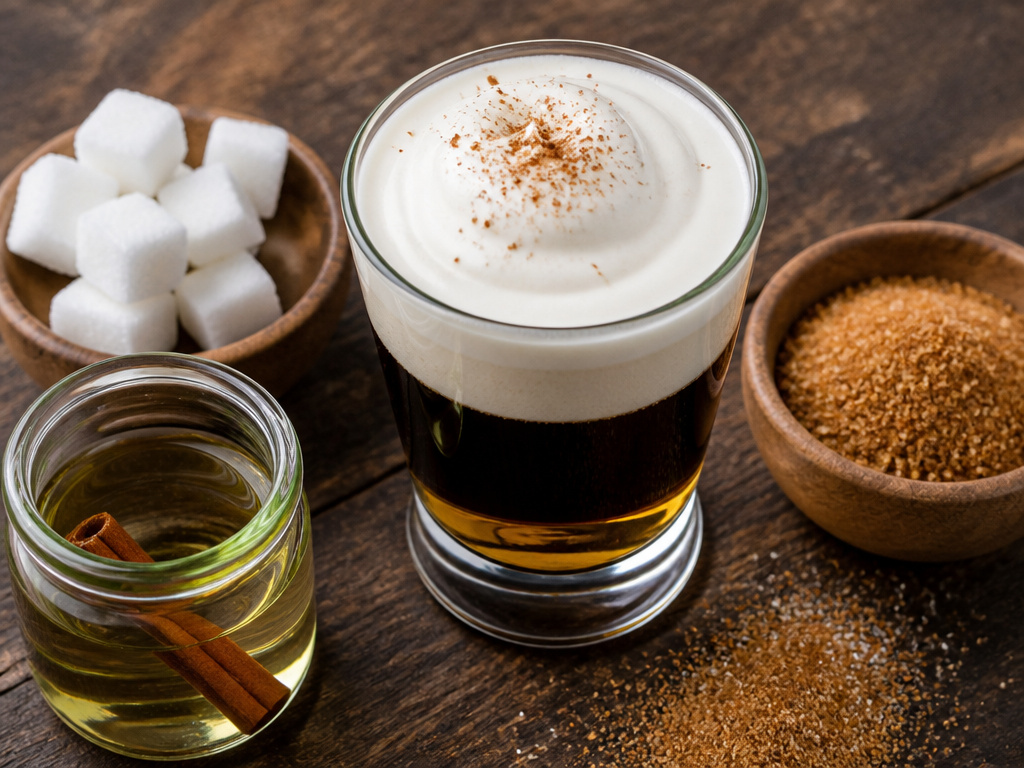
The sweetener does more than sweeten. It adjusts the drink’s body and integrates the whiskey.
White sugar cubes are authentic. They dissolve slowly, giving a evolving sweetness. Simple syrup (equal parts sugar and water, dissolved) integrates instantly, creating a more uniform flavor from the first sip. For a deeper, caramel-like note, use brown sugar or a teaspoon of Demerara syrup.
You can infuse the syrup. A cinnamon stick steeped in the hot syrup adds a warm spice note that pairs beautifully with the whiskey. A cinnamon garnish on top of the cream adds aroma.
Other additions belong in the modern riff category, not the classic. A splash of Bailey’s Irish Cream in the base makes it sweeter and richer. A pinch of nutmeg or grated chocolate on top of the cream is a festive finish. If you’re exploring energy-boosting additives like coconut oil, know that the fat will likely break your cream layer. Save that for your morning bulletproof coffee.
For a non-dairy version, the challenge is immense. The whipped cream layer relies on dairy fat. Most plant-based milk alternatives lack the fat content and protein structure to whip and float reliably. Canned coconut cream (the thick part from a can of full-fat coconut milk) is the only viable substitute. Chill it overnight, whip it lightly, and use it the same way.
Frequently Asked Questions
Can I use bourbon instead of Irish whiskey?
You can, but you’re making a different drink, a Kentucky coffee. Bourbon’s vanilla and caramel notes from charred new oak are sweeter and more aggressive. They can overpower the coffee and make the drink cloying. Irish whiskey’s cleaner, smoother profile is the traditional choice for a reason.
Why does my cream keep sinking?
Two reasons. First, your coffee isn’t hot enough. It needs to be steaming hot when you pour the cream. Second, your cream isn’t thick enough. It must be shaken to a pourable but visibly thickened state. If it runs like water, it will sink.
Can I make Irish coffee without a shaker?
Yes. Use a jar with a tight lid. The principle is the same: seal, shake for 15-20 seconds. If you have no jar, you can whip the cream lightly with a small whisk or a fork. The goal is to thicken it slightly, not to form soft peaks.
Is there a non-alcoholic version?
The whiskey is a core flavor component, so omitting it creates hot, sweet coffee with cream. You could try a non-alcoholic Irish whiskey alternative, but they often taste of oak and vanilla without the burn. For a similar layered experience without alcohol, try a “babyccino” (steamed milk foam on hot chocolate) or a hot coffee float with a scoop of vanilla ice cream.
How do I prevent the cream from curdling?
Curdling happens when the cream is too cold and the coffee is too hot, causing a thermal shock. Use cream straight from the fridge, but let your boiling coffee cool for 60 seconds before pouring it into the glass. Aim for a coffee temperature around 200°F (93°C), not 212°F (100°C).
The Bottom Line
A perfect Irish coffee is a lesson in balance and physics. It’s not just mixing four ingredients. It’s about heating the glass, dissolving the sugar, choosing a smooth Irish whiskey, brewing strong hot coffee, and aerating cold cream to one specific texture. Miss one, and the layers fail.
Start with the Buena Vista ratios: 1.5 oz whiskey, 2 sugar cubes, 5 oz of hot coffee, and an ounce of shaken heavy cream. Master that. Then experiment with sweetener options or a cinnamon stick garnish. The goal is a drink where you taste the coffee, the whiskey, the sweetness, and the cream in every sip, separately, then together. That’s the magic Joe Sheridan stumbled upon in a foggy Irish airbase, and it’s worth getting right.
