
A Guide on How to Drink Coffee Without Getting Acid Reflux
To drink coffee without getting acid reflux, you need to manage three variables: what you drink, how you drink it, and when. Choose a dark roast, low-acid bean, brew it with a paper filter or as cold brew, and always have it with food, never on an empty stomach. Limiting yourself to one or two cups and finishing six hours before bed prevents the late-day surge that disrupts sleep and digestion.
Most advice gets this wrong by treating coffee as a universal trigger. The real problem is treating a complex, individual digestive response like a simple on/off switch. You can follow every “low-acid” tip and still get heartburn if you ignore timing or pair coffee with the wrong foods.
This guide walks through the science that says coffee isn’t a guaranteed problem, then lays out the specific, adjustable levers you can pull, from bean chemistry to your daily schedule, to find your personal tolerance.
Key Takeaways
- A 2020 meta-analysis in Diseases of the Esophagus found no clear evidence coffee is a universal risk factor for GERD, your mileage will vary.
- Dark roast beans have less chlorogenic acid than light roasts, and cold brew coffee has up to 70% less titratable acidity than hot coffee.
- A paper filter catches oily diterpenes like cafestol that stimulate stomach acid; a French press lets them through.
- Drinking coffee on an empty stomach is the single most common mistake. Food provides a buffer.
- Caffeine relaxes the lower esophageal sphincter. Finishing your last cup six hours before sleep gives your body time to process it.
What Science Says About Coffee and Reflux
The blanket statement “coffee causes acid reflux” is medical oversimplification. It’s comforting but wrong. A 2020 systematic review and meta-analysis published in Diseases of the Esophagus analyzed 15 observational studies and concluded there is “no clear evidence that coffee consumption is a risk factor for GERD or its symptoms.” The data shows association, not guaranteed causation.
The 2020 Boekema et al. meta-analysis, which reviewed 17 total studies, states: “there is no clear evidence that coffee consumption is a risk factor for GERD or its symptoms.” The report notes symptom reporting is highly individualized and not consistently linked to coffee intake across populations.
Your genetics, your existing gut health, and even your stress levels that day play a bigger role than the coffee itself. This is why one person can drink espresso all day with no issue and another feels a burn after half a cup of decaf. The 2019 review article “Dietary and Lifestyle Factors in the Management of Gastroesophageal Reflux Disease” in Gastroenterology & Hepatology underscores this, stating that dietary modifications “should be individualized, as not all patients respond to the same interventions.”
The goal isn’t to find a magic bean that works for everyone. It’s to systematically adjust variables until you find your personal threshold. The Cleveland Clinic acid reflux guide echoes this, identifying coffee as a potential trigger for some, but not all, individuals.
TL;DR: Science doesn’t support a universal coffee-GERD link. Your reaction is personal, so testing individual factors beats following generic bans.
The Bean Choice That Actually Matters
Bean origin and processing matter, but roast level is the primary lever for acidity control. The chemical change is straightforward: longer, hotter roasting breaks down chlorogenic acids. These compounds are a major source of coffee’s perceived sharp, bright acidity.
| Roast Level | Chlorogenic Acid Content | Best For Reflux | Flavor Trade-Off |
|---|---|---|---|
| Light Roast | High | Avoid | Bright, fruity, acidic |
| Medium Roast | Moderate | Maybe | Balanced, classic |
| Dark Roast | Low | Yes | Bitter, smoky, less acidic |
Dark roast is the consistent pick. The roasting process that creates those oily, dark beans also significantly reduces the acid load. Look for beans specifically marketed as “low-acid” or “stomach-friendly.” These are often dark roasts from regions like Brazil or Sumatra, which are naturally lower in acidity than East African beans.
Bean species matters too. Coffea arabica beans have almost half the caffeine of Coffea canephora (Robusta) and generally a smoother, more complex acid profile. If you’re exploring single-origin coffees, stick with Arabica from low-altitude regions.
Common mistake: Switching to a light roast because it’s “smoother”, the brighter acidity in light roasts triggers heartburn within 20 minutes for people with sensitive stomachs, even if the flavor seems milder.
Don’t get distracted by the “low-acid” label on some blonde roast beans. A light roast is a light roast; the marketing might refer to the bean’s origin, not the final brew’s pH. Your safest bet is a visibly dark, oily bean.
The Brewing Method That Cuts Acidity
Your brewer is more important than your bean bag. The two methods that genuinely lower measurable acidity are cold brewing and any method using a paper filter.
Cold brew coffee steeps coarse grounds in cold water for 12-24 hours. The lack of heat means fewer acidic compounds dissolve into the water. Studies measuring titratable acidity, the total acid content, show cold brew can have up to 70% less than hot coffee brewed from the same beans. It’s not just about pH; it’s about the total acid load hitting your stomach. The NIH coffee and GERD study on dietary triggers notes preparation method as a variable, though it doesn’t single out cold brew.
For hot coffee, the filter is your friend. The paper filter in a drip machine or pour-over traps oily compounds called diterpenes, specifically cafestol and kahweol. These oils stimulate gastric acid secretion. A French press or metal filter lets these oils pass straight into your cup.
| Brew Method | Filter Type | Acid/Oil Impact | Best for Sensitive Stomachs? |
|---|---|---|---|
| Cold Brew | Metal (mesh) | Very Low Acidity | Yes |
| Drip / Pour-Over | Paper | Low Oils, Moderate Acidity | Yes |
| French Press | Metal (mesh) | High Oils, Moderate Acidity | No |
| Espresso | Metal (puck) | High Oils, High Acidity | No |
If you love French press texture, try a hybrid approach. Brew with a paper-filtered method first, then add a tiny splash of cream. The fat mimics the mouthfeel of the oils without the gastric side effects. The choice between bleached and unbleached coffee filters is a taste and environmental one, but both trap oils equally well.
TL;DR: Cold brew cuts total acid by up to two-thirds. For hot coffee, always use a paper filter to block stomach-irritating oils.
What You Add (And When You Drink It)
The coffee is only half the equation. Your habits around it are the other half, and they’re easier to fix.
Never drink it on an empty stomach. This is the rule. Coffee stimulates gastric acid production. If there’s no food in your stomach, that acid has nothing to digest except your stomach lining. It also passes into your intestines faster, which can trigger the laxative effect some people mistake for acidity. Always eat something first, even a handful of nuts or a piece of toast.
Limit your total intake. One strong cup is better than three weak ones. Caffeine relaxes the lower esophageal sphincter (LES), the valve that keeps stomach acid down. More caffeine means a looser valve for longer. Stick to a single cup, or at most two, and space them out.
Finish early. Caffeine has a half-life of about 5 hours. If you drink coffee at 4 PM, half that caffeine is still in your system at 9 PM. A relaxed LES right before you lie down is a recipe for nighttime reflux. Cut off all caffeine at least six hours before bedtime.
What you put in the cup matters, but not how you think. Dairy milk can sometimes soothe, but for many, it adds fat that slows digestion and worsens reflux. Almond milk in coffee is a popular low-acid, dairy-free alternative, but check for carrageenan, a thickener that can itself cause GI distress in some people.
Sugar is a problem. It can feed gut bacteria that produce gas and bloating, putting upward pressure on your stomach. If you need sweetness, a small amount of brown sugar sweetener is less processed than white, but the effect is similar. For a zero-calorie, gut-friendly option, consider a pinch of salt, which can neutralize bitterness without affecting acidity.
The Decaf Question and Other Tweaks
Decaffeinated coffee isn’t a free pass. The decaffeination process removes most caffeine, but the acids and oils remain. If your trigger is the acidic compounds or the oils, decaf will still cause problems. However, if your primary trigger is caffeine’s effect on the LES, then switching to a well-made decaf, prepared with a paper filter, could be a complete solution.
Here are three less common tweaks that can move the needle:
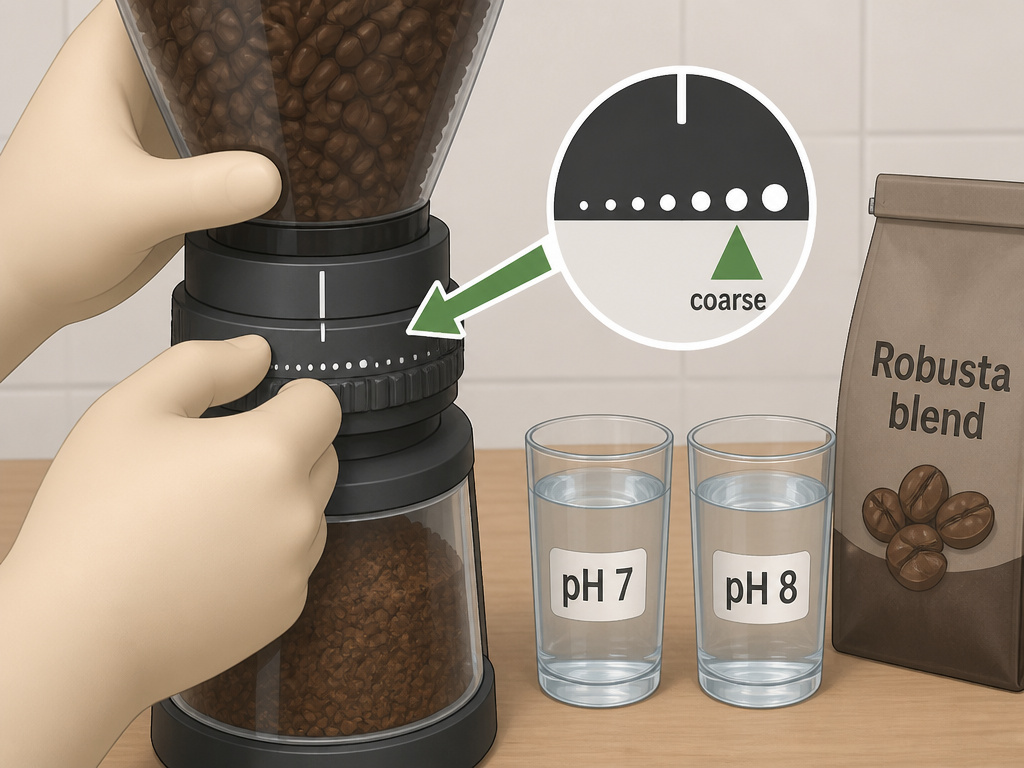
- Grind coarser. A finer grind extracts more acidity. For drip or pour-over, use a medium-coarse grind. For cold brew, go coarse.
- Use alkaline water. If your tap water is soft or acidic, brewing with a slightly alkaline water (pH 7.5-8.5) can neutralize some of the coffee’s acids. Don’t use strongly alkaline water, it makes terrible-tasting coffee.
- Try a darker Robusta-Arabica blend. While 100% Robusta is harsher, a small percentage (10-20%) in a dark roast blend can add body without the bright acidity of a pure light-roast Arabica. It’s a counterintuitive trick that works for some.
Pay attention to the broader digestive effects of coffee. Sometimes what feels like acid reflux is actually accelerated gastric emptying or irritation further down the tract. Keeping a simple log, coffee type, preparation, timing, and symptoms, for a week is the single best diagnostic tool you have.
Frequently Asked Questions
Does cold brew coffee have less acid?
Yes, significantly. The cold extraction process results in a brew with up to 70% less titratable acidity than hot coffee. This makes it one of the most stomach-friendly ways to consume coffee, though the caffeine content remains high.
Is dark roast coffee less acidic?
Yes. The prolonged heat of dark roasting breaks down chlorogenic acids, which are a primary source of coffee’s perceived acidity. A dark roast will almost always be less acidic and gentler on the stomach than a light or medium roast from the same beans.
Should I switch to decaf for acid reflux?
Only if caffeine is your specific trigger. Decaf coffee still contains the same acidic compounds and oils as regular coffee. If those bother you, decaf won’t help. Try a paper-filtered decaf dark roast first to test.
Can adding milk to coffee help with acidity?
It can for some people, by diluting the coffee and providing a buffering fat. For others, the dairy fat can slow digestion and worsen reflux. Non-dairy milks like almond or oat are often a better bet, as they are less likely to trigger reflux.
How long before bed should I stop drinking coffee?
Aim for at least six hours. Caffeine relaxes the lower esophageal sphincter, and lying down with a relaxed sphincter is a direct path to nighttime heartburn. This rule is more important than the specific type of coffee you drink in the morning.
Does the type of coffee bean matter for acid reflux?
Yes, but less than roast or brew method. Arabica beans are generally less acidic and contain less caffeine than Robusta beans. Within Arabica, beans from Brazil, Sumatra, or Peru tend to be lower in acidity than those from Ethiopia or Kenya.
The Bottom Line
You don’t have to give up coffee. You have to become a detective about your own reaction to it. Start with the strongest levers: always eat first, switch to a paper-filtered dark roast or cold brew, and limit yourself to one cup before noon. That alone solves the problem for most people.
If symptoms persist, look at your additives, swap dairy for oat milk, skip the sugar, and scrutinize the acidity of your other beverages. The difference between an Americano and drip coffee might be the culprit, or that afternoon pastry. Track it. The evidence says coffee isn’t a universal villain, but your particular combination of bean, brew, and habit might need a tweak. Find it, and you get to keep your cup.
{
“@context”: “https://schema.org”,
“@type”: “HowTo”,
“name”: “How to Drink Coffee Without Getting Acid Reflux”,
“totalTime”: “PT5M”,
“tool”: [
{
“@type”: “HowToTool”,
“name”: “Paper coffee filter or cold brew maker”
},
{
“@type”: “HowToTool”,
“name”: “Dark roast, low-acid coffee beans”
},
{
“@type”: “HowToTool”,
“name”: “Food or snack to eat with coffee”
}
],
“step”: [
{
“@type”: “HowToStep”,
“name”: “Eat first, then drink”,
“text”: “Never drink coffee on an empty stomach. Have a meal or a substantial snack containing some fat or protein before your first sip.”
},
{
“@type”: “HowToStep”,
“name”: “Choose a dark roast bean”,
“text”: “Select a dark roast coffee labeled as low-acid. The longer roasting process breaks down more chlorogenic acids, which are a primary source of perceived acidity.”
},
{
“@type”: “HowToStep”,
“name”: “Brew with a paper filter or cold steep”,
“text”: “Use a paper filter to trap oily compounds that can irritate the stomach, or make cold brew, which has up to 70% less titratable acidity than hot coffee.”
},
{
“@type”: “HowToStep”,
“name”: “Limit intake and time it right”,
“text”: “Stick to one, maybe two cups per day. Finish your last cup at least six hours before bedtime to let caffeine clear your system.”
}
]
}
{
“@context”: “https://schema.org”,
“@type”: “FAQPage”,
“mainEntity”: [
{
“@type”: “Question”,
“name”: “Does cold brew coffee have less acid?”,
“acceptedAnswer”: {
“@type”: “Answer”,
“text”: “Yes, significantly. The cold extraction process results in a brew with up to 70% less titratable acidity than hot coffee. This makes it one of the most stomach-friendly ways to consume coffee, though the caffeine content remains high.”
}
},
{
“@type”: “Question”,
“name”: “Is dark roast coffee less acidic?”,
“acceptedAnswer”: {
“@type”: “Answer”,
“text”: “Yes. The prolonged heat of dark roasting breaks down chlorogenic acids, which are a primary source of coffee’s perceived acidity. A dark roast will almost always be less acidic and gentler on the stomach than a light or medium roast from the same beans.”
}
},
{
“@type”: “Question”,
“name”: “Should I switch to decaf for acid reflux?”,
“acceptedAnswer”: {
“@type”: “Answer”,
“text”: “Only if caffeine is your specific trigger. Decaf coffee still contains the same acidic compounds and oils as regular coffee. If those bother you, decaf won’t help. Try a paper-filtered decaf dark roast first to test.”
}
},
{
“@type”: “Question”,
“name”: “Can adding milk to coffee help with acidity?”,
“acceptedAnswer”: {
“@type”: “Answer”,
“text”: “It can for some people, by diluting the coffee and providing a buffering fat. For others, the dairy fat can slow digestion and worsen reflux. Non-dairy milks like almond or oat are often a better bet, as they are less likely to trigger reflux.”
}
},
{
“@type”: “Question”,
“name”: “How long before bed should I stop drinking coffee?”,
“acceptedAnswer”: {
“@type”: “Answer”,
“text”: “Aim for at least six hours. Caffeine relaxes the lower esophageal sphincter, and lying down with a relaxed sphincter is a direct path to nighttime heartburn. This rule is more important than the specific type of coffee you drink in the morning.”
}
},
{
“@type”: “Question”,
“name”: “Does the type of coffee bean matter for acid reflux?”,
“acceptedAnswer”: {
“@type”: “Answer”,
“text”: “Yes, but less than roast or brew method. Arabica beans are generally less acidic and contain less caffeine than Robusta beans. Within Arabica, beans from Brazil, Sumatra, or Peru tend to be lower in acidity than those from Ethiopia or Kenya.”
}
}
]
}
