
Answer: How Long Is Iced Coffee Good For & Spoilage Signs
Plain, black iced coffee lasts 3 to 5 days in the refrigerator at or below 40°F (4°C). Once you add milk, cream, or a dairy-based creamer, treat it as a perishable dairy product and finish it within 1 to 2 days. The exact timeline depends on your brew method, container cleanliness, and your fridge’s actual temperature.
Most guides stop at those numbers. They miss the regulatory backbone and the chemical shift happening in your carafe. The real limit isn’t a random day count, it’s your refrigerator’s ability to slow microbial growth to a crawl, and whether you’ve added the sugars and proteins that bacteria love.
This guide breaks down the shelf life by ingredient, cites the food safety codes baristas follow, and shows you how to spot the difference between a stale cup and a dangerous one.
Key Takeaways
- The FDA Food Code mandates holding cold foods at 5°C (41°F) or below; a fridge at 38°F buys you more time than one at 45°F.
- Adding dairy reclassifies your drink as a “Time/Temperature Control for Safety” (TCS) food, slashing its safe window from days to hours if left on the counter.
- Cold brew concentrate, due to its lower acidity, can develop off-flavors from acetic acid bacteria before showing obvious spoilage signs.
- Visually, cloudiness or tiny floating strands appear before a sour smell; mold means instant discard.
- Freezing iced coffee in ice cube trays preserves it for months but permanently dulls the brighter aromatic notes.
The Regulatory Backbone: What the FDA and USDA Actually Say
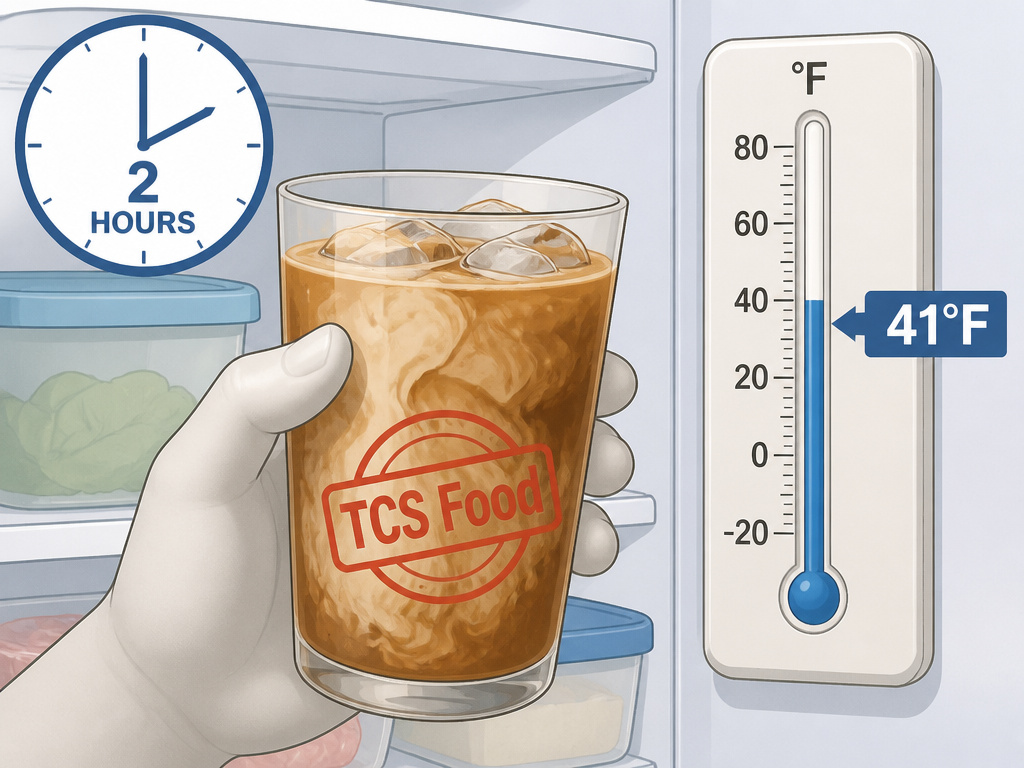
Your fridge isn’t just a cool box. It’s a food safety appliance governed by public health codes. The FDA Food Code 2022, specifically Annex 3, states that potentially hazardous cold foods must be held at 5°C (41°F) or below. While black coffee isn’t always classified as “potentially hazardous,” the moment you add milk, it becomes a TCS Food (Time/Temperature Control for Safety Food). That label matters. It’s the difference between a flavor decline and a health risk.
The USDA Food Safety and Inspection Service reinforces this with its “2-hour rule”: perishable foods left in the “danger zone” between 40°F and 140°F for more than two hours should be discarded. For a dairy-laden iced coffee on a summer patio, that clock starts ticking fast.
Technical Snippet: The FDA Food Code 2022, Section 3-501.16, establishes 5°C (41°F) as the maximum holding temperature for cold Time/Temperature Control for Safety (TCS) foods to inhibit pathogenic microorganism growth. Beverages containing dairy meet the TCS definition upon mixing.
TL;DR: Your fridge must be at 41°F or colder. Iced coffee with dairy has the same safety rules as milk.
The Plain Iced Coffee Timeline (No Milk, No Cream)
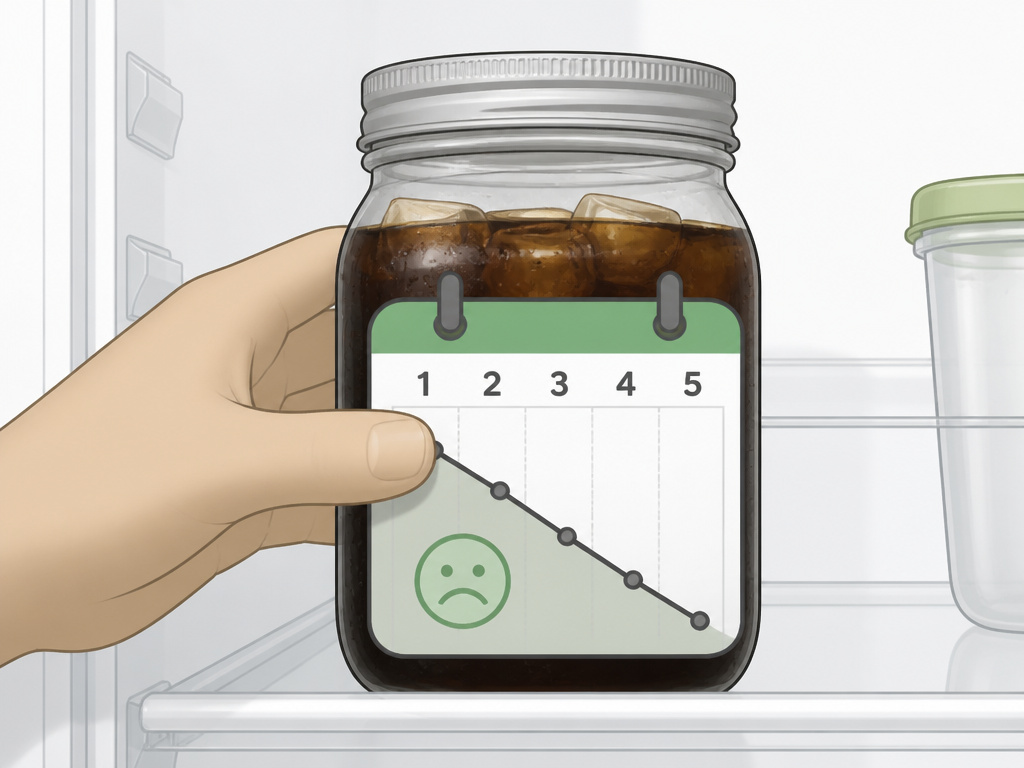
Black iced coffee, made from hot-brewed coffee cooled over ice, has a 3 to 5 day window in a cold fridge. The enemy here isn’t always pathogens, it’s oxidation and slow-growing acid-producing bacteria.
Day 1-2: Peak flavor. The bright, acidic notes and volatile aromatics are still present.
Day 3: The decline begins. The coffee tastes flatter, less complex. It’s safe, but dull.
Day 4-5: Staleness is pronounced. You might detect a faint, sharp edge, the start of acetic acid production. It’s often still safe to drink but unpleasant.
Beyond Day 5: The risk of noticeable sourness and off-flavors increases significantly. While not typically a food poisoning risk, the quality is gone.
Cold brew concentrate behaves differently. Its lower acidity from the cold-steep process doesn’t mean it lasts forever. A PMC cold brew coffee shelf life study found that while microbial growth was slow in the fridge, sensory quality, especially the development of stale, woody, and fermented notes, deteriorated within two weeks. The concentrate was “safe” but tasted off.
| Brew Method | Optimal Flavor Window | Safe Consumption Window | Primary Failure Mode |
|---|---|---|---|
| Hot-Brewed, Iced | 1-2 days | 3-5 days | Oxidation, loss of aromatics, stale flavor |
| Cold Brew Concentrate | 5-7 days | 10-14 days | Development of fermented, sour notes (acetic acid) |
| Store-Bought, Bottled (Unopened) | Until printed date | Weeks past date (if sealed) | Degradation of added stabilizers, flavor separation |
The container is half the battle. Glass or stainless steel is ideal. Plastic can absorb odors and scratches harbor bacteria. Always use a clean, airtight lid.
Common mistake: Storing iced coffee in the pitcher you brewed it in, lid askew, oxygen gets in overnight and turns the top layer flat and sour by morning, even if the bottom seems okay.
The Game Changer: Adding Milk, Cream, or Creamer
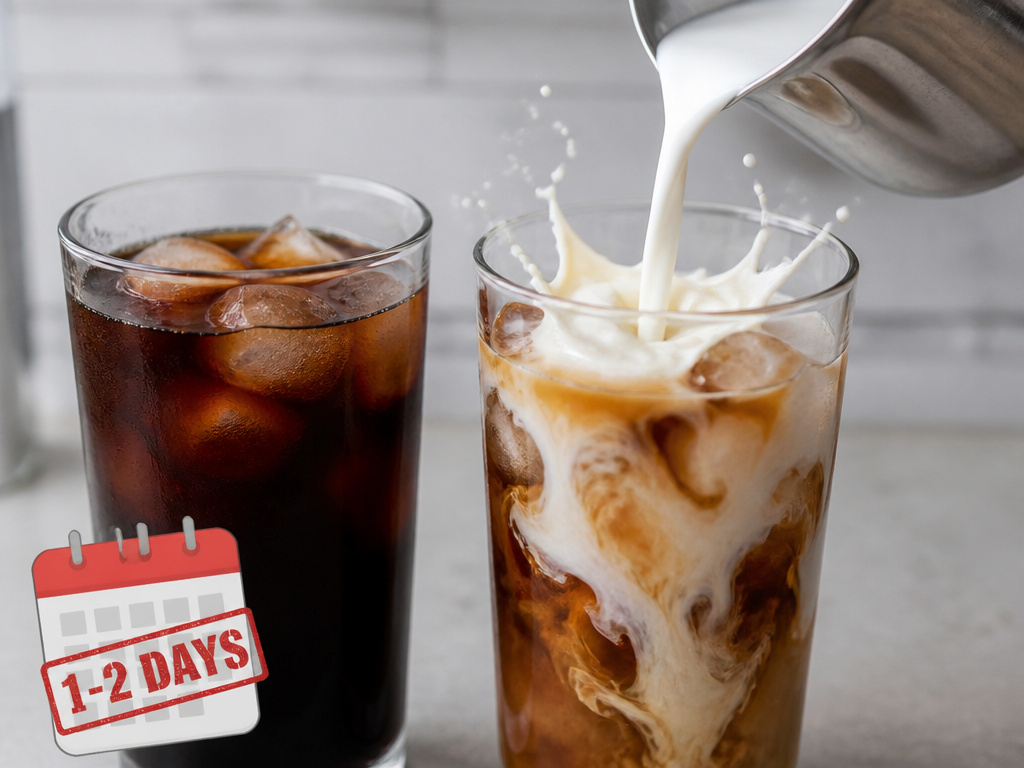
This is the single biggest pivot in shelf life. Dairy introduces lactose (a sugar) and protein, creating a buffet for bacteria like Lactobacillus and Pseudomonas. Your iced coffee is now a dairy product.
Finish it within 1 to 2 days. Period.
If you use a dairy-free milk option like almond or oat milk, check the carton. Shelf-stable versions last longer, but once opened and mixed with coffee, the same 3-5 day rule for plain coffee is wiser. The oils in nut milks can also separate when cold, creating a visually unappealing but not unsafe drink.
The calories in your drink aren’t just a dietary concern; they’re a stability factor. A splash of whole milk has a different microbial profile than sugar-free syrup. This is why knowing the calories in coffee additives you use regularly helps you gauge risk, higher sugar and protein content generally means a shorter shelf life.
TL;DR: Dairy turns your coffee drink into milk. Drink it fast or waste it.
The Sour vs. Spoiled Distinction
Your senses are the best tool. Knowing what you’re detecting is crucial.
Sour (Quality Failure): This is often acetic acid bacteria at work, especially in cold brew. It produces a sharp, vinegar-like tang. The coffee might be safe but tastes terrible. It’s a common end point for old cold brew concentrate that’s been hiding in the back of the fridge.
Spoiled (Safety Failure): Look and smell for these signs:
* Visual: Cloudiness that doesn’t dissolve with a swirl. Tiny, hair-like strands or fuzzy spots (mold). Distinct separation.
* Olfactory: A cheesy, rotten, or distinctly “off” smell that isn’t just “strong coffee.”
* Taste: An unpleasant bitterness or foul flavor that makes you instinctively spit it out.
A PMC study on stored coffee quality tracked these sensory changes, correlating them with measurable chemical breakdown. The research shows that flavor degradation happens long before most dangerous microbial growth in black coffee, giving you a quality buffer.
I kept a batch of homemade cold brew in a supposedly clean bottle for 10 days. It never looked cloudy. On day 11, I took a sip and it tasted like someone had stirred it with a penny. That’s the acetic acid bacteria, invisible, flavor-wrecking, and a reminder that “safe” and “good” are different lines.
How to Extend the Life of Your Iced Coffee
You can’t stop time, but you can slow it down.
- Brew with Storage in Mind. If you know you’ll drink it over several days, make a cold brew concentrate. Dilute it as you go. The concentrate resists spoilage longer.
- Store Immediately and Correctly. Pour your brewed coffee into a clean, airtight glass jar or bottle the moment it’s cooled. Get it into the fridge.
- Sweeten Strategically. If you use sugar, make a simple syrup. Granular sugar won’t dissolve in cold liquid and settles, creating pockets of sweetness. Using a brown sugar sweetener syrup incorporates evenly and doesn’t introduce undissolved particles that can hasten settling.
- Freeze It. Pour coffee into ice cube trays. Once frozen, transfer the cubes to a freezer bag. They’ll keep for 3 months. Use them to chill fresh coffee without dilution. Expect some loss of the brightest top notes, freezing dulls them.
The 4 Tools That Replace Guesswork:
- A refrigerator thermometer (ensure it’s below 40°F)
- Airtight glass storage bottles (like Kilner or Mason jars)
- A permanent marker to label brew dates
- Your nose, trust it
Frequently Asked Questions
Can you get sick from old iced coffee?
From plain, black iced coffee, food poisoning is extremely rare. The acidity and caffeine create a somewhat hostile environment for pathogens. The real risk is from added dairy, which can spoil like milk. The more common result from old coffee is gastrointestinal discomfort from the increased acidity and compounds produced by spoilage bacteria, which is why some people connect coffee and digestion issues with stale brews.
Does iced coffee go bad if left out overnight?
Yes. If it contains dairy, discard it, it’s been in the temperature danger zone for far too long. If it’s black, it will be stale and likely sour from accelerated oxidation and bacterial activity. The flavor will be ruined. When in doubt, throw it out.
How can you tell if store-bought iced coffee is bad?
Check the expiration date first. Once opened, treat it like homemade. For unopened, shelf-stable bottles, look for bloating or bulging of the container (a sign of gas production from fermentation). After opening, watch for sediment, separation, or any change from the product’s normal color and consistency.
Does the type of coffee bean affect shelf life?
Indirectly, yes. A dark roast has fewer remaining organic acids than a light roast, which might slow certain souring processes slightly. A blend vs single-origin coffee choice matters more for flavor than safety. The bean’s origin impacts the initial acidity and oil content, which influences how the flavor profile degrades, not necessarily how fast it spoils.
Is it safe to drink iced coffee that tastes sour?
sour taste from acetic acid (vinegar) is typically a quality issue, not a safety one, in black coffee. Your body will likely reject it before you drink enough to cause harm. However, sourness in a dairy-containing coffee could coincide with other spoilage. If it’s sour and has dairy, do not drink it.
Before You Go
Shelf life isn’t a mystery. It’s a combination of temperature control, ingredient chemistry, and container hygiene. Remember the core numbers: 3 to 5 days for black, 1 to 2 for dairy. Your fridge must be cold, verify it with a thermometer. Your nose is a more reliable guide than any calendar.
For the longest-lasting, most consistent base, master a cold brew concentrate method. Sweeten with syrups, not granules. And if you love a creamy cup, make it fresh or commit to finishing the carton within 48 hours. The best iced coffee is the one you enjoy at its peak, not the one you gamble on from the back of the fridge.
{
“@context”: “https://schema.org”,
“@type”: “HowTo”,
“name”: “How to Determine If Your Iced Coffee Is Still Good”,
“totalTime”: “PT2M”,
“tool”: [
{
“@type”: “HowToTool”,
“name”: “Clean, airtight glass or stainless steel container”
},
{
“@type”: “HowToTool”,
“name”: “Refrigerator with a reliable thermometer”
},
{
“@type”: “HowToTool”,
“name”: “Your senses (sight, smell, taste)”
}
],
“step”: [
{
“@type”: “HowToStep”,
“name”: “Check the container and date”,
“text”: “Verify the coffee is in a sealed container and note when it was brewed. If it’s past 5 days for plain coffee or 2 days with dairy, proceed with caution.”
},
{
“@type”: “HowToStep”,
“name”: “Inspect visually”,
“text”: “Hold the container to the light. Look for cloudiness, floating particles, or any separation that wasn’t there initially. Mold is an instant discard.”
},
{
“@type”: “HowToStep”,
“name”: “Smell carefully”,
“text”: “Open the container and take a short sniff. A sharp, vinegary or cheesy smell indicates spoilage. A flat, stale aroma means it’s just lost its flavor.”
},
{
“@type”: “HowToStep”,
“name”: “Taste a tiny amount”,
“text”: “If it passes sight and smell, sip a teaspoon. If it tastes unpleasantly sour, bitter, or ‘off’ in a way that isn’t coffee, spit it out and discard the batch.”
}
]
}
{
“@context”: “https://schema.org”,
“@type”: “FAQPage”,
“mainEntity”: [
{
“@type”: “Question”,
“name”: “Can you get sick from old iced coffee?”,
“acceptedAnswer”: {
“@type”: “Answer”,
“text”: “From plain, black iced coffee, food poisoning is extremely rare. The acidity and caffeine create a somewhat hostile environment for pathogens. The real risk is from added dairy, which can spoil like milk. The more common result from old coffee is gastrointestinal discomfort from the increased acidity and compounds produced by spoilage bacteria, which is why some people connect coffee and digestion issues with stale brews.”
}
},
{
“@type”: “Question”,
“name”: “Does iced coffee go bad if left out overnight?”,
“acceptedAnswer”: {
“@type”: “Answer”,
“text”: “Yes. If it contains dairy, discard it, it’s been in the temperature danger zone for far too long. If it’s black, it will be stale and likely sour from accelerated oxidation and bacterial activity. The flavor will be ruined. When in doubt, throw it out.”
}
},
{
“@type”: “Question”,
“name”: “How can you tell if store-bought iced coffee is bad?”,
“acceptedAnswer”: {
“@type”: “Answer”,
“text”: “Check the expiration date first. Once opened, treat it like homemade. For unopened, shelf-stable bottles, look for bloating or bulging of the container (a sign of gas production from fermentation). After opening, watch for sediment, separation, or any change from the product’s normal color and consistency.”
}
},
{
“@type”: “Question”,
“name”: “Does the type of coffee bean affect shelf life?”,
“acceptedAnswer”: {
“@type”: “Answer”,
“text”: “Indirectly, yes. A dark roast has fewer remaining organic acids than a light roast, which might slow certain souring processes slightly. A blend vs single-origin coffee choice matters more for flavor than safety. The bean’s origin impacts the initial acidity and oil content, which influences how the flavor profile degrades, not necessarily how fast it spoils.”
}
},
{
“@type”: “Question”,
“name”: “Is it safe to drink iced coffee that tastes sour?”,
“acceptedAnswer”: {
“@type”: “Answer”,
“text”: “sour taste from acetic acid (vinegar) is typically a quality issue, not a safety one, in black coffee. Your body will likely reject it before you drink enough to cause harm. However, sourness in a dairy-containing coffee could coincide with other spoilage. If it’s sour and has dairy, do not drink it.”
}
}
]
}
