
How Long Does Iced Coffee Last in the Fridge? Storage Tips
Plain black iced coffee or cold brew lasts 3–5 days in a fridge at 40°F (4°C). Cold brew concentrate can last up to 2 weeks. Adding dairy like milk or cream cuts that shelf life to 1–2 days due to rapid bacterial growth.
Most people dump leftover iced coffee back in the fridge without a second thought. They assume it’s fine for days. The mistake isn’t forgetting it exists, it’s assuming all iced coffee is the same. A black cold brew and a creamy latte follow completely different clocks once they’re chilled.
This guide breaks down the shelf life by type, explains the science behind the countdown, and shows you how to spot the point where your drink goes from stale to unsafe.
Key Takeaways
- Dairy is the shelf-life killer. Adding milk or cream turns your iced coffee into a high-risk beverage within 48 hours.
- Cold brew concentrate is the longevity champion. Stored airtight, it keeps for up to two weeks, per the Toddy Cold Brew System instructions.
- Your nose knows. A sour, fermented, or “off” smell is a more reliable spoilage sign than a printed date.
- Temperature matters more than time. A fridge warmer than 40°F (4°C) can cut all these timelines in half.
- Sweeteners are sneaky. Liquid simple syrup can introduce mold spores; granulated sugar is safer for batch storage.
The Science Behind the Clock (And the Dairy Danger)
Shelf life isn’t just about flavor fading. It’s a race between chemical staling and microbial growth. Understanding the players tells you why the rules exist.
Coffee is acidic, which naturally inhibits some bacteria. Cold brewing, with its long, room-temp steeping phase, is a particular risk if not done in the fridge. One coffee expert on YouTube was adamant: “Never brew cold brew outside. You might get sick and spend an entire day on the toilet.” The higher water temperature might extract more flavor, but it also creates a perfect breeding ground during those 12–24 hours.
Common mistake: Adding cream to the whole batch for convenience, the dairy sours within two days, and you’ll taste the tangy spoilage long before you see any visible change.
Once brewed and chilled, the primary enemy is introduced contaminants. This is where dairy changes everything. The USDA FSIS states that bacteria grow most rapidly between 40°F and 140°F. Milk is a rich, neutral-pH food source. Adding it to your coffee immediately dilutes the protective acidity and provides a banquet for any bacteria present.
The result is a drastic shelf-life reduction. A study on the shelf life of cold brew coffee noted that microbial stability is one of the key factors defining its safe consumption window, and additives are a major variable.
TL;DR: Black coffee’s acidity buys you time. Dairy neutralizes that defense and turns your drink into a perishable food with a 48-hour deadline.
How Your Fridge Betrays You
Not all fridge spaces are equal. The door is warmer and experiences temperature swings every time you open it. The back of the bottom shelf is typically the coldest, most stable zone.
You need a consistent 40°F (4°C) or lower to hit the shelf-life numbers discussed here. A fridge running at 45°F can cut safe storage time by a third. Use a simple thermometer to check. If your iced coffee container is sweating on the outside, that’s condensation from temperature fluctuation, another factor that encourages microbial activity on the inside.
Iced Coffee vs. Cold Brew: A Shelf Life Showdown
These two drinks start with the same bean but end with different expiration timelines. The brewing method sets the stage.
Iced coffee is hot-brewed coffee rapidly chilled over ice. The heat extraction pulls a wide range of compounds, including more acidic notes. This complexity can break down faster. The rapid chill locks in brightness, but those bright, volatile flavors are often the first to fade, leaving a flat, stale taste after a few days.
Cold brew is steeped in cold water for 12-24 hours, always in the fridge for safety. The lack of heat results in a smoother, less acidic profile. This simpler chemical profile is more stable over time. It’s why manufacturers like Toddy can state their cold brew concentrate stays fresh for up to two weeks.
| Beverage Type | Max Fridge Shelf Life | Flavor Falls Off | Key Risk |
|---|---|---|---|
| Iced Coffee (black) | 3–4 days | Day 3 – loses brightness | Staling, flat taste |
| Cold Brew (black) | 4–5 days | Day 4–5 – becomes muted | Minimal safety risk if black |
| Cold Brew Concentrate | 10–14 days | Week 2 – weaker dilution | Mold if container isn’t airtight |
| Any coffee with dairy | 1–2 days | Day 2 – sour, tangy notes | Bacterial spoilage, foodborne illness |
The concentrate is the real storage workhorse. By keeping it strong and undiluted, you preserve it longest. Dilute it with water when you’re ready to drink. This also solves the dairy problem, you only add milk to the single serving you’re about to consume.
The Additive Effect: Milk, Sugar, and Flavor Syrups

What you put in your coffee determines how long it will last. Think of each addition as a new ingredient with its own expiration countdown.
Dairy and Creamers are the top concern. This includes milk, half-and-half, heavy cream, and most liquid nondairy creamers. They should always be added per serving, not to the storage batch. If you must batch with dairy, mark that container with a 48-hour deadline. For a deeper dive on popular alternatives, consider the flavor and stability of almond milk in coffee.
Sweeteners come in two camps: risky and safe.
* Risky: Liquid simple syrup. Its water content can harbor mold spores. If you add it to a batch, consume within 3 days.
* Safe: Granulated white or brown sugar sweetener. Sugar is a preservative in high concentrations. It draws moisture out of microbial cells, inhibiting growth. A batch sweetened with granulated sugar will last about as long as a black batch.
Flavor Syrups & Powders are wild cards. Store-bought syrups with preservatives (like most major brands) are low-risk. Homemade syrups or fresh ingredients (like cinnamon sticks) increase the risk of introducing microbes.
Other Additives like coconut oil coffee or MCT oil coffee blends introduce fats. While not as prone to rapid bacterial spoilage as dairy, fats can go rancid over time, developing off flavors. Keep these to single-serve preparations.
I once pre-mixed a week’s worth of iced coffee with my favorite vanilla creamer. By Wednesday, the third cup had a distinct tang that wasn’t vanilla. The batch was only 60 hours old. Now I keep a small pitcher of plain cold brew and a separate carton of creamer. The extra ten seconds of pouring each morning beats the waste and the weird taste.
Step-by-Step Storage for Maximum Freshness
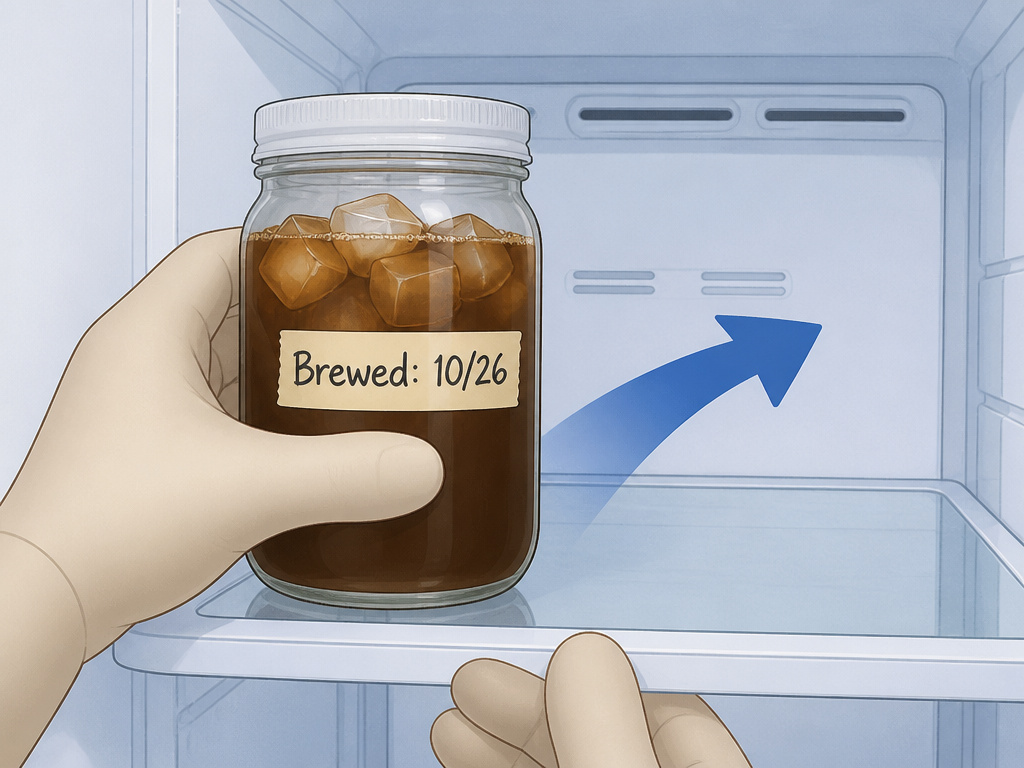
Getting the longest life from your brew is about process, not guesswork. Follow this sequence.
- Cool It Immediately. Never let hot-brewed iced coffee sit on the counter to cool slowly. Pour it over ice or into a storage container and get it into the fridge. The “danger zone” between 40°F and 140°F is where bacteria double quickly.
- Choose the Right Container. A clean, airtight glass jar or bottle is ideal. Glass doesn’t absorb odors or flavors. Ensure the lid seals completely. Plastic can sometimes impart a taste, especially with oily coffee.
- Label with the Date. Write the brew date directly on the container with a marker. “Brewed Thursday” is useless by Sunday. Use the date.
- Store in the Cold Zone. Place the container in the back of the middle or bottom shelf of your fridge, away from the door. This is the most consistently cold area. Research into industrial storage emphasizes consistent, low temperature as critical for maintaining the physical-chemical characteristics of cold brew.
- Keep Additives Separate. Store your plain coffee, your dairy, and your sweeteners in their own dedicated containers. Combine them only in your drinking glass.
- Practice the First-In, First-Out Rule. If you make a new batch, place it behind the old batch in the fridge. Drink the older one first.
Skipping the airtight seal lets in fridge odors and allows contamination. Forgetting to date leads to the dreaded sniff test of a mystery brew. Both waste coffee.
How to Tell When Your Iced Coffee Has Gone Bad

Your senses are the best tools here. Safety usually fails before flavor becomes undrinkable.
Smell It. This is the first and most reliable test. Fresh coffee smells aromatic, even when cold. Spoiled coffee often develops a sour, fermented, or yeasty odor. Sometimes it just smells “off” or flat. If your nose wrinkles, pour it out.
Look At It.
- Mold: Any visible fuzzy spots, filaments, or film on the surface means immediate disposal. Don’t try to skim it off; mycotoxins can permeate the liquid.
- Sediment: Some natural settling is normal, especially with cold brew. But a new, cloudy suspension or stringy particles are a bad sign.
- Carbonation: If you see tiny bubbles forming on the side of the glass that weren’t there before, it could be fermentation. This is more common with sweetened batches.
Taste It (With Caution). If it passes the smell and sight test, take a tiny sip. Flavor loss (staleness) is characterized by a flat, bland, or papery taste. Actual spoilage tastes sour, unpleasantly tangy, or fermented. Spit it out if it’s off.
Common mistake: Relying on the “5-day rule” blindly, if your fridge is warm or the batch contained dairy, spoilage can happen much faster. Your senses beat the calendar every time.
Frequently Asked Questions
Can you freeze iced coffee?
Yes, but with a caveat. Freezing is excellent for plain cold brew concentrate. Pour it into an ice cube tray or a freezer-safe container. Thaw in the fridge. The texture and aroma will degrade slightly upon thawing, but it’s fine for iced drinks or cooking. Do not freeze coffee with dairy or creamer, it will separate and become grainy.
Does the type of coffee bean affect shelf life?
Not significantly for safety, but it does for taste. Oily, dark roast beans might leave more sediment. Lighter roasts, like those from blonde roast beans, have brighter notes that fade first. A stale light roast will taste flat faster than a stale dark roast, but both are safe for the same duration if stored black.
Why does my iced coffee taste watery after a day?
This is dilution from melting ice if you stored it with ice cubes. Always store your coffee liquid without ice. Pour it over fresh ice when serving. The other cause is staling, the compounds that give coffee its body and mouthfeel break down over time, creating a thin, watery perception.
Is it safe to drink iced coffee left out overnight?
No. Do not consume iced coffee left at room temperature for more than 2 hours, or 1 hour if the ambient temperature is above 90°F. It has passed through the bacterial “danger zone” for too long. The risk of foodborne illness isn’t worth it.
How does caffeine content change over time?
Caffeine is a stable molecule. It does not degrade significantly over a week in the fridge. Your week-old iced coffee will have roughly the same caffeine in iced tea or coffee as it did on day one, even if the flavor has faded.
Before You Go
Store your iced coffee like a condiment, not a leftover. Keep the base plain and strong, locked in an airtight jar in the cold part of your fridge. Treat dairy and liquid sweeteners as perishable toppings you add at the last second. Your nose is the ultimate expiration date. A sour smell means the party’s over, no matter what the calendar says. This approach saves money, avoids waste, and most importantly, keeps your morning ritual safe and delicious.
{
“@context”: “https://schema.org”,
“@type”: “HowTo”,
“name”: “How to Store Iced Coffee and Cold Brew in the Refrigerator”,
“totalTime”: “PT5M”,
“tool”: [
{
“@type”: “HowToTool”,
“name”: “Airtight glass container or mason jar”
},
{
“@type”: “HowToTool”,
“name”: “Refrigerator thermometer”
},
{
“@type”: “HowToTool”,
“name”: “Permanent marker for labeling”
}
],
“step”: [
{
“@type”: “HowToStep”,
“name”: “Cool it fast”,
“text”: “Transfer freshly brewed iced coffee or strained cold brew to a clean, airtight container immediately. Do not let it sit at room temperature.”
},
{
“@type”: “HowToStep”,
“name”: “Store plain and separate”,
“text”: “Keep dairy, creamers, and simple syrups separate from the main batch. Add them only to the portion you’re about to drink.”
},
{
“@type”: “HowToStep”,
“name”: “Label with the brew date”,
“text”: “Use a marker to write the date directly on the container. This prevents guesswork later.”
},
{
“@type”: “HowToStep”,
“name”: “Place in the cold zone”,
“text”: “Store the container in the main body of the fridge, not on the door, where the temperature is a consistent 40°F (4°C) or below.”
},
{
“@type”: “HowToStep”,
“name”: “Perform the smell and sight test”,
“text”: “Before drinking, check for any off odors, surface film, or visual sediment that wasn’t there before.”
}
]
}
{
“@context”: “https://schema.org”,
“@type”: “FAQPage”,
“mainEntity”: [
{
“@type”: “Question”,
“name”: “Can you freeze iced coffee?”,
“acceptedAnswer”: {
“@type”: “Answer”,
“text”: “Yes, but with a caveat. Freezing is excellent for plain cold brew concentrate. Pour it into an ice cube tray or a freezer-safe container. Thaw in the fridge. The texture and aroma will degrade slightly upon thawing, but it’s fine for iced drinks or cooking. Do not freeze coffee with dairy or creamer, it will separate and become grainy.”
}
},
{
“@type”: “Question”,
“name”: “Does the type of coffee bean affect shelf life?”,
“acceptedAnswer”: {
“@type”: “Answer”,
“text”: “Not significantly for safety, but it does for taste. Oily, dark roast beans might leave more sediment. Lighter roasts, like those from blonde roast beans, have brighter notes that fade first. A stale light roast will taste flat faster than a stale dark roast, but both are safe for the same duration if stored black.”
}
},
{
“@type”: “Question”,
“name”: “Why does my iced coffee taste watery after a day?”,
“acceptedAnswer”: {
“@type”: “Answer”,
“text”: “This is dilution from melting ice if you stored it with ice cubes. Always store your coffee liquid without ice. Pour it over fresh ice when serving. The other cause is staling, the compounds that give coffee its body and mouthfeel break down over time, creating a thin, watery perception.”
}
},
{
“@type”: “Question”,
“name”: “Is it safe to drink iced coffee left out overnight?”,
“acceptedAnswer”: {
“@type”: “Answer”,
“text”: “No. Do not consume iced coffee left at room temperature for more than 2 hours, or 1 hour if the ambient temperature is above 90°F. It has passed through the bacterial \”danger zone\” for too long. The risk of foodborne illness isn’t worth it.”
}
},
{
“@type”: “Question”,
“name”: “How does caffeine content change over time?”,
“acceptedAnswer”: {
“@type”: “Answer”,
“text”: “Caffeine is a stable molecule. It does not degrade significantly over a week in the fridge. Your week-old iced coffee will have roughly the same caffeine in iced tea or coffee as it did on day one, even if the flavor has faded.”
}
}
]
}
