
How Decaf Coffee Works: The Solvent, Water, and CO2 Processes
Decaf coffee works by removing caffeine from unroasted green coffee beans using a solvent, water, or pressurized carbon dioxide to dissolve and extract the stimulant. The FDA permits specific solvents like methylene chloride with a residual limit of 10 parts per million, while water-based methods like the Swiss Water Process use osmosis and carbon filters to achieve 99.9% caffeine removal.
Most people think decaf is just weak coffee. The reality is more interesting. The challenge isn’t just pulling out caffeine, it’s doing so without stripping away the hundreds of other compounds that give coffee its flavor.
This guide walks through the chemistry and mechanics of the four main decaffeination methods. You’ll learn what the labels “Swiss Water” and “CO2 Process” actually mean, why solvent methods are both common and controversial, and how each technique changes what ends up in your cup.
Key Takeaways
- The Swiss Water Process removes 99.9% of caffeine using only water and carbon filters, but it can mute some high-end flavor notes due to the osmotic exchange.
- Methylene chloride, a common solvent, is FDA-approved for decaffeination with a strict residual limit of 10 ppm, far below levels linked to health risks.
- Supercritical CO2 decaffeination requires equipment that operates above 73.8 bar (1070 psi), making it expensive but excellent at preserving origin characteristics.
- All methods start with green, unroasted beans because the roasting process seals the bean’s pores, locking caffeine in.
- “Decaf” is not caffeine-free. U.S. regulations only require 97% caffeine removal, meaning a typical cup still contains 2-3 mg of caffeine.
The 4 Main Decaffeination Methods (Explained & Compared)
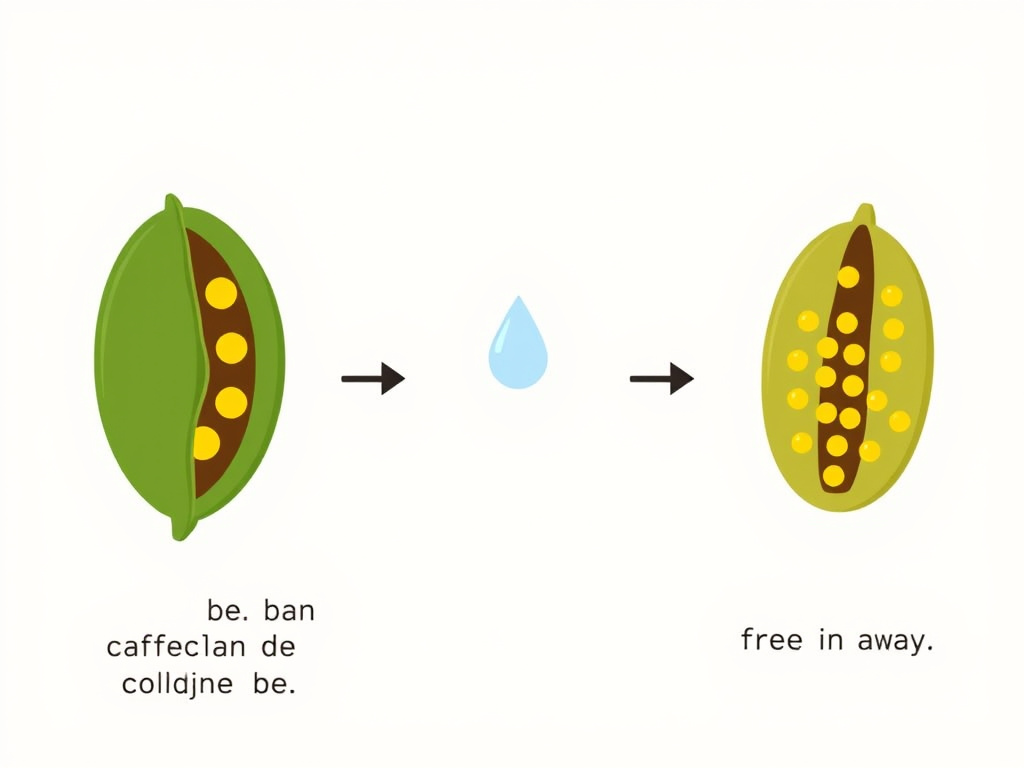
You have four proven paths to decaffeination. Each uses a different medium, a chemical solvent, a natural ester, water, or pressurized gas, to solve the same problem: caffeine dissolves in some things more easily than others.
The goal is a solvent that grabs caffeine but leaves sugars, acids, and oils behind. No method is perfect. All of them alter the bean’s chemistry to some degree. Your choice trades off cost, flavor fidelity, and personal comfort with the process.
The Swiss Water Process guarantees 99.9% caffeine-free coffee by using a proprietary Green Coffee Extract (GCE) saturated with all water-soluble coffee components except caffeine. Green beans are steeped, and the caffeine-laden water is passed through activated carbon filters that trap only the caffeine molecules based on molecular size.
1. The Solvent-Based Methods: Methylene Chloride & Ethyl Acetate
These are the workhorses of the industrial decaf world. They are fast, scalable, and cost-effective. The process is straightforward: steam the green beans to open their pores, then repeatedly rinse them with the chosen solvent. The solvent bonds with the caffeine molecules, washes them away, and is then recovered.
Methylene Chloride (Dichloromethane)
This is the most common method for large-scale decaf production. Methylene chloride is a specific chemical solvent prized for its selectivity, it has a strong affinity for caffeine and a weaker one for coffee’s flavor compounds.
The FDA’s regulation 21 CFR 173.250 is specific: residual methylene chloride in decaffeinated coffee shall not exceed 10 parts per million (ppm). Modern processing easily meets this. The beans are steamed after treatment to evaporate any remaining solvent.
The health controversy stems from its industrial use. In high concentrations, it’s a concern. At 10 ppm in your coffee, the exposure is negligible. It’s a calculated risk that regulatory bodies have deemed acceptable for decades.
Ethyl Acetate
Often marketed as “naturally decaffeinated” because ethyl acetate occurs in fruits like apples and bananas. It’s derived from sugarcane, making it a popular choice for organic decaf lines.
The process is identical to the methylene chloride method. The solvent selectivity is different. Ethyl acetate is less precise, often pulling out more fruity, acidic notes along with the caffeine. This can lead to a flatter, sometimes slightly boozy or overripe fruit taste in the cup. The European Food Safety Authority notes it is rapidly metabolized by the body.
TL;DR: Solvent methods are efficient and cheap, but methylene chloride carries a perception problem and ethyl acetate can blunt a bean’s natural acidity.
2. The Swiss Water Process: Caffeine Removal by Osmosis
This is the chemical-free poster child. The Swiss Water Process uses only water, temperature, time, and activated carbon filters. It relies on the principle of osmosis and a saturated solution called Green Coffee Extract (GCE).
Here is the step-by-step breakdown:
1. Create the GCE: A batch of green beans is soaked in hot water. All water-soluble solids, caffeine, sugars, acids, dissolve into the water.
2. Filter the Caffeine: This solution is passed through activated carbon filters calibrated to trap only the larger caffeine molecules. The result is GCE: water full of coffee flavor, but no caffeine.
3. Decaffeinate New Beans: A new batch of green beans is submerged in the GCE. Because the GCE is already saturated with flavor compounds, only the caffeine molecules move from the bean into the water (following the concentration gradient).
4. Repeat: The newly caffeine-laden water is filtered again, refreshing the GCE, and the cycle continues.
The major advantage is purity. The major drawback is that some flavor compounds inevitably leave the bean during that first GCE creation phase. While the process aims for equilibrium, some high-end roasters argue it mutes the most delicate top notes of a single-origin bean.
| Method | Medium Used | Caffeine Removal | Primary Flavor Impact |
|---|---|---|---|
| Methylene Chloride | Chemical solvent | ~97% (to FDA standard) | Minimal; best flavor preservation of solvent methods. |
| Ethyl Acetate | Natural ester (sugarcane) | ~97% (to FDA standard) | Can reduce acidity; may impart faint fruity/sweet note. |
| Swiss Water | Water & carbon filters | 99.9% | Can mute subtle, complex origin notes; clean, balanced cup. |
| Supercritical CO2 | Pressurized carbon dioxide | ~99% | Excellent preservation; often described as the “truest” to original flavor. |
3. The Supercritical CO2 Process: High-Pressure Precision
This is the high-tech, expensive option. It uses carbon dioxide in a “supercritical” state, a phase achieved at pressures above 73.8 bar (1070 psi) and temperatures above 31.1°C where it acts like both a gas and a liquid.
The process works like this:
1. Green beans are placed in a stainless steel extraction vessel.
2. Supercritical CO2 is pumped in. In this state, it’s an excellent, selective solvent for caffeine.
3. The CO2 circulates through the beans, dissolving the caffeine.
4. The caffeine-rich CO2 is transferred to a separate chamber. When pressure drops, the CO2 reverts to a gas, leaving pure, dry caffeine behind. The CO2 is recycled.
The selectivity is remarkable. It almost exclusively targets caffeine molecules, leaving the intricate flavor matrix nearly untouched. The downside is the multi-million-dollar equipment cost, which is why you typically only find this method used for high-volume, premium decafs.
TL;DR: CO2 decaf offers the best flavor fidelity but comes at a premium price due to the complex, high-pressure equipment required.
Is Decaf Coffee Safe? Navigating the Solvent Debate
Safety questions almost always point to methylene chloride. The fear is understandable. The key is the dose. The FDA’s 10 ppm residual limit is a strict engineering target. An average adult would need to drink impossibly large volumes of decaf daily to approach exposure levels seen in occupational hazards.
The University of Queensland decaf coffee article clarifies that modern solvent decaffeination is a closed-loop system. The solvent is recovered and reused, not dumped, and the final beans are steamed to evaporate any trace amounts. The risk from a lifetime of drinking solvent-decaf is considered far lower than the risk from countless other common chemical exposures.
For those who prefer zero chemical interaction, the Swiss Water or CO2 methods exist. They address a peace-of-mind concern more than a quantified health risk. It’s a personal choice, not a medical imperative.
Common mistake: Assuming “Swiss Water” or “CO2” on a label automatically means better flavor. The processing method is one variable. Bean quality, roast profile, and brew method matter more for your final cup.
What About the Flavor? How Decaf Changes the Bean
Decaf will never taste exactly like its caffeinated counterpart. Caffeine itself is bitter. Removing it changes the bean’s chemical balance and physical structure.
All decaffeination methods make the bean more porous. Think of it like a sponge that’s been soaked and dried. This increased porosity means the beans roast faster and can absorb moisture more easily. Roasters specializing in decaf use slower, gentler roast profiles to compensate.
The flavor difference you notice depends on the method:
* Solvent-Decaf (Methylene Chloride): Tends to taste the most “normal,” especially in darker roasts where the roast flavors dominate.
* Solvent-Decaf (Ethyl Acetate): Often has a muted, softer acidity. This can be a benefit for people sensitive to acid, but it flattens vibrant African or Central American coffees.
* Swiss Water Decaf: Produces a consistently clean, sweet, and balanced cup. The trade-off is a potential loss of the most fragile floral or tea-like notes.
* CO2 Decaf: Gets the closest to the original bean’s character. You can often still taste the distinct terroir of a Guatemalan versus a Sumatran.
The best decaf starts with excellent green beans. A mediocre bean decaffeinated by the Swiss Water Process is still a mediocre bean. Focus on roasters who source quality green coffee and are transparent about their decaffeination partner.
Why Your Decaf Still Has a Little Caffeine
“Decaffeinated” is a regulated term, not a promise of zero. In the United States, coffee must have at least 97% of its caffeine removed to earn the label. The European standard is 99.9%. This is why the Swiss Water Process, which meets the higher standard, explicitly markets its 99.9% claim.
A typical 8-ounce cup of brewed decaf coffee contains 2-5 milligrams of caffeine. Compare that to 80-100 mg in a regular cup. It’s trace, but not zero. This residual amount is why individuals with extreme caffeine sensitivity or specific medical directives should still exercise caution.
For context, this is less caffeine than you’d find in many common caffeine-free alternatives like most herbal teas or hot chocolate. If you’re strictly monitoring your caffeine intake, know that decaf is a reduction tool, not an elimination tool.
Frequently Asked Questions
Is decaf coffee bad for your heart?
No. For most people, moderate decaf coffee consumption is neutral or beneficial for heart health. It provides antioxidants without caffeine’s potential to temporarily elevate heart rate or blood pressure. Those with specific conditions like caffeine-induced arrhythmias often find decaf a safe alternative. For a detailed look at the research, see our article on coffee and heart health.
Which decaf method is healthiest?
From a pure health perspective, the differences are minimal. The Swiss Water and CO2 processes involve no chemical solvents, which satisfies a preference for “processing purity.” However, the FDA strictly regulates solvent residues to levels considered safe. The health impact of the antioxidants in your cup far outweighs any negligible risk from modern decaffeination methods.
Why does decaf coffee sometimes taste sour or weird?
This is usually a brew problem, not a decaf problem. Decaf beans are more porous and less dense. If you use your regular grind setting and brew time, you’ll over-extract quickly, leading to a hollow, sour, or papery taste. Grind slightly coarser and/or reduce brew time by 10-15 seconds. Treat decaf as its own category, not a direct substitute.
Can I drink decaf coffee while pregnant or breastfeeding?
Yes, decaf is generally considered safe during pregnancy and breastfeeding because it contains only trace amounts of caffeine. It allows you to enjoy the ritual and taste without the stimulant. Always consult your doctor, but decaf is the standard recommendation for managing caffeine consumption during these periods.
Does decaf coffee dehydrate you?
No. This is a myth that conflates caffeine’s mild diuretic effect with coffee itself. Decaf coffee is almost entirely water and contributes to your daily fluid intake just like any other beverage. The diuretic effect from the minimal caffeine in decaf is insignificant.
The Bottom Line
Decaf coffee is a feat of food science, not a compromise. The method matters. Swiss Water for chemical-free purity, methylene chloride for cost-effective flavor retention, CO2 for premium fidelity. Each leaves a signature on the bean.
Your best cup starts with a roaster who cares about their decaf source. Look for the method on the label. Experiment with grind and brew time. Decaf deserves its own setup.
That faint, familiar bitterness in your cup? That’s not leftover caffeine. It’s the taste of hundreds of other compounds, carefully preserved through a process designed to remove just one.
