
Coffee and Green Tea Mixed: A Synergistic Energy Blend
To mix coffee and green tea, brew them separately at their ideal temperatures—90-96°C for coffee and 80°C for green tea—then combine. Use a 1:1 to 3:1 tea-to-coffee ratio. This method preserves their distinct flavors and creates a synergistic blend of caffeine and L-theanine for alert, focused energy without the jitters.
Mixing green tea with coffee creates a drink defined by the synergistic interaction between caffeine and L-theanine. The goal is a 1:1 to 3:1 tea-to-coffee ratio, brewed separately at their ideal temperatures (80°C for tea, 90-96°C for coffee) before combining to balance focused alertness with reduced jitters.
Most people dump a tea bag into their coffee pot. That guarantees a bitter, astringent mess because green tea scalds at coffee-brewing temperatures, releasing harsh tannins that fight the coffee’s acidity.
This guide breaks down the science behind the combination, walks through the only methods that work, and tells you when to skip it entirely.
Key Takeaways
- The combination works because L-theanine in green tea modulates caffeine’s stimulant effect, promoting alpha brain waves associated with calm focus.
- Brew separately, then combine. Pouring boiling water over green tea destroys its delicate amino acids and makes it taste vegetal and bitter against coffee.
- Start with a 3:1 ratio of tea to coffee and adjust based on your caffeine sensitivity and desired flavor profile.
- Matcha lattes with a shot of espresso (“Dirty Matcha”) are the most consistent and popular method for good reason.
- Long-term daily consumption may lead to tolerance build-up and potential mineral leaching; treat it as an occasional tool, not a daily staple.
The Synergy of Caffeine and L-Theanine
This isn’t about stacking stimulants. It’s about biochemistry. Green tea contains L-theanine, an amino acid that crosses the blood-brain barrier. Coffee delivers a bolus of caffeine. A 2018 review in Nutrients concluded their combination improves attention and reduces the subjective experience of mental fatigue more than either compound alone.
The mechanism is specific. L-theanine increases the production of alpha brain waves. These waves are present during states of relaxed alertness, think of being awake but calm. Caffeine blocks adenosine receptors, preventing the feeling of tiredness. Together, they can produce a state of focused concentration without the nervous edge or crash associated with pure caffeine.
L-theanine and caffeine in combination have been shown to improve performance on attention-switching tasks and reduce susceptibility to distracting information in healthy participants, according to a 2018 peer-reviewed analysis in Nutrients.
The synergy depends on ratio and timing. Swallowing a caffeine pill with a theanine supplement is predictable. Drinking a mixed beverage is not. The caffeine release rates from steeped tea and brewed coffee differ, and the L-theanine concentration in your cup varies wildly by tea grade and steep time.
TL;DR: The “balanced energy” claim is real and studied, but your results depend entirely on the tea quality and your brewing precision.
What You’re Actually Signing Up For
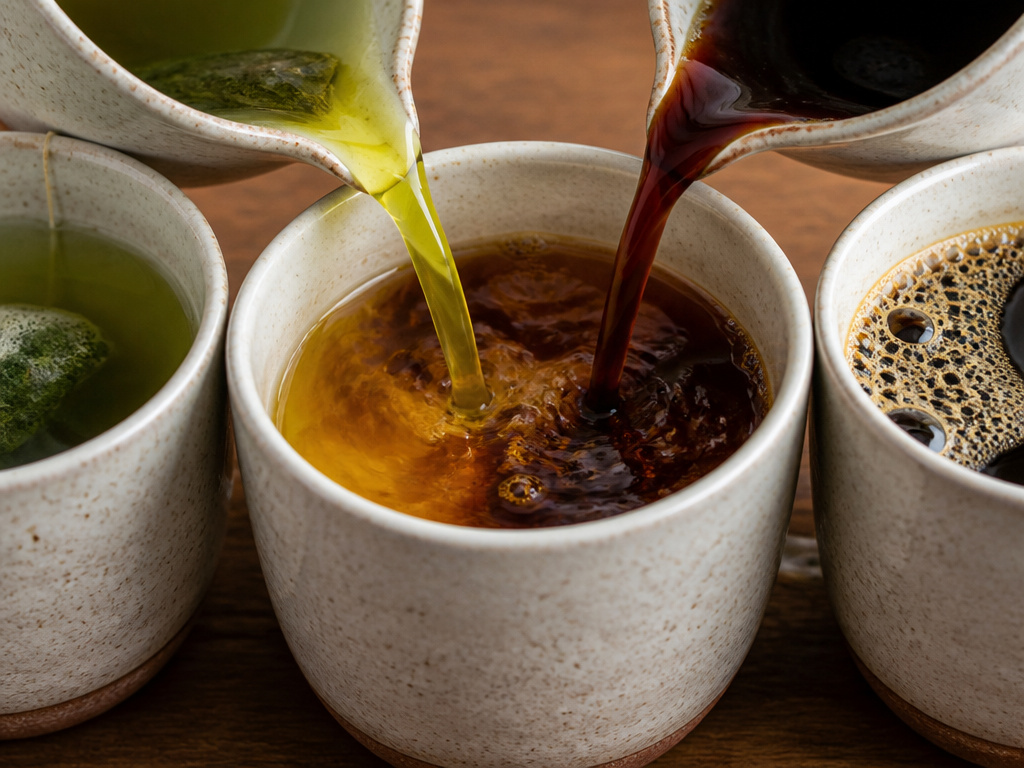
Expect a different kind of buzz. Your heart rate might not spike the same way. The mental clarity often feels cleaner, less frantic. Some people describe it as removing the brain fog without turning on the anxiety light.
The flavor is a negotiation. You are marrying two very assertive profiles. High-quality, lightly steamed Japanese sencha brings umami and a slight sweetness. A naturally processed Ethiopian coffee adds bright citrus. Together, they can create a complex, layered cup. A low-grade tea bag and a dark roast, however, will taste like muddy, bitter confusion.
Your stomach might object. Both beverages are acidic, though the acidity of tea is generally lower than coffee. Combining them can be a gamble for anyone prone to acid reflux. The tannins from over-steeped tea can also feel drying and astringent, amplifying any harshness from the coffee.
Here is the practical outcome spectrum:
| Your Goal | Likely Outcome | Risk If You Get It Wrong |
|---|---|---|
| Calm, sustained focus | Achievable with correct tea/coffee ratio and quality ingredients. | Jittery anxiety from too much caffeine, or no effect from too little. |
| Novel flavor experience | Possible with complementary, high-quality single-origin pairings. | A wasted, unpalatable cup that tastes like sour grass. |
| Reducing coffee jitters | Effective if the L-theanine dose is sufficient relative to caffeine. | Continued jitters plus a weird tea aftertaste. |
The physical experience is the main event. The flavor is a bonus you have to work for.
How to Actually Mix Them (Without Ruining Both)

The cardinal sin is using one brewing water temperature for both. Green tea scorches above 85°C (185°F), locking in a bitter, vegetal flavor. Coffee typically brews between 90-96°C (195-205°F). You must brew them separately.
Before you start: Use filtered water. Chlorine and hard minerals will exaggerate bitterness in both components. If you have heart conditions or are sensitive to caffeine, consult a doctor before experimenting with combined stimulants.
Method 1: The Separate Brew & Blend
This is the most controlled approach.
- Brew the green tea. Use 2-3 grams of loose-leaf tea per 200ml of water heated to 80°C (175°F). Steep for 2 minutes, then remove the leaves. Over-steeping pulls out catechins and tannins that clash with coffee.
- Brew the coffee. Use your normal method, but consider pulling back the temperature slightly to 88-90°C (190-194°F) if you plan to combine them hot. A pour-over or AeroPress offers more control than a full-immersion French press.
- Combine in a pre-warmed vessel. Start with a 3:1 ratio of tea to coffee. Stir gently. Taste. Adjust toward 1:1 if you want more coffee character.
Common mistake: Brewing the tea with boiling coffee water, the scalded tea releases alkylpyrazines that taste like canned asparagus, and that note will dominate the entire cup.
Method 2: The Dirty Matcha (The Crowd-Pleaser)
This is the safest path to a delicious drink. The fat and sweetness in the milk buffer any flavor clashes.
You will need matcha powder, hot water (not boiling), milk, and a shot of espresso.
- Step 1: Sift 1.5-2 grams of ceremonial-grade matcha into a bowl. Add 60ml of 80°C water. Whisk vigorously until frothy and no clumps remain.
- Step 2: Prepare a shot of espresso (or 60ml of strong coffee).
- Step 3: Steam or froth 180-200ml of milk (dairy or oat work best).
- Step 4: Pour the matcha into a mug. Add the steamed milk. Gently pour the espresso shot over the back of a spoon to create a layered effect or stir it in.
The matcha provides a concentrated dose of L-theanine. The espresso gives a quick caffeine hit. The milk adds texture and sweetness. It works every time.
TL;DR: Brew tea at 80°C and coffee at 90°C separately, then mix. Or, make a matcha latte and add an espresso shot.
The Ratio That Changes Everything

There is no universal perfect mix. Your ideal ratio depends on your goal, your caffeine tolerance, and the specific teas and coffees you use.
Think of it as a sliding scale:
| Tea : Coffee Ratio | Primary Effect | Best Use Case |
|---|---|---|
| 3 : 1 | Tea-forward, mild stimulation, high theanine | Reducing coffee anxiety, afternoon focus |
| 1 : 1 | Balanced hybrid flavor and effect | Replacing your standard morning cup |
| 1 : 3 | Coffee-forward with a tea undertone | Extending coffee’s focus without doubling jitters |
Start at 3:1. Your first sip should taste more like tea than coffee. If the calm focus is there but you miss the coffee flavor, move to 1:1 on your next attempt. Jumping straight to a coffee-heavy mix often overwhelms the L-theanine’s moderating effect.
The caffeine content in tea is lower and releases more slowly than in coffee. A 1:1 ratio by volume does not mean a 1:1 caffeine ratio. You are getting more caffeine from the coffee portion. This is why the tea-heavy start is wise, you can adjust the stimulant effect by adjusting the coffee volume, not the tea.
When Not to Mix Green Tea and Coffee
This is not a daily health elixir. Treat it as a functional tool for specific moments.
Skip it if you have an iron deficiency. Both coffee and green tea contain polyphenols that can inhibit non-heme iron absorption from plant-based foods. Consuming them with meals can reduce iron uptake by 30-40%. If you are anemic or vegetarian, have your mixed drink between meals, not during.
Avoid it after 2 PM if you are caffeine-sensitive. The L-theanine may smooth the edges, but the caffeine half-life is unchanged. You might feel calm but still lie awake at midnight.
I tried a 1:1 mix daily for two weeks as a morning replacement. By day ten, the unique “calm focus” sensation was barely noticeable, my tolerance had adjusted. The drink just tasted odd. I now reserve it for days when I need to concentrate through long, tedious tasks.
Do not use this combination to mask fatigue from poor sleep. It is a cognitive aid, not a substitute for rest. Relying on it to power through chronic sleep deprivation leads to deeper burnout.
Flavor Pairings: What Works and What Fights
Not all teas play nice with all coffees. The goal is harmony, not conflict.
- Japanese Sencha + Washed Ethiopian Coffee: This is a high-success pairing. The sencha’s umami and steamed vegetable notes complement the Ethiopian coffee’s floral and citrus brightness. They share a certain clean, bright quality.
- Chinese Dragonwell (Longjing) + Costa Rican Coffee: Dragonwell has a distinct chestnut aroma and smooth body. A honey-processed Costa Rican coffee, with its balanced sweetness and mild acidity, can merge seamlessly, creating a nutty, sweet cup.
- Matcha + A Dark Roast Espresso: The strong, bittersweet notes of a dark roast stand up to matcha’s intense, grassy flavor. The milk in a latte format is essential here as a mediator.
- Avoid with: Smoky teas like Lapsang Souchong or overly tannic, low-grade tea bags. They will create a harsh, ashy flavor when combined with coffee.
The brewing methods matter as much as the origin. A gently steeped tea and a clean-filtered coffee have the best chance. Avoid French press coffee with lots of silt combined with tea, the textural muddiness is unpleasant.
The Health Perspective: Beyond the Buzz
Mixing these beverages doesn’t create new health benefits. It combines their existing profiles.
You get the antioxidants in green tea, like EGCG, and the chlorogenic acids from coffee. The research on their combined antioxidant effect in a single beverage isn’t conclusive. It’s likely additive, not synergistic.
The potential downside is the combined acidic load and caffeine content. For someone with a sensitive stomach, this can be irritating. It also represents a significant diuretic load. Hydrate with plain water afterward.
Contrast this with other popular coffee additives. For example, the benefits of cinnamon coffee revolve around blood sugar regulation, while coconut oil coffee is pursued for sustained energy from fats. The green tea combination is uniquely cognitive.
TL;DR: The health profile is the sum of its parts, antioxidants plus caffeine plus L-theanine. The main novel benefit is the cognitive synergy, not a magical new compound.
Frequently Asked Questions
Does mixing green tea and coffee cancel each other out?
No, they don’t cancel out. The caffeine from both sources adds up. The L-theanine from the tea modulates the subjective experience of that caffeine, potentially reducing jitters and anxiety while maintaining alertness. The effects are pharmacologically complementary.
What is the best green tea to mix with coffee?
High-quality, smooth, low-tannin green teas work best. Japanese sencha or gyokuro are excellent choices for their umami and sweetness. Matcha is also ideal because it’s consumed whole, ensuring you get all the L-theanine. Avoid cheap tea bags or bitter, over-steeped teas.
Can I just put green tea leaves in my coffee filter?
Do not do this. Coffee brewing temperature is too hot for green tea, resulting in a bitter, astringent, and vegetal-tasting brew that ruins the coffee. The flavors will clash severely. Always brew separately at their optimal temperatures.
How much caffeine is in green tea mixed with coffee?
It’s the sum of the caffeine in each component. An 8-oz cup of green tea has about 30-50mg of caffeine. An 8-oz cup of coffee has 95-165mg. A 1:1 mix of two 8-oz brews would thus contain roughly 125-215mg of total caffeine, depending on strength.
Is it safe to drink this every day?
While likely safe for most healthy adults, daily consumption can lead to increased caffeine tolerance, diminishing the desired synergistic effect. It may also contribute to acid reflux or iron absorption issues over time. It’s wiser to use it as an occasional tool rather than a daily habit.
Does this taste good?
Taste is subjective. When done correctly with complementary, high-quality ingredients and proper brewing, it can be a complex and enjoyable drink. When done poorly, it tastes like a mistake. The “Dirty Matcha” latte method is the most reliably palatable for most people.
Before You Go
Mixing green tea and coffee is a functional experiment, not a flavor miracle. The prize is the L-theanine and caffeine synergy, a distinct state of calm alertness. To get it, you must respect two rules: brew the tea low and slow, and start with a tea-heavy ratio.
The Dirty Matcha latte is the foolproof entry point. For the adventurer, a separate brew of sencha and a bright Ethiopian coffee can be revelatory. Just know that this is a sometimes drink. Your tolerance will build, and the magic fades with daily use. Keep it in your back pocket for when you need a clear head and a steady hand.
