
Caffeine: Does Matcha Have More Than Coffee? A Comparison
No, a typical serving of prepared matcha tea does not have more caffeine than a typical serving of coffee. According to USDA data, 100 grams of prepared matcha contains about 28mg of caffeine, while the same amount of brewed coffee contains 40mg, and espresso contains 212mg. The confusion starts because you consume the entire powdered tea leaf.
Most comparisons get this wrong by mixing up dry weight and prepared servings. They’ll say “matcha powder has more caffeine per gram than coffee beans,” which is technically true but practically useless. You don’t eat spoonfuls of dry coffee grounds.
This guide breaks down the numbers from the USDA, explains why the experience feels so different, and shows you how to calculate the caffeine in your actual cup.
Key Takeaways
- Per prepared serving, coffee almost always wins. A standard 8oz coffee has 80-100mg caffeine; a matcha serving has 35-70mg.
- Dry powder is misleading. While 1 gram of matcha powder can hold 30-70mg of caffeine, you only use 1-2 grams per cup. Coffee uses 10-15 grams of grounds to make a cup.
- L-theanine changes the game. Matcha’s unique amino acid promotes calm alertness by slowing caffeine absorption, which is why the energy feels smoother and longer-lasting.
- Heavy matcha drinking can affect iron. The polyphenols (EGCG) in matcha can inhibit non-heme iron absorption by up to 70% when consumed with meals.
- Preparation dictates everything. An espresso shot packs more caffeine per ounce than any matcha, but a large cold brew coffee can contain over 200mg.
The Short Answer (Caffeine Per Serving)
For the prepared drink in your cup, coffee contains more caffeine. The USDA’s FoodData Central, the primary nutritional database, lists 28mg of caffeine per 100 grams of prepared matcha tea. The same 100 grams of brewed, restaurant-style espresso contains 212mg. Regular brewed coffee sits at 40mg per 100 grams.
According to USDA FoodData Central entries, prepared matcha tea contains 28mg of caffeine per 100g serving. Brewed coffee contains 40mg/100g, and espresso contains 212mg/100g. This measures the beverage as consumed, not the raw ingredients.
Your serving size changes the math. A typical 8-ounce (240g) cup of drip coffee delivers about 96mg of caffeine. A matcha serving made with 1.5 grams of powder and 2 ounces of water yields roughly 50mg of caffeine. The coffee cup wins on total caffeine every time.
TL;DR: By the cup, coffee has more caffeine. Matcha’s reputation for potent caffeine comes from its concentrated dry powder, not the prepared tea.
Why Everyone Gets the Matcha vs. Coffee Caffeine Question Wrong
The mix-up is a units problem. Many articles cite a fact that is true in a vacuum: “Gram for gram, matcha powder contains more caffeine than coffee beans.” This ignores consumption reality.
You use about 1 to 2 grams of matcha powder per serving. You use 10 to 15 grams of ground coffee to make a single cup. Even if the coffee grounds have less caffeine per gram, you start with so much more mass that the final beverage wins.
People also forget about preparation. Caffeine extraction isn’t 100%. The USDA numbers account for this, they test the final drink. Your coffee’s caffeine varies wildly with grind size, water temperature, and contact time. A cold brew steeped for 18 hours extracts more caffeine than a 3-minute French press, even with the same beans.
Matcha is different. You consume the entire leaf, so you ingest 100% of the caffeine present in the powder you measure. There’s no extraction variable. What you weigh is what you get. This consistency is why the dry-weight argument feels convincing, but it’s the wrong frame for comparing drinks.
The Matcha vs. Coffee Caffeine Table
This table cuts through the noise by comparing equal measures. It shows why the “per serving” answer is different from the “per gram” answer.
| Metric | Matcha | Coffee (Brewed) | Coffee (Espresso) |
|---|---|---|---|
| Caffeine per 100g beverage (USDA) | 28 mg | 40 mg | 212 mg |
| Typical Dry Weight per Serving | 1.5 – 2 g | 10 – 15 g | 7 – 9 g (for a double shot) |
| Estimated Caffeine per Serving | 35 – 70 mg | 80 – 120 mg | 60 – 80 mg (per 1oz shot) |
| Key Modulating Compound | L-theanine | – | – |
Caffeine per gram of dry product is where matcha appears stronger. High-quality ceremonial matcha powder can contain 30-70mg of caffeine per gram. Arabica coffee beans contain about 12mg of caffeine per gram (1.2% by weight). So yes, the powder is more concentrated. But you use so little of it.
Common mistake: Comparing caffeine per gram of dry product, it misleads you into thinking your matcha latte is a caffeine bomb. Your cup’s total caffeine is determined by serving size, not concentration.
The table’s last row is the real story. Matcha contains L-theanine, an amino acid that coffee lacks. This compound binds to the same brain receptors as caffeine but has a relaxing effect. It smooths the caffeine’s sharp edges.
How L-theanine Changes the Energy Experience

This is why matcha feels different. The caffeine in coffee hits your system fast. You get a jolt, maybe some jitters, and a crash a few hours later. Matcha’s L-theanine changes the pharmacokinetics.
L-theanine promotes the production of alpha brain waves, which are associated with relaxed focus. It also slows the absorption of caffeine through the gut. The result is a slower, more sustained release of caffeine into your bloodstream.
I switched to matcha on hectic workdays after one too many coffee-induced afternoons of shaky hands and scattered thoughts. The focus is there, but the panic isn’t. It’s the difference between a sprint and a paced hike.
The YouTube transcript context nails it: the energy from matcha can last twice as long. You don’t get the same peak-and-trough cycle. This “calm alertness” is unique to teas containing L-theanine, especially matcha where you ingest the entire leaf.
It’s not a weaker buzz. It’s a differently modulated one. For tasks requiring sustained concentration, many find matcha superior. For a rapid, blunt-force energy hit, coffee is the tool.
TL;DR: L-theanine in matcha slows caffeine absorption and promotes alpha waves, creating a smooth, focused energy that lasts longer than coffee’s sharp spike.
Variables That Change the Caffeine in Your Cup
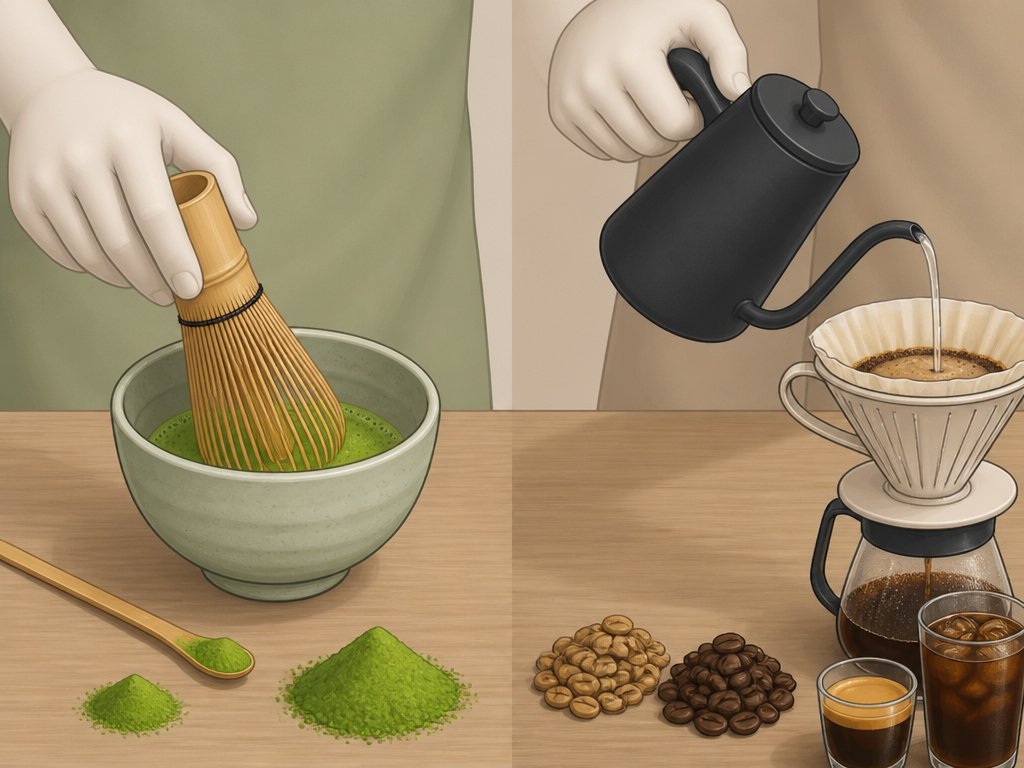
The numbers in the table are averages. Your actual cup depends on these factors.
For Matcha:
- Grade and Serving: Ceremonial grade matcha uses younger leaves, which often have slightly higher caffeine. A “koicha” (thick tea) preparation uses double the powder of a standard “usucha,” effectively doubling the caffeine.
- Powder Amount: This is the biggest variable. Using a heaping teaspoon (closer to 3 grams) instead of a scant one (1 gram) can triple your caffeine intake.
For Coffee:
- Bean Type: Robusta beans contain 2-4 times the caffeine of Arabica beans. A cheap espresso blend heavy on Robusta will be far more caffeinated than a single-origin Arabica pour-over.
- Brew Method: This is everything. An espresso shot extracts caffeine very efficiently in a small volume. A cold brew uses a long steep time (12-24 hours) to pull a huge amount of caffeine into solution, often leading to the highest total caffeine per serving of any method.
- Coffee-to-Water Ratio: A strong brew ratio (like 1:13) yields more caffeine than a weak one (1:18), all else being equal.
A Hidden Consideration for Daily Matcha Drinkers

There’s a trade-off for consuming the whole leaf. Matcha is packed with polyphenols, particularly EGCG, a potent antioxidant. In moderate amounts, this is beneficial. In high, cumulative doses, it can interfere with mineral absorption.
Common mistake: Drinking matcha with your iron-rich breakfast, the polyphenols can bind to non-heme iron (from plants) in your gut, reducing absorption by 60-70% according to clinical studies cited in YouTube research.
The YouTube transcript from a medical creator highlights this clearly. Heavy matcha consumption, especially for vegans, vegetarians, or women with higher iron needs, can slowly lead to iron deficiency anemia over time. The fix is simple: drink your matcha between meals, not during them. This gives your body a window to absorb iron without competition.
If you drink multiple bowls daily and feel chronically fatigued, it might not be the caffeine. Ask your doctor to check your ferritin levels. It’s a side effect no one talks about until they’re wondering why they’re so tired despite their “healthy” habit.
Frequently Asked Questions
Does matcha have more caffeine than espresso?
No. Per serving, a 1-ounce espresso shot contains 60-80mg of caffeine. A standard matcha serving contains 35-70mg. Even a strong double espresso will out-caffeinate a typical bowl of matcha. The difference is volume, espresso is a concentrated caffeine delivery in a tiny package.
Why does matcha feel stronger than coffee if it has less caffeine?
It doesn’t feel stronger; it feels different. The L-theanine in matcha modulates the caffeine’s effects, promoting focused calm without jitters. This sustained, clear-headed energy is often perceived as more effective or “stronger” for mental tasks than coffee’s more anxious, peak-and-crash alertness.
Can you get a caffeine overdose from matcha?
It’s extremely difficult from prepared matcha alone. You would need to consume an unrealistic amount of the beverage. However, if you are using pure matcha powder in very large quantities (e.g., in smoothies or baking), the high caffeine concentration per gram makes overconsumption more plausible. Stick to 1-2 gram servings.
Is matcha better for you than coffee?
“Better” depends on your goals. Matcha provides antioxidants like EGCG and L-theanine for calm focus. Coffee is also rich in antioxidants and is linked to certain health benefits. Matcha is less acidic, which is easier on some stomachs. Coffee might exacerbate anxiety or sleep issues more readily. For managing caffeine intake, matcha’s profile offers more control.
The Bottom Line
For total caffeine per cup, coffee is the clear winner. The USDA data and serving sizes don’t lie. But focusing solely on milligrams misses the point of why people choose matcha.
You drink matcha for the quality of energy, not just the quantity. The synergy of caffeine and L-theanine provides a unique state of relaxed concentration that coffee can’t match. It’s why the stimulation from tea feels so distinct. It’s also why the effects of green tea extend beyond a simple buzz.
If you need a high-dose, fast-acting stimulant, choose coffee, especially a strong espresso shot. If you want sustained, jitter-free focus that supports a long work session, matcha is your tool. Just be mindful of your timing to protect your iron levels, and enjoy the fact that you’re consuming the entire leaf, with all its nuanced chemistry. That’s the real power in the bowl.
