
Discover If Flavored Coffee Has Calories and How Many
Flavored coffee has calories when the flavor comes from added syrups, sugars, milk, or cream. A plain cup of black coffee, even if made from artificially flavored beans, is typically listed as 0 calories due to FDA rounding rules. The real caloric load starts with the first pump of syrup, each pump of standard caramel syrup adds about 20 calories and 5 grams of sugar.
Most people get this wrong because they assume “flavored” means “flavored beans.” They see “French Vanilla” on a bag of grounds or a K-Cup and think it’s just scented coffee. The flavoring process for beans uses chemicals like propylene glycol that carry negligible calories. The hundreds of calories in a Starbucks drink come from the sweetened syrup and milk added after the espresso is pulled.
This guide breaks down where the calories actually hide. You’ll get the exact numbers from the USDA database and major coffee chains, learn how to read labels correctly, and find out how to enjoy flavor without the sugar crash.
Key Takeaways
- A Starbucks Grande Caramel Macchiato contains 250 calories, primarily from vanilla syrup, milk, and caramel drizzle, the espresso contributes less than 10.
- FDA regulations allow products with less than 5 calories per serving to be labeled as “0 calories,” which is why most artificially flavored coffee beans show zero.
- One tablespoon of standard coffee syrup averages 50-60 calories and 13-15 grams of sugar; sugar-free versions use artificial sweeteners like sucralose for 0-5 calories.
- Naturally flavored beans, infused with oils from sources like vanilla or cinnamon, also fall under the FDA’s 5-calorie rounding rule and are effectively calorie-free when brewed black.
- The single biggest caloric variable in any coffee drink is milk or cream; switching from whole milk to almond milk in a large latte can save over 100 calories.
The Calorie Breakdown: Beans, Syrups, and Creamers
Head design changes the entire process. Look at the business end of your trimmer. You need to know which of the three main flavoring methods you’re dealing with. Each has a completely different calorie profile.
Artificially flavored coffee beans are the most misunderstood. Manufacturers spray green coffee beans with flavor compounds dissolved in a carrier agent, usually propylene glycol. This chemical helps the flavor adhere to the bean during roasting.
The U.S. Food and Drug Administration considers propylene glycol generally recognized as safe (GRAS) for use in food. Under FDA labeling rules in 21 CFR 101.9, a serving of food containing less than 5 calories may be declared as containing 0 calories.
The amount of propylene glycol and flavoring that survives the roasting process and transfers into your cup is minuscule. We’re talking fractions of a gram. That’s why the nutrition panel on a bag of “French Vanilla” grounds or a Green Mountain Coffee Roasters French Vanilla K-Cup Pod reads 0 calories. It’s not a trick, it’s legal rounding. Brew it black, and you get a flavored aroma with virtually no caloric payload.
Syrups are the calorie bombs. This is where the math gets real. A standard one-ounce serving (about two tablespoons) of a popular brand’s caramel syrup packs around 100 calories and 24 grams of sugar, according to the USDA FoodData Central entry for chocolate-flavored syrups. That’s roughly 50 calories per tablespoon.
Common mistake: Assuming “one pump” is a negligible amount, most coffee shop syrup pumps dispense about 1/4 ounce (half a tablespoon). That’s still 25 calories and 6 grams of sugar per pump. A medium vanilla latte with three pumps starts with a hidden 75 calories just from syrup.
| Flavoring Component | Typical Serving | Calories | Primary Calorie Source |
|---|---|---|---|
| Artificially Flavored Beans (brewed black) | 8 oz cup | 0 (rounded) | None |
| Standard Coffee Syrup | 1 Tbsp (1/2 oz) | 50-60 | Sugar / High-Fructose Corn Syrup |
| Sugar-Free Syrup | 1 Tbsp | 0-5 | Artificial Sweeteners |
| Half-and-Half | 1 Tbsp | 20 | Milk Fat |
| French Vanilla Creamer | 1 Tbsp | 35-45 | Sugar, Oil, Corn Syrup |
Creamers and milk are the other major variable. The USDA lists fat-free liquid creamer at 20 calories per tablespoon. The flavored, shelf-stable liquid creamers are worse, they replace dairy fat with oil and sugar, pushing a tablespoon to 35-45 calories. The “French Vanilla” flavor in your mug is more likely from this creamer than from the bean itself.
TL;DR: Beans flavored before brewing ≈ 0 calories. Syrups and creamers added after brewing are the true sources of calories and sugar. Always check the label on the bottle, not the bag.
Does Starbucks or Dunkin Flavored Coffee Have Calories?
 Yes. Dramatically so. The business model of chain coffee shops is built on selling sugar and fat, not coffee. The espresso shot is the cheapest ingredient in your cup.
Let’s take the numbers straight from their nutrition calculators. A Starbucks Grande (16 oz) Caramel Macchiato is 250 calories. Break that down: the two shots of espresso are about 10 calories. The 2% milk is roughly 150 calories. The vanilla syrup (standard pumps) adds about 70 calories. The caramel drizzle cross-hatched on top contributes the final 20. The flavor, the caramel and vanilla notes you actually taste, is responsible for nearly 100 of those 250 calories.
A Dunkin’ Medium (24 oz) French Vanilla Swirl Iced Coffee with cream hits 230 calories. Notice this isn’t even a latte; it’s iced coffee with “swirl” syrup and a splash of cream. The swirl syrup is a thick, sweet mixture. The large volume (24 oz) means more syrup and cream to maintain flavor strength. The “French Vanilla” name promises a sophisticated, bean-derived flavor. The reality is poured from a syrup bottle with a calorie count that rivals a can of soda.
I switched to black coffee for a month to reset my palate. The first time I went back and ordered a “vanilla latte,” the sweetness was overwhelming. It tasted like melted ice cream, not coffee. I now ask for one pump instead of three, which cuts the syrup calories by two-thirds and lets the espresso actually come through.
The problem is one of concentration. Syrup is engineered to be potent so a little provides big flavor in a large drink. But “a little” is still a significant dose of sugar. Your taste buds adjust to this high level of sweetness, making unadorned coffee taste bitter by comparison. It’s a cycle that keeps you ordering the high-calorie version.
TL;DR: Chain coffee shop flavored drinks are high-calorie desserts. The flavor syrups are the primary contributor, followed closely by the milk. The coffee itself is a minor ingredient in the calorie equation.
Navigating Coffee Shop Menus Without the Calorie Bloat
 You don’t have to give up flavor. You just need a different map. The standard menu is a trap of defaults, large sizes, standard syrup pumps, whole milk.
Start with size. Order a small. A Starbucks Tall (12 oz) drink has one less pump of syrup than a Grande (16 oz) and uses less milk. You automatically save 30-50 calories from the syrup and another 30-40 from the milk. The flavor intensity is often better in the smaller volume, too.
Next, attack the syrup. Always ask for fewer pumps. The standard build is often too sweet. For a Tall latte, request two pumps instead of three. For a Grande, ask for three instead of four. This simple verbal instruction can save 25-50 calories. Better yet, explore the sugar-free syrup options. Brands like Torani Sugar-Free Syrups use sucralose or stevia. They provide the vanilla or hazelnut flavor without the sugar calories. Some people detect an aftertaste; your mileage may vary.
Now, deal with the milk. This is your biggest lever. Switch from whole milk to 2% to nonfat (skim). Each step down saves about 20-30 calories in a latte. The real win comes from switching to a plant-based milk like almond milk. A splash of almond milk adds a nutty flavor with about a third of the calories of dairy milk. It’s the easiest single swap to cut 100+ calories from a large beverage.
Finally, skip the whipped cream. It seems obvious, but it’s a default on many “macchiato” or “mocha” drinks. Whipped cream adds 80-110 calories of pure fat and sugar. Tell them “no whip” when you order.
| Modification at a Coffee Shop | Calorie Savings (Approx.) | Flavor Impact |
|---|---|---|
| Downsize from Grande to Tall | 60-100 calories | More concentrated flavor |
| Reduce syrup pumps by 1 (e.g., 4→3) | 25-35 calories | Slightly less sweet, more coffee-forward |
| Switch from Whole to Nonfat Milk | 40-60 calories | Lighter body, less creamy mouthfeel |
| Switch from Dairy to Almond Milk | 80-120 calories | Nutty, slightly sweet flavor |
| Omit Whipped Cream Topping | 80-110 calories | Eliminates rich, sweet finish |
These aren’t sacrifices. They’re recalibrations. A well-made espresso with a single pump of sugar-free vanilla and a light pour of steamed almond milk is a delicious, complex drink. It might have 50 calories instead of 250. You’ll taste the coffee.
TL;DR: Order small, ask for fewer syrup pumps, switch to almond or skim milk, and always refuse whipped cream. You can keep the flavor and lose hundreds of calories.
The Truth About “Naturally Flavored” and “Sugar-Free” Options
These terms are marketing magnets. They feel healthier. Your job is to decode them.
“Naturally flavored” coffee beans usually mean the beans have been infused with essential oils or extracts from things like vanilla beans, cinnamon, or cocoa. The process is different from artificial flavoring, but the caloric outcome is similar. The amount of actual cocoa or vanilla oil that makes it into your cup is, again, negligible. Per the same FDA rounding rules, these brewed coffees also declare 0 calories. The benefit is avoiding the chemical carrier agents, not avoiding calories.
You can also create natural coffee flavorings at home. Stirring a cinnamon coffee stick into your cup or adding a drop of pure vanilla extract adds flavor for maybe 1-2 calories. This is the ultimate low-calorie flavoring method. It’s also inconsistent, the strength varies each time.
“Sugar-free” is a clearer term but has a catch. A sugar-free syrup replaces sugar with an artificial sweetener like sucralose (Splenda), aspartame, or a natural one like stevia. The calorie count drops to essentially zero. The catch is that these sweeteners can trigger a sweet taste response without delivering glucose. For some people, this can disrupt metabolism or increase sugar cravings later. They are a fantastic tool for calorie reduction, but they aren’t a “free pass” for health.
Then there’s the creamer aisle. “Sugar-free French Vanilla creamer” often exists. It might save you 10-15 calories per tablespoon compared to the regular version. But remember, the base is still oil and water. You’re swapping sugar calories for fat calories and artificial ingredients. It’s not a health food.
The cleanest path is to separate the flavor from the sweetener. Use a non-caloric flavor enhancer like a drop of vanilla or a sprinkle of cinnamon for flavor. If you need sweetness, add a controlled amount of a natural coffee sweetener you choose yourself, like a teaspoon of brown sugar (15 calories), so you know exactly what’s going in.
TL;DR: “Naturally flavored” beans are still ~0 calories. “Sugar-free” syrups are ~0 calories but use artificial sweeteners. The healthiest approach is to add pure flavorings (spices, extracts) yourself and sweeten mindfully.
How to Accurately Track Calories in Your Coffee
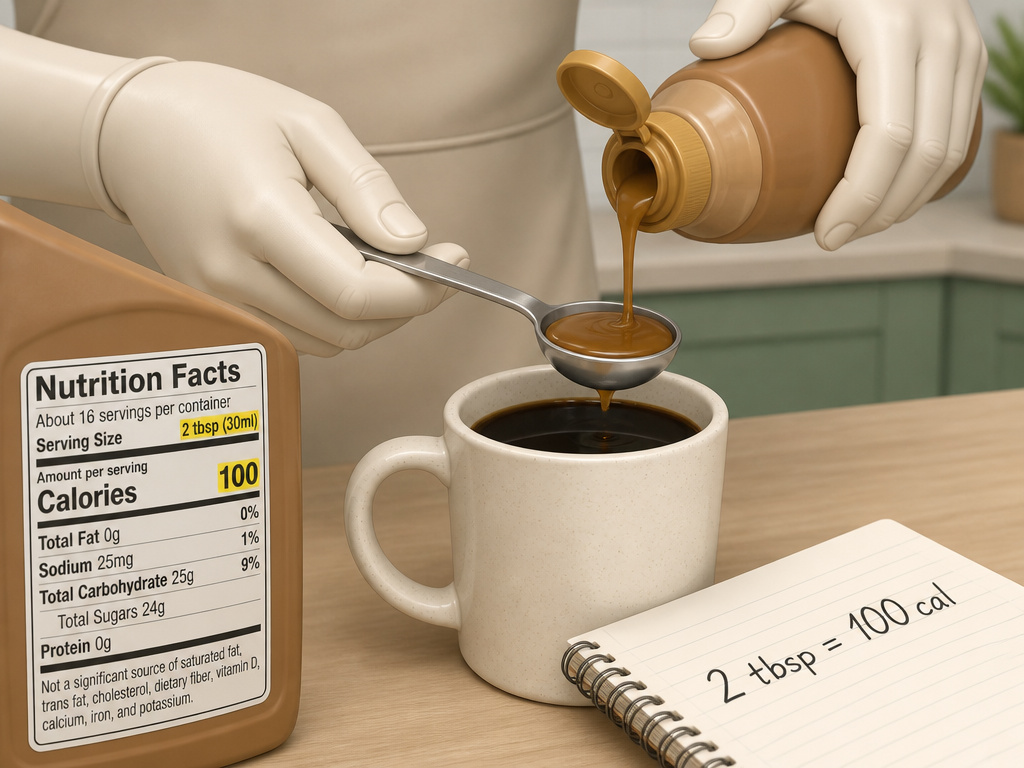 Guesswork leads to underestimates. You think you’re having a 50-calorie coffee, but it’s 150. The fix is measurement and trusted sources.
First, if you’re using packaged products, read the label. The Nutrition Facts panel is law. Look at the serving size. Is it “1 cup (240ml)” or “1 tbsp (15ml)”? This is critical. That bottle of caramel syrup might list 100 calories per serving, but if the serving is 2 tbsp and you pour 4, you’re at 200 calories.
For coffee shop drinks, use the chain’s official online nutrition calculator. Don’t rely on generic calorie-tracking app entries. Go to Starbucks.com or DunkinDonuts.com, find your exact drink, size, and milk choice, and get the number straight from the source. These calculators account for the standard build.
At home, measure your additives. Don’t glug cream from the carton. Pour your almond milk or half-and-half into a measuring spoon. One tablespoon of half-and-half is 20 calories. Two tablespoons are 40. That visual is powerful. The same goes for sweetening coffee with brown sugar or honey. A level teaspoon is about 15 calories.
Keep a simple list in your head: * Black Coffee / Espresso: <5 cal * 1 Tbsp Half-and-Half: 20 cal * 1 Tbsp Flavored Creamer: 35 cal * 1 Pump (1/4 oz) Standard Syrup: 25 cal * 1 Tsp Sugar: 15 cal
If you start with black coffee and add one tablespoon of creamer and one teaspoon of sugar, you’re at about 50 calories. That’s honest tracking. If you buy a pre-made bottled Frappuccino or a can of Monster energy drink, you’re looking at 200-300 calories of a pre-sweetened beverage. That’s a snack, not a zero-calorie caffeine hit.
TL;DR: Use official nutrition calculators for chain drinks. At home, measure cream and sugar with spoons. Most people double their estimated intake because they don’t account for volume.
Frequently Asked Questions
Does hazelnut flavored coffee have calories?
Brewed black from flavored beans, hazelnut coffee has fewer than 5 calories per cup, rounded to 0 on labels. The calories come from what you add. One tablespoon of hazelnut-flavored creamer adds 35-40 calories. A medium hazelnut latte from a cafe can have 250+ calories from syrup and milk.
Do flavored K-Cups have calories?
Most standard flavored K-Cup pods, like Green Mountain French Vanilla, contain just coffee and artificial flavorings. Brewed black, they are considered 0 calories. However, some “cafe style” or “latte” K-Cups include powdered milk and sugar. These can have 60-100 calories per pod. Always check the side panel of the K-Cup box.
Can flavored coffee make you gain weight?
The coffee itself won’t. The syrups, sweeteners, and creamers you add to it absolutely can. Regularly drinking a 250-400 calorie coffee beverage is like adding an extra slice of cake or a candy bar to your daily diet. This consistent caloric surplus leads to weight gain over time.
Is flavored coffee bad for diabetics?
It can be problematic. Sugar-free flavored options are better for blood sugar control, but the caffeine in coffee can still affect insulin sensitivity for some individuals. The safest approach is to choose black coffee flavored with spices like cinnamon or a dash of sugar-free syrup, and to monitor your blood glucose response.
What is the lowest calorie way to flavor coffee?
Use whole spices. Add a cinnamon stick, a few cardamom pods, or a piece of orange peel to your grounds before brewing. Alternatively, add a drop of pure vanilla or almond extract to your brewed cup. These methods add intense flavor for 1-5 calories at most.
The Bottom Line
Flavored coffee beans, by themselves, are virtually calorie-free. The danger, and the calories, live in the bottles and pumps behind the counter. A Grande flavored latte isn’t a coffee drink; it’s a dessert that happens to contain espresso.
You have all the tools now. You know a pump of syrup is 25 calories, a switch to almond milk saves 100, and “sugar-free” doesn’t mean “chemical-free.” The goal isn’t to live on bitter black coffee. It’s to make conscious choices. Order the small with one less pump. Try the cinnamon stick. Measure your cream.
Your daily ritual shouldn’t secretly derail your health goals. With the specifics from the USDA and the coffee chains themselves, you can navigate the menu, decode the labels, and keep your coffee flavorful, satisfying, and under control.
