
How Does Coffee Wake You Up? Blocking Adenosine Explained
Coffee wakes you up by blocking adenosine, a neuromodulator that accumulates in your brain to signal sleepiness. Caffeine molecules fit into the same neural receptors as adenosine, preventing the sleep signal and prompting a secondary adrenaline release. Its half-life is about 6 hours, meaning a 3pm cup still has half its caffeine active in your system at 9pm.
Most people get the basic idea right but miss the timing. They blame the 3am stare at the ceiling on stress, not the latte they finished at 4pm. The real mechanism isn’t just a generic stimulant, it’s a precise chemical lock-pick with a long tail.
This guide breaks down the adenosine block, why genetics change everything, and how to use coffee as a tool instead of a crutch.
Key Takeaways
- Caffeine doesn’t add energy; it blocks adenosine receptors, hiding your brain’s natural fatigue signals for 4-6 hours.
- The 6-hour half-life rule means coffee consumed 6 hours before bed still has 50% of its caffeine active, significantly disrupting sleep quality.
- Genetic differences in the CYP1A2 enzyme mean a standard cup can make one person alert for two hours and another jittery for six.
- For consistent alertness, limit daily intake to under 300mg and establish a caffeine cutoff time at least 6 hours before bedtime.
- Coffee is a recognized performance-enhancing drug (PED), with the NCAA setting a urinary caffeine limit of roughly 500mg.
How Caffeine Tricks Your Brain (It’s Not Adding Energy)
Your brain runs on a chemical called adenosine triphosphate (ATP). As neurons fire all day, they break down ATP and release adenosine as a byproduct. This adenosine binds to specialized A1 and A2A receptors. Think of it like a key sliding into a lock. When enough adenosine locks are filled, neural activity in your basal forebrain slows down. That slowing is the physical feeling of drowsiness.
Caffeine is an adenosine receptor antagonist. Its molecular structure is similar enough to adenosine that it binds to the same neural receptors, but it doesn’t activate them. This competitive blockade prevents adenosine from delivering its sleep signal, leading to increased neuronal firing and perceived alertness.
Caffeine is a lock-pick, not a new key. It occupies the receptor so the real key can’t fit. Your brain cells, now free from adenosine’s dampening effect, start firing more. Your hypothalamus interprets this sudden neural activity as a sign of emergency or stress. It doesn’t distinguish between a chemical trick and a real threat.
This triggers your fight-or-flight response: your pituitary gland signals your adrenal medulla to release epinephrine (adrenaline). Your heart rate increases, your pupils dilate, and your liver dumps sugar into your bloodstream for quick energy. You feel awake because your body is literally preparing for battle.
TL;DR: Caffeine creates wakefulness by impersonating adenosine and blocking it from your brain’s sleep receptors, which then triggers a secondary adrenaline response.
The 6-Hour Half-Life and Why Afternoon Coffee Ruins Sleep
Half-life is the time it takes for your body to eliminate half of a substance. For caffeine in a healthy adult, that’s about six hours. This is not a guess; it’s the pharmacokinetic average established in reviews like the one by Fredholm et al. (1999).
The math is simple but brutal. If you drink a 200mg cup of coffee at 3pm, you still have about 100mg of caffeine in your system at 9pm. By 3am, you’re down to 50mg. Your brain is still struggling to bind enough adenosine to initiate proper sleep cycles, even if you feel like you’re asleep.
Common mistake: Having a “pick-me-up” coffee after 2pm, even a small one delays sleep onset and reduces deep sleep (slow-wave sleep) that night, creating a cycle of fatigue the next morning.
This is why sleep experts like those in the 2013 Sleep journal study recommend a caffeine cutoff time. The data showed caffeine consumption within six hours of bedtime significantly disrupted sleep, even if participants reported no trouble falling asleep. The sleep you get is shallower and less restorative.
| Time of Last Coffee | Caffeine Remaining at Bedtime (10pm) | Likely Sleep Impact |
|---|---|---|
| 4:00 PM (200mg cup) | ~100mg | Noticeably delayed sleep onset, reduced deep sleep. |
| 2:00 PM (200mg cup) | ~50mg | Possible sleep fragmentation, less restorative rest. |
| 10:00 AM (200mg cup) | ~25mg | Minimal impact for most average metabolizers. |
The takeaway isn’t to never drink afternoon coffee. It’s to know that the alertness you buy at 3pm is a loan against your sleep at 11pm. You will pay it back with interest.
The Genetic Wild Card: Why Your Friend Can Sleep After Espresso
The standard half-life and dose recommendations assume you have an average metabolism. Your genetics determine if that’s true. The primary enzyme responsible for breaking down caffeine in your liver is called CYP1A2.
Variations in the gene that codes for this enzyme create two broad profiles:
* Fast Metabolizers: They process caffeine quickly. A cup of coffee gives them a sharp, short boost. They can often drink coffee later in the day without major sleep issues. They may also get less long-term cardiovascular benefit (or risk) from coffee.
* Slow Metabolizers: They process caffeine slowly. The effects are more pronounced and last much longer. A morning coffee can affect them well into the afternoon. They are far more susceptible to caffeine-induced anxiety, jitters, and sleep disruption.
You can’t change your genes, but you can observe your body. If a single cup makes you feel wired for six hours or gives you cold hands (from adrenaline-induced vasoconstriction), you’re likely on the slower side. Your caffeine cutoff time needs to be earlier, maybe 8 or 10 hours before bed, not 6.
Beyond Alertness: The Full Body Response
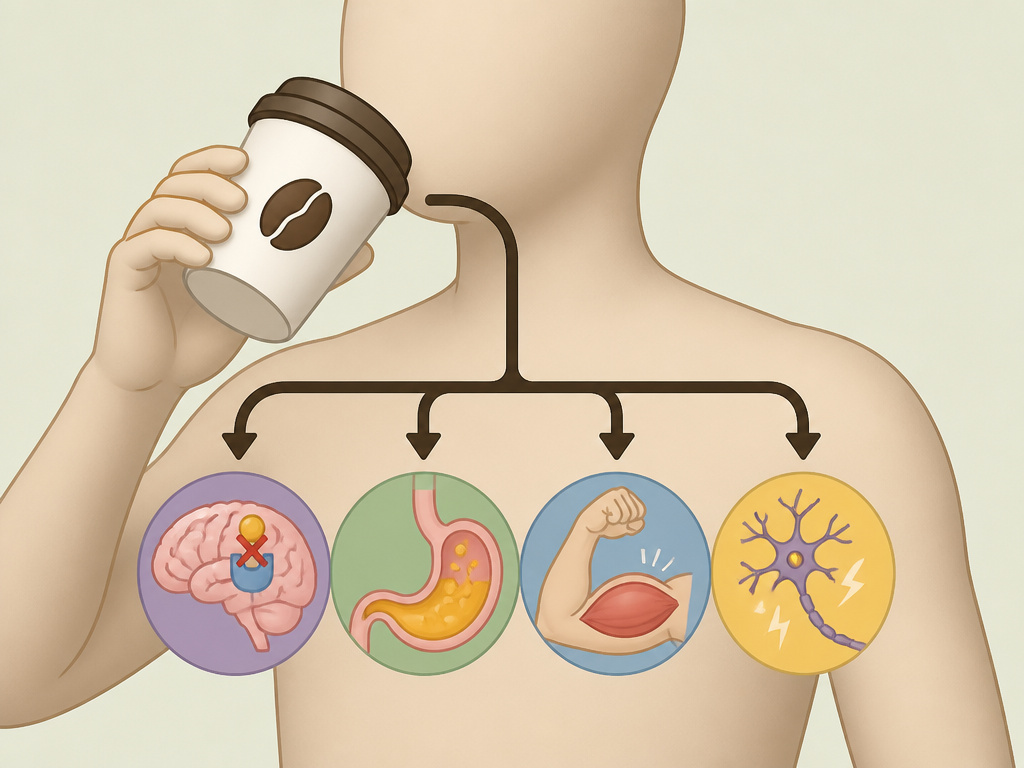
The adenosine block in your brain is the main event, but coffee triggers a cascade of other effects. Understanding these explains the common side effects and a few benefits.
The Gut Reaction. Coffee stimulates the release of the hormone gastrin, which increases stomach acid production. This is why coffee can trigger acid reflux or the urge for a bowel movement, it’s literally priming your digestive system. This effect occurs with both caffeinated and decaf coffee, pointing to other compounds in the brew as the cause.
The Performance Enhancer. Caffeine is a well-established ergogenic aid. It mobilizes fatty acids for fuel, spares muscle glycogen, and lowers the perceived rate of exertion. Studies show doses of 3-6 mg per kilogram of body weight (about 200-400mg for a 70kg person) taken 60 minutes before exercise improve endurance and strength output. The effect is so reliable that the NCAA sets a urinary caffeine limit for athletes, roughly equivalent to 500mg consumed in a short period.
The Anxiety Trigger. That same adrenaline surge that wakes you up can tip into jitters and anxiety, especially at higher doses or in slow metabolizers. Research indicates that overdoing caffeine can increase baseline anxiety and even the likelihood of panic attacks in susceptible individuals.
The Dehydration Myth (Mostly). Coffee is a mild diuretic, but the fluid in a cup of coffee typically outweighs the fluid loss it causes. You won’t become dehydrated from a few cups. However, if you’re drinking very concentrated shots of espresso without additional water, the net fluid balance can tip negative.
How to Use Coffee Intentionally, Not Reactively

Treating coffee as a precision tool requires a plan. Here’s how to build one.
- Find Your Effective Dose. Start with 100mg of caffeine (about one standard 8oz cup of brewed coffee). Note how you feel in 30-60 minutes. The goal is alertness without jitters. Going straight for a 300mg triple-shot is a recipe for anxiety and a crash. The optimal dose for alertness for most people, as shown in research, falls between 100-200mg.
- Set a Hard Cutoff Time. Calculate backwards from your bedtime. For an 11pm bedtime, your last caffeine should be at 5pm at the absolute latest. If you’re a slow metabolizer or notice sleep issues, move that to 1pm. This single habit does more for sleep quality than any other change.
- Cycle to Avoid Tolerance. Drinking the same amount of caffeine every day leads to tolerance, your brain creates more adenosine receptors. The same cup has less effect. Taking even a single day off per week (or a few lower-caffeine days) helps reset your sensitivity. The headache you might get is from those extra receptors suddenly being flooded with adenosine again.
- Map It Against Other Sources. Coffee isn’t your only caffeine source. A shot of espresso has about 64mg, a black tea about 47mg, and a can of cola about 34mg. An energy drink can pack 160mg or more. Your daily total is what matters for sleep and side effects.
| Factor | What to Do | What Happens If You Don’t |
|---|---|---|
| Timing | Stop caffeine at least 6 hours before bed. | Adenosine blockade continues, fragmenting sleep and increasing next-day fatigue. |
| Dose | Cap daily intake at 300-400mg for most adults. | Exceeding 500mg daily increases risks of anxiety, insomnia, digestive upset, and tolerance. |
| Source | Account for caffeine from tea, soda, and chocolate. | Unwittingly double your intake, leading to overstimulation and harder crashes. |
| Hydration | Drink a glass of water with your coffee. | With only espresso shots, the diuretic effect can lead to mild dehydration and headaches. |
Frequently Asked Questions
Does decaf coffee wake you up?
True decaf coffee still contains 2-15mg of caffeine per cup, which is negligible for most people. However, decaf can still trigger gastrin release and a bowel movement due to other compounds. It won’t provide the central nervous system stimulation of regular coffee.
Why does coffee sometimes make me tired?
This is often a sign of dehydration, a sugar crash if you’ve added sweeteners, or severe sleep debt. Caffeine blocks adenosine, but if you’re profoundly sleep-deprived, other sleep-promoting chemicals overwhelm the block. It can also indicate the onset of caffeine tolerance.
How long does it take for coffee to kick in?
Caffeine is absorbed quickly, reaching peak blood levels within 30 to 60 minutes of consumption. You’ll typically start feeling more alert within 15-20 minutes.
Can you build a tolerance to caffeine?
Absolutely. Chronic consumption causes your brain to upregulate (create more) adenosine receptors. You need more caffeine to block the same percentage of receptors, diminishing the wake-up effect. This is also why withdrawal causes headaches, all those extra receptors are suddenly open for business with adenosine.
Is coffee a diuretic?
Yes, but a mild one. The water content in a cup of coffee generally offsets the fluid loss it causes for moderate consumers. It becomes a net dehydrator only at very high intakes (e.g., several strong cups in a row without other fluids).
Before You Go
Coffee wakes you up through a specific, measurable chemical intervention, not magic. The adenosine blockade has a cost, paid in hours of half-life and potential sleep disruption. Your genetics write your personal rulebook for dose and timing.
Use the six-hour rule as your baseline. Listen to your body’s signals for jitters or prolonged alertness to clue into your metabolism. Remember that the goal is sustained alertness, not a series of frantic peaks and crushing troughs. When you understand the mechanism, you stop fighting your chemistry and start working with it. That’s when a cup of coffee becomes a reliable tool, not a daily gamble.
