
Does Coffee Make You Bloated? The Causes and Your Fixes
Coffee can make you bloated, but usually not because of the coffee itself. The primary triggers are the additives you put in it, dairy, sugar, artificial sweeteners, and the timing of when you drink it. For a minority, the caffeine and specific acids in the brew directly stimulate stomach acid and colon activity, which can lead to gas and discomfort if your system is sensitive.
Most people blame the coffee. They switch to decaf or cut their intake and still feel bloated. That’s because they missed the real culprit sitting in their mug.
This guide walks through the mechanics, the specific compounds, the genetic quirks, and the common additives, so you can pinpoint your trigger and adjust your routine without giving up your morning cup.
Key Takeaways
- Bloating from coffee is often caused by what you add to it, not the brew itself. Dairy, sugar, and artificial sweeteners like sorbitol are frequent offenders.
- Caffeine and chlorogenic acids in coffee stimulate stomach acid and colon movement. For some, this rapid transit leads to gas and bloating.
- Your genetics matter. If you’re a “slow metabolizer” of caffeine (CYP1A2 enzyme variant), the stimulant effects linger longer, prolonging any gut disturbance.
- Drinking black coffee on an empty stomach maximizes acid irritation. A small bite of food first acts as a buffer.
- Switching to a dark roast or a marketed low-acid coffee reduces the chlorogenic acid load, which can ease stomach sensitivity.
The Science Behind Coffee and Bloating
Coffee doesn’t just wake you up. It wakes up your digestive system, too. A 2021 systematic review in the Journal of Human Nutrition and Dietetics found that caffeine significantly increases the colonic motility index within 30 minutes of ingestion. That’s the measure of how quickly things move through your colon.
Caffeine consumption significantly increased colonic motility index within 30 minutes of ingestion. This rapid transit can, in some individuals, lead to increased gas production from fermentation or simply a sensation of cramping and bloating.
For most people, faster movement is a good thing, it can prevent constipation. But if your system is sensitive, or if you have a condition like Irritable Bowel Syndrome (IBS), that sudden acceleration can feel like a cramp. Gas gets trapped. The sensation is bloating.
The other direct hit comes from your stomach. Coffee stimulates the release of gastrin, a hormone that tells your stomach to produce more acid. A 2020 review in Nutrients details how compounds like chlorogenic acids and N-alkanoyl-5-hydroxytryptamides are particularly potent here. More acid helps break down food. On an empty stomach, with no food to buffer it, that acid can irritate the lining. For some, that irritation manifests as a bloated, tight feeling.
The National Institute of Diabetes and Digestive and Kidney Diseases (NIDDK) lists caffeine as a common trigger for IBS symptoms, which include bloating. It’s a recognized link.
TL;DR: Caffeine speeds up your colon, and coffee acids boost stomach acid. Both can cause bloating in sensitive individuals, especially if consumed alone.
What Your Genetics Have to Say
Not everyone reacts the same way. Your genes play a role, specifically how quickly you process caffeine.
The enzyme that metabolizes caffeine is called cytochrome P450 1A2 (CYP1A2). Some people have a variant that makes this enzyme slow. They are “slow metabolizers.” For them, caffeine hangs around in the bloodstream longer. The colonic stimulation and acid production don’t shut off as quickly.
If you’re a slow metabolizer, even one cup can cause prolonged discomfort. You might feel bloated for hours, not just the first thirty minutes. There’s no easy home test for this, but if you notice that decaf doesn’t solve your problem and you’re sensitive to even small amounts of caffeine in other foods, this could be the reason.
Fast metabolizers clear caffeine quickly. They might get the initial gut jump but feel fine an hour later. This genetic split explains why blanket advice like “cut caffeine” works for some and fails for others.
| Metabolizer Type | Caffeine Clearance | Typical Bloating Experience |
|---|---|---|
| Slow (CYP1A2 variant) | Takes 6–8 hours | Prolonged discomfort, may last hours after drinking |
| Fast (Standard CYP1A2) | Takes 3–4 hours | Short-lived, often resolves within an hour |
TL;DR: If caffeine seems to bother you longer than others, you might be a slow metabolizer. Genetics can turn a minor irritation into a major one.
The Additives That Double Your Bloating Risk
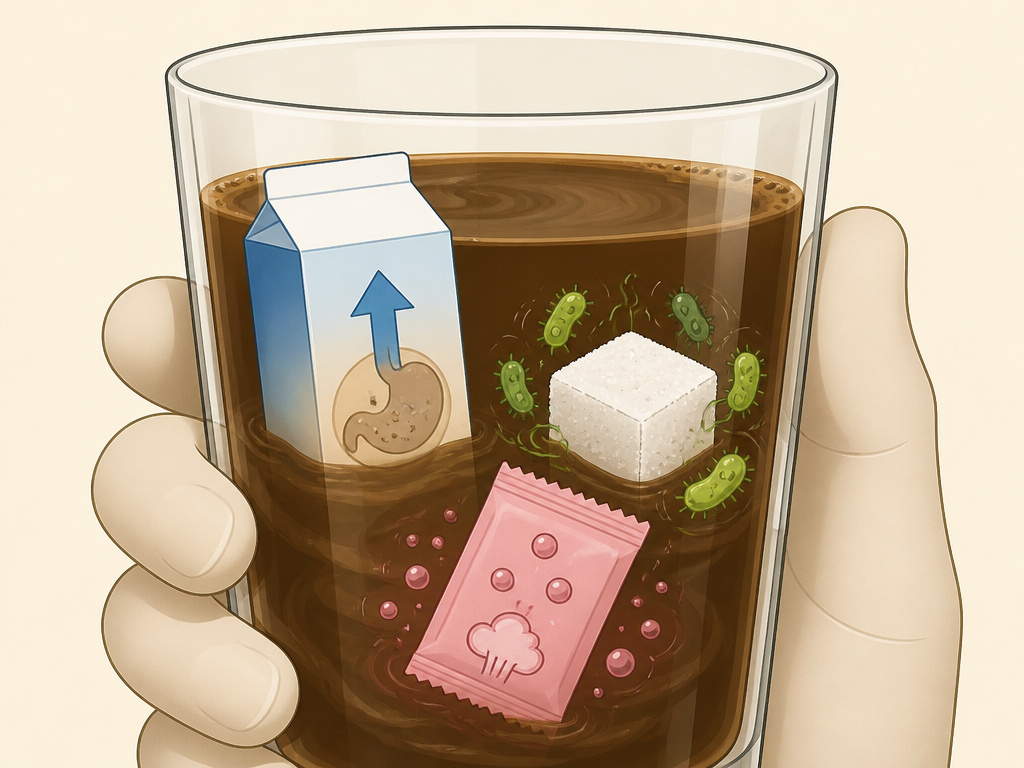
Here’s where most people get tripped up. They blame the coffee bean when the problem is in the creamer.
Dairy is the biggest offender. Lactose intolerance is common. Even if you’re not fully intolerant, the fat and protein in milk or cream can slow digestion, creating a backlog that feels bloated. Switching to a non-dairy creamer like almond milk can remove this variable entirely.
Sugar is next. Simple sugars feed the bacteria in your gut. If you have any bacterial imbalance, a sugar rush can cause a fermentation party, and gas is the byproduct.
The sneaky one is artificial sweeteners. Sorbitol and xylitol, common in “zero-calorie” syrups and powders, are fermentable carbohydrates (FODMAPs). The Nutrients review explicitly notes they can cause bloating and gas in susceptible individuals. Your gut bacteria ferment them, producing gas. You might think you’re making a healthy swap, but you’re inviting more trouble.
Common mistake: Switching to a “skinny” latte with artificial sweeteners to avoid sugar, the sorbitol or xylitol acts as a FODMAP and can produce more gas than the sugar would have.
If you’re experimenting with additives for health or energy, know the trade-offs. Bulletproof coffee with MCT oil or coconut oil adds healthy fats that can slow digestion slightly, but they don’t ferment like sugars. A pinch of salt can reduce bitterness without triggering bloating. Cinnamon is a digestive spice that may actually help.
TL;DR: Milk, sugar, and artificial sweeteners are more likely to cause your bloating than the coffee. Change your additives first.
Low-Acid Coffee. Does It Help?
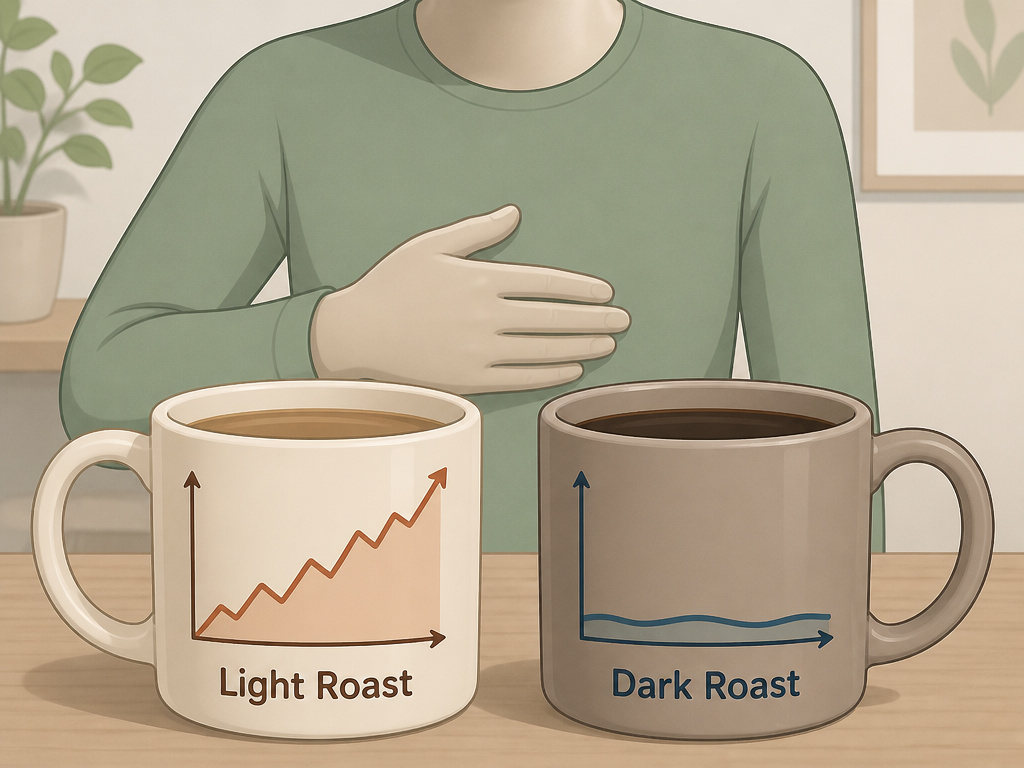
“Low-acid” coffee is marketed as a solution for sensitive stomachs. The science backs it up, partially.
The acidity in coffee isn’t just pH. It’s driven by organic acids like chlorogenic acid. Dark roasts have less of these acids because the longer, hotter roasting process breaks them down. A PMC coffee storage study also showed that storage conditions, oxygen exposure, temperature, can further degrade these acids over time, making older beans less acidic.
Switching to a dark roast or a brand that uses a low-acid process (like steam washing or specific bean selection) can reduce the chlorogenic acid load. That means less gastrin stimulation, less acid production. For someone whose bloating is directly tied to stomach acid irritation, this can be a real fix.
But if your bloating is from lactose, sugar, or a caffeine sensitivity, low-acid coffee won’t change anything. It’s a targeted solution.
| Coffee Type | Chlorogenic Acid Level | Best For |
|---|---|---|
| Light Roast | High | Those who want bright, fruity flavors and don’t have gut sensitivity |
| Dark Roast | Low | Individuals with acid reflux or stomach irritation from coffee |
| Low-Acid Processed | Very Low | People with diagnosed sensitivity to coffee acids |
TL;DR: Low-acid coffee reduces the compounds that stimulate stomach acid. It helps if acid is your trigger, but not if your bloating comes from additives or caffeine.
How to Drink Coffee Without the Bloat

You don’t need to quit. You need to adjust.
- Isolate the variable. Drink black coffee for three days. If you don’t get bloated, the coffee itself isn’t the problem. If you do, note the timing, is it immediate or delayed?
- Swap your milk. If black coffee is fine, reintroduce your usual milk. If bloating returns, switch to a lactose-free dairy or a low-FODMAP milk substitute like almond milk. Skip oat milk for this test, it’s high in FODMAPs.
- Change your sweetener. If you use sugar, try halving the amount. If you use an artificial sweetener, cut it out completely for a week. Use a pinch of salt trick to mitigate bitterness instead.
- Adjust your timing. Never drink your first cup on a completely empty stomach. Have a small bite, a piece of toast, a banana, 30 minutes before. This gives your stomach something to buffer the acid surge.
- Consider the roast. If black coffee alone causes issues, switch to a dark roast or a marketed low-acid brand. Look for terms like “stomach-friendly” or “low-acid” on the bag.
- Listen to your genes. If you’ve done all this and still feel bloated, you might be a slow caffeine metabolizer. The only solution here is to reduce caffeine intake or switch to decaf.
I used to blame my morning espresso for my midday discomfort. Cutting it out didn’t work. Turns out, the splash of half-and-half I’d been adding for years was the culprit. Switching to black for a week pinpointed it. Now I use a splash of almond milk, and the bloating vanished.
The process isn’t about elimination. It’s about substitution and observation.
Frequently Asked Questions
Can decaf coffee cause bloating?
Yes, but less likely. Decaf still contains trace caffeine (about 2-5% of original) and the same chlorogenic acids that stimulate stomach acid. If your bloating is from acid irritation, decaf might still cause it. If it’s from caffeine, decaf should help.
Does coffee bloating go away on its own?
Usually. If the bloating is from rapid colon motility, it typically subsides within an hour as the caffeine is metabolized. If it’s from additives like dairy, it may last longer as digestion completes. Chronic bloating after every cup suggests a deeper issue like IBS or lactose intolerance.
Is cold brew less bloating?
Often, yes. The cold brewing process extracts fewer chlorogenic acids and other irritants. Cold brew is naturally lower in acidity. Many people with sensitive stomachs find it gentler.
How much coffee is too much for bloating?
There’s no universal limit. One cup might trigger a slow metabolizer. Three cups might be fine for a fast metabolizer. The additive threshold is clearer: more than 1-2 tablespoons of dairy or a full packet of sugar per cup increases risk significantly.
Can I take something to prevent coffee bloating?
Over-the-counter acid reducers (like H2 blockers) can buffer stomach acid if that’s your trigger. Digestive enzymes (for lactose) can help if dairy is the issue. But the better path is to identify and remove the trigger.
Before You Go
Bloating from coffee is usually a fixable problem. The coffee itself is often innocent.
Start with your additives. Dairy, sugar, and artificial sweeteners are the usual suspects. Change one at a time and see what happens.
If black coffee still bothers you, look at the roast. Darker is milder. Then look at your timing, never drink it on an empty stomach.
For a few, it’s genetics. If caffeine sensitivity runs in your family, you might just be a slow metabolizer. In that case, reducing caffeine or switching to decaf is the only real answer.
Your morning ritual doesn’t have to end. It just needs a tweak.
