
Does Coffee Help with Constipation? Effects & How It Works
Coffee can help with constipation by stimulating colonic motor activity, an effect documented in studies using both caffeinated and decaffeinated coffee. The stimulatory response begins within 4 minutes of drinking a hot cup and lasts at least 30 minutes. For adults under 60, population data suggests a daily caffeine intake of up to 204 milligrams, about two standard cups, correlates with an 18% lower risk of constipation.
Most people get this wrong because they focus only on caffeine. They drink cup after cup, ignoring the dehydrating diuretic effect that can lock things up. Or they add milk and sugar, which changes the chemical trigger. The real mechanism isn’t just one compound.
This guide breaks down the peer-reviewed science on coffee and colon motility. You’ll see the exact dose that works, why decaf still triggers a response, and the one demographic where the coffee trick stops working entirely.
Key Takeaways
- The colon-stimulating effect is not solely from caffeine. A 2018 study in Neurogastroenterology & Motility found decaffeinated coffee also significantly increased colonic motility, just with a slightly weaker effect than regular.
- There is a sweet spot. Research analyzing National Health and Nutrition Examination Survey data shows a U-shaped relationship: up to 204 mg of caffeine daily is beneficial, but exceeding that reverses the benefit for adults under 60.
- Timing and preparation matter. The effect is strongest with hot, black coffee consumed in the morning, leveraging the body’s natural gastrocolic reflex. Adding dairy or excessive sugar can blunt the response.
- Individual physiology dictates results. The same study noted the effect “may vary among individuals, depending on their baseline gut motility and sensitivity to coffee components.” Coffee is not a universal laxative.
- The mechanism is physical. Manometric catheter readings show coffee increases the amplitude and duration of contractions in the distal colon, physically moving contents along.
How Coffee Stimulates Your Colon (The Science)
Forget the old wives’ tales. We have catheter data. In a 2018 study by Rao and Sadeghpour, researchers inserted a solid-state manometric catheter with eight sensors into the colons of healthy volunteers. They then measured the Motility Index, the sum of contraction amplitude and duration, after subjects drank hot water, decaf coffee, or regular coffee.
The regular coffee contained 95 mg of caffeine per 180 mL serving. The decaf contained 5 mg. Hot water did almost nothing.
Both caffeinated and decaffeinated coffee stimulated colonic motor activity within 4 minutes of ingestion. The Motility Index for caffeinated coffee was 60% higher than for hot water. Decaffeinated coffee’s index was 23% higher than water. The effect lasted for at least 30 minutes.
This tells us the trigger is more than caffeine. Chlorogenic acids and other bioactive compounds in coffee likely stimulate the release of gastrin and cholecystokinin, hormones that trigger colonic contractions. It’s a chemical message, not just a caffeine jolt to smooth muscle.
The 1990 study by Brown et al. in Gut confirmed it. They recorded increased rectosigmoid motor activity within 4 minutes of drinking coffee. The body treats a hot cup of black coffee as a signal to prepare the lower digestive tract for evacuation.
TL;DR: Coffee, both regular and decaf, triggers a measurable hormonal and muscular response in the colon that begins within minutes, physically pushing contents forward.
The Right Dose and The Wrong Dose
More coffee is not better. This is where people create their own problem. A large cross-sectional study published in the Journal of Multidisciplinary Healthcare tracked the habits of 12,759 people. It found a perfect U-shaped curve between caffeine intake and constipation risk for adults under 60.
The bottom of that U, the optimal point, was 204 milligrams of caffeine per day.
Consuming up to that amount was associated with an 18% lower risk of constipation. Going significantly above it erased the benefit and increased risk. Think of it as a bell curve for your bowels. The relationship vanished entirely for people over 60, suggesting age-related changes in gut physiology override coffee’s stimulatory effect.
| Daily Caffeine from Coffee | Effect on Constipation Risk (Adults <60) | Practical Equivalent |
|---|---|---|
| 0–100 mg | Mild reduction | ~1 standard cup |
| ~204 mg | Maximum benefit (18% lower risk) | ~2 standard cups |
| 300+ mg | Benefit disappears, risk increases | ~3+ standard cups |
A “standard cup” here is the research benchmark: 10 grams of coffee grounds brewed with 180 mL of hot water, yielding about 95 mg of caffeine. That’s a typical mug of black drip coffee.
Common mistake: Chasing constipation relief with a fourth or fifth cup of coffee, the diuretic effect of that much caffeine pulls water from the colon into the kidneys, dehydrating stool and making it harder to pass within 6-8 hours.
The diuretic action is mild but cumulative. For relief, you want the colonic stimulant, not the dehydrator. Stick to one or two cups in the morning, drunk black. Space out any additional fluids later in the day.
Decaf vs. Regular: Does It Matter?
Yes, but not in the way you think. The Rao and Sadeghpour study gave us hard numbers. Decaffeinated coffee (5 mg caffeine) still increased the colonic Motility Index by 23% over water. Caffeinated coffee (95 mg caffeine) increased it by 60%.
Decaf works. Regular works better.
This is critical for two groups: people sensitive to caffeine’s jittery or anxious effects, and those who enjoy coffee in the afternoon or evening. A cup of decaf can provide a gentler nudge to the system without the central nervous system stimulation.
The trade-off is intensity. If you’re relying on coffee for a pronounced laxative effect, regular is the stronger tool. The combination of caffeine plus the other bioactive compounds creates a more robust contractile response.
If you’re experimenting, start with decaf. The digestive effects of coffee are complex, and a milder trigger lets you gauge your personal sensitivity without the side effects. Many find that the ritual and heat of the drink alone, mediated by those other compounds, is sufficient.
Why Your Coffee Ritual Changes Everything
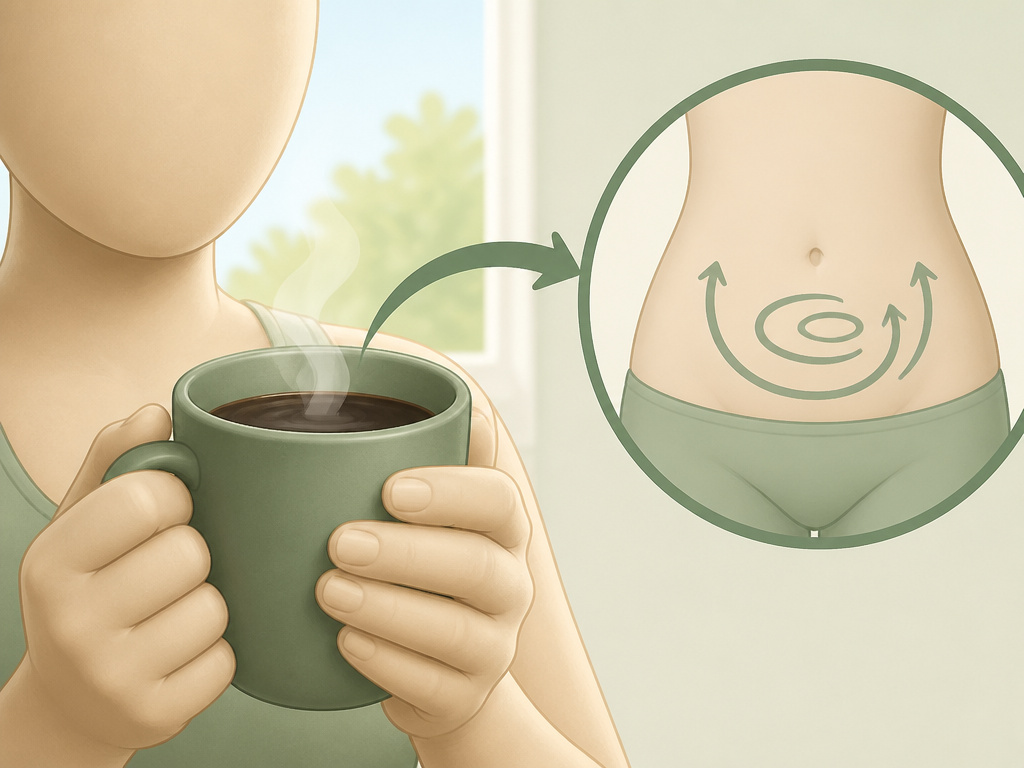
The details you skip determine if this works. Drinking cold brew straight from the fridge at noon while scrolling through emails will not produce the same effect as a hot black cup first thing in the morning.
Heat accelerates the process. It relaxes the stomach and upper GI tract, allowing the coffee’s compounds to be absorbed and trigger hormone release faster. The morning timing capitalizes on the gastrocolic reflex, your colon’s natural tendency to be most active after waking and after eating.
What you add to the cup matters more than the brew method.
- Skip the dairy. Casein protein in milk and cream can slow gastric emptying for some people. It adds a fat layer that may delay the absorption of the active compounds. If you need a creamer, opt for a small amount of almond milk coffee or other plant-based milk.
- Go easy on sweeteners. A spoonful of brown sugar sweetener is fine, but a syrup-laden concoction changes the osmotic balance in your gut. High sugar concentrations can initially draw water into the intestine, then lead to a rebound effect.
- Consider functional add-ins. Some people add coconut oil in coffee or MCT oil coffee for sustained energy. These fats are metabolized differently than dairy and, for some, can have a mild lubricating effect. Start with a teaspoon to see how your system responds.
The ritual is a signal. A hot, black cup in a quiet morning moment tells your nervous system it’s time to shift into “rest and digest” mode. That psychological component primes the physical response.
When Coffee Makes Constipation Worse

Coffee is not a harmless cure-all. For a significant minority, it exacerbates the problem. The PMC article on caffeine intake association from NHANES data highlights that individual variability is the rule, not the exception.
The primary risk is dehydration. Caffeine is a mild diuretic. For someone already marginally dehydrated or who doesn’t drink enough water alongside their coffee, the net effect is water loss. The colon reclaims more water from stool, making it harder and drier.
Common mistake: Using coffee as your primary fluid source for the day, by mid-afternoon, the cumulative diuretic effect can leave you with harder, more impacted stool, especially in dry climates or during exercise.
Another risk is dependency. Your colon can become accustomed to the chemical stimulation. If you use coffee daily to provoke a bowel movement, you may find it difficult to go without it. This isn’t a true “laxative dependency” like with stimulant laxatives, but it’s a patterned habit that’s hard to break.
Finally, consider other coffee safety concerns. For individuals with certain conditions like irritable bowel syndrome (IBS), the acidity and compounds in coffee can trigger spasms and pain, not productive motility. If coffee gives you cramps or urgent diarrhea, it’s irritating your system, not helping it.
Frequently Asked Questions
How long after drinking coffee will I need to go to the bathroom?
The colonic motor response can start as soon as 4 minutes after drinking a hot cup, based on manometric studies. For most people, the urge hits within 20 to 45 minutes. This leverages the morning gastrocolic reflex.
Is decaf coffee a good laxative?
Yes, decaffeinated coffee has a proven laxative effect, though it’s about 40% weaker than regular coffee’s effect in clinical measurements. It’s a viable option for those sensitive to caffeine or drinking coffee later in the day.
Can coffee cause constipation instead of helping it?
Absolutely. The diuretic effect of caffeine can lead to dehydration, which is a primary cause of constipation. Excessive intake, typically over 300-400 mg of caffeine daily, increases this risk. Individual sensitivity, as noted in the Scientific Reports coffee concentration study, also plays a major role.
How much coffee should I drink for constipation?
The population data suggests up to 204 mg of caffeine from coffee daily is optimal for reducing constipation risk. This equals about two standard cups (10g coffee per 180mL water). Start with one cup of black coffee in the morning and assess your response.
Are other caffeinated drinks as effective as coffee?
Probably not. The Springer systematic review on caffeine indicates caffeine itself has an effect, but the unique blend of chlorogenic acids and other compounds in coffee provides a stronger, more reliable stimulant effect on the colon than tea or soda.
Should I be concerned about coffee if I have chronic constipation?
Coffee is a temporary, occasional aid, not a treatment. Chronic constipation requires a holistic look at fiber, water, exercise, and potentially medical advice. Relying on coffee can mask an underlying issue and lead to dehydration.
Before You Go
The science is clear: coffee can be a effective, fast-acting stimulant for your colon, but it operates within strict boundaries. The 204-milligram caffeine sweet spot is a real target, not a guess. Decaf works, but regular works stronger. And the entire effect hinges on drinking it hot and black, preferably in the morning.
Remember the U-shaped curve. One or two cups may help. Four or five will almost certainly hurt. Your individual gut motility decides the final result. Pay attention to how your body responds over a week, not just one morning.
For a deeper look at how coffee interacts with your body, our articles on the cardiovascular effects and safe coffee consumption for specific populations provide essential context. Coffee is a powerful tool. Use it with precision.
