
Does Coffee Cause Hair Loss? The Research May Surprise You
No, drinking coffee in moderation does not directly cause hair loss. The caffeine in coffee may actually support hair follicle health by counteracting hormones that shrink follicles. The real risk to your hair comes from what you add to your coffee, excessive sugar and dairy, and from letting caffeine disrupt your sleep, which elevates stress hormones linked to shedding.
The confusion starts because we lump the drink itself with the unhealthy habits that sometimes surround it. People see a correlation between high caffeine consumption and thinning hair, then blame the bean. They miss the actual mechanisms.
This guide breaks down the biochemistry, reviews the surprising primary research, and shows you where the real hair-related risks hide in your coffee routine.
Key Takeaways
- Caffeine applied topically shows promise for stimulating hair growth and fighting androgenetic alopecia, per multiple studies.
- Drinking black coffee in moderation (3–4 cups daily) is unlikely to harm hair and may offer protective anti-inflammatory benefits.
- The primary hair-loss risks from your coffee habit are high sugar intake driving inflammation and poor sleep from overconsumption elevating cortisol.
- The 2007 British Journal of Dermatology study is a cornerstone, finding caffeine prolonged the hair growth phase and counteracted testosterone’s effects in vitro.
- Managing overall caffeine intake from all sources is more critical for hair health than fearing coffee alone.
The Science of Caffeine and Hair Follicles
You need to separate two concepts: drinking coffee and applying caffeine directly to the scalp. They are different delivery systems with different evidence. Oral consumption affects your whole body, including stress and sleep systems. Topical application targets the follicle locally.
The biochemical pathway for topical caffeine is well-documented. Caffeine acts as a phosphodiesterase (PDE) inhibitor. By blocking PDE, it indirectly raises levels of insulin-like growth factor-1 (IGF-1) around the follicle. IGF-1 is a known promoter of hair growth and follicle health. This is the core mechanism cited in research on caffeine’s impact on scalp biology.
Caffeine stimulates hair shaft elongation, prolongs the anagen (growth) phase, and counteracts the suppressive effects of testosterone on hair follicles in vitro, according to a 2007 study published in the British Journal of Dermatology.
For androgenetic alopecia, pattern hair loss, the enemy is dihydrotestosterone (DHT). DHT binds to follicles in genetically susceptible individuals, slowly miniaturizing them. Some studies suggest caffeine can inhibit the effects of DHT, potentially slowing this process. It doesn’t block DHT production like a pharmaceutical; it may help the follicle resist its shrinking signal.
TL;DR: Topical caffeine works by blocking PDE to boost IGF-1 at the follicle, promoting growth. Drinking coffee delivers caffeine systemically, where its effects on hair are indirect and mediated through sleep and stress.
What the Primary Studies Actually Say
The internet is full of noise. The signal comes from a handful of key papers. The most cited is the 2007 study from the British Journal of Dermatology. Researchers took human hair follicles and treated them with caffeine in a lab. They observed a statistically significant stimulation of hair shaft elongation and a lengthening of the growth phase. In male follicles, caffeine counteracted the growth suppression caused by testosterone.
This is an in vitro study. It doesn’t prove drinking three espressos will give you a fuller head of hair. It provides a plausible biological mechanism for why topical caffeine formulations are being researched. It’s a starting point, not a final answer.
A 2014 review in the Indian Journal of Dermatology summarized the evidence, concluding that topical caffeine is a promising agent for managing androgenetic alopecia due to its ability to penetrate the follicle and exert these stimulating effects. It highlighted the need for more robust clinical trials on humans.
Later research, like a PubMed study on coffee pulp extracts, has explored specific coffee by-products for anti-hair loss effects, often using advanced extraction methods. This reinforces the concept that compounds within coffee have bioactive potential relevant to hair science, even if the delivery method is different from your morning mug.
| Study / Source | Key Finding | Relevance to Hair Loss |
|---|---|---|
| British Journal of Dermatology (2007) | Caffeine stimulated hair growth & counteracted testosterone in lab follicles. | Establishes the core biochemical mechanism for topical use. |
| Indian Journal of Dermatology Review (2014) | Topical caffeine is a promising treatment for pattern hair loss. | Summarizes the therapeutic potential for androgenetic alopecia. |
| PMC Lifestyle Review (2022) | Diet, stress, and sleep are major modifiable factors in hair loss. | Contextualizes coffee consumption within overall lifestyle factors literature review. |
The takeaway isn’t that coffee is a hair growth treatment. It’s that the primary scientific literature does not support the fear that coffee causes hair loss. In fact, it hints at potential benefits from its primary alkaloid, when applied correctly.
The Real Culprits: Sugar, Sleep, and Stress
Coffee itself is rarely the problem. The vehicle is. If your “coffee” is a 500-calorie milkshake of syrup, sugar, and cream, you’re ingesting a pro-inflammatory cocktail daily. Chronic inflammation and insulin spikes from high sugar intake are linked to various health issues, including conditions that can exacerbate hair thinning. This is a dietary problem, not a coffee problem.
The second major vector is sleep disruption. Caffeine has a half-life of about 5-6 hours. Drinking coffee late in the day can significantly impair sleep quality and duration.
Common mistake: Having a large coffee after 2 PM, the residual caffeine disrupts deep sleep cycles, elevating cortisol the next day. Elevated cortisol over time can push more follicles into the shedding (telogen) phase.
Poor sleep elevates cortisol, the body’s primary stress hormone. Chronically high cortisol levels are a known trigger for telogen effluvium, a diffuse shedding of hair. So, while the caffeine in your 4 PM latte isn’t directly attacking your follicles, the sleepless night it causes might be. This is why managing total caffeine consumption while breastfeeding or during periods of high stress is a common piece of advice, it’s about protecting systemic balance.
If you are concerned about hair health, audit your coffee habit, not the coffee.
1. Switch to black or use minimal, unsweetened additives. Eliminate the sugar and cream vector.
2. Set a hard caffeine curfew. For most people, this means no caffeine after 2 PM.
3. Monitor total intake. Four cups of black coffee is different from four Monster Energy caffeine content drinks plus coffee. Know your total daily load.
How Much Coffee Is Safe for Hair Health?
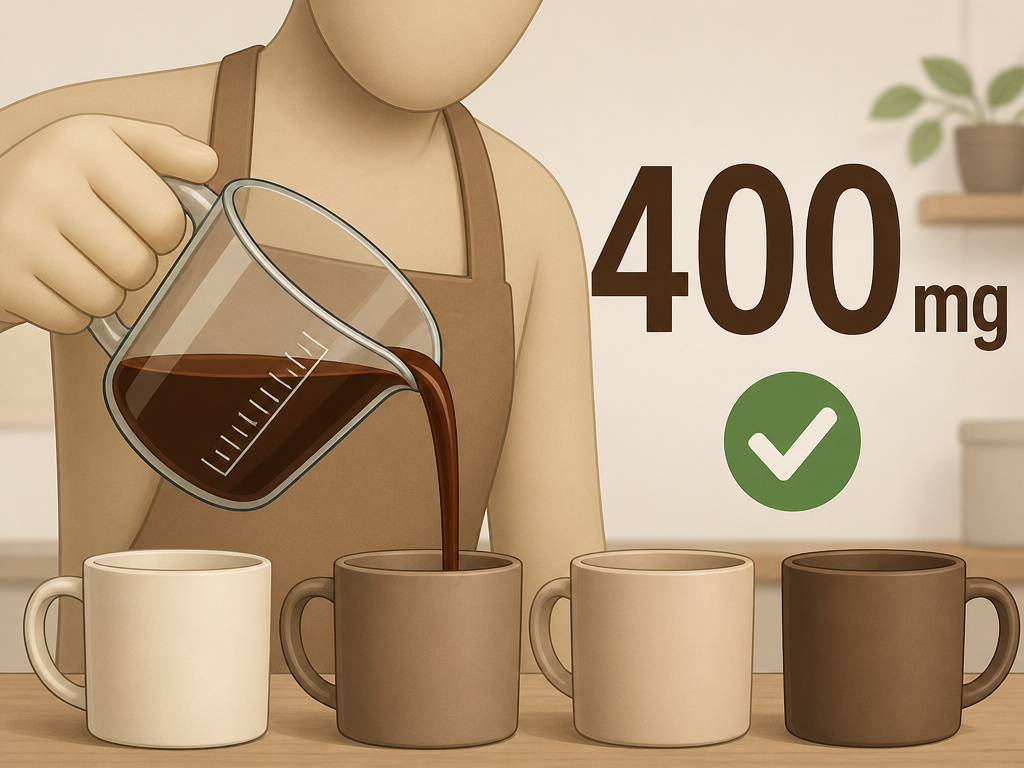
“Moderation” is a useless word without numbers. For the average adult, moderate caffeine intake is defined as up to 400 milligrams per day. That’s roughly the amount in four 8-ounce cups of brewed coffee. Staying at or below this level is unlikely to have any negative systemic effects that would impact hair.
Your personal threshold may be lower. Genetics determine how fast you metabolize caffeine. If you are a slow metabolizer, even two cups might affect your sleep. Listen to your body. If you feel jittery, anxious, or have trouble sleeping, scale back. Protecting your sleep is protecting your hair.
It’s also about consistency. Six cups one day and none the next is more disruptive than two cups every day. A stable, moderate intake allows your body’s stress systems to remain in equilibrium. This stability is far better for hair than wild swings that come with binge-and-abstain cycles, similar to how stable blood sugar benefits overall health.
Consider your other sources. That 400 mg budget includes tea, soda, chocolate, and pre-workout supplements. A single energy drink can consume most of it. When comparing energy drinks vs. coffee, the drink’s other ingredients often pose a greater risk.
Topical Caffeine: A Different Story
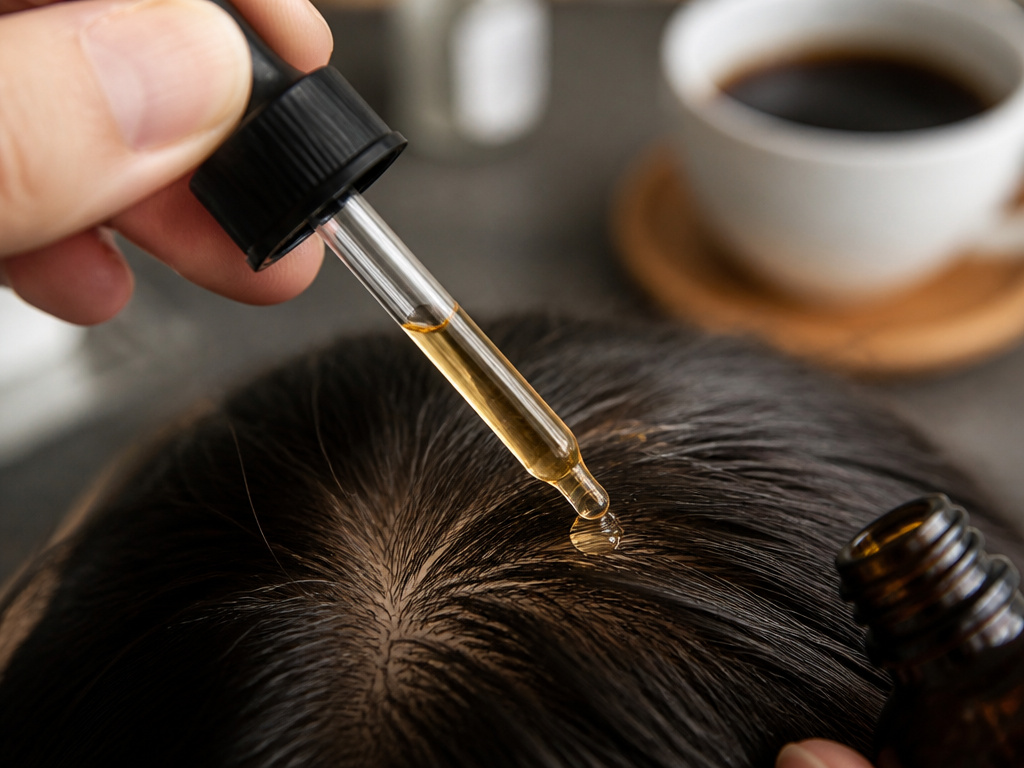
Shampoos, serums, and toners containing caffeine are marketed for hair growth. This is where the laboratory science meets the consumer. The theory is solid: deliver caffeine directly to the follicle to inhibit PDE, boost IGF-1, and possibly blunt DHT’s effects.
Does it work? Some clinical studies show modest improvements in hair count and reduction in shedding for people with androgenetic alopecia when using topical caffeine formulas over several months. The effects are not as potent as FDA-approved medications like minoxidil or finasteride, but the side-effect profile is generally milder.
If you’re considering this route, manage expectations. It’s a treatment, not a cure. It requires consistent, long-term use. Results are subtle and slow. It works best for early-stage thinning, not advanced baldness. And as with any topical product, penetration is key, the formulation matters.
For someone exploring options, a topical caffeine product could be a reasonable, low-risk adjunct to other strategies. It’s the practical application of the science we’ve discussed, turning the molecule from a consumed stimulant into a targeted follicle stimulant.
Frequently Asked Questions
Can quitting coffee reverse hair loss?
If your hair loss was primarily driven by the sugar in your coffee drinks or severe sleep disruption from caffeine, then yes, correcting those habits can help. The hair lost due to stress (telogen effluvium) often regrows once the stressor is removed. If the loss is due to genetic pattern baldness, quitting coffee will not reverse it.
Is espresso worse for hair loss than regular coffee?
No. While espresso caffeine content is higher per ounce, a standard serving is much smaller. A single espresso shot has about 63 mg of caffeine, compared to 95 mg in an 8-ounce cup of drip coffee. The total caffeine dose is what matters, not the concentration.
Does decaf coffee cause hair loss?
There is no biological mechanism linking decaffeinated coffee to hair loss. The caffeine has been removed, and the remaining compounds in decaf are not associated with hair follicle damage. Any correlation would again point to additives or coincidental factors.
I drink a lot of coffee and my hair is thinning. What should I do first?
First, get an accurate diagnosis from a dermatologist. Rule out genetic, autoimmune, or nutritional causes. Then, audit your coffee: cut all added sugar, limit yourself to 3-4 cups of black coffee before noon, and track your sleep for two weeks. This addresses the two biggest modifiable vectors, dietary inflammation and sleep stress, while you investigate other coffee and heart health or digestive considerations.
Are some people more sensitive to caffeine-related hair loss?
Yes, individuals who are very slow caffeine metabolizers or who have a high sensitivity to cortisol spikes may be more susceptible to the indirect effects of overconsumption. If you notice hair shedding increases during periods of high caffeine intake and poor sleep, you are likely in this group. Reducing intake or switching to lower-caffeine options like caffeine in tea and coffee alternatives may help.
Before You Go
The fear that coffee causes hair loss is a myth that conflates the drink with the lifestyle around it. The primary scientific evidence points in the opposite direction, exploring caffeine’s potential to support follicles. Your daily brew is not the enemy.
The real risks are the sugar you stir into it and the sleep you lose by drinking it too late. Address those, and you can enjoy your coffee without glancing nervously at your hairline. Focus on a balanced diet, quality sleep, and managing stress, these are the proven, foundational elements of long-term hair health. Your coffee ritual, kept clean and mindful, can comfortably remain a part of that picture.
{
“@context”: “https://schema.org”,
“@type”: “HowTo”,
“name”: “How to Evaluate Coffee’s Impact on Hair Loss”,
“totalTime”: “PT10M”,
“tool”: [
{
“@type”: “HowToTool”,
“name”: “Peer-reviewed study abstracts”
},
{
“@type”: “HowToTool”,
“name”: “Understanding of DHT and androgenetic alopecia”
}
],
“step”: [
{
“@type”: “HowToStep”,
“name”: “Separate consumption from topical application”,
“text”: “Recognize that drinking coffee and applying caffeine to the scalp are two distinct biological pathways with different evidence bases.”
},
{
“@type”: “HowToStep”,
“name”: “Review the primary scientific literature”,
“text”: “Examine key studies, such as the 2007 British Journal of Dermatology paper, which found caffeine stimulated hair follicle growth in vitro.”
},
{
“@type”: “HowToStep”,
“name”: “Identify the real risk vectors”,
“text”: “Look beyond caffeine itself to common coffee additives like high sugar, which can drive inflammation and insulin resistance linked to hair thinning.”
},
{
“@type”: “HowToStep”,
“name”: “Establish a moderate consumption baseline”,
“text”: “Define a safe intake range, typically 3-4 cups of black coffee daily, to avoid sleep disruption and stress hormone spikes that can affect hair cycles.”
}
]
}
{
“@context”: “https://schema.org”,
“@type”: “FAQPage”,
“mainEntity”: [
{
“@type”: “Question”,
“name”: “Can quitting coffee reverse hair loss?”,
“acceptedAnswer”: {
“@type”: “Answer”,
“text”: “If your hair loss was primarily driven by the sugar in your coffee drinks or severe sleep disruption from caffeine, then yes, correcting those habits can help. The hair lost due to stress (telogen effluvium) often regrows once the stressor is removed. If the loss is due to genetic pattern baldness, quitting coffee will not reverse it.”
}
},
{
“@type”: “Question”,
“name”: “Is espresso worse for hair loss than regular coffee?”,
“acceptedAnswer”: {
“@type”: “Answer”,
“text”: “No. While espresso caffeine content is higher per ounce, a standard serving is much smaller. A single espresso shot has about 63 mg of caffeine, compared to 95 mg in an 8-ounce cup of drip coffee. The total caffeine dose is what matters, not the concentration.”
}
},
{
“@type”: “Question”,
“name”: “Does decaf coffee cause hair loss?”,
“acceptedAnswer”: {
“@type”: “Answer”,
“text”: “There is no biological mechanism linking decaffeinated coffee to hair loss. The caffeine has been removed, and the remaining compounds in decaf are not associated with hair follicle damage. Any correlation would again point to additives or coincidental factors.”
}
},
{
“@type”: “Question”,
“name”: “I drink a lot of coffee and my hair is thinning. What should I do first?”,
“acceptedAnswer”: {
“@type”: “Answer”,
“text”: “First, get an accurate diagnosis from a dermatologist. Rule out genetic, autoimmune, or nutritional causes. Then, audit your coffee: cut all added sugar, limit yourself to 3-4 cups of black coffee before noon, and track your sleep for two weeks. This addresses the two biggest modifiable vectors, dietary inflammation and sleep stress, while you investigate other coffee and heart health or digestive considerations.”
}
},
{
“@type”: “Question”,
“name”: “Are some people more sensitive to caffeine-related hair loss?”,
“acceptedAnswer”: {
“@type”: “Answer”,
“text”: “Yes, individuals who are very slow caffeine metabolizers or who have a high sensitivity to cortisol spikes may be more susceptible to the indirect effects of overconsumption. If you notice hair shedding increases during periods of high caffeine intake and poor sleep, you are likely in this group. Reducing intake or switching to lower-caffeine options like caffeine in tea and coffee alternatives may help.”
}
}
]
}
