
Does Chicory Coffee Have Caffeine? The Definitive Answer
Pure chicory coffee, made from 100% roasted chicory root, contains zero caffeine. The USDA FoodData Central database lists raw chicory root with 0 mg of caffeine per 100g. However, many commercial “chicory coffee” products are blends with real coffee beans, which reintroduce caffeine. The answer depends entirely on checking your product’s ingredient list.
Most people assume a bitter, dark brew must pack a caffeine punch. They hear “coffee” in the name and their brain wires it for a buzz. That assumption leads to surprise, either a disappointing lack of energy or an unexpected jittery night.
Let’s cut through the confusion. We’ll look at the raw data from agricultural sources, explain why chicory root itself is caffeine-free, and show you how to decode any product label. You’ll know exactly what’s in your cup.
Key Takeaways
- The USDA and university agricultural extensions confirm pure chicory root contains 0 mg of caffeine.
- The signature bitter, coffee-like taste comes from roasting, not from caffeine or coffee beans.
- Blended products are the main source of confusion; if the ingredients include coffee, caffeine is present.
- Chicory’s primary functional compound is inulin, a prebiotic fiber that can cause digestive gas if introduced too quickly.
- Always check the ingredient list first, the label doesn’t lie.
The Definitive Answer (Based on Raw Data)
Forget hearsay. The question “does chicory coffee have caffeine?” has a data-backed answer.
According to the USDA FoodData Central entry for raw chicory root (FDC ID: 170404), the caffeine content is listed as 0 mg per 100-gram serving. The Louisiana State University Agricultural Center explicitly states, “Chicory contains no caffeine.”
These are primary sources, not blog summaries. The USDA database is the national nutrient standard. The LSU AgCenter is an agricultural research authority. Their consensus is absolute: the plant Cichorium intybus L., specifically its root, does not synthesize caffeine.
This fact separates chicory from actual coffee beans, tea leaves, guarana, and yerba mate, all of which produce caffeine as a natural alkaloid. Your taste buds might be fooled, but the biochemistry isn’t.
TL;DR: Government and agricultural science sources state unequivocally that chicory root contains zero caffeine. The confusion starts when manufacturers blend it with coffee.
Why Pure Chicory Root Has Zero Caffeine
Caffeine is a specific defensive chemical produced by certain plants. Chicory root evolved a different survival toolkit.
The plant stores its energy as inulin, a complex prebiotic fiber, instead of producing stimulant alkaloids. When you roast chicory root, the inulin and other sugars caramelize. This Maillard reaction creates melanoidins, those large, flavorful compounds that give roasted chicory its deep color, bitter notes, and malty sweetness. It’s the same family of reactions that browns coffee beans, but the starting material is completely different.
Think of it like this: searing a steak and searing a portobello mushroom both create a delicious, browned crust. The process is similar, but one is animal protein and the other is fungus. Roasting creates the “coffee” flavor profile from a non-coffee substance.
This biochemical difference is why you can enjoy the ritual and taste of a dark brew without the pharmacological effects of a stimulant. It’s also why people managing their caffeine intake limits often explore chicory as a genuine alternative, not just a weaker version of the real thing.
The Blended Product Trap (Where Caffeine Hides)
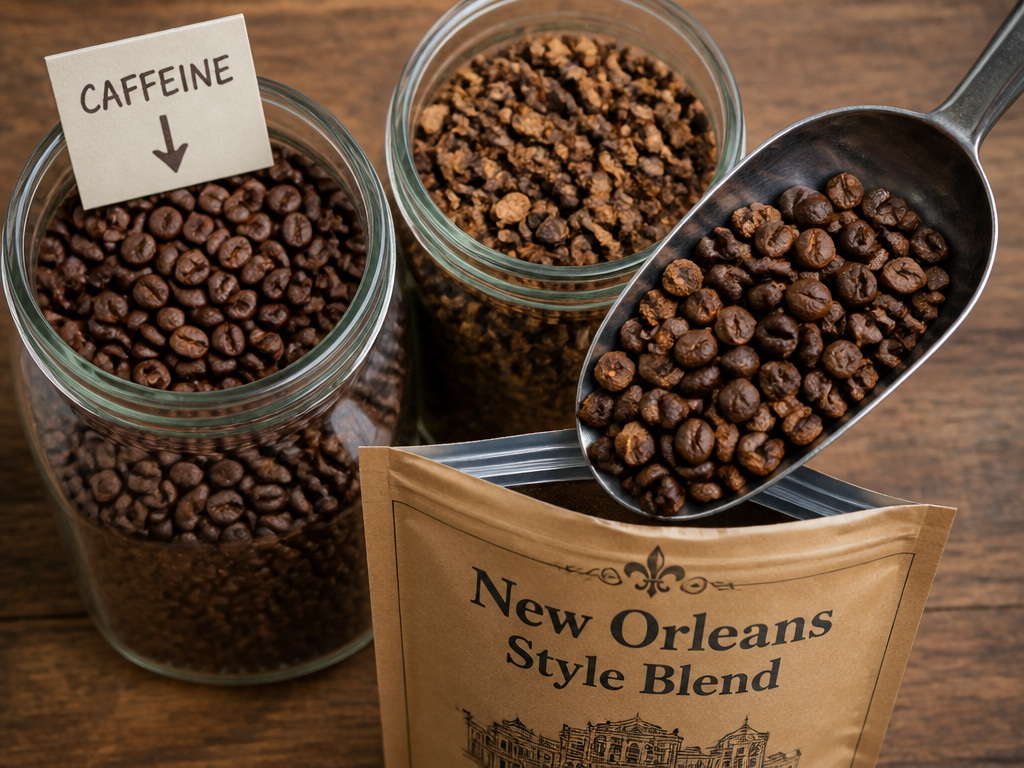
Here is where most online answers fail. They state “chicory coffee is caffeine-free” and stop. In the real world, the most famous chicory coffee product. New Orleans-style coffee like Cafe Du Monde, is a blend.
Traditional New Orleans blends mix roughly 30-40% chicory root with 60-70% dark roast coffee beans. The chicory mellows the coffee’s acidity and adds a woody, slightly sweet depth. It also stretches a scarce commodity, a practice dating back to Civil War blockades. But it absolutely contains caffeine from the coffee portion.
| Product Type | Primary Ingredients | Caffeine Status | Common Example |
|---|---|---|---|
| Pure Chicory Coffee | 100% roasted chicory root | Caffeine-Free | Dandelion & Chicory Herbal Coffee |
| New Orleans-Style Blend | Chicory root + coffee beans | Contains Caffeine | Cafe Du Monde Coffee & Chicory |
| “Coffee Alternative” Blend | Chicory + barley + rye + other grains | Caffeine-Free | Teeccino Herbal Coffee |
Common mistake: Assuming a product labeled “chicory coffee” is caffeine-free, the blend ratio determines the actual caffeine concentration, and a 50/50 blend delivers about half the punch of a standard cup.
The rule is simple. Your eyes must go to the ingredient list before your brain decides. If “coffee” or “coffee beans” appears, caffeine is present. The amount depends on the blend ratio and your brewing methods for caffeine extraction.
Chicory’s Active Compound: Inulin, Not Caffeine
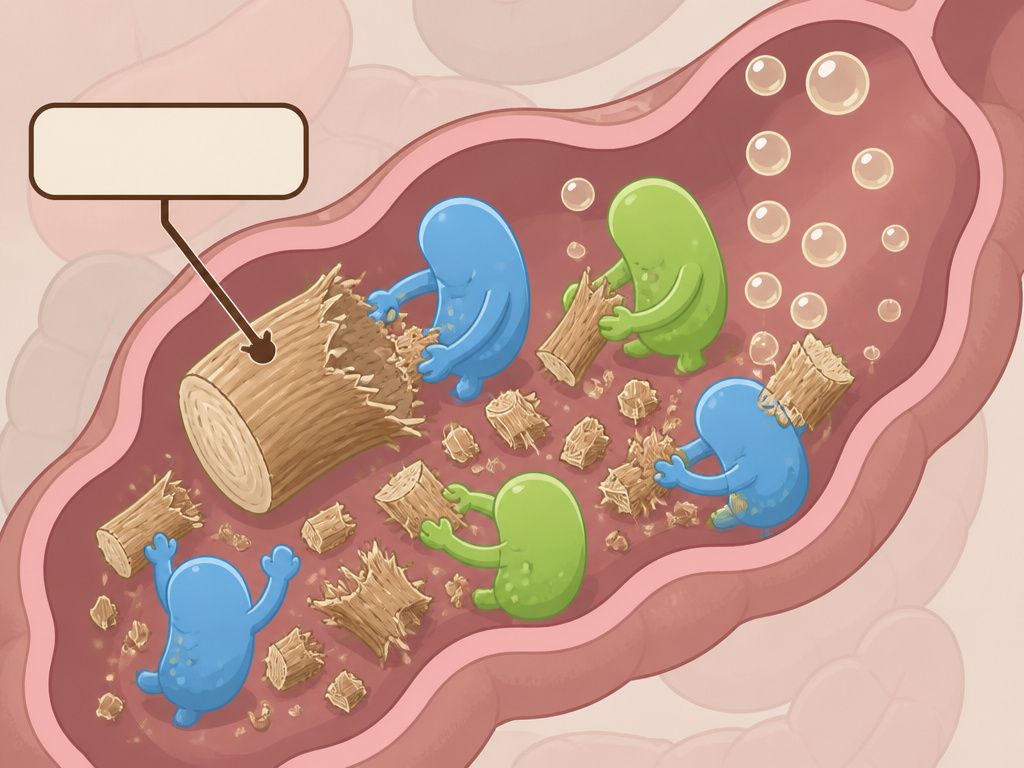
Since we’ve removed caffeine from the equation, what is in chicory that affects your body? The answer is inulin.
Inulin is a soluble fiber that passes undigested through your stomach and small intestine. It then ferments in the colon, acting as a food source for beneficial gut bacteria like Bifidobacteria. This is the “prebiotic” effect highlighted in studies, including a PMC study on chicory melanoidins that notes the health-promoting potential of these roasted compounds.
But this beneficial effect has a tangible, physical consequence for new users.
I switched to pure chicory for a week to break a late-afternoon coffee habit. The first three days were fine. By day four, I felt a persistent, low-grade bloating that no amount of peppermint tea would settle. It wasn’t cramps, just a full, gaseous feeling. I cut my serving in half for the next week and the issue vanished. Your gut flora needs time to adjust.
This experience is typical. Inulin increases microbial activity, which produces gas. For individuals with IBS or a sensitive gut, this can trigger significant discomfort. The health trade-off is real: potential benefits for gut microbiome diversity versus immediate physical discomfort.
It’s a different kind of “buzz”, one happening in your digestive system, not your nervous system. This makes chicory an interesting subject in any tea and coffee comparison about digestive health.
How to Brew and Use Chicory Coffee
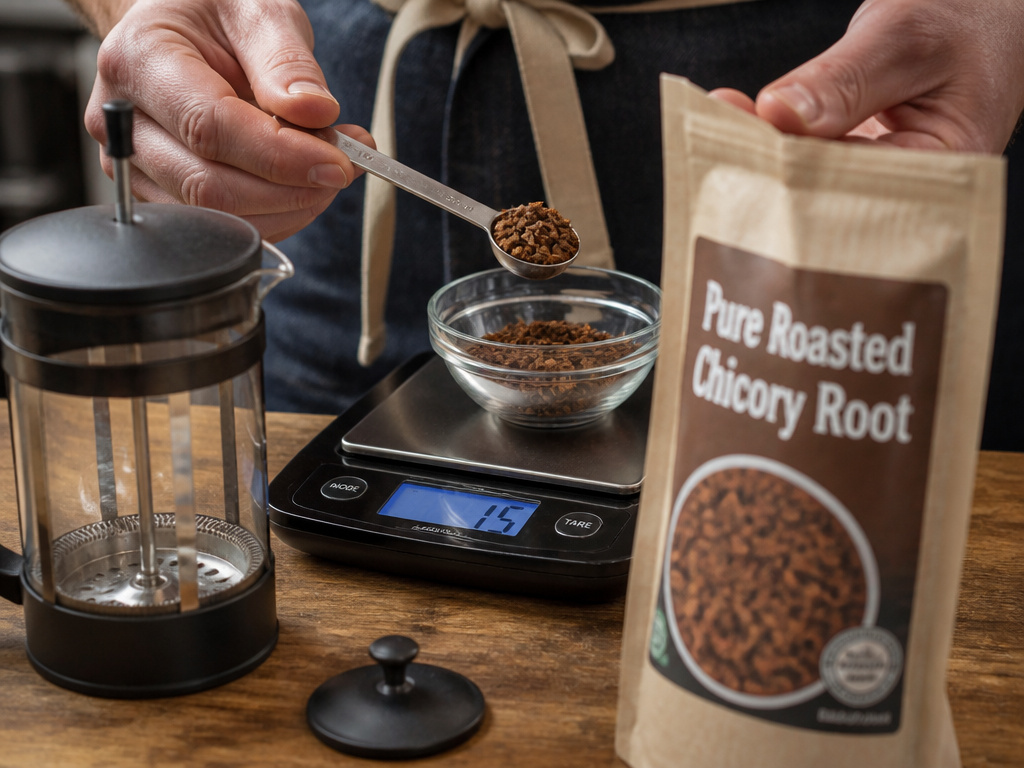
Using chicory is straightforward, but a few specifics improve the result.
You’ll need:
- Pure roasted chicory root (ground to a consistency like coarse coffee)
- A brew method: French press, pour-over, or percolator work best
- A kettle
-
A scale (optional but recommended)
-
Dose like coffee. Use 2 tablespoons (about 10-12 grams) of ground chicory per 6 ounces of water. This mimics a standard coffee ratio.
- Use near-boiling water. Aim for 200°F (93°C). Chicory lacks coffee’s delicate acids, so you don’t risk over-extracting bitterness from caffeine, the bitter compounds here are fixed by the roast.
- Steep or brew. In a French press, add water, stir, and steep for 5 minutes before plunging. For pour-over, a 3-4 minute total brew time is sufficient.
- Expect a different body. The brew will be slightly thinner than coffee but with a pronounced, malty-sweet finish. It lacks the oils and suspended solids of coffee.
- Store it airtight. Ground chicory can stale and lose its aromatic depth. Keep it in a sealed container away from light and heat.
Chicory also works as a flavor enhancer. Adding a teaspoon of ground chicory to your regular coffee grounds before brewing adds complexity without overwhelming the cup. It’s a gateway to understanding the New Orleans style before you commit to a full blend.
Frequently Asked Questions
Does Cafe Du Monde coffee have caffeine?
Yes. Cafe Du Monde’s famous “Coffee & Chicory” is a blend of coffee beans and chicory root. The coffee beans provide caffeine. A 6-ounce cup likely contains 40-60 mg of caffeine, depending on brew strength, compared to 80-100 mg in a pure coffee of the same size.
Can chicory coffee keep you awake?
Pure chicory coffee will not keep you awake due to caffeine because it has none. However, the ritual of a hot drink before bed or the digestive activity from inulin might affect some individuals’ sleep indirectly. It is not a stimulant.
Is chicory coffee good for you?
Chicory coffee offers potential prebiotic benefits from inulin, which may support gut health. It is also a caffeine-free alternative for those reducing stimulant intake. However, the inulin can cause gas and bloating, especially initially. It contains antioxidants from the roasting process, but its overall health benefits of caffeine are absent because it lacks caffeine.
Why does chicory taste like coffee if there’s no caffeine?
The similarity comes from the roasting process, not shared chemicals. Roasting chicory root caramelizes its sugars and creates bitter, toasted flavor compounds (melanoidins) similar to those found in roasted coffee beans. The taste is a product of heat chemistry, not plant biology.
What has more caffeine: chicory coffee or decaf coffee?
pure chicory coffee has 0 mg caffeine. A standard cup of decaffeinated coffee still contains 2-5 mg of caffeine. Even the best decaf process doesn’t remove 100% of the alkaloid. Therefore, decaf coffee has marginally more caffeine, though both are considered very low.
Before You Go
The caffeine question boils down to ingredients. Pure chicory root is a caffeine-free tuber that mimics coffee through roasting alone. The moment it’s blended with real coffee beans, caffeine enters the equation.
Use the USDA data as your anchor. Check the label on your tin or bag, it’s the only way to know for sure. If you’re exploring chicory for the first time, start with a small serving to let your digestive system adapt to the inulin. It provides a rich, coffee-like experience built on entirely different chemistry, a fact that makes it a fascinating staple in the world of brewed beverages.
