
Do Coffee Grounds Go Bad? The Flavor Timeline & What Happens
Coffee grounds go bad in terms of flavor and aroma, not safety. An opened bag of pre-ground coffee stored at room temperature loses most of its desirable volatile compounds within 2-3 weeks, leaving a flat, stale, or papery-tasting brew. For optimal flavor, use grounds within 2 weeks of opening and always store them in an airtight container away from light, heat, and moisture.
Most people judge their coffee grounds by the “Best By” date printed on the bag. That date is a food compliance placeholder, not a flavor countdown. The real clock starts ticking the second the beans are ground, and it ticks fastest when you leave the grounds in the flimsy bag they came in.
This guide walks through what “going bad” actually means for coffee, the precise enemies that ruin it, and the storage moves that keep your morning cup tasting like it should.
Key Takeaways
- Ground coffee’s primary enemy is oxidation, which degrades flavorful oils and aromatic compounds within days, not months.
- Moisture is a silent killer; humidity causes clumping and can invite mold in extreme, neglected cases.
- The “Best By” date is virtually meaningless for flavor. Always look for and track the roast date instead.
- Freezing coffee grounds works, but only if you portion them into single-use, airtight bags to prevent condensation and odor absorption.
- Stale grounds won’t make you sick, but they will make your coffee taste like cardboard. They’re better off in your garden compost.
What “Going Bad” Really Means for Coffee Grounds
Forget spoiled milk or moldy bread. Coffee grounds undergo staling, a chemical process that strips flavor, not a biological one that breeds pathogens. The USDA’s FoodKeeper guidelines note that coffee is safe to consume long after its quality peaks, focusing on storage for “best quality” over safety. The real spoilage is in your cup.
Technical Snippet: Coffee staling is primarily caused by oxidation and the loss of volatile aromatic compounds. After grinding, the surface area of the coffee increases exponentially, exposing oils and organic compounds to oxygen. This reaction, accelerated by heat and moisture, degrades chlorogenic acids and breaks down flavor molecules, leading to flat, stale, or bitter notes.
The moment whole beans are ground, they begin a rapid decline. Those fragrant notes of citrus, chocolate, or caramel are carried by volatile compounds that escape into the air or break down on contact with oxygen. What’s left behind is the skeletal structure of the coffee, the caffeine and the body, without the soul. Your grounds haven’t “gone bad” in a way that would concern a food inspector. They’ve just become tasteless.
TL;DR: “Going bad” for coffee is the loss of volatile aromatics and the oxidation of oils, resulting in a stale, flat brew. It’s a quality failure, not a safety one.
The Three Enemies of Coffee Grounds (And How They Attack)
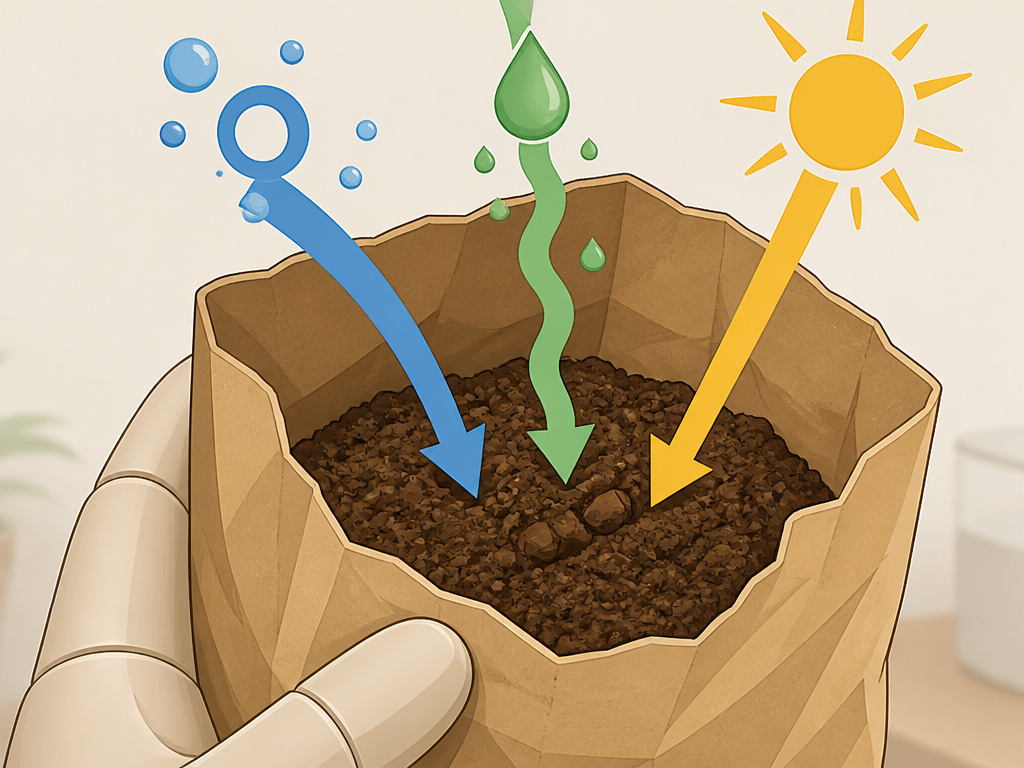
Flavor loss follows a predictable path dictated by three environmental factors. Control them, and you control your coffee’s lifespan.
| Enemy | How It Attacks | Visible or Sensory Sign | Typical Timeline for Noticeable Loss |
|---|---|---|---|
| Oxygen | Oxidizes coffee oils and aromatic compounds. | Aroma is faint or gone. Taste is flat, papery, or cardboard-like. | 3–7 days after grinding if not sealed. |
| Moisture | Causes clumping, accelerates staling, can lead to mold in extreme neglect. | Grounds stick together in hard lumps. Possible musty smell. | Clumping can start within days in a humid kitchen. |
| Heat & Light | Accelerate all chemical degradation processes. | Grounds feel warm. Brew tastes sharply bitter or hollow. | Consistent exposure shortens freshness by 50% or more. |
Oxygen is the main villain. Grinding coffee is like slicing an apple, you’re dramatically increasing its surface area. All those newly exposed cells start reacting with air immediately. This is why pre-ground coffee from the supermarket, often ground weeks prior, never tastes as vibrant as coffee you grind yourself just before brewing.
Moisture often works with oxygen. In a humid environment, water molecules adhere to the coffee grounds. This not only makes them clump and resist proper extraction in your coffee filters, but it also facilitates faster chemical breakdown. I learned this the hard way storing a bag of grounds on a shelf above my dishwasher. The steam from weekly cycles turned the last third of the bag into a solid, brick-like mass that brewed a cup tasting of nothing but weak bitterness.
Heat and light are force multipliers. A container left on the counter in direct sunlight or next to the oven is getting cooked. The heat energizes the molecules, speeding up oxidation and driving off the delicate aromatics you paid for.
Common mistake: Storing the original bag with a folded-over top in a sunny kitchen, the combined assault of oxygen, light, and ambient heat turns premium grounds into generic-tasting dust within ten days.
How to Tell If Your Coffee Grounds Have Gone Stale
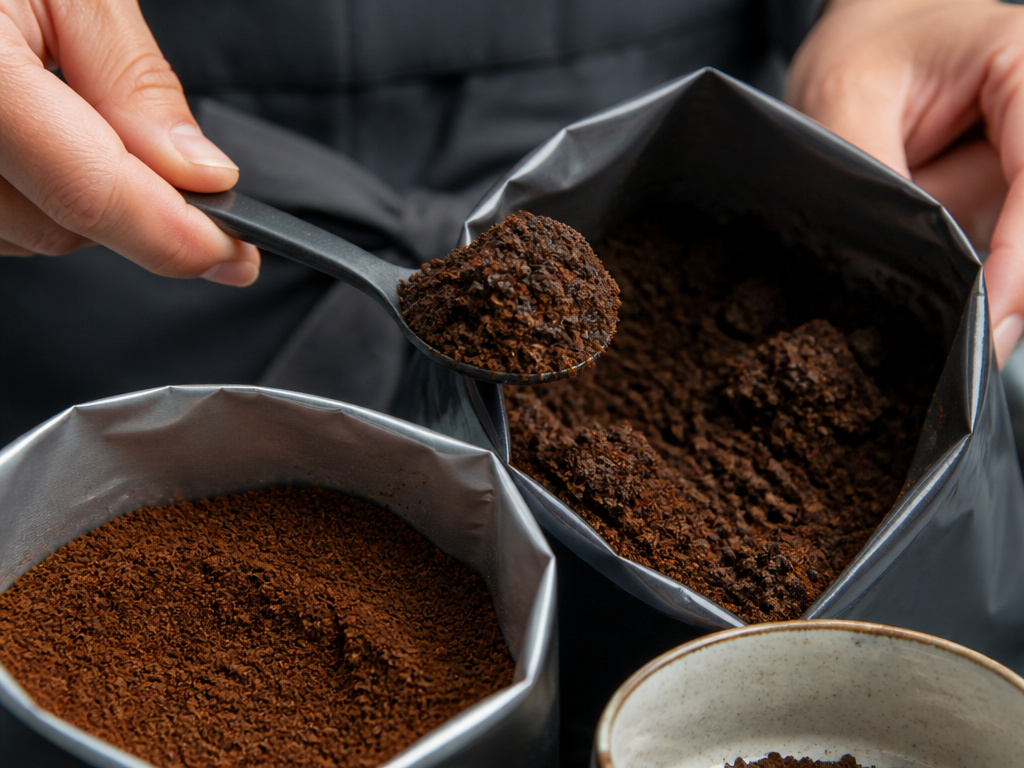
Your senses are the best tool here. You don’t need a lab.
- Smell the grounds. Fresh coffee has a pronounced, pleasant aroma specific to its origin or roast. Stale coffee smells faint, dusty, or like nothing at all. If you open the container and don’t get a satisfying noseful of scent, the flavor has already left.
- Look at the grounds. Fresh grounds are dry and flow freely. Grounds compromised by moisture will form clumps or feel slightly tacky. In a severe case of neglect, you might see visible mold, this is the only true “bad” in terms of safety, and it requires extreme, prolonged dampness.
- Watch the bloom. If you use a pour-over method, the “bloom” is telling. Fresh coffee will bubble and expand as released CO2 meets hot water. Stale coffee has off-gassed all its CO2 and will show little to no bloom, resulting in a flat, under-extracted bed.
- Taste the brew. This is the final verdict. Staleness manifests as a lack of clarity, flavors blur into a generic, dull, or papery taste. Acidity disappears, bitterness can become harsh, and the finish is short. It tastes like “coffee” but without any of the adjectives you wanted.
The “Best By” date is useless for this diagnosis. A bag of pre-ground coffee stamped for next year can be utterly lifeless if it was ground six months ago. A bag of whole bean blonde roast beans roasted last week and ground yesterday will be vibrant, even if its “Best By” date is sooner. Trust your senses, not the printed guess.
TL;DR: Sniff for a weak aroma, look for clumps, watch for a absent bloom, and taste for flatness. Your senses are more accurate than any “Best By” date.
The Right Way to Store Coffee Grounds
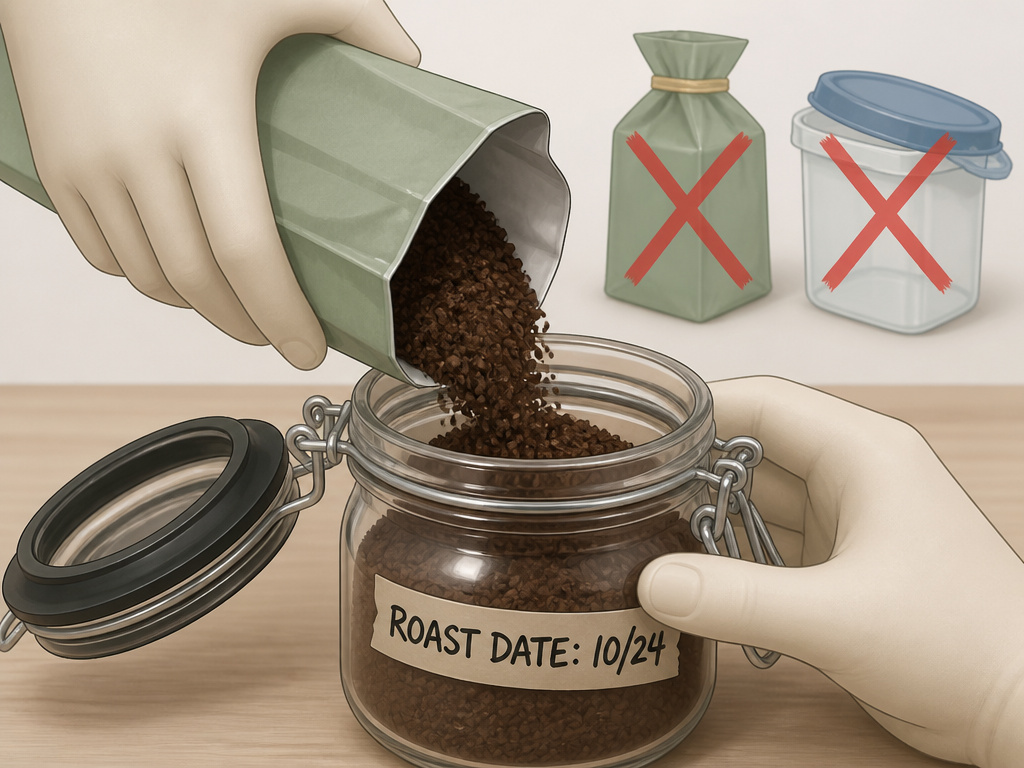
The goal is to create a stable, sealed environment. Here is the straightforward protocol.
- Get a real airtight container. The bag with a tin-tie or the canister with a loose lid isn’t enough. Use a glass or ceramic container with a rubber-gasketed, clamp-on lid. Plastic can retain odor over time. Transfer grounds the instant you open the bag.
- Keep it cool, dark, and dry. A pantry or cupboard away from the stove, oven, dishwasher, or windowsill is ideal. The back of a counter is not.
- Label with the roast date. Write the roast date on your container with a marker. This is your true countdown clock. Ignore the “Best By.”
- Freeze strategically. Freezing halts staling. But you must do it right. Portion grounds into airtight bags, squeeze out all excess air, and seal. Take out only what you’ll use in a week. Never re-freeze thawed grounds, as condensation will ruin them.
The freezer debate is settled. A study shared on Preprints.org demonstrated that proper frozen storage, airtight, portioned, no temperature cycling, preserved coffee ground quality significantly longer than room-temperature storage. The key is the airtight seal. Tossing the whole bag in the freezer door leads to condensation on every opening, which is worse than not freezing at all.
This storage system applies whether you’re using grounds for a basic drip machine with paper filters for coffee makers or for a high-end espresso machine that needs a consistent, fine grind from a quality burr grinder. The enemy is the same.
Personal take: I freeze single-origin coffees I want to savor. I’ll vacuum-seal 18-gram portions for espresso. Thaw one on the counter while the machine heats up, grind, and pull. The flavor preservation is remarkable, but only because I eliminated air and moisture from the equation.
What About the Fridge?
Don’t do it. The refrigerator is a humid box full of circulating food odors. Coffee grounds are hygroscopic, meaning they absorb moisture and smells from their environment. Storing them in the fridge is a fast track to tasting your leftover garlic bread.
Can You Use Stale Coffee Grounds?
You can, but you shouldn’t expect a great cup. The flavor is gone. However, stale grounds are far from useless.
- Compost them. Coffee grounds are a fantastic “green” material for your compost bin, adding nitrogen.
- Use them as a deodorizer. A bowl of dry, stale grounds in the fridge or freezer can absorb odors, just like baking soda.
- Add them to garden soil. Sprinkle used grounds around acid-loving plants like azaleas or blueberries as a mild soil amendment.
If you’re experimenting with adding salt to coffee to cut bitterness, stale grounds are a good candidate for the test. Since their flavor is already muted, you can more clearly taste the effect of the salt without the interference of complex origin notes. It’s a practical use for an otherwise disappointing product.
Just don’t try to brew your way out of staleness with more grounds. Using an extra scoop of stale coffee won’t bring back missing acidity or aroma. It just makes a stronger cup of stale coffee. The difference between a vibrant single-origin coffee and a stale one is night and day, and no amount of quantity can fix it.
Frequently Asked Questions
Do unopened coffee grounds go bad?
Yes, but slower. An unopened, vacuum-sealed bag protects grounds from oxygen and moisture. However, the clock on flavor degradation started at the roast date, not the open date. Even sealed, pre-ground coffee will be noticeably staler after 3-4 months post-roast compared to fresh grounds.
Can old coffee grounds make you sick?
It is extremely unlikely. The dry environment of coffee grounds is inhospitable to pathogenic bacteria like salmonella or E. coli. The only conceivable risk would be from mold growth, which requires the grounds to be consistently damp and neglected for a very long time. If you see mold, discard it.
How long do coffee grounds last in the freezer?
For maintained quality, use frozen grounds within 1-2 months. They remain safe indefinitely, but flavor will gradually diminish even in the freezer due to very slow oxidation. The key is the airtight, portioned seal to prevent freezer burn and odor transfer.
Does the type of coffee affect how fast it goes stale?
Yes. Darker roasts have more surface oils exposed, which can oxidize slightly faster. Oily Arabica beans from a dark roast may taste stale sooner than a dry, light roast. Finer grinds (like for espresso) have more surface area than coarse grinds (like for French press), so they stale more quickly once exposed to air.
Why does my coffee taste bitter with old grounds?
Staling doesn’t just remove flavor; it can create off-flavors. As chlorogenic acids break down, they can produce bitter, astringent compounds. Furthermore, stale grounds extract unevenly, often leading to over-extraction of bitter elements in an attempt to get any flavor at all, which is why pairing them with a strong brown sugar sweetener is a common salvage attempt.
Before You Go
Coffee grounds don’t spoil in the conventional sense, but their vibrant character is incredibly fragile. The fight is against oxygen, moisture, and heat. Win it by using an airtight container, keeping it in a cool pantry, and prioritizing the roast date over any other printed number.
Freezing is a powerful tool if done with discipline, portion and seal aggressively. And when your grounds do eventually lose their spark, don’t brew a sad cup. Put them to work in your garden or compost. Their best days in your mug may be over, but their journey doesn’t have to end in the trash. Just don’t expect a miracle from that forgotten bag in the back of the cupboard. The aroma that left was never coming back.
