
Instant Cold Brew Coffee | A Fast, Low-Acid Concentrate That Works
Cold brew instant coffee is a freeze-dried or spray-dried powder made from pre-brewed, concentrated cold brew. You mix it directly with cold water or milk for a smooth, low-acid drink in under a minute. It dissolves without heat, which is the main technical difference from traditional hot-brewed instant coffee.
Most people see the words “instant coffee” and assume it’s the same bitter, acidic powder their grandparents used. They miss that the cold-brewing step before dehydration changes the entire chemical profile. This guide explains what cold brew instant coffee actually is, how the two main production methods affect your cup, and whether its convenience is a fair trade for flavor.
Key Takeaways
- Cold brew instant is made from brewed concentrate, not roasted beans, which cuts acidity by roughly 70% compared to hot-brew methods.
- Freeze-dried versions preserve more volatile aroma compounds than spray-dried ones, directly impacting flavor clarity.
- It mixes instantly in cold liquids, but always add a splash first to prevent a gritty, undissolved layer at the bottom of your glass.
- Caffeine content is fixed by the manufacturer; a typical packet has about 80-100mg, similar to a standard cup of drip coffee.
- Shelf life is long, but once opened, the powder absorbs ambient humidity and starts to clump and lose flavor within 4-6 weeks.
What is Cold Brew Instant Coffee?
Cold brew instant coffee starts as a brewed beverage, not a raw bean. Manufacturers steep coarse-ground coffee in cold water for 12 to 24 hours, strain the concentrate, and then dehydrate that liquid into a soluble powder. The final product is a snapshot of that cold brew’s flavor, locked in a jar.
Cold brew instant coffee is a soluble powder produced by dehydrating a pre-brewed cold water coffee extract. This process bypasses the high-temperature extraction of traditional instant coffee, resulting in a powder with significantly lower levels of quinic and citric acids, which are the primary sources of perceived bitterness and sourness.
The real shift is in the starting point. Traditional instant coffee is made by brewing hot coffee, often aggressively, and then dehydrating it. That hot brew pulls out all the acids and bitter compounds. Cold brewing first acts as a filter. It doesn’t extract those harsh compounds in the same quantity. So when you dehydrate it, you’re preserving a mellower base.
TL;DR: It’s dehydrated cold brew concentrate, not dehydrated hot coffee. That initial cold extraction is what defines its smoother character.
The Freeze-Dried vs Spray-Dried Difference
Not all instant powders are created equal. The dehydration technology dictates the final quality in your cup, and it comes down to heat. Freeze-drying is the premium path. Spray-drying is the commodity shortcut.
| Method | How It Works | Flavor Impact | Common In |
|---|---|---|---|
| Freeze-Drying | Frozen coffee concentrate is placed in a vacuum, where ice sublimates directly into vapor. | Preserves delicate volatile aromatics. Tastes closer to the original brewed cold brew. | Waka Coffee, Starbucks Via, Alpine Start |
| Spray-Drying | Liquid concentrate is sprayed into a hot chamber, where water flashes off as steam. | High heat degrades subtle flavors. Can introduce a faint “cooked” or flat note. | Many generic or lower-cost brands |
Freeze-drying wins because it uses cold and vacuum, not heat. The sublimation process skips the liquid phase entirely, which helps preserve the fragile top notes, the floral, fruity, or nutty hints, that define a coffee’s origin. Spray-drying blasts the concentrate with hot air. That heat drives off those same delicate compounds and can even create new, less pleasant ones through Maillard reactions gone too far.
You can often spot the difference by looking at the granules. Freeze-dried granules are larger, lighter, and more irregular. They look like little frozen sponges. Spray-dried powder is finer, denser, and more uniform, like fine sand. The grind consistency of the original brew matters less here than the dehydration science.
Common mistake: Assuming all instant coffee powders are the same, the dehydration method creates a bigger flavor gap than the bean origin for these products. A spray-dried version of a great single-origin coffee will still taste flat.
How to Use It (It’s Not Just Water)
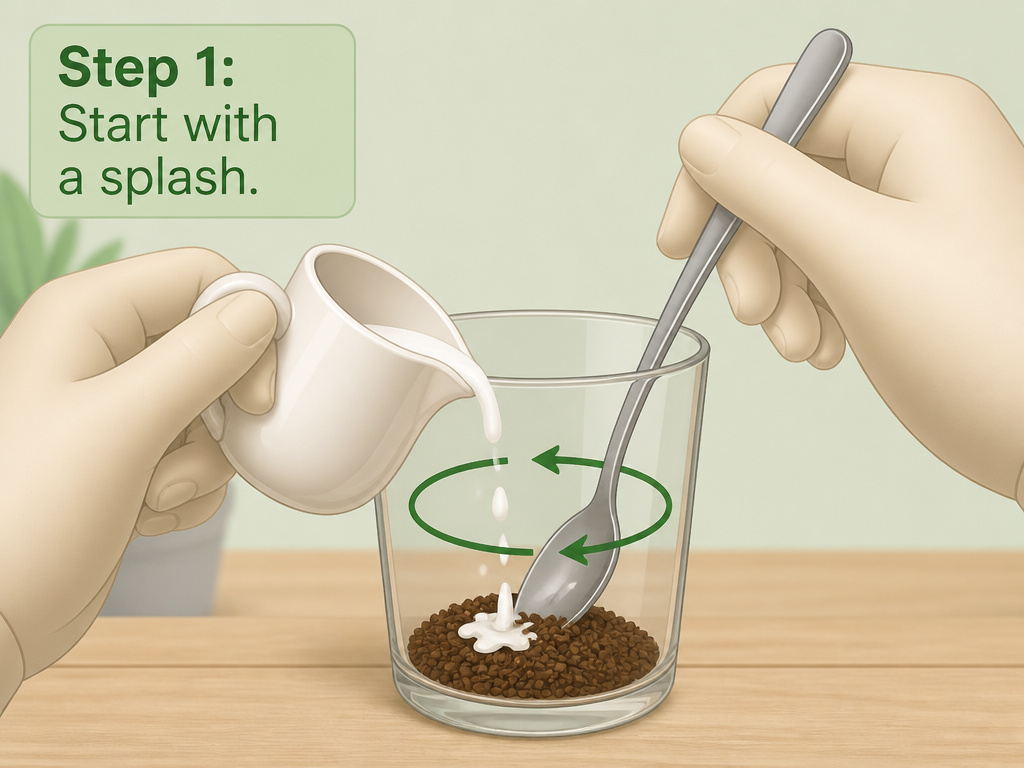
The instructions say “mix with water,” but that’s the baseline. How you mix it changes everything. The powder is hygroscopic, it grabs moisture from the air instantly. If you dump powder into a full glass of water, the top layer hydrates into a sludge that blocks the rest from dissolving. You get a gritty layer at the bottom every time.
Follow this sequence instead:
1. Start with a splash. Put your measured powder in the glass. Add just enough cold liquid (water, milk, oat milk) to cover it, about a tablespoon.
2. Stir into a paste. Mix vigorously for 10 seconds until it forms a smooth, lump-free slurry. This step is non-negotiable.
3. Top up and finish. Pour in the rest of your 8-12 ounces of liquid. Give one final gentle stir.
For iced drinks, build it in the glass with ice. The cold temperature doesn’t hinder dissolution if you do the paste step first. For a latte, make the paste with a splash of milk, then steam or froth the remaining milk and pour it over. It works.
What about hot coffee? You can absolutely mix it with hot water. It will dissolve even faster. But remember, you’re just rehydrating cold brew. You won’t get the flavor notes that hot extraction pulls from beans. It makes a low-acid hot cup, but it’s not a replacement for a freshly brewed coffee if that’s what you’re after.
Flavor and Strength Realities
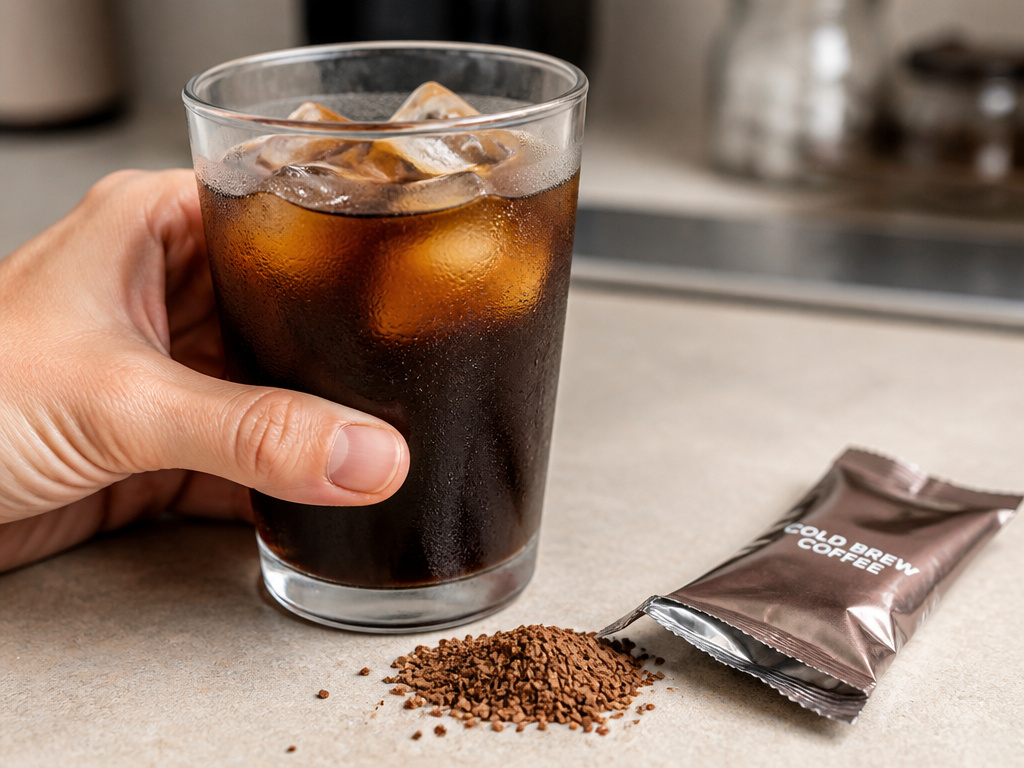
Manage your expectations. Cold brew instant coffee is a convenience product with a specific flavor profile. Its greatest strength, low acidity, is also its greatest limitation.
You are buying a fixed recipe. Unlike brewing your own cold brew where you can adjust the coffee strength, ratio, or steep time, the instant version is locked in. The manufacturer decided the concentration. This means you can’t make it stronger by adding more powder without also making it more bitter, as you’re simply adding more of the same fixed extract.
The flavor tends to be simple: chocolate, nut, general sweetness. The subtle citrus, berry, or floral notes that make single-origin coffees exciting are usually muted or absent. The dehydration process, even freeze-drying, loses something. Think of it as a reliable sketch rather than a detailed painting.
That said, within its lane, it’s remarkably consistent. A packet of Starbucks Via Iced Coffee tastes the same in Tokyo as it does in Toronto. For a quick, reliable, smooth iced coffee with no equipment or wait time, it delivers exactly what it promises.
Caffeine Content: How Does It Compare?
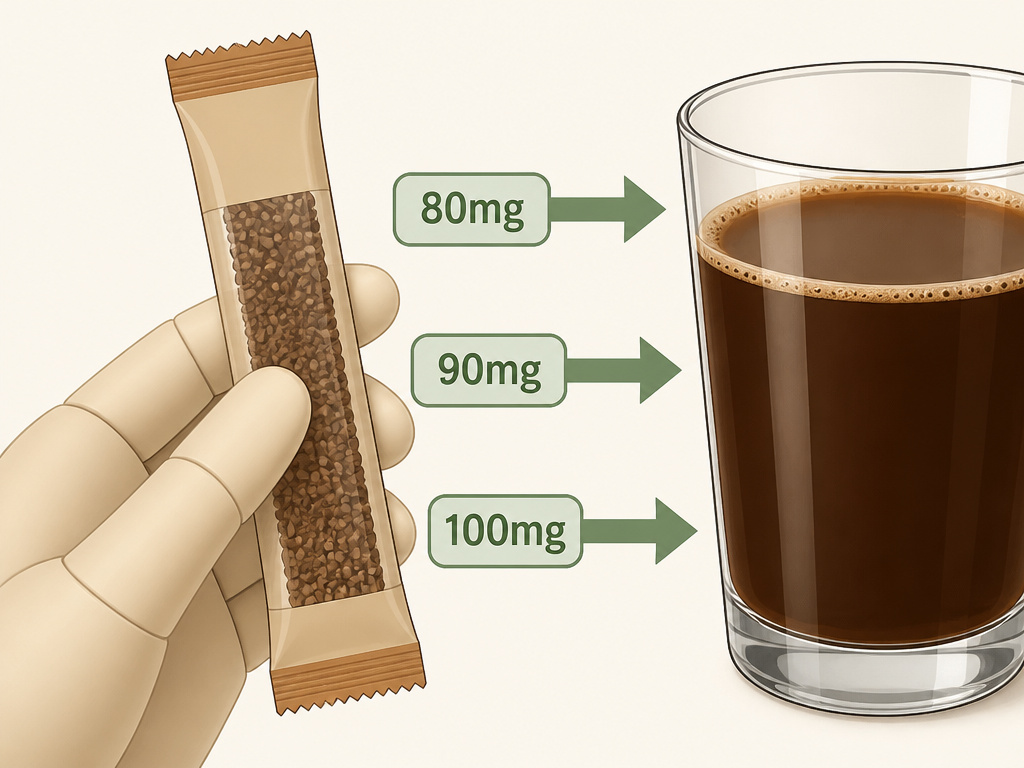
This is a fixed variable. The caffeine content is determined during the concentrate production phase. Most major brands land in the 80-100mg per serving range.
| Beverage | Approximate Caffeine per 8oz | Notes |
|---|---|---|
| Cold Brew Instant | 80-100 mg | Fixed by manufacturer. One packet = one serving. |
| Home-Brewed Cold Brew | 100-200 mg | Highly variable based on coffee-to-water ratio and steep time. |
| Drip Coffee | 95-165 mg | Depends on coffee brewing methods and bean. |
| Black Tea | 40-70 mg | See our comparison of black tea caffeine. |
This puts a serving of cold brew instant squarely in the range of a standard cup of coffee, often with less caffeine than a strongly brewed homemade cold brew concentrate. It has significantly more caffeine than an equivalent volume of tea. If you’re sensitive to caffeine, this is a predictable source.
Who Should Try It? (And Who Should Skip It)
This product solves specific problems. It’s not for everyone, but for its target user, it’s a game-changer.
Try it if:
- You travel frequently and want decent coffee without a machine.
- Your office has only a hot water kettle and you crave iced coffee.
- You’re camping, backpacking, or in any situation with minimal gear.
- You love cold brew but hate the 12-24 hour wait for a batch.
- You have a sensitive stomach and find regular coffee too acidic.
Skip it if:
- Your primary coffee enjoyment comes from exploring nuanced coffee flavor profiles and coffee bean types.
- You already own and use a cold brew maker and enjoy the ritual.
- You are on an extreme budget, per cup, it’s more expensive than brewing at home.
- You only drink hot coffee and prefer the bright acidity of a light roast.
For the right person, it’s not a compromise. It’s the optimal solution. I keep a jar in my pantry for Saturday mornings when I want iced coffee immediately, not after a day of steeping. It’s also permanently in my dopp kit. The convenience fee is worth it for those use cases.
Storage and Shelf Life
The sealed shelf life is long, often 18-24 months. The real clock starts ticking the moment you break the seal. The powder is engineered to absorb water, and it will gladly absorb it from your kitchen air.
Common mistake: Leaving the jar open on the counter while you make your drink, 30 seconds of exposure on a humid day is enough to start the clumping process. Close the lid immediately after scooping.
Within 4-6 weeks of opening, you’ll notice the texture change. It goes from free-flowing granules to clumps that require crushing. The flavor also dulls. Those bright top notes fade first. Store it in a cool, dark place with the lid tightly sealed. Do not refrigerate it. The fridge is a humid environment, and condensation will ruin the powder faster. The ISO 6670:2025 instant coffee standard outlines strict protocols for bulk sampling to ensure quality, highlighting how sensitive this product is to environmental moisture.
Frequently Asked Questions
Is cold brew instant coffee just regular instant coffee?
No. Regular instant coffee is made from dehydrated hot-brewed coffee. Cold brew instant is made from dehydrated cold-brewed coffee concentrate. The cold brewing step first results in a fundamentally different, and less acidic, flavor profile in the final powder.
Can you make cold brew instant coffee hot?
Yes, it dissolves perfectly in hot water. However, you will get a hot cup of coffee that tastes like rehydrated cold brew: smooth and low-acid, but lacking the complex acidity and brightness that hot extraction draws from coffee beans.
How much caffeine is in a packet?
Most major brands contain between 80 and 100 milligrams of caffeine per single-serve packet. This is comparable to a standard cup of drip coffee and less than a typical espresso-based drink when compared by volume.
Does it taste better than regular instant coffee?
If you dislike the bitter, sour notes of traditional instant coffee, then yes, overwhelmingly. The reduction in acidic compounds makes it taste smoother and more approachable. The best freeze-dried versions can taste surprisingly close to a decent ready-to-drink cold brew.
What’s the best way to mix it to avoid clumps?
Always use the “paste method.” Put the powder in your cup, add just a small splash of your cold liquid (water or milk), and stir vigorously into a smooth paste until no dry powder remains. Then add the rest of your liquid. This guarantees full dissolution.
Before You Go
Cold brew instant coffee is a niche product that excels within its niche. It will not replace your favorite local roaster or your home brewing setup. It exists to solve the problem of “I want a smooth, cold coffee now, with zero cleanup.” For travel, rushed mornings, or pantry backup, it’s unmatched. Focus on freeze-dried brands for the best flavor, always mix it into a paste first, and seal the jar tight after every use. It’s a tool, not a destination. Keep your expectations in check, and you’ll find it’s a remarkably useful one to have on hand.
{
“@context”: “https://schema.org”,
“@type”: “HowTo”,
“name”: “How to Make Cold Brew Instant Coffee”,
“totalTime”: “PT2M”,
“tool”: [
{
“@type”: “HowToTool”,
“name”: “Spoon or measuring scoop”
},
{
“@type”: “HowToTool”,
“name”: “Glass or mug”
},
{
“@type”: “HowToTool”,
“name”: “Cold water, milk, or plant-based milk”
}
],
“step”: [
{
“@type”: “HowToStep”,
“name”: “Measure the powder”,
“text”: “Use one standard packet or one rounded teaspoon of cold brew instant coffee powder per 8 to 12 ounces of liquid.”
},
{
“@type”: “HowToStep”,
“name”: “Add a splash of liquid”,
“text”: “Pour a small amount of cold water or milk into your glass first, just enough to cover the powder. This prevents clumping.”
},
{
“@type”: “HowToStep”,
“name”: “Stir thoroughly”,
“text”: “Stir vigorously for 15-20 seconds until the powder is completely dissolved and no granules remain on the bottom or sides.”
},
{
“@type”: “HowToStep”,
“name”: “Top up and enjoy”,
“text”: “Fill the rest of the glass with your chosen cold liquid, give it a final gentle stir, and drink immediately over ice if desired.”
}
]
}
{
“@context”: “https://schema.org”,
“@type”: “FAQPage”,
“mainEntity”: [
{
“@type”: “Question”,
“name”: “Is cold brew instant coffee just regular instant coffee?”,
“acceptedAnswer”: {
“@type”: “Answer”,
“text”: “No. Regular instant coffee is made from dehydrated hot-brewed coffee. Cold brew instant is made from dehydrated cold-brewed coffee concentrate. The cold brewing step first results in a fundamentally different, and less acidic, flavor profile in the final powder.”
}
},
{
“@type”: “Question”,
“name”: “Can you make cold brew instant coffee hot?”,
“acceptedAnswer”: {
“@type”: “Answer”,
“text”: “Yes, it dissolves perfectly in hot water. However, you will get a hot cup of coffee that tastes like rehydrated cold brew: smooth and low-acid, but lacking the complex acidity and brightness that hot extraction draws from coffee beans.”
}
},
{
“@type”: “Question”,
“name”: “How much caffeine is in a packet?”,
“acceptedAnswer”: {
“@type”: “Answer”,
“text”: “Most major brands contain between 80 and 100 milligrams of caffeine per single-serve packet. This is comparable to a standard cup of drip coffee and less than a typical espresso-based drink when compared by volume.”
}
},
{
“@type”: “Question”,
“name”: “Does it taste better than regular instant coffee?”,
“acceptedAnswer”: {
“@type”: “Answer”,
“text”: “If you dislike the bitter, sour notes of traditional instant coffee, then yes, overwhelmingly. The reduction in acidic compounds makes it taste smoother and more approachable. The best freeze-dried versions can taste surprisingly close to a decent ready-to-drink cold brew.”
}
},
{
“@type”: “Question”,
“name”: “What’s the best way to mix it to avoid clumps?”,
“acceptedAnswer”: {
“@type”: “Answer”,
“text”: “Always use the \”paste method.\” Put the powder in your cup, add just a small splash of your cold liquid (water or milk), and stir vigorously into a smooth paste until no dry powder remains. Then add the rest of your liquid. This guarantees full dissolution.”
}
}
]
}
