
Coffee Before Fasting Blood Work: Effects on Glucose & Lipids
Do not drink coffee, regular, decaf, black, or otherwise, during the 8 to 12 hours before fasting blood work. The caffeine can spike glucose levels by 10-20%, and the oils in unfiltered coffee can raise LDL cholesterol by approximately 5.6 mg/dL, skewing results for metabolic panels, lipid profiles, and liver function tests.
The universal mistake is assuming “just black coffee” is fine. People equate it with water because it has almost no calories. But fasting for labs isn’t about calories. It’s about biochemical neutrality. Coffee is pharmacologically active. It triggers insulin release, alters liver enzyme production, and introduces cholesterol-raising compounds if it’s not paper-filtered. Your doctor needs a baseline, not a snapshot of your morning ritual.
This guide breaks down exactly which tests are affected, the hard numbers from clinical reviews, and the critical exception for filtered coffee that most medical advice glosses over. We’ll also cover what to do if you slip up.
Key Takeaways
- Caffeine intake of 200–400 mg (1–2 cups) can transiently increase fasting glucose levels by 10–20% in healthy individuals, per a 2020 systematic review in Clinical Chemistry.
- Unfiltered coffee (French press, boiled) contains diterpenes (cafestol, kahweol) that raise total and LDL cholesterol; filtered coffee does not significantly impact lipid panels.
- Coffee consumption is associated with lower levels of liver enzymes (ALT and AST), meaning drinking it could mask underlying liver issues during testing.
- Individuals with type 2 diabetes or slow caffeine metabolism (CYP1A2 gene variant) experience more pronounced glucose and insulin disruptions from pre-test coffee.
- The fasting rule includes all coffee, decaf, gum, juice, and soda. Only plain water and necessary medications with a sip of water are permitted.
What Blood Tests Require Fasting, and Why?
Fasting means no calories and no metabolically active compounds. The goal is to get a reading of your body’s steady state, not its reaction to a stimulus.
Fasting for laboratory tests typically requires an 8- to 12-hour period with no caloric intake. This standardizes conditions for measuring glucose, lipids (cholesterol and triglycerides), and certain enzymes, as these biomarkers are directly influenced by recent food and beverage consumption. Even non-caloric substances like caffeine can stimulate neuroendocrine pathways, altering results.
The core panel is the comprehensive metabolic panel (CMP) and the lipid panel. The CMP checks glucose, electrolytes, and kidney and liver function. The lipid panel measures total cholesterol, LDL, HDL, and triglycerides. A 2020 meta-analysis in European Journal of Clinical Nutrition found coffee consumption lowers liver enzyme readings. If you drink coffee before the test, your ALT and AST levels might look artificially healthy. That’s dangerous. It could delay the diagnosis of a real problem.
TL;DR: Fast for 8–12 hours before a CMP or lipid panel to get a true baseline. Coffee’s compounds directly interfere with the very markers these tests are designed to measure.
How Coffee Specifically Skews Three Critical Results
Coffee doesn’t just “affect” results. It targets specific mechanisms. The research notes three precise effects.
1. Glucose and Insulin: The Caffeine Jolt
Caffeine antagonizes adenosine receptors. This triggers the release of adrenaline, which in turn stimulates the liver to release stored glucose and reduces insulin sensitivity. A 2002 study in Diabetes Care is blunt: ingesting 250 mg of caffeine 90 minutes before a glucose tolerance test increased the insulin response by 26% and the glucose area under the curve by 13%.
For a standard fasting glucose test, a 2020 systematic review quantified the spike. Acute caffeine intake (200–400 mg) can raise glucose levels by 10–20% in healthy people. Your result might read 110 mg/dL instead of 92 mg/dL. That could flip a diagnosis from “normal” to “prediabetic” and trigger unnecessary follow-ups.
Common mistake: Assuming decaf is safe, decaffeinated coffee still contains other bioactive compounds that can influence gastric emptying and insulin secretion, potentially altering glucose readings.
2. Lipids: The Unfiltered vs. Filtered Coffee Loophole
This is where preparation method is everything. The oils in coffee beans contain diterpenes called cafestol and kahweol. These compounds potently inhibit the liver’s receptors that clear LDL cholesterol from the blood. Paper filters trap these oils; metal filters and immersion methods like French press do not.
The data is specific. A 2012 meta-analysis reported that unfiltered coffee consumption increased total cholesterol by 8.2 mg/dL and LDL cholesterol by 5.6 mg/dL compared to drinking no coffee. Filtered coffee showed no significant effect. If your doctor orders a lipid panel and you had a French press coffee 10 hours prior, your LDL might be elevated due to the coffee, not your long-term health. This is a known, measurable confounder.
| Coffee Preparation | Impact on LDL Cholesterol | Primary Cause |
|---|---|---|
| Unfiltered (French press, boiled, Turkish) | Increase (~5.6 mg/dL) | Diterpenes (cafestol, kahweol) bypass filtration. |
| Paper-Filtered (Drip, Pour-over) | Negligible | Paper filter traps nearly all cholesterol-affecting oils. |
| Espresso | Mild, variable increase | Some diterpenes pass through; depends on machine and dose. |
3. Liver Enzymes: The Masking Effect
While caffeine jolts glucose and oils muddy lipids, coffee’s overall effect on the liver is paradoxically protective in the long term. The same compounds that raise cholesterol also induce liver enzymes that detoxify other substances. A 2020 meta-analysis found every 2-cup daily increase in coffee consumption was associated with a decrease in ALT by 1.1 U/L and AST by 0.8 U/L.
Drinking coffee before a test could therefore make your liver look healthier than it is. A patient with early-stage non-alcoholic fatty liver disease might have borderline-high enzymes that coffee pushes into the “normal” range. The problem goes undetected.
“But My Intermittent Fasting App Says Black Coffee Is Okay!”
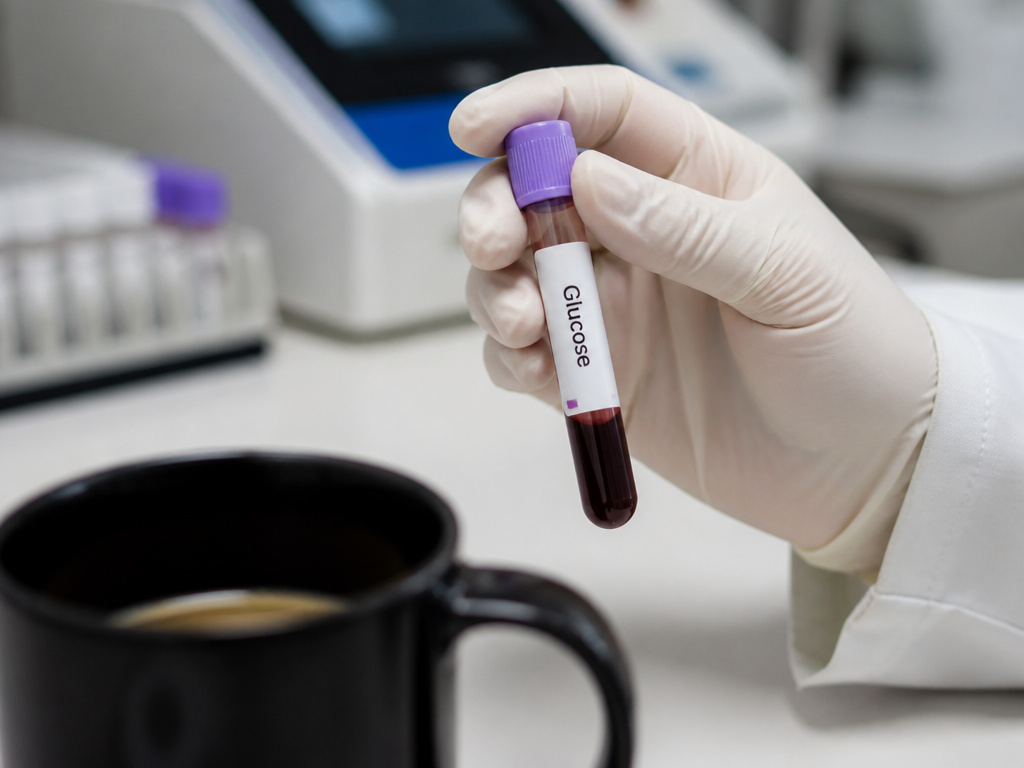
Nutritional fasting and diagnostic fasting are different games with different rules. Apps and guides for weight loss or metabolic flexibility allow black coffee because its negligible calories won’t break a fasted state for fat burning. Diagnostic fasting is about biochemical neutrality for measurement.
The YouTube transcript where a user tests black coffee on a continuous glucose monitor (CGM) proves the point for weight loss. “Black coffee did absolutely nothing to my blood sugar,” she says. A CGM measures interstitial fluid glucose, which reacts more slowly. A fasting blood draw measures plasma glucose directly and is far more sensitive to acute hormonal shifts caused by caffeine. Furthermore, a CGM user is tracking trends; a lab test requires pinpoint accuracy at a single moment in time.
You are not your CGM. The lab’s spectrophotometer is.
The Two High-Risk Groups That Must Be Strict
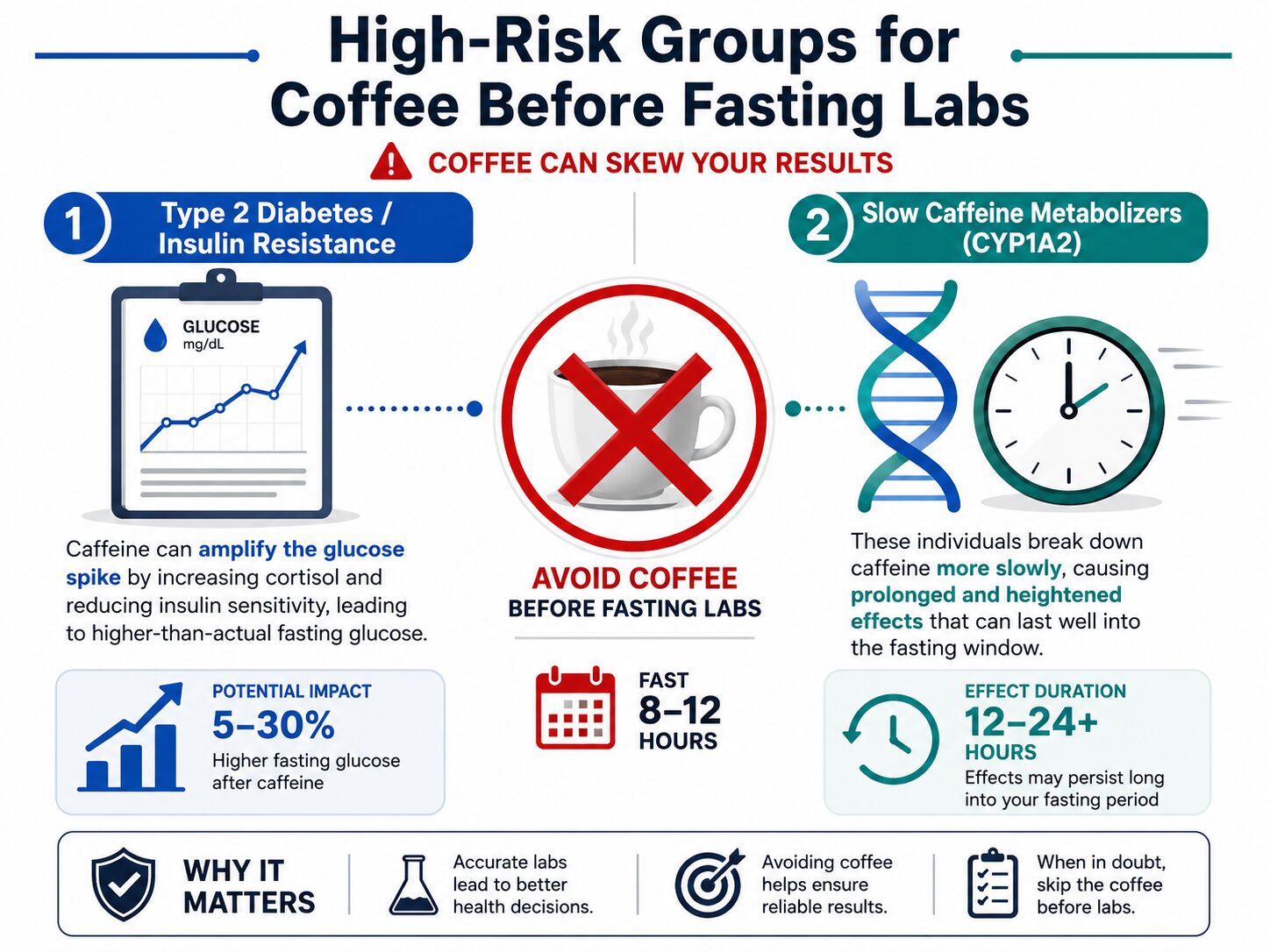
For most people, coffee before labs might just add noise. For these groups, it can create a false positive or obscure a real issue.
- Individuals with Type 2 Diabetes or Insulin Resistance: The 2002 Diabetes Care study noted caffeine’s impairment of glucose tolerance was “more pronounced” in those with type 2 diabetes. Their insulin response is already blunted. Adding caffeine-induced insulin resistance on top of that can cause a significant, misleading spike in fasting glucose.
- Slow Caffeine Metabolizers (CYP1A2 Gene Variant): The 2020 systematic review by van Dijk et al. notes individual differences in caffeine metabolism due to genetic polymorphisms influence the magnitude and duration of caffeine’s effects. Slow metabolizers have caffeine circulating longer and at higher concentrations. A single cup for them could have the impact of two or three cups for a fast metabolizer, magnifying all the effects on glucose and adrenaline.
If you fall into either group, the “maybe” becomes a “definitely not.” The margin for error is too small.
Your Pre-Blood Work Checklist: The 8- to 12-Hour Protocol

Follow this sequence. Deviating from it risks a wasted vial of blood and a repeat appointment.
- Confirm the Window. When your doctor orders the test, ask: “Is 8, 10, or 12 hours the preferred fasting length?” Write it down. Schedule the earliest morning appointment you can get to minimize the fast’s discomfort.
- Stop All Intake. At the start of your fasting window, stop consuming everything except plain water. This means:
- No coffee (regular, decaf, black, with MCT oil coffee, with coconut oil coffee).
- No tea (see our comparison of tea vs coffee for caffeine content).
- No food.
- No juice, soda, or energy drinks.
- No chewing gum (even sugar-free).
- Manage Medications. Take your prescribed medications with a small sip of water as you normally would, unless your doctor has specifically told you to hold them. This is a critical step often overlooked in Harvard Health fasting blood test guide.
- Avoid Other Interferents. Do not smoke or engage in vigorous exercise during the fast. Both can independently raise glucose and lipid levels.
- Hydrate with Water. Drink plain water as needed. It will not affect your tests and can make veins easier to find.
- Communicate Any Breach. If you accidentally drink coffee, tell the phlebotomist and your doctor. They can note “non-fasting” on the sample, which is better than getting results you misinterpret.
TL;DR: Water and necessary meds only. No coffee, no gum, no exercise. If you mess up, fess up.
What If You Can’t Function Without It? (The Damage Control Plan)
You woke up, autopiloted to the machine, and drank half a cup before your brain engaged. Now what?
First, do not panic and cancel the appointment. Call the lab or your doctor’s office immediately and ask for guidance. Some tests, like a thyroid panel (TSH) or a complete blood count (CBC), do not require fasting. They might tell you to come in anyway.
If the test is a fasting metabolic or lipid panel, you have two options:
1. Reschedule. This is the cleanest choice. Book a new appointment for another morning.
2. Proceed with Disclosure. Go to your appointment and explicitly tell the phlebotomist, “I broke my fast with coffee about an hour ago. Please note that on the sample.” Inform your doctor as well. They can interpret the results with that caveat, though the clinical utility will be limited.
A PMC patient fasting knowledge study found a significant number of patients are poorly informed about preparation, leading to erroneous results. Being honest is better than generating data that leads to a misdiagnosis.
Frequently Asked Questions
Can I drink decaf coffee before fasting blood work?
No. Decaffeinated coffee contains other bioactive compounds, including trace caffeine and acids, that can influence digestion and hormone levels. The fasting instruction is for all coffee.
Does adding cinnamon in coffee change the rule?
Yes, absolutely. Cinnamon, like any additive, introduces calories and compounds that break a fast. Even if it helps with blood sugar control in daily life, it invalidates a fasting lab test.
How long does caffeine affect blood work?
Caffeine’s half-life is about 5-6 hours in a healthy adult. To ensure it’s fully cleared, a 12-hour fast is more reliable than an 8-hour one if you are a heavy coffee drinker or a slow metabolizer.
What about espresso caffeine content vs. drip coffee?
single shot of espresso has less volume but a higher concentration of caffeine per ounce compared to drip coffee. However, the fasting rule is binary, no coffee. The specific caffeine content is irrelevant for test preparation, though espresso’s unfiltered nature means it also carries the diterpenes that can affect lipids.
Can coffee before a test show a false heart attack risk?
Not directly. Coffee is unlikely to cause a test to falsely indicate a heart attack. However, by raising blood pressure and cholesterol readings (if unfiltered), it could contribute to a risk profile that suggests greater cardiovascular concern. For a clear picture of your cardiovascular effects, fast properly.
The Bottom Line
The rule exists for a measurable, mechanical reason. Caffeine pharmacologically increases glucose and insulin. Unfiltered coffee oils directly raise LDL cholesterol. Coffee’s protective compounds lower liver enzymes. Each action corrupts the snapshot your doctor needs.
Stick to water. Take your meds. If you slip, reschedule or be brutally honest. The goal is an accurate result, not a perfect fast. Knowing the why, the 10-20% glucose spike, the 5.6 mg/dL LDL bump from a French press, makes the inconvenience make sense. It turns a arbitrary order into a logical step for your own care.
{
“@context”: “https://schema.org”,
“@type”: “HowTo”,
“name”: “How to Prepare for Fasting Blood Work When You Drink Coffee”,
“totalTime”: “PT12H”,
“step”: [
{
“@type”: “HowToStep”,
“name”: “Confirm your fasting window”,
“text”: “Check with your doctor or lab for the required fasting duration, typically 8 to 12 hours before your blood draw. Schedule your appointment for first thing in the morning to minimize the fast.”
},
{
“@type”: “HowToStep”,
“name”: “Stop all coffee intake”,
“text”: “Do not drink any coffee—regular, decaf, black, or with additives—during the entire fasting window. This includes no chewing gum, juice, or soda.”
},
{
“@type”: “HowToStep”,
“name”: “Take medications as directed”,
“text”: “Continue taking your prescribed medications with a small sip of water unless your doctor has instructed you to hold them. Always verify this step with your physician.”
},
{
“@type”: “HowToStep”,
“name”: “Avoid other interfering factors”,
“text”: “Do not smoke or engage in vigorous exercise during the fasting period, as these can also alter lab results.”
},
{
“@type”: “HowToStep”,
“name”: “Communicate any mistakes”,
“text”: “If you accidentally consume coffee or break the fast, inform both the lab technician and your doctor immediately so they can note it on your results.”
}
]
}
{
“@context”: “https://schema.org”,
“@type”: “FAQPage”,
“mainEntity”: [
{
“@type”: “Question”,
“name”: “Can I drink decaf coffee before fasting blood work?”,
“acceptedAnswer”: {
“@type”: “Answer”,
“text”: “No. Decaffeinated coffee contains other bioactive compounds, including trace caffeine and acids, that can influence digestion and hormone levels. The fasting instruction is for all coffee.”
}
},
{
“@type”: “Question”,
“name”: “Does adding cinnamon in coffee change the rule?”,
“acceptedAnswer”: {
“@type”: “Answer”,
“text”: “Yes, absolutely. Cinnamon, like any additive, introduces calories and compounds that break a fast. Even if it helps with blood sugar control in daily life, it invalidates a fasting lab test.”
}
},
{
“@type”: “Question”,
“name”: “How long does caffeine affect blood work?”,
“acceptedAnswer”: {
“@type”: “Answer”,
“text”: “Caffeine’s half-life is about 5-6 hours in a healthy adult. To ensure it’s fully cleared, a 12-hour fast is more reliable than an 8-hour one if you are a heavy coffee drinker or a slow metabolizer.”
}
},
{
“@type”: “Question”,
“name”: “What about espresso caffeine content vs. drip coffee?”,
“acceptedAnswer”: {
“@type”: “Answer”,
“text”: “single shot of espresso has less volume but a higher concentration of caffeine per ounce compared to drip coffee. However, the fasting rule is binary, no coffee. The specific caffeine content is irrelevant for test preparation, though espresso’s unfiltered nature means it also carries the diterpenes that can affect lipids.”
}
},
{
“@type”: “Question”,
“name”: “Can coffee before a test show a false heart attack risk?”,
“acceptedAnswer”: {
“@type”: “Answer”,
“text”: “Not directly. Coffee is unlikely to cause a test to falsely indicate a heart attack. However, by raising blood pressure and cholesterol readings (if unfiltered), it could contribute to a risk profile that suggests greater cardiovascular concern. For a clear picture of your cardiovascular effects, fast properly.”
}
}
]
}
