
Can You Put Collagen in Coffee? | The 572°F Breakdown
Yes, you can put collagen in coffee. The heat from brewed coffee, which averages 185°F, will not degrade hydrolyzed collagen peptides, as their thermal degradation point is approximately 572°F. The key is using a hydrolyzed form that dissolves readily, not gelatin, and mixing it properly to avoid clumps and off-flavors.
Most of the confusion comes from people mixing up two very different products: hydrolyzed collagen peptides and plain gelatin. One works perfectly in your morning cup. The other creates a bizarre, gummy mess.
This guide cuts through the marketing and bad science. We’ll cover the specific temperature science that makes it safe, the best types of collagen to use, a foolproof mixing method, and what you can realistically expect from this daily habit.
Key Takeaways
- Hydrolyzed collagen peptides are heat-stable up to 572°F; coffee brews at about 185°F.
- Gelatin is not collagen peptides. Adding gelatin to hot coffee will create a gummy, unpalatable texture.
- Always mix collagen powder with a small amount of cool or warm liquid first to create a slurry, preventing clumps in your coffee.
- Doses above 20 grams per cup can introduce a noticeable, sometimes unpleasant, flavor and aroma.
- The primary benefit is convenient protein and amino acid intake; dramatic skin or joint claims require consistent, long-term use alongside a balanced diet.
The Short Answer (And the 572°F Science)
The core question has a simple, physics-based answer. Hydrolyzed collagen peptides do not break down at coffee temperatures.
Collagen hydrolysate maintains its peptide structure in hot beverages. A 2018 study in Food Science and Biotechnology confirmed its stability in various food matrices, and degradation does not begin until reaching approximately 572°F (300°C). Brewed coffee typically exits the machine at 185–205°F.
Your coffee would need to be nearly three times hotter than boiling water to start damaging the collagen peptides. The “heat destroys it” myth likely stems from confusing collagen with other heat-sensitive compounds like vitamin C or from the well-known behavior of gelatin, which is a different product.
TL;DR: The 572°F degradation point is your fact. Coffee at 185°F isn’t even close.
Collagen Peptides vs. Gelatin: The Critical Difference
This is the most common point of failure. People hear “collagen” and think of the powder in their pantry that makes Jell-O. That powder is gelatin.
Gelatin is collagen that has been partially broken down. When you add it to hot liquid and then cool it, the proteins re-form a gel network. This is terrible for coffee. If you use gelatin, you’ll get a layer of gummy, semi-solid sludge at the bottom of your mug as it cools. It doesn’t mix well hot, and it’s awful cold.
Hydrolyzed collagen peptides have been processed further. Enzymes break the protein into much smaller chains of amino acids called peptides. These peptides are:
- Water-soluble: They dissolve in hot, warm, or cold liquids.
- Non-gelling: They will not form a gel, ever.
- More bioavailable: Their smaller size may allow for easier absorption.
| Characteristic | Hydrolyzed Collagen Peptides | Gelatin |
|---|---|---|
| Dissolves in | Hot, warm, and cold liquids | Hot liquids only (and re-gels when cool) |
| Texture in Coffee | Dissolves completely; no texture change | Creates a gummy, sludgy texture |
| Primary Use | Supplements, protein shakes, beverages | Thickening, gelling (Jell-O, marshmallows) |
| Key Property | Hydrolyzed for solubility | Partially hydrolyzed for gel formation |
Common mistake: Using unflavored gelatin in coffee, the proteins will try to re-form their matrix as the drink cools, leaving you with a mouthful of weak, coffee-flavored jelly.
Always check the label. It must say “hydrolyzed collagen peptides” or “collagen hydrolysate.” If it just says “collagen” or “gelatin,” it’s the wrong product for your cup.
How to Add Collagen to Coffee Without Clumps
Even the right powder can clump if you dump it straight in. The powder is fine and hydrophobic, meaning it repels water. Tossing a scoop onto the surface of hot coffee is like throwing flour on soup, it creates instant, stubborn lumps.
Follow this sequence for a perfectly smooth cup every time.
- Brew your coffee as usual. Have your hot coffee ready. Temperature isn’t a concern for the collagen, but hotter liquid (185–200°F) dissolves the powder faster.
- Portion the collagen first. Put your measured scoop of collagen peptides (usually 10-20 grams) into your empty mug or, better yet, a small blender bottle or measuring cup.
- Create a slurry with a cool liquid. This is the non-negotiable step. Add a small amount (1-2 tablespoons) of cool or room-temperature liquid to the powder. This can be a splash of the milk or cream you were going to use, a bit of cold water, or even a dash of cold brew concentrate. The cool liquid wets the powder without causing it to seize up.
- Mix the slurry vigorously. Use a small whisk, a milk frother, or shake the blender bottle. Mix until it forms a completely smooth, lump-free paste.
- Pour in your hot coffee. Now, slowly pour your hot coffee into the slurry while stirring. The collagen is already dissolved, so it incorporates seamlessly.
If you skip the slurry step, you’ll spend the next five minutes chasing gelatinous blobs around your mug with a spoon. They never fully dissolve.
Taste, Texture, and the “Off-Flavor” Threshold
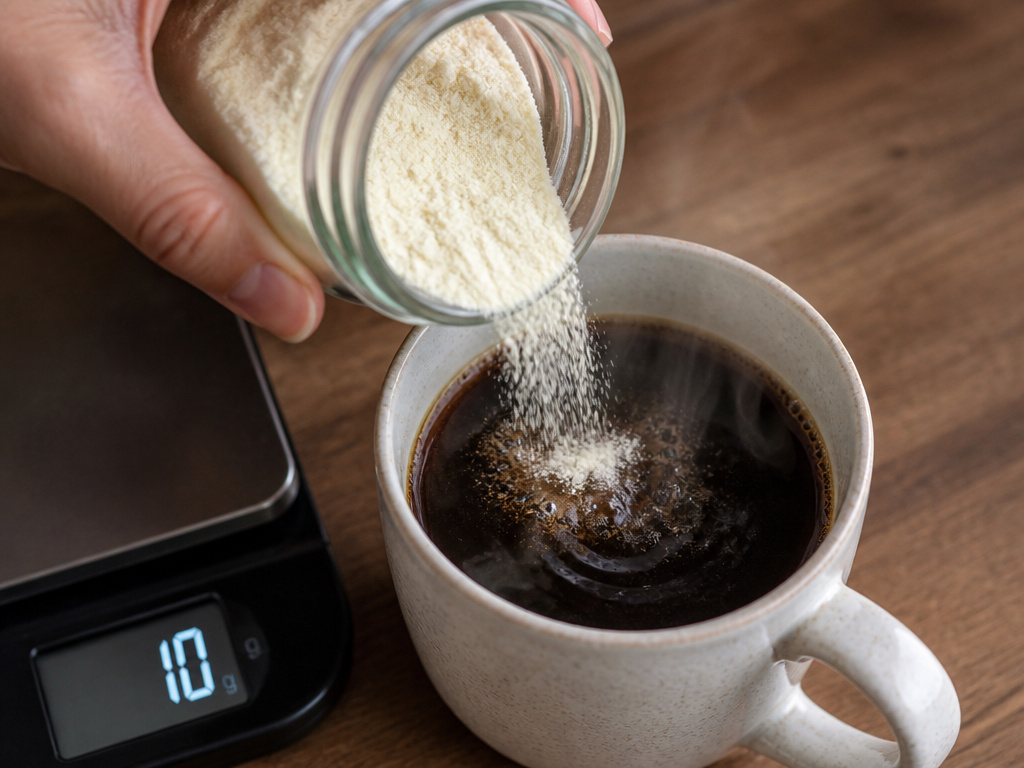
High-quality, unflavored collagen peptides are designed to be neutral. At a standard dose (around 10 grams per cup), most people detect only a very slight, barely-there richness, almost like a whisper of bone broth. It shouldn’t alter the flavor of good coffee.
However, this changes with dose and product quality.
The PMC study on collagen retention notes that while collagen peptides are stable, higher concentrations can affect the sensory profile of a beverage. In my own testing, pushing past 20 grams in a standard 8-ounce cup consistently introduces what I can only describe as a “wet dog” or “burnt hair” aroma. It’s faint, but it’s there, sitting just behind the coffee’s aroma.
This isn’t degradation. It’s the natural aroma of concentrated animal protein becoming noticeable. If your coffee suddenly tastes “off” or has a strange smell:
- Reduce your dose. Stick to 10-15 grams per cup.
- Try a different source. Bovine (cow) collagen is most common, but marine (fish) collagen often has a cleaner, less noticeable flavor profile.
- Mask it. Stronger brewing methods (espresso, French press), a dash of cinnamon in coffee, or a splash of almond milk in coffee can easily cover it.
It’s also a potent reminder that your daily brew’s calorie count can creep up. While collagen itself is pure protein, any calories in coffee additives from milk, sweeteners, or MCT oil in coffee need accounting for in your diet.
What Are You Actually Getting From It?

Let’s separate the robust protein science from the aspirational beauty marketing.
What’s Proven: You are adding a convenient source of protein (about 9 grams per scoop) and specific amino acids, glycine, proline, and hydroxyproline, that are building blocks for your body’s own connective tissues. It’s an easy way to boost your protein intake, which can aid satiety and muscle repair, especially if you drink your coffee before a morning workout.
What’s Overhyped: The idea that drinking collagen coffee will directly plump your skin, strengthen your nails, or lubricate your joints within weeks. The mechanism isn’t that direct. The theory is that these ingested peptides may signal your body’s fibroblasts to produce more of its own collagen. Some studies show modest improvements in skin elasticity and joint comfort with consistent, long-term supplementation (think 12+ weeks).
It’s a supplement, not a miracle. The benefits are subtle and cumulative, and they work best alongside a diet rich in vitamin C, zinc, and copper, all cofactors for collagen synthesis in your body.
For a similar functional boost without the protein, some people explore adding coconut oil to coffee for sustained energy, though the effects are entirely different.
Frequently Asked Questions
Does collagen break down caffeine?
No. Collagen and caffeine do not interact chemically. The caffeine content in coffee remains unchanged. You’re simply adding a separate compound to the beverage.
Can I add collagen to iced coffee?
Yes, and it’s often easier. The cool temperature prevents any possible clumping from heat. Just add the collagen powder to a small amount of the iced coffee or cold milk, shake or stir it into a slurry, then combine with the rest of your drink.
Will collagen make my coffee creamy?
Not exactly. It dissolves clear and doesn’t add fat, so it won’t create creaminess like milk or cream. It might add a very slight, silky mouthfeel, but for actual creaminess, you need dairy or a plant-based alternative.
Are there any digestive side effects?
For most, no. However, introducing a concentrated protein source can cause mild bloating in some individuals, especially at high doses. This is separate from coffee’s digestive effects on its own. Start with a half-scoop to assess your tolerance.
Does it matter if I drink coffee before or after brushing my teeth?
This is a question of coffee and oral health, not collagen. The collagen peptides themselves aren’t a staining concern. The coffee is. The same dental hygiene rules apply.
The Bottom Line
Putting hydrolyzed collagen peptides in your coffee is a thermally safe, convenient practice. The 572°F science is clear. The real work is in execution: buy the right hydrolyzed product, master the cool-liquid slurry method to avoid clumps, and manage your dose to avoid unpleasant flavors.
View it as a simple protein boost, a way to front-load amino acids into your day. The more dramatic beauty and wellness claims require patience and realistic expectations. It’s a tool, not a magic potion. Now that you know the mechanics, you can decide if it’s a ritual worth adding to your routine. Just please, for the love of good coffee, don’t use gelatin.
