
Is Coffee Allowed Before a Colonoscopy? The Complete Rule
Yes, you can drink coffee before a colonoscopy, but it must be plain black coffee, no milk, cream, sugar, or any other additive, and you must stop all intake, including coffee, at the time specified in your preparation instructions, typically midnight the night before or a few hours prior to the procedure.
The confusion starts with the phrase “black coffee.” Most people hear that and think “my usual cup,” which almost always includes something else. That single additive is enough to force a reschedule. The prep is unforgiving.
This guide walks through the exact rules from major medical societies, explains the physical reasons behind each restriction, and outlines the multi-day dietary process that leads up to the clear liquid phase where your black coffee fits in.
Key Takeaways
- Plain black coffee is permitted during the clear liquid diet phase, but nothing can be added to it, no dairy, non-dairy, sweeteners, or flavors.
- You must transition to a low residue diet 2-3 days before the clear liquid phase to reduce solid waste in the colon.
- All liquid intake, including water and black coffee, must stop several hours before the procedure, as per your doctor’s specific timeline.
- The primary risk isn’t the coffee itself; it’s residue from additives that can coat the colon lining or clog the scope’s tiny 3.7mm suction channel.
- Your gastroenterologist’s written instructions override all general guidelines; always follow their protocol first.
The Official Medical Guidelines on Coffee
The American Society for Gastrointestinal Endoscopy (ASGE), the National Institute of Diabetes and Digestive and Kidney Diseases (NIDDK), and the Mayo Clinic are unanimous. Their patient preparation materials explicitly list “black coffee or tea (no cream or milk)” as an acceptable clear liquid.
The ASGE guideline states: “Do not drink anything red, purple, or orange. You may have black coffee or tea (no cream or milk).” This 50-word directive is the technical standard for pre-procedure dietary clearance.
This consensus exists because the fluids absorbed in your stomach and small intestine leave no visible trace in the colon. The caffeine and water content pass through without depositing any film or particulate matter that could obscure the physician’s view.
The rule exists for one mechanical reason. A colonoscope’s suction channel is only 3.7 millimeters in diameter. As highlighted in a gastroenterologist’s PSA video, it cannot handle particulate matter. Grounds from unfiltered coffee, milk solids, or undissolved sweetener granules can clog this channel instantly. When the channel clogs, the doctor cannot clear fluid or debris from the colon, which compromises visibility and increases procedure time and risk.
TL;DR: Major medical societies allow black coffee because it’s a residue-free liquid, but the scope’s tiny suction channel makes any additive a genuine physical hazard.
What Exactly Is a “Clear Liquid Diet”?
The clear liquid diet is the final stage of your prep, usually starting the day before the colonoscopy. It’s not a suggestion; it’s a requirement. The goal is to hydrate you while leaving your digestive tract, specifically the colon, completely empty of any substance that could color, coat, or hide the lining.
A true clear liquid is something you can see through when held up to light. Approved items include:
– Water
– Clear broth (beef or chicken, fat skimmed)
– Clear fruit juices without pulp (apple, white grape)
– Plain gelatin (any color but red, purple, or orange)
– Sports drinks (again, avoid red/purple/orange dyes)
– Plain black coffee
– Plain tea (no milk)
The prohibition against red, purple, and orange dyes is critical. These colors can be mistaken for blood or inflammation during the exam, potentially leading to false positives or missed diagnoses. This is why even a seemingly clear liquid like a red sports drink is banned.
The diet is monotonous and lacks real nutrition, which is why it’s only used short-term. Its purpose is singular: to create a pristine visual field inside your colon. Your black coffee fits into this regimen solely as a source of fluid and comfort, not as a nutritional item.
TL;DR: If you can’t see through it, you can’t drink it. Black coffee and tea are exceptions because they are liquid without residue, not because they are nutritious.
The Low Residue Diet: Your First Step
Most people focus on the clear liquid day and forget the preparatory phase that comes before it. In the 2-3 days leading up to your clear liquid diet, you’ll typically be asked to follow a low residue or low fiber diet.
Common mistake: Jumping straight from a normal diet to clear liquids, this leaves too much fibrous matter in the colon, which the prep solution cannot fully clear, resulting in a “poor prep” and a higher chance of missed polyps.
This diet reduces the amount of undigested material that reaches your colon. It includes foods like white bread, white rice, plain pasta, skinless poultry, well-cooked eggs, and canned fruit without skin. You must avoid seeds, nuts, raw vegetables, whole grains, and tough meats.
The YouTube transcript from a gastroenterologist emphasizes this, noting that seeds and fibrous greens “linger or persist in the colon.” If you drink coffee during this phase, it’s still subject to the same black-only rule. More importantly, you should examine your coffee’s origin. A light roast with visible chaff or a natural process coffee with occasional fruit matter? Switch to a clean, washed-process dark roast filtered through paper. The fewer physical particulates, the better.
| Food Category | Eat (Low Residue) | Avoid (High Residue) |
|---|---|---|
| Grains | White bread, white rice, plain crackers | Whole wheat bread, brown rice, quinoa, oats |
| Proteins | Skinless chicken, turkey, tofu, eggs | Tough meats, beans, lentils, nuts, seeds |
| Vegetables | Well-cooked, skinless carrots, green beans | Raw vegetables, broccoli, cauliflower, corn, leafy greens |
| Fruits | Canned peaches/pears (no skin), banana | All berries, raw fruit with skin, dried fruit |
| Beverages | Water, black coffee, clear juices | Milk, smoothies, pulp-filled juices, alcoholic drinks |
This table isn’t just a list; it’s a map for the 48 hours that determine how clean your colon will be. The cleaner the start, the more effective the brutal clear liquid and bowel prep day will be.
How to Prepare and Drink Your Coffee Safely
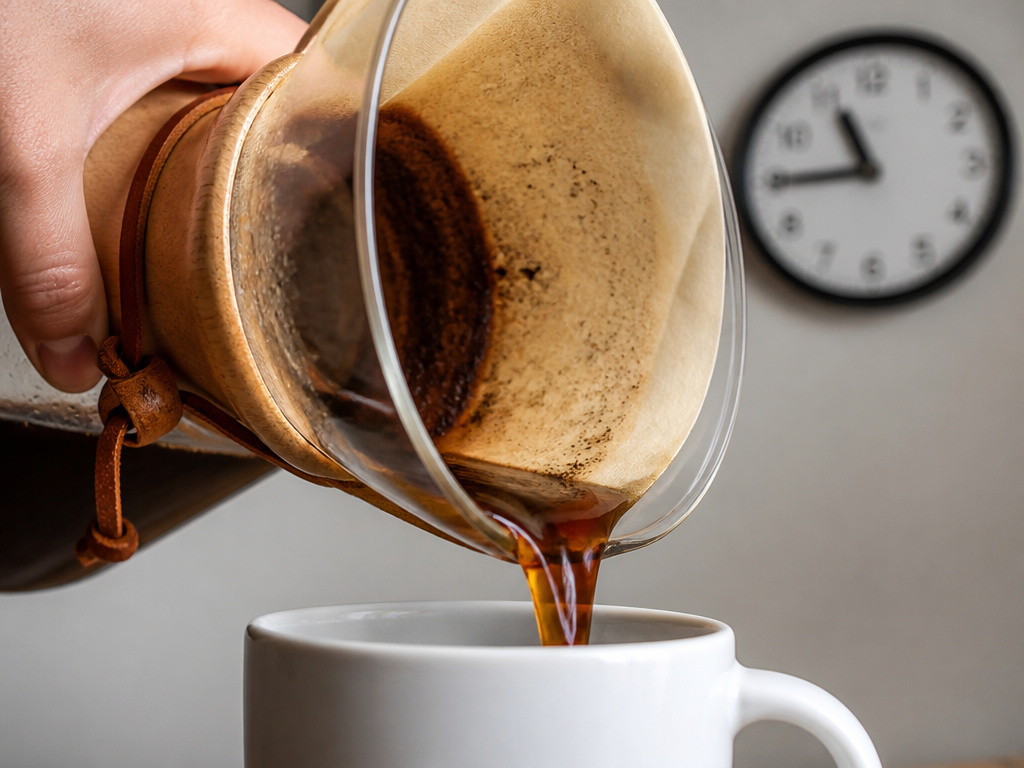
The method matters as much as the ingredients. Here is the sequence for your final permissible cups.
- Use a paper filter. Whether you’re using a drip machine, pour-over, or French press (with a paper filter inserted), this step traps fine coffee grounds and oils. These oils can leave a faint, hazy film on the colon wall. A hospital colonoscopy preparation guide often emphasizes removing all particulate matter, which includes micro-grounds.
- Brew it plain. Add absolutely nothing to the cup. This means no dairy milk, non-dairy creamers (which contain thickeners and oils), sugar, artificial sweeteners, honey, or flavored syrups. The vanilla syrup you love is full of sugar and coloring that will absolutely leave a residue.
- Let it cool slightly. Drinking it very hot is fine, but scalding temperatures can irritate an empty stomach. Since coffee can stimulate bowel activity, a phenomenon explored in our article on coffee’s laxative effect, adding physical irritation to the chemical stimulation can be uncomfortable.
- Consume it within the clear liquid window. This is typically the entire day before the procedure, up until your cutoff time.
- Stop at the hard deadline. Your instructions will say something like “nothing by mouth after midnight.” This includes water and your beloved black coffee. The reason is anesthesia safety; an empty stomach reduces the risk of aspiration.
Skipping the paper filter step means microscopic grounds enter your system. While you might not notice, they provide tiny particles that the bowel prep must evacuate. It’s an unnecessary risk.
I once assumed a gold mesh filter was “clean enough.” The prep seemed to go fine, but the doctor’s report noted “moderate residue requiring increased irrigation.” He asked if I’d had any broth with fat or coffee with oils. The mesh filter passed fine silt I never saw. Now I use a bonded paper filter the week leading up to any procedure.
TL;DR: Brew with a paper filter, add nothing, and respect the absolute cutoff time. The goal is zero physical trace.
When You Should Skip Coffee Altogether
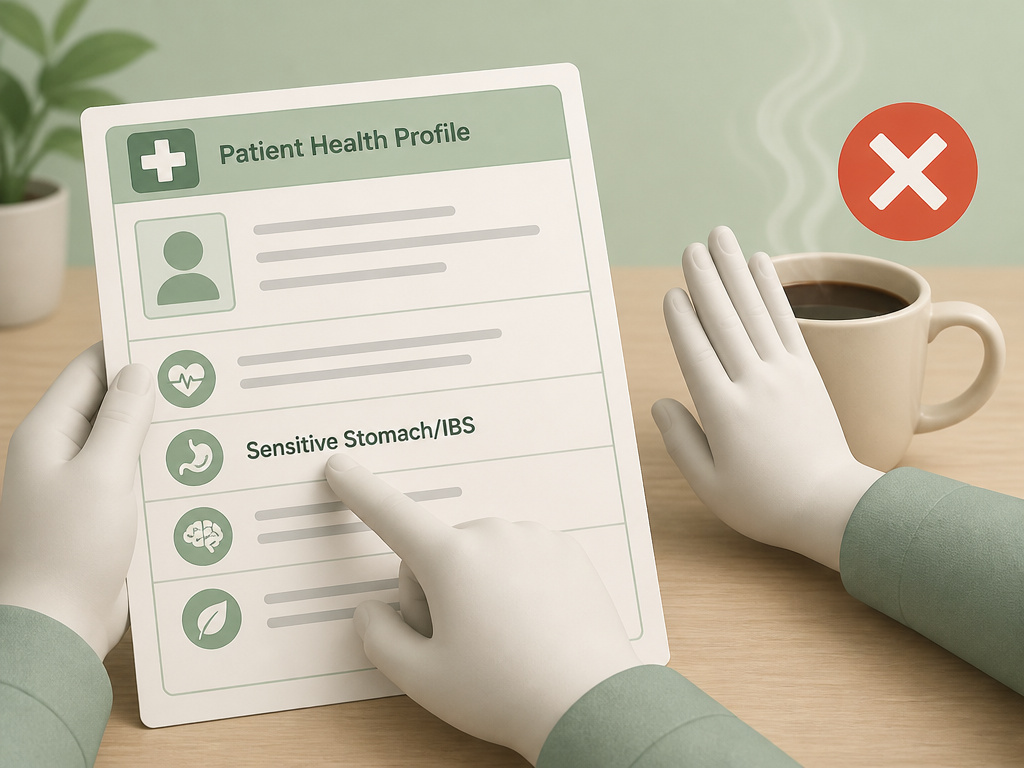
While the guidelines permit it, your personal health profile might veto it. You need to consider more than just the colonoscopy rules.
If you have a sensitive stomach, irritable bowel syndrome (IBS), or colitis, coffee can be a trigger. The caffeine and digestive effects are more pronounced on an empty system during the clear liquid diet. Triggering a cramping episode or discomfort the day before is miserable and unnecessary.
Furthermore, the stimulant effects of caffeine matter. If you have specific cardiovascular concerns, such as arrhythmias or managed hypertension, the short-term caffeine triggers for increased heart rate and blood pressure are worth discussing with your doctor. The stress of the procedure combined with caffeine might be inadvisable.
Finally, consider the caffeine consumption guidelines you might already follow for other reasons. If you are pregnant, breastfeeding, or adhering to a strict limit for another health condition, the colonoscopy prep period is not a holiday from those rules.
The safest path is to discuss it with the doctor who ordered the colonoscopy. Say, “My instructions say black coffee is allowed, but I have [X condition]. Do you recommend I skip it during prep?” Their answer is your final authority.
Common Mistakes to Avoid
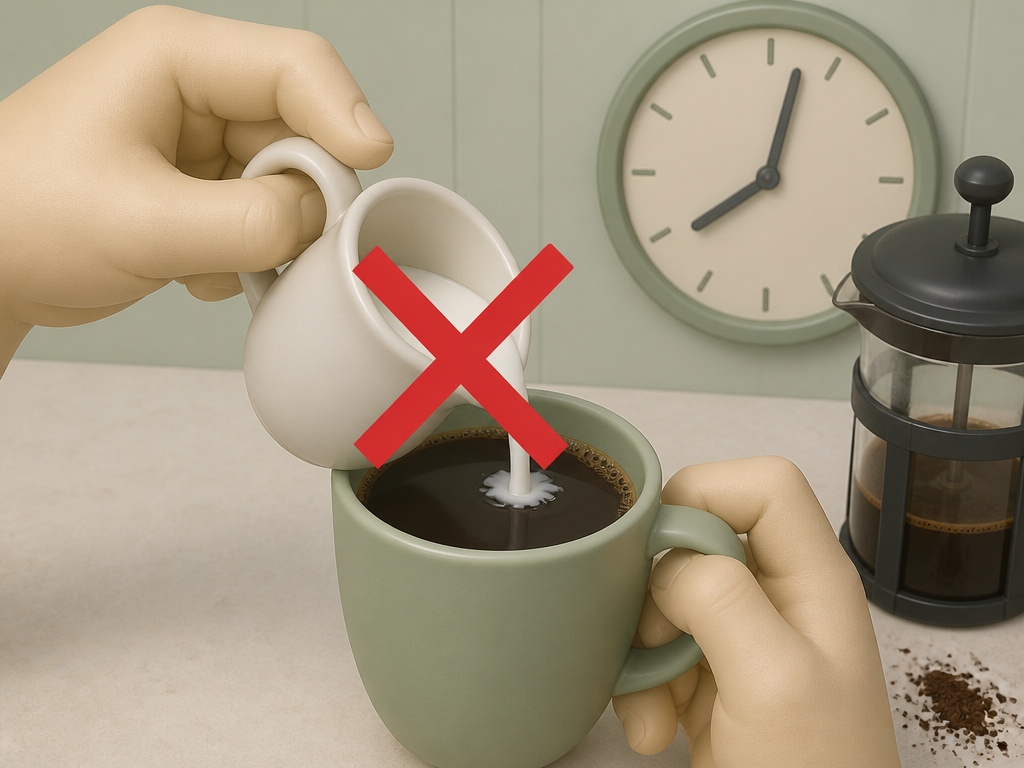
Most failed preps aren’t caused by malice, but by misinterpretation.
Common mistake: Using “just a splash” of cream or “one sugar packet”, these additives leave a coating of fat or undissessed sugar crystals that cloud the mucosal lining. The result is often a hazy, obscured view that can extend procedure time by 20 minutes or more.
- Assuming “black coffee” includes artificial sweeteners. It does not. Zero-calorie sweeteners are chemicals that can leave residues.
- Drinking coffee with grounds. Turkish coffee or French press without a paper filter introduces physical particles that can clog the scope.
- Forgetting the cutoff time. Sipping coffee 6 hours before instead of 8 because “it’s mostly water” is a common error. Anesthesia protocols are strict.
- Ignoring the low residue lead-up. You can follow the clear liquid day perfectly, but if you ate a salad with seeds three days prior, those seeds may still be present.
- Switching to tea as a loophole. Herbal teas with red or purple flowers, or chai with milk, violate the rules. Only plain, clear tea is allowed.
Another subtle error is volume. While you can drink black coffee, gulping multiple large cups can overfill your stomach and cause bloating or reflux when you’re lying down for the procedure. Moderation still applies.
TL;DR: The devil is in the details: no additives, no grounds, strict timing, and proper pre-clearing with a low residue diet.
The Role of Caffeine Withdrawal
This is the unspoken practical challenge. For daily coffee drinkers, the clear liquid day, and the procedure morning without coffee, can trigger caffeine withdrawal headaches. This adds genuine discomfort to an already stressful process.
Plan for it. If you are a heavy consumer, consider gradually reducing your caffeine intake in the week before the prep. You don’t need to quit entirely beforehand, but dropping from four cups to two in the days prior can soften the withdrawal blow.
The clear liquid day itself is when you can have your black coffee. Use it strategically. A cup in the morning and perhaps one in the early afternoon can stave off the worst symptoms. Just remember it still must be plain and must stop at your cutoff time.
Understanding the caffeine content per volume in your preferred brew can help. A standard drip coffee has more caffeine than a single espresso shot, but you drink a larger volume. If you’re trying to minimize intake while avoiding headache, a single strong cup might be more effective than several weak ones.
Frequently Asked Questions
Can I drink coffee with non-dairy creamer before a colonoscopy?
No. Non-dairy creamers contain additives like carrageenan, vegetable oils, and thickeners that leave a residue. The rule is “no cream or milk,” which encompasses all creamer products, dairy or not.
What about iced coffee or cold brew?
Yes, but with the same stringent conditions. It must be plain, black, and filtered. No sweeteners, milk, or cream. Ensure any ice is made from purified water, but it’s safer to drink it cold without ice to avoid any potential contaminants.
Can I have decaf coffee?
Yes, plain black decaf coffee is allowed. The restriction is about additives and residues, not caffeine content. However, note that decaf is not 100% caffeine-free, so if you’re avoiding all stimulants, discuss this with your doctor.
Why is the cutoff time for liquids so strict?
This is an anesthesia safety protocol. Having liquid in your stomach increases the risk of pulmonary aspiration (breathing stomach contents into your lungs) while you are sedated. The mandatory empty stomach minimizes this serious risk.
My instructions don’t mention coffee. What should I do?
Assume it is not permitted unless explicitly allowed. Preparation instructions are tailored for success. If coffee isn’t listed as an approved clear liquid, do not drink it. Contact your doctor’s office for clarification.
If coffee is a diuretic, will it dehydrate me during prep?
While caffeine has a mild diuretic effect, the fluid volume in the coffee outweighs it. In the context of a clear liquid diet where you’re consuming other fluids, black coffee contributes to your overall hydration. The greater risk is from additives, not dehydration.
Before You Go
The short answer remains yes, but the long answer involves a paper filter, a stark empty cup, and a clock. Your pre-colonoscopy coffee is a functional beverage, not a pleasurable one. Its only purpose is to provide fluid and perhaps stave off a caffeine headache without compromising the multi-hundred-dollar procedure you’ve endured a brutal prep for.
The stakes are visibility. A clean colon means detectable polyps, a reliable diagnosis, and a procedure that doesn’t need to be repeated in six months. A single splash of cream clouds that view. Always, always default to your gastroenterologist’s specific written instructions. They know your health history and their equipment’s limits. When in doubt, skip the cup. It’s one day. The clarity it buys is worth the sacrifice.
