
Can You Put Creatine in Hot Coffee? Research-Backed Guide
Yes, you can put creatine monohydrate powder in hot coffee. The standard brewing temperature of coffee (around 95°C/203°F) is not hot enough for long enough to degrade a meaningful amount of creatine into creatinine before you drink it. The real concern isn’t the heat, it’s the caffeine.
Most people worry about the wrong thing. They picture the powder turning into useless sludge the second it hits hot liquid. That mental image is wrong. The actual risk is biochemical, not thermal, and it plays out over hours, not seconds.
This guide walks through the chemistry, the caffeine interaction, and the practical method that avoids both grit and wasted effort.
Key Takeaways
- Heat degradation is negligible. You’d need to boil creatine for over two hours to see significant conversion to creatinine.
- The solubility bonus is real. Hot coffee dissolves creatine far better than cold water or a protein shake, eliminating the gritty texture.
- Caffeine might be the actual problem. Some studies suggest it can blunt creatine’s performance benefits by opposing its effect on muscle relaxation time.
- If you’re serious about performance, separate your caffeine and creatine intake by 3–4 hours.
- For general health and muscle maintenance, mixing them is fine. The convenience often outweighs the minor theoretical trade-off.
The Chemistry of Heat and Creatine
People imagine creatine as a delicate compound that shatters under heat. It’s not sugar. It’s a stable molecule.
Creatine monohydrate breaks down into creatinine, a waste product, through a process called cyclization. This reaction is accelerated by two things: high heat and low pH (acidity). Your morning coffee provides both, but not at levels that matter on a human timescale.
A 2004 review in Sports Medicine by Tarnopolsky states that heating creatine to boiling temperatures for prolonged periods, specifically around two hours, can lead to its degradation to creatinine. Your coffee cools in your mug long before that mark.
TL;DR: Your coffee isn’t hot enough for long enough to ruin your creatine. You drink it in minutes, not hours.
The multi-analytical study on creatine stability confirms this. Degradation in hot, acidic solutions is a slow, time-and-temperature-dependent process. The few minutes between stirring and sipping are irrelevant.
Where you might see an issue is with extremely acidic cold-brew concentrates or if you left a creatine-laced coffee simmering on a warmer all day. Don’t do that. For a standard cup, the thermal risk is a ghost.
| Condition | Effect on Creatine | Practical Implication |
|---|---|---|
| Boiling water (100°C) | Significant degradation after 2+ hours of continuous exposure. | Not relevant for coffee consumption. |
| Hot coffee (~95°C) | Minimal to no degradation within a normal drinking window (5-30 minutes). | Safe to mix and drink immediately. |
| Highly acidic brew (low pH) | Accelerates degradation rate, but still requires prolonged heat to matter. | Use a balanced, medium-roast coffee if concerned; dark roasts are less acidic. |
| Room temperature water | Stable for several days. | Cold mixing is chemically safest but dissolves poorly. |
The real advantage of hot coffee isn’t safety, it’s solubility. Creatine monohydrate dissolves sluggishly in cold water. You get a gritty, sandy texture at the bottom of your shaker. Hot coffee acts as a solvent. The powder vanishes in seconds with a stir. That’s the lived benefit nobody talks about.
Common mistake: Using boiling water straight from the kettle, the extreme heat can cause the creatine to clump before it dissolves. Let the coffee sit for 30 seconds off the boil, then add the powder.
The Caffeine Conundrum
Heat is a non-issue. Caffeine is the real debate.
Creatine works, in part, by shortening muscle relaxation time. This lets you generate force more quickly between contractions. Caffeine does the opposite. It triggers calcium release in muscle cells, which can prolong relaxation time. The fear is they cancel each other out.
The evidence is mixed but specific. A 1996 study found that caffeine abolished the performance benefits of creatine on knee extension torque. A 2022 study saw no increase in muscle thickness when creatine was combined with caffeine, whereas creatine alone showed a clear effect.
The mechanism makes physiological sense. They push the system in opposing directions.
I stopped taking my pre-workout (loaded with caffeine) with my creatine years ago after a string of flat gym sessions. The switch to separating them by a few hours felt like removing a governor. The placebo effect is powerful, but the weights moved easier.
This doesn’t mean caffeine negates all of creatine’s benefits, like cellular hydration or cognitive support. It suggests the performance edge, the extra rep, the faster sprint, might get dulled if you take them together. For the average person adding creatine to their morning coffee for general health, this is a non-issue. For an athlete squeezing out every percent of gain, it’s a variable to control.
If you want to maximize the ergogenic effect, separate your caffeine and creatine by 3–4 hours. Take your creatine with breakfast, have your coffee mid-morning. Or take creatine post-workout and have your coffee pre-workout. The half-lives give you a window.
Step-by-Step: How to Mix It Right
Doing it wrong makes a mess. Doing it right is seamless.
- Brew your coffee as usual. Any method works, drip, pour-over, French press. If you’re neurotic about acidity, a dark roast is typically less acidic than a light roast.
- Let it cool for 30 seconds. Pouring boiling water (100°C) onto the powder can cause it to clump. A temperature around 85–90°C (185–194°F) is ideal. This is about the time it takes to grab your mug from the machine and walk to the counter.
- Add a measured 5g dose. Eyeballing leads to under-dosing. Use a milligram scale if you have one, or a dedicated 5g scoop. Dump it directly into the center of the liquid.
- Stir aggressively for 10–15 seconds. A lazy swirl leaves undissolved sludge at the bottom. Stir like you mean it until the liquid is perfectly clear. No cloudiness, no granules on the spoon.
- Drink it within the hour. While stability is good, don’t leave it sitting on your desk all morning. Oxidation and continued slow acid interaction aren’t your friends.
Skip the milk or creamer until after the creatine is fully dissolved. Fat can coat the powder particles and make them harder to dissolve. Add your almond milk in coffee or dash of MCT oil in coffee after the mix is clear.
Creatine vs. Other Coffee Additives

Coffee has become a supplement vehicle. Creatine is just one passenger. How does it stack up?
Unlike adding coconut oil to coffee or MCT oil, creatine dissolves completely. You won’t have an oily film on top. Unlike brown sugar in coffee or other sweeteners, it’s virtually tasteless. It doesn’t add calories from milk or creamer.
It also doesn’t offer the immediate cognitive or energy boost of caffeine or the purported metabolic benefits of cinnamon in coffee. Its job is systemic and long-term, saturating muscle phosphocreatine stores.
| Additive | Dissolves in Hot Coffee? | Primary Benefit | Taste Impact |
|---|---|---|---|
| Creatine Monohydrate | Yes, completely. | Increases muscular strength & endurance. | Neutral, slightly chalky if under-dissolved. |
| MCT Oil | No, forms suspension. | Rapid energy, cognitive focus. | Adds oily texture. |
| Coconut Oil | No, forms suspension. | Sustained energy, adds healthy fats. | Adds oily texture, mild coconut flavor. |
| Sugar / Sweetener | Yes. | Adds sweetness, masks bitterness. | Sweet. |
| Salt | Yes. | Reduces perceived bitterness. | Can be undetectable at low doses. |
| Cinnamon | No, grounds settle. | Antioxidants, may help regulate blood sugar. | Adds spice flavor. |
The choice comes down to your goal. Are you using coffee as a efficient delivery system for a daily health supplement? Creatine fits. Are you looking for a morning energy or focus kick? Caffeine content in coffee or MCT oil might be better. You can combine them, but know the trade-offs.
Who Should Avoid This Combo?
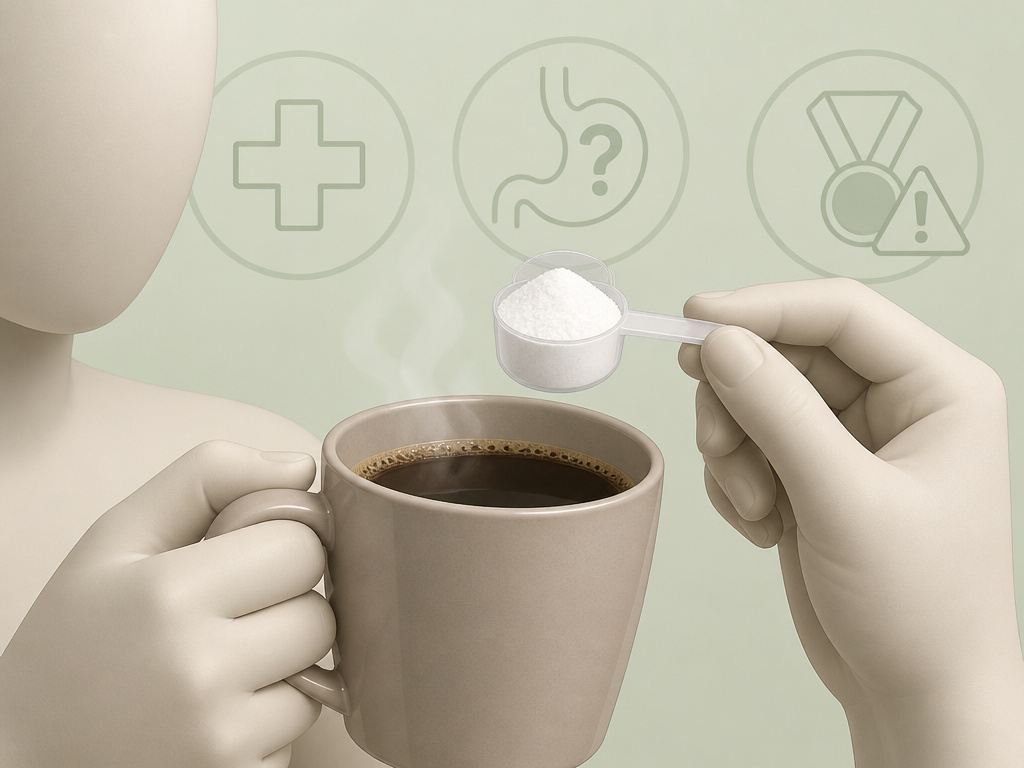
It’s safe for most. A few groups should pause.
If you have kidney issues, consult your doctor before adding any creatine supplement, regardless of the liquid. The concern isn’t the coffee, it’s the creatine load on renal function.
Individuals sensitive to coffee’s effect on digestion might find the combination exacerbates things. Creatine can cause water retention and mild stomach upset in some. Caffeine is a diuretic and a gut stimulant. Together, they can be a lot for a sensitive system.
Anyone on a strict caffeine-free regimen for sleep or anxiety should obviously skip the coffee part. Take your creatine with juice or water.
For the performance-focused athlete, the potential interference effect is a reason to separate them. If your livelihood depends on that extra 2% output, don’t gamble. Give the creatine a clean, caffeine-free window to work. The PubMed study on creatine degradation underscores that stability isn’t the issue, bioavailability and interaction are.
Frequently Asked Questions
Does hot coffee destroy creatine?
No. The temperature of brewed coffee is not high enough for long enough to cause significant degradation. Research indicates you’d need to boil creatine continuously for over two hours to break it down substantially. You drink your coffee in minutes.
What’s the best liquid to mix creatine with?
For complete dissolution and no grit, hot water or hot coffee is best. For taste, many prefer juice because the sweetness masks creatine’s mild chalkiness. Avoid mixing it with dairy milk right before shaking, it clumps.
Can I just take my creatine and coffee separately?
Absolutely. This is the gold standard if you’re concerned about the caffeine interaction. Take your creatine with breakfast water, then have your coffee 30 minutes later. Or reverse it. A 3–4 hour separation is ideal for eliminating interference.
Will I still get the benefits if I mix them?
For muscle building and general health, yes. The primary mechanism of saturating muscle stores works regardless. The potential interference is on the performance end, the explosive strength and power benefits might be slightly blunted if taken simultaneously.
Does creatine make coffee taste bad?
High-quality, pure creatine monohydrate is virtually tasteless. If your coffee tastes metallic or foul after adding it, you might have a impure product or you’re not stirring it enough, leaving undissolved granules.
The Bottom Line
Stop worrying about the heat. Your morning cup won’t cook the benefits out of your creatine. The powder dissolves better in hot coffee than in anything else, and that’s a practical win.
The real question is whether you want the caffeine in the same dose. For maximum performance, give them a few hours apart. For convenience and general supplementation, stirring them together is perfectly effective. It’s a time-saver, not a deal-breaker.
Just measure your dose, stir it well, and drink it fresh. The rest is chemistry that works in your favor.
