
Can I Drink Coffee with Diverticulitis? | What the Data Says
You can drink coffee with diverticulitis, but only during remission and if you personally tolerate it. During an active flare, caffeine’s stimulant effect on the colon can worsen pain and inflammation, so it’s best avoided. The key is matching your intake to your current gut state: strict avoidance when flaring, cautious reintroduction when healed.
Most advice stops at “listen to your body,” which is useless when your body is sending mixed signals. The real problem is not knowing how caffeine interacts with inflamed diverticula or what “caution” actually looks like in a daily routine.
This guide breaks down the physiology, cites the latest research, and gives you a phased protocol for testing coffee safety on your own terms.
Key Takeaways
- Stop coffee completely during an active diverticulitis flare. Caffeine stimulates colonic contractions, which can increase pressure on inflamed pouches.
- Reintroduce coffee only during confirmed remission, starting with a half-cup of a low-acid, paper-filtered brew consumed with food.
- A 2024 study in BMC Gastroenterology found no direct link between coffee consumption and developing diverticulosis, but its data doesn’t cover active inflammation.
- Your tolerance depends on more than caffeine. Acidity, brewing method, and additives like dairy or sugar can be independent triggers.
- If coffee consistently causes pain, switch to a tested decaf or a low-acid alternative like cold brew. A food journal is more reliable than guesswork.
The Caffeine Mechanism: Why It’s a Trigger
Caffeine doesn’t cause diverticulitis. It aggravates existing inflammation. The compound is a gastrointestinal stimulant. It binds to receptors in your colon wall, prompting smooth muscle contractions. This is the peristaltic action that moves waste along.
During remission, this mild stimulation is often harmless. During a flare, those same contractions press against swollen, infected diverticula. The result is a sharp increase in cramping and pain. Think of it like rubbing a deep bruise. The motion itself isn’t damaging, but the inflamed tissue underneath screams.
Caffeine’s primary action on the gut is to increase colonic motility. For someone with active diverticulitis, this can translate directly to heightened abdominal pain and spasms within 30 to 90 minutes of consumption.
The stimulant effect also has a secondary consequence. Caffeine is a diuretic. It pulls water from your bloodstream into your urine. If you’re not aggressively replacing that fluid, your stool becomes harder and drier. Hard stool requires more forceful contractions to pass, again increasing pressure on those vulnerable pouches. Dehydration is a silent partner in constipation, which is a known risk factor for flare-ups.
TL;DR: Caffeine makes your colon contract and can pull water from your system. Both actions stress inflamed diverticula, turning discomfort into pain.
What the Research Actually Says About Coffee and Diverticular Disease
The internet is full of blanket statements. The science is more nuanced. You need to separate research on diverticulosis (having the pouches) from diverticulitis (when they’re inflamed).
A significant 2024 study published in BMC Gastroenterology analyzed the relationship between coffee consumption and colonic diverticulosis. Its conclusion, available as an open-access paper on the NIH PubMed Central diverticulosis study platform, found no statistically significant association. Drinking coffee did not increase the odds of developing the pouches in the first place. This is good news for coffee lovers and contradicts older assumptions.
That same Springer Nature coffee consumption research does not, however, address active diverticulitis. Studying a disease state is harder than studying a condition. Clinical guidelines, like those from the American College of Gastroenterology, focus on acute management: antibiotics, bowel rest, and a low-fiber diet until the infection clears. They rarely single out coffee because the standard “clear liquids only” advice during a severe flare naturally excludes it.
The consensus from major medical institutions like Johns Hopkins is pragmatic. The Johns Hopkins Medicine nutrition recommendations frame diet around symptoms. During a flare, you avoid anything that stimulates the gut. During remission, you reintroduce foods—including coffee—one at a time to gauge personal tolerance. The research doesn’t forbid coffee; it underscores that your inflamed colon is the final judge.
| Condition / Phase | Coffee Recommendation | Primary Reason |
|---|---|---|
| Active Diverticulitis Flare | Avoid completely. | Caffeine stimulates colonic contractions, increasing pain and pressure on inflamed tissue. |
| Recovery / Transitional Diet | Avoid until on a low-fiber diet and pain-free for 48+ hours. | Gut is still healing; reintroduce stimulants last. |
| Remission (Symptom-Free) | May try reintroduction with caution. Start with small amounts of low-acid coffee. | Individual tolerance varies widely; not a universal trigger. |
| Chronic Sensitivity | Switch to tested decaf or eliminate. | Acidity or other compounds in coffee may be the trigger, not just caffeine. |
Your Personal Coffee Protocol: Flare vs. Remission
This is not a one-size-fits-all rule. It’s a two-phase system based on your current gut status.
Phase 1: Active Flare – The Absolute No-Go Zone
When you have fever, localized abdominal pain (usually lower left), and your doctor has diagnosed an active diverticulitis flare, coffee is off the table. Full stop. This includes decaf. The goal is bowel rest. You’re likely on a clear liquid or low-fiber diet. Coffee, even black, is a gastrointestinal stimulant and an irritant. Introducing it now is like pouring lemon juice on a cut. It will set back healing.
Phase 2: Remission – The Reintroduction Test
Once symptoms are fully resolved and you’ve transitioned back to a high-fiber diet, you can test. This isn’t about diving back into your morning routine. It’s a controlled experiment.
- Wait for the all-clear. Be symptom-free for at least one week after finishing antibiotics or transitioning to a normal diet.
- Choose your test vehicle. Pick a low-acid coffee bean or ready-made cold brew. Brew it with a paper filter (it traps oils that can irritate). Make one standard cup.
- Drink a half-cup with a meal. Never test on an empty stomach. Food buffers the impact.
- Monitor for 24 hours. You’re looking for any return of cramping, sharp pain, or significant changes in bowel habits. Bloating or gas alone is less concerning.
- Interpret the results. No reaction? You can gradually increase to your normal amount over the next few days. A clear reaction? Wait another 2-3 weeks and retest with a Swiss Water decaf. If decaf also causes issues, the problem is likely the coffee’s acidity or other compounds, not the caffeine.
Common mistake: Testing coffee while still on a low-residue or soft-foods diet — your gut isn’t fully healed, so a negative reaction tells you nothing about your long-term tolerance. Wait until you’re back on your regular high-fiber maintenance diet.
Beyond Caffeine: Other Coffee Components That Irritate
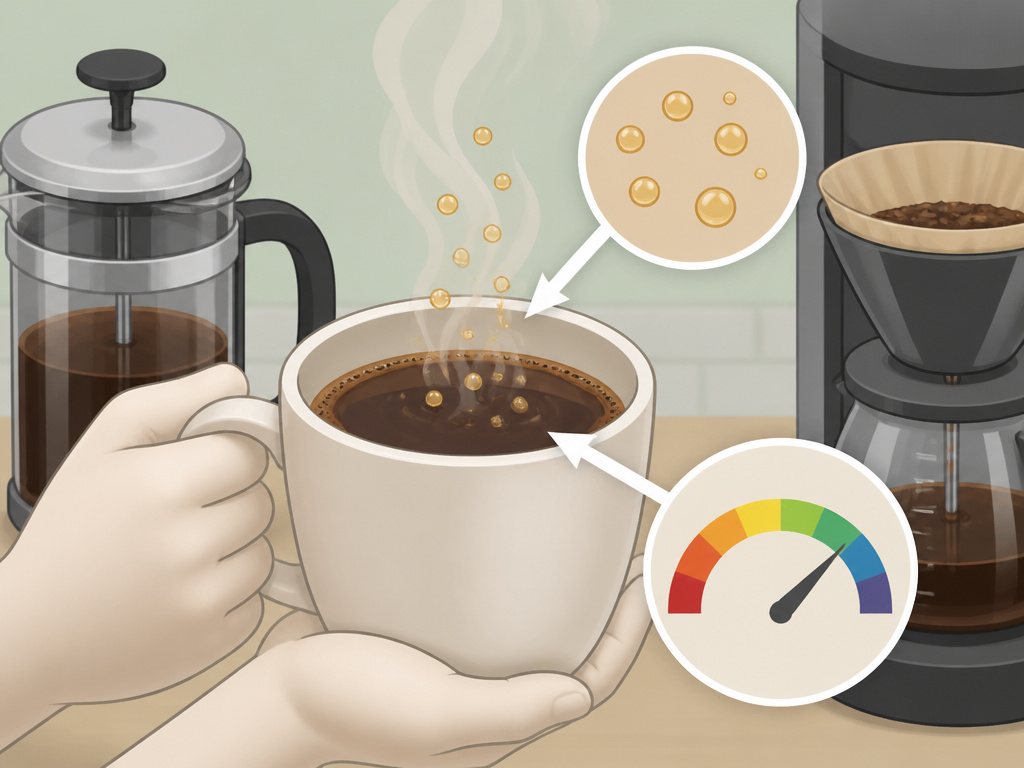
Caffeine takes the blame, but it’s rarely the only culprit. Two other factors regularly cause issues.
Acidity. Coffee’s natural pH sits around 5, which is mildly acidic. For a sensitive or recently inflamed digestive tract, that acid can cause a burning sensation or exacerbate general irritation. This is separate from caffeine’s stimulant effect. You can test this by trying a truly low-acid coffee brand or cold brew, which is up to 60% less acidic than hot brew.
Brewing Method Oils. French press and espresso methods allow more coffee oils, called diterpenes, into your cup. These oils can stimulate bile acid production and colonic motility. A paper filter traps most of them. If you get cramping from French press but not from drip, the oils are likely your trigger.
Your additives matter, too. Dairy is a common independent trigger for gut inflammation. Switching to a dairy-free coffee creamer like almond milk can remove that variable. Similarly, some coffee sweeteners can ferment in the gut and cause gas and bloating.
Safe Alternatives and Modifications
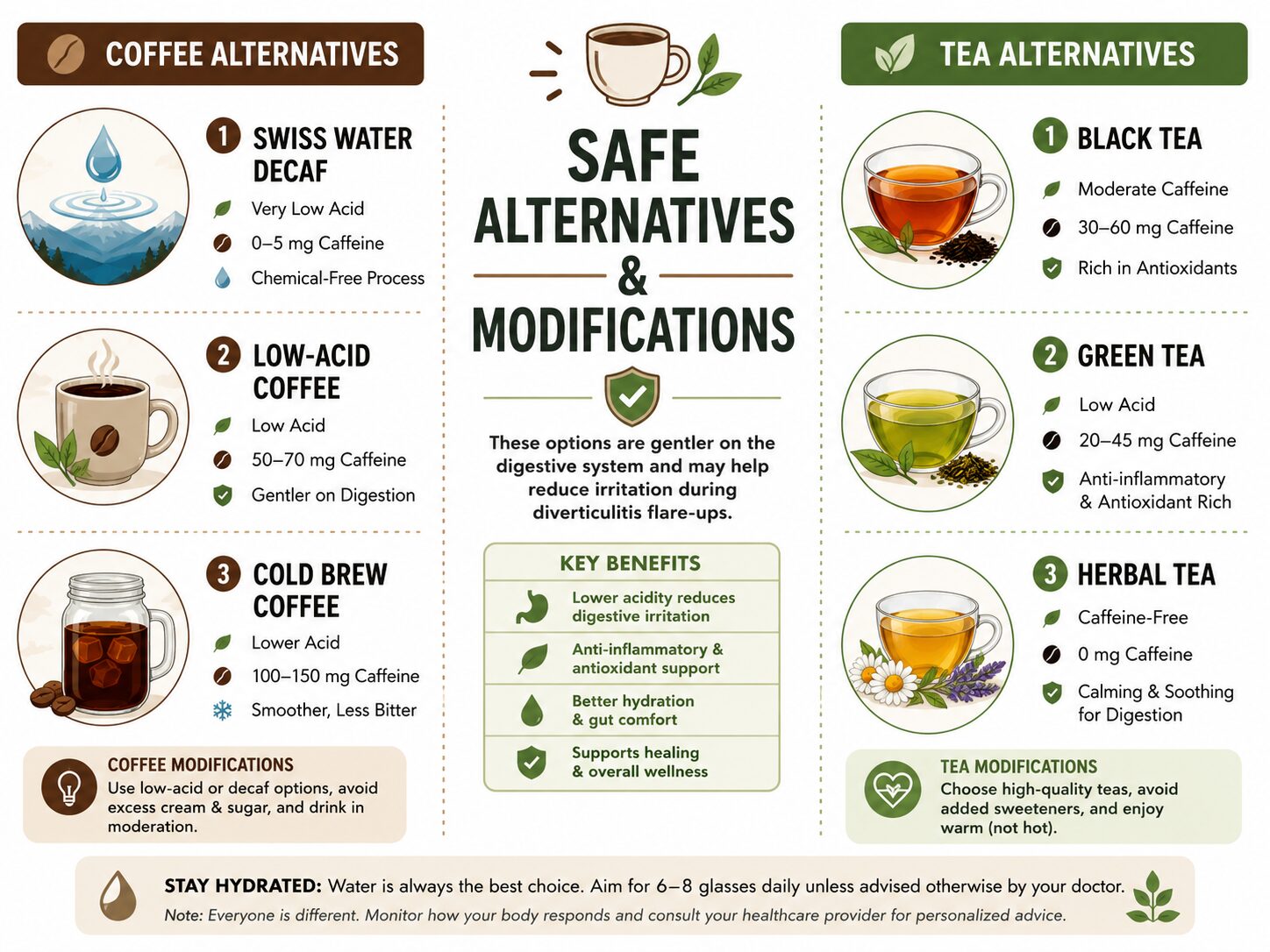
If regular coffee fails the test, you have structured fallbacks. Don’t jump straight to elimination.
1. The Decaf Route. Not all decaf is equal. The Swiss Water Process uses only water and carbon filters to remove caffeine, leaving other compounds intact. If you react to Swiss Water decaf, the problem is the coffee itself, not the caffeine. Solvent-based decaf might work, but some people react to trace chemicals.
2. The Low-Acid Route. Brands like Puroast or Lifeboost market specifically on low acidity. Cold brew is another excellent low-acid option you can make at home. These choices directly address the acidity of coffee as an irritant.
3. The Gentler Preparation Route. Always use a paper filter. Reduce your serving size to a 4-6 oz “small” rather than a 12-oz mug. Never drink it on an empty stomach. These small changes lower the total irritant load hitting your gut at once.
4. The Substitute Route. If coffee is out, you still have options. Black tea has about half the caffeine and is less acidic. Green tea has even less caffeine and contains L-theanine, which can smooth the stimulant effect. For a deeper comparison of these gentler caffeine sources, the antioxidant and caffeine profiles are worth reviewing. Herbal teas like ginger or peppermint can provide a warm ritual without any gut stimulation.
| Alternative | Caffeine | Acidity | Best For | Risk If Wrong Choice |
|---|---|---|---|---|
| Swiss Water Decaf | Negligible | Same as regular coffee | Those sensitive only to caffeine. | If acidity is the trigger, symptoms persist. |
| Low-Acid Coffee (e.g., Puroast) | Full | 50%+ lower than standard | Those with acid sensitivity or reflux. | Caffeine stimulation remains; can still cause cramping. |
| Cold Brew | Full (can be high) | 60%+ lower than hot brew | Those needing low acidity but full caffeine. | High caffeine concentration can still over-stimulate. |
| Black Tea | ~50% of coffee | Lower | A moderate caffeine reduction. | Tannins can be constipating for some. |
| Green Tea | ~25% of coffee | Lower | A gentle caffeine introduction. | Can be too weak for habitual coffee drinkers. |
Building Your Long-Term Management Plan

Managing diverticulitis is a marathon, not a sprint. Coffee is one variable in a larger system.
Hydration is Non-Negotiable. For every cup of coffee, drink an equal amount of water. This counteracts caffeine’s diuretic effect and keeps stool soft. Hard stools are enemy number one.
Fiber Timing is Everything. Soluble fiber (from oats, apples, beans) is your friend. It forms a gel that softens stool. Insoluble fiber (from celery, kale, seeds) adds bulk. During remission, a high-fiber diet is protective. But adding fiber while reintroducing coffee can muddy the waters. If you’re testing coffee, keep your fiber intake steady and familiar.
Listen to Patterns, Not Single Events. One bad morning doesn’t condemn coffee forever. But a pattern of pain following consumption within a few hours is a clear signal. Keep a simple log: date, coffee type/amount, any symptoms (1-10 scale). Data beats intuition.
I spent two years blaming “random” flare-ups before I logged my habits. The pattern was undeniable: French press coffee on an empty stomach led to a dull ache within three hours, every time. Switching to paper-filtered drip with breakfast erased those episodes. The culprit was the oils, not the caffeine.
Your gut’s tolerance can also change with age, stress, or antibiotic use. A food that was safe last year might not be safe today. Re-test periodically.
Frequently Asked Questions
Does decaf coffee irritate diverticulitis?
It can. Decaffeination removes caffeine but not the acidic compounds or oils in coffee. If your sensitivity is to coffee’s acidity or other natural chemicals, decaf will still cause problems. Test with a Swiss Water Process decaf to be sure.
How long after a diverticulitis flare can I drink coffee?
Wait at least one full week after all symptoms (pain, fever) have completely resolved and you’ve transitioned back to your normal high-fiber diet. Reintroduce it as the last item, not the first.
Is cold brew better for diverticulitis?
Often, yes. The cold brewing process extracts fewer acidic compounds, resulting in a cup that is up to 60% less acidic. This makes it gentler on a sensitive gut. However, it can be higher in caffeine concentration, so start with a small serving.
Can coffee cause a diverticulitis flare?
There’s no strong evidence that coffee causes the initial inflammation or infection of a diverticulum. However, its stimulant effect can absolutely worsen the pain and symptoms of an existing flare, making it feel like it triggered one. The distinction is important for long-term management.
What about the health benefits of coffee?
The antioxidant and anti-inflammatory benefits of coffee are well-documented for general health. These benefits are most relevant during long-term remission, not during an acute flare. Weighing the potential gut irritation against the general health effects of black coffee is a personal calculation for your remission phase.
Should I avoid all caffeine?
Not necessarily. The caffeine content in coffee is typically much higher than in tea or soda. You may tolerate the lower caffeine’s effects on the gut from these other sources. The goal is to find your personal threshold, not to eliminate all stimulants forever if you don’t need to.
The Bottom Line
Coffee and diverticulitis have a conditional relationship. The answer isn’t a simple yes or no—it’s “it depends on what’s happening in your colon right now.” Use the flare versus remission framework. Stop during a flare, test methodically during remission. Pay as much attention to acidity and brewing method as you do to caffeine. Your personal tolerance is the only metric that matters. Track it, respect it, and you can likely find a way to keep coffee in your life without it costing you days of pain.
