
Can I Drink Coffee 30 Minutes After Thyroid Medication? No.
You should wait at least 60 minutes after taking levothyroxine before drinking coffee. A 2008 study published in the journal Thyroid found that coffee significantly impairs the absorption of the synthetic thyroid hormone L-thyroxine, leading to higher TSH levels. Thirty minutes is not enough time for the medication to clear the absorption window in your stomach and small intestine.
The problem isn’t just the caffeine. It’s the polyphenols and tannins in coffee that bind to the medication, forming a complex your body can’t absorb. Most people get this wrong because they follow the food rule, wait 30 to 60 minutes before eating, and assume coffee, being a liquid, gets a pass. It doesn’t.
This guide walks through the specific study that changed the timing, explains why cream and sugar change the math, and gives you a practical system to protect your dose without giving up your morning ritual.
Key Takeaways
- Coffee reduces levothyroxine absorption by up to 39% if taken within 60 minutes, per a 2008 clinical study.
- The interference comes from coffee’s polyphenols and tannins, not just caffeine.
- Adding milk or cream to your coffee may slightly mitigate the effect, but it’s not a reliable workaround.
- A liquid formulation like Tirosint may offer slightly more tolerance, but the 60-minute rule still applies.
- Setting a physical timer for 60 minutes after your pill is the most effective way to build the habit.
The 60-Minute Rule Isn’t a Suggestion
The American Thyroid Association says to take your medication on an empty stomach, 30 to 60 minutes before breakfast. That’s the commodity advice. The non-commodity truth comes from a 2008 paper by Benvenga and his team.
They gave participants their L-thyroxine dose with water or with coffee. The group that took it with coffee showed a significant spike in their TSH levels. TSH is the hormone your pituitary gland releases to tell your thyroid to work harder. Higher TSH means your body isn’t getting enough thyroid hormone from the pill. The coffee was blocking it.
Coffee significantly impaired the absorption of L-thyroxine. When the hormone was ingested with coffee, the mean peak serum TSH levels were markedly higher compared to ingestion with water alone.
The researchers pinpointed the wait. They concluded you need at least 60 minutes between pill and coffee. Thirty minutes failed. Your stomach empties a liquid meal in about 20 to 30 minutes, but the medication itself takes longer to dissolve and pass through the intestinal wall where absorption happens. Coffee rushes through and gets there first.
TL;DR: The 60-minute wait is based on a clinical study showing impaired absorption and higher TSH. Thirty minutes is a guess that doesn’t hold up.
Why Coffee Wrecks Absorption (It’s Not the Caffeine)
You might think caffeine is the culprit. It’s not. Black tea has more tannins than coffee, and green tea is packed with polyphenols. But the NIH review of levothyroxine food interactions shows coffee is uniquely problematic.
The compounds in coffee, chlorogenic acids and melanoidins, bind to the levothyroxine molecule. This creates a larger, insoluble complex. Your gut can’t absorb it. The medication passes through you.
Think of it like pouring glue into a glass of water and then trying to drink the water. The glue binds to the water molecules, and you can’t separate them. That’s what happens in your duodenum.
Caffeine alone doesn’t do this. A bioavailability study with coffee administration tested a novel liquid levothyroxine formulation with coffee and found slightly better results than with tablets. But the absorption was still reduced compared to taking it with water. The formulation helped, but the coffee still interfered.
The binding is physical. It happens in the gut lumen before the medication ever reaches the bloodstream. No amount of stomach acid or digestive enzymes breaks that bond once it’s formed.
What If You Add Milk or Sugar?
This is where people try to cheat. The logic goes: if coffee on an empty stomach is bad, maybe adding milk buffers the effect.
It might. A little.
Milk proteins could bind to some of the coffee’s polyphenols before they bind to your medication. Dairy fat slows gastric emptying, which might give the pill a head start. But this is a gamble, not a strategy. The 2008 study didn’t test coffee with cream. Later reviews note that any food or drink other than water risks interference.
Adding sugar doesn’t help. It’s just calories. It might speed up gastric emptying slightly, which is worse.
If you absolutely cannot wait the full hour, having your coffee with a significant splash of whole milk or cream is the lesser of two evils. It’s still a risk. Your TSH level at your next lab draw will tell you if it’s working.
| Additive | Likely Effect on Absorption | Why It’s a Gamble |
|---|---|---|
| Black Coffee | High reduction (30-39%) | Polyphenols bind directly to medication. |
| Coffee with Milk/Cream | Moderate reduction | Dairy may bind some polyphenols, but effect is unpredictable. |
| Coffee with Sugar Only | High reduction | Sugar offers no protective binding, may accelerate gastric emptying. |
| Decaf Coffee | High reduction | Polyphenols are still present; caffeine isn’t the primary issue. |
Common mistake: Assuming decaf is safe, the polyphenols that cause the interference are still there in full force, so decaffeinated coffee impairs absorption just as much as regular.
Your Other Morning Beverages Ranked
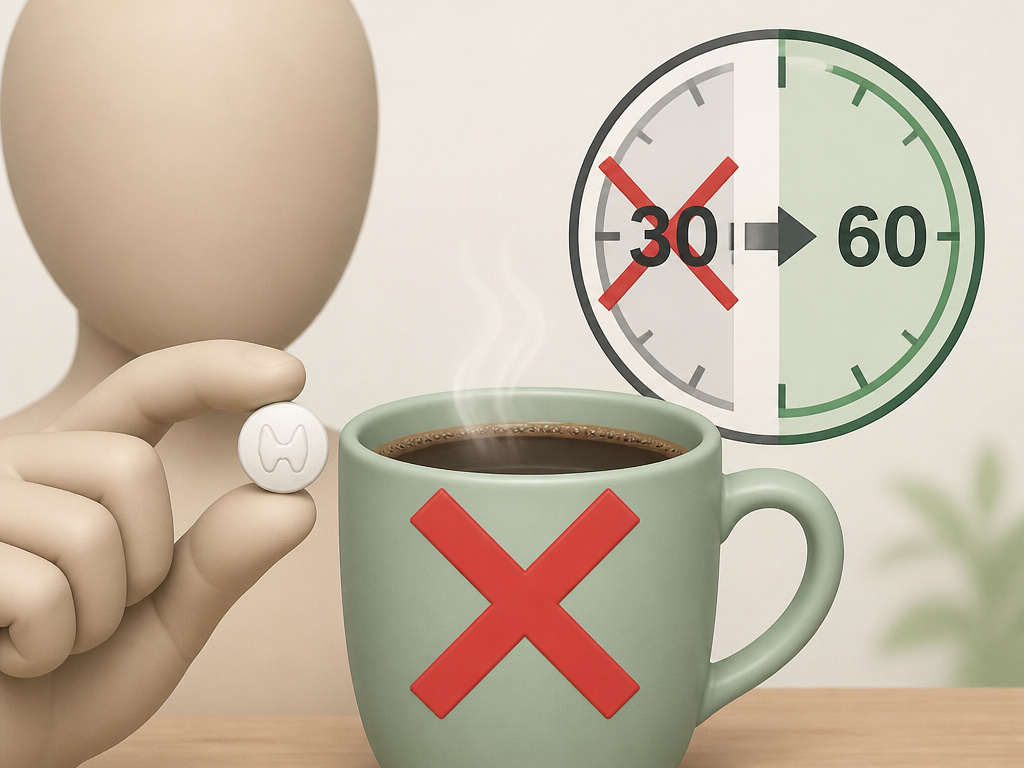
Water is the only safe companion for your pill. Everything else has a cost.
Herbal tea is often suggested as a substitute. It depends on the herb. Peppermint or chamomile? Probably minimal interference. Anything with hibiscus, which is high in acids? That’s a problem. The rule is simple: if it’s not water, it’s a risk.
Orange juice is acidic and contains calcium if fortified. Bad idea. The calcium will bind to the levothyroxine directly.
A protein shake is a meal. It has fats, proteins, and often minerals like calcium and iron. Taking your pill with a shake is the same as taking it with breakfast.
Here’s the ranking, from safest to worst:
1. Plain water. The gold standard. No interference.
2. Herbal tea (non-acidic, no added vitamins). A distant second, but only if you wait 30+ minutes.
3. Black tea. High in tannins, known to reduce absorption. Wait 60+ minutes.
4. Coffee (any kind). Wait 60+ minutes, per the study.
5. Juice, milk, or smoothies. Treat these as food. Wait 60+ minutes.
The caffeine content in coffee varies by brew, but the interference compounds do not. A strong espresso has them. A light pour-over has them. The brew method doesn’t change the chemistry.
A Practical System That Actually Works
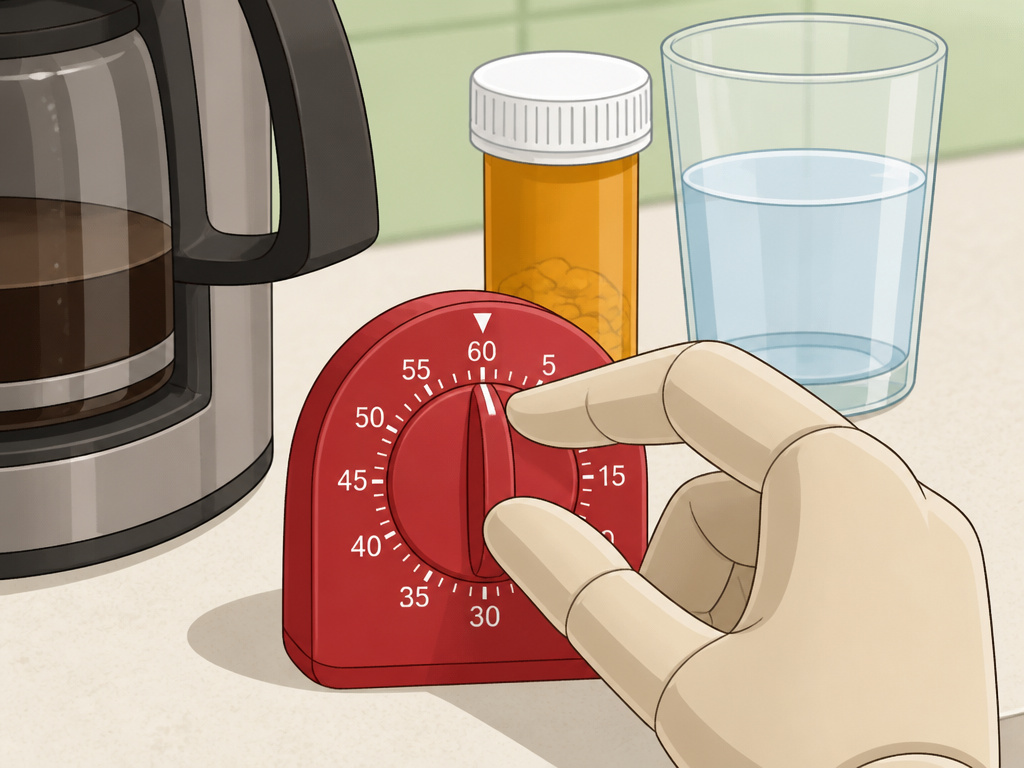
Knowing you should wait an hour is one thing. Remembering to do it while half-asleep is another. You need a system, not just willpower.
First, move your pill bottle. Put it on your nightstand with a glass of water. Take it the moment your alarm goes off, before your feet hit the floor. This gives you a full 60-minute head start on the day.
Second, use a physical timer. Not the clock on your phone. Set a kitchen timer for 60 minutes and place it next to your coffee maker. When it goes off, you brew. This auditory cue builds the habit faster than glancing at a clock.
Third, structure your morning around the wait. That hour is for showering, getting dressed, checking emails, or taking a short walk. The goal is to make coffee the reward at the end of a morning routine, not the first thing you do.
If you consistently forget, tie the pill to another unbreakable habit. Toothbrushing works. Keep the pill bottle on top of your toothpaste. The sequence becomes: wake up, brush teeth, take pill. The consistency of brushing after acidic drinks is a good parallel, both are non-negotiable daily health acts.
I set a repeating 60-minute timer on my smart speaker for months. Now the habit is locked in. I don’t think about it. The coffee tastes better because I’m not wondering if I just wasted a dose.
Common mistake: Relying on memory, by the time you’re standing in the kitchen holding the pill bottle, you’ve already lost. The decision must be made the night before by where you place the bottle.
When the Standard Advice Doesn’t Fit Your Life
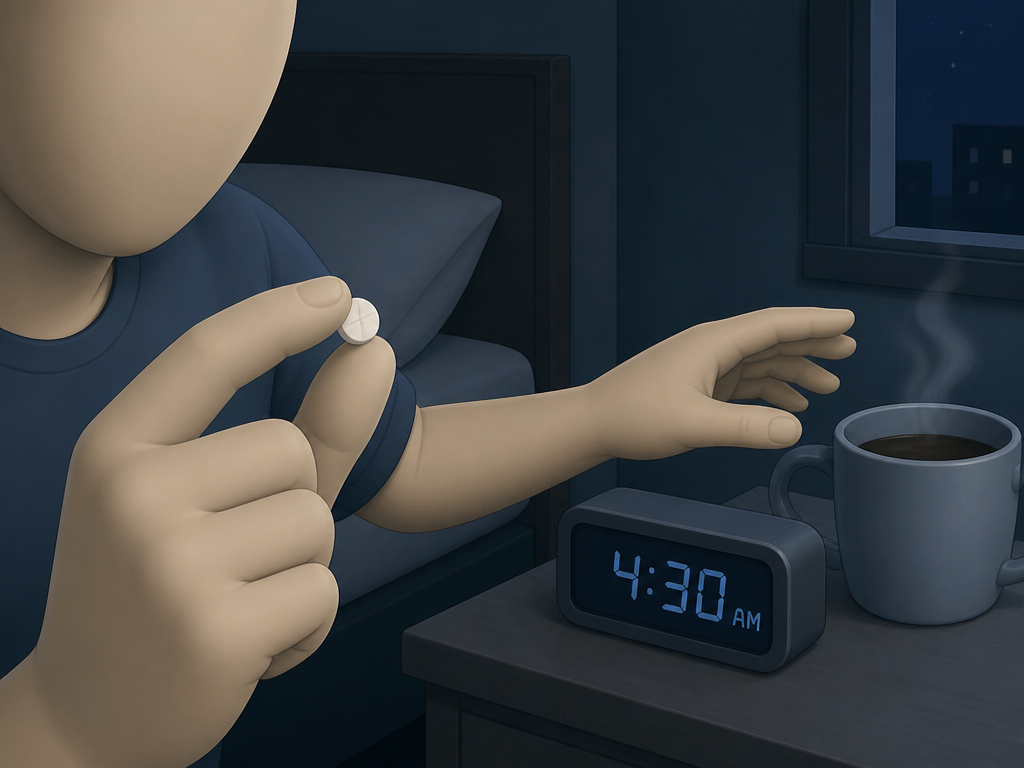
Some schedules defy the “first thing in the morning” rule. Night shift workers, parents of newborns, people who workout fasted, they need a different plan.
If you take your medication at night, the same rules apply. Take it on an empty stomach, at least 60 minutes after your last meal or snack, and at least 60 minutes before any nighttime beverage. Herbal tea before bed? That’s a 60-minute wait after the pill.
For the workout crowd, taking your pill immediately after a morning gym session is risky. You’re dehydrated, and your gut blood flow is directed to your muscles, not digestion. Absorption can be slower and less predictable. It’s better to take the pill when you wake up, wait the hour, have your coffee, then go to the gym.
The FDA prescribing information for levothyroxine is clear about consistency. Pick a time that you can stick to every single day. A perfect schedule you follow 80% of the time is worse than a good-enough schedule you follow 100% of the time. Your doctor adjusts your dose based on the assumption of consistent absorption. Inconsistent timing creates noisy lab results.
Could a Different Medication Form Help?
The standard levothyroxine tablet has to dissolve in your stomach. Newer formulations try to bypass this.
Tirosint is a gel-cap liquid formulation. The theory is that it’s absorbed more quickly and might be less susceptible to food interference. The data is promising but not a get-out-of-jail-free card. You still need to wait. The clinical pharmacokinetics of levothyroxine shows improved bioavailability with the liquid, but coffee still poses a risk.
Soft gel capsules are another option. They dissolve faster than pressed tablets. Again, they might shave a few minutes off the required wait time, but no reputable endocrinologist will tell you 30 minutes is safe.
Switching formulations is a discussion for your doctor, not a DIY fix. It often requires a dosage recalibration. The simpler path is mastering the 60-minute wait with your current prescription.
Frequently Asked Questions
What if I accidentally drink coffee right after my pill?
Don’t panic. Do not take another pill. The risk is that you’ve reduced that day’s dose, not canceled it entirely. Mark it on a calendar. If it happens once a month, it likely won’t swing your labs. If it happens twice a week, you’ll probably see your TSH creep up. Just get back on schedule with the next dose.
Does decaf coffee have the same effect?
Yes. The compounds that interfere with absorption are polyphenols and tannins, which are present in full force in decaffeinated coffee. Caffeine isn’t the primary issue.
Can I take my thyroid medication at night with coffee?
No. The 60-minute rule applies regardless of the time of day. You must wait at least 60 minutes after your last food or drink (other than water) before taking the pill, and then another 60 minutes after the pill before consuming anything else. Taking it with coffee defeats the purpose.
What about other caffeinated drinks, like energy drinks or soda?
It’s not about the caffeine. It’s about the other compounds. However, most energy drinks and sodas contain acids, vitamins, and minerals that can also interfere. They should be treated like food, wait 60 minutes after your pill. The caffeine stimulation factors in these drinks are different, but the absorption rule remains.
Will adding milk to my coffee make it safe?
It might reduce the interference slightly, but it is not considered safe. It’s a risk mitigation strategy, not a guarantee. The only guaranteed safe practice is waiting 60 minutes with only water.
The Bottom Line
The 60-minute wait isn’t arbitrary. It’s the buffer that lets a 2008 clinical study result become a reliable daily habit. Your thyroid medication is a precision tool. Coffee is a complex chemical soup. They don’t play nice in the same gut space.
Set a timer. Move your pill bottle. Build the ritual. The alternative is wondering why you feel sluggish and your TSH is high despite taking your pill every day. The health benefits of coffee are real, but they don’t outweigh a properly dosed thyroid. You can have both. You just need the clock.
