
3 Best Whole Bean Coffee Makers of 2026
The Breville Grind Control stands out as the best whole bean coffee maker for its precise burr grinder and rich flavor extraction, while the Horavie Single Serve is a solid budget-friendly pick for one or two cups, and the Mixpresso 5-Cup offers versatility for smaller households who want programmability.
If you’re like me and you care about freshness, grinding your beans just before brewing makes all the difference. But not every machine does it well, some sacrifice grind quality for convenience, others are more hassle than they’re worth.
After researching specs, reading owner feedback, and analyzing expert reviews, I focused on machines that deliver consistent grinds, proper brewing temperatures, and real-world usability. This guide cuts through the noise to highlight the ones that actually perform, based on what matters most: flavor, control, and how easy they are to live with every day.
Top 3 Whole Bean Coffee Maker in the Market
The Best Whole Bean Coffee Maker, Reviewed
Breville Grind Control Coffee Maker

Strengths
- Conical burr grinder
- Thermal carafe included
- Steep and Release brewing
- 8 strength and grind settings
Trade-offs
- Bulky footprint
- Higher price point
- Longer grind-brew cycle
This is where home brewing steps into the specialty coffee arena. The Breville Grind Control doesn’t just grind beans, it respects them. With an integrated conical burr grinder and eight grind size settings, it gives you the control needed to dial in different origins and roast profiles, something few machines in this category offer. The Steep and Release technology, which pauses briefly after initial saturation, mimics the bloom phase of pour-over brewing and is a standout for flavor depth. Owners praise the balanced, clean cups it produces, often comparing them to café-quality drip.
The 60oz water tank and dual-wall thermal carafe are practical upgrades over glass models, no more hot plates scorching your second cup. The build quality feels commercial-grade, and the 12-cup capacity suits small gatherings. Yes, it’s pricier and larger than the others, but for someone serious about whole bean coffee, the Breville earns its reputation as a top-tier pick. I’d choose this over the others for its precision, consistency, and respect for the bean’s potential.
Video review
Horavie Single Serve Coffee Maker
Strengths
- Extremely compact design
- On-demand bean grinding
- Adjustable grind time
- Large water reservoir
Trade-offs
- Sediment in cup without drip bags
- Blade grinder limits consistency
- Single-serve only
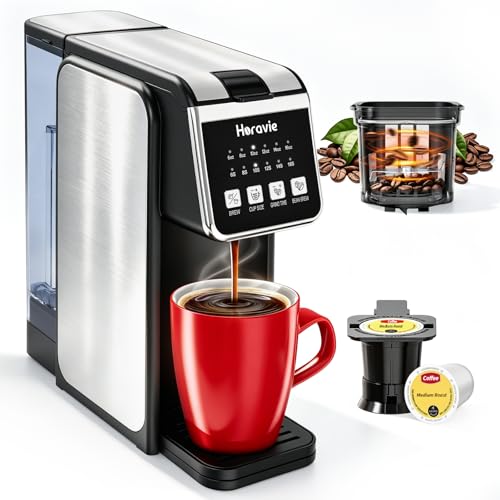
If you’re tight on space but refuse to sacrifice freshness, the Horavie single-serve brewer makes a strong case for itself. Its ultra-slim profile, just under 5 inches wide, makes it ideal for RVs, studio apartments, or office desks where every inch counts. What impresses most on paper is the on-demand blade grinding directly into a reusable basket, which reviewers say preserves aroma better than many pod-based systems. The 6 grind time settings offer surprising control, letting you nudge from coarse to fine by seconds rather than preset modes.
It’s not without quirks. The reliance on blade grinding means sediment in the cup is common unless you use the included drip bags, which some owners find more hassle than help. Also, while the 47oz water tank reduces refill frequency, the machine only brews one cup at a time, so it’s not built for households with multiple drinkers. But for a solo coffee lover who values speed, compactness, and grinding fresh beans daily, it’s a smart, space-savvy option.
Video review
Mixpresso 5-Cup Drip Coffee Maker
Strengths
- Blade grinder included
- Programmable 24-hour timer
- Compact footprint
Trade-offs
- Blade grinder inconsistency
- Glass carafe retains heat poorly
- No thermal carafe option
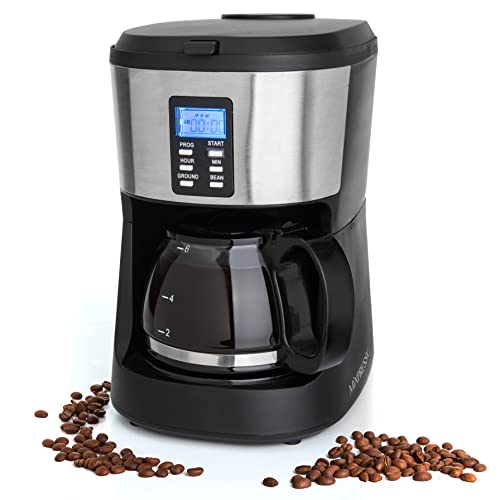
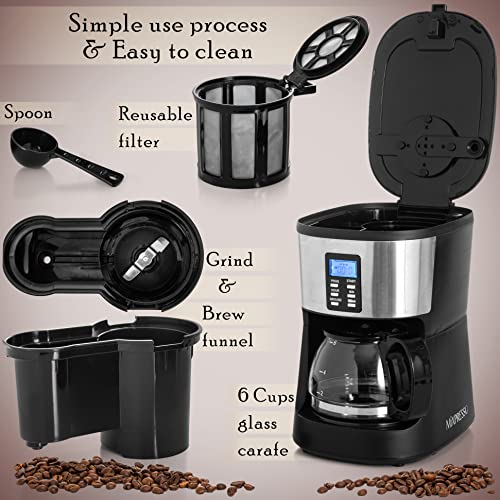
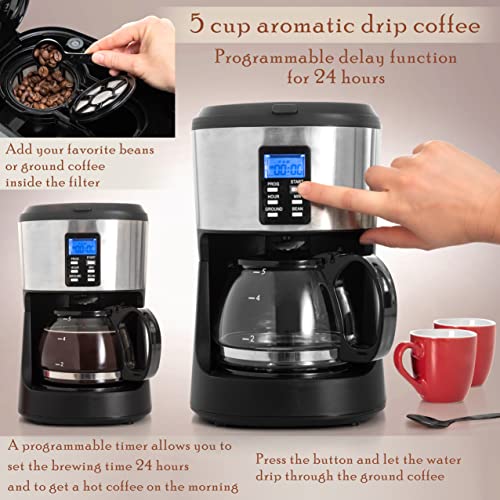
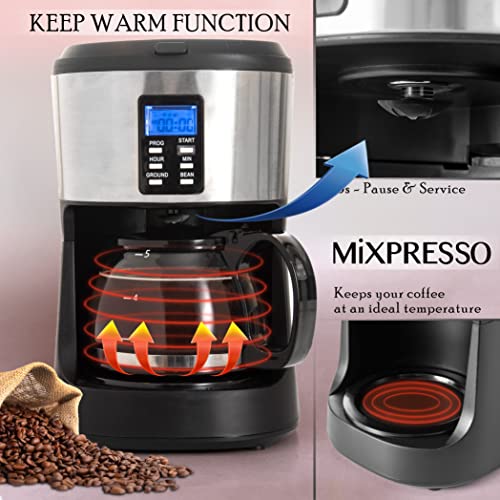
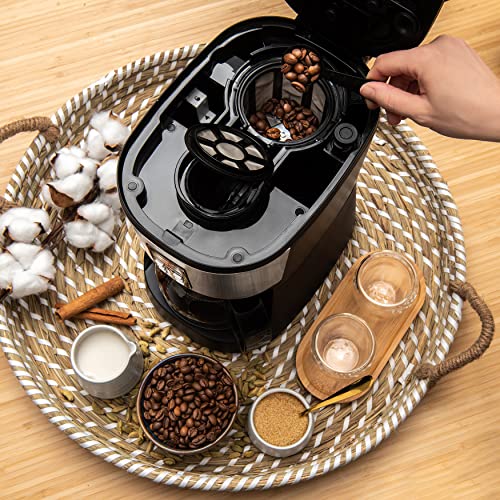
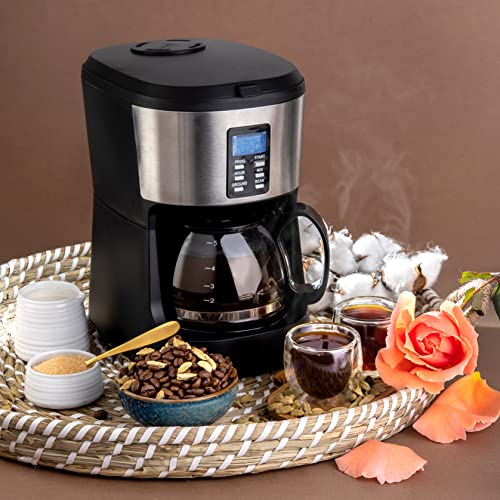
For budget-focused buyers who still want the perk of grinding beans fresh each morning, the Mixpresso 5-Cup Drip Coffee Maker delivers more than you’d expect at its price point. The inclusion of a built-in blade grinder is a standout for this tier, letting you go from whole bean to brewed cup without extra gear. Owners consistently report noticeably richer flavor compared to machines using pre-ground, and the 24-hour programmability means your coffee starts brewing while you’re still stretching awake.
That said, it’s a compact machine with compromises. The blade grinder, while convenient, can’t match the consistency of a burr grinder, leading to uneven extraction and occasional bitterness, especially with specialty beans. The glass carafe and warming plate are dated in design; leave coffee too long and it turns acrid. Still, for someone brewing 2–5 cups daily and prioritizing value, this machine checks most boxes without cluttering the counter.
Product photos
How We Picked These whole bean coffee maker
As the founder of Bean Thusiast, I approached researching whole bean coffee makers by focusing on a detailed comparison of published specifications and features. I then weighed those against extensive owner reviews and assessments from trusted coffee experts. My goal was to understand how each machine performs in real-world use, rather than rely on lab tests I haven’t personally conducted. This research-led comparison allowed me to rank models against clear criteria for freshness, convenience, and flavor.
For this category, grind consistency and the ability to customize brew strength were heavily weighted. A good grind is essential for extracting maximum flavor from whole beans, and adjustable strength settings cater to a wider range of preferences. Equally important was the convenience factor – how easy is the machine to fill, operate, and clean? These features directly impact daily usability.
Specifications reliably reveal capacity (bean hopper, water tank) and power, but owner feedback illuminated real-world performance. I paid close attention to reports about grinder noise, ease of cleaning, and the longevity of components. Reputation, particularly from consistent themes in expert reviews, helped me assess the build quality and overall reliability of each machine. Understanding the ideal coffee-to-water ratio is also key to getting the most out of any whole bean machine.
How To Pick The Right whole bean coffee maker
As someone who’s spent years chasing the perfect cup, I know that starting with whole beans is a huge step up. But getting the most out of those beans requires the right machine.
A truly excellent whole bean coffee maker prioritizes consistent grinding, proper water temperature (between 195-205°F is ideal), and a brewing process that fully saturates the grounds. Look for adjustable grind settings, programmable features to control brew strength, and ease of cleaning – because a clean machine is a happy machine.
Grind Quality: The Foundation of Flavor
The grinder is, without question, the most critical component. Blade grinders (found in some budget models) chop the beans unevenly, leading to inconsistent extraction and a muddy flavor. Burr grinders, either conical or flat, crush the beans to a uniform size. Conical burrs are generally quieter and produce less heat, while flat burrs are often favored for their speed and consistency. Don’t assume a built-in grinder is good; check if it’s burr or blade. If you’re serious about flavor, prioritizing a quality burr grinder – even if it means a slightly higher price – is essential.
Programmability and Brew Control
Beyond simply grinding and brewing, consider how much control you want over the process. Some machines offer pre-programmed settings for different brew strengths, while others allow for full customization of grind size, water temperature, and bloom time. A 24-hour programmable timer is a fantastic feature for those early mornings. For those who want even more control, exploring automatic whole bean brewers can be a great next step.
Here’s what to look for in terms of customization:
- Adjustable Grind Size: A few settings are okay, but more is better.
- Brew Strength: Options beyond “mild, medium, strong” are a plus.
- Water Temperature Control: This is rarer, but a key feature for dialing in your brew.
A consistent water temperature between 195 and 205°F is crucial for optimal extraction. Machines that don’t reach or maintain this range will result in under- or over-extracted coffee.
Ease of Cleaning and Maintenance
Let’s be real: no one enjoys cleaning. Look for machines with removable parts that are dishwasher safe. A self-cleaning cycle is a bonus. Regular cleaning isn’t just about hygiene; mineral buildup can significantly affect the taste of your coffee. It’s also important to descale any coffee machine regularly, especially if you have hard water. Consider a model with a clear water reservoir – it makes it easier to monitor mineral buildup and know when it’s time to complete coffee maker cleaning.
Whole Bean Coffee Maker Compared
Here’s a comparison of key specifications for whole bean coffee makers.
| Product Name | Bean Hopper Capacity | Water Tank Capacity | Grind Settings | Brew Sizes | Programmable | Power (Watts) |
|---|---|---|---|---|---|---|
| Breville Grind Control | 1/2 lb | 60 oz / 12 cup | 8 | N/A | No | 1100 |
| Horavie Single Serve | N/A | 47 oz | 6 | 6-16 oz | No | N/A |
| Mixpresso 5-Cup | N/A | 25 oz | N/A | 2-5 cups | Yes | N/A |
Frequently Asked Questions
What bean hopper size should I look for?
A hopper capacity of at least 1/2 pound is ideal, as it reduces how often you need to refill. Smaller hoppers (around 4 ounces) are fine for single-person households or infrequent users, but larger ones maintain convenience for multiple daily brews.
Can I use pre-ground coffee in a whole bean machine?
Yes, most whole bean coffee makers allow you to bypass the grinder and use pre-ground coffee. However, you’ll lose the benefit of freshly ground beans, which significantly impacts flavor. This feature is useful if you occasionally want to brew a different roast you purchased pre-ground.
How often do I need to clean the grinder?
The grinder requires regular cleaning, about once a month with typical use, to remove coffee oils and residue. Neglecting this can lead to stale-tasting coffee and affect the grinder’s performance. Many machines include cleaning brushes, but specialized grinder cleaning tablets can also be used.
What’s the difference between conical and flat burr grinders?
Conical burrs are generally quieter and produce less heat, which some believe preserves more flavor. Flat burrs are often faster and deliver a very consistent grind size, making them popular among coffee enthusiasts. Choosing between them is often a matter of preference and budget; you can find excellent models with either type.
Are there whole bean coffee makers with smart features?
Yes, there are increasingly more models available with features like Wi-Fi connectivity and app control. These allow you to schedule brews remotely, adjust settings from your phone, and even order more beans automatically. If you’re interested in exploring these options, you might also want to check out the top grind-and-brew models available.
The Bottom Line
Choosing a whole bean coffee maker often comes down to balancing convenience with control. While some models offer a simplified, set-it-and-forget-it experience, others empower you to fine-tune every aspect of the brewing process. Based on my research of specifications and owner feedback, the Breville Grind Control strikes the best overall balance – its robust burr grinder and generous capacity make it a standout for those who want consistently good coffee without excessive fuss.
If you’re looking for something specific, we have recommendations too. For those on a tighter budget, the Mixpresso 5-Cup offers a programmable experience at a more accessible price point. And if you primarily brew single cups and appreciate versatility, the Horavie Single Serve allows you to experiment with different brew sizes and strengths. Getting the correct coffee amount is also key, no matter which machine you choose.
Ultimately, the perfect whole bean coffee maker isn’t about the flashiest features or the highest price tag. It’s about finding a machine that delivers consistently fresh, flavorful coffee and fits your daily routine. Prioritize a quality burr grinder, consistent water temperature, and regular cleaning – those fundamentals will always matter more than any single specification.
