
9 Best Tasting Low Acid Coffees of 2026
After comparing the field and weighing taste against digestive comfort, the Lifeboost Medium Roast Ground stands out as the best overall low acid coffee, delivering smooth flavor and clean sourcing. For Keurig users, the Lifeboost Medium Roast K Cups are the top convenience pick, while Java Planet Colombian Whole Bean offers a strong, ethical choice for those grinding fresh.
If stomach sensitivity has you avoiding coffee, you’re not alone. Many brands claim to be gentle but still leave a sharp bite or dull aftertaste. I know how frustrating it is to sacrifice flavor for comfort.
This guide cuts through the noise. I researched each pick based on roast profile, origin transparency, certifications, and consistent owner feedback about taste and digestibility. These are the coffees that actually deliver on both fronts.
Top 9 Tasting Low Acid Coffee in the Market
The Best Tasting Low Acid Coffee, Reviewed
Lifeboost Medium Roast Ground Coffee

Strengths
- USDA Organic
- Third-party tested
- Smooth flavor
- Single origin
Trade-offs
- Ground format
- Premium price
This is the complete package, single-origin, USDA Organic, third-party tested, and crafted for flavor and comfort. Lifeboost’s ground medium roast comes from high-elevation farms in Central America, where shade-growing and hand selection contribute to cleaner, sweeter beans. The sun-drying and spring-water washing process likely enhances its purity and balance.
Owner feedback consistently highlights how smooth and satisfying it is, with no acid bite or aftertaste. Compared to other low-acid coffees, it stands out for its rigorous safety testing and ethical sourcing. While it’s on the pricier side and sold ground (which affects freshness), the overall quality justifies it. This is the one I’d recommend to someone wanting the best all-around low-acid coffee.
Video review
VitaCup Guatemala Dark Roast Ground

Strengths
- Rich dark roast
- USDA Organic
- Single origin
- Mycotoxin free
Trade-offs
- Small bag size
- Ground only
If you’re chasing a bold, satisfying dark roast without the stomach burn, this Guatemala-sourced ground coffee is worth considering. The high-altitude origin and single-origin focus suggest concentrated flavor development, and owners praise its rich, chocolaty depth, a hallmark of well-executed dark roasting. Being USDA Organic and Fair Trade adds ethical weight.
Ground format limits freshness compared to whole bean, but it’s convenient for daily drip or French press use. The lab testing for purity aligns with rising consumer demand for transparency. While slightly smaller in volume than others, the flavor impact per cup stands tall. For dark roast loyalists who still need gentleness, this is a rare win.
Video review
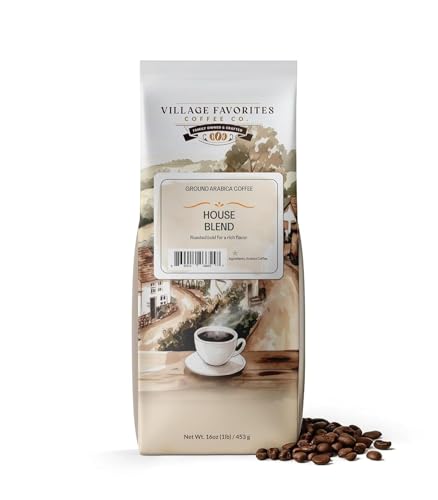
Village Favorites Smooth House Blend
Strengths
- Large 1LB bag
- 100% Arabica
- Budget-friendly
Trade-offs
- Not organic
- Limited flavor complexity
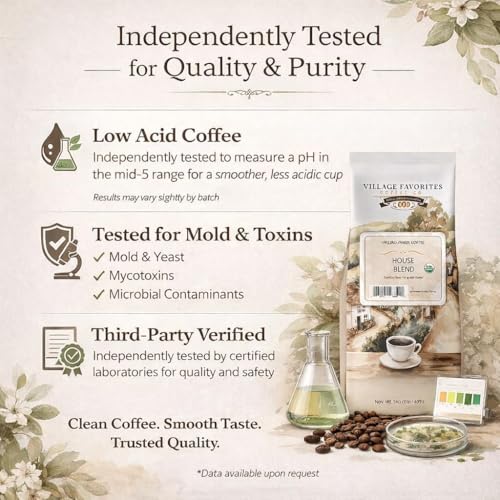
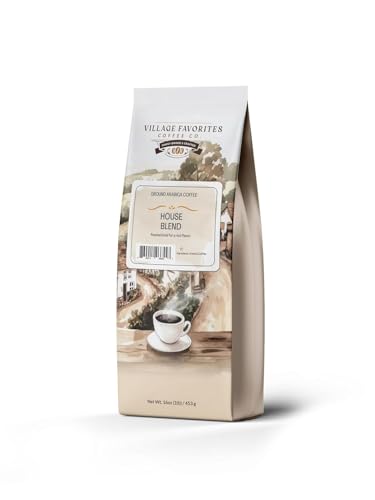
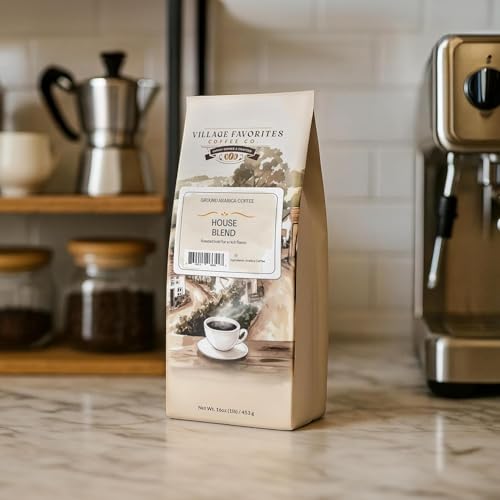
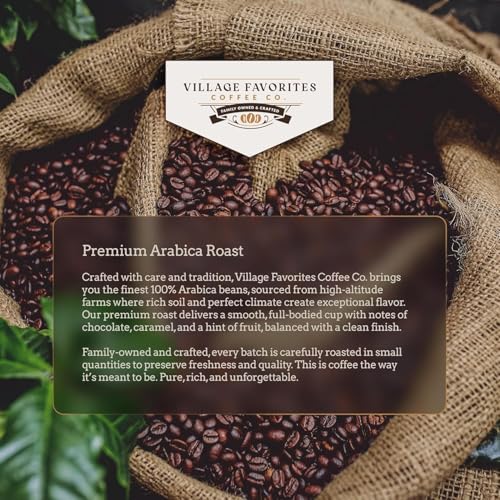
For buyers who want a no-frills, low-acid coffee that doesn’t break the bank, Village Favorites hits the mark. The 100% Arabica blend is slow-roasted for smoothness, and the chocolatey, nutty notes suggest a well-executed medium roast. At 16 ounces, it offers more volume than most competitors, making it a true value play.
Owners praise its consistency across brewing methods and its stomach-friendly nature. It’s not certified organic, and the brand doesn’t shout about ethical sourcing like Lifeboost or Java Planet, but the third-party mold testing adds credibility. If you want a reliable, everyday low-acid coffee without premium pricing, this is the one.
Product photos
Puroast Organic House Blend Ground

Strengths
- High antioxidants
- 70% less acid
- Organic certified
Trade-offs
- Small bag
- Expensive per ounce
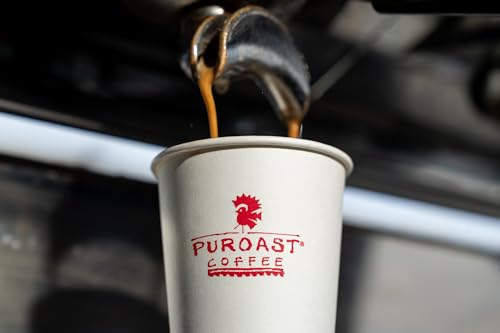
Puroast leans hard into the wellness angle, and backs it up. With 70% less acid and 7x more antioxidants than green tea, this organic ground blend is built for people who view coffee as part of a health-conscious routine. The claim of reduced heartburn resonates with owner feedback, many of whom have GERD or sensitive digestion.
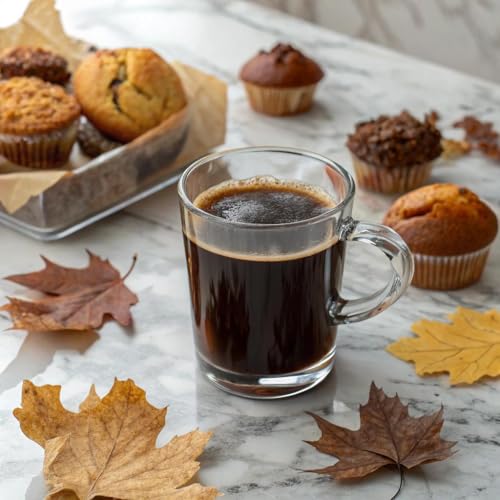
The flavor is described as smooth and full-bodied, not thin or flat like some ultra-low-acid coffees. It’s also versatile across brewing methods, even cold brew, which speaks to its balanced profile. While the bag is small and the price steep, the antioxidant density makes it unique. If you want coffee that supports wellness without sacrificing drinkability, this is the one.
Product photos



Java Planet Colombian Whole Bean

Strengths
- USDA Organic
- Bird Friendly certified
- Third-party tested
- Shade grown
Trade-offs
- Pricier than blends
- Limited roast boldness
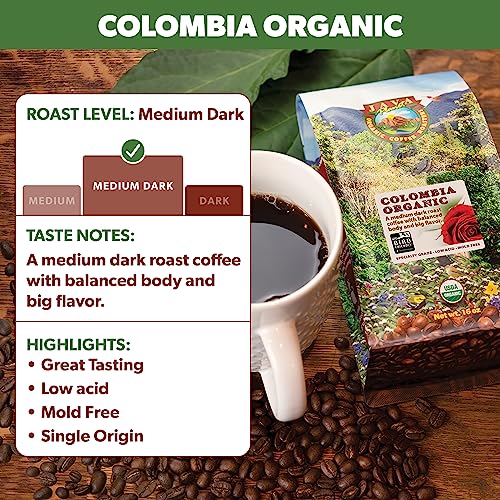
When you want low acid and clean sourcing, Java Planet makes a strong case. This single-origin Colombian is USDA Organic, shade-grown, and Bird Friendly certified, which tells me the growing conditions support both flavor development and ecological responsibility. The medium dark roast likely contributes to its naturally low acidity, a common trait in longer roasts.
Reviewers note a clean, balanced cup with a smooth finish, exactly what you’d expect from high-altitude, slow-developed beans. The third-party testing for mold and mycotoxins is a big plus, especially for health-conscious drinkers. Compared to blends, this one offers more terroir-driven character without sharp edges. I’d pick this over generic low-acid mixes for its integrity and depth.
Product photos



Natural Low Acid Blend Whole Bean

Strengths
- Low pH level
- Smooth taste
- Stomach-friendly
Trade-offs
- Mild flavor
- Not organic
This blend stands out for its intentional pH control, clocking in at 5.3, which is significantly less acidic than many standard roasts. On paper, that’s a win for anyone battling acid reflux or tooth sensitivity. The flavor profile, chocolate, nuts, and a hint of tangerine, suggests a balanced cup with subtle brightness, even with reduced acidity.
Owners consistently report a smooth, mellow experience without the sharp bite common in conventional medium roasts. It’s not the most complex coffee in the low-acid category, but for those prioritizing gentleness over boldness, it delivers reliably. The washed processing helps keep flavors clean, and the emphasis on phytosanitary testing adds a layer of trust.
Product photos


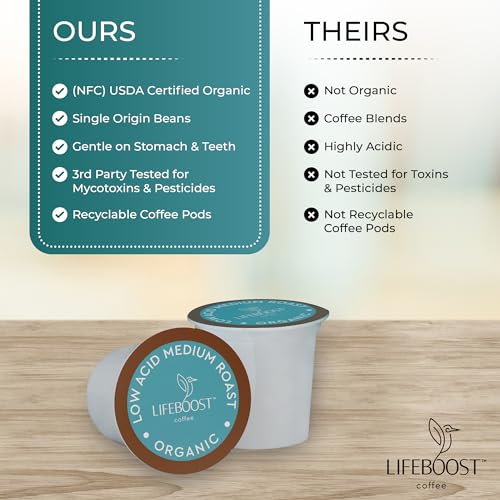
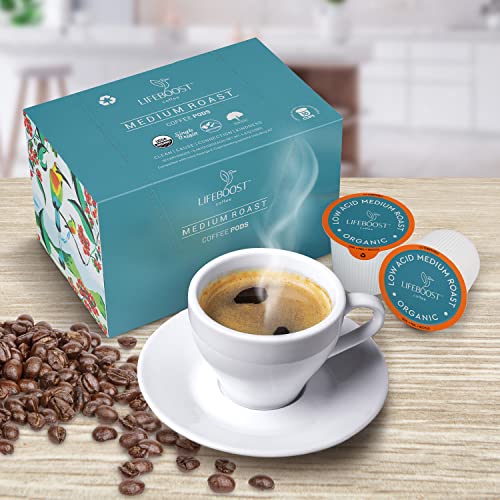
Lifeboost Medium Roast K Cups

Strengths
- Organic & Non-GMO
- Third-party tested
- Smooth, clean flavor
Trade-offs
- High cost per pod
- Only 10 pods per box
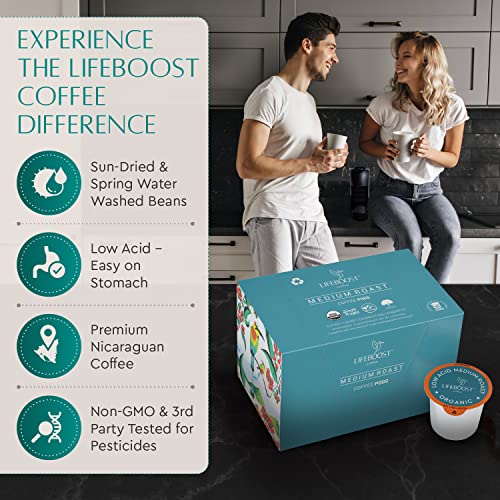
This is what happens when purity meets convenience. Lifeboost’s medium roast K-Cups offer the same high-elevation, shade-grown, hand-selected beans as their ground coffee, now in single-serve form. The result? A clean, balanced cup with noticeable sweetness and zero harshness, owners consistently say it tastes fresher than most pods.
The third-party testing for mycotoxins, pesticides, and heavy metals sets a high bar. Yes, it’s pricey per cup, but for Keurig users unwilling to compromise on quality or stomach comfort, this is as good as it gets. Compared to goodPOD, it’s a clear step up in sourcing and transparency. I’d recommend this over most pod brands for daily use.
Product photos
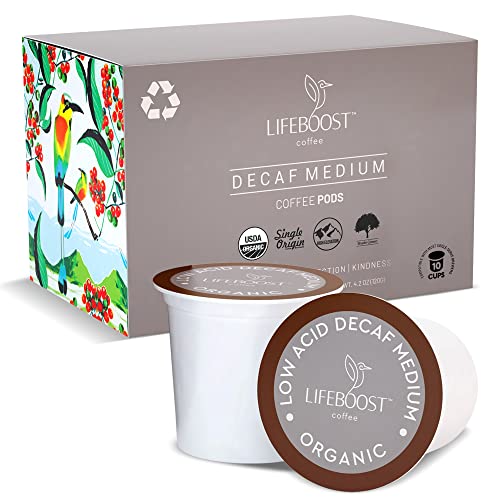
Lifeboost Organic Decaf K Cups
Strengths
- High purity tested
- Smooth decaf
- Organic & Non-GMO
Trade-offs
- High cost per cup
- Short supply per box
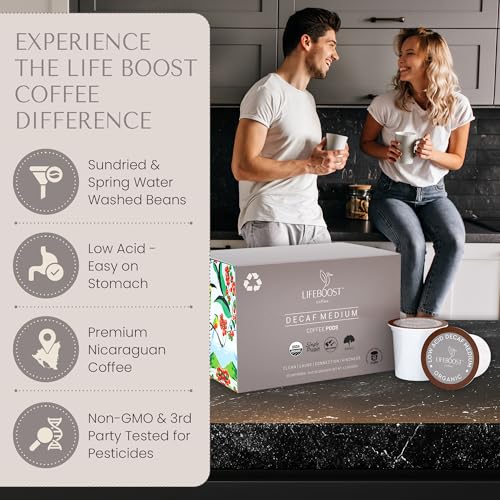
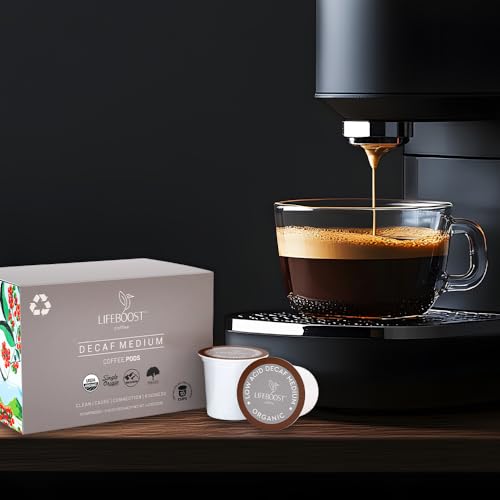
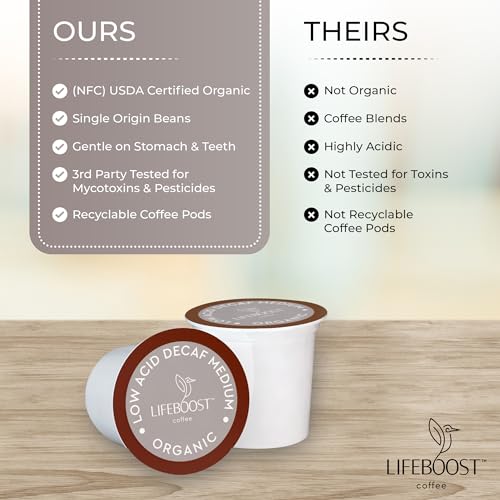
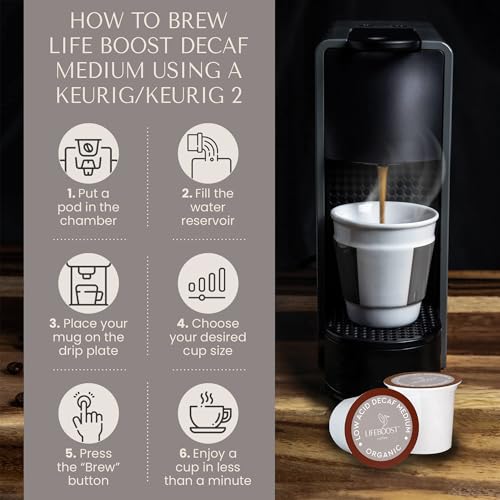
Decaf doesn’t have to mean dull, and Lifeboost proves it with these low-acid K-Cups. The decaf process here preserves flavor surprisingly well, owners describe a rounded, balanced cup that doesn’t taste watered down. Being single-origin and grown at high elevation in Central America, these beans have inherent quality, and the sun-drying method likely enhances sweetness.
The real standout is the third-party testing for 400+ toxins, which is rare even among premium brands. For Keurig users who’ve given up on flavor for comfort, this is a revelation. It’s not cheap per pod, but if you value purity and taste in your decaf, it’s the smart buy. I’d choose this over most decaf pods without hesitation.
Product photos

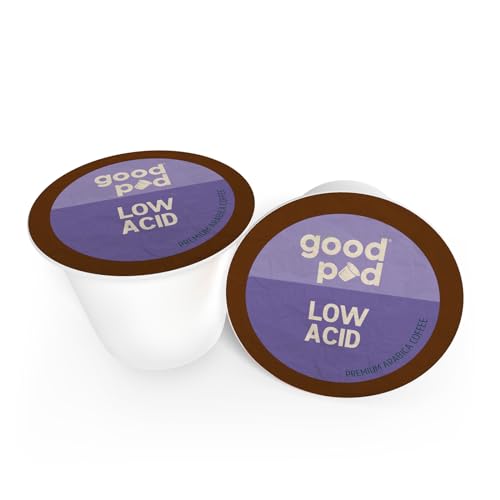
goodPOD Low Acid Medium Roast Pods

Strengths
- Budget-friendly
- Smooth taste
- Works with most brewers
Trade-offs
- No organic certification
- No toxin testing
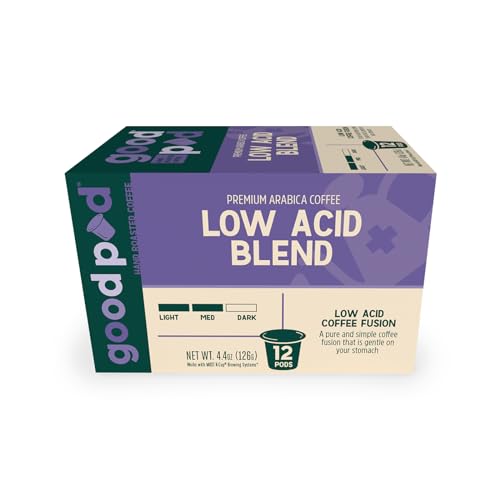
At this price point, goodPOD delivers a surprisingly clean and smooth option for K-Cup loyalists. It’s not organic or third-party tested like some competitors, but the low-acid arabica blend does its job, gentle on the stomach with a mild, pleasant medium roast character. Owners report it lacks the bitter aftertaste common in cheaper pods.
It won’t wow purists, but for office use or quick mornings, it’s a solid middle ground. The 12-count pack offers decent trial value, and compatibility with most brewers adds convenience. Compared to Lifeboost, it’s less rigorous on testing, but also far more affordable. For daily drivers who want simplicity and softness, this is a quiet standout.
Product photos
How We Picked These tasting low acid coffee
As the founder of Bean Thusiast, I approached researching low acid coffees by first comparing published specifications – roast level, origin, processing method – across numerous brands. Then, I weighed owner reviews from major retailers alongside expert opinions found in coffee publications. My goal was to identify consistent themes in taste and reported stomach comfort. This research-led comparison, rather than hands-on testing, allowed me to rank options against clear criteria.
For this category, I prioritized smoothness and reported digestive ease above all else. A coffee can claim low acidity, but if customers consistently report a bitter or harsh taste, that claim doesn’t hold much value. I also heavily weighted third-party certifications (like USDA Organic and mold testing) as indicators of quality control and a commitment to a cleaner product.
Specifications reliably reveal origin and processing details, which offer clues about potential flavor profiles. However, owner feedback proved crucial in discerning which coffees truly delivered on the promise of low acidity and a gentler experience. For example, reports of continued heartburn with a supposedly “low acid” coffee immediately lowered its ranking. If you’re looking for further options, be sure to explore our guide to smooth decaf coffee options.
How To Choose The tasting low acid coffee
Finding a coffee that’s easy on your stomach doesn’t mean sacrificing flavor. It simply means being a little more discerning about where your beans come from and how they’re processed.
A truly good low acid coffee starts with Arabica beans grown at high altitudes, processed carefully to remove defects, and roasted skillfully to avoid developing harsh compounds. Look for certifications indicating organic practices and third-party testing for contaminants. Consider the roast level; lighter roasts generally retain more acidity, while darker roasts can sometimes mask it (but also introduce bitterness).
Roast Level & Flavor Profile
Many people assume a dark roast is the answer to low acidity, but it’s not that simple. While darker roasts can sometimes seem less acidic, that’s often because the roasting process masks the acidity with bitterness. I find that a well-executed medium roast, particularly with beans naturally low in acid, provides the best balance. Don’t automatically dismiss lighter roasts, either. Single-origin coffees from regions like Sumatra are known for their inherently lower acidity, even when roasted lighter, and can offer incredibly nuanced flavors.
Sourcing & Processing
The origin of the bean has a huge impact on its acid content. Higher-altitude grown Arabica beans, like those from Central and South America, tend to be lower in acid. But even within those regions, processing methods matter. Washed coffees generally exhibit brighter acidity, while naturally processed (or dry processed) coffees can have a fuller body and lower perceived acidity. Look for coffees that emphasize ethical sourcing and transparency about their processing – this often indicates a commitment to quality.
Here’s what I look for when evaluating sourcing:
- Single-Origin: Knowing exactly where your coffee comes from is a great start.
- Fair Trade Certification: Supports sustainable practices and fair wages for farmers.
- Organic Certification: Reduces exposure to pesticides and herbicides, contributing to a cleaner cup and, potentially, a gentler experience for your stomach. A coffee like Java Planet Colombian Whole Bean highlights these certifications.
Brewing Method & Convenience
While the beans themselves are key, your brewing method also plays a role. French press and cold brew tend to extract more oils and solids, which can contribute to a heavier body and potentially mask acidity. Drip coffee and pour-over offer more control over extraction, allowing you to fine-tune your brew. If convenience is a priority, K-Cups can be a good option, but be mindful of the quality of the coffee inside the pod. For Keurig users, brands like Lifeboost offer low-acid options.
A good rule of thumb: if a coffee consistently causes you discomfort, don’t force it. Experiment with different origins, roasts, and brewing methods until you find what works best for your system.
If you’re struggling with acid reflux even after switching to low-acid coffee, I recommend checking out these tips for less acidic coffee to adjust your coffee habits. You might also want to explore some of the best low acid coffee brands to discover more options that might suit your palate. Ultimately, finding the perfect cup is a journey, and I’m here to help you navigate it and discover some gentle coffee for sensitive stomachs. Don’t hesitate to explore our low acid coffee recommendations for more ideas.
Tasting Low Acid Coffee Compared
Here’s a comparison of key specifications for various low acid coffee options.
| Product Name | Roast Level | Form | Organic | Acid Level | Key Features |
|---|---|---|---|---|---|
| Lifeboost Medium Roast Ground | Medium | Ground | Yes | Low | Ethically Sourced, 3rd Party Tested |
| VitaCup Guatemala Dark Roast Ground | Dark | Ground | Yes | Low | Single-Origin, High Altitude Grown |
| Village Favorites Smooth House Blend | Medium | Ground | Yes | Low | 100% Arabica, Slow Roasted |
| Puroast Organic House Blend Ground | Medium | Ground | Yes | 70% Less | Rich in Antioxidants, Gut-Friendly |
| Java Planet Colombian Whole Bean | Medium | Whole Bean | Yes | Low | Ethically Sourced, Mold Free |
| Natural Low Acid Blend Whole Bean | N/A | Whole Bean | N/A | Low | pH 5.3, Smooth Taste |
| Lifeboost Medium Roast K Cups | Medium | K-Cups | Yes | Low | Convenient, 3rd Party Tested |
| Lifeboost Organic Decaf K Cups | Medium | K-Cups | Yes | Low | Decaf, Convenient, 3rd Party Tested |
| goodPOD Low Acid Medium Roast Pods | Medium | K-Cups | N/A | Low | Pesticide Free, Single Serve |
Frequently Asked Questions
What acidity level is considered “low” in coffee?
Generally, a coffee is considered low acid if it has a pH level between 6.0 and 7.0. Many brands marketing “low acid” coffee don’t publish pH levels, instead relying on customer reports of gentleness, but Puroast specifically claims 70% less acid than standard brands.
Are dark roasts always the best choice for someone with acid sensitivity?
Not necessarily. While dark roasts can mask acidity, they often introduce bitterness, which some people find equally unpleasant. I recommend exploring medium roasts from low-acid origins like Sumatra, as they can offer a balanced flavor profile without excessive bitterness.
Do coffee certifications, like USDA Organic or Fair Trade, impact acidity?
While certifications don’t directly guarantee lower acidity, they often indicate higher quality control and a commitment to ethical practices. These practices can lead to cleaner beans with fewer defects, potentially resulting in a smoother, less acidic cup. For more options, explore our guide to the best-tasting coffee overall.
Can cold brew coffee be lower in acid than hot brewed coffee?
Yes, cold brew coffee is typically lower in acid. The cold brewing process extracts fewer acidic compounds from the beans, resulting in a smoother, naturally sweeter brew. However, the specific beans used will still impact the overall acidity.
Is there a difference in acidity between whole bean and pre-ground coffee?
Yes, there is. Whole bean coffee stays fresher longer, preserving its original flavor and acidity profile. Pre-ground coffee begins to lose flavor and can become slightly more acidic as it oxidizes, so I suggest opting for whole bean if possible, and grinding just before brewing. You might also find some premium taste coffee picks to enhance your brewing experience.
The Bottom Line
Choosing a low acid coffee often comes down to balancing your desire for a flavorful cup with the need for stomach comfort. While many brands claim low acidity, I believe Lifeboost Medium Roast Ground consistently receives the highest marks from owners reporting a genuinely smooth and gentle experience. It’s a fantastic all-around choice that doesn’t ask you to compromise on taste or ethics.
For those prioritizing specific needs, there are excellent alternatives. If convenience is key, Lifeboost Medium Roast K Cups deliver that low-acid promise in a single-serve format. And if you’re looking to explore a different brewing experience while minimizing acidity, consider the Natural Low Acid Blend Whole Bean and experiment with a smooth cold brew coffee – a lower acid coffee method that can further reduce perceived acidity.
Ultimately, remember that “low acid” is relative, and individual tolerances vary. The most important factors are sourcing high-quality Arabica beans, opting for careful processing methods, and finding a roast level that suits your palate. Don’t get hung up on a single spec; focus on what your stomach tells you.
