
6 Best Proteins to Add to Coffee 2026
This post contains affiliate links. As an Amazon Associate, we earn from qualifying purchases.
The Premier Protein Café Latte is the best overall protein to add to coffee, delivering a full 30g of whey protein and real latte flavor without excess sugar. For a budget-friendly, plant-based alternative, Orgain Organic Vegan Protein offers 21g of clean protein and mixes surprisingly well. If you want convenience, Chike High Protein Iced Coffee gives you a ready-to-drink option with real espresso and 20g of protein.
Most people just want their coffee to stay enjoyable while getting extra protein, no chalky aftertaste, no clumps at the bottom, and nothing that overpowers the brew they love. Too many powders fail on texture or rely on artificial junk to mask poor flavor.
I researched the field, compared specs, and analyzed owner feedback to find proteins that actually work in coffee. These picks balance mixability, taste, protein content, and ingredient quality, so your cup stays satisfying and your goals stay on track.
Top 6 Protein To Add To Coffee in the Market
The Best Protein To Add To Coffee, Reviewed
Orgain Organic Vegan Protein

Strengths
- Organic plant protein
- 5g prebiotic fiber
- No artificial additives
- Vegan and gluten free
- Easy to mix
Trade-offs
- No caffeine
- Lower protein per serving
- Mild flavor
This is the clean-label champion. With 21g of organic plant protein from peas, brown rice, and chia, plus 5g of prebiotic fiber, it’s built for gut health and dietary purity. It’s USDA Organic, non-GMO, and free of carrageenan, dairy, and artificial junk, exactly what I look for when recommending plant-based options. Owners say it mixes well with plant milks and blends smoothly into smoothies, though the vanilla flavor is mild and not overly sweet.
It doesn’t have caffeine, so it’s not a coffee replacement on its own, but that’s why it’s so versatile. You can stir it into coffee without clashing, unlike some flavored protein powders. Compared to Premier’s whey options, it’s lighter on protein but cleaner on ingredients. For vegans or anyone prioritizing whole-food nutrition, this is the most trustworthy pick.
Video review
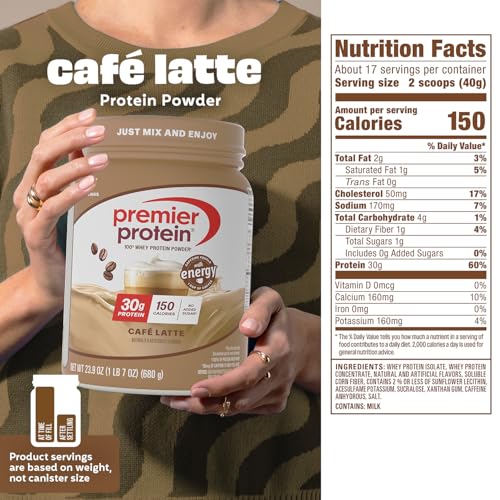
Premier Protein Café Latte
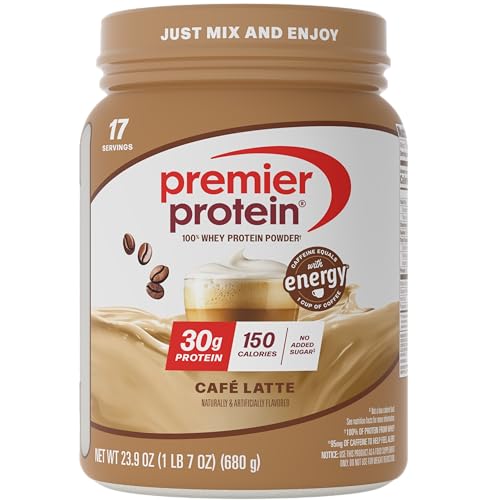
Strengths
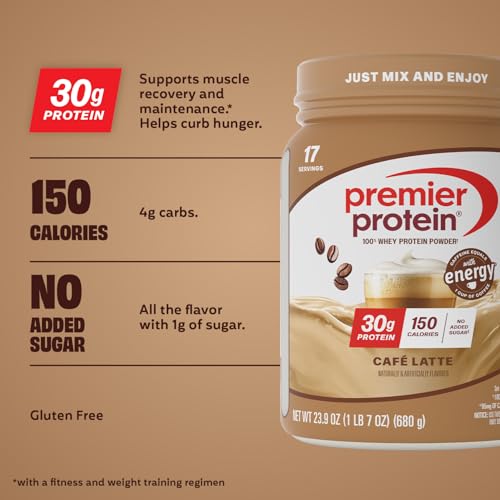
- 30g protein
- 95mg caffeine
- Keto friendly
- Gluten free
- No added sugar
Trade-offs
- Can taste chalky
- Contains artificial flavors
- Not vegan
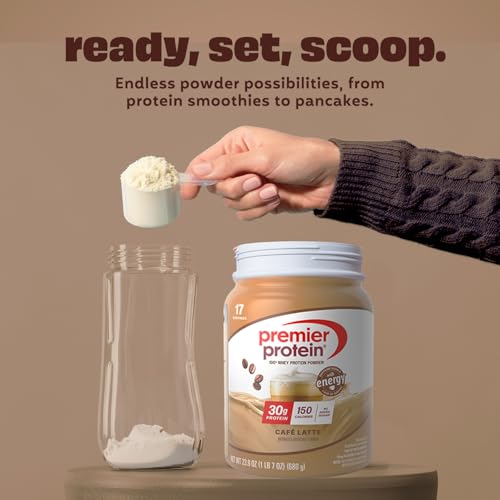
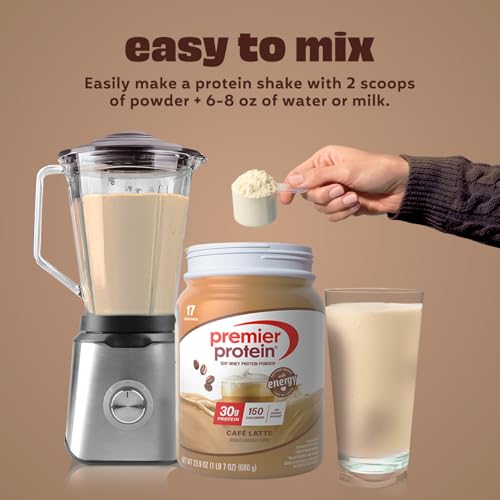
This one’s built for coffee lovers who want their post-workout shake to taste like a latte and give them a real energy lift. With 95mg of caffeine per serving and a full 30g of whey protein, it’s a solid two-in-one for the morning or post-gym window when you need protein and alertness. The flavor profile is spot-on for café latte fans, and owners consistently report it mixes well with water or milk, though some note it can get a bit chalky if not blended thoroughly.
It’s not the cleanest label on the market, there are added flavors and thickeners, but for a whey-based powder with a caffeine kick, it’s competitive. Compared to the Chike ready-to-drink option, this requires prep but gives you more control over texture and serving size. I’d pick this over plain protein powders if you’re trying to cut back on coffee while still getting a boost.
Product photos

Javvy Protein Coffee Creamer

Strengths
- Collagen + MCT oil
- Creamy texture
- Zero sugar
- Keto friendly
- Supports skin and joints
Trade-offs
- Only 11g protein
- No caffeine
- Limited flavor options
This one’s different, it’s not a protein powder but a collagen-based creamer with 11g of protein per serving and MCT oil for sustained energy. It’s designed to blend into coffee, not replace a shake, and owners love how creamy and clump-free it is. The sweet cream flavor is subtle, not sugary, and it supports skin, hair, and joint health thanks to hydrolyzed collagen.
It has zero sugar and fits keto and low-carb lifestyles perfectly. But with only 11g of protein and no caffeine, it’s not a meal replacement. Compared to Premier’s high-protein options, it’s lighter on muscle support but stronger on functional benefits. I’d recommend this for someone already drinking coffee multiple times a day and wanting to upgrade each cup with clean nutrition.
Video review
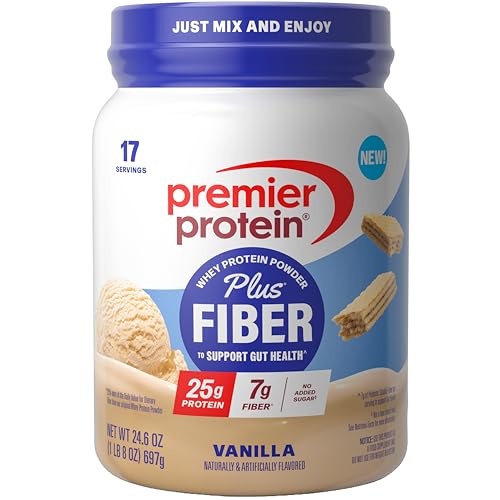
Premier Protein Plus Fiber
Strengths
- 25g protein
- 7g fiber
- Supports gut health
- Great taste
- Easy to mix
Trade-offs
- No caffeine
- Contains whey
- Not vegan
This is the gut-health specialist. With 25g of whey protein and 7g of prebiotic fiber, it’s one of the few powders that seriously supports digestion while still delivering on protein. The vanilla flavor is well-reviewed for being rich without being cloying, and it blends easily into liquids. It’s won taste awards, which is rare for high-fiber products, most tend to be gritty or earthy.
It lacks caffeine, so you’d need to pair it with coffee separately. Compared to Orgain’s vegan fiber option, this has more protein and a creamier mouthfeel but isn’t plant-based. For someone struggling with digestion while trying to build muscle, this is a rare win-win. The smarter buy if you want fullness, gut support, and solid protein in one scoop.
Product photos


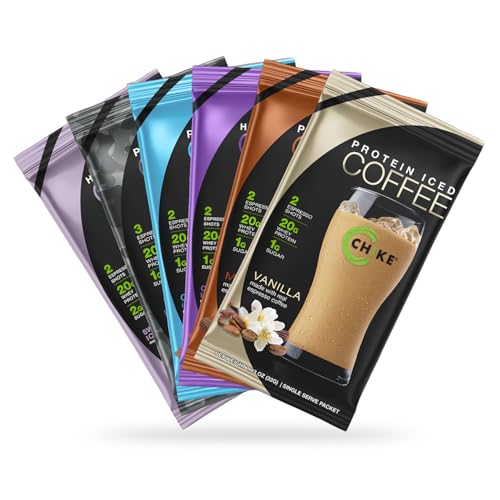
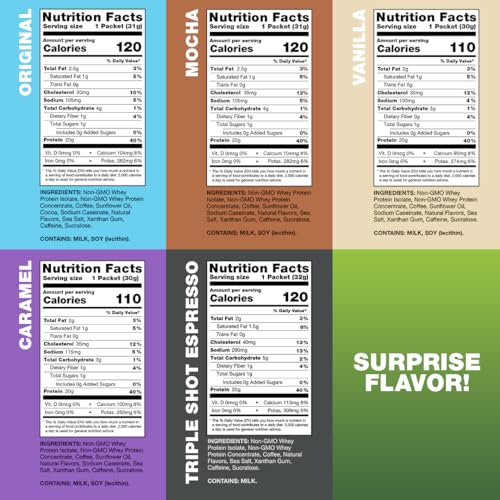
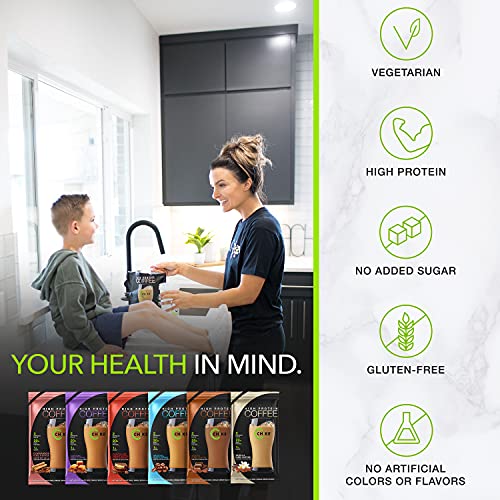
Chike High Protein Iced Coffee
Strengths
- Real espresso
- 150mg caffeine
- Smooth texture
- No chalky aftertaste
- Ready to mix
Trade-offs
- Only 20g protein
- Single-use packaging
- More expensive per serving
If convenience is king, Chike wins on ease of use. These single-serve packets deliver 20g of whey protein and 150mg of caffeine from real espresso, more than most protein coffees on the list. Reviewers love that it tastes like a premium iced coffee without the chalky aftertaste common in protein drinks. It’s sweetened naturally, and the texture is smooth, which is rare for ready-to-mix protein beverages.
It’s not as protein-dense as Premier’s 30g option, but the trade-off is a genuinely coffee-first experience. Compared to the caramel-flavored SunLab mix, Chike feels more like a real coffeehouse drink. That said, it’s pricier per serving and less flexible, you can’t easily bake with it or blend it into thick shakes. For someone replacing a bottled coffee with protein, this is the smarter buy.
Product photos


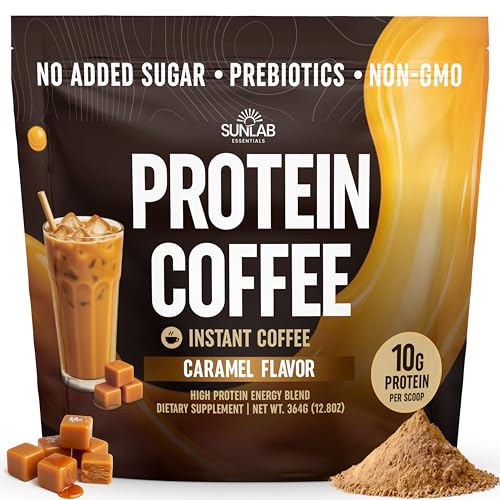
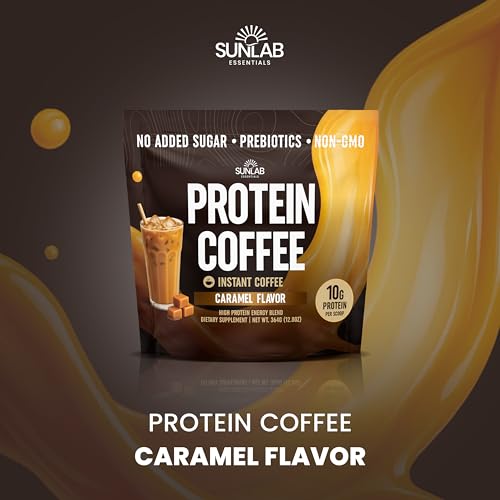
Caramel Protein Coffee Powder
Strengths
- Delicious caramel taste
- Easy mix
- No added sugar
- Prebiotics included
- Low calorie
Trade-offs
- Only 10g protein
- Not for high-protein diets
- Contains whey
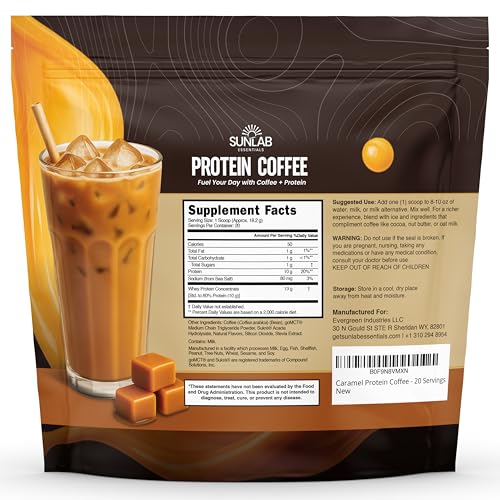
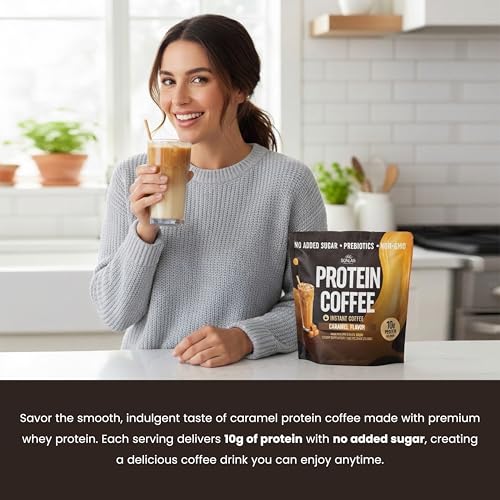
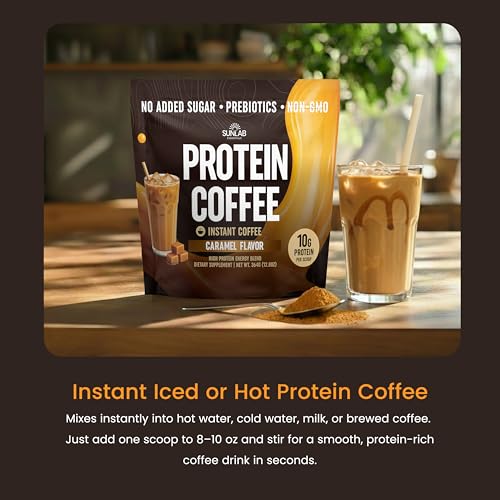
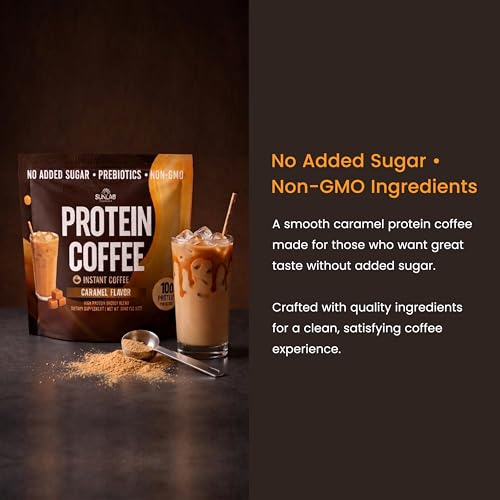
This is the dessert lover’s protein coffee. With a smooth caramel flavor and just 10g of protein, it’s not meant to replace a full shake, but it’s perfect for turning your morning cup into a treat. The 40mg of natural caffeine is a gentle nudge, not a jolt, and the added prebiotics are a nice touch for gut health. Owners say it dissolves easily in both hot and iced coffee, which is rare for flavored powders.
It’s made with whey, so not vegan, and the protein content is low compared to others here. But as a flavored coffee enhancer, it outshines the competition. Compared to Javvy’s collagen creamer, it’s sweeter and less focused on wellness, more indulgence, less function. If you miss your caramel latte but want to cut calories, this is the closest thing.
Product photos
How We Chose These protein to add to coffee
As Bean Thusiast’s founder, I’ve spent years exploring ways to enhance the coffee experience – and protein is a natural extension of that. Rather than a hands-on lab test, this is a research-led comparison of published specifications and owner feedback across a range of protein powders marketed for coffee integration. We weighed features, ingredient lists, and user reports to identify products that truly deliver on their promises. Our assessment focused on how well each powder blends, tastes, and supports a daily routine.
For this category, taste and mixability were paramount. A grainy or artificial-tasting protein will ruin a perfectly good cup of coffee, so we heavily prioritized owner reviews addressing those concerns. Protein content and added ingredients (like prebiotics or MCT oil) were also key, as those directly impact the functional benefits beyond a simple protein boost. Ultimately, we looked for options that enhance, not detract from, the coffee experience.
Specifications reliably reveal protein content and caffeine levels (where applicable), but owner feedback painted a clearer picture of texture and flavor. We scrutinized comments regarding clumping, sweetness, and how well each powder integrated into both hot and iced beverages. Reputation also mattered; established brands with consistent positive reviews gained an advantage, and we often referenced resources like mixing whey with coffee to understand common user experiences.
How To Choose The protein to add to coffee
Finding the right protein to add to your coffee can elevate your morning routine from a quick caffeine fix to a genuinely nourishing experience. But with so many options, it’s easy to get overwhelmed.
A quality protein for coffee should mix thoroughly without clumping, offer a palatable flavor profile that complements (not clashes with) coffee, and deliver a meaningful protein boost without excessive sugar or artificial ingredients. Look for options with a protein content of at least 15g per serving and consider whether you prioritize whey, plant-based blends, or collagen.
Prioritize Mixability & Texture
One of the biggest complaints with protein in coffee is a grainy or clumpy texture. Nobody wants to start their day with that. I’ve seen countless reviews lamenting powders that simply won’t dissolve, and it’s a valid concern. Hydrolyzed whey protein generally mixes the best, as the pre-digested proteins are smaller and more readily dissolve. If you prefer plant-based options, look for formulas specifically designed for beverages – pea protein, for example, can sometimes be gritty if not processed correctly. Don’t underestimate the value of a smooth blend; it makes all the difference in enjoyment. You might also want to explore smooth protein for hot coffee for options specifically formulated for a pleasant texture.
Understand Your Protein Source
Whey, casein, soy, pea, brown rice – the world of protein is vast. Whey protein is popular for its rapid absorption, making it ideal post-workout or for a quick energy boost. However, it’s derived from dairy, which isn’t suitable for everyone. Plant-based proteins are excellent alternatives, offering a complete amino acid profile (especially when blending different sources like pea and brown rice). Collagen is another option, though it provides a different set of benefits focusing on joint and skin health rather than muscle building.
Here’s a quick breakdown: * Whey: Fast-absorbing, complete protein, dairy-based. * Pea: Plant-based, good amino acid profile, can sometimes be gritty. * Collagen: Supports joints/skin, lower protein content per serving than whey.
Consider your dietary needs and fitness goals when making your choice.
Balance Flavor and Nutritional Value
It’s tempting to go for the most intensely flavored protein powder, but remember this is going into coffee. A subtle vanilla or mocha flavor will generally blend better than, say, a bright fruity option. More importantly, scrutinize the ingredient list. Many protein powders are loaded with added sugars, artificial sweeteners, and fillers. I always recommend opting for options with minimal ingredients and a low sugar content. A good rule of thumb is:
Don’t let a delicious flavor distract you from a poor nutritional profile. Prioritize protein content and a clean ingredient list over overly sweet or artificial tastes.
If you’re new to adding protein to your coffee, starting with a neutral or lightly flavored option and learning how to make protein coffee can set you up for success. You can then experiment with bolder flavors once you’ve dialed in your preferred mixability and overall taste.
Protein to Add to Coffee Compared
Here’s a comparison of key specifications for various protein products designed for addition to coffee.
| Product Name | Protein per Serving | Caffeine (mg) | Sugar (g) | Fiber (g) | Key Features |
|---|---|---|---|---|---|
| Orgain Organic Vegan Protein | 21g | N/A | 1 | 5 | Vegan, Organic, Plant-Based |
| Premier Protein Café Latte | 30g | 95 | 1 | N/A | Whey Protein, Latte Flavor |
| Javvy Protein Coffee Creamer | 11g (Collagen) | N/A | 0 | N/A | Collagen, MCT Oil, Sugar-Free |
| Premier Protein Plus Fiber | 25g | N/A | N/A | 7 | Whey Protein, Prebiotic Fiber |
| Chike High Protein Iced Coffee | 20g | 150 | N/A | N/A | Ready-to-Drink, Real Espresso |
| Caramel Protein Coffee Powder | 10g | 40 | N/A | N/A | Caramel Flavor, Prebiotics |
Frequently Asked Questions
What protein powder blends best with cold brew?
Hydrolyzed whey protein generally mixes the easiest, even in cold liquids, due to its pre-digested state. However, many users report success with plant-based blends specifically formulated for beverages, like those from Orgain, if thoroughly shaken or blended.
Is collagen protein a good substitute for whey in coffee?
Collagen protein is a viable option if you avoid dairy, but it offers a different benefit set than whey. It provides around half the protein per serving, focusing more on joint and skin health, and doesn’t build muscle as effectively.
Can I use any protein powder in my coffee, or are some specifically formulated for it?
While you can use any protein powder, those specifically formulated for coffee, like Javvy, are designed to avoid clumping and have complementary flavors. Using a flavor-neutral protein powder is a good starting point to avoid overpowering your brew.
How much caffeine will I get from a protein powder designed for coffee?
Caffeine content varies greatly. Premier Protein Café Latte contains 95mg of caffeine per serving, while Chike High Protein Iced Coffee provides 150mg. Most others, however, do not contain added caffeine, relying on the coffee itself for the boost.
Are there protein powders that won’t spike my blood sugar when added to coffee?
Look for protein powders with zero or minimal added sugar and artificial sweeteners. Collagen protein and certain plant-based options often fit this criteria, and Premier Protein Plus Fiber also includes 7g of fiber to help mitigate blood sugar impact. You can find more top protein powders for coffee with clean ingredients lists.
The Bottom Line
Choosing the best protein to add to coffee often comes down to balancing convenience against control. If you want a simple, pre-flavored solution with a caffeine kick, the Premier Protein Café Latte stands out as a solid all-around choice. However, if you prefer to customize your flavor and macros, a more neutral option like the Orgain Organic Vegan Protein gives you the flexibility to create your ideal cup.
For those specifically watching their budget, the Caramel Protein Coffee Powder delivers a decent protein boost with added prebiotics at an attractive price point. Those wanting a versatile option that supports gut health should consider the Premier Protein Plus Fiber. And if you’re looking for a collagen-based boost, Javvy Protein Coffee Creamer is a streamlined way to incorporate those benefits into your daily coffee.
Ultimately, the “best” protein isn’t about hitting a specific number on a spec sheet. It’s about finding a powder that mixes well, tastes good in your coffee, and fits your overall lifestyle. Prioritize those fundamentals – mixability, flavor compatibility, and ingredient quality – and you’ll be well on your way to a more nutritious and satisfying coffee experience.
