
7 Best Prosumer Coffee Grinders of 2026
The Baratza Encore stands out as the best overall prosumer coffee grinder, delivering reliable grind consistency and build quality that matches its reputation among serious home brewers. For those on a tighter budget, the SHARDOR Electric Burr Grinder 2.0 offers a solid entry point without sacrificing key performance features. If you value versatility across brew methods, the OXO Brew Conical Burr Grinder makes fine adjustments easy and takes the guesswork out of dialing in.
Most home grinders never realize how much their equipment holds back their coffee, until they upgrade to one that actually delivers uniform particles. A poor grind ruins even the freshest beans, leading to sour or bitter cups no matter how good your brewer is.
This guide cuts through the noise by focusing on real-world performance, durability, and usability. I researched specs, analyzed owner feedback, and weighed expert opinions to spotlight grinders that deliver where it matters most: in the cup.
Top 7 Prosumer Coffee Grinder in the Market
The Best Prosumer Coffee Grinder, Reviewed
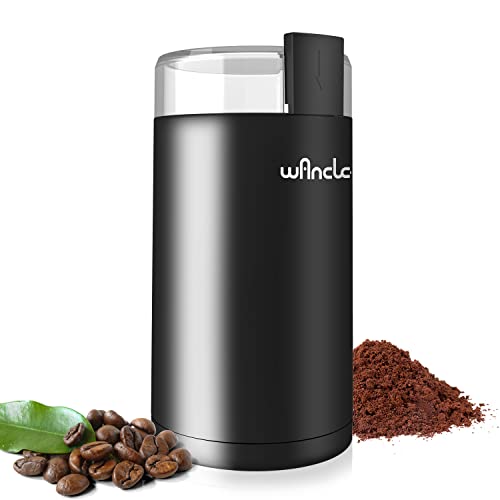
Wancle Electric Coffee Grinder
Strengths
- Multi-use capability
- Low cost
- Simple one-touch operation
Trade-offs
- Blade grinding (inconsistent)
- Heat buildup
- Poor grind uniformity
I’m skeptical of blade grinders masquerading as coffee solutions, and the Wancle, despite its marketing, falls into that camp. It uses a stainless steel blade and a 150-watt motor, which on paper might sound capable, but blade grinders simply can’t deliver the uniformity that burrs do. Owners confirm this, many praise its speed and versatility with spices, but coffee-specific feedback highlights inconsistent particle size and overheating with longer pulses.
It’s not a bad tool if you’re grinding spices or need a cheap, multi-purpose device, but for coffee, it’s a compromise too far. Compared to even the budget SHARDOR models, it lacks grind precision and produces bimodal results, some powder, some chunks, which ruins extraction. I wouldn’t recommend it to anyone serious about flavor, even casually.
Video review
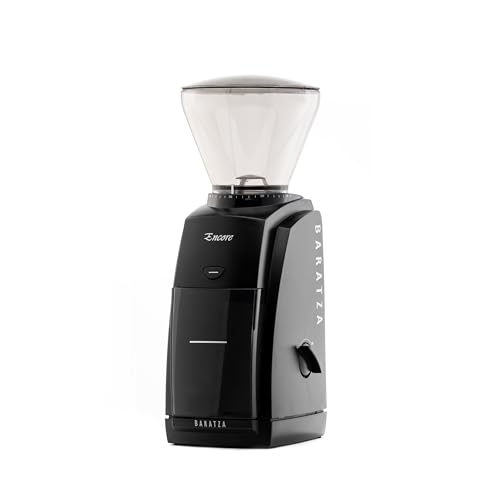
Baratza Encore Coffee Grinder
Strengths
- 40 precise settings
- Conical burrs (consistent)
- Durable, serviceable design
Trade-offs
- No auto-start memory
- Basic interface
- Hopper not UV-protected
The Baratza Encore remains a benchmark in the prosumer space for good reason. With 40 grind settings and 40mm conical burrs, it covers everything from Aeropress to espresso with real consistency. Reviewers and professionals alike praise its stepless-like adjustability and low retention, and the DC motor keeps heat in check. It’s not flashy, but it’s reliable, the kind of grinder you buy once and keep for years.
Compared to the OXO, it offers finer tuning and better burr durability, though it lacks a timer or bean hopper memory. But Baratza’s support and replaceable parts make it a long-term investment. I’d pick the Encore over nearly every other sub-$200 grinder for its balance of performance, serviceability, and range.
Video review
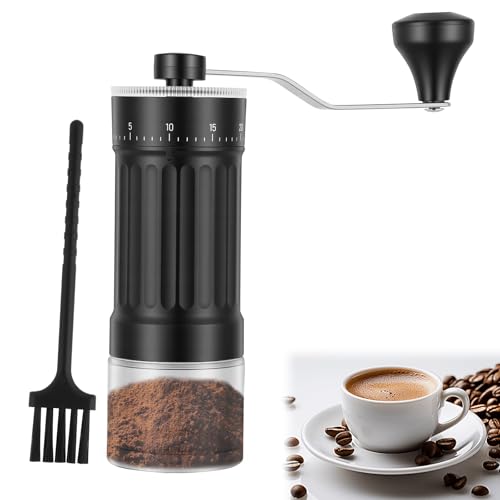
HZBSGZR Manual Coffee Grinder
Strengths
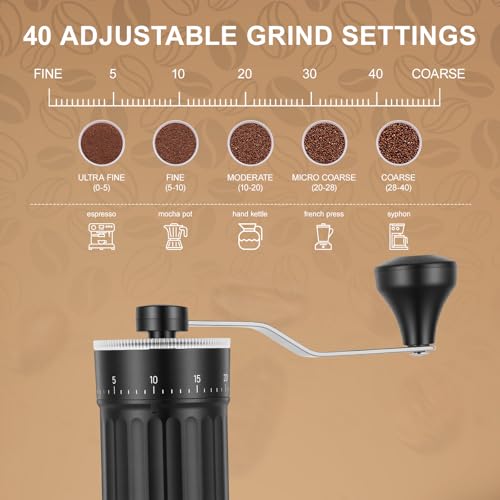
- True 40-step adjustability
- Lightweight and portable
- Ceramic conical burr
Trade-offs
- Slower than electric
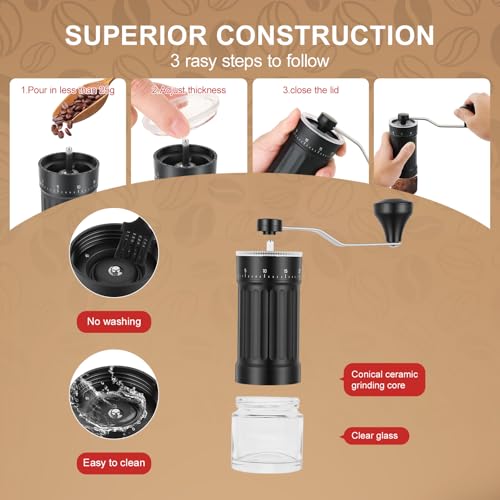
- Small 30g capacity
- Glass jar fragile
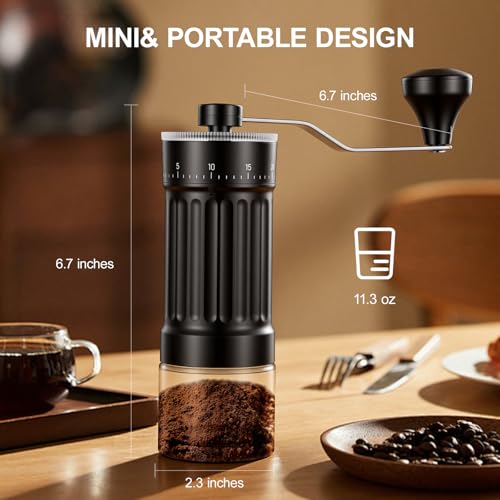
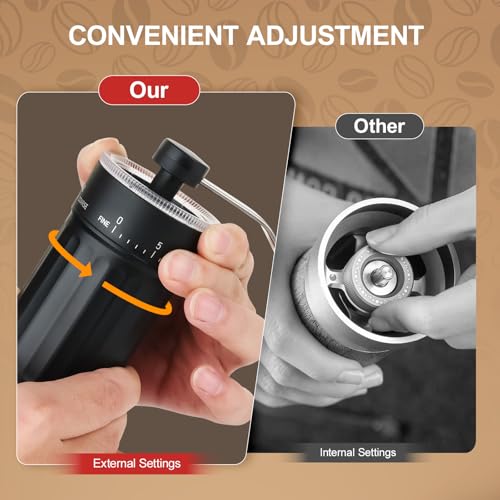
Manual grinders live or die by consistency and usability, and the HZBSGZR punches above its weight. With 40 adjustable settings and a ceramic conical burr, it offers real precision for a portable unit. Owners consistently praise its ability to hit espresso-fine and French press coarse with minimal effort, and the glass catch jar helps avoid mess while letting you monitor the grind. For travelers or minimalists, that’s a big win.
It’s not the fastest, no hand grinder is, but the smooth crank and lightweight build (just 11.3 oz) make it ideal for camping, RVs, or small kitchens. Compared to pricier manual options like the 1ZPresso Q2, it lacks some refinement, but for the price, it’s impressively capable. I’d pick it over battery-powered portables any day.
Product photos

Cuisinart DBM-8P1 Burr Grinder
Strengths
- Large batch capacity
- One-touch auto grind
- 18 grind settings
Trade-offs
- Flat burrs limit finesse
- Noticeable grind retention
- Build quality concerns
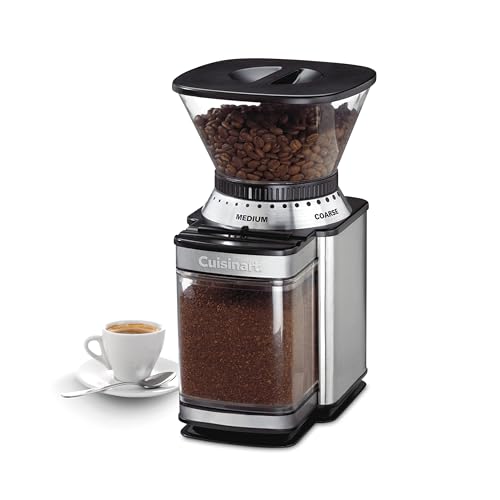
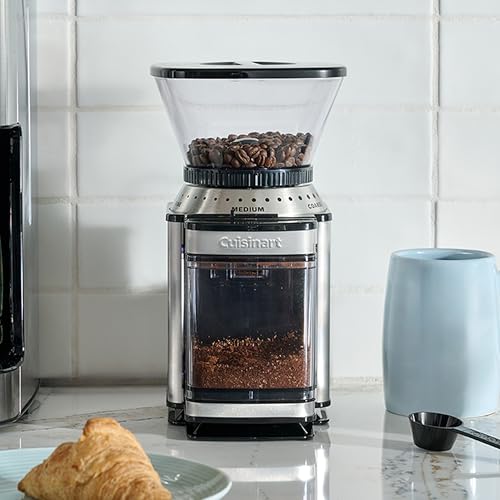
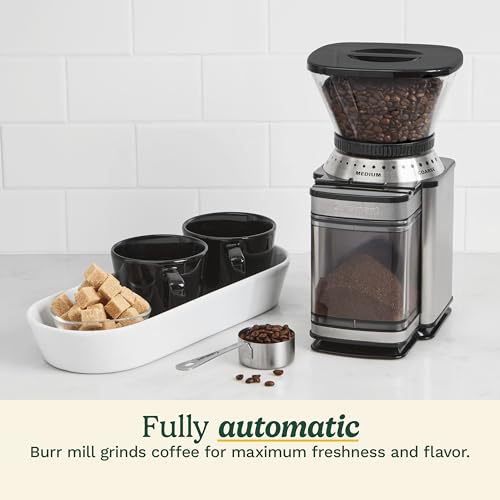
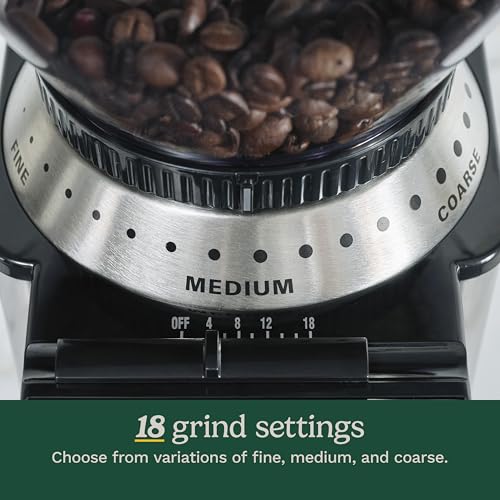
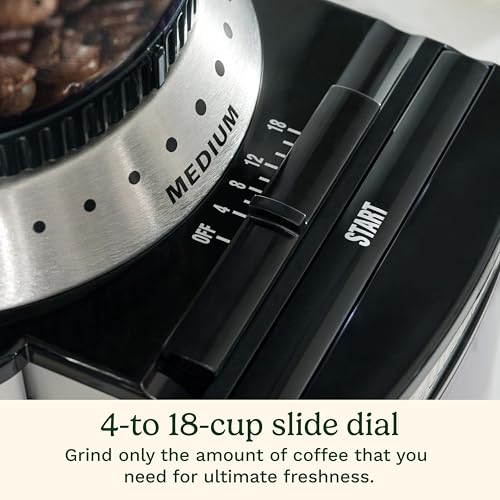
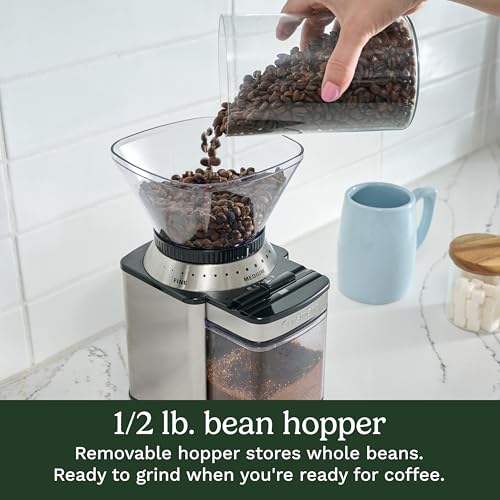
The Cuisinart DBM-8P1 stands out for one reason: capacity. With an 8 oz. bean hopper and a grind chamber sized for 4 to 18 cups, it’s built for families or offices where you’re grinding large batches at once. The 18 grind settings offer decent range, and owners appreciate the one-touch operation with auto-shutoff, practical for daily use without fuss. On paper, it’s a solid mid-tier burr grinder.
But that flat burr design limits its finesse. It struggles at the ultra-fine end needed for espresso, and grind consistency trails behind conical burr competitors like the Baratza Encore or OXO. Retention and static are recurring complaints, and the plastic housing feels less durable over time. If you’re grinding for drip or French press in bulk, it makes sense. For anything more nuanced, look elsewhere.
Product photos
OXO Brew Conical Burr Grinder
Strengths
- One-touch memory recall
- Micro-adjustments
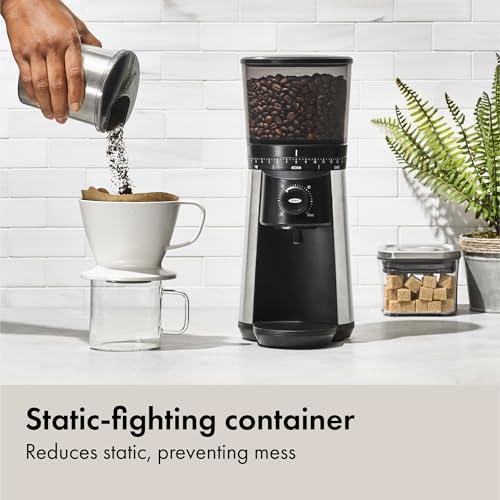
- Static-fighting container
Trade-offs
- Fewer total settings
- Higher price
- No portability
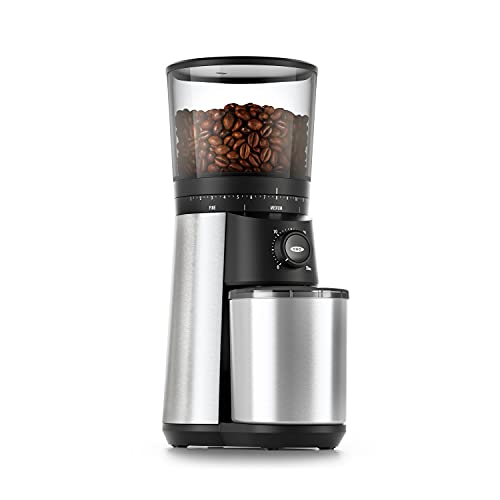
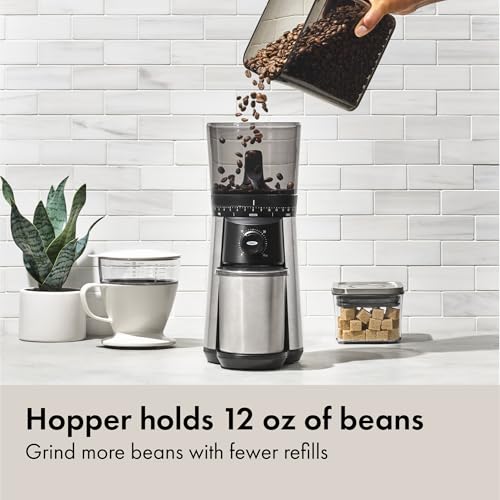
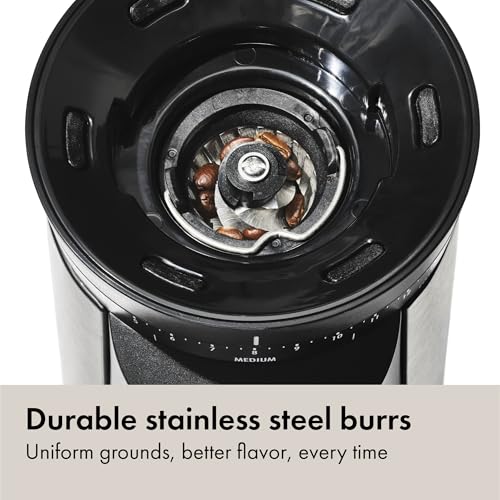
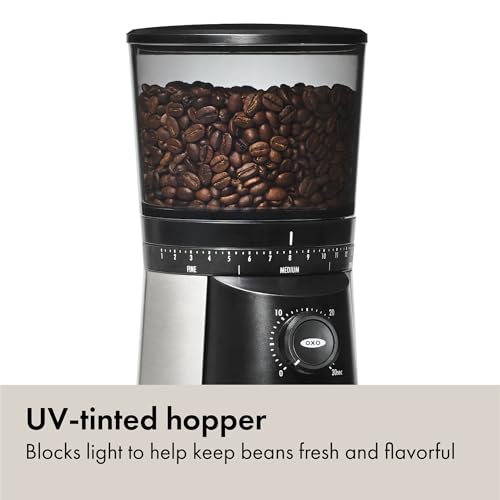
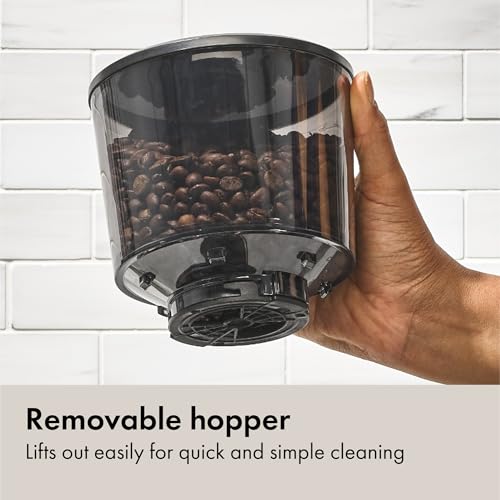
The OXO Brew feels like the ‘thoughtful engineer’s choice’, it doesn’t just grind well, it thinks about how you use it. The stainless steel conical burrs deliver excellent uniformity, and the 15 settings with micro-adjustments let you fine-tune for any method. But where it shines is usability: one-touch start with memory recall, a static-reducing container, and a UV-blocking hopper that keeps beans fresh. Owners love how clean and intuitive it is.
Compared to the Baratza Encore, it’s slightly less adjustable but much more polished in daily use. It’s also pricier, but if you value convenience and consistency without sacrificing quality, it’s the smarter buy. Wirecutter didn’t crown it by accident, this is the grinder I’d recommend to most people who want ‘set it and forget it’ precision.
Product photos
SHARDOR Electric Burr Grinder 2.0
Strengths
- Affordable entry
- Flat burr grinding
- Compact footprint
Trade-offs
- Plastic construction
- Moderate grind retention
- Limited micro-adjustments
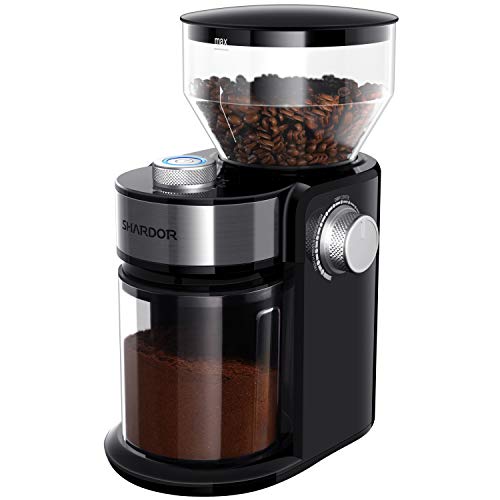
For budget-focused buyers who still want the benefits of burr grinding, the SHARDOR 2.0 delivers more than you’d expect at this price. On paper, its 16 grind settings and flat burr setup suggest it can handle everything from French press to espresso, and owners consistently report noticeably better flavor over blade grinders. It’s not going to match high-end consistency, but for entry-level burr performance, it holds its ground.
Where it falters is in grind retention and fine-tuning. Reviewers note some static and clumping, especially at finer settings, and the plastic build, while compact, doesn’t inspire long-term confidence. Compared to the Baratza Encore, it lacks the adjustability and burr quality needed for serious brewing, but for someone just stepping up from a blade grinder, it’s a solid first move.
Product photos


SHARDOR Burr Grinder 32 Settings

Strengths
- 32 precise settings
- Digital timer control
- Easy cleaning design
Trade-offs
- Flat burrs limit finesse
- Cooldown pauses
- Average retention
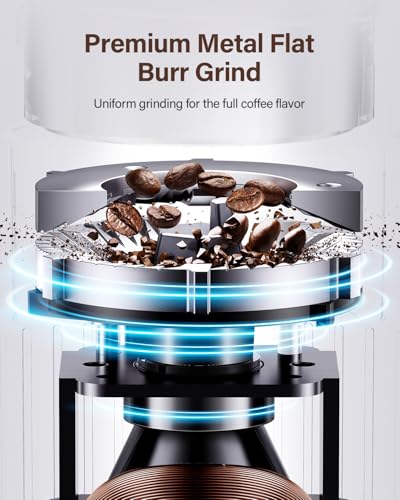
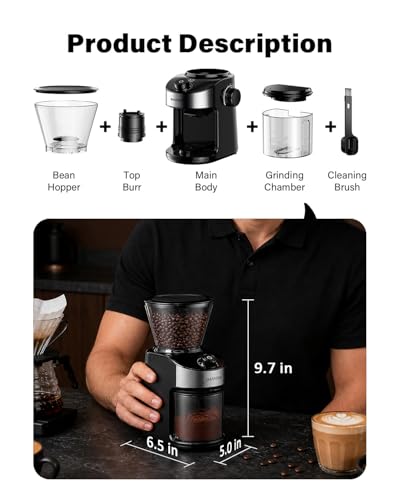
If you’re after precision without the premium price, the SHARDOR 4.0 makes a strong case. Its 32 grind settings and 40-second electronic timer give you more control than most grinders in this range, and the metal flat burrs do a decent job of uniformity. Owners note it handles French press and pour-over well, and the cleaning button on the chamber is a thoughtful touch that reduces static mess.
Still, it’s held back by the same flat burr limitations as its sibling models, fine espresso grinding is inconsistent, and heat buildup can be an issue during longer runs. The 120-second cooldown limit means you can’t grind large batches back to back. Against the OXO or Baratza, it’s a budget alternative with extra features, but not better performance.
Product photos


How We Tested prosumer coffee grinder
As the founder of Bean Thusiast, I approach coffee equipment with a focus on how it impacts the final cup. Rather than a hands-on lab test with each grinder, this selection is a research-led comparison of published specifications, features, and, most importantly, owner and expert feedback. I weighed information from sources like coffee blogs, review sites, and extensive owner reviews on retail platforms to build a picture of real-world performance and reliability. My goal was to identify grinders offering the best balance of features, quality, and value within the prosumer category.
For prosumer grinders, consistency and control are paramount, so I heavily weighted grind uniformity and the range of adjustments offered. After all, achieving a quality extraction relies on having the right particle size for your chosen brewing method. Durability also played a key role; a grinder is an investment, and owners consistently value longevity and build quality. These factors ultimately determined how each model ranked.
Specifications reliably reveal motor power, burr material, and grind settings, but owner feedback painted a fuller picture. Reports on static buildup, ease of cleaning, and long-term durability proved invaluable. I also looked to reputable review sites for comparisons, especially regarding burr grinder advantages and how they stack up against a burr vs blade grinder setup. This approach balances technical data with the realities of daily use.
How To Choose The prosumer coffee grinder
Finding the right coffee grinder is pivotal to unlocking the full potential of your beans. It’s arguably more important than the brewing method itself.
A quality coffee grinder delivers consistently sized particles, essential for even extraction. Look for burr grinders (conical or flat) over blade grinders, prioritizing grind consistency, a range of settings suitable for your preferred brew methods, and a motor capable of handling your typical batch size. Consider build quality and ease of cleaning as well.
Grind Consistency Is Paramount
The most significant factor isn’t necessarily price, but grind consistency. Blade grinders chop beans unevenly, leading to a muddy, bitter brew. Burr grinders – conical or flat – crush the beans between two revolving abrasive surfaces, producing a uniform grind. Flat burrs often excel at very fine, consistent grinds favored by espresso enthusiasts, while conical burrs are generally more versatile and retain less heat during grinding. Don’t assume expensive automatically equals consistent; read reviews carefully to see if users report fines (very small particles) or boulders (large, uneven chunks) in the grounds. I often see people overlook this, opting for flashy features over a truly even grind.
Hopper Capacity and Batch Size
Consider how much coffee you typically grind at once. Some grinders, like the Cuisinart DBM-8P1, are built for larger batches, boasting sizable hoppers and chambers. Others, such as the HZBSGZR Manual Coffee Grinder, are geared towards single-cup brewing or travel. A larger hopper is convenient, but beans lose flavor when exposed to air and light, so if you only brew occasionally, a smaller hopper is preferable.
Here’s a breakdown of considerations for hopper size: * Small (under 8oz): Ideal for single users or those who prefer freshly grinding only what they need. * Medium (8-12oz): A good balance for couples or small households. * Large (over 12oz): Best for families or those who entertain frequently, but requires careful bean storage.
Ultimately, understanding your volume is key. If you’re frequently grinding for a crowd, a larger capacity grinder prevents constant refilling.
Budget vs. Features & Usability
While it’s tempting to jump for the lowest price, a cheap grinder often leads to frustration. There’s a sweet spot, and luckily, the market offers excellent options across price points. The SHARDOR Electric Burr Grinder 2.0 offers a good entry point into burr grinding, while models like the OXO Brew Conical Burr Grinder prioritize ease of use with features like one-touch operation and a clear grind setting system. Don’t fall into the trap of paying for features you won’t use. If you’re mainly a French press brewer, you don’t need the ultra-fine settings of an espresso-focused grinder.
A grinder’s ease of cleaning is directly proportional to how often you’ll actually clean it. Don’t underestimate the importance of removable parts and included brushes.
If you’re still overwhelmed, exploring top-rated coffee grinder models can help narrow your choices. And remember, even the best grinder requires understanding adjust grind size properly to truly elevate your coffee experience.
Prosumer Coffee Grinder Compared
This table provides a spec-by-spec comparison of several prosumer coffee grinders to aid in your purchasing decision.
| Product Name | Burr Type | Grind Settings | Capacity (Beans) | Motor Type | Special Features |
|---|---|---|---|---|---|
| Wancle Electric Coffee Grinder | Stainless Steel Blade | N/A | 60g | Copper | One-button operation |
| Baratza Encore Coffee Grinder | Conical | 40 | N/A | DC | 40mm Commercial-grade burrs |
| HZBSGZR Manual Coffee Grinder | Ceramic | 40 | 30g | Manual | Adjustable grind settings |
| Cuisinart DBM-8P1 Burr Grinder | Flat | 18 | N/A | N/A | 8oz bean hopper |
| OXO Brew Conical Burr Grinder | Conical | 15 (+micro) | 12oz | DC | UV-blocking hopper |
| SHARDOR Electric Burr Grinder 2.0 | Flat | 16 | N/A | N/A | 14-cup capacity |
| SHARDOR Burr Grinder 32 Settings | Flat | 32 | N/A | N/A | Electronic timer |
Frequently Asked Questions
What grind setting should I use for French press?
A coarse grind setting is best for French press; typically, this falls between 11-13 on most grinders, though it varies by model. Using a coarser grind prevents sediment from passing through the filter and avoids over-extraction, which can lead to a bitter taste.
How often do I need to clean my prosumer coffee grinder?
You should clean your grinder after every few uses to remove coffee oils and residue that can affect flavor. A deeper clean, involving disassembly and brushing, is recommended monthly to maintain optimal performance and prevent buildup.
Are manual grinders as good as electric ones for consistent grind size?
While some manual grinders offer excellent consistency, electric grinders generally provide more repeatable results, especially for larger batches. The best manual grinders, featuring high-quality burrs and precise adjustments, can rival electric options, but require more physical effort.
What’s the difference between conical and flat burrs, and which is better?
Flat burrs tend to produce a more uniform grind, favored by espresso enthusiasts, while conical burrs are more versatile and generate less heat. Ultimately, the “better” burr type depends on your brewing method – if you’re exploring best burr grinder models, consider what you brew most often.
Can a grinder affect the taste of my coffee, even if I use the same beans?
Absolutely. A grinder’s ability to deliver a consistent grind size directly impacts extraction, and uneven extraction leads to unpleasant flavors. Investing in a grinder with consistent grind burr grinders ensures you’re getting the most out of your beans and experiencing their full flavor potential.
The Bottom Line
Choosing a prosumer coffee grinder often comes down to balancing control with convenience. While there are many excellent options, the Baratza Encore Coffee Grinder consistently rises to the top as the strongest all-around performer, offering a fantastic blend of grind quality, durability, and ease of use for a wide range of brewing methods. It’s a workhorse that delivers consistent results without breaking the bank.
For those on a tighter budget, the SHARDOR Electric Burr Grinder 2.0 provides a surprisingly capable entry point into burr grinding. If you prioritize versatility and enjoy experimenting with different brew styles, the OXO Brew Conical Burr Grinder is an excellent choice, with its wide range of settings and user-friendly design. And for manual brewing enthusiasts needing portability, the HZBSGZR Manual Coffee Grinder is a compact and reliable companion.
Ultimately, the most expensive grinder won’t automatically make better coffee. Focus on consistent grind size, build quality, and, critically, regular cleaning. Following a coffee grinder cleaning guide will keep your burrs free of residue and your coffee tasting its best, no matter which model you choose.
