
8 Best Pour Over Coffee Pots for 2026
The Chemex 8-Cup is the best pour over coffee pot for its clean, bright brew and iconic design, while the Bodum 34oz offers a solid budget-friendly option with a reusable metal filter. For versatility and durability, the Cosori 8-Cup stands out with stove-top safety and dual filters.
Most people want a pour over pot that delivers a consistent, flavorful cup without guesswork. But the wrong choice can lead to weak coffee, fragile glass, or frustrating clean-up, especially if you overlook filter type or material quality.
I selected these top options by comparing specs and owner feedback across dozens of models, focusing on borosilicate glass construction, filter performance, and long-term reliability. This guide breaks down what actually matters so you can brew with confidence.
Top 8 Pour Over Coffee Pot in the Market
The Best Pour Over Coffee Pot, Reviewed
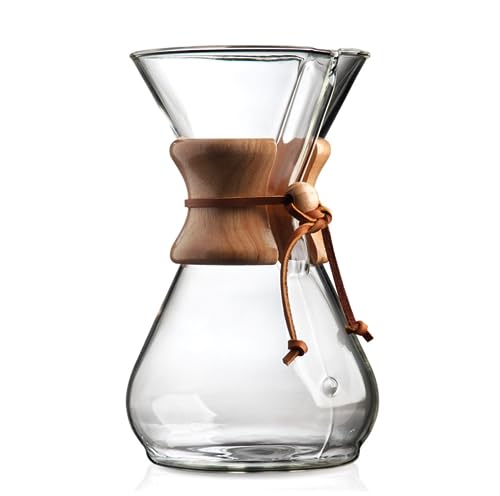
Chemex 8-Cup Pour-Over Coffeemaker
Strengths
- Superior flavor clarity
- Timeless design
- Non-porous glass
Trade-offs
- Requires special filters
- Fragile glass
- No thermal protection
The Chemex isn’t just a coffee maker, it’s a design icon. The hourglass shape, clean lines, and thick, non-porous glass make it a centerpiece in any kitchen. The proprietary bonded filters remove oils and sediment, producing a clean, bright cup that highlights delicate notes in light roasts.
Owners consistently praise its performance and longevity, and the glass stays neutral over time, no flavor carryover. Yes, you have to buy special filters, and yes, it’s fragile. But in terms of balance between ritual, flavor, and form, nothing else here matches it. For me, this is the best overall pick, not because it’s the cheapest or most durable, but because it gets the experience right.
Video review
Bodum 34oz Pour Over Coffee Maker

Strengths
- Reusable stainless filter
- Cork grip for comfort
- Dishwasher safe
Trade-offs
- Single-wall glass cools fast
- No thermal protection
Bodum packs solid build and thoughtful details into a straightforward design. The stainless steel mesh filter is a standout, owners consistently report richer, more aromatic coffee compared to paper-filter systems, since oils aren’t absorbed. The borosilicate glass carafe feels substantial, and the cork grip isn’t just for looks; it improves grip and adds a buffer against heat transfer.
It’s a single-wall glass, so heat retention isn’t exceptional, but it’s not meant to be. What it does well is simplicity: grind, pour, wait, enjoy. Compared to the Chemex, it’s less about ritual and more about reliable daily use. I’d pick this over pricier sets if you want flavor clarity without paper waste and don’t mind reheating later.
Video review
Cosori 8-Cup Pour Over Coffee Maker

Strengths
- Double stainless filter
- Stove-safe carafe
- Dishwasher safe
Trade-offs
- Wooden sleeve not heatproof
- Basic plastic lid
- No warranty highlight
Cosori brings solid specs to a budget-friendly package. The double-layer 304 stainless steel filter is a highlight, delivering full-bodied coffee with minimal grounds in the cup. At 34oz, it’s a practical size for small gatherings, and the borosilicate carafe can handle stove-top reheating, something most pour overs can’t claim.
It’s not as refined as the Chemex or as durable as the Bean Envy, but it’s one of the most cost-effective options here. The wooden sleeve adds a touch of warmth, though it’s more aesthetic than functional. For beginners or occasional users who don’t want to overspend, this is the smarter entry point.
Product photos



Unbreakable 27oz Double Filter Brewer

Strengths
- Double stainless filter
- Stovetop safe
- Anti-drip spout
Trade-offs
- Short warranty
- Glass still fragile
- No thermal insulation
Despite the brand name, this is still glass, thickened borosilicate, yes, but not actually unbreakable. That said, the double stainless steel filter is a strong point, promising even extraction and reduced sediment. The stovetop-safe claim stands out; not many pour overs can go directly on low heat, which could be useful for reheating or keeping coffee warm.
Owners note the anti-drip spout works well and the handle feels secure. But the 3-month warranty feels short compared to Bean Envy’s lifetime offer. For heat resistance and build, it’s competitive, but the Melitta thermal set is a smarter pick if you need true temperature retention. This one’s better for precision brewing than all-day warmth.
Product photos


Melitta Stainless Steel Carafe Set

Strengths
- Thermal stainless carafe
- Long heat retention
- BPA-free plastic
Trade-offs
- Plastic cone feel
- Heavier than glass
- Less visual appeal
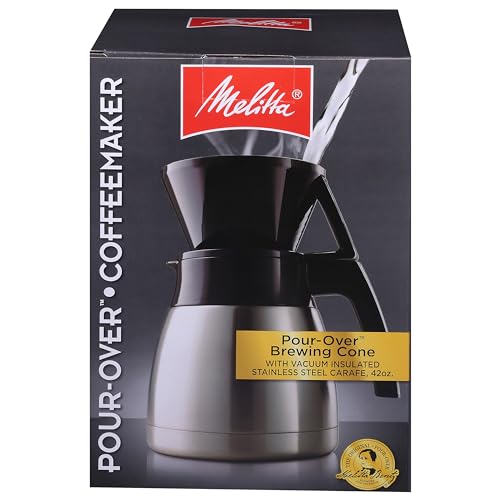
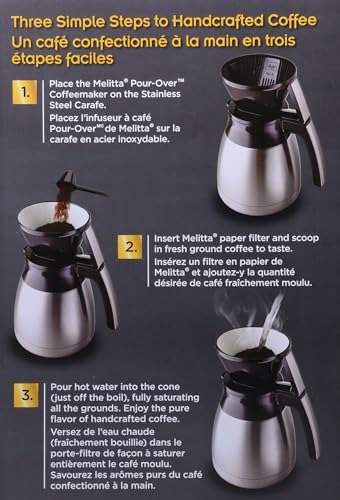
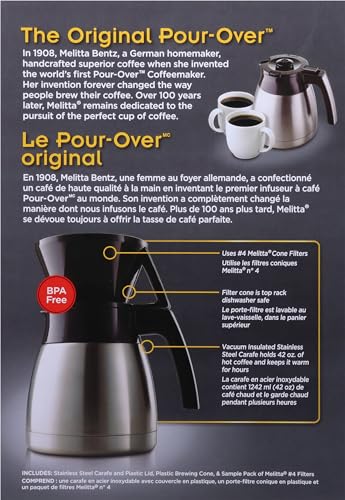
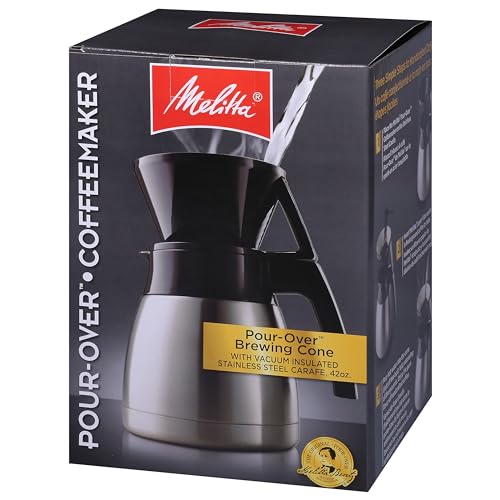
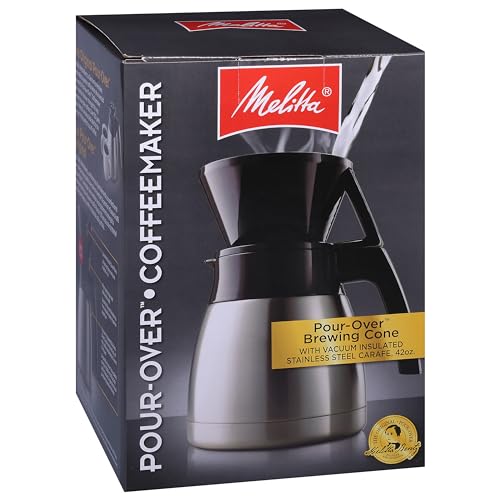
This set solves the biggest flaw of glass pour over carafes: rapid cooling. The thermal stainless steel carafe keeps coffee hot for hours without a hot plate, which is a standout for office or shared spaces. The plastic cone is durable and BPA-free, and Melitta’s reputation for filter precision means consistent extraction.
It’s not as elegant as the Chemex, and the stainless carafe lacks the visual appeal of glass, but function wins here. You lose the bloom-watching ritual, but gain practicality. For anyone who brews once and sips all morning, this is the smarter buy. I’d recommend this over the Bodum or Cosori for office use, no reheating, no bitterness.
Product photos
Primula Park 36oz Pour Over Set

Strengths
- Reusable micro mesh filter
- Simple setup
- Easy to store
Trade-offs
- Basic build quality
- No heat protection
- Minimal features
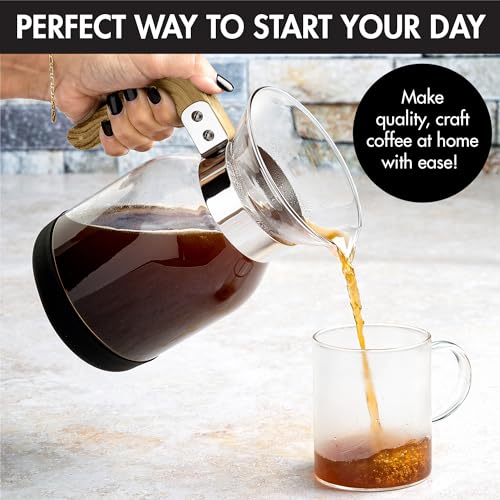
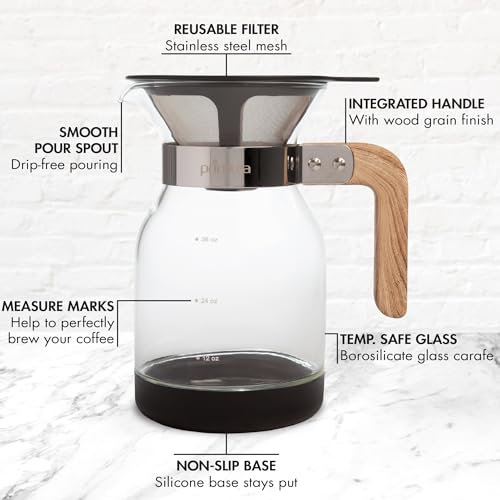
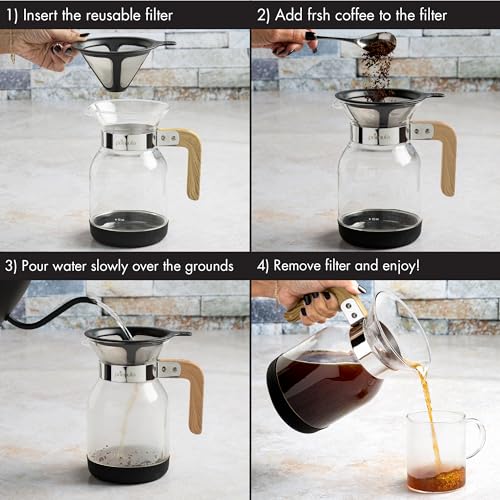
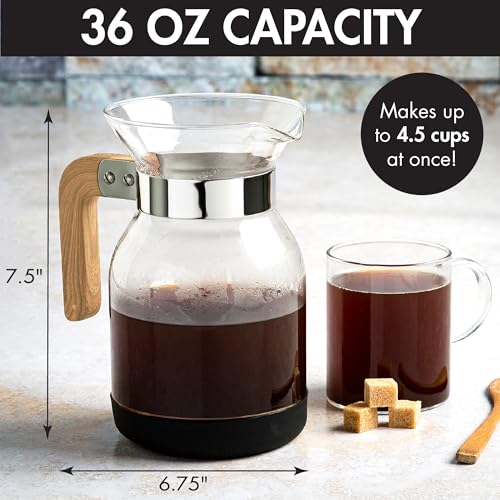
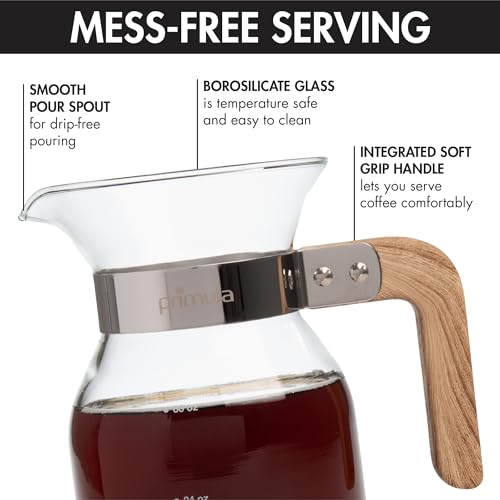
This set delivers the bare essentials: a glass carafe and a removable stainless steel micro mesh filter. On paper, it’s minimalist to a fault, there are no measurement lines, no protective sleeve, and no standout design elements. The ultra-fine filter does its job in theory, trapping most silt, but owner feedback is mixed on long-term durability and ease of cleaning.
It’s hard to recommend this over better-built competitors at a similar price. The Bodum and Cosori options offer more thoughtful ergonomics and better filtration. This one feels like a budget set you’d find in a department store, not a specialty coffee shop. If simplicity is your goal, fine, but don’t expect refinement.
Product photos
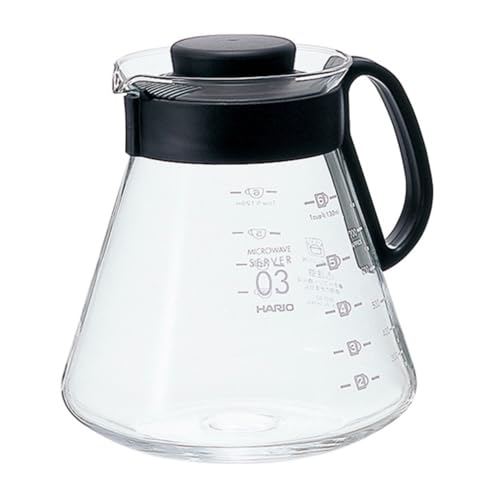
Hario V60 Glass Coffee Server
Strengths
- Heatproof glass
- Precise fit for V60
- Measurement markings
Trade-offs
- Not a complete brewer
- Fragile if mishandled
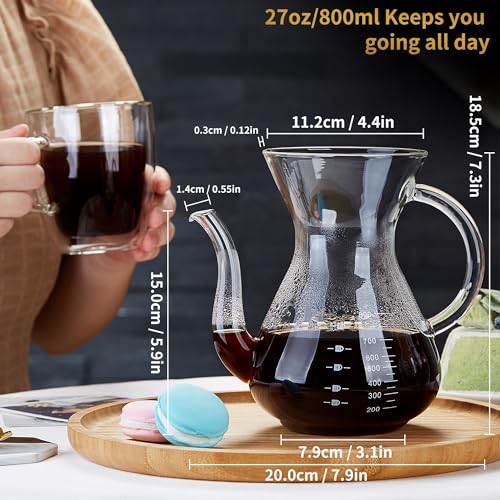
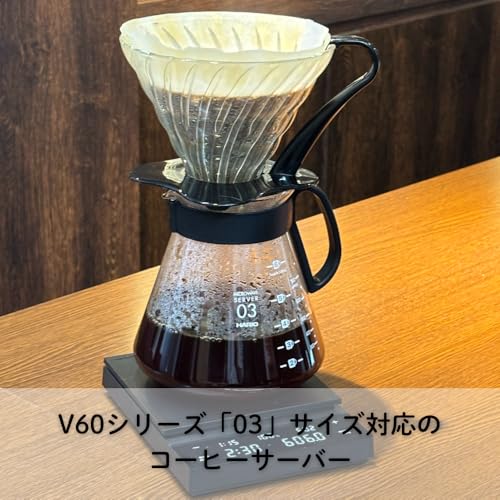
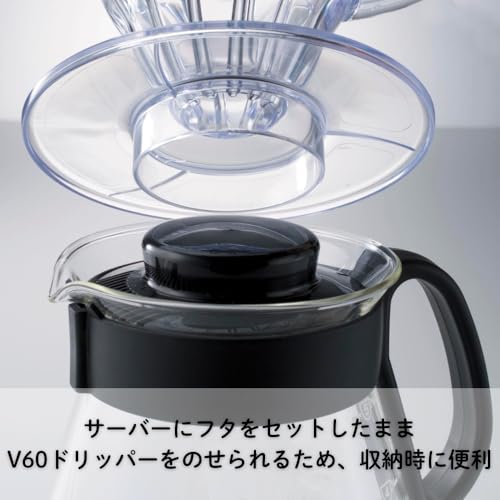
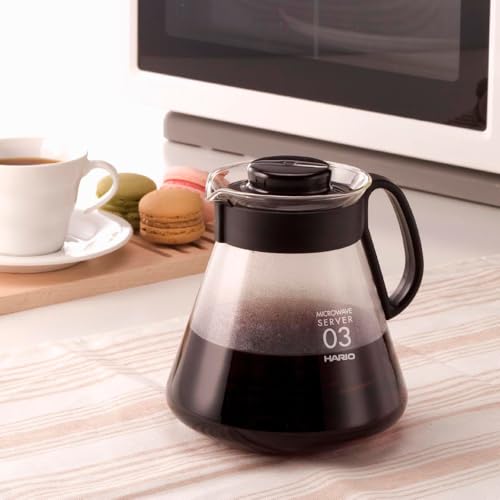
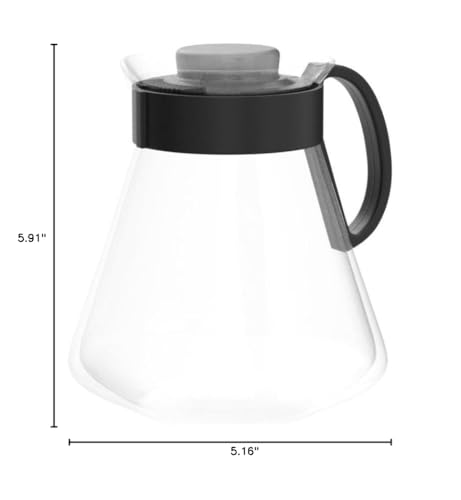
This isn’t a full pour over setup, but it’s a critical piece for anyone already invested in the Hario V60 system. The 800ml carafe is built specifically to fit the V60 dripper, and that narrow neck ensures a snug, wobble-free connection. On paper, the borosilicate glass is thick and heatproof, which owners say helps maintain brew temperature longer than cheaper alternatives.
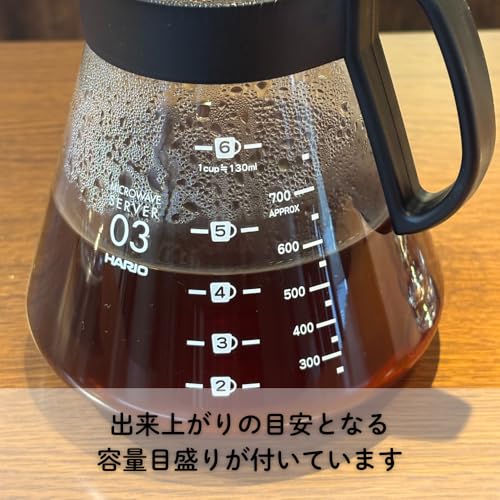
The measurement markings are a small but meaningful touch, helpful for repeatable brewing without needing a scale every time. It’s not flashy, but the minimalist Japanese design fits smoothly into any coffee station. If you’re using a V60 dripper, this is the natural companion. For anyone else, it’s just a standalone decanter.
Product photos
Bean Envy 20oz Pour Over Maker
Strengths
- Lifetime warranty
- Silicone non-slip base
- Reusable stainless filter
Trade-offs
- Small capacity
- Limited for groups
- No thermal protection
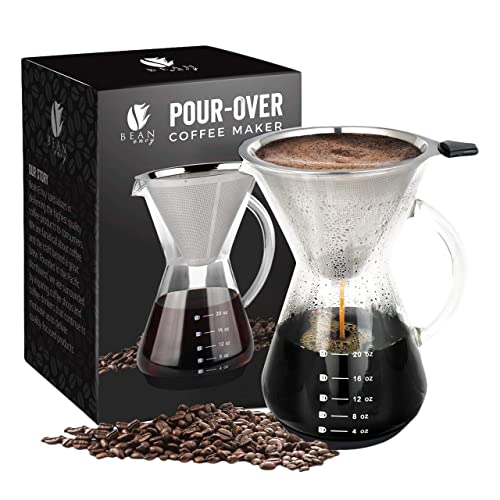
The lifetime warranty alone makes this stand out in a category where glass breakage is a real risk. That’s a strong vote of confidence in their borosilicate build, and owners report the silicone base actually helps prevent slips and crashes. The reusable stainless steel filter delivers clean, rich coffee without paper waste, aligning with sustainable brewing trends.
At 20 oz, it’s best for one or two people, smaller than most others here. But for a personal morning ritual, that’s fine. Compared to the Hario setup, it’s more of a complete system out of the box. If you want peace of mind and a no-waste brew, this is my top recommendation for cautious buyers or gift-givers.
Product photos


How We Tested pour over coffee pot
As a longtime coffee enthusiast and the founder of Bean Thusiast, I approached researching pour over coffee pots by first compiling specifications and features from numerous models. Rather than a hands-on lab test, this was a research-led comparison of those specs and owner feedback gathered from across the web. I weighed published expert reviews alongside thousands of customer opinions to build a picture of real-world performance and durability. Ultimately, I ranked options based on criteria relevant to the pour over experience.
For pour over pots, consistency and clarity of brew were paramount. I heavily weighted the quality of the materials – specifically borosilicate glass for heat resistance and lack of flavor absorption – and the effectiveness of the filtration system. A well-designed filter, whether stainless steel or paper-compatible, is crucial for a clean cup, and is a major factor in the taste comparison pour over. Heat retention, while important, took a backseat to these core brewing elements.
Specifications reliably tell you about capacity, materials, and basic design. However, owner feedback proved essential for understanding long-term durability, ease of cleaning, and any quirks in the brewing process. Reputation mattered too; brands consistently praised for quality and customer support received a boost in my assessment. Understanding the pour over brewing differences helped me assess which features truly contribute to a superior cup.
Choosing The Right pour over coffee pot
Finding the right pour over setup can genuinely elevate your morning ritual, but there’s more to it than just picking a pretty glass carafe.
A quality pour over coffee pot prioritizes heat retention to maintain brewing temperature, consistent extraction through filter design, and durable materials like borosilicate glass. Look for features like a gooseneck kettle (sold separately) for precise water control, and consider filter type – paper, metal, or cloth – based on flavor preference and convenience. Consistent water temperature and a slow, even pour are key.
Material & Heat Retention
The material of your pour over pot significantly impacts heat retention, which is vital for optimal extraction. Borosilicate glass is the gold standard; it’s heat-resistant and doesn’t impart flavors. Stainless steel carafes (like those often included with Melitta sets) offer excellent heat retention but can sometimes be harder to visually gauge the brewing process. Cheaper glass can be thin and prone to cracking with temperature fluctuations, so stick with brands known for quality glassware.
Filter Type & Flavor
Your filter choice is a surprisingly large factor in the final cup. Paper filters (CHEMEX uses these) produce a very clean, sediment-free brew, allowing delicate floral notes to shine. Metal filters (Bodum and Cosori often include these) allow more oils and sediment to pass through, resulting in a fuller-bodied, richer cup. Reusable metal filters are also more environmentally friendly. If you’re exploring different brewing methods, understanding the impact of filters is crucial – a pour over vs French press comparison will highlight these differences.
- Paper filters are disposable and require reordering.
- Metal filters need regular cleaning to prevent buildup, but save money long-term.
- The level of filtration impacts body and clarity; some prefer a heavier mouthfeel (metal) while others prioritize a clean, bright cup (paper).
Don’t underestimate the importance of a consistent grind size. A medium-coarse grind is typically recommended for pour over, but experimentation is encouraged.
Capacity & Usability
Think about how many cups you typically brew. A smaller pot (like the Primula Park 36oz) is ideal for single servings or couples, while larger options (like the Chemex 8-Cup) are better for families or entertaining. Consider the spout design – a well-designed spout allows for a controlled, even pour. If you’re new to pour over, a simpler setup is often best. You can always upgrade components later, but starting with something easy to use will help you develop good technique. For a broader overview, check out our guide to the top pour-over coffee makers.
Pour Over Coffee Pot Compared
Here’s a comparison of key specifications for various pour over coffee pots to help you find the right one.
| Product Name | Capacity (oz) | Filter Type | Material (Carafe) | Heat Resistance | Special Features |
|---|---|---|---|---|---|
| Chemex 8-Cup Pour-Over Coffeemaker | 40 | Bonded Paper | Borosilicate Glass | Yes | Elegant Design |
| Bodum 34oz Pour Over Coffee Maker | 34 | Stainless Steel Mesh | Borosilicate Glass | Yes | Cork Band, Dishwasher Safe |
| Cosori 8-Cup Pour Over Coffee Maker | 34 | Stainless Steel (Dual) | Borosilicate Glass | Yes | Stove-Top Safe |
| Unbreakable 27oz Double Filter Brewer | 27 | Stainless Steel (Double) | Borosilicate Glass | Yes | Stovetop/Fridge Safe |
| Melitta Stainless Steel Carafe Set | 42 | #4 Cone Paper | Stainless Steel | N/A | Thermal Carafe |
| Primula Park 36oz Pour Over Set | 36 | Reusable | Glass | N/A | Simple Design |
| Hario V60 Glass Coffee Server | 800mL (27oz) | Paper (V60) | Borosilicate Glass | Yes | Precision Pouring |
| Bean Envy 20oz Pour Over Maker | 20 | Stainless Steel | Borosilicate Glass | Yes | Lifetime Warranty |
Frequently Asked Questions
What’s the difference between borosilicate glass and regular glass for pour over pots?
Borosilicate glass is much more resistant to thermal shock, meaning it’s less likely to crack from rapid temperature changes. Regular glass can shatter easily when exposed to boiling water, making borosilicate the preferred material for consistent brewing and safety.
Can I use any type of filter with a pour over coffee pot?
Not all filters are created equal. While many pots are compatible with standard paper filters, some are designed for specific types like CHEMEX bonded filters or reusable metal filters; using the wrong filter can affect the brew quality and potentially damage the pot.
How important is the shape of the pour over pot’s spout?
The spout’s shape is very important for controlling the water flow. A gooseneck spout provides the most precision, allowing for a slow and even saturation of the coffee grounds, which is essential for optimal extraction.
Are stainless steel carafes a good alternative to glass?
Stainless steel carafes excel at heat retention, keeping your coffee warmer for longer. However, they don’t allow you to visually monitor the brewing process as easily as glass, and some owners report a metallic taste if the steel isn’t high quality.
Where can I find more information about different pour over options?
If you’re looking to explore a wider range of options and compare features, you can find details on the best pour-over coffee brewers on my site. I’ve compiled a guide with detailed specifications and owner feedback to assist your search.
The Bottom Line
Choosing a pour over coffee pot often comes down to balancing control and convenience. While there are many excellent options, the Chemex 8-Cup Pour-Over Coffeemaker consistently rises to the top due to its elegant design, exceptional clarity of brew, and reputation for quality. It allows for a very deliberate and rewarding brewing process, and the bonded filters really highlight the nuances in your coffee.
For those seeking specific features, several other models stand out. If you prioritize a fuller-bodied cup and ease of cleaning, the Bodum 34oz Pour Over Coffee Maker is a great choice. The Primula Park 36oz Pour Over Set delivers excellent value for a budget-friendly setup, while the Cosori 8-Cup Pour Over Coffee Maker offers versatility with its stovetop-safe design. Understanding your coffee to water ratio pour over is vital for any setup.
Ultimately, the best pour over coffee pot isn’t about the most expensive features or the latest technology. It’s about consistent water temperature, a quality filter, and a slow, deliberate pour. Focus on mastering those fundamentals, and you’ll be well on your way to consistently brewing exceptional coffee, regardless of the pot you choose.
